
























Quorum sensing inhibitors (QSIs) represent a promising new class of antibacterial drugs that disrupt bacterial communication rather than killing bacteria directly, thereby reducing the selective pressure for antibiotic resistance development; these inhibitors can be discovered through three main approaches: high-throughput screening of compound libraries, structure-guided drug design targeting quorum sensing proteins like LuxI and LuxR, and natural product isolation from marine organisms such as seaweeds that produce compounds similar to bacterial autoinducers but with structural modifications that prevent triggering the quorum sensing response.
Quorum Sensing Inhibitors: Drug Development & Bacterial Infection Therapies
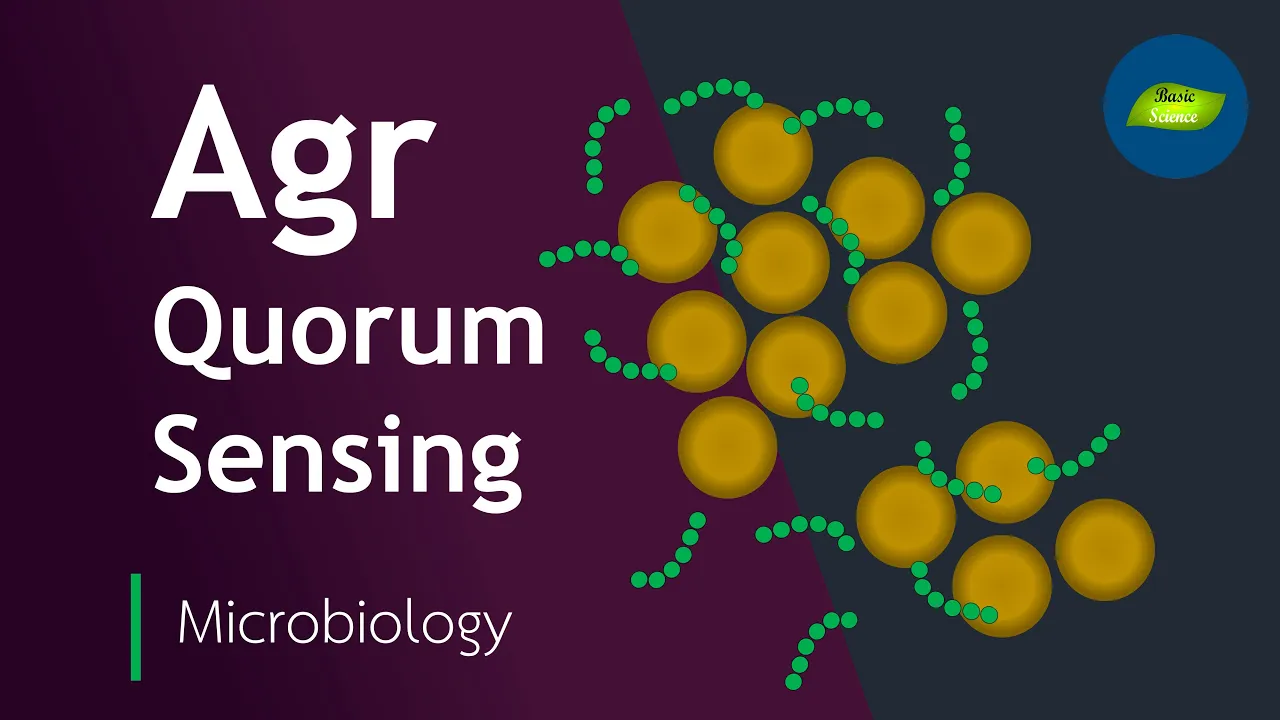
Added:The fundamental mechanism of bacterial Quorum Sensing (QS), including how autoinducers function in density-dependent gene expression.
The difference between traditional bactericidal/bacteriostatic antibiotics and target-specific anti-virulence therapies.
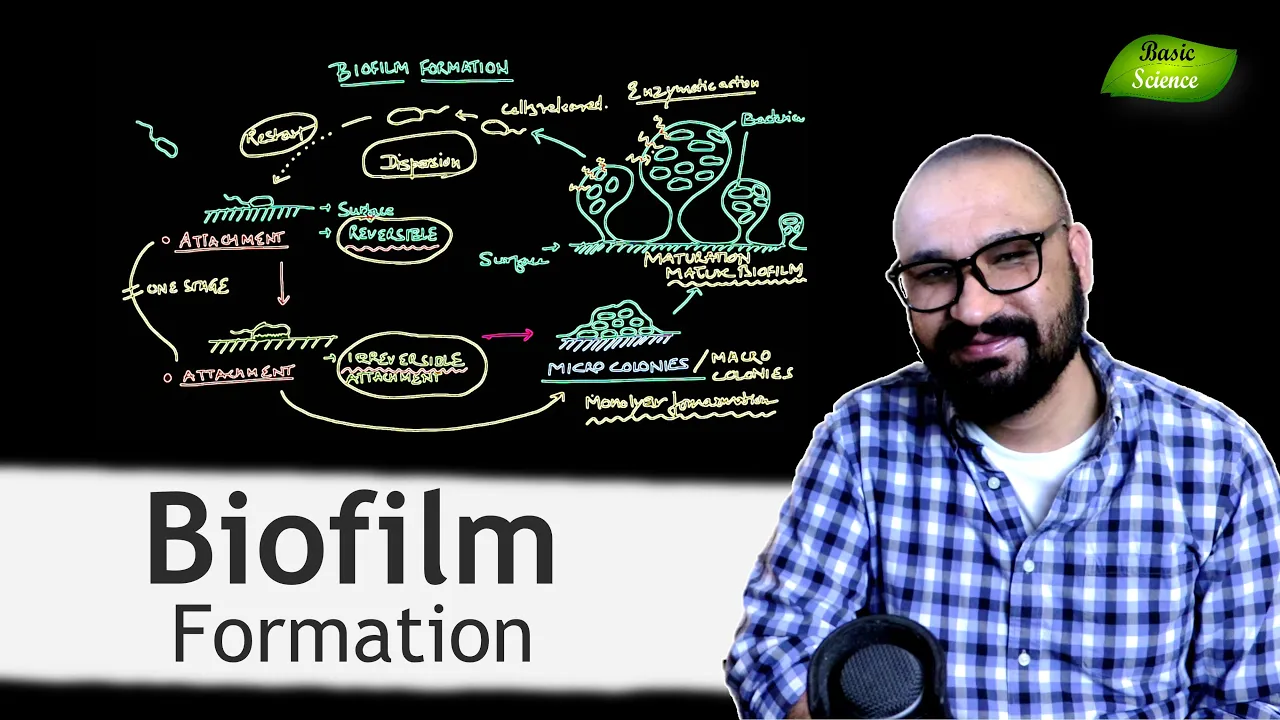
The biological concept of bacterial biofilms, their formation stages, and how they contribute to antibiotic tolerance.
Basic prokaryotic molecular biology, specifically signal transduction pathways and gene regulation mechanisms.
The chemical design and classification of Quorum Sensing Inhibitors (QSIs), such as halogenated furanones and autoinducing peptide mimics.
The mechanisms of enzymatic quorum quenching, focusing on the roles of lactonases and acylases in degrading signaling molecules.
Synergistic therapeutic strategies combining QSIs with traditional antibiotics to disrupt biofilms and clear chronic infections.
The evolutionary biology of resistance: investigating whether bacteria can develop resistance mechanisms against non-lethal anti-virulence therapies.
1.1K views27likes21:43Original Release: 2020-10-14
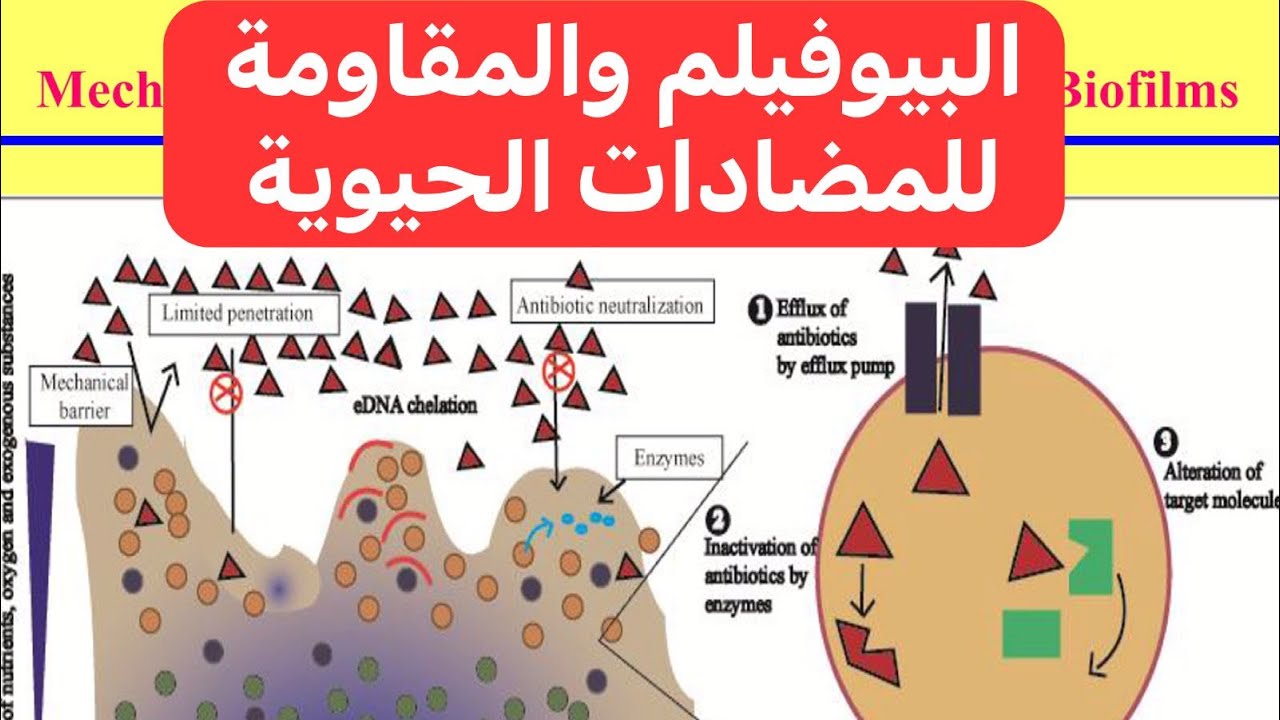
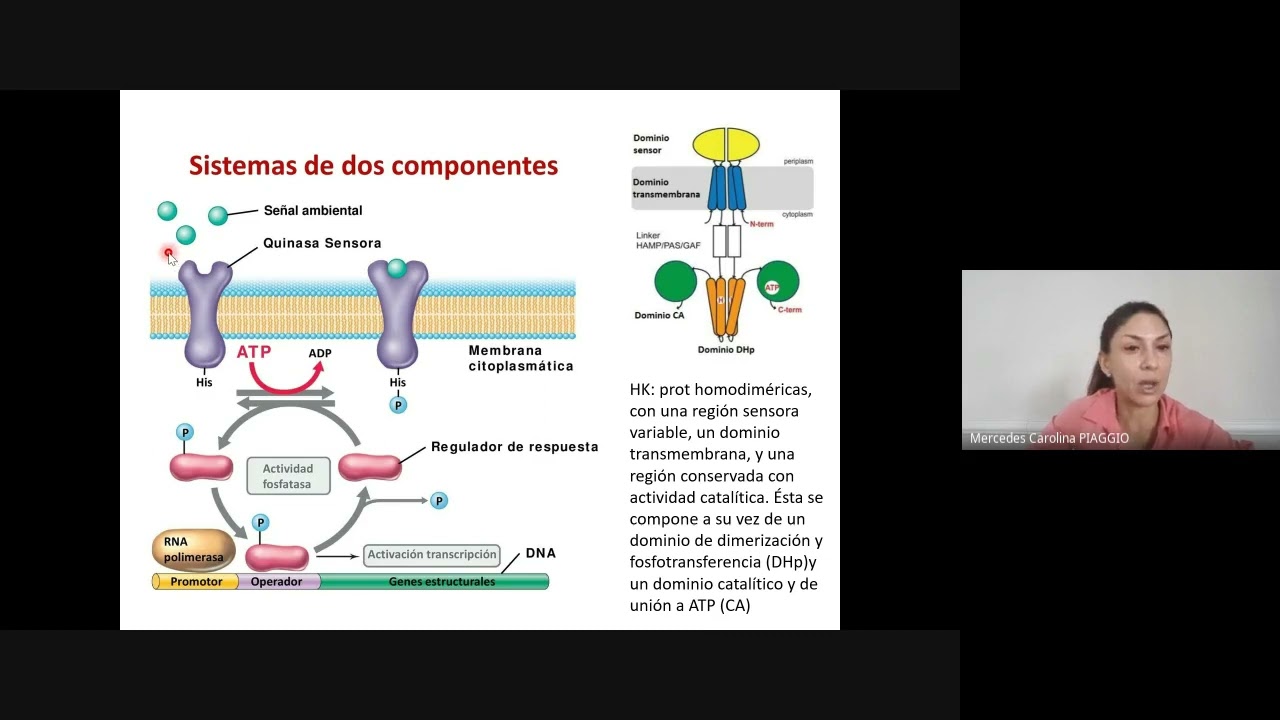
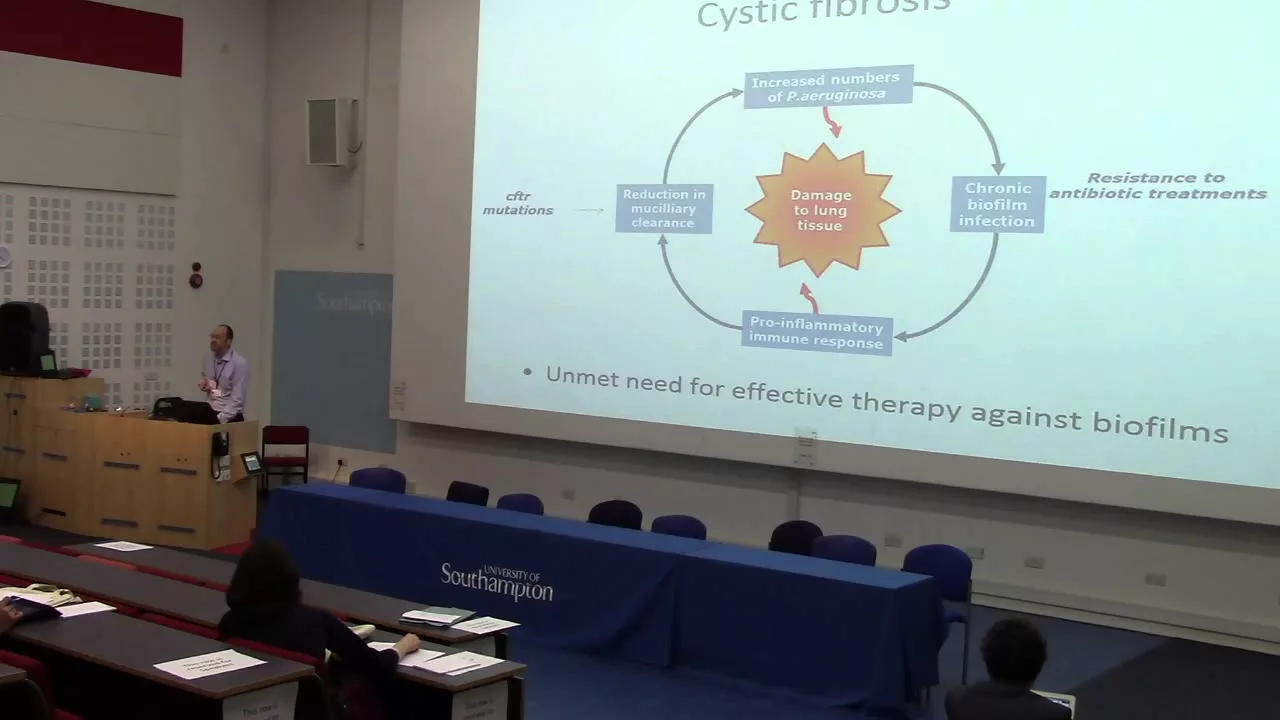
in the last few videos we looked at quorum sensing the phenomenon by which bacteria use small molecules as communication signals to evaluate the concentration of bacteria in their environment and trigger the coordination of group behavior such as the formation of biofilm or virulence bioluminescence and a variety of others what we are going to look at in this video is some applied aspects of this concept of quorum sensing namely we're going to evaluate quorum sensing inhibitors in drug development as possible therapies for bacterial infections we are going to focus on quorum sensing inhibitors thinking of some of the pros that quorum sensing inhibitors offer when thinking of treating a bacterial infection relative to traditional antibiotics so in considering quorum sensing inhibitors as alternatives or additives to antibiotics when we think of traditional antibiotics versus quorum sensing inhibitors which i'll abbreviate as q s eyes for quorum sensing inhibitors on one hand antibiotics are going to kill bacteria associated with the infection or inhibit their growth and by inhibiting their growth what we're really saying is inhibiting their growth and cell division hence limiting the infection quorum sensing inhibitors on the other hand are just as it says they are going to shut off quorum sensing and in so doing that will have such outcomes as limiting biofilm formation which is important because the formation of biofilms cause bacteria to generally become much more resistant to antibiotics and much more resistant to the body's natural immune responses so once uh bacteria forms a biofilm it becomes much more difficult for the patient to overcome that infection so by inhibiting quorum sensing we can limit biofilm and we can also limit the virulence of that bacterial infection with antibiotics one of the key challenges of antibiotic development and use is that there is strong selection for antibiotic resistance and in this strong selection for antibiotic resistance if we think about how that antibiotic resistance develops if you look at a population of bacteria where each of these circles represents a bacterium i'm going to put an s in each of these to indicate that each of those bacteria that i'm showing in green are sensitive to the antibiotic meaning that the antibiotic will kill those particular bacterial cells they will not be able to continue growing and dividing in addition to that large population of sensitive cells even if there's just one or a few here that are antibiotic resistant what will happen is that once a drug is administered the antibiotic the antibiotic will eliminate all of those cells all of those bacteria that are sensitive so all of the green bacteria will go away but the resistant bacterium will persist and that bacterium now that the others are gone will have the ideal environment for multiplying because there's no competition from the other bacteria that were surrounding it and so as a consequence over a relatively short period of time what will result is a full population of bacteria that are all antibiotic resistant now this brings us to a possible advantage of quorum sensing inhibitors with quorum sensing inhibitors the compound does not kill the bacterial cell and as a result of it not killing the bacterial cell there is much less selection for resistance to a quorum sensing inhibitor because the cells are not dying instead their behavior is simply being changed and so under the heading here of quorum sensing inhibitors it's generally thought that there is reduced selection for resistance to quorum sensing inhibitors than there is for resistance to antibiotics because the penalty here for being sensitive to the quorum sensing inhibitor is just that this bacteria can't as effectively produce as can't as effectively participate in group behaviors it doesn't die as a result of being sensitive to the quorum sensing inhibitor whereas in the case of antibiotics the bacteria dies if it is sensitive to the antibiotics there's strong selective pressure for the resistance to develop much more so than in the case of using quorum sensing inhibitors but certainly there is the concern that the quorum sensing inhibitor since it doesn't kill the bacteria it won't be able to completely eliminate an infection instead it can act to control the infection by doing things like preventing the formation of biofilms and preventing virulence as a result of the fact that the quorum sensing inhibitors don't kill the bacteria and won't completely eliminate the infection one experimental approach that scientists are taking is to consider using quorum sensing inhibitors in combination with traditional antibiotics so the need for traditional antibiotics is reduced by implementing these quorum sensing inhibitors because by inhibiting quorum sensing and hence inhibiting biofilm formation antibiotics can better access the bacterial cells and the bacterial cells have less opportunity to resist the antibiotic molecule and so as a result quorum sensing inhibitors may potentially when thinking of drug development be useful in combination with traditional antibiotics and much of the work on this is still underway we think about the drug discovery pipeline being a relatively long pipeline with a variety of experiments needed so with quorum sensing inhibitors qsis being increasingly recognized as promising therapies for bacterial infections we can ask the question of how does one go about discovering a quorum sensing inhibitor and more broadly this question could be posed as how does the drug discovery process take place in general what are the inspirations for the molecules that become drugs ultimately and in the case of quorum sensing inhibitors and other drugs we can look at three approaches in more detail here one of those approaches is what we refer to as high throughput screening as the name high throughput screening implies we are screening large libraries of organic molecules and evaluating through bioassays their ability to inhibit quorum sensing so high throughput screening is one of the key methods in drug discovery not only for quorum sensing inhibitors but drug molecules in general so in high throughput screening the gist of it is that large libraries of compounds are synthesized and these generally encompass a wide variety of molecular classes and molecular weights and functional groups to make a relatively diverse library of thousands of different compounds so these large compound libraries are synthesized and evaluated in bioassays for the targeted effect so in the case of quorum sensing inhibitors what one would be looking at in evaluating targeted effects in these bioassays is one might be looking at the ability of the kanban to inhibit biofilm since biofilms are a quorum sensing mediated trait and in this case what one might do is set up a plate since we are screening large numbers of compounds it would generally be a plate with a bunch of tiny wells 96 wells or 384 wells so a bunch of wells all the way across this plate and in each well would be a tiny micro scale experiment where bacteria would be growing to form a biofilm and the treatments would be exposed to a small molecule in each well so we'd have the molecule plus the bacteria in each well and then through microscopy techniques or other imaging techniques we would evaluate the amount of biofilm that is present in the treatment wells containing the small molecule being screened plus the bacteria compared to control wells that contain just the bacteria without the small molecule and so in this regard by using 384 well plates or 96 well plates allowing 96 or 384 samples to be tested at a time one could work through a relatively large library of compounds through this high throughput screening it is however a relatively untargeted approach and so much like playing the lottery you could think of the number of compounds being tested in that in that library as being like lottery tickets where the more of those compounds that are tested the more likely one is to discover a compound that has the desired biological effect of in this case for example inhibiting biofilm formation a quorum sensing mutated effect another way that this could be screened via bioassays is one could look at the inhibition of a specific quorum sensing enzyme for example one could look for compounds that inhibit lux i remember that lux i was the enzyme that catalyzes the formation of the acyl homoserine lactones one could also look for inhibitors of lux r that would prevent the quorum sensing signal from being received by the recipient cell and there are a variety of known related um lux type proteins in a variety of different bacteria so that could enable this type of this type of assay this type of screening but at the end of the day it requires generally synthesizing a large library of compounds and screening that large library to find a relatively small number of hits a more targeted approach is to rather than use high throughput screening to instead use structure-guided drug design in structure-guided drug design what we are going to do is use our understanding of the particular proteins involved in quorum sensing to design drug molecules that would be expected and hypothesized to bind to those proteins so hence we're being guided by the protein structures involved in quorum sensing so structure guided drug design and this what we would do is apply our knowledge of quorum sensing protein structures such as lux r lux i or others to design molecules that are expected to interact with and inhibit those proteins and a common way that those proteins are inhibited is by the development of compounds that are expected to bind at the active site of these proteins so for example designing compounds expected to bind at the active site of lux eye the protein that catalyzes the synthesis of acelyl homoserine lactose to shut off the production of that auto inducer molecule and hence attenuate the ability of the bacteria to engage in quorum sensing this particular strategy of structure guided drug design due to the fact that it requires knowledge of the protein structure can be limited in some cases because we need to have an understanding of that protein structure that understanding of a protein structure going back a bit to a few modules ago generally relies upon x-ray diffraction and x-ray crystallography not all proteins are suitable for forming crystals and having their structures determined through that method and so that can limit our ability to use structure-guided drug design but if one has a high-quality x-ray crystal structure of a protein and has understanding of where the binding site is of that protein then one can use that binding site to design molecules expected to interact with that binding site and block the quorum sensing related molecules from binding there and so that can be a really powerful tool particularly if we have understanding of the three-dimensional structure of what proteins we're trying to inhibit in quorum sensing so that has been one of the main practical reasons why scientists have been interested in understanding the proteins that are involved in quorum sensing because by understanding those proteins particularly the structural level we can design molecules that inhibit those proteins we can also enable structure guided drug design by understanding the structures of molecules involved in quorum sensing and creating analogs of those molecules analogs being related compounds compounds that are structurally similar but not identical to the quorum sensing molecule with the hypothesis that those related molecules will bind to and inhibit the proteins involved in quorum sensing so structure guided drug design can be guided by either the protein structure of proteins that are involved in quorum sensing and or knowledge about the structures of quorum sensing molecules otherwise known as autoinducers so by understanding the structure of for example autoinducer 2 the boron containing autoinducer molecule we talked about a couple of videos back we can design compounds that are related to that compound that we provide to the cell that ideally if things work out as we hope they will bind to proteins involved in quorum sensing but don't themselves trigger the quorum sensing response but instead inhibit that quorum sensing response so we can guide that structure guide a drug design based on either the structure of the quorum sensing proteins or the structures that we know of auto inducers those are two of the strategies a third strategy that has been useful and informative in finding quorum sensing inhibitors is the use of natural products molecules produced by living things when looking at natural products organisms produce a variety of compounds to help them in succeeding in the environment in which they live and so it has been found that some organisms such as seaweeds produce compounds that inhibit microbial quorum sensing and presumably there is some ecological reason why those seaweeds produce compounds that inhibit quorum sensing wherein by inhibiting quorum sensing the the seaweed is controlling the environment around its controlling what the behavior of the bacteria is that live in association with it and thus improving the ability of the seaweed to survive in its environment so an example of the use of natural products compounds made by living things in the quorum sensing discovery the quorum sensing inhibitor discovery process is that marine seaweeds have been recognized to produce compounds that act as quorum sensing inhibitors or qsi for quorum sensing inhibitors and interestingly these marine seaweed compounds are similar in structure to the acyl homoserine lactones so an example of the marine seaweed compounds that inhibit quorum sensing is this structure where we have a terminal bromine and hydrogen there and this is linked to a five-membered lactone ring and you'll remember the lactone ring from the acyl homoserine lactones and this structure rather than having the long carbon chain with the amide group in it instead terminates here with a bromine atom and this particular compound isolated from seaweeds is found to inhibit quorum sensing it competes with the natural acyl homoserine lactone for access to the binding sites of the proteins involved in quorum sensing but itself does not trigger the quorum sensing phenomenon and so it it greatly reduces the extent to which bacteria produce bacteria participate in quorum sensing so in general each of these three strategies for designing quorum sensing inhibitors that is high throughput screening structure guided drug design and the use of natural products are all applied not only for the discovery of quorum sensing inhibitors but also more broadly in the field of drug discovery in general so with these different strategies available for designing new quorum sensing inhibitors in the drug discovery pipeline why is it the case that there's not yet a quorum sensing inhibitor drug that is on the market well there's a few reasons for that one is that the drug discovery process is inherently long and laborious typically from the time a lead compound is identified until it is approved for use through the final fda approval process is 10 years or more and there's a lot of hurdles along the way in terms of evaluating toxicity issues as well as a variety of other other aspects and other topics so in the case of the quorum sensing inhibitors key challenges that have been run into is that several of these compounds that have been found to inhibit quorum sensing turn out to also be toxic in human systems or animal systems and so that has been a limitation additionally the human body has a variety of detoxification mechanisms to eliminate drug molecules even drug molecules as common as advil or others from the body and so as a result the drug leads for quorum sensing inhibitors have thus far been largely found to be cleared from the body too quickly so the body quickly deactivates those compounds and eliminates them from the body and hence preventing them from being useful as a drug but as the process of discovery continues there are continuing trials to bring quorum sensing inhibitors in as potential drug therapies for treatment of a variety of bacterial ailments and for treatment of infections of organisms like pseudomonas aeruginosa which is a notorious biofilm forming opportunistic pathogen it is thought that quorum sensing inhibitors could have some huge impacts so the future continues onward with discovery of quorum sensing inhibitors
Up Next

11:47
Essential Graphic Novels: Maus, Fun Home, Blankets | Literary Comics Guide
@stumcm
30.8K views•2017-05-19

12:54
Triumph of Orthodoxy Icon: Byzantine Art & History Explained
@BenCallan
2.1K views•2024-08-06

9:49
FastAPI vs Flask vs Django: Choosing the Right Python Web Framework
@TechWithTim
302.5K views•2024-05-26

1:42
Game of Thrones Opening Credits: A Cinematic Analysis
@gameofthrones
46.3M views•2011-04-18
Related Study Plans & Knowledge Roadmaps
Structured learning paths in General & Interdisciplinary Studies
general-studies
Elevator Engineering: History, Physics & Cities
01From Hoists to Safety Brakes: The Dawn of Vertical Lift
02Hydraulic vs. Traction: The Engineering Physics of Elevators
03Modern Speed, Safety, and Algorithms
+ 2 more learning modules
12h5 modules
Explore Roadmap
general-studies
Rubber: Material Science, History & Geopolitics
01Origins of Natural Rubber & Mesoamerican History
02The Chemistry of Natural Rubber & Vulcanization
03The Geopolitics of the Rubber Boom & Colonization
+ 2 more learning modules
12h5 modules
Explore Roadmap
general-studies
Containerization: Evolution, Logistics & Trade
01Ancient Trade & Bulk Cargo: Amphorae to Barrels
02The Industrial Revolution & Cardboard Packaging
03The Containerization Revolution: Malcom McLean
+ 2 more learning modules
12h5 modules
Explore Roadmap
general-studies
Textile Tech: Evolution, Labor & Global Impact
01Pre-Industrial Textiles: Handloom & Cottage Industry
02Mechanization: The Spinning Jenny to the Power Loom
03The Factory System & Global Labor Transformation
+ 2 more learning modules
10h5 modules
Explore Roadmap