

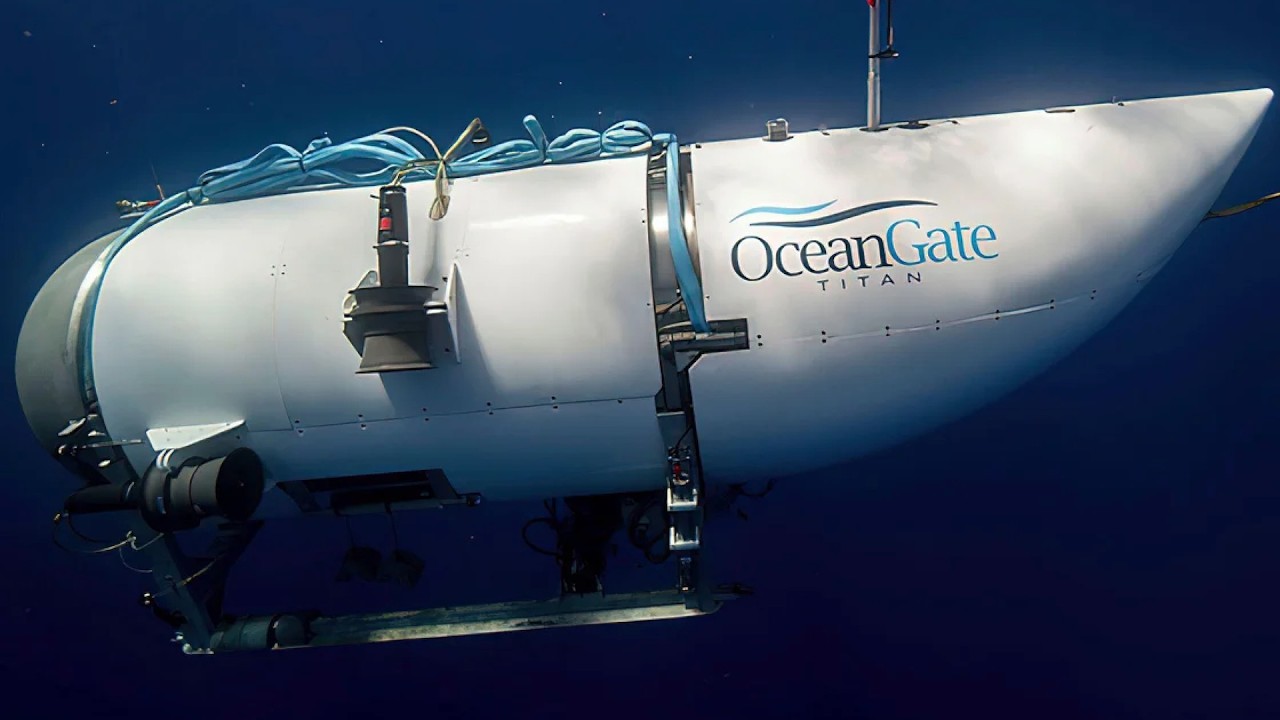






The Triton 3300/3 submersible, designed for deep-sea exploration, carries three passengers to depths of 3,300 feet using a 9-ton hull with 300-330 kg of maneuverable weights for buoyancy control, powered by two battery banks producing 288V DC and 24V systems, with life support systems capable of sustaining occupants for up to 100 hours and a typical dive duration of around 12 hours.
Triton 3300/3 Submersible: A Walkthrough of DEEP's Deep-Sea Submarine
Added:The principles of hydrostatic pressure and fluid mechanics, specifically how ambient pressure increases linearly with ocean depth (approximately 1 atmosphere per 10 meters).
Archimedes' principle of buoyancy and the engineering mechanics of ballast systems used to control ascent, descent, and neutral buoyancy in underwater vehicles.
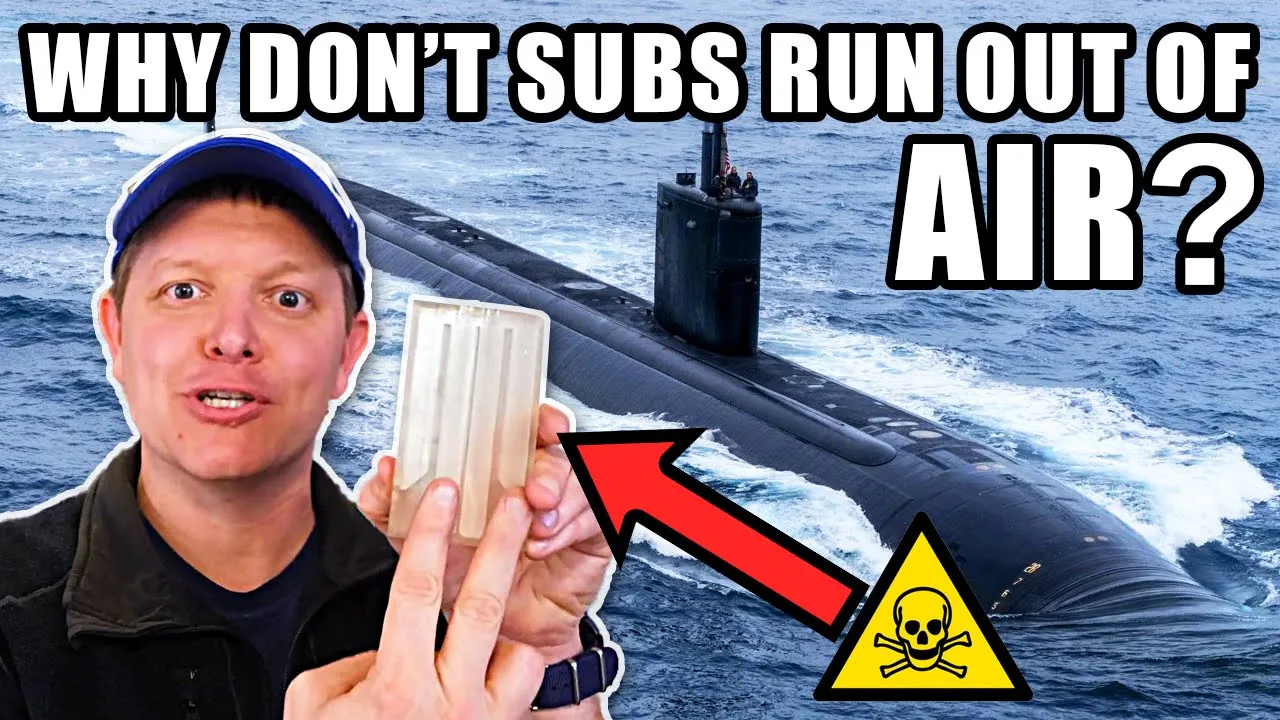
The basic physiology of human respiration and the chemical engineering principles of closed-loop life support systems, including oxygen regulation and carbon dioxide scrubbing (e.g., using soda lime).
An introductory understanding of materials science, focusing on how structural materials like optical-grade acrylic and titanium alloys withstand extreme compressive forces.
The engineering design differences required for Hadopelagic exploration, comparing the Triton 3300/3 to full-ocean-depth submersibles like the Limiting Factor (Triton 36000/2).
Deep-sea marine biology and ecology, focusing on how organisms adapt to the high-pressure, low-temperature, and aphotic zones accessed by these submersibles.
A comparative analysis of manned submersibles versus Remotely Operated Vehicles (ROVs) and Autonomous Underwater Vehicles (AUVs) regarding cost, safety, and scientific utility.
International marine safety regulations, vessel classification standards (such as DNV or ABS), and the operational logistics of deep-sea expedition planning.
684 views14likes8:33Original Release: 2024-03-12
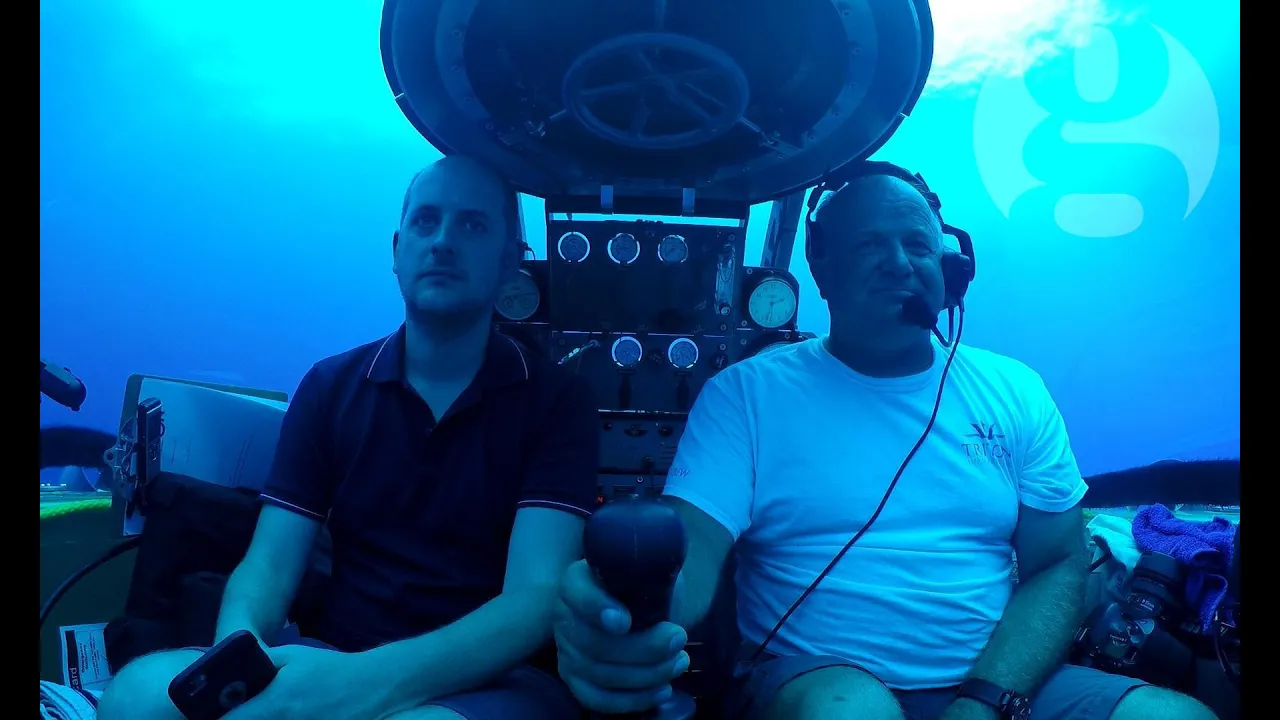
[Music] this video is sponsored by n at90 they are Beyond technical right now there's an offer on if you go to n 90.com and use the big scuba code big scuba 2024 and we're going to meet a sub pilot now and tell me what this is so this is a TR 3K 3 submarine uh Hull number six in the series um we also have Hull number seven next to it but um yeah it is a submersible can carry three passengers down to 1,000 M or 3,300 ft wow that's a long way yeah it's a it's a very long way very dark down there so you're a subpilot yourself so how deep have you been in a I've been maximum depth in one of these so I've done th000 met dive um but majoritively it's it's never really that deep when you go that deep there's not a whole lot to see it's just a a pretty cool experience yeah um but a lot of it is sort of up to around 500 m is is the majority of our di yeah so tell us about the weighting and the buoyancy so the sub itself weighs somewhere around 9 tons um give or take 9 tons yeah um we have around 300 or 330 kilos of maneuverable weights at the front here um so depending on you know passengers and depths and even uh density of the water we add and remove the weights um just so we stay neutrally buoyant when we're in the water um so do you always have a maximum of so it's a maximum of three people yeah so a pilot plus two passengers um and it's it's pretty tight in there but it's it's a it's comfortable for a while M yeah um also you can see on the front here we've got the the manipulator arm um so that's used for taking all of the samples and things um and if there's anything cool that you want to pick up down there when you take samples can you then bring them into the sphere no but we do have it's kind of a bolt-on attachment um just on the side of the housing there there's like a big basket that goes on and then you kind of collect yourself and place them in the basket um depending on they're very sort of adaptable Subs actually um you can have a vast array of different sensors and cameras and things mounted to the front so depending on the type of research being conducted you can have we have sort of laser measuring devices there's different cameras for recording and there's there's a lot of variation and speed speed she reaches uh sort of grand speed of about three knots so right it's it's not the most uh it's it's not the quickest of vehicles but um it is pretty cool when you're under there yeah so it's very condition dependent on when you can where you can dive as well and to get in it you get through the port yeah so we have the the hatch at the top of the sphere there um and you sort of climb up onto the the back and we'll go around and have a look at the back there in a minute you sort of there's some steps leading out the back and you sort of lower yourself in step of the in the center there Center Helm and power how is it power so power wise we have two large battery banks in these sort of PODS here on the undersides um consisting of 15 batteries each size each side sorry um so that's 12 12vt batteries and 3 8vt batteries combining on Port star side giving you a total of 288 volts DC high voltage and 24 volts low voltage systems right okay um yeah so if you want we can sort of work our way around the back and yep yep they look quite small from the front well not and then when you come around the back they are big aren't they where all the Machinery is the front is just like the viewing platform effectively and this is where all the hardware is yeah so it's it's pretty cool so how old are these are they quite new these ones here I had a very good question I don't know who answers that one on these ones I think they're probably about probably around 5 years old um maybe not quite that old but yeah so like a car it's miles do you just clock up hours on exactly it's usually either time based or sort of hour based some of it's even dive based as well after each di you have a set amount of Maintenance to do what's the most amazing place you've flown your sub it's a tough question the business um some of the best places have been South Pacific sort of South Pacific Islands and all around there there some pretty spectacular places this is the business end then Jus this is certainly the business end so out the back here we have some additional buoyancy sort of hidden up in the wings here all of these um we have this is the ejb which is the external junction box the electrical junction box um and on the other side here is the VB the variable variable ballast tank so that fills up with water and so that's the intake for it there so basically it's just the atmospheric pressure when you're under the water is enough to to force water on the into the tank and then when you want to pump it out there is a internal pump and you literally just pump out the water until you're sort of uh well where you want to be either going up or ascending or descending would be the words um you have on the underside here there's six very large um compressed air tanks so those are oh now I they're those green things so the green ones these two are the oxygen tanks and all the oh six there and these two black ones these are main just compressed air tanks so the oxygen is used for the atmosphere inside the sphere so you just sort of gently bleed in O2 uh as you're breathing B basically it works on a a scrubber system so it scrubs out some of the carbon dioxide that you exhale and then you just um tweak in a little bit of oxygen just to maintain the the oxygen levels inside the spere and all of the air basically is just to to bring yourself to the surface as buoyancy so there's there's a lot of air for that um they actually fill up the inside of these tanks so the whole sort of exterior shell is and that's where all of your buoyancy comes from um from breast air so when you dive there's some little vents on top when you're on the surface you open those vents that lets the air out yeah of those tanks and fills them with water and you just go down and when you're under you close them off when you want to come back up you literally just fill those with air again and come up and how long would a flight be a flight could realistically be anywhere up to around about 12 hours um it normally depends on your high voltage consumption big consumers being the lights and thrusters mhm um also dependent on your scrubber and O2 levels and everything but you could make it up to about 12 hours um life support systems inside can run for around 100 hours so if you did get pled on the bottom for B you've got you've got 100 hours Great okay that's what else have we got down the backet so these are the back end of the battery pods basically we actually have one of them off for the minute um just for some work but so all of the there 15 batteries inside here these cables run up to the inside of the electrical bottle and that's where all of the electrical systems happen um there's also another one similar inside the sphere but that's all the low voltage systems um great it's about all we have on the back here can we look look inside one of course so we'll do is if we go back around the front we can climb up the ladder and uh into number seven
Up Next

0:58
SeaPerch ROV Wet Test at Grainville School | Engineering Challenge
@PortsofJersey
390 views•2021-11-24

12:54
Triumph of Orthodoxy Icon: Byzantine Art & History Explained
@BenCallan
2.1K views•2024-08-06

9:49
FastAPI vs Flask vs Django: Choosing the Right Python Web Framework
@TechWithTim
302.5K views•2024-05-26

1:42
Game of Thrones Opening Credits: A Cinematic Analysis
@gameofthrones
46.3M views•2011-04-18
Related Study Plans & Knowledge Roadmaps
Structured learning paths in General & Interdisciplinary Studies
general-studies
Elevator Engineering: History, Physics & Cities
01From Hoists to Safety Brakes: The Dawn of Vertical Lift
02Hydraulic vs. Traction: The Engineering Physics of Elevators
03Modern Speed, Safety, and Algorithms
+ 2 more learning modules
12h5 modules
Explore Roadmap
general-studies
Rubber: Material Science, History & Geopolitics
01Origins of Natural Rubber & Mesoamerican History
02The Chemistry of Natural Rubber & Vulcanization
03The Geopolitics of the Rubber Boom & Colonization
+ 2 more learning modules
12h5 modules
Explore Roadmap
general-studies
Containerization: Evolution, Logistics & Trade
01Ancient Trade & Bulk Cargo: Amphorae to Barrels
02The Industrial Revolution & Cardboard Packaging
03The Containerization Revolution: Malcom McLean
+ 2 more learning modules
12h5 modules
Explore Roadmap
general-studies
Textile Tech: Evolution, Labor & Global Impact
01Pre-Industrial Textiles: Handloom & Cottage Industry
02Mechanization: The Spinning Jenny to the Power Loom
03The Factory System & Global Labor Transformation
+ 2 more learning modules
10h5 modules
Explore Roadmap