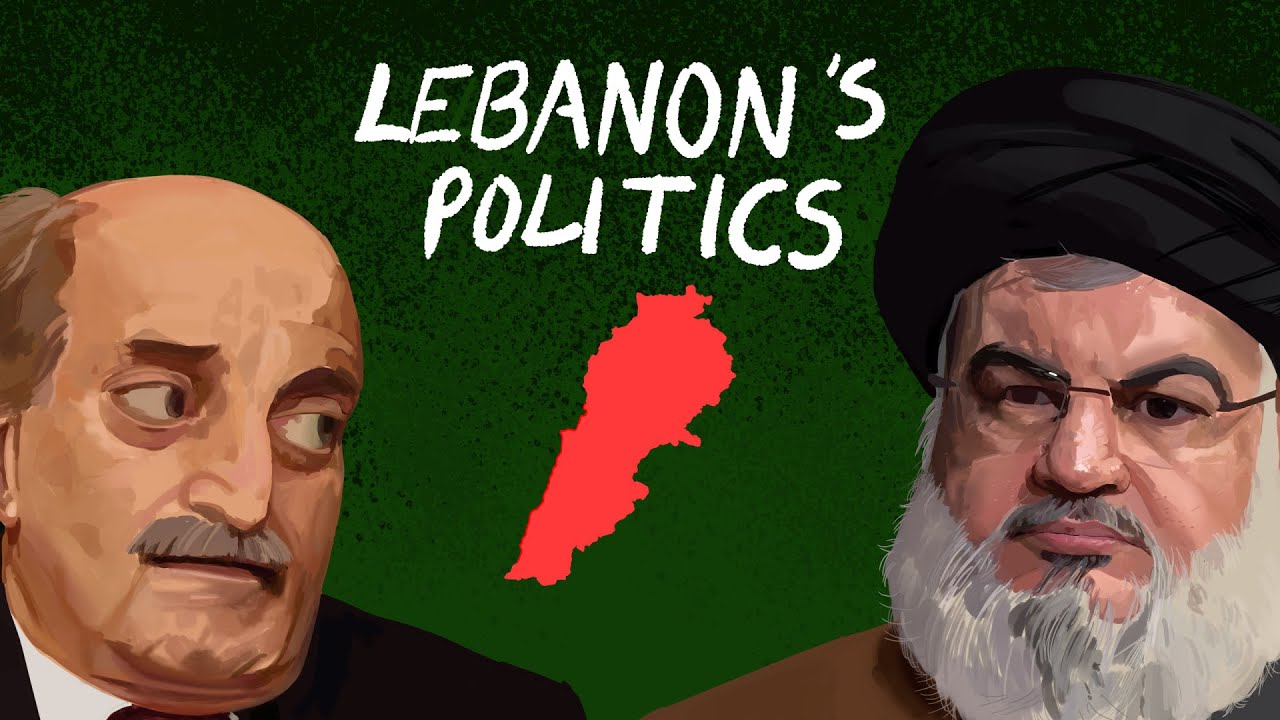





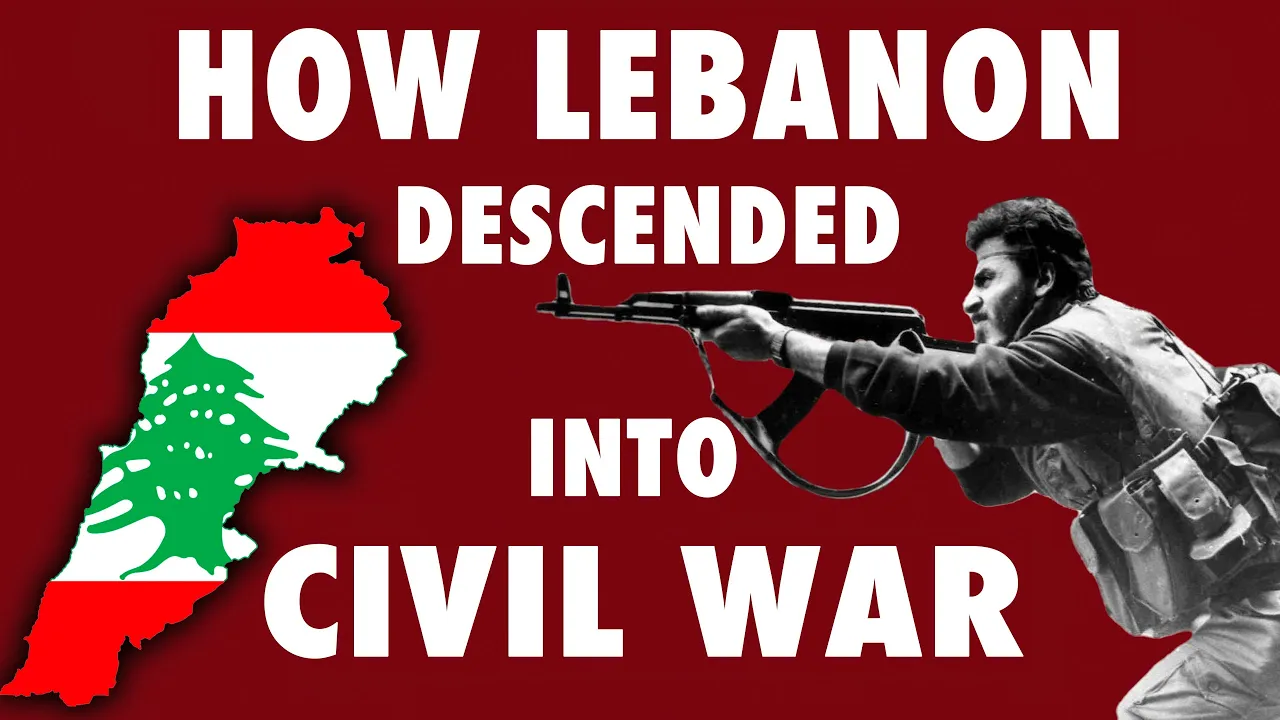
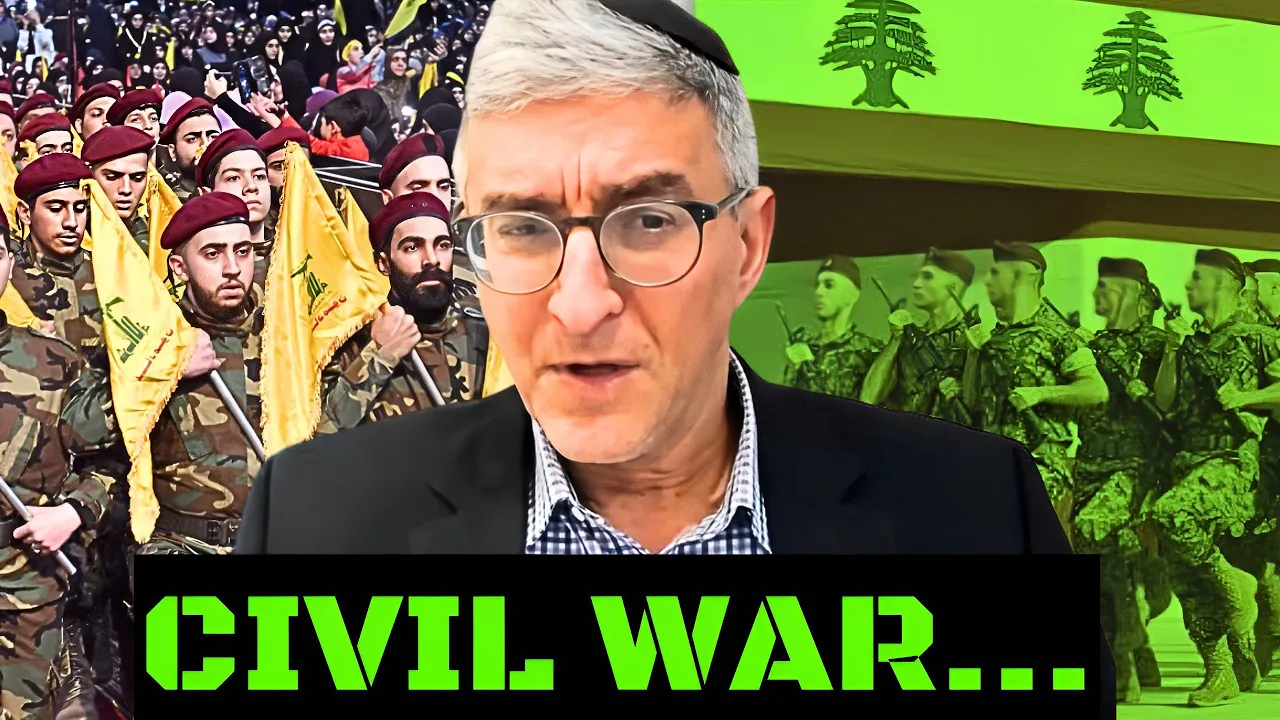
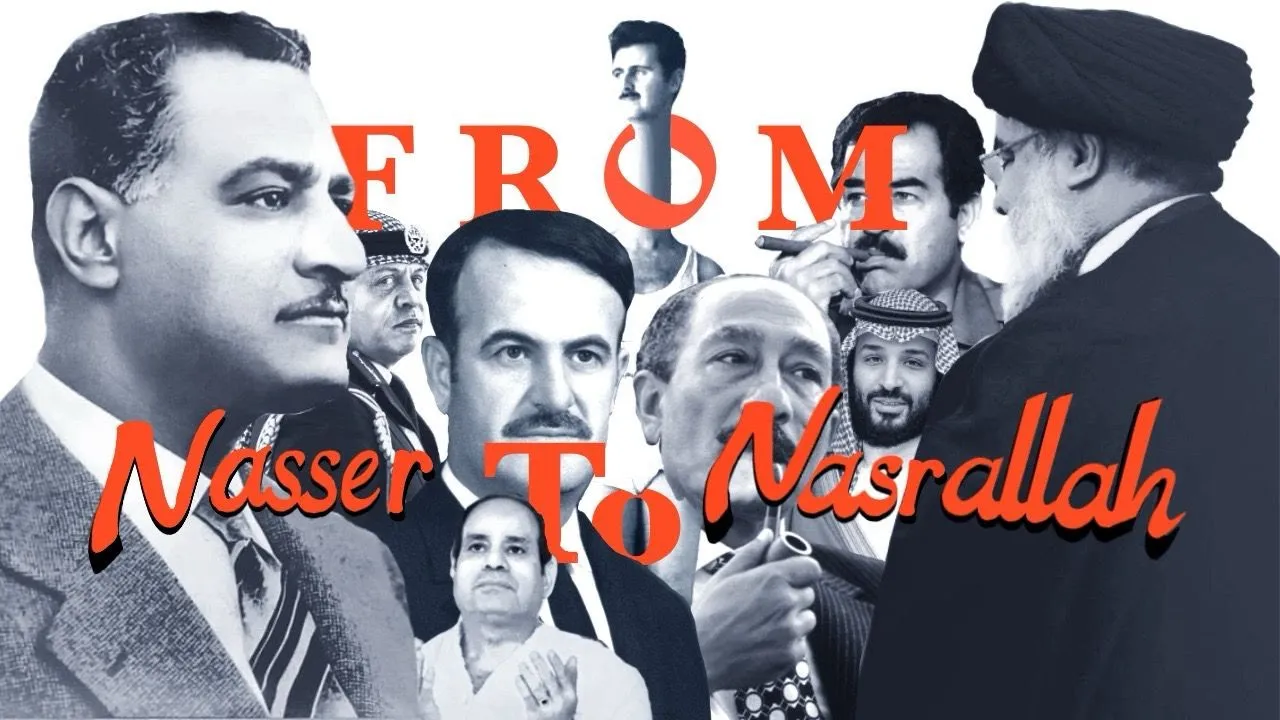





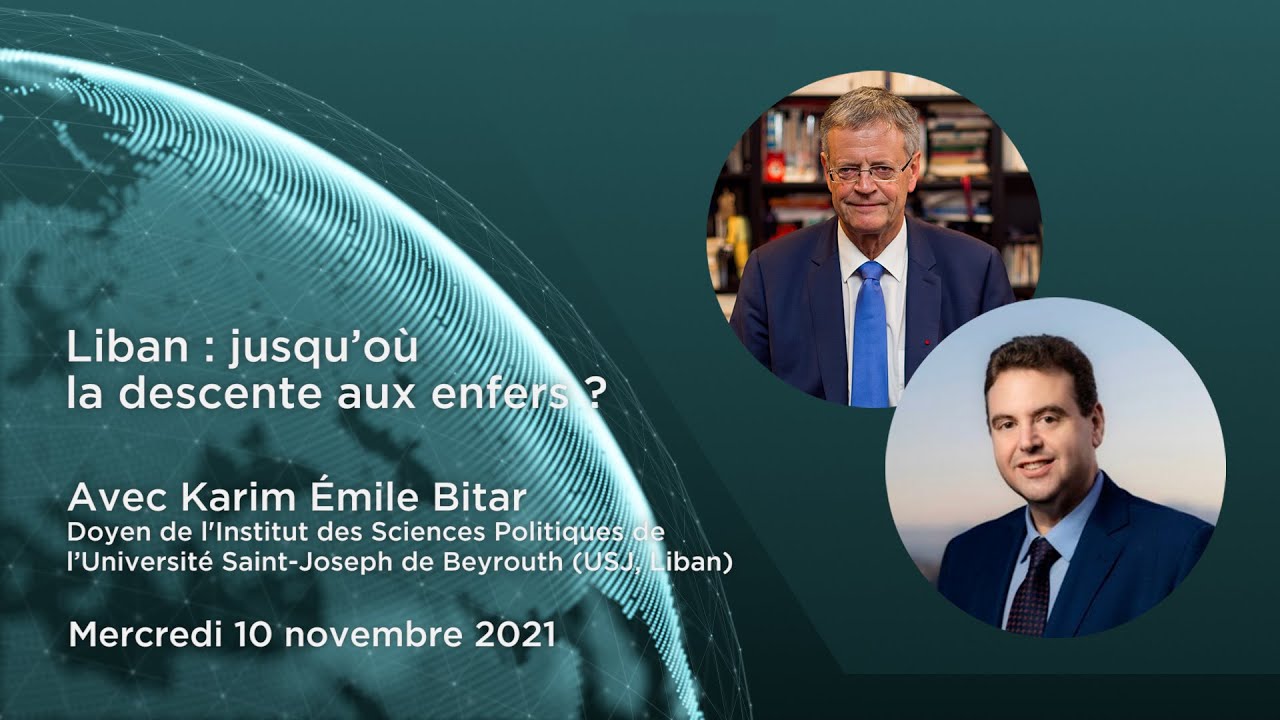



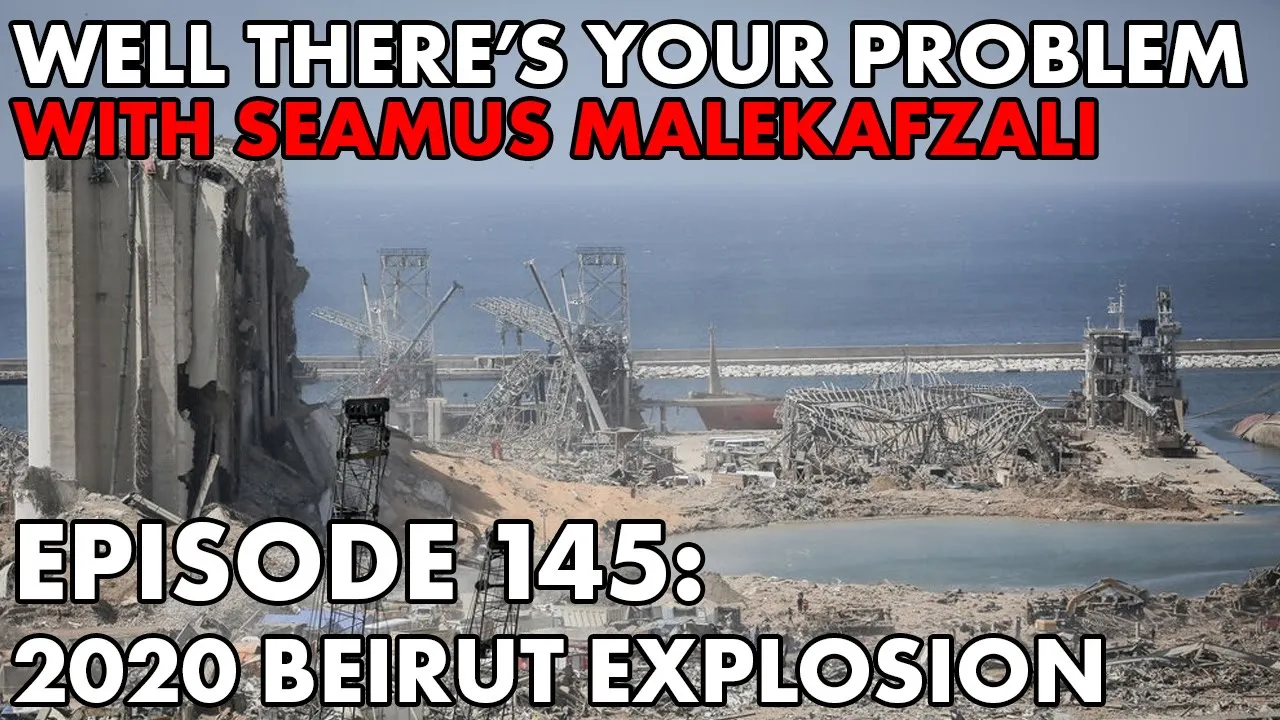


Lebanon's current crisis stems from a combination of systemic corruption, a unique confessional political system dividing power among Christians, Sunnis, and Shiites, and the inability of this sectarian framework to address national challenges; the 2020 Beirut port explosion served as a catalyst that exposed how decades of kleptocratic governance, where public money was captured by the political class, combined with regional tensions involving Hezbollah and external powers, created conditions where hyperinflation, economic collapse, and social unrest became inevitable, leaving the Lebanese people caught between chaos and the possibility of reform.
Lebanon's Crises: Corruption, Sectarianism, and Resilience
Added:Understanding of the Lebanese Confessionalist political system established by the National Pact (1943) and codified by the Taif Agreement (1989).
Basic macroeconomic concepts of currency pegs, sovereign debt, hyperinflation, and the mechanics of a banking crisis.
A historical overview of the Lebanese Civil War (1975–1990) and how it shaped the current sectarian power-sharing dynamics.
The geopolitical landscape of the Middle East, specifically the roles and influence of regional powers like Iran, Saudi Arabia, and Syria in Lebanese domestic politics.
Comparative analysis of economic collapses in other nations (e.g., Venezuela, Zimbabwe) to identify common systemic failures and policy errors.
In-depth study of the 2019 October Revolution ('Thawra') and the challenges civil society faces when attempting to reform entrenched sectarian regimes.
Investigation into the role of the International Monetary Fund (IMF) and World Bank in proposing structural adjustments and economic recovery plans for Lebanon.
Analysis of the 2020 Beirut Port Explosion as a tragic case study of institutional negligence, state decay, and the quest for legal accountability.
83.9K views1.5Klikes1:24:12Original Release: 2025-07-05
The Lebanese are now on the brink.
An oriental joke claims that they are being held back by a long rubber band.
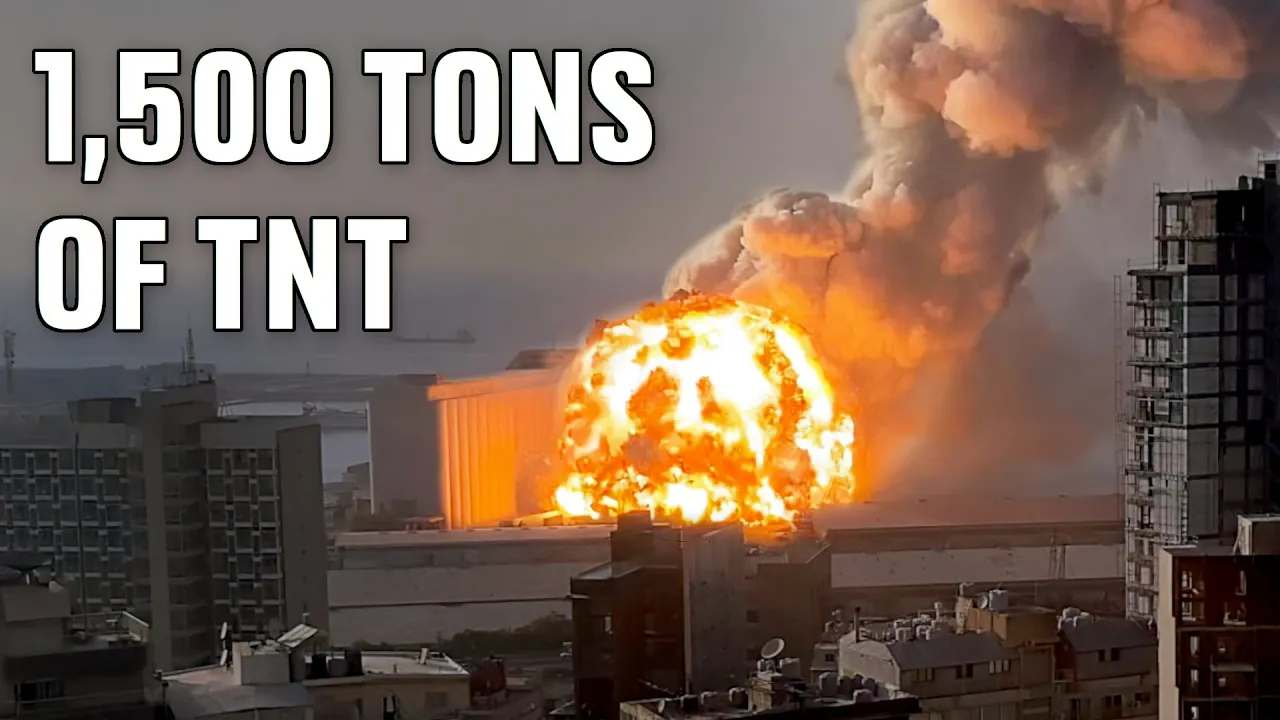
Perhaps it finally snapped when the port of Beirut exploded in August 2020.
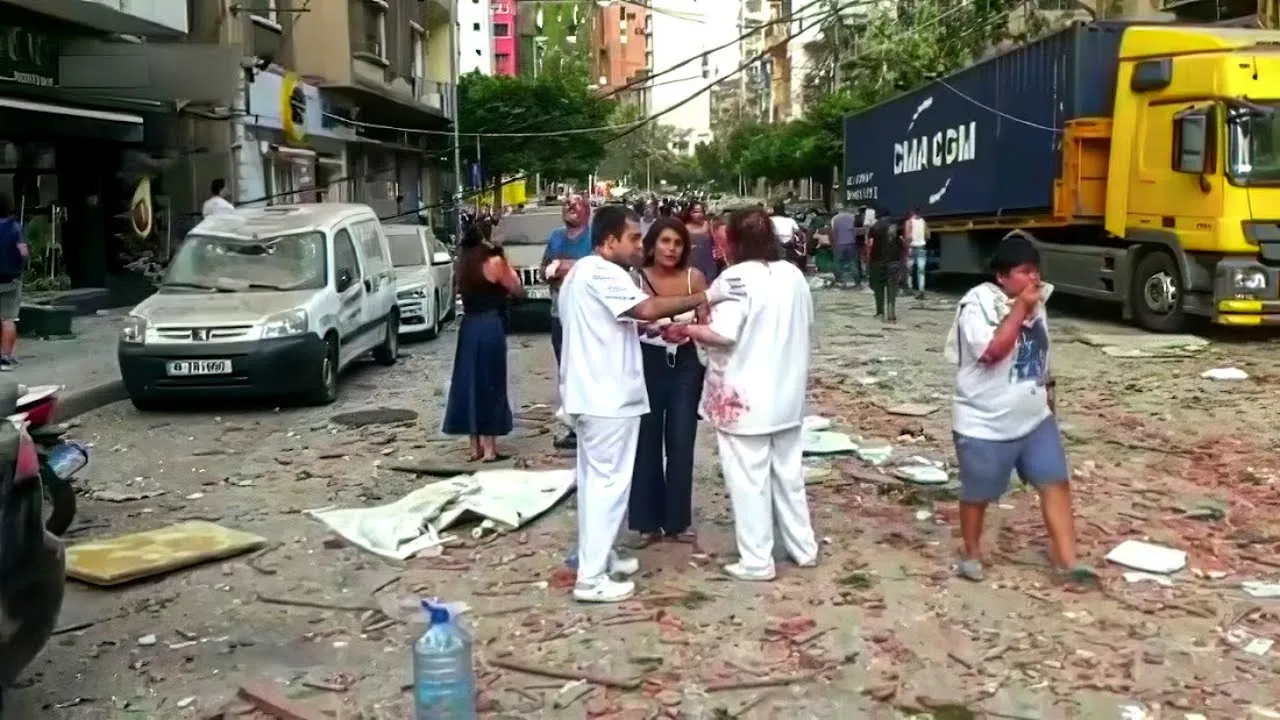
A blast, like a coup de grâce for a bankrupt country, plunged into chaos after years of civil and border war, poor governance and corruption.
Just two days after the disaster, the French President visited the still-smoldering ruins of Beirut.
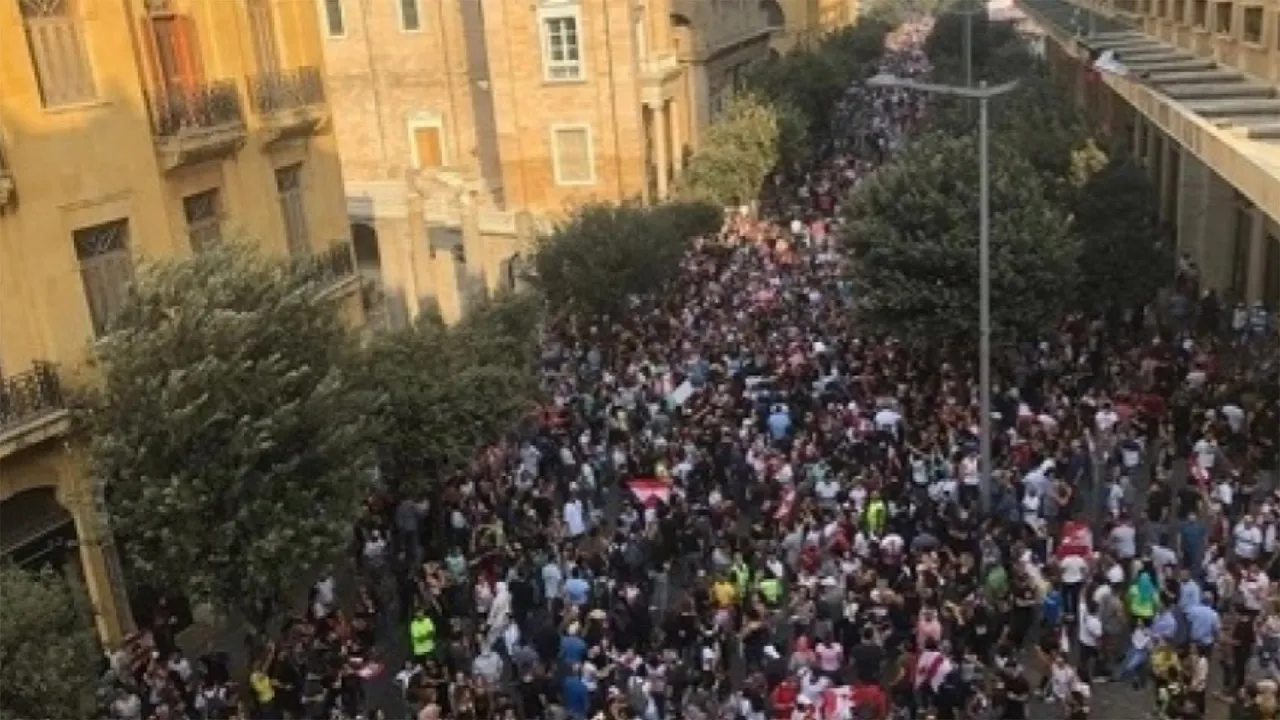
Revolution! A revolution!
In support of the Lebanese people, he immersed himself in this revolted crowd who, despite everything, held onto the wild hope that the tragedy would jolt the country out of chaos.
I had come as a volunteer to clean up the debris, when I saw the presidential guard arrive.
I thought it was the Lebanese president and said to myself: "It's time".
Please listen to us!
Please, Mr. President.
Not a single leader in the country has taken us seriously since the explosion.
There are still victims trapped under the rubble. We don't even know if they're still alive!
Why such injustice?
We are abandoned, alone in the face of tragedy.
Believe me, listen to me...- We want names!
I'm here to help you, directly. That's the mandate I received from the French people. I'm here to put strong pressure on them, now, to change the system and put an end to corruption.
And to reset the system for you.
It's not the politicians! They have no idea of their responsibilities, and no sense of duty.
They've just been taking our money for years and years, without ever giving us anything in return.
We're fed up. We're exhausted.
All they do is try to turn us against each other, to divide the Lebanese in order to stay on their thrones.
You know, your anger is my source of optimism.
Vive la France! Vive la France! Vive la France!
He took me in his arms.
It soothed me.
Really soothed me.
Vive la France!
Most people have lost hope.
But I haven't lost hope in Lebanon.
This film is about a generation that fights in spite of everything and wants to believe that Lebanon can still pull itself out of the chaos.
Overcoming the knot of problems that plague a nation that was once so prosperous.
This is the story of a mosaic of communities, at the crossroads of all the challenges facing the Middle East.
It's like a journey to meet a pluralistic youth.
To understand the five plagues of Lebanon: corruption, war, state resignation, confessionalism and anarchy.
You can find every possible scenario in Lebanon.
Here, it's like a zoo.
And a zoo is better organized.
At least you know where the money goes and the animals are fed.
But not in Lebanon.
Liliane is 24 years old.
As a political science student, she already saw herself as a diplomat and her parents gave up everything to send her to one of the best universities in the country.
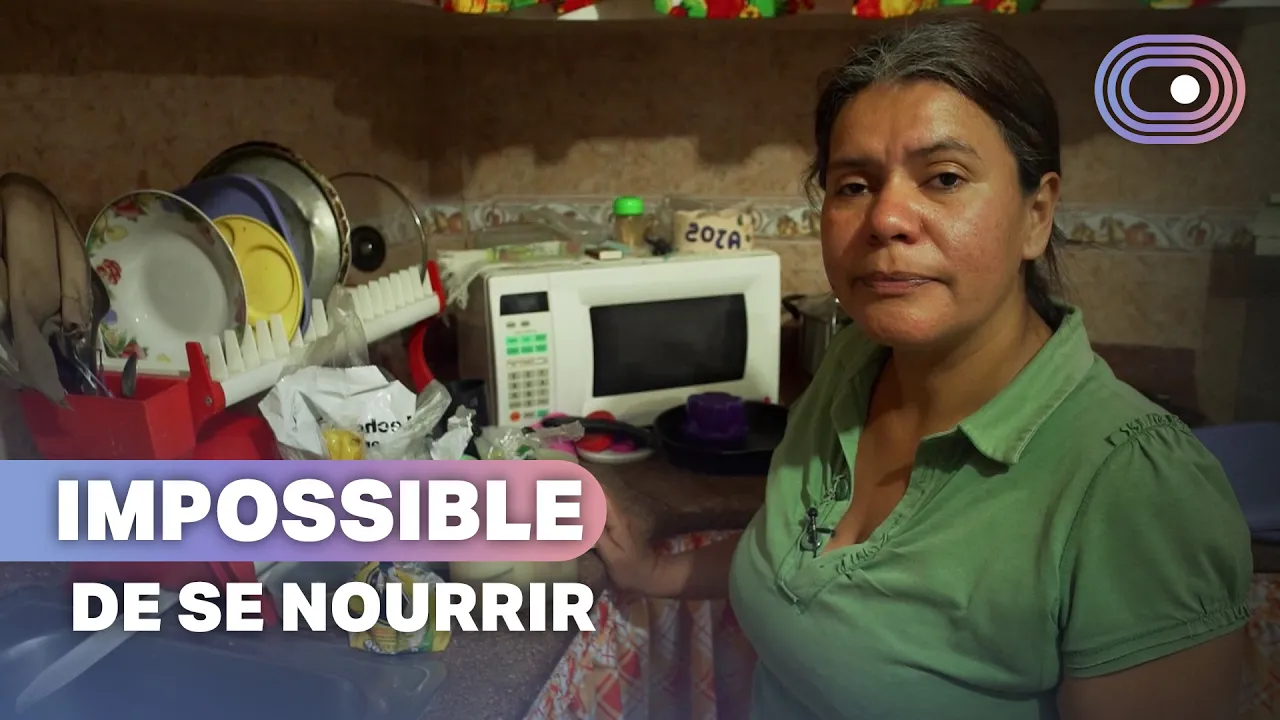
But Lebanon is going through one of the worst financial crises in the world, and Liliane's family, like many others, has been ruined.
She had to give up her studies and find a job to eat.
Hello!
Well, I'll have some cheese.
No, actually.
It's too expensive for me.
In the end, I had yoghurt.
How much is the ham?
This one, the Piara?
Give me the prices from highest to lowest.
The Piara is 90,000 pounds.
Exactly.
I'll keep the ham for holidays.
The eggs, on the other hand, aren't even priced.
Anyway, prices change every day.
Excuse me. How much are the eggs?
16,000 Lebanese pounds.
It used to be 4,000.
Sometimes less.
The mini-market owner is a little ashamed of feeding this galloping inflation.
To justify himself, he ends up showing his WhatsApp messenger, where the cartel of importers fixes the new prices day after day.
We have to pass on the price increases, otherwise we lose money.
At service stations, the crisis is even more acute.
Hyperinflation is blocking the import of petrol, and the ensuing shortage is holding up business, exacerbating the vicious circle of national bankruptcy.
I've been waiting since 6 pm. Up until now, it's been half past 11h.
I'm a lawyer, I don't have any petrol. I have to fill up the gas to be able to come and go.
Look at the failure and humiliation.
What kind of state treats people like this?
What humiliation! Just look at it!
The rich buy with baksheesh the right to fill up their luxury cars with their dollars, which are now worth a fortune.
The social climate is becoming more explosive by the day.
I swear I've been waiting for over an hour.
We're going to stay here and refuel whether you like it or not.
It's to avoid the country going up in flames that Lebanon's historic supporters, starting with the French, regularly head for Beirut, to convince Lebanon's leaders to undertake vital reforms.
Today, it's the Minister of Foreign Affairs, Jean-Yves Le Drian, who is visiting Baabda, the presidential palace.
Lebanon is a fragile democracy, with a political system that is unique in the world, reflecting its division between Christians and Muslims.
This is the formula used by the three presidents.
First, Michel Aoun, President of the Republic who represents the Christian third of the country.
Then the President of Parliament, the irremovable Nabih Berri, who represents the Shiite Muslim third.
The Prime Minister, also known as the President of the Council, belongs to the Sunni Muslim third of the population.
The most recent, Najib Mikati, visited the Elysée immediately after his appointment.
This trinity at the pinnacle of power aims to preserve the balance of power between the communities.
In practice, however, it reinforces a quasi-feudal system of billionaires and clan chiefs who cohort together in a vacuum.
This means that there's a form of autism among political leaders in their own sphere, in the process of putting together political combinations when you see the state of decay of the country, and this kind of logic is no longer possible.
I think Monsieur Macron has underestimated the cunning of Lebanese politicians.
They didn't become Presidents of the Republic four years ago.
They've been in politics for 30 or 40 years.
Senior UN official and advisor to several French presidents, the academic Ghassan Salamé has been a minister in Lebanon and knows his former colleagues well.
They are used to manipulating foreign powers and in particular presidents in a hurry.
They know how to manipulate them like that.
We know there are ways out. Thanks to everyone's efforts, there was $11 billion available on the table to help rebuild Lebanon.
But at the same time, there were demands.
Lebanon had to get moving to ensure that the essential reforms could take place.
Unfortunately, as I speak, these commitments have not been kept.
Lebanon is not a system where there is corruption.
We are well beyond corruption. We're in a kleptocratic system where public money is captured by the political class and a partial redistribution of this captured money to your supporters.
This corruption is at the heart of the Lebanese financial crisis, which is one of the biggest state bankruptcies in over a century.
On Hamra Street, once comparable to Beirut's Champs-Élysées, half the stores have closed down and the big international names have given way to thrift stores to meet the needs of the old middle classes.
I've got some clothes to sell.
Is this your first time selling clothes?
Yes.
Do you decide on the price?
I'm sure they're all top-of-the-line.
That's a nice brand.
Then a great price.
This one has stains on it. I really can't take it.
Not at all?
Yes, it's really stained, even with the washing machine, they won't come out.
Are you sure it's a stain?
I think it'll do.
Sixty thousand. Three garments for 60,000 pounds.
I'll give it to you in cash.
60,000's good.
You can buy lunch with that.
Three sandwiches. Yeah, three sandwiches is cool.
Three sandwiches, but without a bottle of water.
Contrary to popular belief, the Lebanese progressive camp does not only come from Beirut, nor from affluent backgrounds.
Liliane, for example, comes from a modest family in the Shiite community in the south of the country.
In this fragile nation, religious affiliation counts for at least as much as citizenship.
That's nice.
I've never worn a veil in my life.
It's not my vision of religion.
My mother wore it for a very long time, but she decided to take it off.
It was a personal choiceand we supported her.
She wouldn't wear it because it's too low-cut and too short.
But if she feels like it, she can.
This is the Central Bank.
There have been a lot of demonstrations in front of it.
It's Lebanon's main fraud center.
The man whom Liliane and the majority of Lebanese blame more than anything else for their economic debacle is Riad Salamé, head of the Central Bank for the past three decades.
Speculation, influence peddling and capital flight, he is seen as the symbol of mismanagement at the top of the state.
I've been used as a scapegoat.
People think that the Central Bank can do anything.
And when there's no government, it's the only entity that works. Today, wanting to divert all of Libya's misfortunes onto the Central Bank, let me tell you, it's a caricature. What is a caricature is that we don't have the power to carry out reforms. And because there were no reforms, we had this crisis. And this crisis, is not just the fault of the Central Bank.
Like many young Lebanese, Liliane joined the October 2019 movement who wanted to overthrow this corrupt and irreformable system.
But the revolution fizzled out.
What's left is a revolt that is rumbling and flaring up everywhere.
Like today on the airport road.
Don't let any cars through!
No one gets through!
Right now, it's not exactly revolution, but we're getting close.
We've reached a point of no return: nobody told us to demonstrate. Nobody told us anything.
We called each other and said it was time to take to the streets.
Today, our greatest dream is to leave this country.
Since Michel Aoun became president, our only concern has been how to immigrate.
People are queuing up for food aid. How much does a bottle of milk cost?
230,000, shame on them! Look at what they do to children, to babies.
Wake up, Lebanese people.
We've suffered Covid, corruption, economic collapse, the explosion of the port, and the people took to the streets in huge demonstrations.
But alas, the Lebanese are still very divided politically and in terms of identity.
The hope of Lebanese unity has not yet been realized.
But once we're all really starving, I'm sure we'll unite, and then Lebanon will experience the real revolution.
The first head that revolutionaries dream of seeing knocked off is that of the banker.
In addition to mismanagement, Riad Salamé is accused of having taken staggering sums estimated at over a billion dollars from the bank.
According to the Pandora Papers, he is also one of the Lebanese leaders with offshored companies in tax havens.
This is very untrue. Investigations are underway and the truth will come out.
The height of this slander is the complaint in France about assets I owned before becoming governor.
The NGO Sherpa says that you have 150 million euros in Luxembourg, for example.
That's not true, as the investigation will show.
Same for the 400 million dollars in Switzerland mentioned by Sherpa and the NGO.
I have nothing to do with this $400 million.
Despite suspicions of fraud, the IMF has agreed to help Lebanon with a loan of billions of dollars, but on one condition: the Central Bank must be transparent and open its books.
However, Riad Salamé, still Governor, despite the legal investigations opened against him in France and Switzerland for money laundering, still refuses to show his accounts.
I think he's afraid of being killed, because if he opens the accounts, we might find some of his less-than-catholic ingenuity.
But we'll also discover just how much the political class has benefited from the system over the last 30 years. Does the political class want to open this up? I think he has the support of the entire political class not to open the Central Bank's accounts.
How can I fight this system?
Do I have to flee Lebanon? Or should I stay and fight with the others?
I end up thinking that my destiny is to stay and get involved in political action.
The proverb "Lebanese love life" is very true.
We love life in spite of everything.
Contrary to what the media say, we're not just a depressed, weeping people who let ourselves go.
On the contrary, we stand up to the government and, at the same time, we love to party, sing and dance.
But economic collapse is far from being the only cause of Lebanon's chaos.
A hostage of the Middle East, the country brings together all the challenges of a region where 18 religions, nine states and six wars are concentrated in a square of barely 500 kilometers.
In the south, insecurity with Israel is weakening Lebanon’s fragile Republic.
A state of latent war that has lasted for decades.
Hezbollah will never give up its weapons.
Khalil is officially a journalist, but as soon as he crosses the yellow Hezbollah banners marking the entrance to southern Lebanon, Militancy has priority over everything.
Life here is calm and beautiful, and people feel safe.
Here's a scale model of the Al Aqsa mosque, the Dome of the Rock in Jerusalem.
It's to show our solidarity with the Palestinians.
Lebanon has not recognized the State of Israel.
The border between the two countries is merely a ceasefire line patrolled by UN peacekeepers.
This road runs along the border.
The Israelis built this wall.
But where is Hezbollah? You can't see them anywhere.
Even the Israelis don't know where they are.
It's very important for Hezbollah to be discreet.
Hezbollah fighters make sure that we don't know where they are, that we don't know what they're doing.
It's all part of the party's military tactics.
Look, this is a camera installed by the Israelis to spy on us.
They have spies and they also watch us from the sky with drones.
I feel we will free this land and return it to the Palestinians. The Israelis won’t stay—they’re foreigners.
Deep down, we feel called to liberate this land.
In this openly hostile climate locals and tourists on both sides observe and taunt each other.
As do the Israeli army and Hezbollah, always on the alert.
Opposite is Israel.
Settlers come from all over the world to settle there.
Is that the army?
Yes, that's the army.
Upstairs, there's a military base.
And down there are the civilian houses.
But anyway, I think they're all armed.
Hezbollah, or the Party of God, literally, was born in the early '80s, when Israel occupied southern Lebanon.
Over the years, the Shiite militia has developed into a veritable army and largely took credit for the Israeli withdrawal from southern Lebanon in 2000.
One after the other, the last positions occupied by the Israeli army in southern Lebanon were evacuated during the night.
and convoys of armoured vehicles crossed the border.
A little later, the first supporters of Hezbollah waved their flags at the border.
Now Lebanon's leading military and political power, Hezbollah, currently led by Hassan Nasrallah, remains listed as a terrorist organization by the USA and several European countries.
Many accuse the party of being Iran's puppet.
The main power in Shiite Islam spearheads an obsessive hatred of Israel and America.
The country is a battlefield.
Basically, the battle is between the Americans and the Iranians.
Basically.
But there are other less important players: Israel, Turkey, Syria, the Europeans.
They're there too. Iran has had to pay tens of billions of dollars, perhaps $50 or $60 billion over the past three decades, to overthrow Hezbollah which, as its Secretary General says lives, eats, fights and equips itself thanks to Iranian financial support.
And Hezbollah is part of Iranian military power in the region.
A bit like the French Foreign Legion, It's part of the French army.
According to the Americans, Hezbollah's co-founder died in a CIA drone strike targeting an Iranian army commander in January 2020.
But for a dead man, Naïm Qassem is doing just fine.
I've prepared myself for martyrdom at any time and in any place.
It's not surprising that false information is spread from time to time, relaying my death here and there.
More than the assassinations, it's the targeted economic sanctions that Naïm Qassem blames Washington for.
The American position, their sanctions against Lebanon have been at the root of the Lebanese crisis for some three years.
The US says that these sanctions only target Hezbollah.
But as we have no bank of our own, in practice, these sanctions weaken the country's entire banking sector and contribute to inflation.
Perhaps these sanctions are harming the Lebanese economy and contributing to its difficulties, as Qassem claims.
But ironically, they have little effect on Hezbollah, with its subsidies from Iran such as its gasoline trucks, which reinforce the image of a party perceived as a good administrator and far less corrupt than the others.
But it's the fighting that is Hezbollah's main source of popularity.
The last was in summer 2006, when the militia repelled the Israeli army in the south.
A war for nothing on both sides, though perceived in Lebanon as a victory compared to the many setbacks Arab armies have suffered against Israel.
Hezbollah is so proud of this that it has even erected a museum to the glory of its 2006 jihad.
This came as a great surprise to them.
Israel had no idea that the resistance had such missiles.
And today, the resistance hides nothing. They are capable of reaching any point in occupied Palestine.
I didn't fight. I work in journalism.
But belonging to the resistance is already fighting, whether you have your Hezbollah card or not.
You can fight in different ways: culture, weapons, the media.
Even the way we educate our children is a form of resistance.
But I'm not against taking up arms.
If Hezbollah asks me to intervene in any area, I'll do it.
The Americans are targeting Hezbollah by all means, including blocking its social networking accounts.
Khalil is furious at having been caught in the net.
My Facebook account was blocked for 30 days, then 90 days.
Why was this?
Simply because I mentioned the name of Hassan Nasrallah and that of Hezbollah.
But Facebook is just an instrument of the United States.
But opposition to Hezbollah isn't just Western or Israeli.
Within Lebanon itself, some see the party as an octopus cannibalizing the Republic, a religious militia that uses its huge stockpile of weapons and its fight against Israel as a pretext to further extend its power over Lebanon, at the risk of raising the spectre of civil war.
As in this confrontation in the middle of Beirut to oppose the investigation into the explosion in the port which incriminates some of its members.
Samy Gemayel, leader of the Phalangist party of the Christian right, prides himself on being one of the last strongholds against this domination.
The presence of Iran and Hezbollah here, not only undermines Lebanon's sovereignty and independence and independence, but it also represents a structural change in Lebanon's identity.
Hezbollah's objective is to control Lebanon and impose its way of seeing life on all Lebanese, to impose its ideology, its vision of human life, based on a concept of perpetual war, a concept of violence, a concept of disrespect for others that you see today in Iran.
Nephew of an assassinated President of the Republic, brother of a minister also shot dead, Samy Gemayel carries the heavy burden of the Phalange.
A party accused of one of the worst massacres of Lebanon's civil war from 1975 to 1990.
It took place in the Palestinian refugee camps of Sabra and Chatila, in the southern suburbs of Beirut, then occupied by Israel.
Today, his party wants to turn the page and presents itself as the voice of the pro-Western camp in Lebanon.
But the cycle of violence is far from over.
In Lebanon, you have political forces and Lebanese people who continue to say no, we don't accept being under tutelage, we want an independent and sovereign country. That takes courage.
Many people have died because of this, including my brother.
He was killed in 2006. Do you think it's Hezbollah?
Listen, if it's not Hezbollah, it's the Clique.
Because Hezbollah, the Syrian secret service, the small pro-Syrian militias, they're all one group.
They're the ones who killed Hariri.
They have a mafia network that is enormous, recognized by Europe and the United States.
Assassination of the emblematic Prime Minister Rafic Hariri, Indirect responsibility for the Beirut port explosion in summer 2020 and even large-scale drug trafficking, Samy Gemayel does not hesitate to take on board some of the worst accusations against Hezbollah.
I don't feel threatened, I know I'm threatened.
You get in your car in the morning, you don't know if you're going to arrive or not.
That's just the way it is.
You know, between 2005 and 2013, there were 14 political assassinations in Lebanon, including two that targeted our party.
How do you respond to accusations of drug trafficking and political assassination?
They accuse us of such things to damage our reputation.
Yes, we are a resistance movement. We say it loud and clear.
We are armed and will continue to be armed.
Yes, that is our conviction.
But when it comes to drugs, we believe that trafficking is forbidden, as is its use.
Despite its martial posture the Party of God is also capable of political calculation, particularly when it comes to negotiations with Israel, the Mediterranean maritime border where promising natural gas deposits have been discovered.
A godsend for southern Lebanon and therefore for Hezbollah.
Over there is the Naqourafrontier area with Israel.
The area is teeming with gas to be exploited.
This same area is the subject of negotiations to draw a maritime border.
But these negotiations do not involve any political relations or agreements between Lebanon and Israel.
And I would add that Hezbollah of course remains opposed to any political agreement with the Israeli authorities.
If conflict remains the essence of Hezbollah, it's also because the mystique of bloodshed remains one of the keys to Shiite Islam since its inception.
This exaltation of martyrdom, celebrated in particular by ritual flagellation during the Ashura ceremony, can, in its extreme logic to suicide bombing.
This approach has permeated all jihad movements, first Shiite, then by extension Sunni terrorist groups.
It was here, in these southern Lebanese villages where Khalil grew up, that Hezbollah perfected its tactics of suicide bombing in the name of holy war.
As you can see, there are images of martyrs everywhere.
Here's another.
Martyrdom is the way of life.
Martyrs sacrifice themselves to enable others to live with dignity in their own land.
A veritable state within a state, Hezbollah draws its power from its ability to manage all aspects of its members' lives: school, health, retirement.
The party's faithful are fully taken care of in exchange for total loyalty.
Khalil is keen to demonstrate this in his own family.
Hello grandma.
How are you?
This is Khalil, Mariam's son.
Oh, my darling, how are you?
How old are you now?
Ninety-five.
May God prolong your life.
I'm not in great shape anymore.
No, you'll live a long life. You'll see the liberation of Palestine.
She's my aunt.
Besides, you'll come and pray with us in Jerusalem.
God willing!
Do you remember going to Palestine before the Jewish occupation in 1948?
Of course I remember.
The Israelis still threaten the border. Do you want the children to keep fighting?
My descendants?
They've always considered Israel an enemy.
Shall we carry on fighting?
Of course we are.
Let them die!
We'll trample them underfoot.
This is his son Rodhor, who died a martyr.
The resistance gave him a car packed with explosives, but the attack failed.
The Israelis took him to Markaba prison and tortured him for hours.
They even smashed his skull.
They hit his skull so hard that it split open and water-like liquid poured all over his body.
The Israelis came here, they took the whole family out and destroyed it.
On the shelf among the knick-knacks, Khalil proudly displays photos of other family members who fell at the Israeli border, but also in Syria where Hezbollah sends its troops to support the dictatorship.
Hassan, my son, is the martyr.
I'm proud that he's a martyr.
Are you ready to fight the Israelis?
Do you know how to use an assault rifle?
Good for you!
This is my little cousin, Rodhor, in honor of our martyred uncle.
Do you like Hezbollah?
When you grow up, if the Israelis come here, what are you going to do?
I'll shoot them. I'll fight them. Why would you do that? Because they've come to harm our country.
Good for you.
He's a good boy. He's very mature.
Further north, the Bekaa Valley is Hezbollah's other major stronghold.
This fertile agricultural valley was already the country's granary in Roman times who built the famous Jupiter Temple in Baalbek.
The Bekaa is also home to the country's finest vintages.
Caught between the mountain ranges of Mount Lebanon and Anti-Lebanon, the opulent valley also illustrates one of the most acute problems of the momentthe resignation of the State, particularly in the face of the problem of refugees who have fled the Syrian civil war just a few kilometers across the border.
These exiled Syrians make up the world's largest refugee population, 1.5 million people for every 4 million Lebanese citizens.
Their presence is destabilizing a country that has always been historically concerned to avoid Greater Syria's interference in little Lebanon.
In the streets of the Bekaa, where Hezbollah rules, giant portraits of its accomplice, the dictator Bashar Al-Assad, another key member of the Shiite alliance in the Middle East.
The Lebanese state tries to ignore the refugee problem.
There are no large camps in the Bekaa, nor any conspicuous presence of international NGOs.
Everything is done to make them invisible.
The Syrians' shelters are scattered across the plain, on the edge of the fields they plough for Lebanese landowners.
Very often, it's the women and children who are exploited, as they form the cheapest workforce.
Abdelfateh is only 12 years old and already works like an adult to feed his family.
I work harder than the other children.
Those in the field only work one or two hours.
When I'm not at school, I work from 9am to 10pm.
It was in the family shelter, in the very heart of Saad Nahel's small refugee camp, that the boy started his own hairdressing salon.
after starting out as an apprentice with another barber.
The truth is, I hurt a lot of people's feelings at first.
Well, mostly me. I hurt myself a lot with the razor here and there.
The most difficult thing is the razor.
Because with the slightest false move, I can hurt the customer.
I've been working for a year now.
I've deprived myself of a lot of things, like playing with the other kids.
If I don't work, my whole family will go hungry.
It's already happened several times. All we had to eat was thyme and oil, morning, noon and night.
When I earn money, we can eat, otherwise we can't.
For beards, I charge 10,000 pounds, which is less than other barbers.
Just enough to buy bread.
Abdelfateh's parents fled the Aleppo region of Syria, after their home was destroyed in a regime airstrike in 2014.
They and their five children survive thanks to UN food aid.
But Jumana, the mother of the family, is seriously ill.
Refugees are not allowed to have a real salaried job in Lebanon.
And Abdelfateh's father explains that he has broken his back doing a succession of odd jobs as a handler.
In Syria, I was a manager in a factory that made potato chips.
It was called Miam Miam.
In Lebanon, I can hardly find any work.
That's why I put Abdelfateh to work.
I know it's wrong, but I have no choice.
I can't do anything, nor can my husband, and the other children are still too small.
But even the little ones will have to work and their lives will be a failure.
A few days a week, Abdelfateh still tries to learn to read and write.
He goes to the premises of a small Lebanese NGO, Beyond, which is doing what it can to make up for the complete absence of Lebanese social services.
Hello Abdelfateh. How are you? Hello, Professor. May I come in? Is this your classroom? Yes. Please have a seat.
The NGO teaches basic reading, math and English.
So, how do you like school?
Perfect! Bravo!
Created to combat the exploitation of Syrian refugees, the center now takes in a third of vulnerable Lebanese minors, misery has driven many children to the streets.
But helping Syrian refugees isn't to everyone's taste.
The country's Christian strongman, Gebran Bassil, son-in-law of the President and former Foreign Minister, would like to dissociate Lebanon's destiny from the perpetual regional chaos.
Lebanon is being asked to do things that are beyond its capacity to support, such as naturalizing Palestinians and Syrians.
We are suffering the consequences of conflicts in the region and even the world.
If Russia and the United States don't agree on something that belongs to Lebanon, we pay the price. Between Saudi Arabia and Iran, we pay the price.
Between Syria and the Gulf, we pay the price.
Between Israel and our region, we pay the price. So it's always up to us, as a small country that is in one way or another linked to all the region's problems, to pay the price.
A weathervane for some, a master strategist for others, Gebran Bassil embodies the paradox of a Lebanese political class that cannot be unseated.
despite accusations of mismanagement and mounting crises.
Leader of the main parliamentary bloc, he is also the architect of one of Lebanon's secret reversals of alliances.
He pushed his father-in-law, President Michel Aoun, a former sworn enemy of Syria, to make a pact with Hezbollah, and thus the Syrians, to guarantee his hold on power.
Yes, I can at the same time be very different culturally and ideologically from Hezbollah and much closer to the West, France and the United States. But being in harmony with Hezbollah in my country as I am with this country because I have to live in my country.
So yes, it's easy to do without being traitors.
Geography expresses many things in Lebanon.
For example, the Bekaa Valley, a powder keg of traffickers and Syrian refugees controlled by the Hezbollah militia, is only ten kilometers as the crow flies from the Christian strongholds in the mountains.
With a few twists of winding roads and a handful of checkpoints, you go from the furnace of the plain to the misty peaks of the Mount Lebanon range, which reaches 3,000 meters.
This is typical of a country barely the size of the French department of Gironde, where, as we say, you can ski in the morning and swim in the Mediterranean Sea in the afternoon.
A country where all the challenges of the Middle East intersect, and where no fewer than 18 religions are officially recognized by the state, with community rivalries which are at the root of many political deadlocks.
It's a complicated, sectarian, confessional country.
So we mustn't get caught up in a single tunnel. There are so many tunnels, so many guts, so many things.
It's impossible to make reforms in a sectarian system.
It's impossible to have the Lebanese elite who are leaving now, who are emigrating.
Once in power, it's impossible.
It's a closed system.
A bit disillusioned, Walid Joumblatt knows what he's talking about.
For four decades, he has dominated the Druze religious group, one of the branches of Shiite Islam who represent only 6% of the population.
Fierce warriors, these Druze are few in number, but historically important in the country.
Especially since XVIIᵉ century, their prince Fakhreddine was the first to establish the Emirate of Mount Lebanon, the beginnings of the Lebanese nation.
Its capital was Deir El-qamar, or the convent under the moon, is one of the oldest villages in the Souf region, on the southern slopes of the Mount Lebanon chain.
Emblematic of Lebanon's mixed culture, several Christian, Maronite and Orthodox churches stand side by side with a Druze temple and Sunni and Shiite mosques.
There's even an old synagogue around the corner.
Marie-Jo comes from Deir el Qamar.
She wanted to bring her young husband Abdallah back home, to show him the olive trees she inherited.
My grandmother lost her husband in a village duel when she was still pregnant with my father.
As she didn't want to be a financial or other burden on her parents for her parents, she decided to sell all her jewelry. She bought this land to pay for my father's education.
That's where his whole academic and professional career started, thanks to that little plot of land.
In the Lebanese logic where studies come first, Marie-Jo continued the family tradition with a master's degree in law in Paris.
There she met Abdallah, who holds a doctorate in international law from Cambridge University.
The two Lebanese are now lawyers at the New York bar.
But they insisted on returning home to get married.
The couple made a militant choice to confront a scourge that is sclerosing the country, its denominational system, i.e. the fact that each person's legal status and rights depend on his or her religion of origin.
In practice, therefore, the Lebanese are not equal before the law and mixed marriages are a headache.
Marie-Jo's family is Maronite Christian. My family, Salam, is Sunni Muslim.
Lebanese people often go abroad to get civilly married. There's a lot of hypocrisy in the Lebanese system, specifically at the level of the Lebanese Ministry of the Interior, which is ready to recognize and register civil marriages concluded abroad.
It registers them in two minutes, five minutes. It's very easy.
But if the civil marriage is concluded closer to the Ministry of the Interior in Lebanon, five minutes from the Ministry, then that's a big problem.
So that's the taboo strategy, in fact. That doesn't mean it's forbidden, it's allowed, but you have to do it in secret.
So we got married in Beirut, in the middle of Beirut, in front of hundreds of guests.
We also wanted to make progress in terms of social recognition, not just legal recognition.
Abdallah and Marie-Jo's union was the first secular wedding to be held publicly in Lebanon.
In the famous Sursock Palace, emblematic of the capital since ravaged by the port explosion.
Their marriage aims to break a national taboo, that of religion, which interferes in every aspect of Lebanese daily life.
But the battle is far from won. Their marriage may be legal, but it is still not recognized by the Lebanese administration.
If the couple had children today, it would be considered illegitimate.
We're not in conflict with the State, but with administrative staff who don't want to apply the law.
It's an administrative obstruction, a certain administrative harassment, because marriage as such is valid.
It has legal effects from the moment the contract is signed before a notary. And this contract has generated and created reciprocal rights and obligations.
and we registered it with the Ministry of the Interior. But since then, they haven't given us our family record book.
Opinion campaign, TV interview and press conference, the two lawyers launched a full-scale procedure against the Ministry of the Interior.
So you're not officially recognized as married?
Thank you for your question, because it's the Interior Ministry's aim to create this misunderstanding.
With their marriage, the mixed couple are tackling the heart of the Lebanese system confessionalism.
Born under the Ottoman Empire, which controlled Lebanon for centuries, this confessional system was reinforced by the French who settled in the country after the Sykes-Picot agreements signed at the end of the First World War to share the Middle East with England.
Under the colonial mandate from 1920 until Lebanon's independence in 1944, the secular French Republic, which inaugurated a system of divide and rule to favor the Christians, its historical allies in the region.
Civil servants, and later ministers, were appointed on the basis of their religious affiliations rather than for their skills.
To the Christian third of the country, the presidency of the Republic.
To the Sunni third, the post of Prime Minister and to the Shiite third, the head of Parliament.
With a pinch of ministry for the Druze and other small groups.
That's not fair.
Why not give every citizen the same chance and make every citizen responsible.
According to the constitution, we're all equal.
According to confessional and sectarian divisions, we are not equal. Lebanon is not a nation.
It never has been. Lebanon is a state which has been a refuge for many communities and has failed to transform itself into a nation, nor did it seek to do so. People have been parked in their denominations and I think that this is an original infringement to the right of individuals in Lebanon To free themselves from their lost denomination.
In Lebanon, everyone is armed, creating since the beginning of the crisis, a veritable permanent insurrectionary climate.
This confessional system was the main cause of the 15 years of inter-religious civil war until the Taef peace accords in 1989, fossilizing the status quo and reinforcing communal clientelism.
You are herded like cattle into your denomination and the confessional system has become the other face of corruption.
If you have a nepotistic system where the political class buys its salvation by bribing part of the population, this part of the population they bribe is not just any part.
They will choose people who belong to their own denominations.
The economy collapsed largely because of corruption. This massive corruption, we can't attack it, because of confessionalism, or largely because of it. Because every time we want to point the finger to a certain leader or official, there's always a card that says no, why are you attacking a Christian, a Muslim, a Sunni? Why not that Shiite, why not that Maronite, etc.?
And it's this game, this confessional defense, which in fact protects a system of clientelism and corruption that has really damaged the State.
Lebanon today is at the heart of chaos.
The situation is likely to get worse.
We're not optimistic about the short term, but the fight must go on for a better Lebanon in the long term.
But the long-term hopes of those who still have freshdollars to spend in the beach clubs that made Lebanon's reputation don't mean much when their bellies are crying out for food.
In Tripoli, in the north of the country, revolution is a long way off.
It's as if the city concentrates all Lebanon's problems.
The great Sunni city is regularly threatened by the outbursts of the nearby Syrian civil war and by the smuggling that siphons off the economy.
Abandoned by public services in the midst of growing anarchy, Tripoli prefigures a worst-case scenario for Lebanon.
In the tug-of-war of regional influences that threaten to implode the Lebanese nation, it is to Saudi Arabia or the Turkey of the Muslim Brotherhood that the Sunnis of northern Libya are turning as their country disintegrates.
It has to be said that failure is visible around every corner.
Even the former middle classes go to the soup kitchens to get something to eat.
I brought two boxes with me - No, just one.
Yes.
When we started work, we had around 60 to 70 people.
But with Covid and the economic crisis, the number of applicants has only multiplied.
In nine months, we're up to around 600 people a day.
Right now, the government sits back and watches. It doesn't intervene at all.
Without the associations, things would be a lot more complicated.
We could even reach a pre-insurrection climate.
Rising prices and shortages of raw materials are forcing businesses into bankruptcy.
For example, Ahmed's bakery, in the poor Bab Al-tabbaneh district, which oscillates between distress and anger.
I've been working in this bakery since I was twelve years old and I've been there for fifteen years.
Because of the crisis, it closed a month ago.
At the bakery, when my day was over and all I had to do was clean up and close up, there was always one or two pastries or a bit of cheese left over.
I brought them home and the children were happy to eat them.
As a father, when I come home and find my son telling me he wants chocolate or ice cream and I can't buy it for him, I'd rather be dead than have to hear those words.
Why did I bring him into this world?
What more can I do?
I've looked everywhere for work, but today, it's impossible to find one.
How much is the bag of bread? A large bag of bread costs 3,500.
Can I have two bags of bread, please?
Sure. Two bags.
Do you think the price will go up again? I hope it stays at that price.
I have some experience as a baker.
Do you need employees?
Given the situation, we're reducing the number of employees.
Don't forget, the government subsidizes flour, otherwise bread would cost five times as much to reach 15,000 pounds. If wheat is no longer subsidized, that would be the biggest catastrophe.
I hope you find a job soon.
May God protect you!
Everyone will tell you that my neighborhood is the worst in Tripoli.
There's already a lot of incivility.
And a lot of the young people, because of the lack of work, end up taking drugs.
There are many problems, security is very poor, there are shootings and I dream of leaving this city.
When they grow up, I'd like my children not to stay in this country, not to go through what I went through.
When I grow up, I want to fix cars. He wants to be a mechanic. May he study and repair cars, God willing.
I want to fix babies.
I want to buy a Lamborghini and fix it with a screwdriver.
Ahmed puts on a brave face and tries to smile in front of his children.
But there's no electricity, no drinking water and the empty fridge is used as a cupboard.
In the depths of misery, Tripoli becomes a powder keg that threatens to explode every day.
It was yesterday, right here.
A fight in which the army arrested someone.
They do everything to make the people clash with the army and let the brother kill his cousin and the cousin kill his brother.
It's going to backfire on them, because the army is one of us. If things continue to get worse over the long term, the revolution will grow, and not peacefully. It will spread until it becomes chaos.
Today, it's the rumor of a dead child asphyxiated in hospitalfor lack of care and electricity that sends the crowd into the streets.
Revolution! Revolution!
We want to eat and drink, man. What a shitty people!
More than the famine itself, it's the sense of injustice that enrages the Sunni poor as the flip side of the denominational political system that's plaguing the country.
Go ahead and charge! Fuck you!
For the moment, rioters and soldiers alike are firing into the air.
But how long will these soldiers, themselves Sunni and ruined by the crisis going to take their orders from Beirut?
In the Taqwa mosque, Tripolit's largest and owned by the Salafists, the Imam preaches moderation during Friday prayers.
Here in Tripoli, everything's closed and there's no work.
But Sheikh Amir Raad says he understands the desperation of his flock.
There's no doubt that today we've reached a dangerous stage, a very dangerous stage indeed.
And it has got out of hand.
We sent letters to the people, telling them above all, don't enter into conflict with the army, and a letter to the army saying, these are your parents, your brothers, your clan.
No, don't fight, understand.
Together, you must wage a single battle against the politicians, against those who have eaten people's money for nothing in return.
In Lebanon, there is no reliable census of the population, nor of the different religious groups.
so as not to threaten the fragile balance of three-thirds between Sunnis, Shiites and Christians.
But the Sunni Muslims of the North are not happy about this.
They are convinced that they are being sidelined and neglected.
In truth, there's no doubt that Sunnis are in the majority in this country.
Prejudice against Tripoline is nothing new.
That's why the accusation of being close to Daesh is thrown in our faces.
They want to make Tripoli secessionist, even though it's part of the nation.
The influx of weapons and even jihadist fighters from Syria has Tripoli fearing the worst.
But some notables still want to believe in a different destiny.
For example, former MP Misbah El-Ahdab, so proud to inspect the Saint-Gilles fortress, built during the Crusades by the Counts of Toulouse which bear witness to this cosmopolitan city's ancient past.
It's a city with a Sunni majority, yes, there are people who may be religious conservatives, but far from being extremists or jihadists.
And it's a city that's completely bullied and persecuted. We try to give a completely different image of the social fabric.
Because if Tripoli is unnaturally transformed into something resembling Daesh, as we've seen elsewhere in the Middle East: Homs, Hama, Aleppo, etc., it's not just the Sunnis who will suffer, but the whole of Lebanon's diversity.
In Misbah's view, the disarray in North Lebanon is not simply a reflection of a sinking country.
It is yet another facet of the political cynicism in power.
The strategy of chaos is one that has long been used by the Lebanese regime to try and appeal to the West by saying, "We're the only ones who can regulate the country's stability.
What would you like to eat? French fries.
I'll make you one.
In a week, you can eat this kind of food 2 or 3 times.
And if at the end of the day, there are beans left at the shop, we buy them, because they're cheaper and we can feed the kids.
But we don't eat meat.
The price of meat has gone through the roof.
We've gone from 15,000 a kilo to 170,000.
If one day I can't secure a mouthful of food for my house, I'll go down into the ruins and turn everything upside down, no matter what the consequences.
We need a new government.
A new government that we can choose.
Yes, of course, with new faces, experts, not schemers.
This is no way to live.
We're the living dead, we're already dead, but we can still stand on our legs.
If I have the opportunity to leave this country, I won't hesitate.
I'll leave with my family, not alone.
God bless Japan for sending us such engines.
He's a bit tired, but we Lebanese are much more exhausted than he is.
If you shake him, he'll go away.
You can shake us all you want, but we're not going anywhere.
In the midst of chaos, what do the Lebanese have left?
Undoubtedly the valour of a people who have weathered the storms of history with intelligence, humor and courage.
If, to hear them tell it, the Lebanese are led by the worst rulers in the world, they are nonetheless a people who stand up in the face of adversity.
Up Next
109:18
Lord Mountbatten: The Last Viceroy of India (1986) | British Historical Drama
@MoviesToWatchFree
38.2K views•2023-12-10

12:54
Triumph of Orthodoxy Icon: Byzantine Art & History Explained
@BenCallan
2.1K views•2024-08-06

9:49
FastAPI vs Flask vs Django: Choosing the Right Python Web Framework
@TechWithTim
302.5K views•2024-05-26

1:42
Game of Thrones Opening Credits: A Cinematic Analysis
@gameofthrones
46.3M views•2011-04-18
Related Study Plans & Knowledge Roadmaps
Structured learning paths in General & Interdisciplinary Studies
general-studies
Elevator Engineering: History, Physics & Cities
01From Hoists to Safety Brakes: The Dawn of Vertical Lift
02Hydraulic vs. Traction: The Engineering Physics of Elevators
03Modern Speed, Safety, and Algorithms
+ 2 more learning modules
12h5 modules
Explore Roadmap
general-studies
Rubber: Material Science, History & Geopolitics
01Origins of Natural Rubber & Mesoamerican History
02The Chemistry of Natural Rubber & Vulcanization
03The Geopolitics of the Rubber Boom & Colonization
+ 2 more learning modules
12h5 modules
Explore Roadmap
general-studies
Containerization: Evolution, Logistics & Trade
01Ancient Trade & Bulk Cargo: Amphorae to Barrels
02The Industrial Revolution & Cardboard Packaging
03The Containerization Revolution: Malcom McLean
+ 2 more learning modules
12h5 modules
Explore Roadmap
general-studies
Textile Tech: Evolution, Labor & Global Impact
01Pre-Industrial Textiles: Handloom & Cottage Industry
02Mechanization: The Spinning Jenny to the Power Loom
03The Factory System & Global Labor Transformation
+ 2 more learning modules
10h5 modules
Explore Roadmap