![[Anatomia] Orelha](https://i.ytimg.com/vi/k9K7qe4w6x0/hqdefault.jpg)








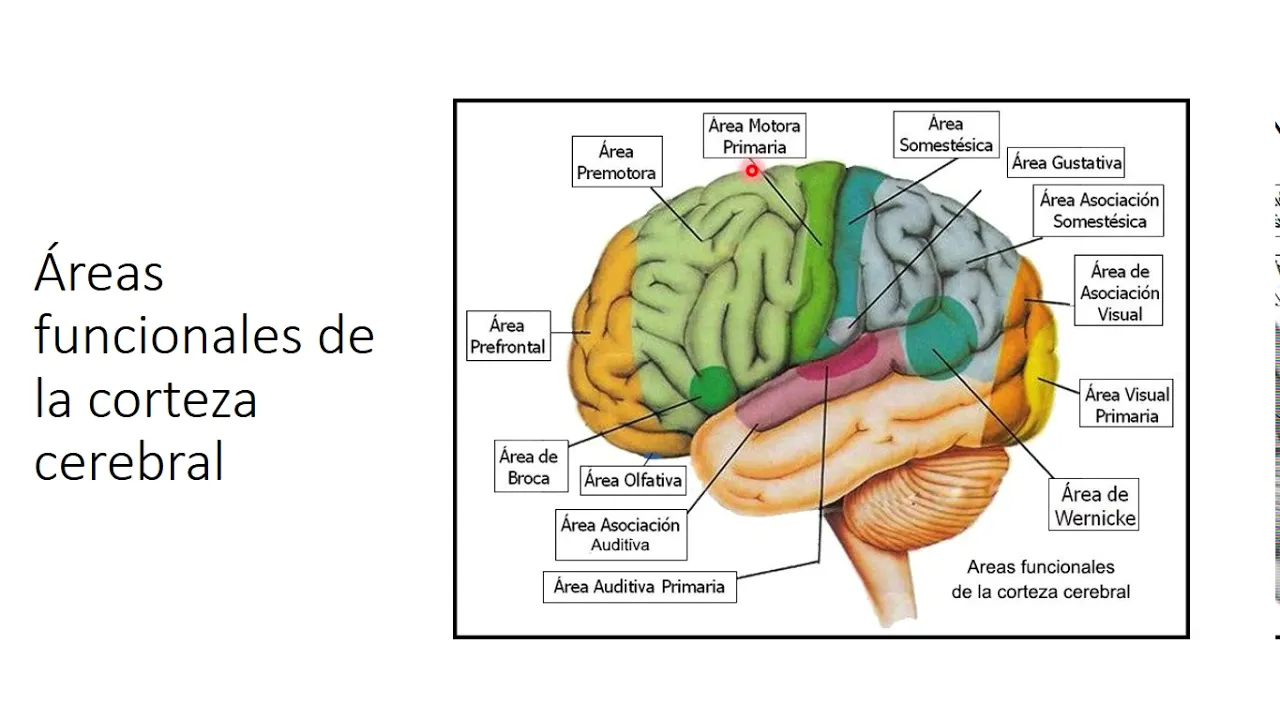
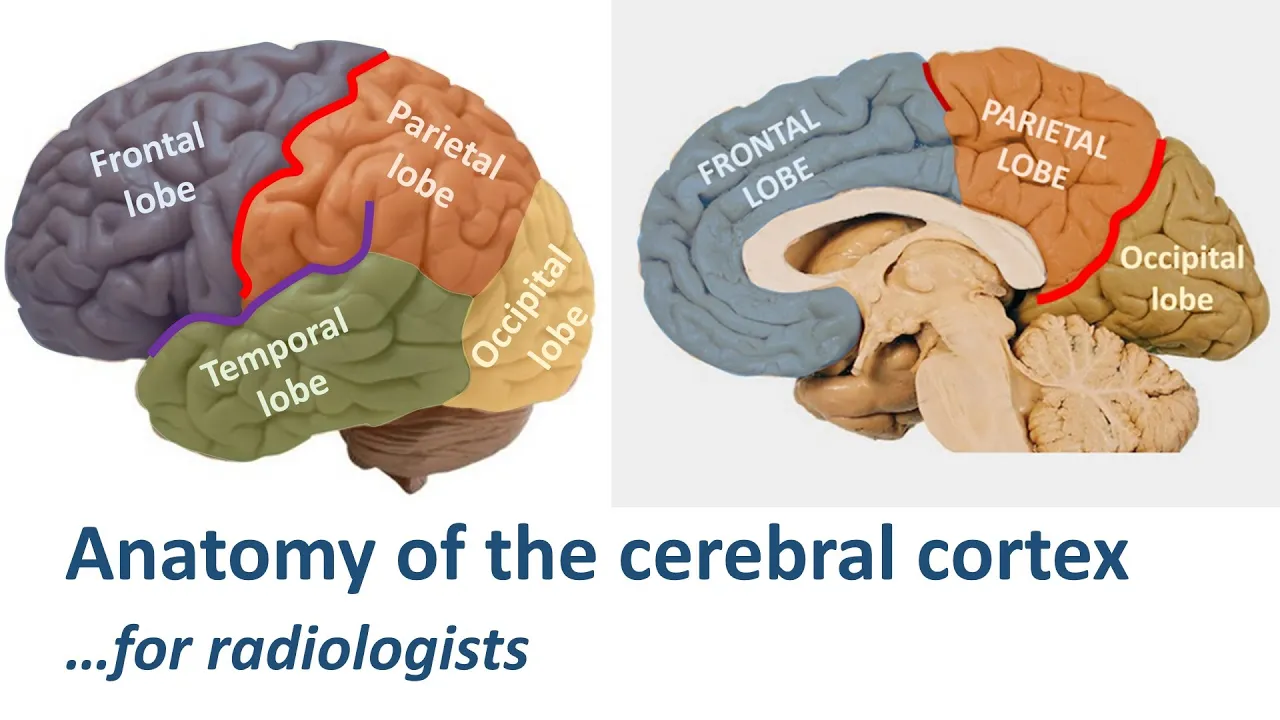





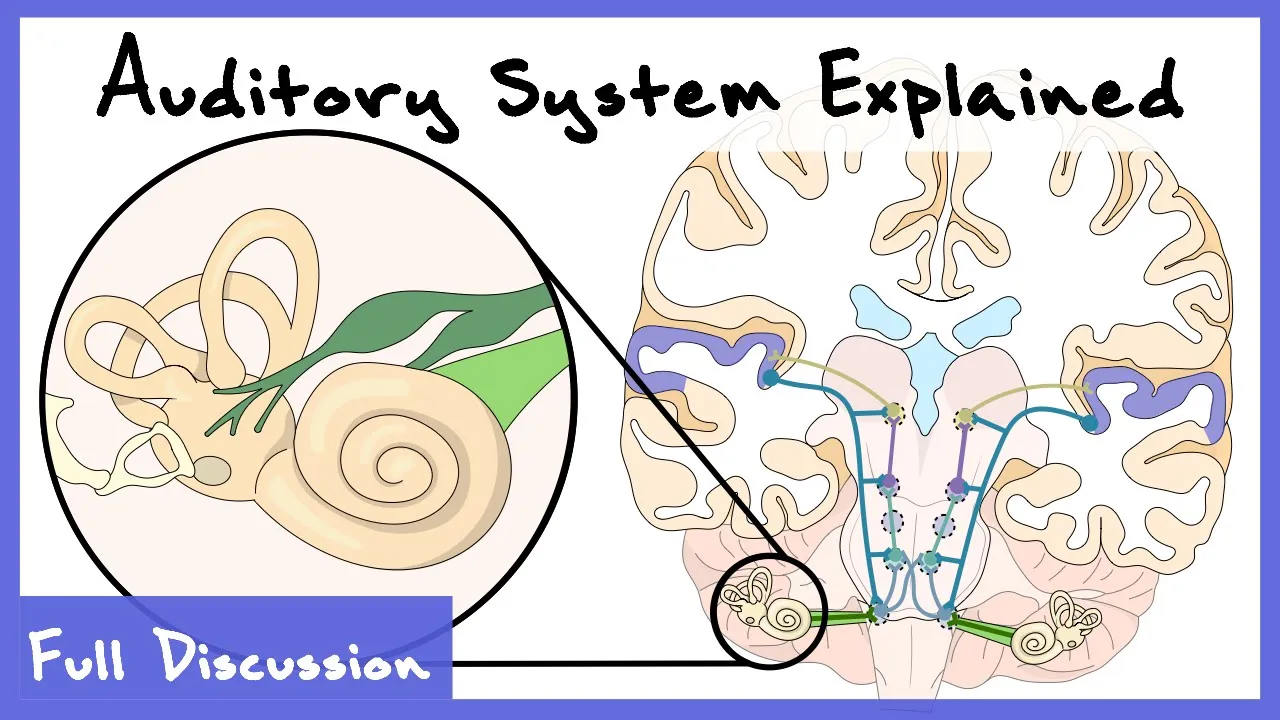






The auditory pathway follows a specific route from the cochlea through the cochlear nucleus, superior olive, inferior colliculus, thalamus (medial geniculate nucleus), and finally to the primary auditory cortex (A1), which is organized tonotopically with neurons tuned to specific frequencies; hearing loss is categorized into conductive (problems transmitting sound to the cochlea) and sensorineural (damage to hair cells or auditory nerve), with noise-induced hearing loss being the most common cause, and tinnitus representing a form of phantom hearing caused by damaged neural pathways.
Audition Brain Pathway & Hearing Loss Psychology Lecture
Added:Basic anatomy of the human ear, including the distinction between the outer, middle, and inner ear (specifically the cochlea).
The physics of sound waves, focusing on how frequency and amplitude translate to the psychological experiences of pitch and loudness.
Fundamental principles of neurobiology, including how action potentials are generated and transmitted across synapses.
General brain geography, particularly the location and function of the temporal lobe and the primary sensory cortices.
Cortical plasticity and auditory deprivation, exploring how the brain reorganizes itself following hearing loss or bionic adaptation.
The neural mechanisms of sound localization, including how the brainstem processes interaural time and intensity differences.
Advanced neurotechnology, such as the biophysics of cochlear implants and the development of auditory brainstem implants (ABIs).
Cognitive auditory processing disorders (CAPD) and the neural basis of complex auditory phenomena like speech perception and music cognition.
Multisensory integration, specifically how the auditory cortex interacts with the visual cortex (e.g., the McGurk Effect).
699 views4likes51:11Original Release: 2023-03-13
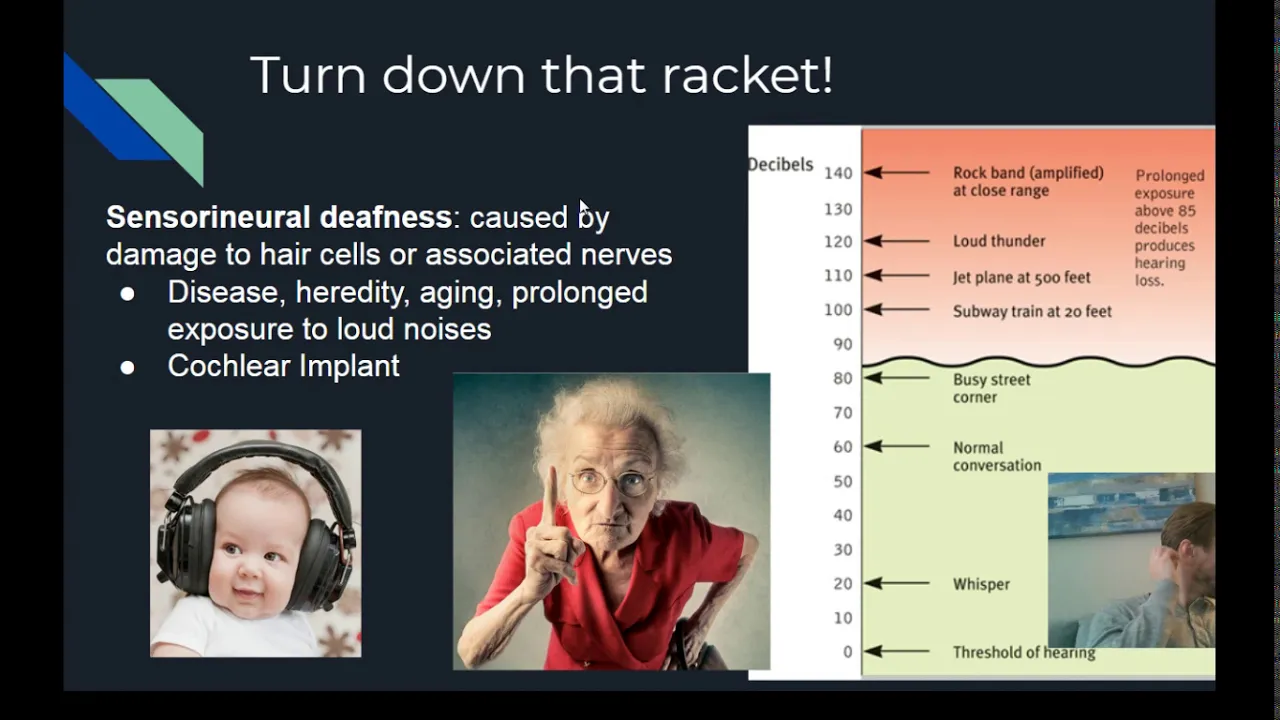
all right I've mentioned that when information from the outside world gets transduced by our sensory receptors it follows a route to a brain area that's specific to that sense meaning wires from your ears they're going to go to the auditory part of your brain auditory cortex well the wires from the touch receptors in your skin go to the touch part of your brain if I was to actually take one of those wires like let's say I take one of the wires heading toward the touch part of your brain and I give it a jolt of electricity Say by hooking up a little electrode to it then the touch part of your brain would activate and you would actually experience you would feel a touch even though nothing made contact with your skin you could look down nothing's touching your skin but you would feel a sort of a phantom touch on you just because we've turned on those wires that go to the touch part of your brain and thus we turned on the touch part of your brain I could even just directly stimulate a touch part of your brain and you'll feel it touch there on your body so each system each sensory system that we have has its own wire to its sort of dedicated part of the brain now after that point after which the info is going to get shared with other parts of the brain it's going to get sort of remixed and processed further so for audition our sense of hearing that we're talking about now let's see where those wires go in the brain uh when the auditory nerve leaves our ear when it comes out of the cochlea we said it follows these auditory nerves a bundle of neurons into the brain let's see where it goes get us to that auditory cortex area the primary auditory area in the brain and we'll talk a little about what happens afterward in the rest of the brain so here is actually a view of the back of someone's head but but inside into the brain for each ear you can see that they've drawn the auditory canal and sort of purple here we've got the ossicle bones there in yellow and then the cochlear spiraling here in red and we got arrows coming out of the cochlea so again that would be like neurons or it's the pathway of neurons coming out through the auditory nerve so it's coming out of those ears and they've got for stuff coming from the the right ear they've got blue arrows for stuff coming out of the left ear they've done red arrows here so we can track where the information goes uh the first stop we see at the bottom here where things come out of the cochlea the first stop is these little blobs at the bottom they've drawn in red these are called the cochlear nucleus technically nuclei since there's one on each side but on each side there is a Cochlear nucleus and from the cochlear nucleus the info is going to travel up it's going to go up towards the brain to the top part the outer layer the the actual cortex up top that you know where most of the fancy stuff in the brain goes on so the eventual goal is trying to get up and reach the auditory cortex up here in green that's the primary the initial real auditory processing center in the brain but to get up there we're going to go through a few waypoints on the way up there so uh as the as the info goes up through these other structures I want you to notice what happens to some of the arrows coming out of the cochlear nucleus so we've gone from the the ear the actual inner ear here to the cochlear nucleus this is technically where star in the brain kind of these lower structures in the brain but as those arrows come out like following the the info from our right ear that's blue arrows notice some of it goes straight upward right and it's going to continue up and stay on the same side of the head the same side of the brain so for the right ear some of the info does go up the right side and get processed on the right side of the brain but also notice the blue arrow goes across to the opposite side of the brain it crosses over we say it crosses contralaterally and contralateral that term comes from Contra for opposite and lateral for side like a lateral pass in football is to the side so as it comes out of the cochlear nucleus the info from your right ear some of it is going actually a lot of it is going contralateral to the other side on the left side of your brain right the opposite side of your brain from where the sound came in and some just goes straight up on the same side actually more of it ends up as we'll see is stronger on the on the opposite side okay the next stop as we go up from the cochlear nucleus on each side we end up the next stop at the superior Olive technically it's the superior olivery complex but we'll keep it simple right just Superior Olive from there then the next step is it goes up the next chunk it'll go to is called the inferior colliculus and this area actually does some interesting processing it's kind of a switchboard an integration Zone but we're not going to dive into that for this course we're not going to get that deeply here the most important thing to note is actually the little plus and minus symbols that are attached to those arrows feeding into the inferior colliculus on each side notice that the arrow is going straight up from the superior Olive to the inferior colliculus on the same side the ones that don't cross over they have a minus sign that means they're actually inhibitory connections the the more that that that particular blue arrow fires like this this one with the minus sign here the more that fires the more signals that go up directly up that way actually the the less firing you get in the receiving area then for your clicklist here in other words it dampens activity in the inferior colliculus if I had activity here on the right Superior Olive I'll have less activity in the right inferior or colliculus right afterward but notice the arrows crossing over so if I have a bunch of activity in the superior Olive then I'm firing across as well but there I've labeled it with a plus sign that means those are what we call excitatory connections the more those paths fire so the more the superior Olive goes off the more it's sending signals across this way the more that happens the more this opposite side inferior colliculus fires so we get more activity in the receiving inferior glucose on the contralateral side the opposite side so actually more of our hearing and audition is processed in the opposite side of the brain is processed contralaterally then the little bit that stays on the same side and gets processed over there now finally from the inferior colliculus right we're here on the on the little diagram from there we've just got one more stop before we get to where we're going the auditory cortex we really want to get to so the next place it goes everything now is just kind of going up on the side it's already on it's on whatever side the information is on now it's just going to keep going up on that side to get to that side's auditory cortex well the next stop is here in actually What's called the thalamus it's a bigger area here not not drawn fully on this diagram but on each side we have a side of the the thalamus the thalamus is often called the sensory Gateway of the brain we're going to see it over and over and over throughout this course because basically for just about all of our senses the information passes through the thalamus right before it gets to the primary area in the brain for processing that sense so so it's called kind of the sensory Gateway for that reason we'll see it over and over but specifically in the thalamus there's a section A little chunk of the thalamus called the medial geniculate nucleus medial meaning towards the middle but medial geniculate they've labeled here it's medial genic nucleus right a clump of of cells of neurons but again it's just a chunk of the thalamus there we'll call it the mgn meteogeniculate nucleus but mgn for short that'll be easier to remember and then finally from the mgn and we'll come back to the purpose of these you know later but from the mgn the signal is finally going to go up to the auditory cortex the primary receiving area for sound information in the brain specifically we're going to call in green here this little chunk it's going to we're going to call this A1 we're going to call it A1 because it's the primary sort of the initial auditory location in the cortex in the outer important layer of brain called the cortex and there are nearby areas that'll be called things like A2 and A3 because they're kind of second and third in the step of processing but the info all has to go to A1 first it's a primary area only then can it be shared with those other areas and with the rest of the brain right to meet up with visual info that you're seeing or other info from you know knowledge and and past experience or things you're imagining or whatever those might all interact but that's later in the brain after it passes through the primary receiving area the primary processing area let's start so again for audition or auditory sense we'll put an A in front of it to say it's the auditory cortex but one meaning primary auditory cortex so now that we're to the cortex that really sucks the outer layer of the brain let's zoom in on A1 and see what the hell this primary auditory cortex is all about so we've kind of zoomed in here the primary auditory cortex you can see that's kind of in the the orange or salmon kind of color here and then they've they've shown actually labeled the the secondary auditory cortex and it's called the belt area that's around it they've they've shown that in blue but let's just zoom in on A1 we just want to talk about A1 the salmon colored area here the primary auditory cortex it's it's actually organized in a tonotopic map the same kind of mapping organized layout that we found in the basilar membrane back in the cochlea that has been maintained all the way through those wires coming out of it going through the auditory nerve and it gets maintained and the receiving neurons here the clump of neurons that we call A1 in the brain so uh what we could basically say is like individual neurons in A1 individual neurons here in the brain that we're looking at now they will go off only for specific frequencies so neurons that respond to similar frequencies will be right next to each other one end of the the clump of neurons here that we call the auditory cortex one end of the auditory cortex will only go off for high-pitched sounds and one will only go off for low pitched sounds and there might be you know thousands of neurons here but the ones at the very tip here all those neurons maybe only go off for 20 Hertz sounds and all the ones here maybe only go off for 100 Hertz sounds and all the little neurons back here only go off for 20 000 Hertz sounds again it's because they got they maintain that mapping because they got that input directly through individual wires from the cochlea from the basilar membrane to the cochlea to these neurons the individual neurons here in A1 in your brain so the the nice mapping from our inner ear is maintained here in the brain you can see this is kind of almost a map of the basilar membrane from the base to the cochlea because it has the same function the same purpose the same layout so if a bunch of neurons in the top right of A1 right in the top right of this image were to go off that would only happen if there was high frequency sound waves coming into the ear in other words that means the activity here and the the top right here activity so neurons going off here in A1 that represents it sort of tracks high frequency sounds out there in the world we now have a way for the brain to represent different facts about the world just in terms of neurons firing now just a side note I'm oversimplifying a little bit here when I say that every neuron has a specific frequency it goes off for um every neuron in A1 isn't necessarily going to fire just for one specific frequency rather many of the neurons are what we might call narrowly tuned neurons where they'll fire for a pretty narrow set of frequencies uh but they're they have the most sensitivity at one specific frequency so you can kind of say that's what it's tuned to that's what it cares about that's what really makes it fire the most is what I mean when I say it only Fires for that frequency um so really I mean it's like most likely to fire for that frequency and that gives the most signal to the brain about that it might fire a little bit for nearby frequencies and then we do have some other neurons in there uh I just I just want to mention this in passing it's not that important but there are some that are more broadly tuned and this is the case for for other neurons in our brain too but they might have a at least a little activity for a pretty wide range of frequencies but again they have a very little range a little area where they have sort of a specific frequency they're most attuned to a specific frequency that makes them fire maximally so in a very meaningful way regardless whether it's narrowly tuned or broadly tuned there is still a specific frequency or right around a little bit of little tiny side frequencies um that they're that they fire the most too so you could still think of those individual neurons as being specific to an individual frequency is having a sort of characteristic frequency that's tuned to the only thing it fires for okay so let's move outside of A1 a little bit into the rest of the brain right now and we'll get deeper into this stuff when we start connecting to other senses and the rest of the brain but just for now let's look at kind of think about areas like in this blue part right outside of A1 because all that we've got in A1 is a bunch of neurons that go off and say like oh I heard 600 hertz frequency or oh I heard 200 hertz frequency or oh I heard you know 14 000 hertz frequency okay cool but that's not enough info for our brain to do all the interesting things we do with sound we need to send those frequency messages to other parts of the brain so we can look for patterns among them more interesting combinations of frequencies and things like that so we can recognize our friend's Voice or make sense of someone's you know what someone is saying or appreciate music that we're hearing things like that or even just recognize fundamental frequencies and stuff like that so as we go outside of A1 to like this secondary auditory cortex blue in this drawing or the areas as we start approaching that we'll find specialized neurons that respond to things more complicated than an individual frequency and one of the most interesting types of neurons are are actually called pitch neurons and Pitch neurons are individual neurons that fire only to a particular pitch regardless of the Timbre regardless of which harmonics are present or absent or strong or weak doesn't matter so remember here on the right we this is a picture we've seen earlier of three instruments a guitar bassoon a sax all playing the same note so they all are playing the same note they all have the same fundamental frequency right it's 196 Hertz is the fundamental frequency that's the step between each of these so we have we have basically some neurons that will be able to recognize what it is that is similar between these three situations despite the fact that we have different combos of frequencies and thus very different parts of A1 going off or going off in you know larger or smaller amounts or maybe even not at all for some of them but we have a part of the brain that will recognize what is similar between this pattern of firing which again would be a bunch of different parts of the basilar membrane right at 10 200 at 400 here here here here here at steps of 196. all of those neurons going off in a pattern right this is the pattern that would show up kind of like in that that video where they unrolled the the Bowser membrane that that that combo of things that pattern has some similarity to this parent some similarity to this pattern that gets picked up on by some of these neurons outside of A1 and A2 these these pitch neurons are one example one type of specialized neuron looking for a a combo of simpler input we'll see that is really common across all the parts of the brain that process sensory input that help us perceive things it starts with something really simple like just mapping frequencies right which frequency went off but then later you can have neurons that look for combos of frequencies interesting Combos and allow us to recognize things like a particular pitch a particular tone right regardless of the the individual makeup the pieces like which individual frequencies when into that doesn't matter if it's the same tone we have a neuron that will be able to tell the brain this is the the pitch this is the the toner this is the note that I'm hearing so in other words these pitch neurons they don't just Fire based on the frequencies that that hit the ear rather they they fire based on the pattern of frequencies and that have the same fundamental frequency the same spacing uh you can see an example of this actually in the in the top diagram here the top left this is someone actually measured a pitch neuron in the brain so the activity will be the the second part the cortical response meaning the response of neurons there in the cortex so on the left side here what we have our six example sounds that we might play that all have the same note they're all they're all the same note they're all the same fundamental frequency but a different Timbre right a different harmonic structure because this one the the note is being played right it's the same spacing so same fundamental frequency but here the node is being played with just the first second and third harmonic here it's the fourth fifth and sixth harmonic and so on bottom row is if we played the 12th through 14th harmonic which is actually a lot of higher frequency sounds and no low frequency sound so on the basilar membrane and thus here in A1 these six things that we might play these six sounds that might come into our ear and get processed in our brain are going to look very different the first one right the first three harmonics might just be some low low low pitched sounds and then this one here the sixth version with the 12th through 14th harmonic might be higher higher higher sounds and those are different neurons going off they don't even have any overlap none none of the same neurons are going off here and yet what we have is a pitched neuron having its its um response measured so having a little electrode clamped onto this one neuron out in A2 outside here and we find these neurons we discovered these neurons called pitch neurons showing that that one neuron will react regardless of which of these six sounds we play also to these sounds because they have the same fundamental frequency we'll make this one neuron go off right it's a it's a little different in its activity but pretty much the same and really only for that one pitch that one fundamental frequency or that one note uh okay so really what what pitch neurons are encoding is fundamental frequency and that's an example a type of specialized neuron we have outside of A1 okay now in this case for these for these pitch neurons what we have is a neuron that fires for something very specific in this case it fires for any sound with let's say a fundamental frequency of 182 Hertz that's where this kind of first line is and that's the spacing each of these are 182 apart so we have a individual neuron here that we would say what does it fire for it fires for sounds with a fundamental frequency of 182. or or where the first harmonic is 182. regardless whether the first harmonic is present or in all these sounds the first harmonic is absent the fundamental is absent but just that that thing that's common to them that is what this neuron is tuned to that's what this neuron cares about that's what makes this neuron go off and so we have a special term for that in Neuroscience in Neuroscience we say that we would say that this neurons receptive field is sounds with a fundamental frequency of 182. it's a bit of a strange term but basically receptive field or RF the RF of a neuron is whatever pattern of stimulation affects that neuron's firing in other words what makes that neuron go off what that neuron is interested in you can kind of say the RF the receptive field is basically whatever a neuron is tuned to it's actually a term that we're going to run into throughout this course so I really want to introduce it here basically all the neurons in our sensory pathway and into the brain areas will have a receptive field a thing that makes them fire here so I just wanted to briefly mention it here even the neurons all the way back in the basilar membrane when we're in in the ear in the in the cochlea those neurons we could say have a receptive field there's something that makes each of those neurons go off and we can say okay then that neuron's receptive field is such and such so remember that basilar membrane right that the cochlea the spiral thing and the middle layer the basilar membrane has a bunch of neurons those hair cells we talked about those are neurons those are our sensory receptors well each of those hair cell neurons has a specific thing that it fires for it fired for a particular frequency of sound and thus its neighboring auditory nerve cell neuron right the little wire coming out of it for the next neuron to go towards the brain also Fires for that same exact frequency of sound because it only goes off if it's basil or membrane neighbor goes off so the different harmonic compositions that we see in the top left here right the different combos of sounds that all have some similar you know fundamental frequency to them they would lead to very different neurons going off in the basilar membrane right the basilar membrane if we had the one two three what we'd be getting is three kind of lines going off at the start here at the base for this 8 9 and 10 frequency the the eight the ninth and tenth um harmonics we would have some sounds going off you know more towards the middle here and then for these later ones maybe further oh sorry I got that backwards the the one two three would be lower by the Apex and and then the high pitch frequencies would be closer to the base but we have specific neurons like neurons that will only go off for those specific frequencies and thus very different patterns of firing on the basilar membrane for these six different sounds unlike that pitch neuron later in the brain so the we would say the the receptive field of one single neuron on the basilar membrane one of those hair cells the receptive field of that neuron let's say one near the base here right so near the base of the basilar membrane its receptive field might be sounds at a frequency have 17 000 Hertz in other words this neuron here near the base will only go off for sounds of 17 000 Hertz or right around 17 000 Hertz there might be another neuron right next door that only goes off also for 17 000 Hertz and a little further away some neurons that only go off for 16 000 Hertz and one of those neurons if I plucked it out I'd say this neuron has a receptive field of Sixteen thousand Hertz and there are other neurons here at the Apex again there's tons of neurons here but there might be one near the Apex here that only goes off for 20 Hertz or one here that only goes off for 100 Hertz and I would say that the receptive field of that neuron is sounds of 100 Hertz so all of these neurons here they have a receptive field it's a term we can use just to say what is it that that makes this neuron fire what is the sort of stimulation from out there in the world that would make this neuron go off and and again that applies even for the neurons that are transmitting the info between the basilar membrane and the brain so those little auditory cortex neurons or sorry auditory nerve neurons the neurons that are bundled in the auditory nerve going towards the brain those are each hooked up to an individual basil or membrane neuron so there might be an auditory auditory nerve neuron coming out right where that 17 000 Hertz neuron in the Bowser membrane was and so that auditory nerve neuron would also only fire if there was a 17 000 Hertz sound so we could say the auditory nerve neuron the little y are going out towards the brain that one has a receptive field of 17 000 Hertz or whatever it is okay so auditory nerve neurons basilar membrane neurons neurons in A1 they all all have receptive fields in this case all of them just have a receptive field that is a specific frequency right the frequency that they're most interested in that is their receptive field that's the sound they listen for but other parts of the brain have their more complicated receptive Fields like a combo of frequencies or pitched neurons had a more complicated fancier type of receptive field okay finally of course out there in the areas you know outside of A1 outside of the primary auditory cortex where we get more complicated processing of sounds those extra areas where the info gets propagated to after it starts in A1 there are a bunch of neurons with other Specialties it's not just pitch neurons out there that's one cool type one interesting type but there's a bunch of other neurons with specialized properties looking for certain combos or patterns in the firing in A1 so for example in addition to pitch neurons there are also areas that respond selectively to changes in Pitch they're kind of our change detector neurons for sound so in the in the study shown here where the data comes from here it's an fmri study so patients were put in a brain scanner well they heard either a sequence with changing pitch so the sounds are going up and then down and then up and then down and up and down so either changing pitch or they heard a fixed pitch sequence so at other times they would hear just a the same tone over and over and over again the pitch doesn't change and if we subtract the activity if you take the the activity across the two conditions and subtract them you find the neural real estate that's dedicated specifically to tracking changes in pitch and of course there that's just another kind of one example of another type of specialized neuron out there we'll see there are tons of these throughout the brain different things different different roles different functions um so there are lots of areas we'll get to I just want to kind of point to a few here but other neurons that will be specific to other parts of auditory signal or processing auditory scene and we're going to dive in the next video into some more kind of real world scenarios we'll start getting into more real world Sound Processing and functions and things we do more at the level of our individual everyday experience in those next two videos after this but first for the rest of this video I just want to briefly talk about damage to the auditory system so so damage to our hearing system there are two main types and that they're called conductive hearing loss and sensor and neural hearing loss so let's just talk let's just introduce each of these briefly the first type is conductive hearing loss and this is when the the ossicles those little bones fail to transmit sound waves properly to the cochlea there are a few ways this can happen but most common is you know infection or like a tumor pushing on things we can also you know there can be a block like if you have a bunch of earwax built up or an infection or something like that um can be part of What's blocking those those obstacles properly transmitting the sound just because it's not enough getting in so there's there's ways that conductive hearing loss can look but basically it's it's unable to conduct the information from outside to the inner ear so basically we're not getting the vibrations to the inner ear we're not even getting there to where there are neurons so we're not able to conduct the information Nation far enough into the ear structure this can often be corrected with surgery or hearing aids can be used sometimes to amplify depending on how much of this there is so there are there are ways to to fix this um turns out just ancient interesting historical note you may have heard Beethoven was deaf so one of the most really famous um people in music he actually went deaf but he continued working he continued composing he actually found that he could just hook up a metal rod to his piano a metal rod the instrument he was playing and and then bite down on it and what would happen is the vibrations from the instrument would vibrate that piece of metal which would vibrate his his teeth in this case and in other words vibrate basically through into his skull and that was enough to vibrate through to those obstacles and vibrate a little bit in his cochlea and and this isn't going to be the same as normal hearing it's not going to be perfect but it enabled him to hear vibrations that a process we call bone conduction now it says here here perfectly did not hear perfect like bone conduction does not necessarily work just as perfectly or it's very hard to get it that way but you may have heard of bone conduction headphones they're actually a technology we have today that you can use if you want to listen to music but have nothing kind of coming out nothing going into your ear canal you can even put on like like um something to block the the ear canal altogether and still be able to listen to music through bone connection headphones that connect to a different part of your skull okay but anyway that's that's conductive hearing loss probably more interesting and certainly more common is what's called sensora neural he hearing loss and don't get lost in this big fancy term it's really just made up of two parts so since or up meaning like sensory and then neural meaning neurons so it's just saying hearing loss that's related to the sensory neurons right we know what the sensory neurons are the sensory receptors those are like those hair cells the stuff in the cochlea or the neurons coming out of there right that would be the auditory nerve so that's what sensorial neural hearing loss is is basically once we start getting into the neuron part of the ear the stuff that sends neural signals to the brain if we have damage or issues there or or if the wires going out from there that would be a type of hearing loss because we just can't get the signal to the brain right if you can't turn on those hair cells or if you can't pass the signal along with the auditory nerve then the brain will never get stimulated A1 won't go off and so we'll never actually experience hearing anything even if the sound is out there vibrating the bones doesn't matter you never actually have an experience of hearing you never can react to anything you never can you know recognize someone's Voice or appreciate music or anything like that now thankfully since we're a neural hearing loss doesn't always mean that you lose all of your hearing all of your ability to to turn on those hair cells or send it to the brain rather it may affect only certain frequencies like if there's damage to part of the basilar membrane but not the rest of it then you would lose the ability to hear those frequencies but the parts of the Bowser membrane that are still there working and still getting vibrated by the the ossicles and the sloshing then those parts would still send info to the brain and you'd still be able to hear other parts of the the frequency spectrum so sometimes it's partial right since or a neural hearing loss not not complete auditory deafness now the causes of this type of hearing loss um there are quite a few but the the most common causes loud noises like loud noises going to concerts things like that are what cause you to lose hearing and again a lot of the times this is very permanent you can also lose hearing either temporarily or permanently from certain drugs or medications um there's also like genetic stuff that can cause this so so sometimes just congenitally from birth you might have a hearing issue but prenatal problems disease a number of other things and as I said this is the most common type of hearing loss about 90 of hearing loss all right a little bit more about sensora neural hearing loss um the most common way as I said to get this is damage from noise so noise reduced or noise induced um hearing loss OSHA the the worker Protection Agency in the United States it actually mandates that workers don't get exposed to greater than 85 decibels for a long shift like it's a little bit it's not as big of a deal if you have it just occasionally louder than that but if it's during a long shift you don't want to be consistently exposed to anything up in that range because you'll actually start to get major permanent damage that's kind of a because all the time and often without any hearing protection uh go way above 85 decibels so we've measured and had things like hockey games and and if someone's like working with power tools we consistently will have greater than 90 decibel sounds going into our ears and remember every 20 decibels you go up is 10 times more amplitude 10 times more pressure 10 times more damage concerts that you go to often go well over a hundred decibels it's actually even gone up over time even higher and headphones even headphones that you can buy today often crank well above 100 decibels in other words if you have your headphones cranked up really loud and are listening to them a lot you are causing permanent damage to your hearing there's a meta-analysis that came out not too long ago uh just sort of summarizing all the studies on this type of hearing loss and they they came to the conclusion of linked here in the slides the most serious threat to human hearing the most serious threat comes from prolonged exposure to Amplified live music in other words concerts concerts are what cause most hearing loss the the biggest threat to hearing for for humans today in the developed World um thankfully Studies have actually shown that a bunch of studies showing that earplugs at concerts helps protect against permanent damage so there are earplugs you can get these today that are they go in your ear and are pretty hard to see even some that are kind of transparent and don't stick out as much so if you're worried about how you look you don't even have to worry about that that much these days and you can save your hands you can keep enjoying concerts later in life uh just to give you a Feel Again going back to that decibel scale we talked about before to give you a feel where we start getting dangerous levels and damage basically as we get up to again about 85 decibels so above you know normal conversation or just hearing some heavy traffic out in the city we start getting to like standing near a Subway even 200 feet away from a Subway that's moving uh then you're at the level you don't want to be exposed to that for very long or you're going to have lasting damage to your hearing but turning on your own stereo or headphones really loud working a power saw without your protection on and when you start getting up even higher like I said you know a plane gear going off nearby plane starting nearby that starts reaching what we call the pain threshold where again you're basically like not even hearing it so much as you start more just like feeling it and feeling pain especially as you get up closer to 130 and 140 and start getting some uh hearing loss here often um if you get loud enough often you're talking about not just permanent hearing loss but like instant permanent hearing loss you don't even have to listen to it for a long time the way like yeah this you know 85 it might be the damage happens over long exposures up here at 1 3 30 and 140 and so on it's just like if you're exposed to it you are going to lose some hearing permanently basically you're going to have some hair cells in your cochlea that are permanently damaged if you're curious what that looks like here it is under a microscope up top we have a sort of normal healthy set of hair cells so these are inner hair cells and outer hair cells but basically just a bunch of hair cells these are neurons these are the things that detect sound at different frequencies and here's someone after noise-induced hearing loss so after they've had a lot of exposure you can see that the neurons are just messed up like they're not there to turn on to detect those frequencies and so can't send the signal to the brain in other words can't hear can't hear those frequencies anymore all right so that's noise-induced hearing loss as I said we're all sort of susceptible to that that means though that basically almost all of us are going to lose some of our hearing as we get older just as we go through life over time and there's a term for that for this sort of progressive loss of hearing as we age it's called presbycusis there's a there's a similar term for vision we actually have a natural visual degeneration that happens to everyone as we get older that's called presbyopia and that just happens naturally you can't do anything about it your vision just gets worse as you get older but this version for hearing what we call presbycusis this is a progressive hearing loss it's a sensora neural hearing loss but it's due to cumulative damage over time this doesn't actually have to happen in pre-industrial cultures that don't have loud noises don't have special drugs and medication they don't actually suffer from presbycusis their hearing doesn't get worse with age it's only if you're in the sort of modern industrialized world when you're around loud noises and things like that that we all then get age-related did or time related damage to our hearing there's this loss of hearing and it's usually the worst at high frequencies so you lose the high frequencies first and then as we get older and older we start to lose even some of the lower other frequencies here actually is a a graph so you can see this you can see some data here for men and women of various ages from 20 years old to 80 years old they just use a different color line for each age compare the the yellowish line at the bottom here for 80 year olds to the red line at the top for 20 year olds or the blue line below that for 30 year olds right whether it's men or women it's the same basic pattern at every frequency whether it's the low frequencies or the high frequencies and again remember human voices are somewhere around here like two thousand to four thousand one thousand five thousand somewhere in that range but at all of those frequencies the younger people can hear things more easily so on the left here what we're actually measuring the hearing level this is the decibels needed in order to hear something so the minimum you can hear or like what's the yeah the quietest thing you can hear how many decibels does it have to be for a given frequency for 20 year olds zero decibels regardless of the frequency they're like I can hear it I can hear it I can hear it I can hear it but an 80 year old especially at those higher frequencies has to have way more decibel like 85 decibels almost a dangerous level of sound needed for a for an 80 year old to even hear a sound at 8 000 Hertz and this is a very normal I mean it's a it's high pitch it's a little like a really high pitched voice but basically for an 80 year old to hear someone with a high-pitched voice that person has to be at a dangerous almost hockey game level of volume for the person to hear them and on the other hand they can still hear lower frequencies pretty decently it just has to be a fair bit louder than for young people now just to review can I bring this back to Old material thinking back to our intro to psychophysics at the start of the course what type of threshold is being measured here can you remember and yeah it's a absolute threshold this is this is measuring basically the the lowest amplitude of sound the lowest power of sound that a person can just barely detect about 50 of the time so it's a graph of absolute thresholds of hearing and you can see that changes with age due to presbycusis that Progressive loss of hearing that we all get if you live in the modern world now people have taken advantage of this for um creating uh interesting like um I don't know like products and stuff like that so for example one of the earliest applications was what were called sort of mosquito anti-loitering systems um people would put this out in your businesses that that teens would kind of hang out and loiter around especially outside of business hours or if they just didn't want those teens nearby and so they'd put this sound out um that would just be a really high pitched sound that we know people who are 30 or 40 can't hear people who are old can't hear this but people who are under 20 can hear these super high pitched frequencies so they would just be constantly all day long playing these annoying high-pitched tones and these kids would be like annoyed by it and leave so it's an anti-loitering system but it doesn't bother the older people who don't even hear it but it's also been applied kind of in Reverse kids learn to apply this by by using mosquito ringtones on their phone so like kids in in school in like you know middle school or high school and things like that might be able to hear really high pitched tones that that older people like their teachers can't hear so they could have ringtones that they'd be able to hear the sound going off without the teacher knowing that the sound went off of course it's kind of stupid because every other kid in the classroom does hear it go off so you're still going to see like 12 heads all turn in your direction and the teacher will know something happened but it's a funny little idea now if you're curious and you want to test what frequencies you can hear whether you can hear high frequencies I've linked the website in the slides here you can just Google for for like hearing tests for different frequencies to see what high frequencies you can hear if you happen to have your your sound turned up super loud right right now I'm going to suggest you might want to turn the volume down a little bit you can always kind of adjust it back up but I'm just going to play some sounds at some of these high frequencies and you can see if you happen to hear the sound there's a couple seconds each but see where you you're first able to hear the sound and kind of see where you stop being able to hear the sound and usually if I do this live in classrooms younger people will keep their hands up and be able to hear at least off and up into like the the 15 000 to 18 000 range maybe but you know it starts to cut off pretty quick here and hands start going down and maybe just a few people in class could still hear some of these higher ones whereas you know a lot of people will be able to hear ten thousand Hertz so let's play this here again don't have your volume super cranked up but it's you know it's not that crazy okay here we go so you hear kind of like a high-pitched annoying squeaky background noise there I'll play it one more time just in case you need to adjust your volume make sure you can hear it it doesn't need to be loud just make sure if you can hear it you know you want to be able to hear it clearly here okay now I'm going to go up to the next ones you can just leave your volume at the same place so these will all be now at an equal volume whatever you're listening for that one if you were okay and comfortable with it these all be the same volume it's just going to be higher frequency noises here so here's 12 000.
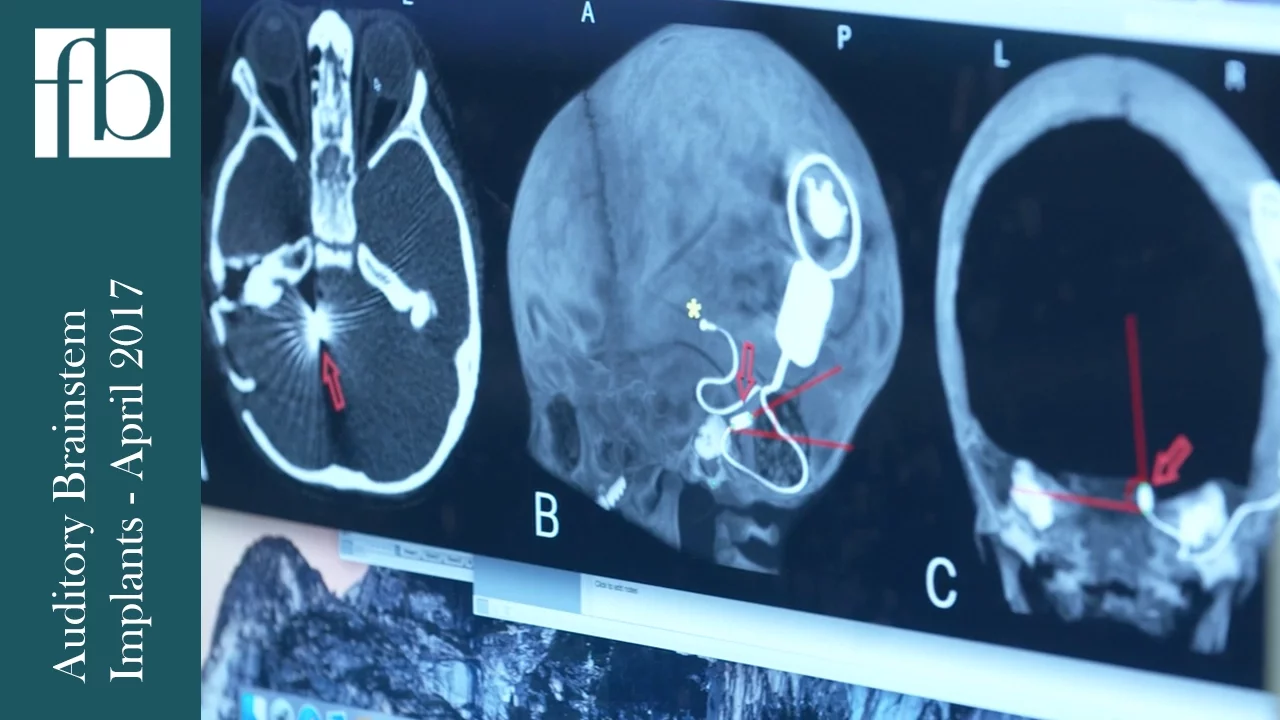
it's like I can hear that no problem maybe you can maybe you can't often depends on your age but maybe also how many concerts you've gone to and things like that here's fourteen thousand again I can hear that fine and certainly if you turn up the volume you'll hear it we know that right but at a constant volume uh what we're going to find is somewhere up here for most of us you'll start dropping off so I'll play the next one 15 000 Hertz and so to me it's almost it's almost hard to hear it's like a background but like it's just a high-pitched annoying sound let's do sixteen thousand some people here start being unsure if they're even hearing it for you it might still be very clear or maybe you've already lost it but I'll play with these last few just in case for those who can still hear it so 17 000 years 18 000 super high pitched okay and then 19 000 getting close to the limits of human hearing and then 20 000 Hertz and finally I've said humans can hear from about 20 to about 20 000 Hertz of course there's individual differences here and of course it depends on the volume so some people can still hear that that's 21 000 Hertz but this is getting pretty close to the limits of human hearing so here's twenty one thousand and I'd be surprised if many people listening can hear this if you can you should be impressed you still have pretty good neurons there at the very very base of your basilar membrane all right another type of hearing damage that's super common very very common hearing condition is tinnitus it's actually kind of relates to the experience we had a moment ago listening to those annoying high-pitched kind of ringing sounds because tinnitus is a frequent or constant ringing in the ears but this happens when there's no physical sound there it's not caused by an actual high-pitched thing you might have been laying in bed like this happens to a lot of us you're laying in bed in a pretty darn quiet room and you just start kind of noticing this high pitched ring in the background high-pitched little buzz in the background and and thinking like is that like the TV still on is that sound coming from a neighbor or what is it an electronics and no we actually know we can measure very carefully we know this is not from physical sound out there it's it's sort of sound invented by your brain but it is experienced by tons of people many people and usually it's people who have sensora neural damage to their hearing say from you know going to loud concerts or using loud you know power tool tools or things like that and especially the more since we're a neural damage that people have had or the more times that say they've come out of a concert and had ring in their ears for a day or you know for the rest of the night the more they've had those kind of experiences the more likely that they'll have tinnitus later in their life for some people this is really really bad not just annoying but can be like to the point of like causing um you know mental anguish and things like that what what is tonight is like what what causes tinnitus I want you to think of it this way the the parts of the pathway the parts of the auditory pathway that respond to certain frequencies they're gonna stop giving input after some sensora neural damage right if you damage the neurons that pick up 19 000 Hertz sounds and damage all the neurons and pick up 20 000 Hertz sounds then what's going to happen to all the neurons that are still up there in your brain in area A1 right in the primary auditory cortex there's a bunch of neurons that get their signal from the 19 000 detectors in your basilar membrane and the 20 000 detectors in your basilar memory suddenly got all these neurons in A1 that only go up for nineteen thousand twenty thousand Hertz sounds but are now never going to get input they're sitting up there waiting and looking and they're never getting input so basically those neurons in essence they become so desperate for input they start firing from just just to like action from nearby areas or or like the brain starts amplifying their spontaneous firing rate we'll talk about more of that stuff with the the third Topic in the course but really it's it's analogous to to like a phantom limb which again we'll talk about that in the fourth topic of this course but it's now just a phantom limb tinnitus is basically just Phantom hearing so it's hearing something that's not there it is a hallucination it's a common hallucination almost all of us will get it at some point in our lives or have it on and off and maybe just notice it when things are really quiet some people get it really bad but it is it is Phantom here and the hallucination your brain makes it's brain activity causing you to experience or perceive hearing even when there's no actual sound of that of that frequency coming into your ear at the time okay finally at the end here for for the hearing damage stuff I just want to touch on one last topic related to hearing loss and that's Cochlear implants so those who are born uh without hair cells or damaged hair cells they're inside the cochlea they may be candidates for a technology called Cochlear implants and what is a cochlear implant if you haven't heard of this it's an array of electrodes little electrical zappers implanted inside the cochlea like along the basilar membrane they put these little electrical devices and though that array of electrodes they'll stimulate the proper auditory nerve fibers according to that known tonotopic map like thanks to bikisi's Nobel winning discovery that we talked about earlier we can take advantage of that orderly mapping to send signals to the auditory cortex to the primary auditory cortex A1 and the auditory cortex has no idea whether those incoming signals are caused by actual sound out there in the environment or by our art of official way of turning on those same wires using cochlear implant those wires that are part of the pathway from the ear to the brain so we're kind of short-circuiting things we say okay maybe the bones aren't don't need to transmit the sound or anything we'll just turn the auditory nerve fibers on directly ourselves with this little implant in the cochlea will act as an artificial cochlea basically and it's still the brain doesn't know the difference because all it knows is did I get up neural activity coming in from the auditory nerve neurons now how it works is basically there's a a microphone hooked up outside the person's ear uh so the the microphone basically is is attached to the ear picks up sounds in the environment environmental sounds goes to a little computer process the sound a transmitter sends the signal wirelessly into a receiver that's implanted inside the skull so so it sends from this little transmitter to a receiver that that's inside there done with right surgery at some point from there the receiver is connected to an array of electrodes because the wires go down to these electrodes that are in the cochlea in that that little you know spiral snail-like area there so all along the basilar membrane and that's that's where it turns on in a little electrical signal there basically the electrodes turn on the right places the right electrodes in the right combination of the proper time in order to roughly simulate the activity in auditory nerve neurons that would have happened if the person's ears if the person's Oakley I was working normally unfortunately it's not as high def as the normal cochlea but it is enough that with experience and practice and giving the brain chance to kind of get used to it it can offer a quite detailed audio world to someone who otherwise would be auditorily deaf now technically we could leave off the microphone and just produce the frequencies we want in a computer and someone could still have the perception of hearing without any sound waves at all that's because perception happens in the brain not in the ear or the eye or the skin indeed we might at some point all have implants that allow us to hear things I don't know outside of our normal range of frequencies or to hear cell phone calls without needing a phone or being overheard by strangers that can all happen if we just directly stimulate the brain without needing to to stimulate any of these peripheral detectors or anything like that okay now here's just a video just a fun example of a baby having their cochlear implant turned on for the first time responding to to hearing moms voice here we go it's coming back on and he's back on again see how he turns hi Jonathan stop the sucking hi sweetie could you hear that [Laughter] hi you got that Dad right hi Jonathan okay now it's important to mention here that Cochlear implants while impressive from a technological standpoint are not universally lauded indeed a lot of people in the deaf Community capital d e def uh object to Cochlear implants for a number of reasons especially for Deaf children who are born to deaf parents deafness in that case is not seen as a medical condition or something that needs curing rather it's more like an identity with with the corresponding like complex culture and history and and a language using manual signs that's it's passed down through families so many see deafness as a difference rather than a disability in the in the deaf Community Capital D auditory deafness is not necessarily seen as a disability if you're curious I recommend you look into and read more about Deaf culture for example one classic book from 1988 is deaf in America like Carol Patton and Tom Humphries it's one of the the books I show here on the screen um there are a couple professors of communication who are also deaf all right meanwhile our next video is going to dive into auditory localization so how the brain makes sense of where sounds are coming from out there
Up Next
27:49
Vestibulocochlear Nerve (CN VIII): Anatomy, Pathway & Functions
@TaimTalksMed
60.7K views•2023-10-22
21:55
Deciphering Neural Circuits Controlling Anorexia in Mice | Richard Palmiter
@AllenInstitute
2.3K views•2011-10-10

4:10
Vagus Nerve (CN X): Anatomy, Nuclei & Functions Explained
@Alilamedicalmedia
305.2K views•2022-10-31

13:03
How Exercise Benefits Your Brain: Science Explained
@TED
11.4M views•2018-03-21
Related Study Plans & Knowledge Roadmaps
Structured learning paths in Neuroscience
neuroscience
Appetite Regulation: Brain Circuits & Hormones
01Foundations of Endocrinology and Brain Anatomy
02Introduction to Energy Homeostasis
03Peripheral Signals: Leptin, Ghrelin, and Insulin
+ 2 more learning modules
14h5 modules
Explore Roadmap
neuroscience
Neuroeconomics: Value, Risk & Brain Mechanisms
01Foundations of Neuroscience and Brain Anatomy
02Introduction to Neuroeconomics and Subjective Value
03Dopaminergic Prediction Errors & Reinforcement Learning
+ 3 more learning modules
18h6 modules
Explore Roadmap
neuroscience
Spatial Navigation: Cells, Grids & Brain Maps
01Foundations of Brain Anatomy and Memory
02Place Cells and Head-Direction Cells
03Grid Cells: The Brain's Coordinate System
+ 2 more learning modules
12h5 modules
Explore Roadmap
neuroscience
BCIs: Neural Decoding & Prosthetic Control
01Neuroscience Foundations: How the Brain Signals Intent
02Signal Acquisition: Recording the Brain's Activity
03Neural Decoding: Translating Brain Waves into Data
+ 2 more learning modules
25h5 modules
Explore Roadmap