














Educational inequality in the United States stems primarily from property tax-based school funding systems that disproportionately disadvantage schools serving Black, Latinx, and low-income students; addressing this requires three key strategies: ensuring funding goes to the most deserving students, investing in early childhood education (where childcare costs exceed college costs in 28 states), and investing in community-based solutions for cognitive, social, and emotional development. Civic engagement through voting and local political participation is essential for driving educational reform, as local elected officials make most decisions affecting young people's lives.
Education Reform: Funding Gaps, Black Educators, and Voting
Added:Understanding of how public schools are funded in the United States, specifically the heavy reliance on local property taxes versus state and federal allocations.
Basic knowledge of systemic racism and historical housing policies, such as redlining, and their direct impact on municipal wealth and school district boundaries.
The role and structure of local government, particularly how school boards are elected and their power over budget allocation and curriculum.
The concept of demographic representation in workforce sectors, specifically the correlation between educator diversity and minority student performance.
Analysis of progressive funding models, such as weighted student formulas, and their efficacy in correcting historical education resource gaps.
Evaluation of policy initiatives and recruitment pipelines designed to attract, support, and retain Black teachers and educators of color in public schools.
Methods of grassroots civic engagement and advocacy strategies to influence school board elections and local educational budgets.
Deep dive into culturally responsive pedagogy and how diverse teaching staffs influence disciplinary practices and the school-to-prison pipeline.
163.7K views585likes13:58Original Release: 2020-10-23
When we talk about the American dream, we know the American dream is not made equal.
When we talk about Black folks and Brown folks in particular, the access to achieving the American dream is filled with roadblocks.
And one of them, as we know, is funding in in the education process.
What type of dream do we create for students if we moved some of those roadblocks out of the way?
Real Talk is about highlighting real issues with real conversations to create real solutions.
Welcome to another episode of "Jordan Real Talk."
Joining me today are my good friend Baratunde Thurston who of course you all know from the podcast, "How To Citizen," the president of Wiley College, Herman Felton.
We also have joining us, David Johns, who is the former executive director of the White House Initiative for Educational Excellence for African Americans, a doctoral candidate at Columbia University, and current executive director for the National Black Justice Coalition.
Welcome gentlemen.
Hey Angela.
Thank you for having us.
Thank you all so much for doing this and for being here, we have a lot to dive into.
We're talking educational excellence, ending educational disparities, and all of that you all.
So David, I wanna come to you because one thing that we know is unequal in this country is the funding gap in public schools.
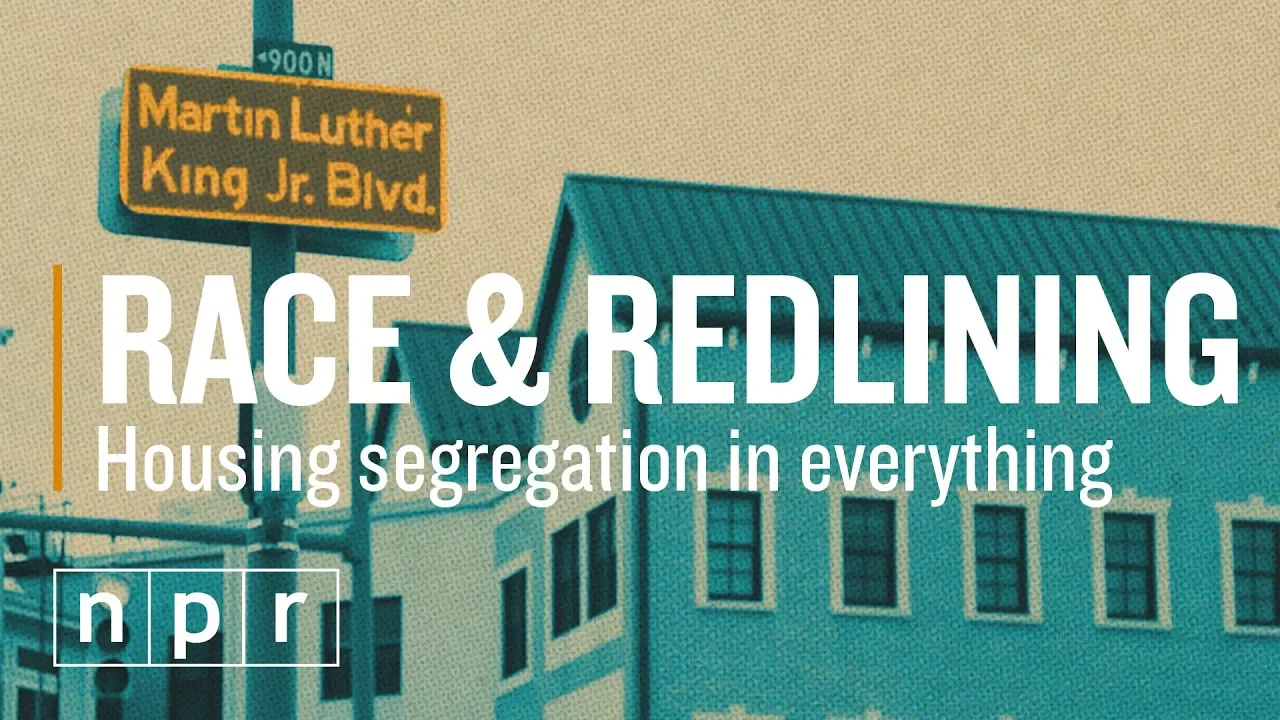
We know that schools are funded by property taxes, and we know that just like everything else in this country, all properties are not made equal and neither are all schools.
What can we do to bridge that gap?
The vast majority of schools their budget is made up of the resources that exist as a result of people's ability to pay taxes for the housing that they live in.
If you live in public housing and are not contributing to a tax base in the same way that you would in a suburban community for example, and what happens is our schools, the schools that are predominantly attended by Black and Latinx students, and poor students, and students whose parents are not native, lack the funding that other state schools have.
There are at this moment at least three things that federal elected officials, and state and local elected officials can do to address this problem.
One, is to ensure that funding goes to students who are most deserving, and least resourced is the cleanest way to address this problem.
The second thing that can be done is to invest in early childhood education.
It should be lost on no one that in 28 states throughout the United States, the cost of childcare is more than the cost of college.
And so investing in early opportunities for kids, especially those who are most disadvantaged based on systemic oppression, and anti-blackness and white supremacy, is the second thing that can and should be done immediately in this moment.
And then the third thing is for us to acknowledge that learning doesn't happen in vacuums, and it doesn't happen just in schools.
And the fact that schools no longer exist in the way in which we have traditionally taken for granted because of COVID, should encourage us to think about investing in community based solutions, to support in the cognitive, social and emotional development of all young people regardless of their ages.
I think it is very simple and it is sad at the same time.
Our challenges are the way they are because people don't care.
It is just that simple.
It is that simple.
If decision makers are not willing to come into those spaces that they represent, to understand who they represent we'll continue to have these conversations and it won't impact the people who really need to be impacted.
When we talk about why elections matter and have consequences, as it relates specifically to ensuring that we don't go backwards.
And when it comes to integration and we move forward when it comes time to talk about resourcing our schools.
I wanna start with building on this point that our kids are brilliant to connect the dots with the things that are happening now, we're seeing a lesson in prioritization.
Whether it's our more robust testing program, whether it is funding for our schools who are so hamstrung right now.
Whether it's investing in broadband, which really should be a public good when you tell the public they can't work except from home, and can't school except from home.
Where use of force by police in our schools, which shouldn't even be a thing, is established, condoned and even encouraged But it doesn't have to be 'cause we can flex our power and change that at every level.
Well so the lesson to me is that elections matter.
How important is it to have advocates at every level of government, working on behalf of institutions that are educating our Black children?
David you're known for saying, "Teach the babies."
It's one of my favorite things about you.
You walk and move around this planet as a teacher, you are a former teacher.
Given that, how often have you seen the fact that people who don't care, people who are not culturally experienced with Black children, how often have you seen that become the very issue for what perpetuates the problem that we're talking about right now?
Yeah, it is, if not the very root cause of the problem, it is one of the biggest challenges that show up in the lives of young people who are forced to go to schools.
There's no secret to how we support them.
We first acknowledge them as human, and we second, support them with love.
And too often Black kids don't get to be loved or seen as human.
And adults believing that young people are capable and educable.
Believing that young people, Black kids in particular, are worthy of the investment of their energy as a significant factor in how it is a young people have access to opportunity.
I love that David.
If you can think of someone in your school who you know advocated for you, and fought for you and represented your best interests, Baratunde, who do you have?
First of all, it's an honor to be here and I'm just taking notes with brother David.
Clearly, this is a pro educational gathering here.
I've had so many advocates and so many heroes and I'm very, very fortunate.
But I go back to my elementary school.
I grew up in Washington, DC in Columbia Heights neighborhood when it was still very Black and a little Brown.
And I I went to Bancroft Elementary, and we had a Black principal, Mr. Milner.
And we had a Black principal who followed him, and most of my teachers were Black.
And so I had role models.
We had a Black principal who spoke seven languages.
Because I saw another Black person out there, a big version of me killing the game.
I saw someone being so dextrous with language, demonstrating his belief in the beseechment of "teach the babies" that was deserved by all of us.
And it was, I think it's those subtle lessons, and those examples of support that teach a part of our minds, this is what we can do.
Herman, Dr. Felton, the president of Wiley College where the historic great debaters hail from, who sir, is your greatest advocate that you can remember while you were in school?
I didn't have any in elementary, middle school, high school.
I'm sitting here listening to this brother and thinking what would have happened for me had I a champion or an advocate?
I escaped through 11 years, 12 years of classrooms dyslexic without it being even identified.
So I did not have a champion that I can think of, not one.
So I didn't have that.
I didn't have that until I got into college at the age of 28 at Edward Waters College at a historically Black college and university.
And it was there the first time that Dr. Jimmy R. Jenkins Sr.
said to me, I could do anything that I wanted to.
And it opened up a world that I did not know existed.
Yes, I just want to take a moment right here to shout out all our educators.
You all are the real MVPs to take a line from Kevin Durant.
Like it's just a game changer.
You just make the world go round What are the other calls to action that you all think, you know, folks who are sitting at home, or they may be walking down the street, getting a COVID break watching this.
What are the things they can do so they don't feel helpless, so they know that they have have something to do as it relates to shifting education, reforming education, so that it really begins to serve them and their family members?
The first is to get involved there are entirely too many organizations that remain engaged and supporting democracy and providing opportunities for people to engage in civic participation and activities throughout the year.
So I encourage you to get engaged.
The second thing is to think about that all politics are local and most of the decisions that are made that affect, the lives of our young people are made by local elected officials.
And that includes thinking about individuals responsible for the school board, the district attorney, the mayor, and then police chief or the sheriff.
When we think about a lot of the crises that we've seen erupt over the summer, and throughout the year to date, it's individuals in those positions of power, who often have the ability to respond in ways that acknowledge the needs of community.
The last thing that I would say is everybody has to vote.
If you have voted, I encourage you to support other people and their ability to vote.
And if you have questions about why you still need to vote at this point in the election cycle, holler at your boy.
What about education drives you to the polls?
Education is the surest vehicle to upward mobility.
And if everyone understands that simple premise, then they now have the capacity to understand how the polls and showing up at the polls, can change their trajectory for their entire families.
So what do we tell young people who may still be on the sidelines about whether or not they're going to the polls at all.
We in this country who are Black are here despite so many attempts to deny us education.
We have thousands of school districts generally at the county level, all across this country to teach a real history, to reflect love and honesty and accuracy of ourselves, back to ourselves.
We need to have folks who are elected and appointed making the right decisions about what kids are being taught Trust the process.
And at the end of the day, if you do not feel like voting right now or being engaged in the process, think about the people who were so convicted that they gave life.
They gave life so that you could simply have the choice not to.
It would be an abomination for you to spit on their graves, and not be active in some shape, form, or fashion in the process.
And if the moral ob- if the moral obligation that my brother Felton reminded us of is not compelling enough I would say the following, At this moment in our current geopolitical environment, none of us have the luxury of sitting in the stands of the arena. We all need to be in the game.
I would remind you that your vote matters.
If it didn't, there wouldn't be as much money and time invested in trying to steal it or to suppress it.
And so I would implore you to ask yourself, what kind of a future do you want to see for yourself, and for your community, for the children that you might have or that you might wanna have or wanna support, and go vote, if not for yourself, then for them.
David, you don't just teach the babies, you teach the grown ass people too, love you.
I love you too.
I love you guys.
It's been my honor.
My pleasure, my privilege to be here.
with my beautiful people.
Bye bye.
Thank you!
Stay tuned for the next episode of Jordan Real Talk.
Up Next
6:48
Finland's Education System: Why It Outperforms Most Schools
@abcnewsaustralia
8M views•2020-01-31

12:54
Triumph of Orthodoxy Icon: Byzantine Art & History Explained
@BenCallan
2.1K views•2024-08-06
54:52
The Decline of Influencer Culture: A Critical Analysis
@jordanatheresa
758.5K views•2022-07-01

1:42
Game of Thrones Opening Credits: A Cinematic Analysis
@gameofthrones
46.3M views•2011-04-18
Related Study Plans & Knowledge Roadmaps
Structured learning paths in General & Interdisciplinary Studies
general-studies
Elevator Engineering: History, Physics & Cities
01From Hoists to Safety Brakes: The Dawn of Vertical Lift
02Hydraulic vs. Traction: The Engineering Physics of Elevators
03Modern Speed, Safety, and Algorithms
+ 2 more learning modules
12h5 modules
Explore Roadmap
general-studies
Rubber: Material Science, History & Geopolitics
01Origins of Natural Rubber & Mesoamerican History
02The Chemistry of Natural Rubber & Vulcanization
03The Geopolitics of the Rubber Boom & Colonization
+ 2 more learning modules
12h5 modules
Explore Roadmap
general-studies
Containerization: Evolution, Logistics & Trade
01Ancient Trade & Bulk Cargo: Amphorae to Barrels
02The Industrial Revolution & Cardboard Packaging
03The Containerization Revolution: Malcom McLean
+ 2 more learning modules
12h5 modules
Explore Roadmap
general-studies
Textile Tech: Evolution, Labor & Global Impact
01Pre-Industrial Textiles: Handloom & Cottage Industry
02Mechanization: The Spinning Jenny to the Power Loom
03The Factory System & Global Labor Transformation
+ 2 more learning modules
10h5 modules
Explore Roadmap