International climate change negotiations have evolved through key summits since 1972, starting with the 1992 Earth Summit in Rio de Janeiro which established the UN Framework Convention on Climate Change (UNFCCC), followed by the 1997 Kyoto Protocol requiring industrialized nations to reduce emissions by 5.2% below 1990 levels by 2012 without binding developing countries, then the 2009 Copenhagen Summit that failed to produce a binding treaty but set a non-binding goal of limiting temperature rise to 2°C, leading to the 2011 Durban Platform committing all nations including the US and China to a legally binding agreement by 2015, culminating in COP21 in Paris aimed at securing the first universally recognized international accord to limit temperature rise to 2°C.
Climate Change Negotiations: A History of Global Summits
Added:Basic science of the greenhouse effect and the primary drivers of anthropogenic climate change.

The greenhouse effect is natural and essential for life - without it, Earth's temperature would be -30°C to -35°C. Greenhouse gases (CO2, water vapor) trap heat from Earth's surface. Natural climate drivers include solar output variations (11-year sunspot cycle), volcanic eruptions releasing aerosols, and Milankovitch cycles (90,000-100,000 year orbital variations) that create glacial and interglacial periods. Human activities have created the 'anthrosphere' affecting all Earth's spheres through pollution. Major sources of anthropogenic greenhouse gases include industrial processes, coal mining, transportation, urbanization, and deforestation. CO2 contributes 64% of greenhouse gases. Global CO2 concentrations have risen from 310 ppm (1958) to over 420 ppm (2025).

The primary cause of recent global warming is anthropogenic - human activities have significantly increased greenhouse gas concentrations. Greenhouse gases include CO2, methane, N2O, ozone, and CFCs. These gases allow shortwave solar radiation to pass through but trap longwave radiation emitted by Earth's surface. CO2 levels have been increasing at approximately 1% per year since industrialization. Climate models project that doubling CO2 from pre-industrial levels will cause significant warming. This anthropogenic forcing is the primary cause of recent global warming trends.

This video presents a scientific debate where geologist José Antonio Sáenz de Santamaría challenges the dominant narrative on anthropogenic climate change, arguing that natural factors like water vapor (95% of greenhouse effect) and orbital cycles (Milankovitch cycles) are primary drivers of climate change, while human CO2 emissions represent only a small fraction (5%) and that climate models significantly overestimate future warming projections.

The theory of anthropogenic global warming is built on fundamental physics principles, primarily the properties of greenhouse gases like carbon dioxide. These gases trap heat radiation near Earth's surface, creating a 'blanket' effect that warms the planet. This phenomenon, known as the greenhouse effect, was discovered by Swedish scientist Svante Arrhenius in the late 19th century. The connection between human greenhouse gas production, atmospheric concentration increases, and measurable global temperature rises provides the primary evidence for anthropogenic climate change.

The greenhouse effect is the process by which certain atmospheric gases trap heat and warm the planet. Greenhouse gases (GHGs) are transparent to incoming solar radiation but absorb outgoing infrared radiation, warming the atmosphere. Primary GHGs include CO2 (most significant anthropogenic), methane, nitrous oxide, and water vapor. CO2 is the most abundant anthropogenic GHG from fossil fuel combustion and deforestation. Not all atmospheric gases are GHGs; nitrogen and oxygen are transparent to infrared radiation. Understanding these mechanisms is essential for comprehending climate change.
Fundamental concepts of international relations, including state sovereignty, international treaties, and multilateral diplomacy.

Modern international relations require multilateral approaches because isolated national efforts can no longer satisfy expectations. Both private and public non-state actors have joined national governments in setting agendas. Borders are becoming less relevant as modern communication transforms the world, though this creates security challenges for terrorism, disease, and drugs crossing borders. Global governance establishes international decision-making between governments and national organizations. The United Nations serves as the most suitable candidate due to its political legitimacy and administrative impartiality. Multilateral diplomacy is defined as the management of international relations through negotiation among three or more states within international organizations, oriented toward principles and norms. It represents cooperation among states promising solutions to common problems without sacrificing sovereignty.

Sovereignty is a quality of the state, not an element. The elements of the state are territory, population, legal system, public authority, and the teleological goals the state pursues. Sovereignty is the quality that allows a state to govern itself internally through its own decisions and institutions, and externally through independence and equality. When states enter into international conventions, treaties, or agreements, they are voluntarily ceding part of their sovereignty for specific purposes.

This section covers foundational concepts in international relations: (1) Geopolitics refers to how countries use territorial position to exercise global influence and hegemony; (2) Hegemony means influence, with more influential countries having better negotiation power; (3) A state is a political organization with three branches: legislative (creates laws), judiciary (interprets laws), and executive (implements laws); (4) A nation is a group of people sharing common history, language, and beliefs; (5) Territory is the physical base where a nation exists, and countries exercise sovereignty over their territory including distant regions.

The state is the privileged actor in international relations, possessing legal equality and capacity for action. Modern states are typically based on constitutions with three branches: legislative, executive, and judicial powers. Sovereignty has two dimensions: internal (supremacy of authority within territory, with government as legitimate holder of force according to Max Weber) and external (independence from external authorities). States are not exempt from international rules but cannot be bound without consent. Three fundamental principles govern international relations: equality (one state, one vote), non-intervention in internal affairs, and non-recourse to force against other states. States are classified by power: superpowers (global projection), great powers (regional influence), intermediate powers (regional intervention), small states, and micro-states.

International relations is the study of interactions between state and non-state actors (such as governments, international organizations, NGOs, and multinational corporations) across national boundaries, with key foundational concepts including sovereignty (a state's supreme authority over its territory and population), diplomacy (official negotiations to achieve foreign policy objectives), national interest (long-term goals guiding state behavior), power (the ability to influence others through various means), globalization (increasing interconnectedness of economies and societies), interdependence (mutual reliance between states), international organizations (institutions facilitating cooperation), and the dynamic relationship between state and non-state actors in shaping global politics.
The role and structure of the United Nations, specifically the establishment of the UNFCCC (United Nations Framework Convention on Climate Change).
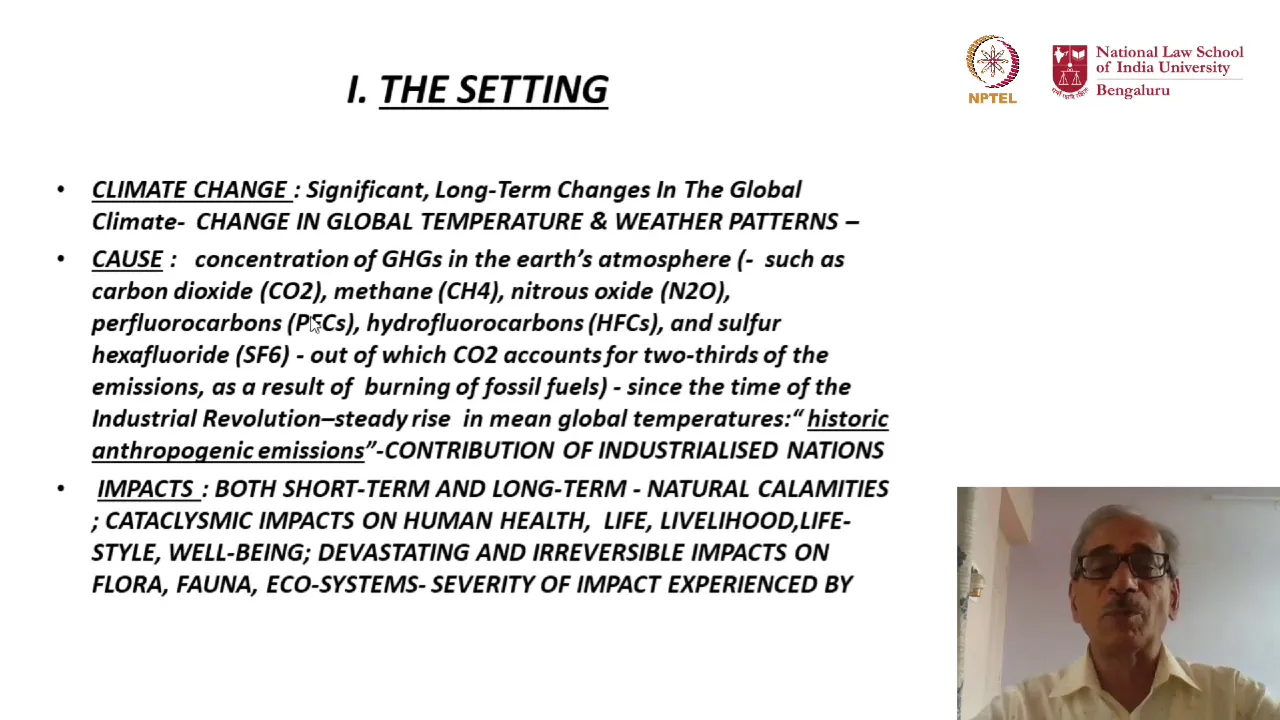
The UNFCCC, established in 1992, is the first major international treaty addressing climate change with universal membership, based on four key principles: common but differentiated responsibilities, where developed countries take primary obligation for reducing greenhouse gas emissions and providing technology transfer to developing nations; sustainable development; precautionary principle; and polluter pays principle. The convention recognizes that industrialized nations bear greater historical responsibility for climate change while acknowledging that developing countries need support for their industrial development.

The UNFCCC (United Nations Framework Convention on Climate Change) is a UN body established in 1994 to address climate change through international cooperation. Its core purpose is stabilizing greenhouse gas concentrations to prevent dangerous anthropogenic interference with the climate system. The framework emerged from the 1992 Earth Summit in Rio de Janeiro, where 100 member states initially participated. The convention operates through annual COP (Conference of Parties) meetings, with headquarters in Bonn, Germany. With 193 parties, it represents near-universal global commitment to climate action. The UNFCCC addresses human interference with the climate system through binding international agreements, building upon the informal work of its predecessor UNCED.

The United Nations Framework Convention on Climate Change (UNFCCC) was established during the Earth Summit in 1992. It became effective on March 21, 1994. The annual Conference of Parties (COP) meetings began in 1995, with the first meeting held in Berlin, Germany.

The United Nations Framework Convention on Climate Change (UNFCCC) is an international environmental treaty established in 1992 to address global climate change. The convention provides a framework for international cooperation on climate issues and serves as the parent agreement for subsequent protocols and agreements, including the Kyoto Protocol and the Paris Agreement. The UNFCCC facilitates negotiations among nations to reduce greenhouse gas emissions and combat climate change.
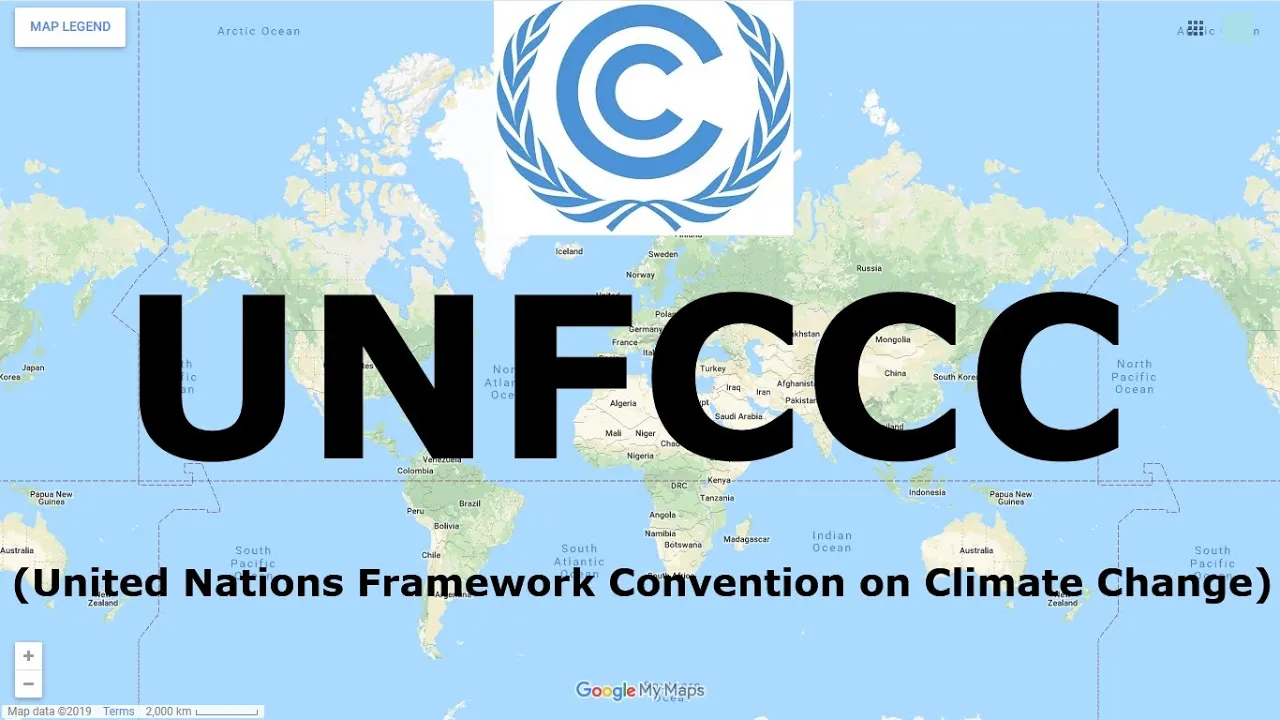
The UNFCCC (United Nations Framework Convention on Climate Change) is an international environmental treaty established in 1992 at the Earth Summit in Rio de Janeiro, Brazil, with its headquarters in Bonn, Germany, serving as the parent treaty for major climate agreements like the 1997 Kyoto Protocol and the 2015 Paris Agreement, whose primary objective is to stabilize greenhouse gas concentrations in the atmosphere to prevent dangerous human interference with the climate system while enabling sustainable development.
The principle of 'Common but Differentiated Responsibilities' (CBDR) and the historical geopolitical divide between developed and developing nations regarding emissions.

The Common But Differentiated Responsibilities (CBDR) principle forms the foundation of the Kyoto Protocol, distinguishing between developed and developing nations. Developed nations (Europe, US, Russia, Japan) became wealthy by freely burning fossil fuels for 150-200 years since the Industrial Revolution, accumulating historical emissions. Developing nations like India and China only began significant fossil fuel use in recent decades. Per capita emissions reflect this disparity: India's 1.2 tons (2006) versus the US's 19.3 tons. Developing nations argued they should not bear equal responsibility for historical emissions given their lower per capita contribution and ongoing developmental needs. This principle, championed by India and China through G77 groupings, established that fighting climate change is a common goal but responsibilities must be differentiated based on historical emissions and economic capacity.

The principle of 'common but differentiated responsibilities' (CBDR) emerged from the Rio Earth Summit and recognizes that while all nations share responsibility for addressing global environmental challenges, developed and developing nations have different historical contributions to environmental problems and therefore different obligations. Developed nations, having industrialized first and contributed most to historical emissions, should take the lead in reducing emissions and providing financial and technological support to developing nations. This principle acknowledges historical equity while promoting collective action on climate change.

Developed nations are responsible for approximately 50% of global cumulative CO2 emissions since 1750, with the United States contributing 25% and the European Union contributing 22%. This historical responsibility forms the basis for developing nations' demands at COP-27. The Common But Differentiated Responsibilities (CBDR) principle, established in the 1997 Kyoto Protocol, states that all countries share responsibility for addressing climate change, but this responsibility is differentiated based on historical emissions and current capabilities. Developing nations, particularly BASIC countries (Brazil, South Africa, India, and China), strongly opposed the creation of a 'major emitters' category at COP-27, arguing it ignores historical responsibility and creates double standards. India's Environment Minister emphasized that developed nations cannot forget their historical contribution to climate change.

The principle of Common but Differentiated Responsibilities (CBDR) is a fundamental principle of UNFCCC. It recognizes that while all countries have a responsibility to address climate change, developed countries have historically contributed more to greenhouse gas emissions and therefore bear greater responsibility. Developing countries have different responsibilities and capabilities. This principle acknowledges historical inequities in emissions and different development needs. Under CBDR, developed countries are expected to take stronger action on emissions reductions, while developing countries have more flexibility.

This section explains the CBDR principle: (1) All countries share responsibility for environmental protection, but developed countries should take greater responsibility, (2) This principle was discussed at the 1992 Earth Summit, (3) Developed countries caused more historical pollution and have more resources to address it, (4) Developing countries have caused less pollution and have fewer resources, (5) Responsibility is based on historical emissions and current capacity, (6) This principle was formally accepted at the Earth Summit and applies to UNFCCC and Kyoto Protocol.
Prerequisite Knowledge
- Concept 01Basic science of the greenhouse effect and the primary drivers of anthropogenic climate change.
- Concept 02Fundamental concepts of international relations, including state sovereignty, international treaties, and multilateral diplomacy.
- Concept 03The role and structure of the United Nations, specifically the establishment of the UNFCCC (United Nations Framework Convention on Climate Change).
- Concept 04The principle of 'Common but Differentiated Responsibilities' (CBDR) and the historical geopolitical divide between developed and developing nations regarding emissions.
Subsequent Learning
- Step 01Analysis of post-COP21 summits (such as COP26 in Glasgow and COP28 in Dubai) to assess the implementation and progression of the Paris Agreement.
- Step 02The mechanics of Nationally Determined Contributions (NDCs) and how national governments translate international climate pledges into domestic policy.
- Step 03Climate finance mechanisms, including the Green Climate Fund and the evolving negotiations surrounding 'Loss and Damage' compensation for vulnerable nations.
- Step 04The economic frameworks of global climate action, such as international carbon markets, cap-and-trade systems, and Article 6 of the Paris Agreement.
Climate Talks
0:02- 1
Environmental issues rose on the agenda since the 1972 Stockholm summit.
- 2
The 1992 Rio Earth Summit established the UN climate framework and COPs.
- 3
Major accords include Kyoto and Paris, aiming to limit global warming.
The Radical Climate Justice and Inefficacy Critique of Global Diplomacy
While mainstream narratives frame global climate summits as milestones of diplomatic progress, critics from climate justice movements, post-colonial scholars, and political scientists offer a starkly different perspective. They argue that these summits, from Rio to Paris, represent a history of 'performative diplomacy' and systemic failure. This critique highlights that agreements like the Paris Accord rely on voluntary, non-binding targets (NDCs) that lack enforcement mechanisms, allowing major polluters to greenwash their images while continuing emissions. Furthermore, critics argue that the COP framework commodifies the environment through market-based mechanisms (such as carbon trading) rather than addressing the root causes of ecological crisis—namely, industrial capitalism and fossil-fuel dependency. From a post-colonial lens, these summits perpetuate 'climate colonialism' by failing to secure legally binding historical reparations or adequate climate finance for the Global South, which suffers the worst consequences of a crisis it did not create. Thus, rather than solutions, the summits are viewed as mechanisms that delay urgent, radical action to protect economic status quos.
Analysis of post-COP21 summits (such as COP26 in Glasgow and COP28 in Dubai) to assess the implementation and progression of the Paris Agreement.

The 2015 Paris Agreement set global temperature limits of 2°C (preferably 1.5°C) and pledged half emission reductions by 2030 with net zero by 2050. COP 26 in 2021 saw India announce its 2070 net zero target. COP 27 established the Loss and Damage Fund with $800 million pledged. COP 28 in 2023 advanced the fund, recognized 2023 as the hottest year, and saw 134 countries address food industry climate impacts. These conferences demonstrate progressive international climate action.

The Paris Agreement (COP 21, 2015) achieved universal participation with 195 countries committing to emission reductions. It aimed to limit warming to 2°C, preferably 1.5°C. However, implementation proved challenging as nationalist governments emerged and climate denialism grew. COP 26 (2021) achieved compromises like gradual coal reduction but weakened commitments under pressure from producing nations. COP 28 (2023) achieved historic fossil fuel phase-out language. This progression shows how ambitious agreements face persistent implementation barriers, requiring continuous diplomatic effort to strengthen commitments over time.

COP26 in Glasgow represented the first major test of the Paris Paradigm's ability to drive increased ambition. While outcomes were mixed, they showed progress: more ambitious NDCs were submitted, closing the emissions gap somewhat (about 15-17% according to Climate Action Tracker), and approximately three-quarters of global emissions countries made mid-century Net Zero pledges. The Paris Agreement has been remarkably successful in establishing 1.5°C as the global benchmark for climate action, moving from a target originally proposed only by small island states to a widely accepted standard. However, significant questions remain about whether these pledges will be implemented meaningfully, and the gap between stated intentions and actual action remains substantial.

Implementing the Paris Agreement required extensive follow-up work. COP22 (2016) established Marrakesh Partnership coordinating non-state actors. COP23 (2017) launched Talanoa Dialogue using story-based formats. COP24 (2018) finalized Paris Rule Book with transparency frameworks. COP26 (2021) achieved Glasgow Climate Pact with coal phase-down commitment, India's Panchamrit pledge, and Global Methane Pledge. COP27 (2022) achieved historic Loss and Damage Fund agreement. COP28 (2023) operationalized this fund and committed to quadruple sustainable fuel use by 2035. These developments demonstrate how diplomatic agreements translate into operational frameworks requiring sustained political commitment and detailed implementation mechanisms.

COP26 in Glasgow 2021 relaunched the Paris Agreement paused by pandemic effects. COP27 in Sharm El-Sheikh 2022 marked step forward in financing loss and damage for countries most affected by climate disasters, giving developing countries greater voice. However, many points remained imprecise regarding concrete responsibilities. Global emissions continue increasing despite agreements, though they would have increased even more without them. COP28 in Dubai faces challenges as a major fossil fuel exporter hosts the conference while gas and oil companies plan new projects. Success depends on decisive acceleration of energy transition with effective commitments subject to monitoring.
The mechanics of Nationally Determined Contributions (NDCs) and how national governments translate international climate pledges into domestic policy.
The Paris Agreement establishes a collective framework for addressing climate change with the goal of limiting global warming to 1.5°C. The agreement integrates human rights considerations, requiring parties to respect rights to health, indigenous peoples' rights, children's rights, and vulnerable populations. Nationally Determined Contributions (NDCs) serve as the primary mechanism for tracking national climate commitments. The agreement uses different legal terminology to indicate obligation strength: 'shall' indicates binding obligations, 'may' indicates optional actions, and 'should' indicates recommendations. Article 15 establishes a transparency mechanism with expert committees facilitating implementation. Countries translate international commitments into domestic law through legislation like Papua New Guinea's 2016 Climate Change Act and Norway's 2018 Climate Act.

Indonesia's compliance with the Paris Agreement demonstrates how international climate obligations are translated into national policy through a combination of legal ratification (UU No. 16/2016), procedural obligations like NDCs and transparency reporting, and domestic implementation mechanisms, though challenges remain in achieving substantive emission reductions due to structural factors including the dominance of forestry and energy sectors, potential policy conflicts with domestic legislation like the Job Creation Law, and the ongoing tension between global climate commitments and national development priorities under the principle of Common But Differentiated Responsibilities.

The Paris Agreement's success depends on whether countries will deliver on their Nationally Determined Contributions (NDCs). Currently, 135 of 187 countries have greenhouse gas targets, with China and India using GDP-per-unit targets. Tracking implementation requires examining whether targets are embedded in Ministries of Finance and Planning rather than just Environment ministries, and whether national committees are designing 2020 targets. India's Prime Minister Modi increased solar energy targets from 3 to 200 gigawatts by 2022, representing one of the biggest ramp-ups in solar energy history. The key question is whether this momentum will continue as countries ratify their commitments in New York.

The Paris Agreement provides for limiting global average temperature increase to well below 2°C above pre-industrial levels as a goal, with 1.5°C as an additional effort. Decisions of the meeting of the parties to the Paris Agreement express the agreement in substance between parties regarding interpretation of Articles 2 and 4, constituting subsequent agreements under Article 31 paragraph 3A of the Vienna Convention. The principle of common but differentiated responsibilities is formulated differently through the addition of 'in the light of different national circumstances,' adding nuance without changing the core principle. The Paris Agreement establishes obligations concerning nationally determined contributions (NDCs) whereby parties outline and communicate their climate actions. Under Article 4 paragraph 2, each party must prepare, communicate, and maintain successive NDCs, and pursue domestic mitigation measures to achieve their objectives. Article 4 paragraph 3 requires that successive NDCs represent progression beyond current NDCs and reflect highest possible ambition capable of making adequate contribution to achieving the temperature goal. Given the seriousness of climate threats, the standard of due diligence for preparing NDCs is stringent. The obligation to pursue domestic mitigation measures is substantive in nature, requiring parties to act with due diligence in taking necessary measures.

The Paris Agreement, adopted in 2015, entered into force after 2016. The first National Determined Contributions (NDCs) - the plans that countries must present to achieve the agreement's goals - are now being discussed at COP26. The agreement aims to limit global warming to 2 degrees Celsius, with an aspiration to limit it to 1.5 degrees Celsius. This framework establishes the international legal basis for coordinated climate action among nations.
Climate finance mechanisms, including the Green Climate Fund and the evolving negotiations surrounding 'Loss and Damage' compensation for vulnerable nations.
COP 16 in 2010 established the Green Climate Fund for reducing emissions in developing countries. COP 18-19 began discussions on the Loss and Damage Fund, which compensates vulnerable countries for climate catastrophes like island nations at risk of submersion. The fund addresses climate justice by allowing countries causing emissions to compensate those suffering effects. These mechanisms represent the evolution of international climate finance from mitigation-focused to include adaptation and loss compensation.
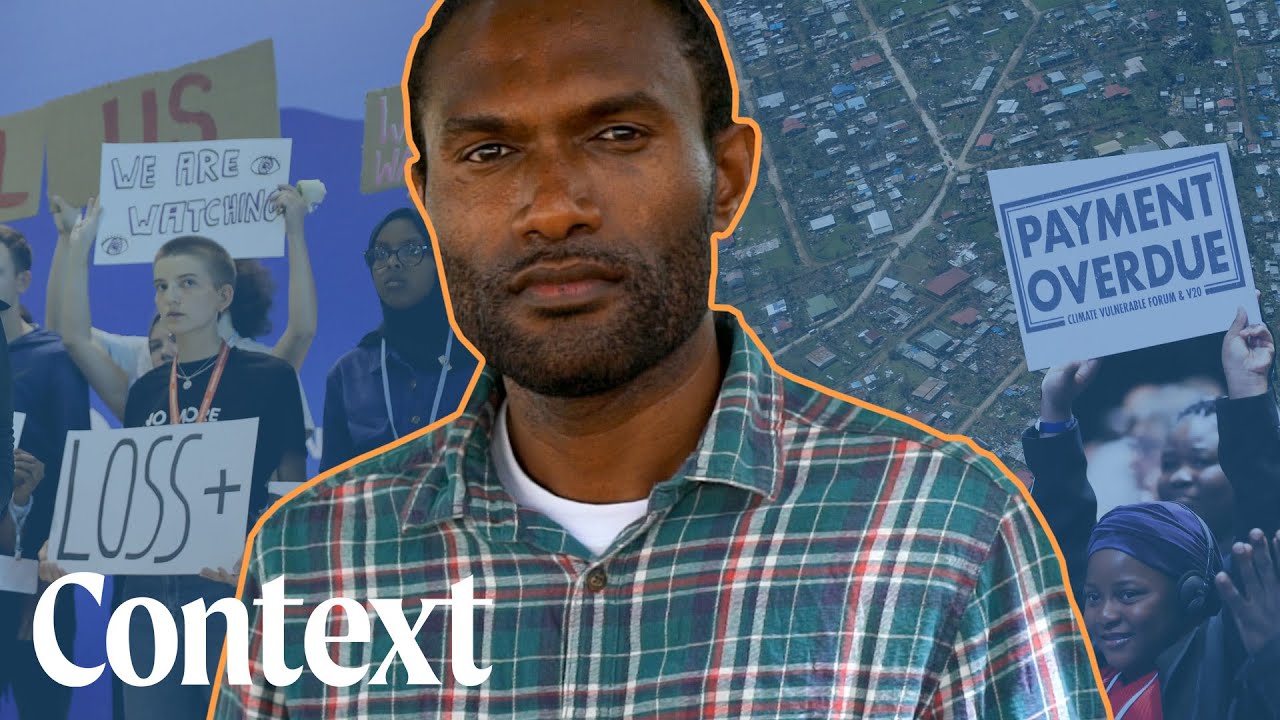
This section analyzes why existing climate finance mechanisms have failed vulnerable nations. The video explains that rich countries promised $100 billion annually by 2020 for mitigation and adaptation, but this commitment remains unmet, with much funding provided as loans rather than grants. Crucially, this framework excludes loss and damage, leaving victims to cover recovery costs through charity. Vanuatu's calculated needs include $110 million for victim compensation, $25 million for climate healthcare, and $22 million for insurance schemes. At COP27, negotiators finally agreed to create a loss and damage fund with direct access for vulnerable countries. However, unresolved questions remain about attribution—how to determine what portion of climate events was caused by human emissions versus natural cycles—and who should pay, with major emitters including the U.S., China, EU, Australia, and Canada resisting liability. Alternative proposals suggest taxing the 100 fossil fuel companies responsible for 71% of emissions since 1988.

COP27 reached historic agreements on climate finance and loss and damage compensation. The Loss and Damage Fund provides financial compensation to developing countries suffering from climate change impacts, with commitments from the Netherlands, Scotland, Norway, Germany, Austria, and Belgium. The UK announced delayed payments for climate-disaster-affected countries. Germany launched the Global Shield from Climate Risks with 60 vulnerable nations, collecting 210 million euros. The UAE-US agricultural innovation initiative increased climate investments from $4 billion to over $8 billion. These mechanisms represent international recognition of climate debt and the need for historical responsibility in addressing climate consequences.

Climate finance mechanisms include: (1) Loss and Damage Fund - operationalized at COP28, provides financial assistance to vulnerable developing countries for climate impacts that cannot be avoided through adaptation or mitigation, (2) Green Climate Fund - supports developing countries in addressing climate change through both mitigation and adaptation, (3) Adaptation Fund - receives 2.5% of proceeds from market-based mechanisms, (4) Special Climate Change Fund - supports developing countries in addressing climate change. Developed nations pledged $100 billion annually by 2020 to support these funds.

The Loss and Damage Fund was established at COP 27 (2022 UN Climate Conference) to provide financial assistance to poorer nations dealing with climate change consequences including rising sea levels, extreme heat waves, desertification, and crop failures. The fund addresses the historical responsibility of developed countries, which are major contributors to greenhouse gas emissions since the Industrial Revolution. Developing countries have agreed to administer this fund through the World Bank to ensure independence and transparency. This represents a significant development in international climate governance and climate justice.
The economic frameworks of global climate action, such as international carbon markets, cap-and-trade systems, and Article 6 of the Paris Agreement.
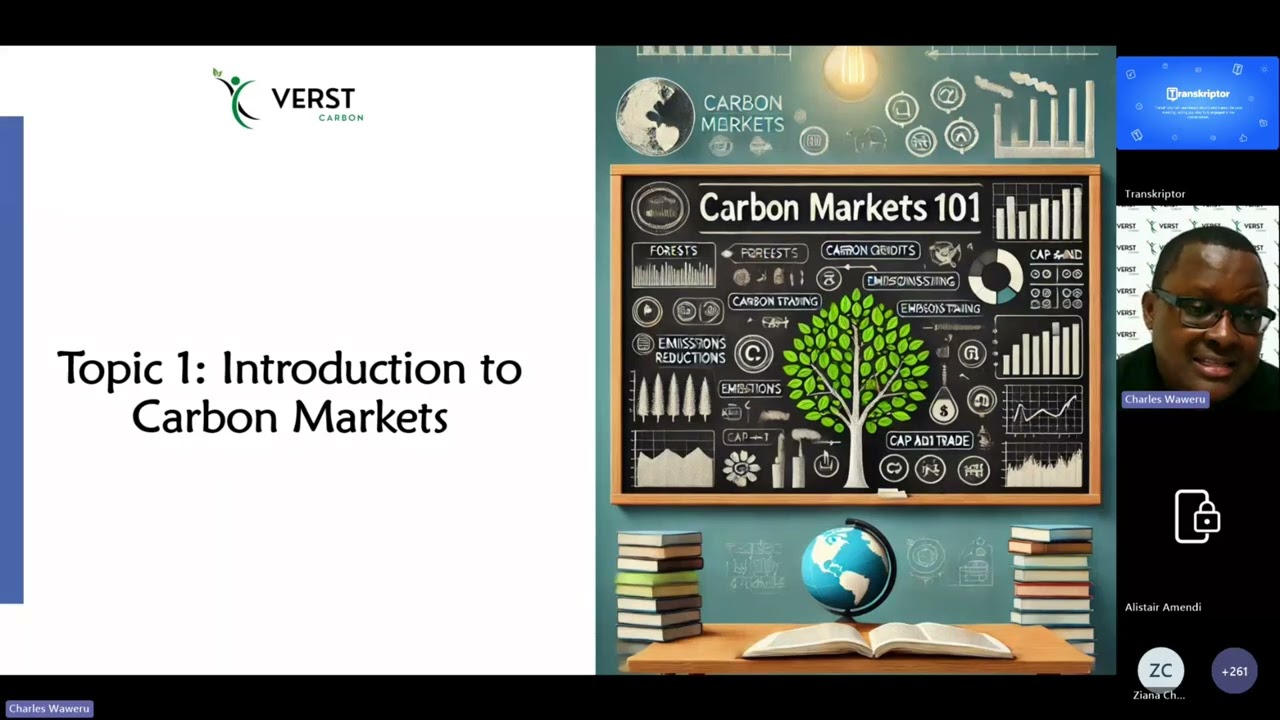
Article 6 of the Paris Agreement (2015) establishes the international framework for carbon credit trading and climate cooperation. Countries adopted Nationally Determined Contributions (NDCs) to limit emissions, with reports submitted every two years. Article 6 governs how carbon credits can be generated and traded internationally, providing frameworks for countries that cannot develop carbon projects themselves to purchase mitigation outcomes from other countries. The framework includes Article 6.2 (international trading rules), Article 6.4 (new UN mechanism replacing CDM), and Article 6.8 (non-market cooperation). Article 6.2 establishes rules for international carbon trading between countries, including criteria for participation, rules to prevent double counting, tracking mechanisms, and review processes. Countries can generate credits through bilateral approaches, existing carbon standards like Gold Standard, or the Article 6.4 mechanism.

Carbon markets can be categorized into compliance markets (regulated by governments or international regimes setting caps) and voluntary markets (based on voluntary initiatives). Compliance markets include emissions trading schemes like Indonesia's coal sector trading scheme. Cap-and-trade involves governments setting caps on emissions and allocating or auctioning allowances to companies. Companies that can reduce emissions at lower costs will do so and sell excess allowances to companies with higher abatement costs. The stringency of the cap affects prices - more stringent caps lead to higher prices. Article 6 of the Paris Agreement sets up an accounting framework for international carbon markets. Unlike the Kyoto Protocol where developed countries had targets and could trade among themselves, the Paris Agreement is a bottom-up scheme where every country sets its own targets. Article 6 has three sections: Article 6.2 (Cooperative Approaches) allows countries to cooperate through bilateral agreements for trading carbon credits; Article 6.4 (Paris Agreement Crediting Mechanism) replaces the Clean Development Mechanism (CDM) as a UNFCCC-governed mechanism; and Article 6.8 (Non-Market Approaches) provides an alternative for countries that prefer non-market solutions. Participation in Article 6 requires more institutional capacity and regulation from the host country compared to CDM. The voluntary carbon market is not regulated by governments; companies and organizations set voluntary targets like climate neutrality or Net Zero. The market has experienced strong growth from 2017 to 2021 due to greater interest in Net Zero targets. The average price on this market is about $6 per ton. Carbon credit prices vary based on risk and market conditions. The primary market involves signing contracts when carbon credits are not yet issued, resulting in lower prices (e.g., $3-4 per ton) because buyers take significant risk. The secondary market involves trading credits that are already issued, with higher prices (e.g., $15 per ton) due to reduced risk. Global carbon market experiences provide important lessons: domestic emissions trading schemes show that prices tend to vary quite a lot, leading governments to regulate prices by setting floor and ceiling prices. There is a trend toward integrating emissions trading schemes with carbon tax schemes. When developing emissions trading schemes in Asia, the trend is to not allow international offsets but to allow offsets from other sectors within the country.
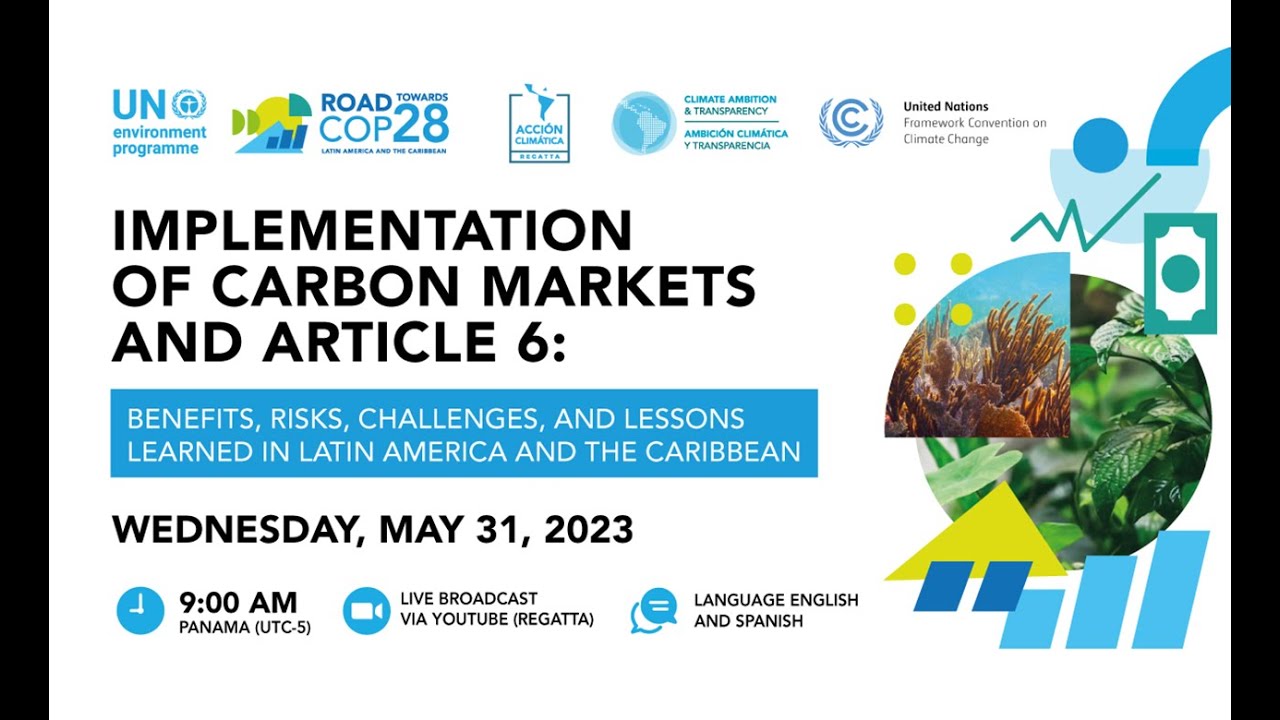
Article 6 of the Paris Agreement establishes a comprehensive framework for international cooperation on climate action through carbon markets. This mechanism enables countries to trade emission reductions internationally, helping them achieve their nationally determined contributions (NDCs) more efficiently. The framework includes over 120 countries representing approximately 80% of global NDC submissions expressing interest in using Article 6 cooperation mechanisms. Carbon markets have shown significant growth, expanding from $520 million in 2020 to $2,200 million in 2022, demonstrating increasing international engagement with market-based climate solutions.
Article 6 provides the international cooperation flexibility for carbon markets under the Paris Agreement, with the Paris Agreement Rule Book providing further guidance developed over subsequent years. Article 6.2 establishes accounting and reporting requirements to prevent double counting through corresponding adjustments, ensuring parties cannot claim the same emissions reductions. Article 6.4 sets up a new centralized carbon market similar to the CDM, with two types of credits: eligible credits with corresponding adjustments for international use, and mitigation contribution credits for host party targets. Major steps forward were made in 2021 at Glasgow (CDM 2.0 rules) and 2024 in Baku when Article 6 was finalized.

The Paris Agreement provides a comprehensive framework for global climate action through 29 articles, with Article 6 establishing mechanisms for carbon markets and non-market approaches. Article 6.4 creates a new UN carbon credit trading system replacing the Kyoto Protocol's Clean Development Mechanism, enabling developing countries to participate in markets. Small island states were instrumental in negotiating the 1.5°C temperature threshold to prevent irreversible damage from sea level rise. With approximately 65 gigatons of CO2 remaining for the 1.5°C target by 2024, these nations face existential threats driving their active engagement in international climate negotiations and market mechanisms.
Climate Talks
0:02- 1
Environmental issues rose on the agenda since the 1972 Stockholm summit.
- 2
The 1992 Rio Earth Summit established the UN climate framework and COPs.
- 3
Major accords include Kyoto and Paris, aiming to limit global warming.
The Radical Climate Justice and Inefficacy Critique of Global Diplomacy
While mainstream narratives frame global climate summits as milestones of diplomatic progress, critics from climate justice movements, post-colonial scholars, and political scientists offer a starkly different perspective. They argue that these summits, from Rio to Paris, represent a history of 'performative diplomacy' and systemic failure. This critique highlights that agreements like the Paris Accord rely on voluntary, non-binding targets (NDCs) that lack enforcement mechanisms, allowing major polluters to greenwash their images while continuing emissions. Furthermore, critics argue that the COP framework commodifies the environment through market-based mechanisms (such as carbon trading) rather than addressing the root causes of ecological crisis—namely, industrial capitalism and fossil-fuel dependency. From a post-colonial lens, these summits perpetuate 'climate colonialism' by failing to secure legally binding historical reparations or adequate climate finance for the Global South, which suffers the worst consequences of a crisis it did not create. Thus, rather than solutions, the summits are viewed as mechanisms that delay urgent, radical action to protect economic status quos.
since the first summit on sustainable development in 1972 in Stockholm environmental issues have slowly corpt up the international agenda the 1992 Earth Summit in Rio de Janeiro laid the foundations of green diplomacy it resulted in the United Nations framework convention on climate change every year since 1995 the conference of parties to the convention known as cop brings together signatory states to try to combat climate change by reducing emissions this annual Summit also formed the basis for 1997's Kyoto Protocol the treaty committed 37 industrialized countries to reduce greenhouse gas emissions to 5.2% against 1990 Levels by 2012 but no restrictions were imposed on developing countries like China and India despite both being significant polluters in 2009 cop 15 in Copenhagen failed to deliver a new Global treaty it ended instead with a non-binding agreement to take action to keep temperature increases below 2° C with without explaining how this would happen the cop 17 Summit in 2011 resulted in the Durban platform for enhanced action committing countries including the United States and China to deliver a new legally binding agreement in 2015 the 21st climate change conference in Paris known as cop 21 aims to secure the first universally recognized Accord to try to limit temperature rise to 2° cius scientists warn that any increase above this could have devastating consequences
Up Next

Daily Current Affairs Analysis for UPSC: October 21, 2024
@VajiramandRaviOfficial
11.8K views•2024-10-21

Triumph of Orthodoxy Icon: Byzantine Art & History Explained
@BenCallan
2.1K views•2024-08-06

Build a Dynamic Rolling Forecast in Excel with FORECAST.ETS
@afponline
56.2K views•2022-12-16

Game of Thrones Opening Credits: A Cinematic Analysis
@gameofthrones
46.3M views•2011-04-18
Related Study Plans & Knowledge Roadmaps
Structured learning paths in General & Interdisciplinary Studies