The four forces of flight are drag (the force that slows an object down), thrust (the force that propels an object forward), lift (the force that makes an object rise), and gravity (the force that pulls an object to earth); for an object to fly, it must experience all four forces working together, with lift counteracting gravity and thrust overcoming drag.
Four Forces of Flight Explained for Elementary Students
Added:Deep Dive
The basic concept of a force as a push or a pull that can make objects move.
STD - 2 (science chap -11 Light and Force)
115
Force is a push or pull that can cause an object to move, stop, or change direction. A push is a force that moves an object away from the source of the force, while a pull is a force that moves an object toward the source of the force.
Click to watch →

Class-9: Chapter-9:: Force and Laws of Motion (Part-I)
126
A force is defined as a push or pull that can change the motion of an object. When you apply a force to an object, it can cause the object to start moving, stop moving, or change its direction. This is the fundamental concept of force in physics.
Click to watch →

Science 7 Chapter 8 Lecture 1 || SNC 2020 ||
181
Force is fundamentally a push or pull acting on an object. When we pull something toward ourselves, we apply a pulling force. When we push something away, we apply a pushing force. The instructor explains that these actions (pulling and pushing) are the basic manifestations of force that cause objects to move or change their motion.
Click to watch →

30 - Unit 2 | Concept 1 | lesson 5
703
Force is defined as a push or pull that can make an object start or stop moving. This is the fundamental definition of force in physics.
Click to watch →

Class-4,Science,ch-11(Push or Pull)
487
Force is defined as a push or pull. This is the fundamental concept that force represents any action that can cause an object to move, stop, or change direction.
Click to watch →
Deep Dive
An intuitive understanding of gravity as a natural force that pulls objects down toward the Earth.

La GRAVEDAD es una ILUSIÓN: Niels Bohr y la Verdad que Einstein no Terminó
111
Gravity is perceived as the most obvious, constant, and irrefutable force in the universe. Objects fall toward the ground with constant acceleration that is perfectly predictable and consistent across all locations on Earth and throughout human history. This everyday experience creates an intuitive understanding that gravity is a force that pulls objects downward.
Click to watch →

GSoul - Natural (lyrics)
1.4K
Gravity is a natural force that pulls objects downward toward the Earth. This force is constant and affects all objects with mass.
Click to watch →
![현대과학의 엄청난 발전, 중력을 거스르는 물체 개발 성공 [네이처 표지논문]](https://i.ytimg.com/vi/g9agdEiKva8/maxresdefault.jpg)
현대과학의 엄청난 발전, 중력을 거스르는 물체 개발 성공 [네이처 표지논문]
331.3K
Gravity is a natural force that pulls objects toward the center of the Earth. This is why objects like apples fall downward when dropped. The Earth's massive gravitational pull causes almost all objects on Earth to move downward rather than upward.
Click to watch →

Class XI Physical World Introduction of Physics
517
Gravity is a fundamental natural force that causes objects to fall toward the Earth. When an object is released, it naturally moves downward due to gravitational pull. This force acts continuously on all objects near the Earth's surface, causing them to accelerate toward the ground. Understanding gravity is essential for explaining everyday phenomena like objects falling, water flowing downhill, and the behavior of celestial bodies.
Click to watch →

Force and Pressure | part 3 | Chapter 11 | S Chand | Class 8 Science | P Chahal
766
Gravity is a natural force of attraction that pulls all objects toward the center of the Earth. When an object is dropped from a height, it falls downward because of the gravitational force pulling it toward Earth's center. This force acts on all objects regardless of their mass.
Click to watch →
Deep Dive
The realization that air is a physical substance made of matter, which can exert pressure and push against moving objects.

الباحث الصغير | الحلقة 15 | الإخوان رايت
234
Air is not empty space but a physical substance that can exert force. When a car moves at speed, the air pushes against objects like a solid wall. This demonstrates that air has mass and can generate pressure, which is why it can support objects like airplanes.
Click to watch →

Class 4 । Matter । Chapter 6 । Elementary Science । 2025 ।
915
Air occupies space and has weight, proving that air is also a form of matter. Air exerts pressure against objects (opposes pressure). This demonstrates that air has the properties of matter.
Click to watch →
Playtime with Parachutes | Physics for Kids
344K
Since air is made up of matter, it pushes back on anything that moves through it. While we don't feel this force much when walking slowly, we can feel it more when running or moving faster, such as when riding a bike.
Click to watch →

Air experiment for kids part.1 | Air is everywhere and can push things
4.8K
Air is invisible but exists all around us. When air moves, we can feel it as pressure on our face. This demonstrates that air is a physical substance that occupies space and can exert force on objects.
Click to watch →

The Most Relaxing Facts About Airplanes to Fall Asleep To
33.1K
We think of air as nothing, as empty space, but it's not. Air is a fluid just like water—thinner, yes, but still a substance you move through. Planes don't fly over air; they swim through it. Wings push it down, engines push it back, and the plane moves forward because air is something real, something physical, something with weight and pressure and movement. A cubic yard of air at sea level weighs about 2 lb. That doesn't sound like much until you think about scale—the atmosphere above one square mile of ground weighs about 14 million tons. All that weight pressing down creates pressure, and that pressure is what holds you to the ground, makes weather, and allows flight to work.
Click to watch →
Deep Dive
The simple distinction between balanced forces (where things stay still) and unbalanced forces (where things move).
حل كتاب التقييمات صفحه 19 و 20 و 21 و 22 و 23 و 24 علوم تانيه اعدادي | الواجب للصف الثاني الاعدادي
151K
This section explains the difference between balanced and unbalanced forces. When forces are balanced (equal in opposite directions), the net force is zero and the object remains stationary. When forces are unbalanced, the object accelerates in the direction of the net force. The video uses examples of teams pulling a rope to demonstrate how the stronger force determines motion direction, and how increasing the number of people pulling in one direction increases the net force in that direction.
Click to watch →

Force and Laws of Motion Class 9
319.7K
Balanced forces occur when equal and opposite forces act on an object, resulting in a net force of zero. This prevents motion - the forces cancel each other out. Unbalanced forces occur when forces are unequal or in different directions, resulting in a non-zero net force that causes motion. The key distinction is whether the net force equals zero or not.
Click to watch →
الدرس الثالث والرابع علوم الصف الرابع مفهوم الحركة والتوقف الترم الاول2025نشاط7-10مستر محمد ابراهيم
45.7K
Balanced forces are equal in magnitude but opposite in direction, resulting in no net force. When balanced forces act on an object, it remains at rest if already at rest, or continues moving at constant velocity if already moving. Unbalanced forces cause changes in motion - objects at rest start moving, and moving objects change speed. Forces in the direction of motion increase speed, while forces opposite to motion decrease speed.
Click to watch →

Balanced and unbalanced forces | Forces and Newton's laws of motion | Physics | Khan Academy
545.2K
Balanced forces occur when forces acting on an object are equal in magnitude and opposite in direction, resulting in zero net force and no acceleration; unbalanced forces occur when forces are unequal, creating a net force that causes acceleration in the direction of the larger force.
Click to watch →

BPSC TRE 4.0 NCERT | NCERT Class 9 Science Chapter 8 Force and Laws of Motion | Physics Vikash Sir
23.8K
Force is a push or pull that changes an object's velocity magnitude or direction. Balanced forces (equal magnitude, opposite direction) maintain an object's state of rest or motion without causing acceleration. Unbalanced forces (unequal magnitude) cause acceleration in the direction of the greater force. Examples include pushing a door, pulling a pen, or hitting a ball. Without force, motion remains unchanged.
Click to watch →
Prerequisite Knowledge
- Concept 01The basic concept of a force as a push or a pull that can make objects move.
- Concept 02An intuitive understanding of gravity as a natural force that pulls objects down toward the Earth.
- Concept 03The realization that air is a physical substance made of matter, which can exert pressure and push against moving objects.
- Concept 04The simple distinction between balanced forces (where things stay still) and unbalanced forces (where things move).
Subsequent Learning
- Step 01How wing shape (airfoils) and Bernoulli's Principle help generate the upward force of lift.
- Step 02The role of airplane control surfaces (like ailerons, elevators, and rudders) in maneuvering a plane's pitch, roll, and yaw.
- Step 03The different mechanical methods used to generate thrust, comparing propellers to jet engines.
- Step 04The science of unpowered flight, exploring how gliders and paper airplanes maximize lift and minimize drag.
- Step 05Biomimicry in aviation, studying how the anatomy and flight of birds and insects inspire airplane design.
Forces Overview
Quiz & Badge
Forces Overview
0:01Playing Section
- 1
Introduces four flight forces: drag, thrust, lift, gravity.
- 2
Guides labeling diagram and matching definitions.
The Bernoulli vs. Newton Lift Debate and the Limits of the Four-Forces Model
While the standard 'Four Forces of Flight' model is a highly effective educational tool, physicists and educators often critique how these concepts—particularly lift—are simplified for young learners. Many elementary presentations rely on the 'Equal Transit Time' theory of Bernoulli's principle to explain lift, which is a known aerodynamic misconception. Critics argue that teaching flight solely through this lens ignores Newton's Third Law of Motion (the downward deflection of air), which is vital for a scientifically accurate understanding. Additionally, some scientists point out that treating the four forces as completely independent is a pedagogical simplification; in reality, fluid dynamics involves a continuous, interconnected system where thrust, drag, and lift constantly influence one another.
Deep Dive
How wing shape (airfoils) and Bernoulli's Principle help generate the upward force of lift.

Ep.168 a lezione con la fisica che ci piace - Muschio Selvaggio Podcast
202.3K
Aircraft generate lift through pressure differences created by wing shape and angle. Bernoulli's Principle states that faster-moving fluids have lower pressure. Air flows faster over the curved upper wing surface, creating lower pressure above and higher pressure below, pushing the wing upward. Formula 1 cars use the opposite principle—downforce—to increase tire grip for cornering.
Click to watch →
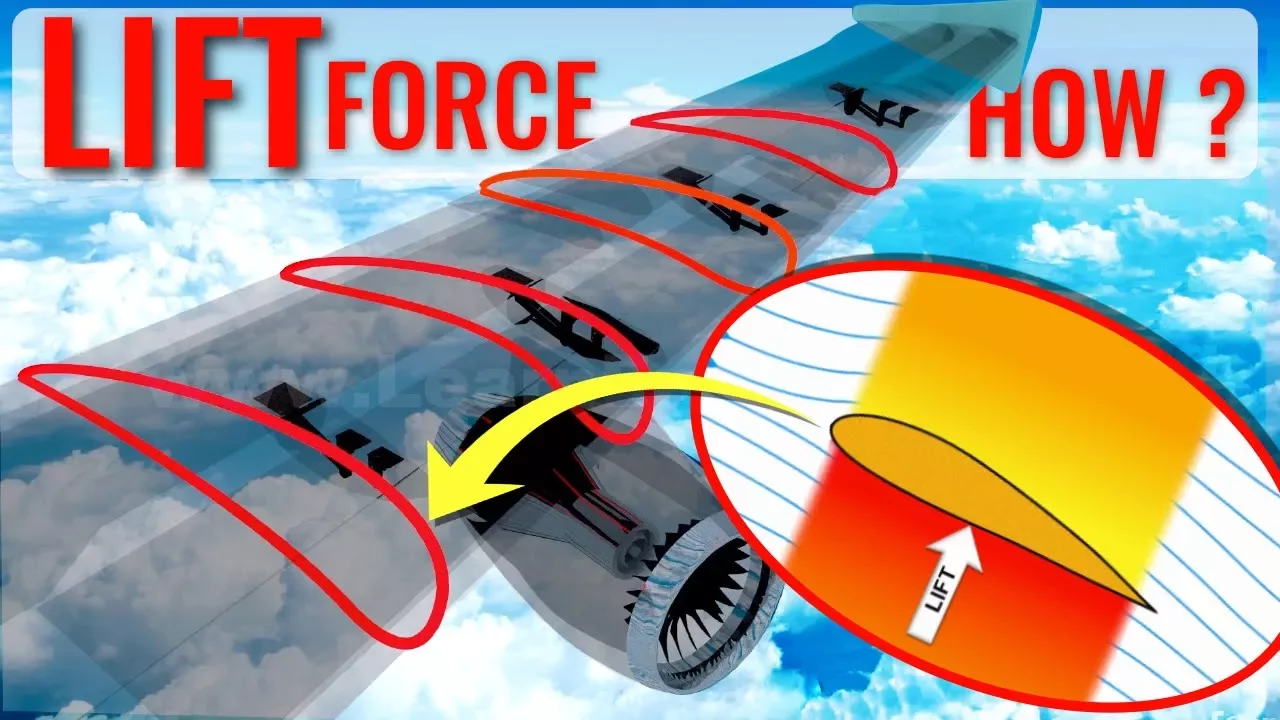
How do Wings generate LIFT?
1.8M
Airfoils generate lift primarily through the Coanda effect, where the curved shape of the wing deflects airflow downward, creating a pressure difference (lower pressure above and higher pressure below) that produces an upward force; this deflection-based explanation using Newton's third law is more accurate than the commonly taught equal-time argument based on Bernoulli's principle, which incorrectly assumes particles on both surfaces must reach the trailing edge simultaneously.
Click to watch →
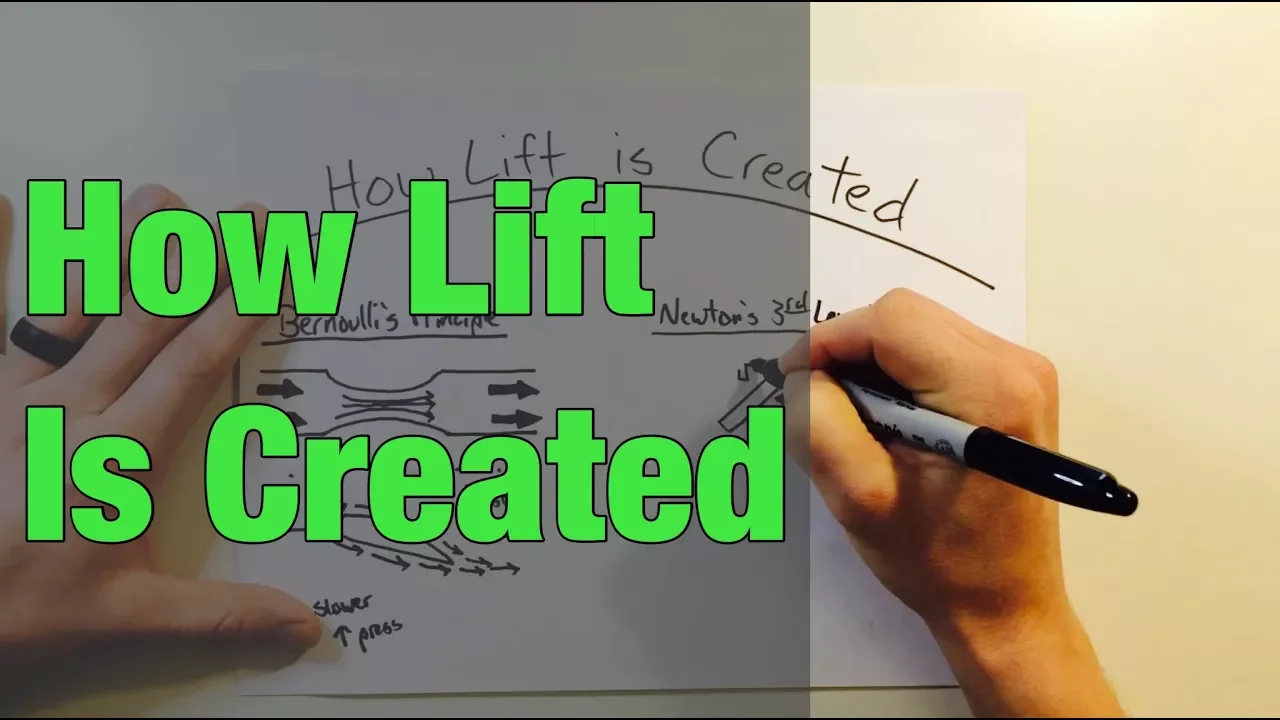
How Lift is Created
44.8K
Lift is created through two complementary theories: Bernoulli's Principle, which explains that the curved shape (camber) of an airfoil causes airflow to accelerate over the upper surface, creating lower pressure above and higher pressure below, resulting in an upward force; and Newton's Third Law of Motion, which states that as air impacts the airfoil at an angle and is redirected downward, an equal and opposite upward force is generated on the airfoil. Neither theory alone fully explains all aspects of lift, but together they provide the most complete understanding of how lift is produced.
Click to watch →

【大航海時代】昔の人は逆風の時どうしていたのか【ゆっくり解説】【雑学】
83.1K
This section explains how sails and airplane wings generate lift. Air pressure is the force exerted by air molecules, with high pressure meaning more molecules and low pressure meaning fewer. Wind flows from high to low pressure areas. When air flows over an airfoil shape (curved top, flat bottom), it splits into faster-moving air over the top and slower-moving air below. According to Bernoulli's Principle, faster air has lower pressure, while slower air has higher pressure. This pressure difference creates an upward force called lift. The Coanda Effect explains why air follows curved surfaces, and Newton's Third Law provides an alternative explanation where the wing pushes air downward, creating an equal and opposite upward force.
Click to watch →
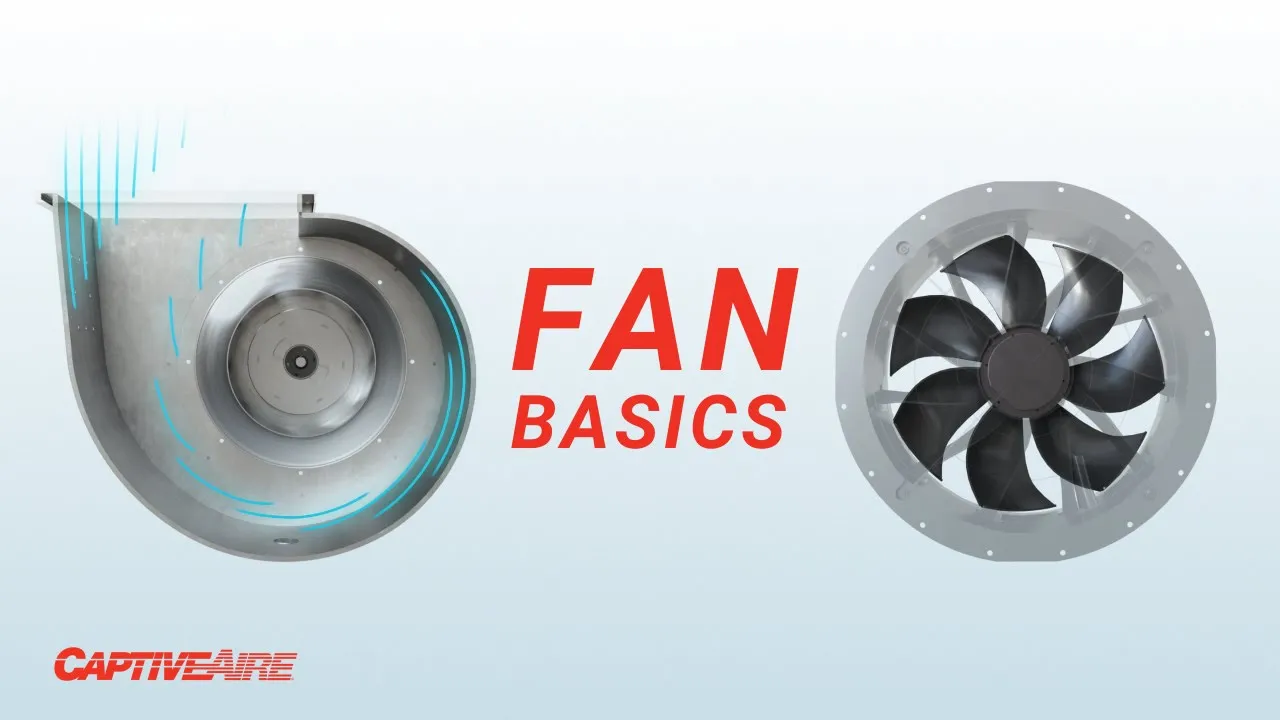
Fan Fundamentals - From The Wright Brothers To Today
181.9K
Bernoulli's Principle states that higher fluid velocity corresponds to lower pressure, explaining flight and curved trajectories. Airfoils generate lift through two mechanisms: the curved upper surface creates longer airflow paths, forcing air to speed up and create low pressure above (Bernoulli Method); changing angle of attack deflects air downward, creating equal upward force via Newton's third law. Most airfoils use both methods. The stall occurs when angle of attack exceeds critical limits (15-20 degrees), causing airflow separation. Drag results from air having to flow around objects and reconverge, visible as turbulence at trailing edges.
Click to watch →
Deep Dive
The role of airplane control surfaces (like ailerons, elevators, and rudders) in maneuvering a plane's pitch, roll, and yaw.

How Do Airplanes Fly? | Aerospace/Aeronautical Engineering - Basics - Chapter -1
544.4K
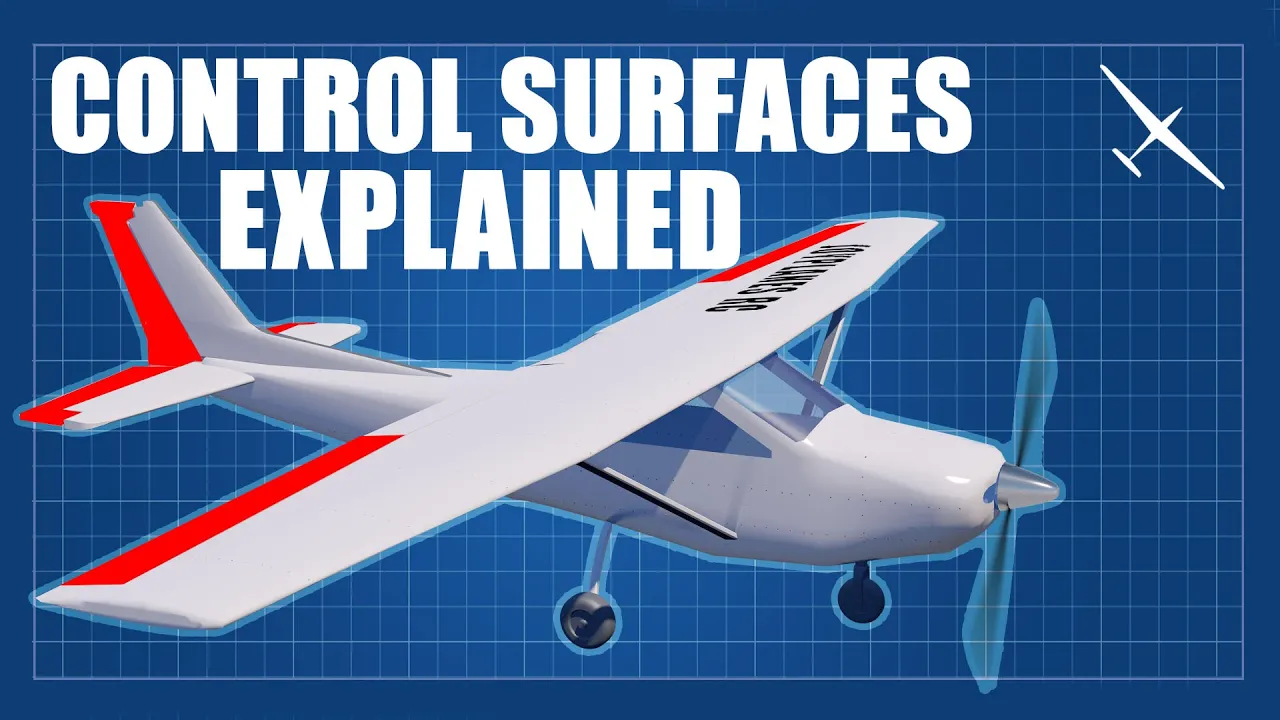
Aircraft control surfaces enable three-dimensional flight maneuvering: pitch (nose up/down), roll (wing tilt), and yaw (nose turn). Primary control surfaces include elevators (horizontal stabilizer—pitch control), ailerons (wingtips—roll control), and rudder (vertical stabilizer—yaw control). Elevators change the horizontal stabilizer's camber to raise or lower the nose. Ailerons work oppositely at each wingtip to create rolling motion. The rudder creates asymmetric lift on the vertical stabilizer for yawing. Secondary surfaces like flaps increase wing camber for additional lift during takeoff and landing. Control inputs from the cockpit translate through mechanical linkages to operate these surfaces.
Click to watch →
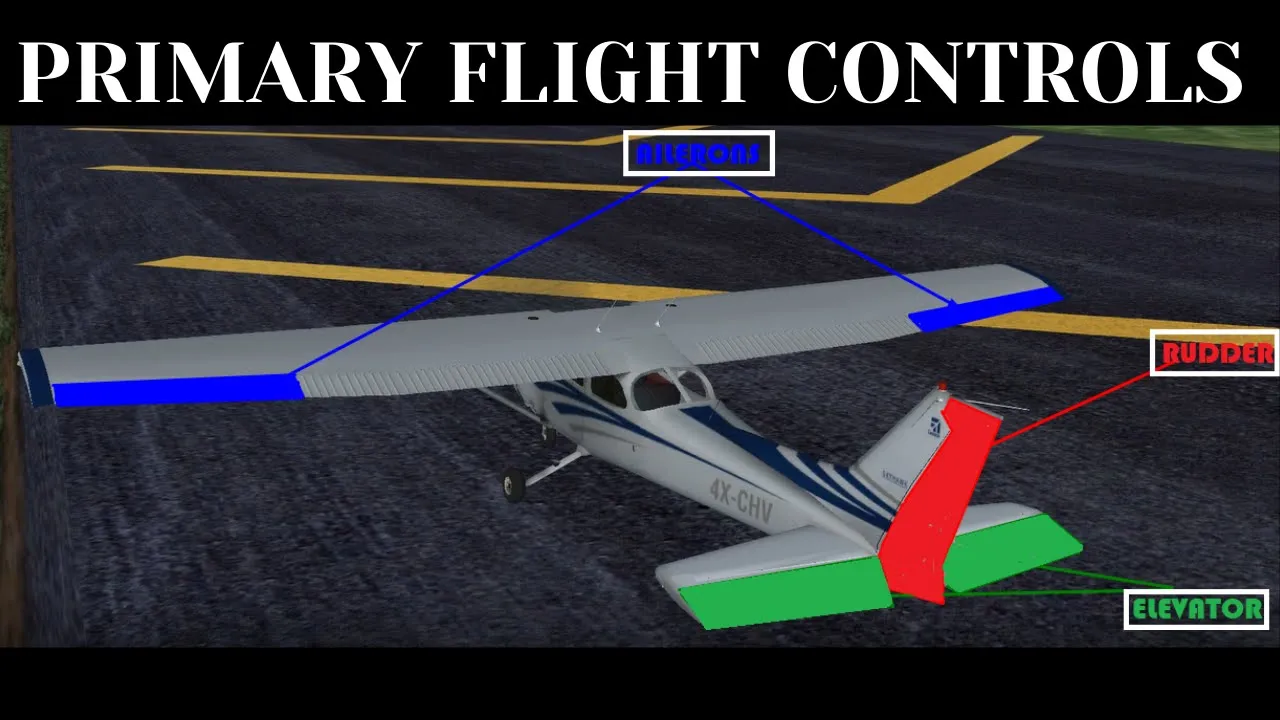
Aircraft Primary Flight Control Surfaces Explained | Ailerons, Elevators, and Rudders
307.9K
Aircraft primary flight control systems consist of three essential surfaces: ailerons, elevators (or stabilators), and rudders, which enable safe flight control. Ailerons are located at the outboard trailing edges of each wing and move in opposite directions—when one rises, the other lowers—creating unequal lift between the wings. The wing with the lowered aileron generates increased lift, while the wing with the raised aileron experiences reduced lift, resulting in a rolling motion around the aircraft’s longitudinal axis. Elevators are situated on the horizontal tail surface and move simultaneously up or down. When deflected downward, they increase the camber and lift on the horizontal stabilizer, producing an upward force that pitches the nose down; when deflected upward, they cause the nose to pitch up. These movements occur via mechanical linkages in older aircraft or fly-by-wire systems in modern ones. The rudder is mounted on the vertical stabilizer and rotates side to side, controlled by rudder pedals rather than the control stick. When deflected left, it generates an aerodynamic force to the right, causing the aircraft’s nose to yaw left around its vertical axis. This lateral force is analogous to how elevators create vertical forces, but acts horizontally. Together, these three surfaces allow precise control of roll, pitch, and yaw, respectively, enabling stable and maneuverable flight.
Click to watch →

CUÁNDO hemos SENTIDO Más FRÍO y NO Sabemos NADA De LA Copa AMÉRICA
133.2K
Aircraft control surfaces (ailerons, elevators, and rudders) enable pilots to control the aircraft's orientation and direction. Ailerons on the wings control roll (banking left or right), elevators on the tail control pitch (nose up or down), and the rudder on the vertical stabilizer controls yaw (directional movement). These surfaces work together to allow precise maneuvering of the aircraft during flight, enabling pilots to navigate safely and perform various flight maneuvers.
Click to watch →

Aerodynamics - How airplanes fly, maneuver, and land
206.4K
Airplanes use three movable control surfaces to maneuver: the rudder controls yaw (side-to-side movement of the nose), the elevator controls pitch (up-and-down movement of the nose), and the ailerons control roll (rotation around the longitudinal axis). These surfaces allow pilots to change the direction and orientation of the aircraft during flight.
Click to watch →
Aircraft Control Surfaces Explained | Ailerons, flaps, elevator, rudder and more
414.2K
The three primary control surfaces are the elevator, rudder, and ailerons. The elevator controls pitch (rising and lowering) by moving the plane along its transverse axis. The rudder controls yaw (side-to-side movement) by moving the plane along its vertical or y-axis. The ailerons control roll (tilting from one side to the other) by moving the aircraft along its longitudinal axis.
Click to watch →
Deep Dive
The different mechanical methods used to generate thrust, comparing propellers to jet engines.

驚異の発明-ジェットエンジンはレシプロ機を蹴散らした
265.3K
A gas turbine jet engine consists of three main components: a compressor that compresses incoming air, a combustion chamber where fuel is injected and burned, and a turbine that extracts energy from combustion gases to power the compressor. The remaining exhaust gases are expelled backward to generate thrust. Both propeller and jet aircraft generate thrust by accelerating air backward, but they do so differently. Propeller thrust decreases significantly at high speeds because the relative velocity between the propeller and air decreases, requiring proportionally more power to maintain thrust. Jet engines maintain thrust efficiency at high speeds because the exhaust jet velocity remains high relative to the aircraft's forward speed. Additionally, jet engines benefit from ram air effect, where forward motion compresses incoming air, further increasing efficiency at higher speeds. Frank Whittle, an RAF officer, was the first to patent a gas turbine jet engine design, but his patent was not taken seriously by the military. Hans von Ohain, a German physicist, independently developed a working jet engine, the HeS 3, which was mounted on the Heinkel He 178.
Click to watch →
LA DEVASTANTE TECNOLOGIA dei MOTORI DEGLI AEREI
82.7K
Jet engines generate thrust through a fundamentally different mechanism than propellers. Instead of mechanically pushing air backward, jet engines burn fuel to create high-temperature, high-pressure exhaust gases that are expelled at extremely high speeds through a nozzle. The process involves: (1) compressing incoming air, (2) mixing it with fuel and burning it, (3) using the hot gases to spin a turbine that powers the compressor, and (4) accelerating the remaining gases through a nozzle to create thrust. The exhaust gases exit at 5-10 times the speed they entered, creating powerful forward thrust.
Click to watch →
Il ridicolo AEREO che ha dato vita ai MOTORI JET!
50.5K
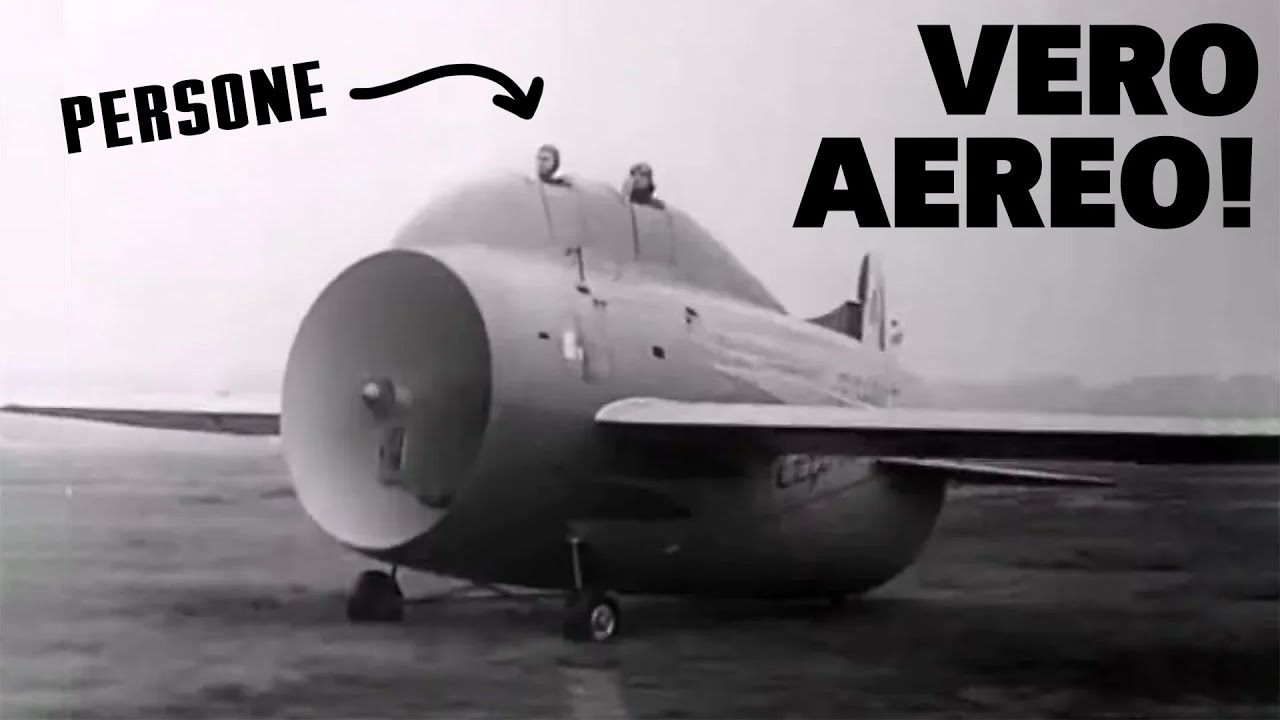
Propeller engines and jet engines operate on fundamentally different principles. Propeller engines use piston motors that spin propellers, which push air backward to propel the aircraft forward. Jet engines, in contrast, use the compression of air mixed with fuel to create hot, high-pressure gas that is expelled backward, generating thrust through Newton's third law of motion. This difference in propulsion mechanism has significant implications for aircraft design and performance.
Click to watch →

Aircraft Performance | Piston Engine vs Jet Engine!
39.5K
A propeller converts engine power into thrust by accelerating air around it, functioning like a rotating wing with its own lift and drag. Due to inefficiency from drag, some engine power is lost in this conversion, called propeller efficiency, which is typically around 85% for good propellers.
Click to watch →
Appreciating The Beauty of Jet Engines by Juxtaposing Them Against Piston Engines
337.3K
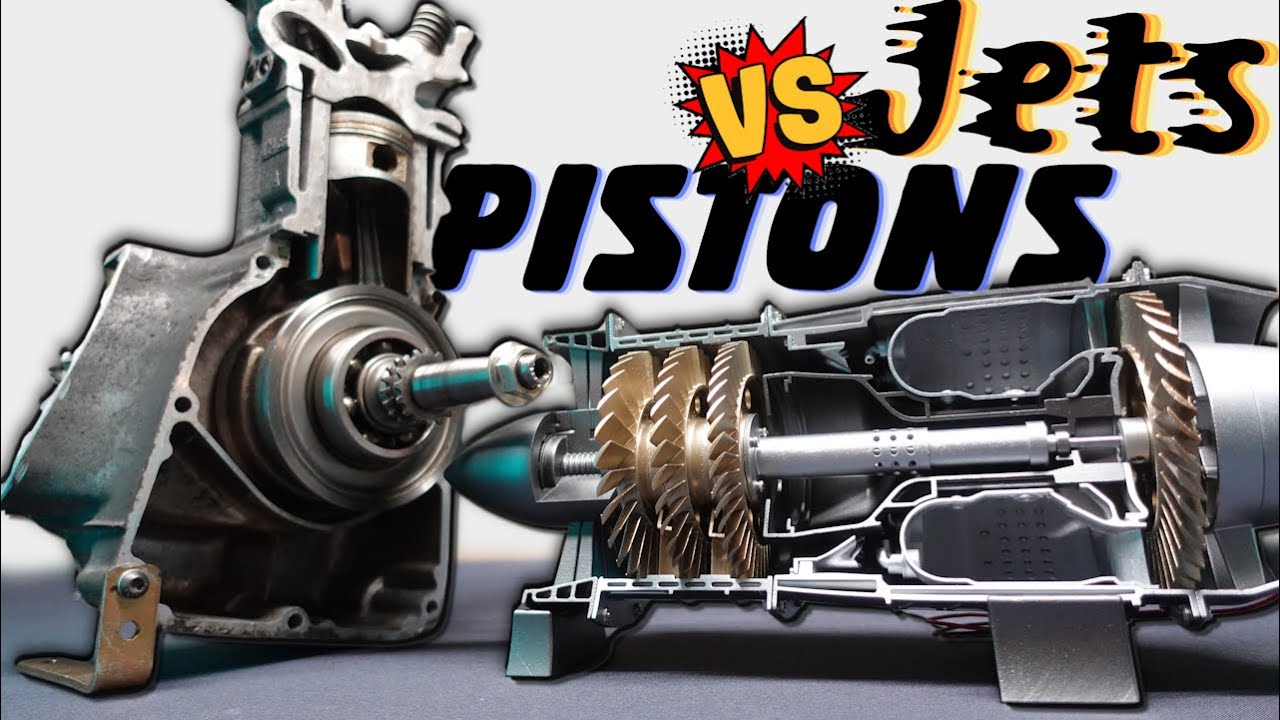
Jet engines are reaction engines operating on Newton's third law: thrust is generated by accelerating massive amounts of air rearward, with the engine moving forward as reaction. A typical commercial jet engine processes 1.2 tons of air per second during takeoff. The nozzle accelerates post-turbine gases, converting remaining pressure energy to velocity for thrust generation. Unlike power plant gas turbines that extract all available energy, jet engines only extract energy needed to spin the compressor, leaving excess energy for thrust. Jet engines offer superior power-to-weight ratios and longer service life (20,000+ hours vs. 4,000 hours for piston engines) due to simpler mechanical systems and absence of reciprocating components. However, they sacrifice fuel efficiency, particularly at low power settings.
Click to watch →
Deep Dive
The science of unpowered flight, exploring how gliders and paper airplanes maximize lift and minimize drag.
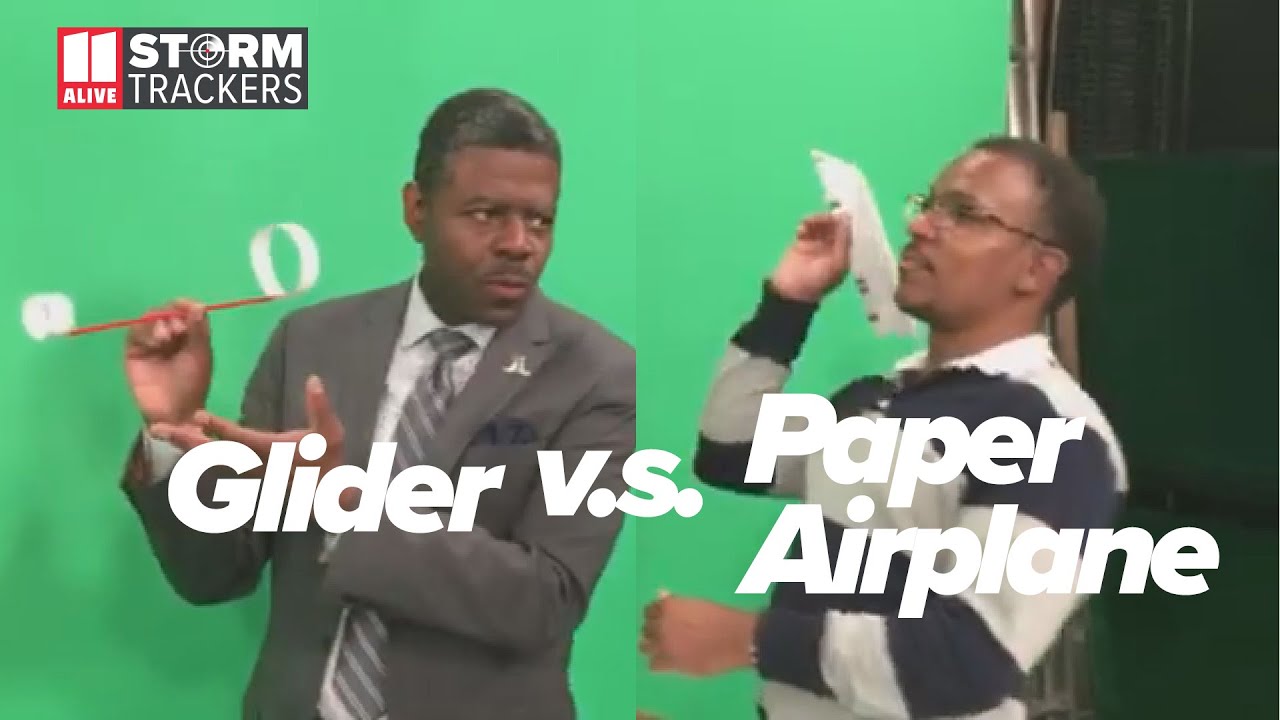
How to make paper airplane and glider | Which is fastest
4.2K
Paper airplanes and gliders both fly using the same four aerodynamic forces—thrust, lift, drag, and gravity—but gliders are designed with a longer fuselage and specific wing configuration to maximize lift and minimize drag, allowing them to stay airborne longer than traditional paper airplanes.
Click to watch →

¿Puedes VOLAR SIN MOTOR como un AVE? 🦅 El ARTE y CIENCIA del planeador.
226
Unpowered flight relies on aerodynamic principles where gliders generate lift while minimizing drag, with forward motion from gravity. The glide ratio measures horizontal distance per meter of altitude lost—modern gliders achieve 60:1 ratios. Historical development began with Leonardo da Vinci's bird-inspired sketches, progressed through George Cayley's 19th-century aerodynamic definitions and first glider flights, and culminated in Otto Lilienthal's 2,000+ glider experiments establishing foundational principles. The Wright brothers developed three-axis control through extensive glider experiments. Post-WWI, the Treaty of Versailles restricted German motorized aircraft, paradoxically accelerating glider development. Modern sailplanes use advanced composites with long high-aspect-ratio wings reducing induced drag. Natural energy sources include thermals (warm air columns from heated surfaces detected through cumulus clouds and variometers), mountain waves (oscillating air currents extending hundreds of kilometers to stratospheric altitudes exceeding 15,000 meters), ridge lift (wind forcing air upward along slopes), and convergence lift (air masses meeting and rising along encounter lines).
Click to watch →
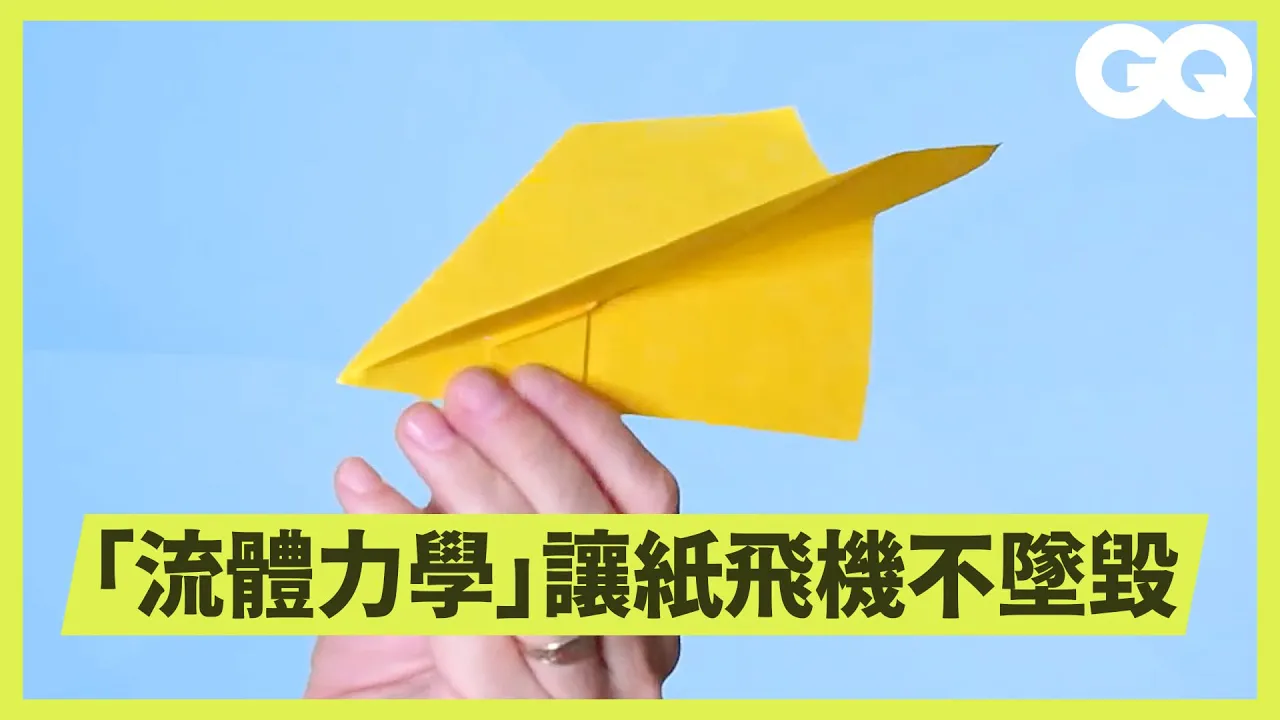
用紙飛機講解空氣動力學!這樣摺才飛得遠 How Paper Airplanes Fly|科普長知識|GQ Taiwan
807.2K
Paper airplanes fly due to four main aerodynamic forces—thrust, drag, gravity, and lift—where lift is generated by the Coanda effect (airflow following curved surfaces) and Newton's third law (downward air deflection creating upward force), while wing loading (weight divided by wing surface area) determines flight speed and efficiency, with higher wing loading requiring faster flight and lower wing loading enabling slower, longer glides.
Click to watch →

Was ist wirklich Fliegen? Die Wissenschaft dahinter
157
Sailplanes (gliders) have long, slender wings designed to maximize lift while minimizing drag. They're launched by tow planes or winches, then seek rising air to stay aloft—using thermals, ridge lift, and wave lift. Without engines, gliding feels closest to bird flight: quiet, soft, dependent on invisible atmospheric structures. Pilots read the landscape like surfers read waves—watching for sunny fields that generate thermals, hills where wind rises, and cloud formations indicating updrafts. It's a blend of science and intuition, calculation and feeling.
Click to watch →
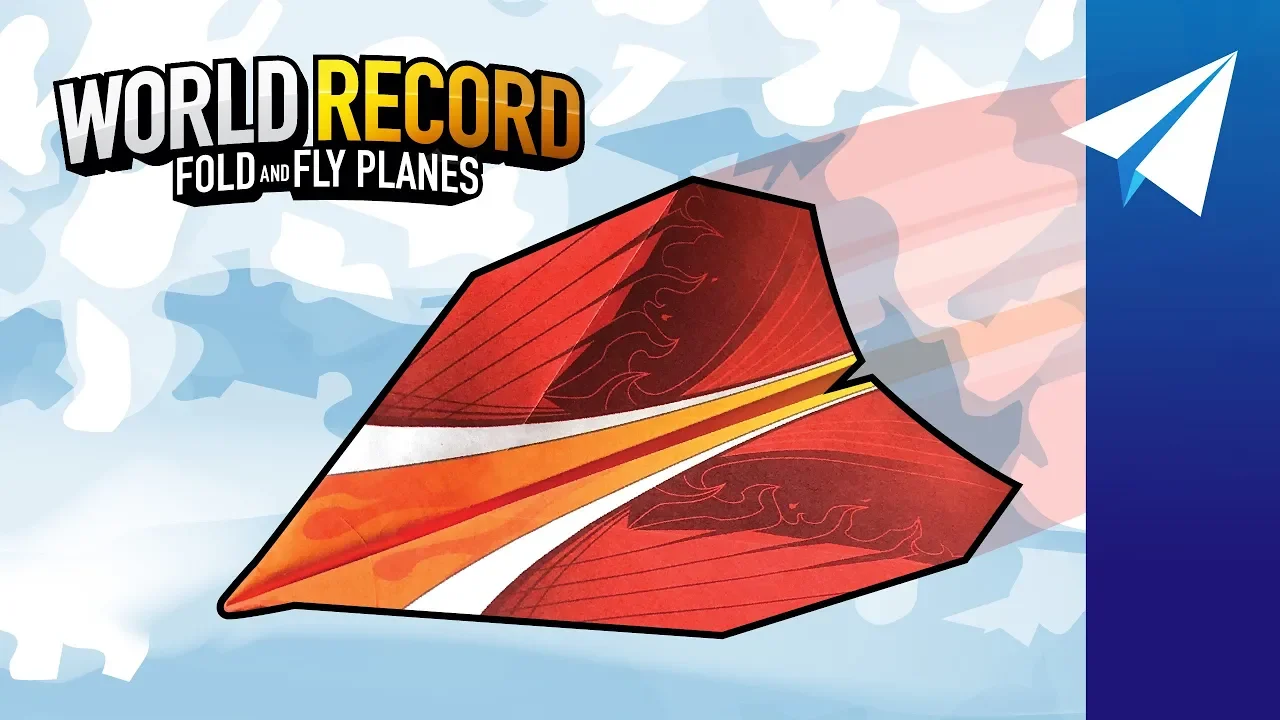
Easy Paper Airplane Glider — How to Make Phoenix, Designed by John Collins, The Paper Airplane Guy
280.3K
Drag is the resistance to airflow generated by the surface of the plane's body and its shape. Gliders counteract drag by pointing the nose down, which increases speed. Once sufficient speed is achieved, the plane levels out again. This creates a stable equilibrium where the plane moves downward and level simultaneously. This balance between drag, center of gravity, and up elevator is fundamental to how all gliders achieve stable flight.
Click to watch →
Deep Dive
Biomimicry in aviation, studying how the anatomy and flight of birds and insects inspire airplane design.

පාඩම 04 - Mother Nature (Pupils Book) English සිංහලෙන් | Grade 08
281.3K
There is a physical relationship between airplanes and birds. The airplane is based not only on the birds' streamlined body shape but also on the arrangement of wings. Engineers analyzed the flight of birds and adapted these principles for the construction of flying machines, demonstrating biomimicry in aviation technology.
Click to watch →

Comportamento e ecologia de aves com William Menq
9.8K
Biomimicry is the practice of designing products and systems based on biological models. In aviation, engineers have studied bird anatomy and flight mechanics to improve aircraft design. For example, the study of falcon wing anatomy has influenced the design of aircraft wings and turbine blades. The study of bird flight has also contributed to understanding aerodynamics and energy efficiency in flight. This application of biological principles to engineering demonstrates the value of studying nature for technological innovation.
Click to watch →

AERONAVES. AVIÕES inspirados pela NATUREZA. BIOMIMÉTICA revoluciona as TECNOLOGIAS para AERONÁUTICA.
165
Leonardo da Vinci pioneered biomimicry in aviation by studying birds in 1485 to create flying machines, establishing the foundation for nature-inspired engineering. Aviation is intrinsically connected to nature because flight principles require observing natural flight. Biomimicry enables solutions for noise reduction, pollution control, fuel efficiency, lightweight materials, and self-cleaning surfaces. Butterfly wing flexibility allows dynamic shape control during flight, improving aircraft efficiency. Shark skin's friction-reducing texture, demonstrated by Michael Phelps' Olympic swimsuit, can be applied to aircraft surfaces since water and air share similar fluid properties.
Click to watch →
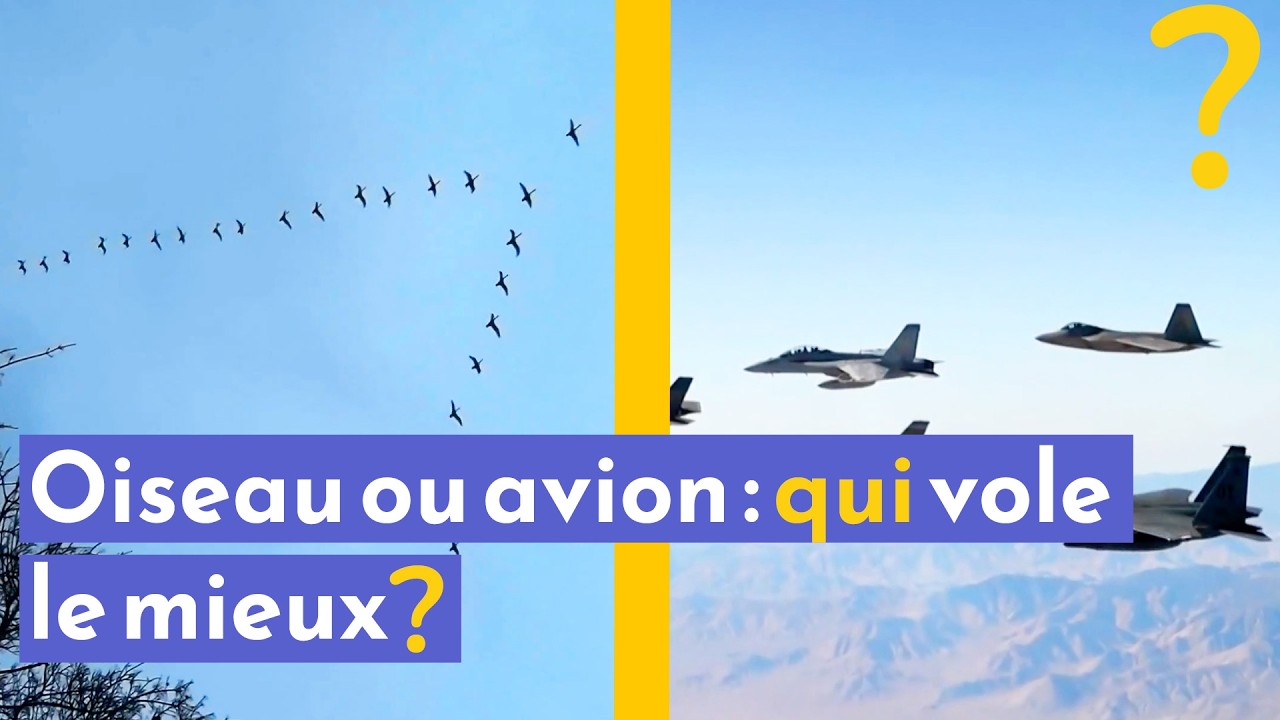
La VRAIE raison qui fait que les oiseaux peuvent voler !
873
Early aircraft designers drew direct inspiration from bird anatomy, copying wing shapes and body structures. The bird's eyes correspond to the cockpit, the beak to the pointed nose for air penetration, and the tail to the rear stabilizer. Aircraft control surfaces (ailerons, elevators, rudders) enable maneuverability similar to how birds orient their wings and tails. Military aircraft fly in triangular formations for tactical surveillance, while migratory birds use V-formations to reduce energy expenditure by riding upwash from preceding birds. This biomimetic approach continues today, with engineers still studying birds to advance aviation technology.
Click to watch →
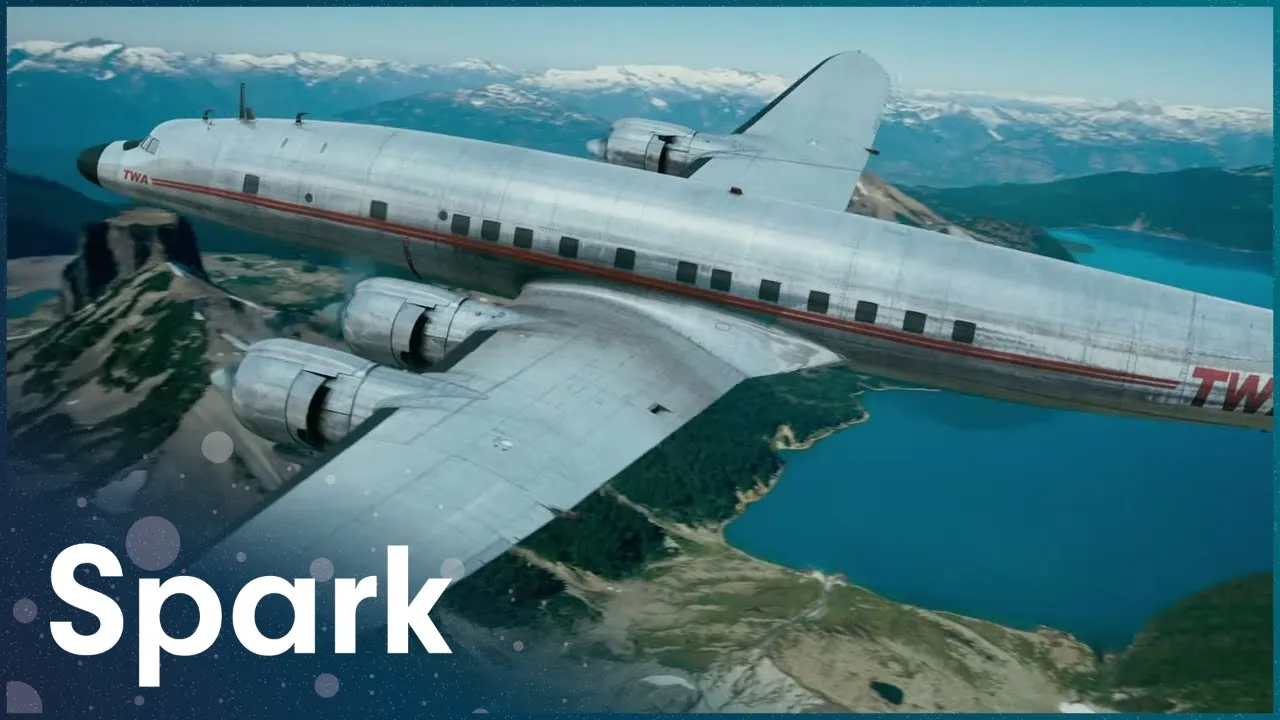
How These Legendary Aircraft Shaped Boeing 787 Dreamliner | Legends Of Flight | Spark
90.2K
Engineers look to nature for inspiration in aircraft design, studying how birds achieve extraordinary energy efficiency and range. The albatross demonstrates exceptional soaring efficiency, while bumblebees achieve remarkable fuel economy. Geese flying in formation benefit from each other's wings, improving aerodynamics and reducing fatigue. These natural solutions inform modern aircraft design for improved efficiency and performance.
Click to watch →
Forces Overview
Quiz & Badge
Forces Overview
0:01- 1
Introduces four flight forces: drag, thrust, lift, gravity.
- 2
Guides labeling diagram and matching definitions.
The Bernoulli vs. Newton Lift Debate and the Limits of the Four-Forces Model
While the standard 'Four Forces of Flight' model is a highly effective educational tool, physicists and educators often critique how these concepts—particularly lift—are simplified for young learners. Many elementary presentations rely on the 'Equal Transit Time' theory of Bernoulli's principle to explain lift, which is a known aerodynamic misconception. Critics argue that teaching flight solely through this lens ignores Newton's Third Law of Motion (the downward deflection of air), which is vital for a scientifically accurate understanding. Additionally, some scientists point out that treating the four forces as completely independent is a pedagogical simplification; in reality, fluid dynamics involves a continuous, interconnected system where thrust, drag, and lift constantly influence one another.
The basic concept of a force as a push or a pull that can make objects move.
An intuitive understanding of gravity as a natural force that pulls objects down toward the Earth.
The realization that air is a physical substance made of matter, which can exert pressure and push against moving objects.
The simple distinction between balanced forces (where things stay still) and unbalanced forces (where things move).
How wing shape (airfoils) and Bernoulli's Principle help generate the upward force of lift.
The role of airplane control surfaces (like ailerons, elevators, and rudders) in maneuvering a plane's pitch, roll, and yaw.
The different mechanical methods used to generate thrust, comparing propellers to jet engines.
The science of unpowered flight, exploring how gliders and paper airplanes maximize lift and minimize drag.
Biomimicry in aviation, studying how the anatomy and flight of birds and insects inspire airplane design.
1.5K views9likes3:52@tcosgrove6056Original Release: 2020-04-14
the four forces of flight do you know what the four forces of flight are or how they work together to make planes fly come join me pilot arrow to explore the four forces of flight and to earn your force badge this plane needs to use all four forces of flight to fly are you ready to learn how important each force is click on the red arrows to find out how each force affects flight drag the force that slows an object down thrust the force that propels an object forward lift the force that makes an object rise gravity the force that pulls an object to earth label the airplane diagram with the four forces of flight click on each force and drag it to its correct position well done now you're ready for a more difficult task mat each force with its correct definition click on each definition and drag it to its correct position excellent work you only one step away from earning your force badge are you up for one final force challenge hop the plane to take off and fly safely by writing down the correct answers when objects fly they experience a all four forces of flight B lift and thrust C only lift the force that keeps us firmly planted on the ground is a drag B gravity C lift the force needed to propel a plane forward is a thrust be drag see gravity to fly an object needs to experience a thrust be gravity see lift planes like any object moving forward will experience a lift be thrust see drag when a space shuttle returns to earth and lands it often releases a parachute to help slow it down the use of the parachute is an example of a drag B flight see gravity for forces of flight quiz answers 1a all four forces of flight to be gravity 3 a thrust for C lift 5 C drag 6 a drag congratulations you've successfully earned your force badge happy flying
Up Next
2:50
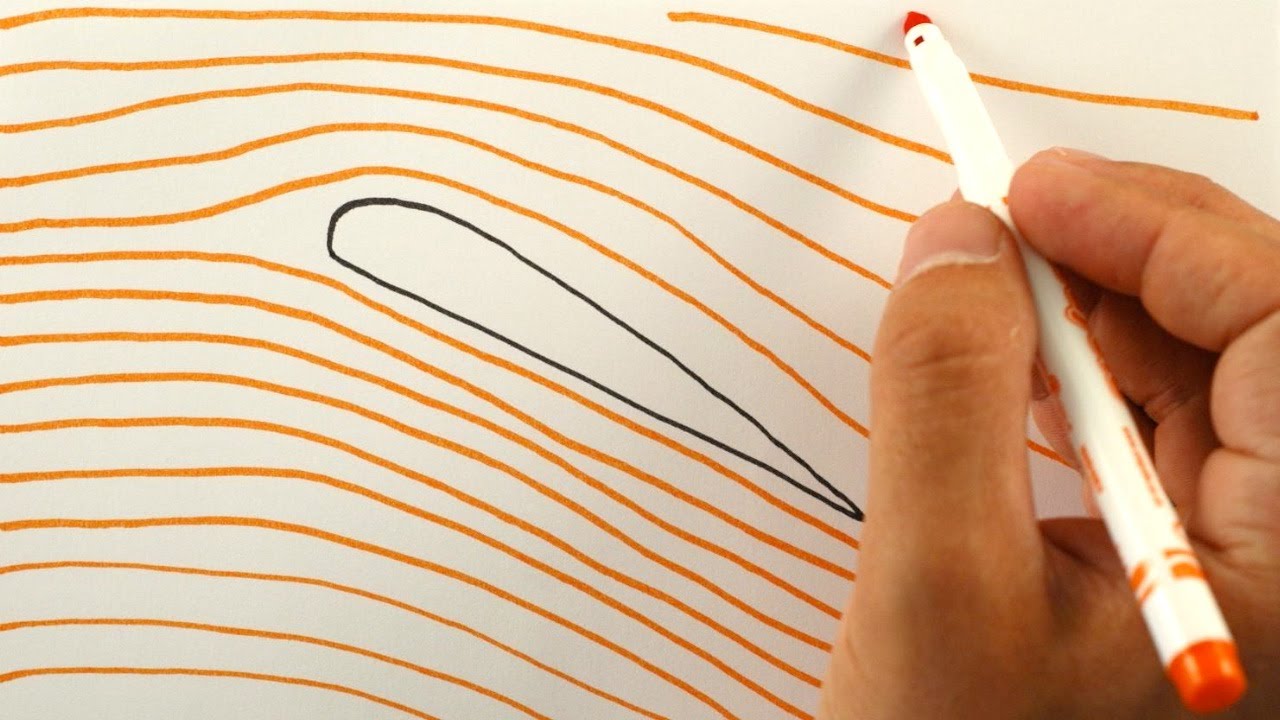
How Airfoils Generate Lift: Physics Explained
@veritasium
1.6M views•2012-08-03
30:32
Ultrasonic Transducers: Resonant Frequency Measurement and Horn Design
@imajeenyus42
229.9K views•2017-02-22
54:16
Polymer Environmental Degradation: Mechanisms & Stabilization
@iit
1.8K views•2012-07-10
33:39
How a Student's Question Saved a NYC Skyscraper from Collapse
@veritasium
22.8M views•2025-04-26
Related Study Plans & Knowledge Roadmaps
Structured learning paths in Engineering
engineering
Building Acoustic Levitators: Physics & Arduino
01The Physics of Sound and Standing Waves
02Piezoelectric Transducers and H-Bridge Drivers
03Arduino Programming: Generating 40 kHz Signals
+ 2 more learning modules
14h5 modules
Explore Roadmap
engineering
Building Peltier Cloud Chambers: Particle Tracks
01Cosmic Rays & Cloud Chamber Physics
02Thermoelectric Cooling (TEC) Fundamentals
03Custom Liquid-Cooling Loop Design
+ 2 more learning modules
18h5 modules
Explore Roadmap
engineering
Yagi-Uda Antennas: Modeling, Build & VNA Test
01Introduction to RF and Antenna Fundamentals
02Yagi-Uda Antenna Design Principles
03Antenna Modeling and Simulation in 4NEC2
+ 2 more learning modules
18h5 modules
Explore Roadmap
engineering
ECG Monitor Design: Op-Amps, Filters & Noise
01Electronics & Breadboard Basics
02Op-Amps and Instrumentation Amplifiers
03Bioelectricity and ECG Fundamentals
+ 2 more learning modules
18h5 modules
Explore Roadmap