


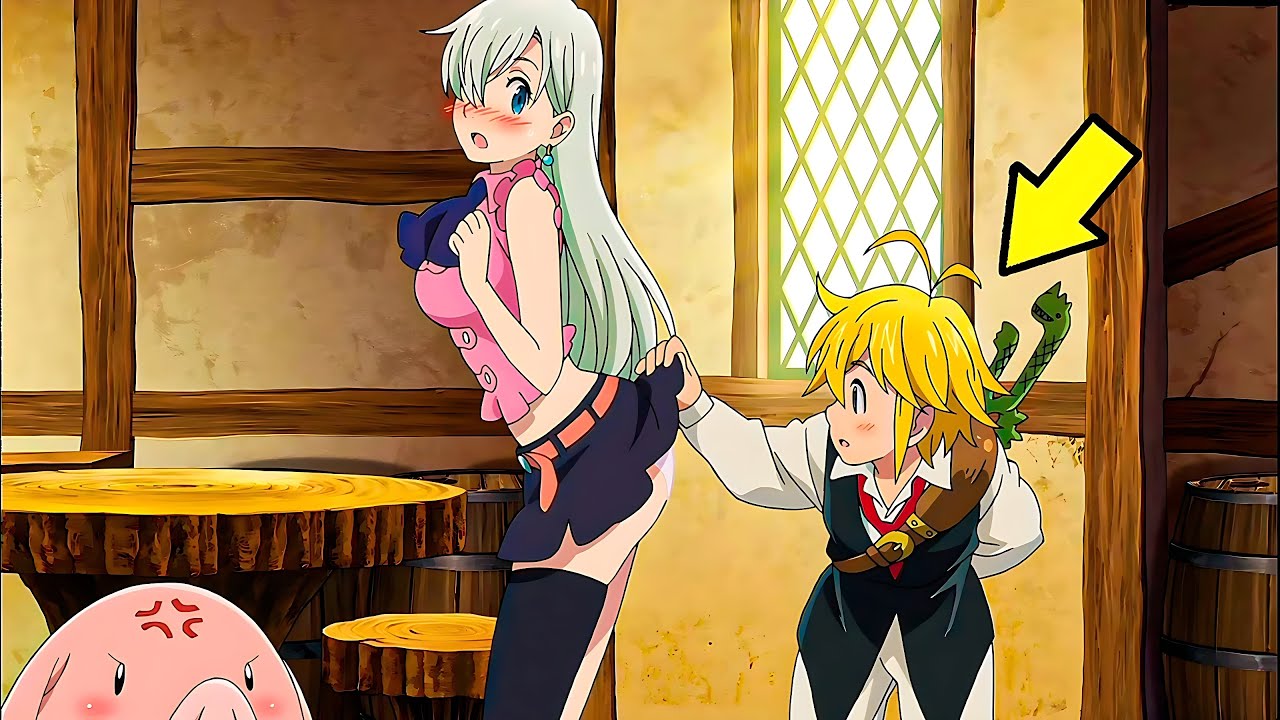


























In the anime Seven Deadly Sins, each member of the Ten Commandments possesses a unique commandment that represents a specific virtue, and their journey throughout the series demonstrates how these virtues shape their character development and ultimate redemption. For example, Fraud Rijn embodies selflessness through his sacrifice to save others, while Meliodas demonstrates love by giving up everything for Elizabeth. The video explores how each commandment's power affects those around them and how the characters' relationships with their commandments evolve over time, ultimately showing that true virtue requires personal growth and self-sacrifice.
Every Commandment in Seven Deadly Sins Explained
Added:The core premise and main characters of the 'Seven Deadly Sins' (Nanatsu no Taizai) series, particularly the roles of Meliodas and the Holy Knights.
The basic mythology of the setting, specifically the historical rivalry between the Demon Clan and the Goddess Clan.
The concept of power scaling in the series, including how 'Power Levels' are divided into Magic, Strength, and Spirit.
The identity of the Demon King as the supreme authority who possesses the power to distribute fragments of his own strength to others.
A comparative analysis of the 'Graces' possessed by the Four Archangels, which serve as the Goddess Clan's counterparts to the Demon King's Commandments.
The deep narrative irony and psychological impact of the Commandments' curses, focusing on how characters like Galand or Grayroad are ultimately defeated by their own decrees.
The true identity and complex character arc of Mael (Estarossa), exploring how his memories were manipulated to fit the dynamic of the Ten Commandments.
The lore connection to the sequel series, 'Four Knights of the Apocalypse', and how the remnants of the Demon Clan's power affect the new generation of heroes.
2.8M views45.7Klikes22:34Original Release: 2019-05-02
before we get into it I want to give a big THANK YOU to Nord VPN for sponsoring this video Nord VPN is an easy to use an incredibly effective way to protect your privacy and security online I tried at least three other VPN providers before Nord VPN but Nord is by far the easiest and fastest option I found you just installed the app on your desktop and mobile device and with a simple click your online activity becomes encrypted which allows you to stop large companies and governments from monitoring and manipulating your presence online and with article 13 and other recent attacks on net neutrality using Nord VPN is no longer an option for me it is a necessity Nord gives you access to thousands of servers around the world and connecting to a server in a different country means you can get quick and safe access to all the content available in that country as if you were there Nord VPN is currently offering an incredible deal when you go to Nord be P n comm slash anime uproar 75% off a three-year plan plus if you use the code anime uproar right now you will receive an extra month for free that's Nord VPN dot-com slash anime uproar or just click the link in the description but please act now this is a limited time offer [Music] what up guys goes in here for anime uproar and today we're going to be explaining how each member of the ten commandments including previous member mellotts relate to their commandment we will also pay attention to the special power that comes along with the specific commandment this video idea was actually suggested on my every character's sin explained video and then I got curious about the commandments and wanted to do more research on them and next thing you know here we are so feel free to leave a suggestion for a future video in the comments and you might just see it pop up in your feed in the near future make sure to LIKE and subscribe for more seven deadly sins videos and if you're already subscribed make sure to hit that notification bell so you actually get notified when new videos come out now it's out further ado let's jump into the video let's start with froderick the commandment of selflessness selflessness is defined as concerned more with the needs and wishes of others than with one's own the commandment appears to have such an effect that whoever in his presence harbors feelings of selfishness and greed will lose their memories feelings and their whole sense of self obviously since in many ways the Ten Commandments were the antagonist of the story for a long time their specific Commandments which all seem to suggest positive virtues will be ironic when it comes to their character fraud Rijn was responsible for killing Liz he framed the son deadly sins for zarathos is dead and no doubt did other terrible stuff however he does in the end live up to his commandment of selflessness before he didn't understand selflessness we get a flashback of him talking to go thir after meliodas left and demon side during the holy war fraud Rinna Soames Mellie Otis acted selfishly at first and fled from the war but go through Towson Mellie Otis didn't flee he threw himself into the fight for the sake of the one he loves he asks fraud Rijn if he can relate and he says no I can't he could not relate to putting someone else's wishes and desires above his own however fast-forward 3000 years to the moment when Mellie Otis is about to kill froderick Roger and decides to self-destruct and take everyone with him to the grave grim or rushes in he traps fraud rent and himself in one of his defensive barriers and begs him not to kill his dad or anyone else Rajan while he was in dreyfuses body has come to love Gris amore as his own son although he didn't want to be able to relate to feelings of love that make you prioritize others over yourself he suggests that he can now relate to such feelings thanks to griot more rather than going out with a bang and potentially taking Mellie Otis and his loved ones with him Rajan prioritizes Greer Moore's wishes and everyone's safety and willingly gives himself over to Mellie Otis to be brutally killed in the end his final act is an act of selflessness he shows that he is more concerned with the needs and wishes of Greer more than his own before fraud Rijn the demon goat her the creator of the doll go third that we know possessed the commandment of selflessness because the commandment could curse anyone with self-interest or ambition and could even affect demons in the demon world the demon king who gifted the demon go through with the commandment imprisoned him for 500 years at first king in gloxinia spotty thinks that demon Gotha is acting selfishly when he takes advantage of the turmoil during the holy war to escape from jail however Gotha also proves to be selfless he explains that his goal is to be a free man so that he could end the holy war the demon go through sacrifice as his own life in order to end a holy war at least temporarily one of his final requests is not for himself but for the doll goat there he asks Deanne and King to be his friends and lead him down the right path he is concerned for the doll Gotha in his final moments and not for himself he then proceeds to use a forbidden spell with go Thurs help that tampers with everyone's memories of the Archangel mile including the memories of the gods the demon king and the supreme deity since the spell required so much power the demon goat are needed his dolls help and even with it still needed to use every last drop of his life force to activate it thus he willingly died so that he could stop the war and all of the suffering that it caused his final act as with fraud Rijn was an act of selflessness we should also look at Argo third all because he can also be said to have possessed the commandment of selflessness with his creator in fact fraud Rijn says that it was go Thurs own commandment that erased his memories and feelings at times he seems selfish like when he heard skill and her brother so that he can better understand the feeling of love however this is usually the result of him simply not knowing what's right and what's wrong at his core with his memories and feelings intact Gotha is a selfless person although he can't cure her he is willing to give up his own life if it would save his lover Nadja furthermore later on in the series we see that he is willing to risk his own life for his friends and to help mail out who is suffering because of the memory altering spell that Gotha and his creator used to stop the holy war luckily he didn't have to sacrifice his life like the others but he has shown through his actions that he is often a selfless person next let's look at the land the commandment of truth being truthful means being honest it is the opposite of lying to someone which is why the commandment of truth turns anyone who lies in Galan's presence to stone and it applies to the user as well only those who are actually aware that they are telling a lie are affected by the commandments curse interestingly enough after he absorbs the commandment mile is able to use it to cancel out go there's allusions galiyan doesn't get as much character development as froderick but we do know that he is forced to be an honest guy because of his commandment which will turn him to stone if he lies or goes back on his word in the end though he can't live up to his commandment against esken or he says and I quote gland of truth never goes against his word let's fight to the death however he gets so scared when he witnesses ESCA NORs immense power that he begins to run away before either one of them is dead because he goes back on his word his commandment activates turning him to stone so props to Oscar nor who was Opie enough to turn the land of truth into a liar hashtag praise the Sun drawl possessed the commandment of patience troll is the founder of the giant clan and the strongest giant in history joel towers over other Giants in size he's the creator of drawls dance and the name for Baylor's I comes from his human name bail or since he has the ability to determine the strength of his opponents and even read their minds just by looking at them his skills and accomplishments are beyond impressive now let's take a closer look at his commandment patience is defined as the capacity to accept or tolerate delay trouble or suffering without getting angry or upset his big challenge came when soldiers easily defeated him in the past and hurt his pride as veliotis explained drawl always aimed to be the strongest and sell just trampled on that dream and crushed his pride Zell just gave him two options to die or join the 10 commandments troll chose to join the 10 commandments on the spot at that time he did not live up to the commandment of patience he did not tolerate his defeat well nor did he delay his decision until he could figure out the right path however he learns through Dan's example that he could have found an alternative path if he practiced patience he could have run away but he couldn't tolerate having his pride crushed and jumped to the wrong decision on the spot eventually he learns the error of his ways and leaves the 10 commandments along with gloxinia unfortunately the specific curse associated with the commandment of patience is still unknown gloxinia the first very king possessed the commandment of repose repose is defined as a state of rest sleep or tranquility this is the opposite of the wakelock see and behaved when he thought that the human ro had killed his sister gloxinia completely loses himself to his anger and brutally kills the human even though he actually saved his sister unlike king who manages to keep his cool in the end and as a result stops his spirit spear in time gloxinia cannot maintain his tranquillity and thus mistakenly jumps to the wrong conclusion he kills ro and doesn't even check to find out that his sister's actually alive however gloxinia eventually realizes that he was wrong he becomes much more tranquil and clear-headed as the series goes on and he realizes that he made a mistake and that he should have acted like king did he realizes that ro wasn't really a bad guy and that he even came back in the form of oslo to watch over his sister and what's precious to her so eventually he regains his tranquility and in doing so man just up to the commandment of repose as withdrawals commandment the effects of luck Sania's commandment are still unknown gray road was the commandment of pacifism pacifism is the belief that any violence including war is unjustifiable under any circumstances and that all disputes should be settled by peaceful means gray roads commandment corresponds with the DAO shalt not kill commandments the commandments curse activates if anyone kills at her presence that person will have their time stolen from them and rapidly age until they die gray road is able to use curse magic on people so that she can defeat them without resorting to killing them for instance she is able to curse Hauser so that all five of his senses are cut off additionally if she can turn people into demons and as fraudulent points out that leaves most of her opponents with only two options they can kill the monsters while they're incubating and die thanks to gray Rhodes commandment or be killed by the monsters once they're done incubating ironically although gray Road cannot directly kill people she is responsible for indirectly killing many unlike some other commandments who get more character development she does not turn over a new leaf she does not end up actually living up to her commandment in a virtuous way like fraud rend roll and larceny eventually do mulaskey law was the commandment of faith faith is defined as complete trust or confidence in someone or something ESMA lastly explains to bond everyone's heart possesses something they have faith in and believe in whether it's a God the sword or a lover it's something very precious to them but people's hearts are weak they lose their faith over the smallest matters it's a vise no matter how many people Harbor distrust before me their eyes will burn in bonds case if he had doubted or hated Elaine even for a moment his eyes would have burned but he had complete unshakable faith in her so he was fine in the official seven deadly sins character guidebook velasca Lowe's dream slash hope was the revival of the demon king although she probably didn't pick the right person to be faithful to she did embody her commandment because of how faithful she was to the demon king who was pretty much a god to the demons she was faithful to him until the and unlike most of the other ten commandments who came to doubt the demon king and chose to prioritize other things rather than being faithful to him the last Club takes on all of the seven deadly sins and says on behalf of the demon king I will punish you for your sins she risks her life over and over again for the demon king and eventually loses to the sins however it can be said that she was indeed faithful right up to the end she proved worthy of the title mulaskey law of the faith derrière II the commandment of purity purity is defined as freedom from immorality especially of a sexual nature at first glance it seems deeply ironic that a villain of the series can be a moral person after all one of the first things she does is attack me leotis our protagonist you also wouldn't expect the commandment of purity to go around wearing nothing except patches of darkness here and there you might expect her to dress more modestly however these are mostly superficial surface level observations in truth there iary proves to be a moral person when we get a glimpse of what happened 3,000 years ago we see that their iary seems ready to trust Elizabeth until Ludo shell makes it look like Elizabeth tricked the demons derriere he only gets violent after she witnesses a huge number of demons including her sister being killed by the goddesses right before her eyes but who wouldn't go crazy in that situation later she doesn't want to take part in the fighting anymore she just wants to live a quiet life with Mon speed in a human village derriere he even desperately wishes to save the human souls that s serosa wants to devour eventually after a serosa kills won't speed the person most important to derriere e we find out that s serosa was actually mild at that point derriere he actually decides to try and help mile and save him from the commandments despite the fact that he killed the man she loved she decides to sacrifice her life in order to try and help him and everyone else by ending the holy war it doesn't really get any more moral than that in the end derriere he definitely lived up to the commandment of purity unfortunately we never learned about the curse that comes with her commandment we never learned how the curse would affect people who are impure in derry Ares presence moles feet was the command reticence which has also been referred to as the commandment of silence reticence is defined as a kind of reserved wanting to avoid communication and not wanting to offer any more information that is necessary with mold speeds commandment those who expressed hidden feelings or emotions in his presence would have their voices blocked for these reasons moan speed could never share his true feelings to dairy Arry who he loved moan speeds commandment is reflected in the fact that he is often drawn without a mouth he also keeps his original power and how it works a secret as he explains to esta rosa a magician doesn't reveal his tricks he purposely kept his power a secret so he could catch his enemies off guard in the future it actually almost worked and it looked like he would have defeated esta rosa if there iary didn't let her guard down but alas she did and Mon spiit sacrificed himself for her right up to the end Mon speed kept his secret before he sacrifices himself most Pete apologizes to derriere II in his mind he thinks that he won't tell her what he wanted to say because he will no longer be able to stay by her side and protect her so even in the end he didn't want to offer any information that he didn't deem necessary and since he wouldn't be around anymore he didn't think it was necessary to share his feelings with derriere II most Pete is one of my favorite Commandments you can let me know who your favorite commandment is in the comments we also know that Esther OSA could use the commandment of reticence to make it so that King was unable to use his magic until he transformed to his new Oh P king of rock form zelgius was the commandment of piety anyone who turns their back on zelgius while he possesses the commandment becomes cursed into serving the demon king and zelgius his representative piety is defined as a belief or point of view that is accepted with unthinking unconventional reverence Zelda's reverence or deep respect is directed towards his father the demon king for a large portion of the series in Chapter 304 zelgius thinks to himself that Mele Otis has something he never had the courage to make an enemy out of the world for the sake of those he treasured most even before Mele Otis fell in love with Elizabeth SEL just loved gelda however unlike Mele Otis when the vampire clan became an enemy of the demon clan the zelgius did not fight against his father for the sake of his lover instead he sealed all of the vampires away including gelda when his father ordered him to execute that obviously he didn't directly follow his father's orders but he did take his father's side over his lovers later after he took over melioidosis body the demon king tells Audra's that his loyalty has always been his one saving grace nevertheless eventually zelgius decides to stand against his father he eventually realizes that his father is an unjust god and that loyalty to him means forsaking gelda his brother and a world where everyone can live in peace the things he cares about the most so although it can be said that he betrayed the demon king he did so because in the end he chose to be loyal to the love of his life instead commodious possessed the commandment of piety before zelgius did from the little we see of him he seems to be blindly loyal to the demon king he hates the goddesses and everyone who's taken their side calling them little goddess lapdogs when Milly oldest arrives to the battle scene commodious calls Mele Otis using the honorific sama after his name which is similar to saying Lord Mele Otis it shows that he has great respect for him the son of the demon king he is also shocked when Mele Otis seemingly betrays him by taking the side of a fairy and a giant the fact emilio de student tried to use words to get calm adios to switch sides shows that he felt that calm adios his loyalty to the demon king was too strong to even attempt swaying him calm adios from what we've seen seem to have perfectly embodied his commandments lastly we'll talk about the commandment of love Mele Otis possessed the commandment of love before Esther OSA aka mile did all who Harbor hatred in the presence of the commandment of love will lose their ability to hurt others the commandment can stop people from grasping their swords clenching their fists or even walking towards the possessor love can be defined in many ways but one way is a feeling of strong and constant affection for a person formerly Otis this person ended up being Elizabeth another useful definition of love is an unselfish loyal and benevolent concern for the good of another before Elizabeth Mellie Otis was the commander of the ten commands he was on track to eventually become the demon king he was greatly admired by his younger brother and the other members of the demon clan yes he gave all that away so that he could unselfishly help Elizabeth the woman he loved he went from being the most respected member of the demon clan to being a traitor and its most hated member because of love in fact the whole series revolves around Mele Otis's love for Elizabeth he talks about how he'd have no reason to live without her and his goal from the beginning is to fulfill her wish thus love is definitely the perfect commandment for meliodas because ever since he met Elizabeth his love for her has driven his actions ironically it is because he falls in love that he actually ends up losing his commandment of love to a serosa aka a mile in the beginning esther osa appears like quite the villain he kills her main character Mellie Otis at least temporarily however even as he's hurting Mellie Otis he speaks of love he says what he's doing he's doing because he loves Mellie Otis even as he kills him he has tears flowing down his eyes and says goodbye brother my beloved brother he is being honest his tears and the fact that he's not being affected by the commandment of love are proof that he doesn't hate Mellie Otis despite the fact that he's doing something as horrible as killing him as the series goes on esther also doesn't act very loving to say the least not only does he fight against the sins he also kills his fellow commandant Smoltz Pete and Derry area as we find out later though this is a side effect of the commandments that he absorbed since he's a goddess the darkness is negatively impacting his psyche we see that before he had a commandant a child mile couldn't even kill a single bug we also find out that he loved Elizabeth - just like Mellie Otis did so in that way it seems fitting that they both shared the same commandment of love when he finally gets freed from the power of the commandments that were destroying him he's back to his normal more loving self however even the mile of the path made mistakes he killed demons including demon go Thurs lover because he thought he was freeing them from their impure cages he eventually sees the error of his ways and chooses to help end the holy war mile despite the shame he feels after what he's done while he thought he was us to roast goes on to risk his life in order to help those people who were previously his enemies including Gotha who turned him into ester osa in the first place he act selflessly helping those who hurt him so you can say that he definitely lived up to the commandment of love however as with Mellie Otis he had to lose the commandment of love before he could fully embody love and that is it for today's video thank you so much for watching if you enjoyed this video definitely smash that like button to let me know if you haven't be sure to subscribe and hit that notification bell so you get notified when future some dudley sends videos come out let me know which commandments story is your favorite in the comments below and let me know what seven deadly sins video you would like to see in the future thanks again to nord VPN for sponsoring this video you can find their incredible deal in the description thank you so much for watching and until next time see you space cowboys [Music] you [Music]
Up Next
6:59
Postcolonialism & Postcolonial Theory: An Introduction
@ArmchairAcademics
161.3K views•2023-03-29

26:22
Walking in the City: Urban Rituals and the Flâneur in Contemporary India
@PSBTIndia
1.9K views•2016-08-02

9:49
FastAPI vs Flask vs Django: Choosing the Right Python Web Framework
@TechWithTim
302.5K views•2024-05-26

1:42
Game of Thrones Opening Credits: A Cinematic Analysis
@gameofthrones
46.3M views•2011-04-18
Related Study Plans & Knowledge Roadmaps
Structured learning paths in General & Interdisciplinary Studies
general-studies
Artificial Light: History, Tech & Human Impact
01The Pre-Electric Era: Fire, Oil, and Gas Lighting
02The Incandescent Revolution and Grid Electrification
03Gas Discharge and Fluorescent Illumination
+ 3 more learning modules
14h6 modules
Explore Roadmap
general-studies
Elevator Engineering: History, Physics & Cities
01From Hoists to Safety Brakes: The Dawn of Vertical Lift
02Hydraulic vs. Traction: The Engineering Physics of Elevators
03Modern Speed, Safety, and Algorithms
+ 2 more learning modules
12h5 modules
Explore Roadmap
general-studies
Rubber: Material Science, History & Geopolitics
01Origins of Natural Rubber & Mesoamerican History
02The Chemistry of Natural Rubber & Vulcanization
03The Geopolitics of the Rubber Boom & Colonization
+ 2 more learning modules
12h5 modules
Explore Roadmap
general-studies
Containerization: Evolution, Logistics & Trade
01Ancient Trade & Bulk Cargo: Amphorae to Barrels
02The Industrial Revolution & Cardboard Packaging
03The Containerization Revolution: Malcom McLean
+ 2 more learning modules
12h5 modules
Explore Roadmap