











![[공기업경영학 기본강의 24] 제8장 경영학일반(1)](https://i.ytimg.com/vi/MRek15JXohs/maxresdefault.jpg)
![[LIVE 3월 23일 월요일 한국장 전] 지지선 붕괴가 희망이 될 수도!](https://i.ytimg.com/vi/9dgVpCjXx_U/maxresdefault.jpg)

![[2027 수능특강 독서] 사회문화2 정보 비대칭과 역선택](https://i.ytimg.com/vi_webp/irGFbcBBL90/maxresdefault.webp)












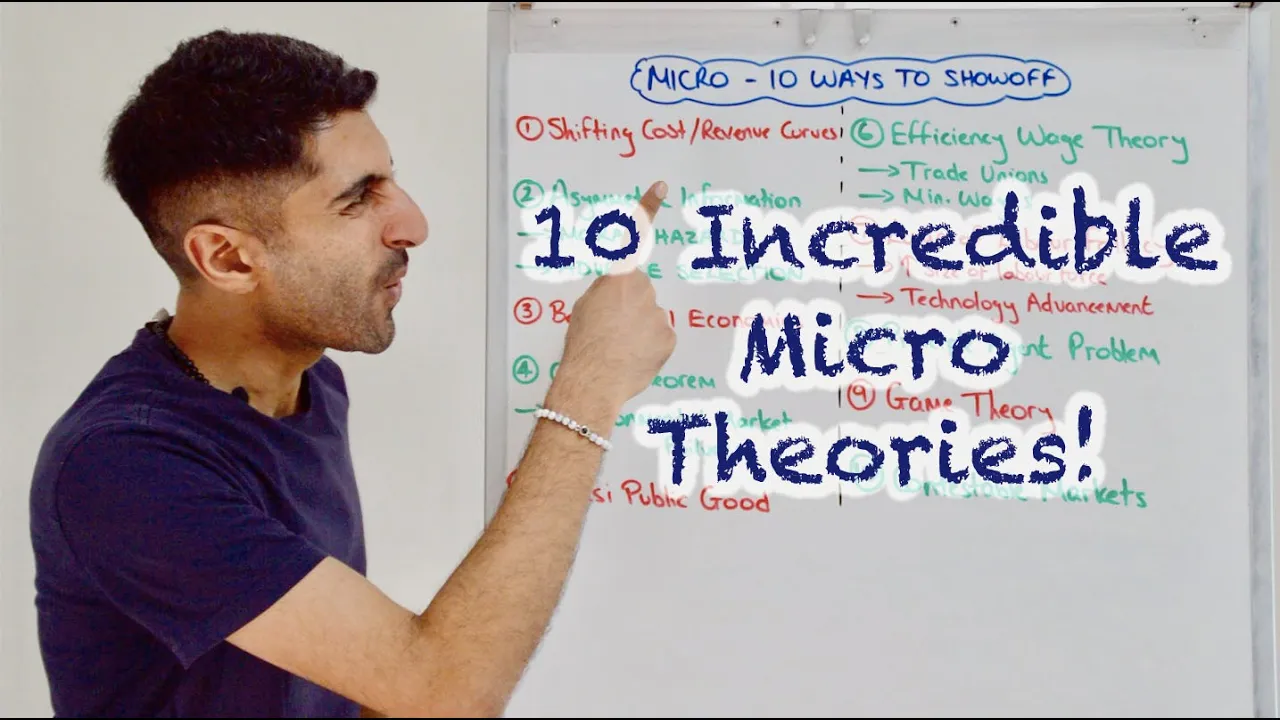
Moral hazard and adverse selection are two distinct problems arising from asymmetric information in insurance markets; moral hazard involves hidden action where insured parties alter their behavior (e.g., students studying less after buying grade insurance), while adverse selection involves hidden information where those most in need of coverage disproportionately seek it out (e.g., students with lower grades buying insurance first), both causing insurers to face higher-than-expected payouts and potentially leading to market failures.
Moral Hazard and Adverse Selection Explained with Examples | Economics
Added:The concept of asymmetric information, where one party in a transaction has more or better information than the other.
Basic microeconomic principles of market transactions, including supply, demand, and market equilibrium.
The definition of market failure and the conditions under which free markets fail to allocate resources efficiently.
An understanding of risk and how individuals make economic decisions under uncertainty.
The Principal-Agent Problem, which explores how conflicting objectives and hidden actions affect corporate governance and management.
Market signaling and screening mechanisms, such as education credentials or warranties, used to mitigate adverse selection.
Incentive design in contracts, including the strategic use of deductibles, copayments, and performance-based pay to combat moral hazard.
The economic implications of systemic risk and 'too big to fail' policies in financial crises as real-world cases of moral hazard.
An introduction to Contract Theory and Mechanism Design, which studies how to structure agreements when parties have private information.
74.7K views465likes6:59Original Release: 2013-08-30
welcome to econ in HD my name is Phil this is moral hazard and adverse selection so in this video we're obviously going to talk about moral hazard in adverse selection um but the term moral hazard is slightly different depending on the field that you're using it in so we're going to focus mostly on the insurance um meaning of it uh in Investments it's a little bit different it's basically a decision that allows someone to increase their risk without increasing the cost associated with that risk uh so if you want to see some an example of that using numbers and a little bit of math you can look at another video I posted my channel called moral hazard by the numbers so what we're talking about is going to stick strictly into the sort of in the insurance meaning of the word um but when we're in that world we also talk about moral hazard and adverse selection sort of at the same time because both of them are a consequence of something called asymmetric information so uh moral hazard by the end of this you'll be able to tell that moral hazard is a problem of hidden action whereas um adverse selection is a problem of hidden information so what is asymmetric information it's it sounds really simple and it is actually I'm just going to give you a basic example anyway uh so Pretend This is a circle that's perfect um and I cut it in half perfectly in half uh and you'll see that it's symmetric so both sides are the same so now we're going to say that it's a circle of information and we have two players um so both players have the same information set so their information is symmetric so all I have to do is erase one side of it change it to something that's not the same and this shape is now asymmetric and the information they have is asymmetric so it's basically two parties involved in a situ sitation that don't share the same information set so let's start with moral hazard the problem of hidden action um basically in the insurance World moral hazard arises when the person covered by the insurance has the ability to affect the magnitude and the probability of the payout so I'm going to give a an example here that will start in the moral hazard and then we'll eventually sort of be able to convert it to adverse selection um so I think you probably all seen this before hopefully I can draw it properly this is a normal distribution curve uh that you'll see with marks for students uh so say like 50% uh and 100% And this is number of students oops students um so what's going to happen is within certain limits uh you know that students marks are associated with or are a result of how much they study and how much they apply themselves so if I walk into an undergrad class and I say okay I'm going to offer you bad grade insurance so anyone that gets less than 80% I will give $2,000 to as long as you buy my insurance so basically what you're looking at here is let's say 80% is uh it's good enough 80% is right here is 80% um so anybody that is above this gets a z payout and anyone sorry I put wrong side there but you get the idea gets a $2,000 payout over here so these students um would study a certain amount but you can see probably that anyone that's in this area that would have studied without the insurance here I probably affected their study habits if they have bought the insurance all of a sudden the people that were getting you know 81 and 82 all of a sudden they start they start moving over here to get there and they sort of don't study as hard and I change their habits and they get their $2,000 payo this is sort of a problem in the insurance world uh why certain types of insurance don't exist because at the end of the year I've affected their sort of behavior and so the payout is higher than I expected I don't get this normal nice normal distribution curve it sort of gets warped a bit uh and on my pay is higher so the next year I have to either increase my my premiums or how much they pay or the price or I have to decrease how much I pay out or I have to move the the Target around so them hiding the fact of how much they study and the fact that I can't like monitor them that is the hidden information uh hidden action that sort of brings about the moral hazard now with this same example we want to talk about adverse selection so let's say we have these exact same students but they've all they're all perfectly honest so what they're all going to do is they're all going to study as hard as they can no matter what now I don't know these students so I don't know where they would normally lie on this distribution curve but they do they know like you know as a student pretty much where you're going to end up so if I offer this insurance I say I'll give you $2,000 if you're going to be less than 80 who are the first people are going to be in line to buy it obviously it's going to be these people down here and then these people are going to you know these people will buy now when you start getting into this area maybe they'll buy maybe they won't but these people AR aren't going to buy the insurance they know but in my mind in my sort of calculations this is the distribution but what's going to happen basically instead of getting this nice curve like this I'm going to end up with a curve that goes like this and these people are not buying so now I just have this little section so all my calculations get thrown off and you can see that the same thing occurs I adjust my price I adjust my payouts but it's always the people that need it the most and that is the adverse selection it's the tendency of the people that need a safety net the most to seek it out this is the same problem that you're going to run into with um people with pre-existing conditions trying to get health insurance I mean if they can hide the fact that they have this condition to get in and get the insurance then it's good for them but for the insurance company that is the problem of adverse selection so that hidden information we've seen that's the problem of adverse selection um over here we have the hidden action that is the problem of um moral hazard that causes moral hazard and all of that is a problem of asymmetric information thanks for watching
Up Next

57:05
Lecture 10: Moral Hazard - Economics of Asymmetric Information
@tovige
384 views•2021-08-09

5:07
Impact of Yuan in Indo-Russian Trade Amid Sanctions
@WION
261.9K views•2022-07-01
10:33
Behavioral Economics Explained: Rationality, Nudges, and Risk
@crashcourse
1.1M views•2016-03-12

113:18
The Age of Easy Money: Fed & Inflation | Full Documentary
@frontline
21.2M views•2023-03-15
Related Study Plans & Knowledge Roadmaps
Structured learning paths in Economics
economics
Sovereign Debt: Defaults, IMF & Restructuring
01Introduction to Sovereign Debt & Government Bonds
02Debt Sustainability & Credit Ratings
03Anatomy and History of Debt Crises
+ 2 more learning modules
12h5 modules
Explore Roadmap
economics
Market Design: Matching Theory & Gale-Shapley
01Introduction to Market Design and Price-Free Markets
02Two-Sided Matching & The Gale-Shapley Algorithm
03School Choice Systems and Mechanism Design
+ 2 more learning modules
10h5 modules
Explore Roadmap
economics
Impossible Trinity: Forex, Capital & Policy
01Introduction to Monetary Policy and Central Banking
02Exchange Rates and International Capital Flows
03The Mundell-Fleming Model
+ 2 more learning modules
8h5 modules
Explore Roadmap
economics
Healthcare Economics: Market Failures & Systems
01Introduction to Healthcare Markets and Market Failure
02Asymmetric Information and Adverse Selection
03Moral Hazard and Insurance Design
+ 2 more learning modules
12h5 modules
Explore Roadmap