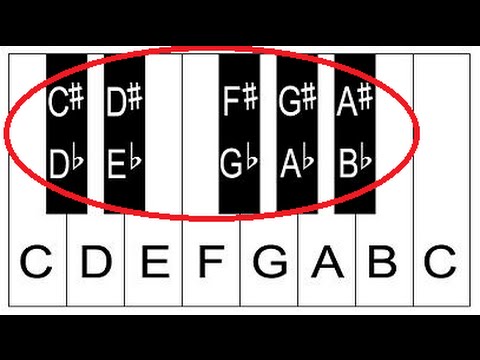



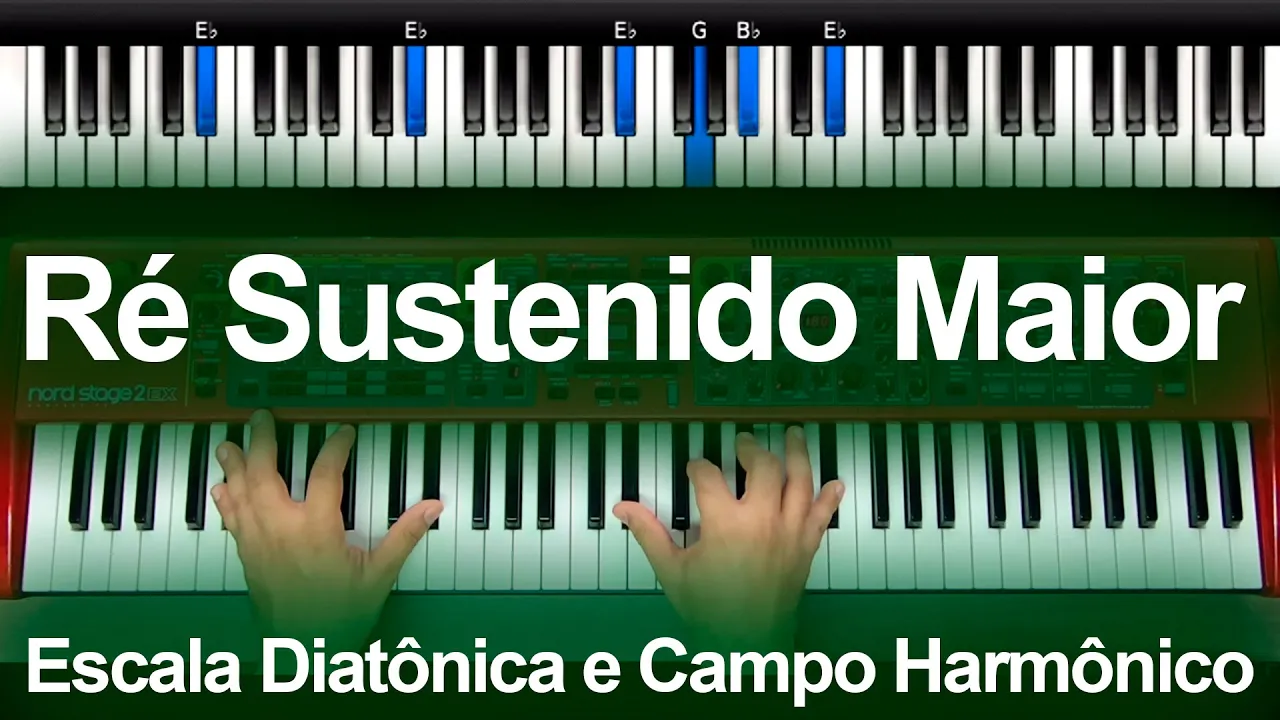








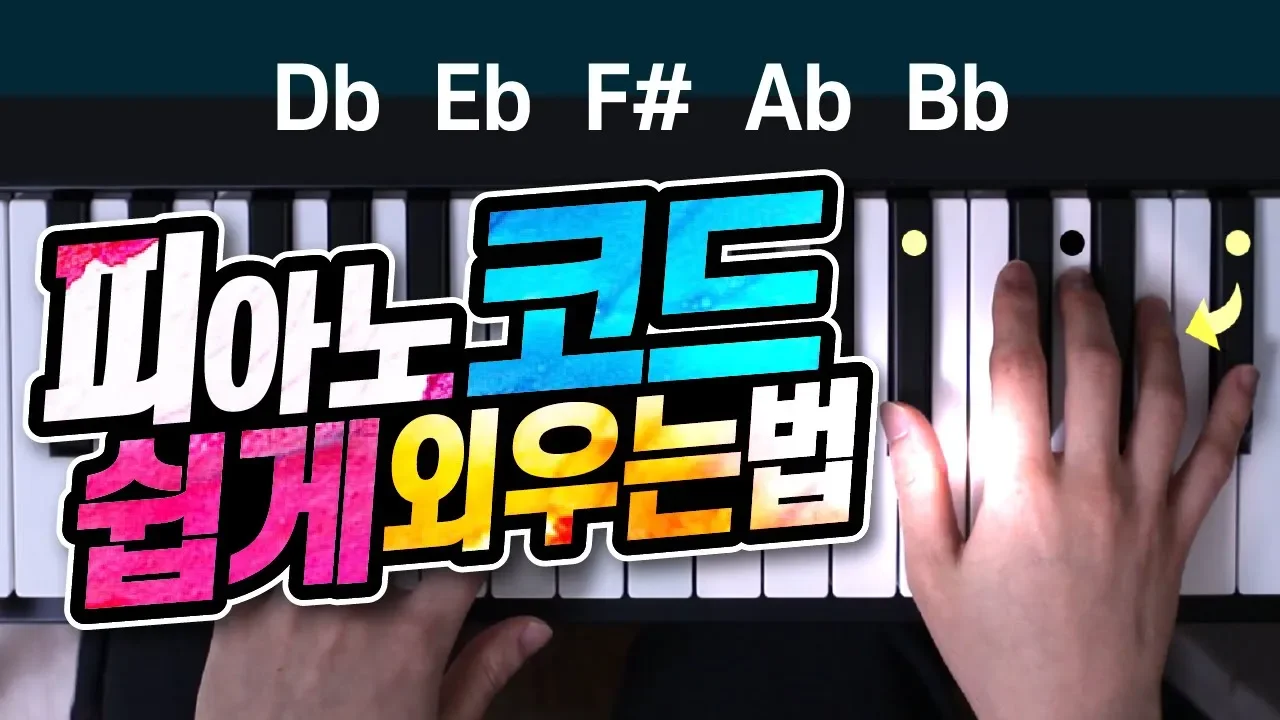



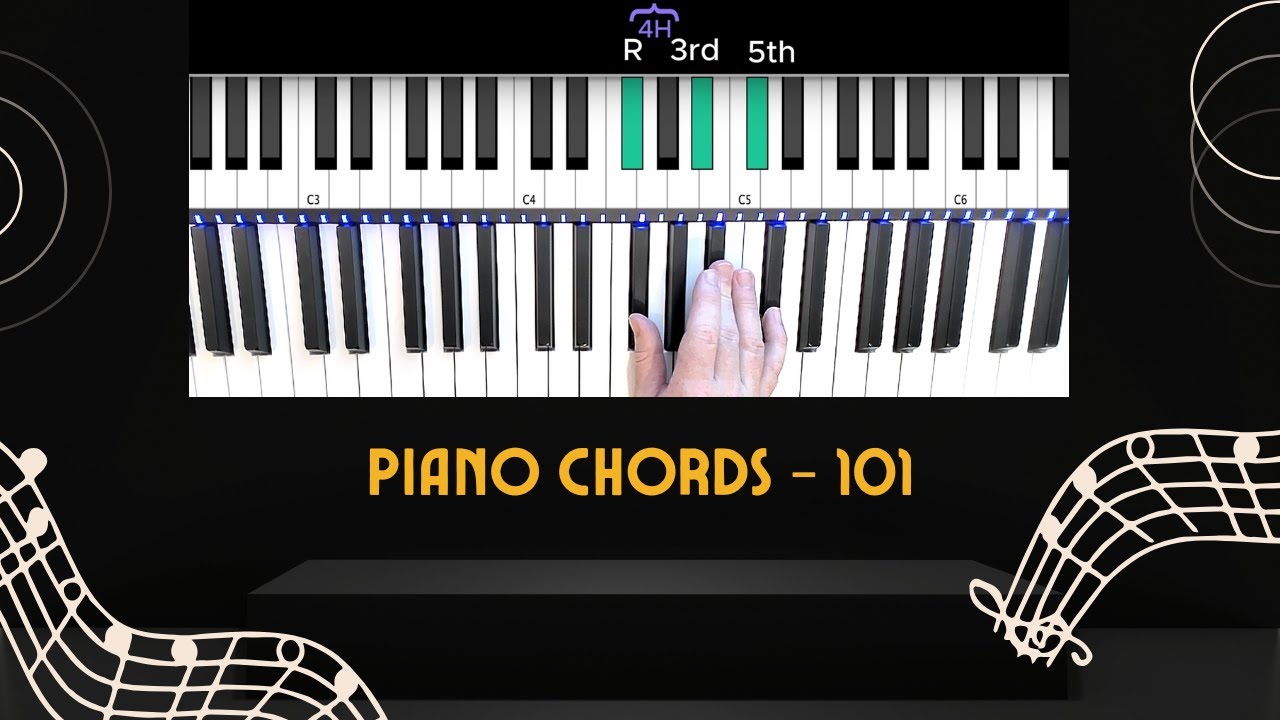









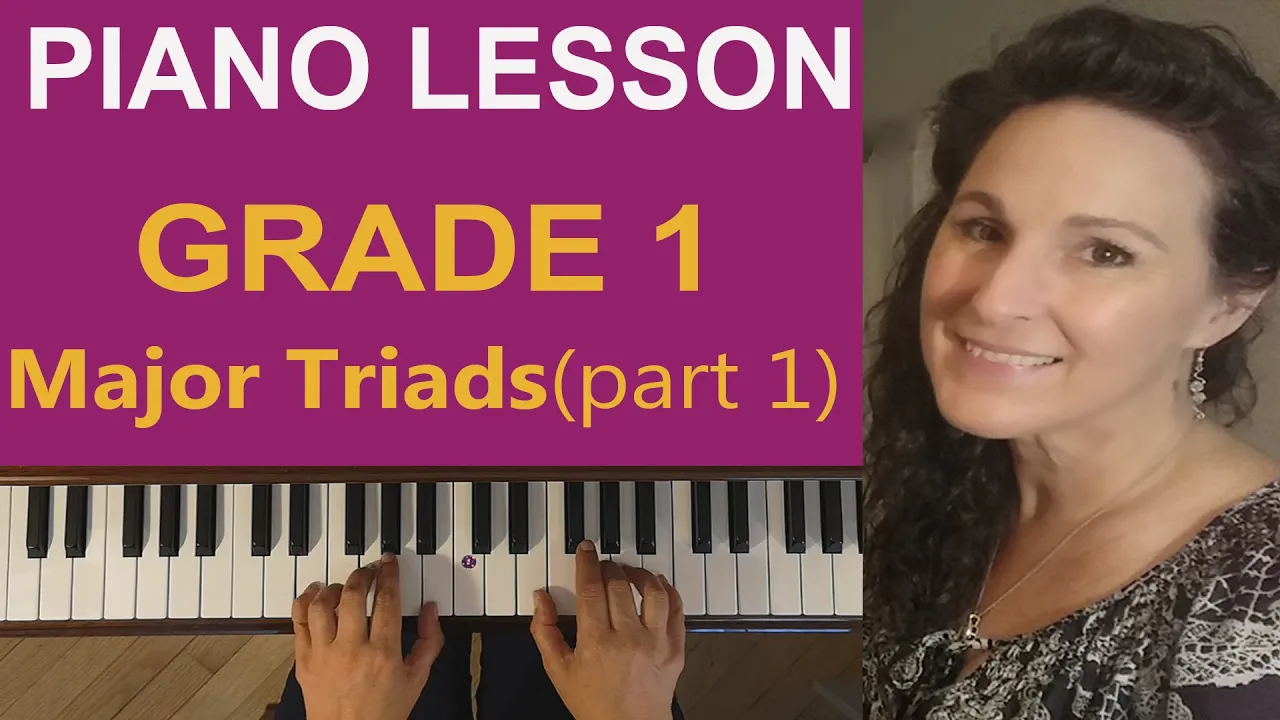

A major triad consists of three notes (root, third, and fifth) stacked in thirds, with a major third (skipping 3 keys) between the root and third, and a minor third (skipping 2 keys) between the third and fifth. The 12 major triads are organized into four groups: Group 1 (C, F, G major) uses only white keys (snowman pattern); Group 2 (A, D, E major) has white keys on outside with black key in middle (hamburger pattern); Group 3 (A♭, D♭, E♭ major) has black keys on outside with white keys in middle (Oreo cookie pattern); Group 4 (G♭, B♭, B major) includes all-black keys (chocolate) and mixed white/black keys (killer bees).
Learn All 12 Major Chords: Beginner Piano Tutorial
Added:Familiarity with the piano keyboard layout, including how to identify both white keys (natural notes) and black keys (sharps and flats).
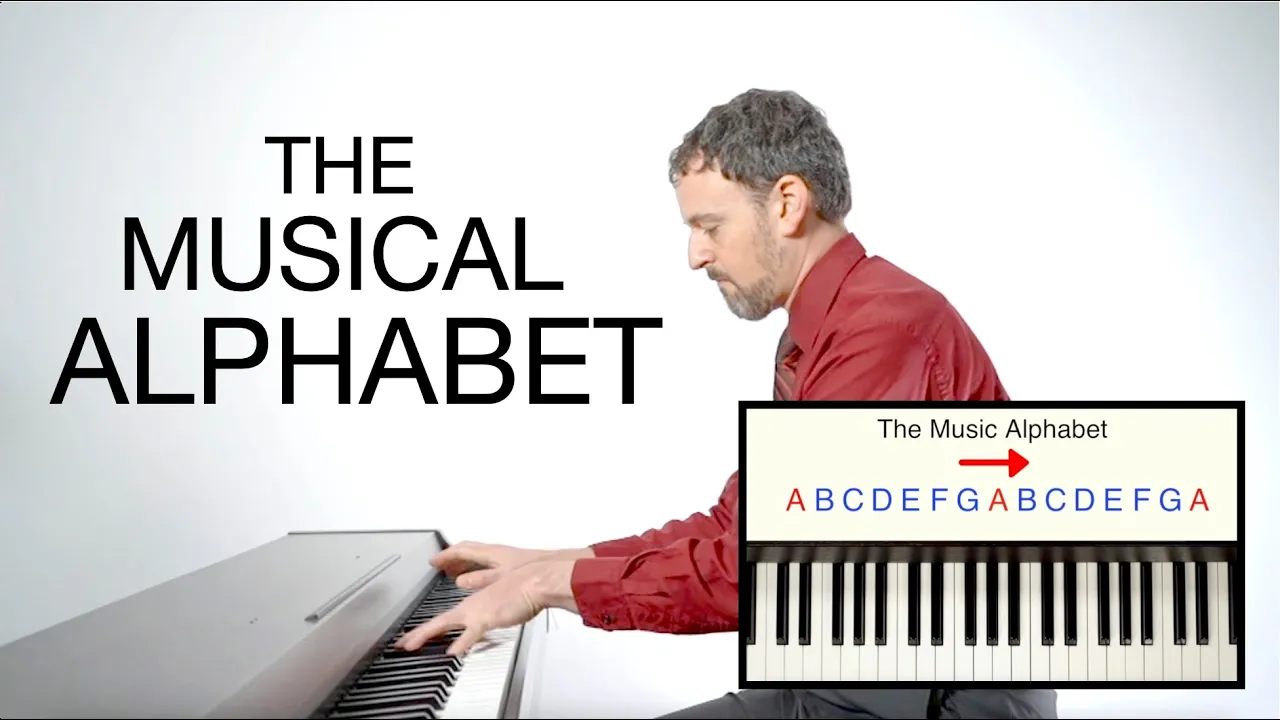
Understanding the musical alphabet (A through G) and how it repeats across octaves.
A basic concept of intervals, specifically the distinction between half steps (semitones) and whole steps (whole tones).
Proper hand posture and finger numbering (specifically fingers 1, 3, and 5) for playing three-note shapes.
Learning minor triads by understanding how to alter the third of a major chord (lowering it by a half step).
Mastering chord inversions (root position, first inversion, and second inversion) to facilitate smooth transitions between chords.
Applying these major chords to basic chord progressions (such as the I-IV-V-I progression) to accompany simple melodies.
Developing coordination to play root notes in the left hand while playing the full major triads in the right hand.
307.7K views3.7Klikes12:28Original Release: 2017-02-27
welcome to piano cording level one at any time you can click the info card for more information there you'll find a video preview of this entire course as well as hundreds of free videos to teach you to play piano from beginner and Beyond welcome to piano video lessons year 1 this is unit five and it's also piano cording level one which is a standalone 16 video unit uh if you already know how to play piano with right hand and you want to learn to add chords with the left hand this is the place for you so today we're starting in with lesson number one of unit 5 which is video 65 of the comprehensive beginner year 1 series here on YouTube the best place for you to be right now is piano video lessons.com so you can just click the info card here in the corner and that will take you over to the website where you can easily find what you're looking for all of the lessons uh indexed in order so here we go we're talking today about all of the major Triads so when you're playing um a melody in the right hand you're going to have some chords in the left hand the left hand plays chords and chords are notes that are played at the same time and the most basic type of chord is a Triad so a Triad has three notes that all play at the same time like a triangle has three sides a Triad has three notes and there are four different types of Triads there are major Triads there are minor Triads there are diminished Triads and augmented Triads and they each have a different sound the two most commonly used Triads are the major and the minor and they're commonly used because they have a settled or a consonant sound they sound good or resting the augmented and the diminished they both sound UNS or dissonant we call it dissonance in music if it sounds uncomfortable leading us somewhere else um in this lesson we're going to learn all 12 of the major Triads so the major has this sort of announcing or cheerful sound um and it's going to have three notes just because it's a Triad we're learning the basic Triads uh the basic three no chords and when we play a Triad we play the root which is the lowest note the third and the fifth we can play that with our first third and fifth finger and we call this root position because we have the root on the bottom so this is all going to make a bit more sense in a minute um but basically we're just stacking up thirds over the bottom note here so we have c e and G so this is the c major Triad and if we look closely at the notes we can see that between these first two keys between c and e there are three keys that I've skipped over and we call this a major third because there are three keys skipped in between and then here we have two keys skipped between the E and the G and we call this a minor third because it's still a third but we're only skipping over two keys making the distance smaller or minor so the c major chord is all white keys and if you look at the chart here from your lesson 5.1 you can see that that's the first one here the three red Keys showing here that's your C major now another similar major Triad is the G major so if we come over to G and we play GB D you can see that we've skipped over three keys and we've skipped over two keys and the same thing for f f major uses three white keys skips three and skips two so this is group one and you should try to play those right now C major F major and G major play them with both hands because both hands do need to know the cords uh what you want to make sure is that your hand is in a comfortably rounded position and that when you press the keys down you don't want extra fingers sticking up in the air when they're not playing so keep a relaxed hand position wait into the fingers that are playing and listen that they land together that they don't land separately see I'm exaggerated that but you get the idea you you want them all to land simultaneously and you can do that with the right hand and both hands I'm demonstrating with both hands but certainly break it down and play one hand than the other so group one C major F major G major now the next group is group two and the D major Triad is one of the chords from group two so if I look here I've got a black key in the middle and the reason that the works is when I play D I have to skip three keys to make a major third and then I have to skip two keys to make a minor third so that means we have to have this black key in the middle if we went just to white keys we would have a different sound and we would have the wrong number of keys skipped so D major has this F sharp in the middle E major same thing a major same thing so now we have six we have C major F major G Major D major E major and a major basically just learning two different patterns so I like to call this one the Snowman pattern because it's three balls of white three white keys and I like to call this one the hamburger pattern because it's like a hamburger bun with a hamburger patty in the middle white on the outside black in the middle and then we can also have um the next one which is Oreo cookies so if you live in North America or anywhere that Oreo cookies are sold you'll know that this is going to be white on the middle and black on the outside so if I move here to E flat which is the black key just below E flats take us down so E flat will have black on the outside white in the middle and you can see here that between E flat and G I've skipped three keys and between G and B flat I've skipped two keys so that's E flat major I can move to d flat same pattern and I can move to a flat same pattern so to find d flat I find D and down one and a flat a and down one so E flat d flat and a flat so that's three more so that's group three let's go through them again group one C major F major G major group two a major D major E major group three a flat major d flat major E flat [Music] major next we have group four which is kind of a mish mash um first of all we can have uh one I like to call chocolate and it's dark chocolate so all three are Black Keys and this is g flat major g flat B flat d flat all Black Keys you can see I've skipped three keys keys and then I've skipped two keys following the pattern for a major Triad and the last two are B flat and B major so I like to call these the Killer Bees because the pattern is opposite they're it's um I don't know that's just what I call it um so we have B flat with d and f which are white keys and then to do B major we have B with d FP and those are uh Black Keys so white on the bot bottom black on top or black on the bottom white on top and that's just again because we're skipping three keys and skipping two keys to have a major thir and a minor third all right so let's go through all of them now you're going to want to practice these two ways you're going to want to practice them in their groups so CF and G group one group two a d and e group three a flat d flat E flat group four now is the mixture so chocolate B flat and B chocolate is g flat um so you can practice them in their group order and then you can also practice them in keyboard order once you're good at doing them in in that other order so keyboard order could be from uh every single key moving up so C Major D flat major D major E flat major E major F major g flat major G major a flat major a major B flat major B major and we're back to C and you could go backwards you should practice these solid and broken you should name the notes C major c e g d Major D f a e major e g Shar B now when you're naming the Triads what you want to do is always use a skip so if you're naming the E major Triad and it's these are the three notes you're not going to name that middle note as a flat E G and B are skips away from each other and if we go to this note G sharp it's not a flat because a flat would look like this and when we make a Triad it's always formed with thirds and this is a skip or a third and this is a skip or a third this is a fourth and a second we don't form a Triad with a fourth and a second we always form it with two3 one major3 and one minor3 and now I'll also give you a nice little trick which is the names that I like to give these chord groups um to help you remember some tricks about them so we have the snowmen we have the hamburgers and we have the Oreo cookies then we have chocolate and the bees now what I like to think about is a picnic to help me remember so the snowmen it's just an easy group of c f and g but at a picnic we have hamburgers and Oreo cookies but what goes really good with uh a picnic to drink is lemonade and so we spell it lemonade ends with a d so we could just put the word here lemon lemonade so a D and E are the three uh hamburger and Oreo cookie groups a d and e a flat d flat and E flat and then we just have chocolate which is g flat and the killer B's are B flat and B all right so that's not a very interesting lesson but it's important to know all of the major chords in order to be able to easily put them in with a piece of music so in our next lesson in lesson number two we're going to actually learn to read a lead sheet and add some chords to the alphabet song So tune in to lesson 5.2 but please before you do make sure you know all of your major chords I hope you enjoyed this lesson and I'd love to hear from you so please leave me a comment in the comment section here on YouTube and perhaps you'd like to consider becoming a patron and support this free video series [Music]
Up Next

22:22
Essential Daily Jazz Piano Exercises for Improvisation
@PianoWithJonny
568.4K views•2023-02-10

10:20
Mozart's Musical Dice Game Explained: History, Rules, & Fun
@webpianoacademy
5K views•2023-03-13

47:36
Understanding Diatonic 7th Chords in Major Keys | Music Theory Tutorial
@GracieTerzian
54.7K views•2022-03-02
10:49
Understanding John Coltrane's Giant Steps: A Music Theory Analysis
@Vox
10.4M views•2018-11-12
Related Study Plans & Knowledge Roadmaps
Structured learning paths in Music Theory
music-theory
Composing Galant Music: Partimento & Schemata
01Foundations of Figured Bass and Keyboard Harmony
02The Rule of the Octave (Regola dell'Ottava)
03Galant Schemata: The Building Blocks of Form
+ 2 more learning modules
30h5 modules
Explore Roadmap
music-theory
Decoding Overtone Series: Tuning & Drone Music
01Acoustic Foundations: The Physics of the Overtone Series
02Tuning Systems: Equal Temperament vs. Just Intonation
03Microtonality and Spectralism: Beyond Standard Pitches
+ 2 more learning modules
24h5 modules
Explore Roadmap
music-theory
Impressionist Harmony: Scales, Planing & RPGs
01Foundational Music Theory: Keys, Intervals, and Seventh Chords
02Impressionist Color: Chord Planing and Parallel Harmony
03Whimsical Textures: Pentatonic Cascades and Whole-Tone Scales
+ 1 more learning modules
14h4 modules
Explore Roadmap
music-theory
Negative Harmony: Axis Reflection in Indie Pop
01Music Theory Foundations: Scales, Intervals, and Triads
02Functional Harmony and the Circle of Fifths
03Demystifying the Negative Harmony Axis Reflection
+ 2 more learning modules
16h5 modules
Explore Roadmap