















Carolee Schneemann, a pioneering multidisciplinary artist, revolutionized art by extending the tactile activity of painting into collages, assemblages, and kinetic theater performances, using her own body as both subject and material to challenge cultural taboos around sexuality, gender, and the body. Her work, including 'Me Joy' (1964) and 'Interior Scroll' (1975), emphasizes that the body is not merely an object of representation but an active, intelligent entity that can communicate and create meaning, fundamentally transforming how art engages with the viewer and society.
Carolee Schneemann on Art, Feminism & the Body at The New School
Added:Understanding of Second-Wave Feminism and its core aims, particularly regarding bodily autonomy, reproductive rights, and the reclamation of female sexuality.
Familiarity with mid-20th-century avant-garde art movements, including Abstract Expressionism, the Fluxus movement, and 'Happenings'.
Conceptual knowledge of performance art and how the artist's physical body transitioned from a tool of creation to the art medium itself.
Basic awareness of kinetic art and the integration of physical movement, performance, and time into traditional visual arts.
In-depth critical analysis of Carolee Schneemann's landmark performance pieces, specifically 'Eye Body' (1963), 'Meat Joy' (1964), and 'Interior Scroll' (1975).
Comparative study of other pioneering feminist body artists of the 1970s and 1980s, such as Ana Mendieta, Marina Abramović, Valie Export, and Hannah Wilke.
Exploration of feminist art theory, specifically addressing the concept of the 'male gaze' and how physical self-representation subverts patriarchal viewing standards.
Investigation into the archival, preservation, and exhibition challenges unique to ephemeral performance art and body-centric installations in modern museums.
9.5K views151likes1:38:15Original Release: 2018-03-23
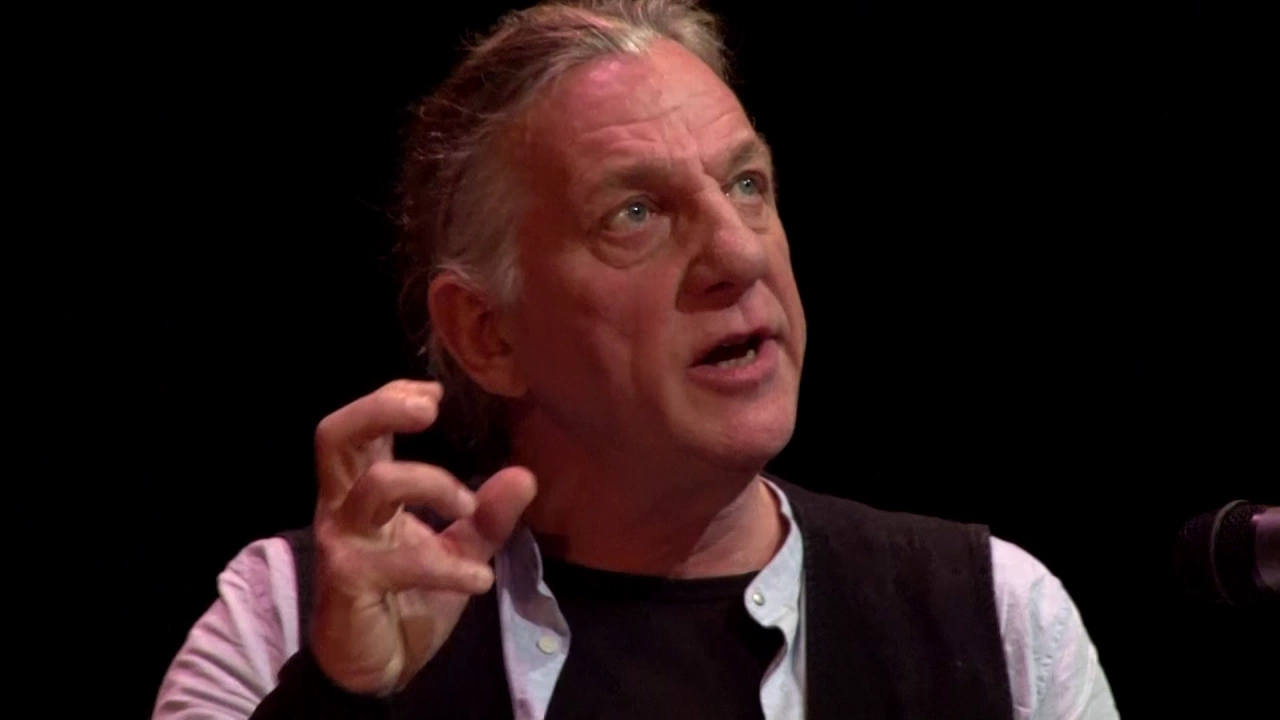
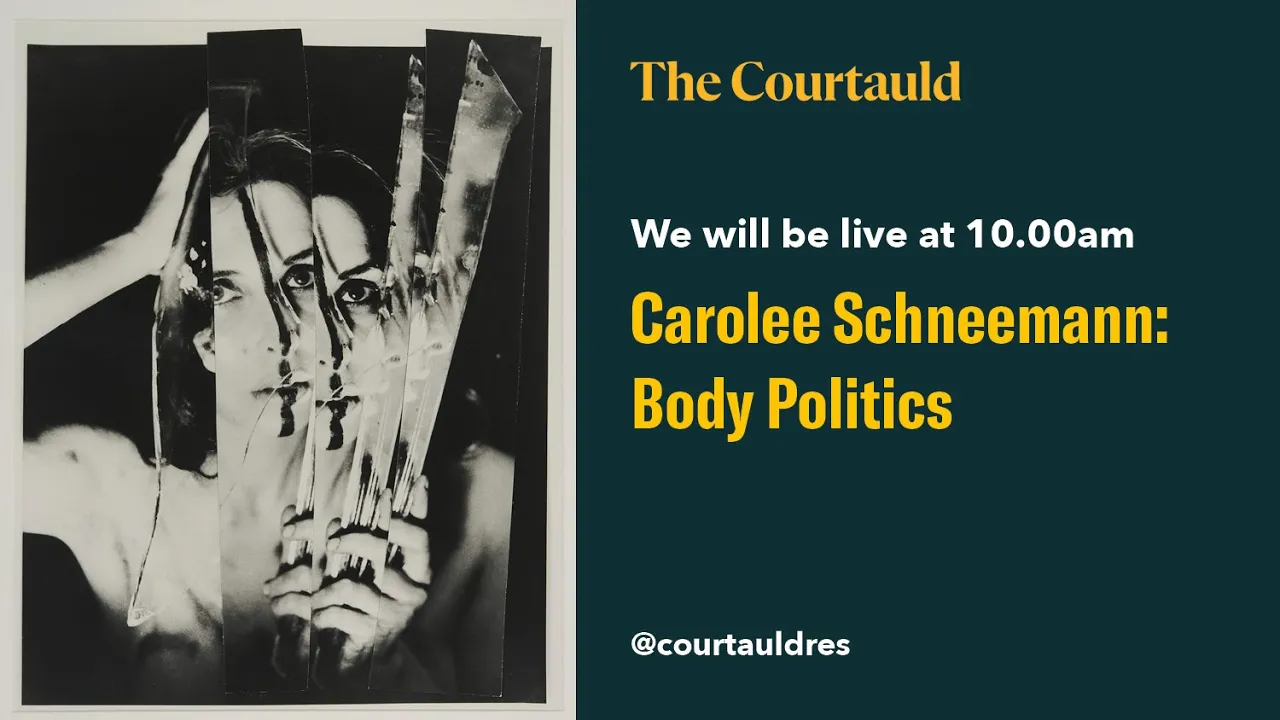
hello does everyone have a seat wonderful so welcome to the new school thank you for joining us for tonight's artwork with Carolee schneemann the artwork series is organized through the Department of the Arts at Eugene Lang College of Liberal Arts at the new school in the series every semester we invite artists to speak with new school students about the hows and whys the processes and stakes of making and thinking through artworks that is not only the work of art but also art and its work my name is so young you and I'm an assistant professor and program director of the visual Studies program within the Department of the Arts at Lange I am absolutely thrilled and honored to welcome to the new school as part of the artwork series one of the most important artists of our generation Carolee schneemann maybe a round of applause the talk tonight will pivot around the retrospective exhibition Carolee schneemann kinetic painting curated by Sabine by Visa and Branden Joseph which travelled most recently to MoMA ps1 last fall of 2017 and closed this past weekend from her earlier canvases from the 1950s Damon has radicalized the language of painting through which the tactile activity of painting its material its gestures its energetics is extended and conquer ties into collages assemblages as well as the kinetic theater of her performances films multimedia installations and environments in me joy from 1964 when Ashe name is most well known works of kinetic theater painting becomes an hour-long performance with a celebration of flesh as material raw fish chickens sausages with paint transparent plastic rope brushes paper scrap quote its propulsion is toward the ecstatic shifting and turning to our tenderness wildness precision and abandon qualities that could at any moment be sensual comic joyous repellent and if me joy and other works underscore a newfound intimacy with the image I didn't see the image I was in it they are also erotic rights and here we can emphasize the importance of SH Nima's work for discourses of the body desire sexuality and gender particularly for the study of feminist art histories and perhaps it is here we can also emphasize the continued importance and added urgency of shaman's work in a current political climate where political suppression is mediated by ever more virulent and violent expressions of toxic masculinity and sexual repression reflecting upon an incident during a performance of meet joy when a man arose out of the audience to assault her Seamus cites the psychoanalyst Wilhelm Reich who had directly linked sexual repression to the rise of a collective fascist mentality in his mass psychology of autism of 1933 to coach Naaman still I was astounded when in the meets when in the midst of me joy a man came out of the audience and began to strangle me steeped in the writings of Wilhelm Reich I understood what had affected him but not how to break his hold on my neck in works such as snows from 1967 around the Vietnam War or the Lebanon series from 1983 to 91 around the Lebanese civil war schmayman offers us a searing indictment of the sexual repression that necessitates a sublimation through warfare through the reign of bombs as toxics ejaculations but if you are not powerful enough to resist my vitality then my brutality is going to increase you're asking for it because you're not as monstrous as I am I am as monstrous as I am because you are there to be savaged by the worst I can do the talk tonight will be moderated by Kenneth white who is currently a visiting assistant sir film history at Sarah Lawrence College and faculty of curatorial studies at the Whitney Museum of American Art independent study program in the fall of 2018 he will begin as assistant professor of cinema at SUNY Binghamton University White's work focuses on the political genealogy of expanded cinema multimedia environments surveillance and control societies and he has published and spoken widely about Shannon's work including editing of the volume unfit unforgivable released in 2015 White has especially underscored the politics of mediation and technology at work in shaymin's work and I am truly delighted to have him join us for a conversation tonight so please join me in welcoming again Carolee schneemann and Kenneth whites to tonight's artwork thank you very much Soyoung thank you so much for that introduction can everyone hear us all right okay wonderful so Cara Lee we've been in conversation many times over the years and my hope is that tonight we can once again return to your work and investigate it in depth looking at particular projects in in their formal properties that considering the the political implications that the the exploration between representation and abstraction and thinking through the material relationships between the the gesture units as you described them the painting constructions kinetic theater these are key words that that now are canonical in the history of art of the last few decades no course on art history in the post-war period is complete without a rigorous and an in-depth investigation of your projects and that will only be more true I think after this great exhibition kinetic painting not only is appreciated and understood as it has been extent already but but the reverberations of it will will echo even though it has as closed the the work is still with us you are here with us now today and my hope is that we can receive some of your insights into those projects so just that by way of brief introduction I thought it might be useful to to give a brief tour through the the opening steps of MoMA ps1 and and think through exactly how a visitor encountered your work beginning with the I body collage of just last year 2017 but working from an absolutely essential and crucial project of yours from 1963 the visitor entered the first floor of MoMA ps1 with with this collage work a kind of reorganization of one senses as a kind of break from from the street in a really wonderful way I'm curious if we we could begin with perhaps talking a little bit about how this project came about and and how it came to be so prominent as in that entering well it comes about because of your devotion and insight and teaching of the work your I have an audience here where I was fired or refused any kind of position for many many years due to the confusion in my culture between sensuality and pornography so using the body as a early feminist activity in which I wanted to be as you know most both image and image maker was considered ridiculous [ __ ] or obscene one or the other and interior scroll that's now entered as something that's taught was vilified and despised and was the cause of many formal rejections so that museums refused the trustees refused to show any work at all so this is a wonderful incredible and rather unbelievable moment for me after what I'm used to which is marginalization and Confused projection so this is all very strange and thank you everybody who's here most of all can in your forthright insistence on the integrity of the structures of the work which started long ago when you were a film watch I was a teenager in college ham yes and he made a really tough visiting artist program was but it was maybe too tough it was a triple feature yo tell them what it was it was so strong it was a the act of seeing with one's own eyes by stan brackish his autopsy film yeah and then it was the dead man by Peggy I wash and Keith Sanborn and then it was fuses yeah I thought this was a perfect and then you spoke and and shared devoured and then we watched of our twice okay all right yeah I mean that was a long night and wonderful it was wonderful and completely coherent for us and how was that audience then it was probably overwhelmed but it was it was great it was they it was committed yeah it was packed overflowing just like like today yeah but years ago no right yeah that was 2004 yeah yeah November how is this Mike is it clear or fuzzy it's okay cuz usually they do something when you're speaking in it you don't know what's happening with it so to refer to this collage it was a terrible mistake it was all made up of problems there was an edition of the i body photographs made in canada I was working in Montreal on and off for a couple years and so I sweated it up and I really wanted the energy that was in the images and not to have to rely on the depictive references of the actual performance actions richer nineteen 63 so I had all these bad prints and started feeling good about the interaction between the shreds the tearing which is always something that happens in collage for me where there's an incremental energy once I crush smash tear shred usually always there's an enrichment of the energy in the dynamic implied by the forms but I couldn't solve this thing it came from Montreal back home upstate where I've lived for most of my life in your old farmhouse it was lying on the floor there when curators from ps1 turned up and they said oh look at this thing abyss mess and they said no this will be perfect for the entrance so I thought well I better finish it and there it is but as with most of my work you're not going to get a nice projector of descriptive process described other things are always driving it that notion of an incremental energy I think is is it's so great to have in mind especially as we consider how a visitor would proceed into into the next gallery that actually the first at the very first room of the show and actually that's Anthony McCall they're in and in the picture right I grabbed a shot of him on the last day he came back Anthony McCall who has this incredible film light installation at what's it called that place pioneer works Sunday as well it closed with my exhibit closed and we have been partners in London through the early 70s so it's a very sweet coincidence that we had important work and a coincidence of the closing dates as a visitor would would come into the space they would encounter a canvas a smaller canvas under a spotlight entitled fire lights and that notion of incremental energy I think is a great way of being of beginning to describe that canvas and its relationship to to your other projects in that space the the ochre the the burnt umber the the quality of that marigold and and the and the the registration of your of your gesture it's there there's a movement a kinetic energy at work across the the space of the canvas it is a surface it is a geography that also for me is rich with potentiality of energy energy that is criss crossing across that space now what comes next is fuses behind fire lights in a wonderful organization a kind of I think outstanding example of kind of curating by by by clear argument that that there is there is the the canvas actually it's on paper paper oh my goodness yeah excuse me thank you sorry it just I happen to know that [Laughter] thank you thank you I appreciate that okay so on paper fire lights the the the combust ability I think is is rich here in that piece and then and then fuses behind perhaps one of your your your best-known projects in 16 millimeter film an experience and a duration in time so from this let's say the stillness of the of the work on paper fire lights and it's it's kind of captured movement to then fuses your your your perhaps but best best-known Moving Image work there is there's a necessity for a viewer to proceed through through those canvases and that works on those work on works on paper oh that's nice I love what you make of the work it's so enlightening for me fire lights I'm a student I'm a graduate student at the University of Illinois and I have a tiny little room maybe as big as your New York bathroom and so it's bursting with energy my partner James Kenney is in another tiny little room where we've squeezed in his upright piano that came on the you Holland from East to see the Illinois the only space I could find where there were trees I was very frightened by Illinois initially was I felt like a cat was its first shaved off but I began to look at a kind of implicit energy that maintained of spatial dynamic and also what I called the important grid my debris of the smallest unit of forms and the energy within them that was what I could call as a gestalt of connectivity and this was also part of the work that was being rejected by the professors that had given me the scholarship because they told me that I was unteachable and this work was neither abstract or landscape or but when you in graduate school if it's still like that you have a different professor assaulting whatever you do several times a month and so I had the realist who said the landscapes weren't realistic enough and then I had the abstraction it's who said my line was always broken and finally I just worked out in the woods or in my little room and hope to survive it and of course fuses is one of the first works I make when tanning and I escaped Illinois through a series of miracles and are back in in the old farmhouse where I still live and of course at this time there was no representation of any of my lived physical or sensual experience absolutely none and part of the conversation always had to do with Braca jiz freedom and bravery and beginning to use his own lived life as material and so the documentation the vision he made of his wife Jane water I note how her like water meet her meet her own window water baby moving the birth film that inspired me to want to see it was another crazy experiment to borrow Merson see what could I capture of a lived erotic heterosexual experience with my devoted trusting sensuous partner and that became fuses as a visitor would proceed to the the second floor at ps1 again they would move through your painting constructions before encountering an another of your most famous works meet joy so a canvas such as 10 abrasion or Sir Henry Francis Taylor from 1960 would compel the visitor I think to think and and and ruminate upon the multimedia collage that gets told that you were referring to before approaching me joy that me joy is is perhaps well considered within a context of those painting constructions no but it all work backwards meet joy and the physicalized works entered the culture but you know what I considered my essential construction works were ignored they were sort of displaced by anything involving the nude body or the energy of semi-clad energetic bodies without the understanding of the premise and the formalization the structure of meet joy wasn't addressed for many years and certainly the paintings have only been accepted maybe now with the exception of a few historians who I don't know who really responded in that to them but I couldn't show these paintings or have any positive response for a very very long time it's just if they never existed but I felt very foolish because when I'm interviewed I always say I'm in essence a painter I'm not a performance artist I'm not the P thing except if it's a painting P so so perhaps there's a bit of creative history there in a sense that with in the construction of the of the exhibition by forcing the viewer amongst those paintings it's actually a recognition that is only now happening do not forced really they come in a surprise and shock that I think has been pleasurable usually in the art world when someone with any significant position condemned something they never changed their mind because it's they just it's against human nature we said this is a piece of [ __ ] in 1963 don't ask us to reconfigure this but everybody is reconfiguring and it's very fresh I should say that these are early paintings I'm still at the University of Illinois Sir Henry Francis Taylor is an early feminist influenced work because he the famous scientist was photographed as part of Jo Margaret Cameron's series of studies of contemporary famous figures and he is a cousin of Virginia Woolf as is Julia Margaret Cameron Wolff was a huge influence when I was first at Bard on my fellowship there and I found of the waves in the back of a library truck with this funny name with the double O's and I had double e's and I took it to the barn and I was in tears reading it I'm still overwhelmed by my sense that this is what I have to do whatever this is this is how my work must be and so when I wanted to write about Woolf at Bart I was advised that she was a minimizer of the English language and a sort of feeble subject and I could write about Mon Kafka or some other guy would you be willing to speak a little bit more about the the working process in these painting constructions the the mixture of photography and pigment with found objects it's it's a it's it's a fascinating and and very rich arrangement that for example I was just chatting with one of the museum docents last last weekend and a Jerry I think his name was and Jerry was like the these vibrate they've they vibrate if you you you find the the perspective point and then it starts to move and then it's and and something like ten abrasion I think captures some of that that energy that movement within within the the surface the plane are elements begins to vibrate and if a so as you know can I'm very influenced by James tennies practicing at the piano phrasing from Ives they burn what's-her-name anyway he was a difficult learner and absolutely passion and determined over the experience of neglected new music so I'm listening to Concord Sonata and fragments phrases over and over and over again it influences my painting just as my fracture in the painting begins to influenced any on his structure of collage in the musical composition so it's a conversation in media it's very exciting and constant and everybody else who's saying whatever we do is crap we confirm each other in our processes so Sir Henry Taylor includes some of Jim's old Underpants just for the perfect formation of rags over worn-out things the photographs I get to always represent an aspect of reality for me I bring it in confidently and they're there as a critical dimension Sir Henry Frances Taylor is above a swing above a series of nudes from something like Playboy magazine that are there to contradict the traditions of the idealized masculine fantasy of the female body they're there to introduce my own question marks including this shape of Illinois that's cut out into the this is wood yeah the wooden canvas and covered with glass which shiny paper under glass I can't explain how I work except every now and then there's well I'm certainly influenced by schwitters and Paleolithic shards it's very various and then I need to in a very private way assault images in my culture that I find demeaning persistent and stupid not this one oh I think I think that's a great way actually to consider these projects in particular maybe meet joy as as a means of counteracting that repression of working against that stupidity that suppression be a political or otherwise aesthetic cultural and and the the undergirding repression against the perhaps flows of energy of conversation of cultural difference as a means of communication as a means of actually a finding finding common conversation through exactly that diversity and the difference between spaces the kind of the way that brakes can be means of merger something like that's a little bit more abstract perhaps a way but to describe it but it because it I think achieve a matter and a heat and something like like me joy it's you're leading me to the question which was where was the life of the body as I know it and where could I find that well certainly in my personal life I was very lucky my abuse was not huge compared to all the other women I've taught and worked with since the 60s and of course my cats were very influential what was really one cat when I learned to pay attention to what the cat was studying to be very still when something was invisible and the cat would give me a look like and I just sit there and try to pay attention and suddenly a spider would shoot out a web of minut sparkling little baby spiders on the window where the cat was sitting how did she know that so many instances of the cats coherent consideration of motion also justice with games she had a very fierce set that you're too big humans don't torture me with that toy we have something equitable anyway it's pretty indescribable this is case yes hmm some of you think that I named all my cats Kitsch but actually this one lived for almost 21 years so it was constantly kitchen not with an S no but from kitchen so what was a question we were talking a little bit about about meat joy and I think perhaps I I was getting a little too abstract in well I I was fascinated by the the way in which something like meat joy attempts to generate an energy within a concentration of focus as well as a splintering between between the participants and and then the audience and and always that has been I think I understand to be a crucial aspect of kinetic theater projects I'm curious a few would perhaps speak a little bit about me chewy and and those elements of responsiveness between between the audience and the and the participants there were crucial directions there was a great deal of rehearsal in me joy it's known now through the the film documentation the photo documentation and we so we only have a glimpse of of that sense of energy that that you and that intensity that that you were able to create it's a training also meet joy is not a slapdash event that it's often been described as it took weeks to sensitize the participants who were not answers to motions and trust and energy in exchange in improvisation with each other given a set of very particular parameters for the kinds of configurations and movements that I had drawn so the drawings are always preceding works the same with snows and water like water needle and it's the visualization of physical energy in its most immediate form and my intention with me joy was like a visionary dream of sensuous interchange to I said at the time I want to errata sighs my guilty culture because it was so boring and at the same time it's full of sensuous energy in rejecting and reacting to the Vietnam War in paying attention to civil rights that's a huge influence on our sense of purpose and geography and responsibility how do we respond to this nightmare government so I had two strands at the time that one would become the Vietnam obsession with atrocity and the other was the obsession was an exchange of physical izing sensuous trust pleasure a kind of a static situation that didn't necessarily mean [ __ ] it meant another realm of attentiveness I think one key line that has has been so crucial in your writing about about me joy was a space a place between desire and experience that notion of a kind of interstitial area that is at once measurable or topographical some a realm of the material but then also one of psychic energy of interconnectivity at a level of we've kind of a responsive energy between between the participants well the psychic energy then is more elusive you know I know when it's there when I'm teaching but my students don't know that's what it is I can bring it forward but not with a conscious determination it's slippery it's dense it's not easily describable especially in our culture which is so mechanistic and militaristic and commercializing everything mm-hmm but once a space begins to involve me then if I'm lucky there's a great deal of psychic event oh but you really have to pay attention it might be a bunch of feathers falling in front of your feet or it might be a window that sunny cracks and breaks and opens or or something you read um so I'm a gatherer like a crow you know I don't know what I'm going to be attracted to but I really have to be alert oh that's a good one for that yeah so a lot of dream has been an influence and a lot of contemporary work as came to New York City that I found exactly what I don't want this is great I don't want to do anything like this so that was a structural influence from when I began choreographing for the Judson dance theater and I was their first visual artist to create home works and momentum for them and with them and from that very inspiring set of collaborations I moved out towards other disciplines and as I said about meet joy for participants I found them in the street I found a balloon salesman he was incredible I found a poet who said I can't possibly be part of this I said yes you're perfect look at how you're running away [Laughter] that I really enjoyed was seeing the refraction of the projection of me joy into gifts science the way the broke the way that you can see just a little bit in the reflection there the way that say maybe Joy's captured and broken in the glass of gift science and I'm among your your boxes of this time this I think especially evokes the notion of collection of concretions of some of that energy that the production of images from a range of different materials and moments and instances and then the kind of sequential relation here the stacking it is both a window and it is also an object at once coming forward into space you speak about projective vision at times in your writings in this moment the way that our our in our engagement with with an object as these painting constructions in particular and and meet joy as an extension of that is intended not simply about passive absorption or or some kind of voyeurism but-but-but challenging the our understanding of vision itself as as actually a force in relationship and and and in communication with these objects it's the visceral and the textual and how that comes from my sense of embodiment and that's a particular every one's going to be different about that but in this instance we have to refer to Arte Povera in the 60s artists had the opportunity if they had money and grants to do perfected properly maintained frame new materials but most of us who had come to New York City was no backing worked with trash and trash was delectable and in the early days it would be right out on your corner when you dreamt about it they weren't efficient and picking it up but this was also the time the mid 60s into the seventies when small manufacturers were fleeing Midtown New York and I still don't quite know why but artists from Canal Street all the way up well I was found a loft on 29th Street and no one knew where that was it was beyond 14th Street and before 57th and it was a farriers loft I was full of fear abandoned by Papadopoulos whose mahogany table was still there and all these huge big fir cutting boards with a thousand pin points so they almost looked like burlap they were perfect for me so that was my initial wonderment and magic gift of big debris yo that's a very bad photograph of it you know now I have better requirements I was mine go back to I have a giant science yeah that one so gift science was a crate that was found on 29th Street a big solid crate and while I was exploring its proportions three friends from Europe brought strange little gifts one was Daniel Sperry who brought that little light machine that automatically responds what's it called do you remember anybody no it has a positive a bright and a dark side and if you put a lighter on it and we'll just turn forever what's that quarter something growling anyway there was that and then that's on the top of gifts science in the middle are a series of slides Jim Kenney made was permission of various at Bell Telephone labs so that I could encapsulate this visual aspect of music and in the bottom is something from the poet artist Phil you who came also from France and found another little turning machine so those in a way correspond to the psychic sometimes paranormal or unexpected elements that influence the work and these were very literal and things distinctive of New York junk that I would never have found if this might be a way to to think about how you are activating those those surfaces in 1963-64 in particular I body 36 transformative actions for camera and the way that you are at once collaging here for example this this tearing of the of the photograph to to make it an accumulation a concentration of these views in across one one image surface you have more slides that show the studio with all the things in it and then you would actually see gift science with the body enacting a connection to it yes there something like that do you have any others well you could go back to that one these are the physical actions but my body which was considered ridiculous at the time because I thought my collaboration with the Icelandic painter photographer arrow who had a completely generous open regard for my work unlike my male visual artist friends in New York City who lent me their cameras with the worried expression that she might bleed on this or mess this up or will it come back with the painters who are really macho and determined to dominate art history and the women the girls if they look good could hang around and do what they wanted but they shouldn't assume that they should have any authority or your purpose in the art world so that was part of the motive of using my body within the constructions themselves this notion of using your body within the constructions the the body has both figure and as ground as a fascinating exploration I'm wondering if you could perhaps speak a little bit more about that relationship because it for me it seems to be a wonderful and very rich and provocative extension of your painting constructions as well as your experiments in cinema of that time and so as you proceed with with I body and and and and present yourself not at in it so much the iconographic emphasis of the of the body alone or isolated but increasingly a an element within the the larger arrangement of furthermore and especially so know we knew each other we almost never knew what one another was really doing we sat around in our little tiny skirt smoking dope and cigarettes wolterman discussed art and art politics and so the early journals and magazines on which women participated tended to enhance and sustain the aesthetic politics of male culture so it wasn't really until the 70s when what I what I thought I was doing began to have some context among um radicalizing women it was still apart from the major culture and parts of a body house I think is a crucial project in the in that process you would say anything about the parts of the body house if it exists in in watercolor works on paper beautiful text and just for example woman house here and that Martha Roslin I think for example the heart chamber is very vividly contrasted to something like the parting of the curtains there's not in my point here an intention to create a priority of one strategy to another but rather we didn't we didn't have that conversation that's a critical exploration that happens 25 years later like oh look what what's happening look what you were each doing at the time ya know or at least I was tucked away in Vermont in spring town with some European experience I knew the importance of what was happening with the woman's house and that was inspiring and we were forming independent feminist galleries in New York but at the time I didn't have the money forty one dollars a month to join NIR so what's all that superimposition there that's is it oh okay sorry probably probably all for the best my mic was off Agnes just died or some yes I wore I wore Devon okay boredom i bored bored the microphone so my my point here in in highlighting these excerpts from parts of a body house was was to assert the centrality of writing and the the way that parts of a body house in particular exists especially through the text beautifully described multimedia environments that never came to be specifically but were continuous with so many other projects of this time oh this feels like a test feels like a test the drawing was well I would say the drawings I think he's right all right well good thank you thank you well perhaps we could we could talk a little bit about the drawings a little more well they're very joyful drawings I was so happy thinking about this and sitting down to work with the imagery nobody asked for it nobody needed it but it seemed like the sculptural project I really wanted to make happen after when after what year is this thing 66 66 you wanted to realize these projects and perhaps you would do that in part with snows no no this is a very joyful free physicalized concentration Snow's is dark it's based on grief and fury and a very extended idea of building an inclusive environment that could hold all the contradictory dynamics about the Vietnam War that I could work with that I could establish in form in material I'm just jumping ahead a little bit beyond water light water needle if you'd like to return to that but you you mentioned snows and the contrast to parts of a body house the the humor of parts of the body house is is so crucial and and so you are describing snows and in a kind of diametrical opposition in its in its sentiment it's it's its purpose even the the vietnam atrocity images especially through viet flakes the projections the the silver walkers i oh found to be especially of akut of y'all and you know destroy of the Reynolds Wrap right I think you should tell it tell it you know I think so yes please yes please so I had a vision of all these remarkable materials I wanted a lens that was 12 feet by 14 feet high in which projection and motion of the participants would be mixed in constructing that was impossible I couldn't get such a lens so I designed a really crazy structure of water sacks that would be refractive and reflective and were extremely dangerous as they were hoisted in a frame upon a small stage surrounding an intensive electrical barrage of materials 16 millimeter 8-millimeter film surrounding the area microphones under the stage that would amplify our sounds and an extensive SCR switching system under a third of the audience's seats which would transfer their physical motions into the electronic system so I work with Bell Telephone labs to manage that that was complex and this is something about the materials I had to find a winter environment of white branches snows and snows based on the elect in electable falling of bombs that is opening to the film via flakes and snows as a play on my own name and I was very lucky because I was hallucinating the environment of Gimbels department store for Christmas and they had a hundred of these white shiny crispy branches and that's what I needed for my environment and I was given the use of a small theater called the Martinique by the director owner who was also fanatic against the Vietnam War and somehow he gave me two weeks of the empty theatres to build in and I also needed an environment of silver foil that would be almost a metaphor for the NAP palm that my participants would be wrapped in at random signals at random sequences and I couldn't afford it I really needed a lot so I mused on this and I wrote to the headquarters of Reynolds throughout making their napalm but I wrote to the wrapping section and I said I'm a teacher working with blind students and teaching them to use Reynolds Wrap to make sculptures and various physical environments and I hope you can help us we are not funded by anybody and all this Reynolds Wrap I was avid cartons of it so that was one good material yeah my sabotaging of the war right and so the participants the designated silver walkers were stepping out onto planks into the audience I recall yes and there was some some danger in in that action that necessitated precipitation from from the audience a kind of put their hands up as the figure was walking between them on these planks to help them not fall over because silver walkers were blindfolded under the Reynolds Wrap under the aluminum foil and the most dangerous part of it was that your your position in the sequence was determined by the audience so it was always random who would be in a certain place where it meant you would be with silver Walker rather than being wrapped and dragged or situated on a platform and sculpted into various formulations so it was quite a complex core and as usual a great deal of thoughtful and gentle collaboration between the participants was what our training work towards and and the positions of victim or aggressor in in these actions were constantly shifting yeah I'm curious if you could speak a little bit about that kind of direction and its relationship to to the the image that you were producing in a variety of different ways here that for example the silver walkers where we're blindfolded you you say stepping out onto planks they were also being bombarded with projection beams and and in a way blinded in in a variety of different streams of light that then also broke across the surface of that tin foil refracting into the audience they were both the screen and the image in a way with the audience both kind of pressing and perhaps halting them from falling in a in a way that that seemed I understand to was kind of stunned by the whole configuration and the overt atrocity images that were projected centrally into the space or a large huge white disc that was rolled in front of the water lenses was I thinking about that I forgot well perhaps this is a good place to connect to some of your more recent projects such as flange in which there's there's a way though from my view in which some of that immersive quality that you were describing in snows is is now generated through video projection with the objects these these molded objects slowly moving in and in and out of almost like a lighting closing opening injuring each other they get so close to looking like they're gonna be moving would you describe how these this project came about perhaps elaborate a little bit on on what what is involved in flange I like it because it starts off as the most simple thing in the world I'm walking down the street and I see a kind of a stick floating in front of me I think I don't know what's that that could be interesting if it was moving so I think about that and then I talked to a graduate artist in town near where I live and say I want to make these shapes and they're going to be motorized and I have to build sequences of them what would be interesting in he says will help out lost wax process and so that sounds nice so we're out on the porch with this little burning machine melting piles of wax and I'm building these elongated vertical shapes and I'm getting very content with that accumulation and I keep making them and then I say well now that they have a formulation and they're crunchy looking they're archaic they look almost like something built or destroyed or dug up and that's a look that I favor I've done a work called video rocks with a hundred 100 made handmade rocks out of cement and Joran leaves and very tedious to keep making them but I have to do I try to get a crew to help and they were dead that doesn't feel right so I have to do the tedious things I keep making these wall strap Ross wax process things and then my assistant says there's a foundry where we can cast these into aluminum and then we can build a structure with a motorized aspect and put them into form so that's how it evolves and then from the foundry where there's this incredible brilliant burning fire that looks like rose petals or something exploded from an organic density Oh we build a video and it's projection and that's flange six rpm and six rpm is a very basic motor instruction that sometimes comes to me from a hostile voice a guy I don't know what he looks like but he's been in and out of different projects unexpectedly and he'll say something that tells me how I'm going to resolve a work and so with this work he said it's six rpm again I'm fascinating fascinated with flange as as something that does not include explicit images of for example the anti-war or atrocity pictures of snows or Viette flakes and yet the the heat the kind of immersion into the projection seems to evoke exactly that politics of matter in a way the the sense in which the the imposition of an activist or or confrontational scenario on on a particular topic I against the Vietnam War for example and snows is not present in flanch in this more recent work and and yet it is the quality of immersion into the the play between the the wax the aluminum and then to the video projection let's say the the hard severe quality of the video versus the soft pliability of of the the wax and the aluminum the kind of contradict contradiction of that wax very tough once it's aluminum yeah it's it looks degraded or crunchy but it's tough its metal yeah you can't do anything with it there's a sense of almost momentary weightlessness as if as an up grace that's achieved that's I think really quite quite beautiful just to step ahead a few places I thought it might be nice to spend a little time with another another point of both both humor and and also rigorous investigation sexual parameter survey ye old checks chart from the 70s yeah I'm curious if you perhaps could elaborate a little bit on on this project and and its its place within within these these multimedia projects and and and other investigations it's it's a project that's been given I think unduly little attention it really calls for greater investigation people are very curious about and very frightened of it because it's such an early report on the vagaries of heterosexual experience after my D ideology my erotic life was James 10 II and make fuses I'm suddenly lost in the world and having all these strange unpredictable sometimes awful sometimes interesting so I make a chart of all the sexual events that I'm experiencing now that I am a solitary female in London and sometimes back in the States oh and I have a friend who consults and adds her investigations to mine and they're very detailed and thorough here we're looking at the description of the project and then here is the chart itself also all these initials represent erotic aspects hand litoris hand anus sound earlier in our conversation you mentioned the importance of the grid the importance of the grid here we are yeah well this is funny because it's part of the neglected realm of work and of course everyone's curious about this and they can contradict you or confirm but certainly the curiosity Oh is a primary connection to what this made yeah thank you so perhaps just briefly on on one of your most notorious pieces in interior scroll I've concentrated especially on the notion of the the message coming from from the interior that you've described that there was a message from the inside and and the way that that you are conceiving of the project from its very beginning as a confusion between the body and machine the body as machine as something that is especially fraught with attributions of gender and sexuality a range of forces that are imposed upon it I'm curious if you might speak a little bit more about about this project and and then one image in particular photographed by Antony McCall I think especially evokes and that that arrangement of forces the the mediation involved in in this project Mike my curiosity is I guess going especially to the way that interior scroll seems to be a part of a continuum of investigations let's say from the sexual parameter survey into the kinetic theater projects your works in collage there there is a way in which there is a sustained investigation of the way that the body is determined with and through media technologies well interior scroll insists that the vagina has a mind that the vagina is smart that it is alive it is not according to lack call and absence it is not according to Freud an orgasmic sight of transference where clitoral orgasm has to become vaginal or contrary early through other researchers where vaginal orgasm has to become clitoral um when the fact for me is that both are active and alive and speaking and that every human being every mammal with some exceptions passes through a vagina what is this god-awful taboo that you were born from a dictators head or from some originating man's rib or from the thigh of a god or so I've been just trying to make real life have a voice in a presence and that's what interior scroll is all about thank you something like this collage I think that that you're producing at that very same time speaks to the notion of media as as killing machine as a way in which the technologies become extensions of those those oppressive forces that they are not objective they are non neutral they are not inert but actually active with and through oppressive and highly particular and and corruptive of forces and destructive I'm doing these collage and Ken is like the second person to find them and respect them and use them in some materiality that has a public I am so engaged I have a an amazing sense of England as a kind of healing place I live in a tiny little flat in Belsize Park that has a river run running under it and I have to have a shearling shilling to heat the shower upstairs so and I smuggled kitchen my cat is with me somehow it's a miracle but at the same time there's such a erotic contradiction constantly through English culture there's this ancient reverence for the archaic goddess artifacts but every time a guy hates something he calls it you [ __ ] the bad driver you stupid [ __ ] somebody doesn't give him the right change in the grocery store you're just an idiot [ __ ] so I have a whole series of letters I'm writing to local newspapers sign Connolly snowball Belsize Park and they're funny and I'm very very funny well that's the only way to handle certain kinds of wrath yeah may I ask you to do one last one last thing I'm going to skip ahead a little bit here in the interest of time - to your own writing and I'd like to promote a little bit this new collection of your writings uncollected text edited by Brandon Joseph and I was wondering if you might share with us in in your voice one one text in particular that that I think is is really a beautiful way to come to a close would that be okay yeah I should say that this is a wonderful book uncollected text because I had nothing to do with it except it's my writing so these amazing scholars found the text in places that I had completely forgotten about and found a perfect wonderful cover back so I thank brown and Joseph and the uncollected text group right Hunter group present it yeah okay and they picked one work that you like from 1974 I assume the senses crave I assumed the senses crave sources of maximum information the fundamental life of any material I use is concretize din that materials gesture gesticulation gestation source of compression measure of tension and expansion resistance developing force of visual action manifest in space any particular gesture acts on the eye as a unit of time performers or glass fabric wood are potent as variable gesture units color light and sound will contrast or enforce the quality of particular gesture area of action and it's emotional texture environments happenings visual dramas are an extension of my painting constructions which often have moving motorized sections the essential difference between visual drama and painting constructions involves the materials used and their function as scale both physical and psychological so this reminds me that I was about to explain the relationship of the audience within a performative dynamic and that they had to be very close that was an important consideration when an audience came in I had to position them so there was a connective energy flow between the actions we were inhabiting in their presence there was that leftover thank you Ken thank you so much Karolina thank you very much and perhaps now we have a few moments for a couple of questions so I will turn it over to Soyoung to select out of the audience before we start our Q&A perhaps we could another round of applause you are so it's love in the next few minutes there is a microphone on microphone circulating odd perhaps we could collect a few questions and then I will moderate the Q&A so does anyone have a question or comment that you would like to pose of Carolee schneemann back um thank you so much for the conversation it was really really wonderful and inspiring um I had a question about the piece with the it was like texts and one of them was crossed sort of there was like a vertical text in a horizontal text and you were speaking about that together but I had never seen that piece before and I'm really curious about hearing more about it so the question was about parts of body house and its publication in fantastic architecture the book edited by dick Higgins and wolf vostell and it's a fascinating example of a publication of your text for example in Caterpillar magazine it was your some of your your notations and parts of a bawdy-house writing was amongst poetry and exploratory texts in fantastic architecture it's printed on a nearly translucent vellum stalk being so one is at once reading the text and then also seeing through it too to the subsequent pages no the drawings were not present instead they used a different a different photograph of you yeah I was very disappointed in that I thought the essence of the writing had to do with the drawings and for some reason the guys left the drawings out another aesthetic mystery just a side note fantastic architecture was recently published by primary information in 2015 I think and it's now readily available it's a really beautiful volume we have a couple of volumes in the university library I made sure that yes hi um this kind of an odd odd question but when I was at MoMA ps1 I noticed that there were a lot of kids there like five-year-olds a lot of kids like five-year-olds and three-year-olds and I was just wondering what you especially because you talked about how when it came when all of your work came out people kind of equate it with pornography and so how do you feel about kids seeing your work like fuses and meet joy and what do you hope I don't know they get out of it the essence of the question I think is is regarding your use of your body especially your your nude body in as an element within within your projects such as fuses or me joy and and how it raises certain complex questions about the the nude form in culture and sir and she mentioned she mentioned the diversity of the audience that there were there are families children so perhaps there's this is a way to to think through the some of those particular cultural expectations I have a simple answer and that is when I had finished fuses I thought this should be shown in every high school dining room and at ps1 I was really thrilled a tiny little creature she was probably six years old came over to me with bulging eyes and looking tremulous as if she'd be blown away in a moment and she stood in front of me and looked up she said are you the artist any other questions why do you consider yourself as a painter is it because it's more challenging to establish yourself as a female artist in the world of painting which is dominated by wet white male artists do you assert yourself that's my training that's how I learned to see that's how I know what a form is oh that's how I understand art history and that starts when I'm really young and doing intensive drawings over and over and over again to try and learn how can I capture what I'm looking at and then it has a kind of crescendo when I'm teenage I'm painting a watermelon in my bedroom and my father comes in and says drop the brush and that's what the rest of them say all through the years until recently and yet the questions Emilia thank you so much is this on I think so yes okay yeah so my friend has been sitting on a question for 15 years and I felt like I should ask you for her which is what advice do you have for young feminist artists wanting to engage creatively and critically with artists who are examples of patriarchy such as Bukowski Picasso etc if you would have any advice for young feminist artists as they strive to work against patriarchal forces in the culture strive to work against patriarchal forces by gathering your deepest wish to transform your culture and if you're fortunate find community to work with I'm most interested now in ecology and in political activism where we are able to focus on helping people other women who have very basic issues that artists can interpret and support and hopefully sustain I'm thrilled when I meet artists who have formed vegetable organic gardens and abandoned plots all over the city or artists who are working on systems such as water cleansing organic bud just bug destroying things that I see overtly helpful as an artist I think we've done a lot and we need to refocus from the selfie other questions yes when you talked about artists that are I guess doing things that are productive for society and all these various ways I kept thinking about a work we skipped that it's one of my favorite works of yours water light water needle that for me in many ways it's it's a really magical piece where it seems like there's this fostering of a community through it and it's made with very simple elements and it's very much a countryside piece and I see it also as a work straight out of Judson Church kind of School of Dance and I wonder if you can talk about this piece and that was a magical work and as you can understand from tonight the work goes from the aesthetic domestic to the ferocious political and areas of destruction that invade my consciousness water light water needle evolved because I was sent to Venice after me joy and it was so astonishing in terms of the interchange of light and water and what was above and what was below and from it I conceived this work of suspended ropes that would redefine space by being both vertical and horizontal on both water and both sky and that movement sequence for participants would engage them in their own intentions and that as soon as they were moving on the ropes with their own motion intention and they came upon another person they would have to collaborate they would after improvise and so it was much more difficult to realize that it starts with a lot of drawings but what I didn't understand with the ropes once I got them constructed was that you had to build muscle memory you couldn't just move around on these ropes you needed calluses you needed practice we had to rehearse constantly and this was 1965 so it's the good old days when Saint Mark's Church just gives me the power space and they let me hammer steel rods into the pillars and suspend the ropes I have an architect helping me they let me break open their cupboards so the participants can be hidden before they emerge on the ropes and they let me use the organ upstairs so that suddenly at the end of water like water Needle there's a great Bach chorale surrounding us all in developing us and then it gets the outside version is even more strange and magical I realized that we never plan to take it outdoors and my crew wants to work on it we know somebody has a truck and then there's a young kid who's been aroused about who says well I think I know a space we could use it's in Mahwah New Jersey and my father who was a Venetian Venetian psychiatrist has just bought this acreage at an old estate and I think he doesn't care if we use it no one's there now it was pouring pouring rain and we got into a truck with the ropes and the crampons and a couple photographers and the guys are saying this won't work we're going to drown out there I said I'm gonna stop it don't worry so we're on the Turnpike and the rain stops and we get to this beautiful wild estate and it turns out it belongs to the have a Meijer anybody here know who they are you tell us they find founded Louie's Havemeyer is the best friend of what's-her-name the painter also Louie's no no no this is 1800 I'll think of it anyway the daughter of the Havemeyer sugar fortune whose estate is this abandoned place in Malveaux New Jersey is responsible for almost all the impressionist works have been brought to the Metropolitan Museum and Here I am in this Inn they're spaced and the trees are perfect and there's a beautiful little lake and there's also a mansion that's still there with an attendant whom we meet and I say I hope we have permission nobody cares and she's old-world the old lasts mr. Havemeyer he was very mental don't you know and she opens the cupboard and there's a huge metal contraption that was used for mental problems so that's where we were maybe I can follow up on that because the use of rope like is a constant motif throughout your work and just to introduce a few more other works like into this discussion I was wondering if we could talk a little bit about more recent works such as more wrong things 3/4 eNOS mineral rope becomes one of my basic materials um I've used rope in some painting constructions because it really is a way of drawing extended volume narrow volume extending that in space rope is malleable rope can confer and conform with what I'm building and then once it's in water light water needle it comes up again in snows and I use it there in its dynamic as the device of dangerous as an image for material in lynching as a material in Vietnam dragging bodies being Machinery as a murdering element that threatens the participants and snows and then I use it as the wonderful way of suspending myself on the harness in the arborist when I call it yeah the harness with the arborist harness for for up - Thank You Kathy for up to including her limits with that rope I find I can hold myself up or down it's a special set of knots so the Rope is purposeful and it's also becomes very mystical in up to including her limits when I'm suspended in the harness and I'm completely quiet and not doing anything the Rope will suddenly gather an unpredictable energy and start turning me around and it's very frightening you know that kind of a rope it's wonderful and it's mystifying yeah mortal coils is all the Rope thank you yell yell that's again the interference of the angry man voice I'm making an immemorial is it 17 friends have died you know and Kathy brew and I have shared many of the death experiences of friends in the 90s there's a cascade of death so they're not all AIDS they're quite unpredictable and they include friends Hannah Wilke pole shower it's John Cage Peter Moore barber Damon so I'm working with my personal material of these friends and I'm going to do something a public in memoriam for them and I want to do a wall of images and then I have these disturbing dreams one where Hannah Wilke says in the dream don't put me next to Paul shouts I said so now the dead are trying to tell me what to do so I'm having a lot of trouble resolving this and then the angry man voice comes in a dream and says get off the wall projected six rpm and he shows me a rope a coiled rope yeah so then I realize each um subject each image of a friend will have a coiled rope moving at six rpm with the projection going through the ropes yeah could I ask you to speak a little bit about more wrong things - no more wrong things I'm very fond of it it's so variable and it uses up all these old monitors that no one can find anymore and it starts with the death of a very important cat Oh a stray cat who's estatic he loves everything he starved he's wandered around he's lost his home he doesn't know where he is and a neighbor up in High Falls says there's a very smart lost cat he's gonna get run over he's on these little roads all the time and no one will take him in and so she says come and climb up the stone stairs behind my house and call kitty kitty into a shrub and and meet him and I do and out comes this foxy little face and I say you look very special you look really nice and he disappears I said well to hell with that I'm going to yoga and then from the bottom of this long staircase is this emaciated cat it's just ears and a tail he's walking all the way up these steps to meet me like a gentleman not like a wild thing in a shrub and he comes and he stands in front of me and I'm completely smitten by him and I say well you look very special and I lean over he jumps in my arms and I take him to yoga and his name is treasurer and I haven't raised him but he fetches he plays ball he loves everything he's all purring I'm about to travel for work in California and I said that sat down with the cat and I said look I'm gonna go away for a couple weeks and I'd like to take you but I haven't trained you in anything you'd be seven hours in a plane in a box what do you think and he says okay don't wake me up til it's over so we go all the way to Texas to California everywhere anyway one night I have to go to Charlottesville for conference where I'm gonna speak about paranormal influence of my animals and includes dogs and treasure is not in bed and he doesn't come and it's a nightmare I can't find him and I'm going really kind of nuts about it because he always comes when he's called wherever we are Texas California Ohio home and I try to I go out on the road two o'clock in the morning with the flash that I'm looking everywhere for a little corpse and I can't find him and finally I go into a kind of crazy state I'm concentrating to try to get through to the other side and I beg the essences for information show me where is my cat and they put up a kind of a screen and they show me a horrible mutilated cat mouth full of blood and the teeth all broken and I go back out on the road and there's a gray shape that looks please be a rabbit please be a squirrel it's it's it's treasure and he's mutilated exactly that way so this is how more wrong things begins I bring him home and put him on a cushion and photograph this horrible mutilated face and as that's happening I begin to get all these serendipitous videos coming from one from Sarajevo that's the end of the film culture in Yugoslavia and the co-operative has put together a compendium of disaster footage and just available for me to use and it comes with a text that says we have no more film we have no water we have no home we have no food we have no culture we're sending out the remnants of what remains and it includes a very long interview with a war criminal that's fascinating and compelling anyway I have got to work with and then someone sends me footage of an uprising in Haiti I have my old Vietnam footage Cathy what else have I got darkness I have a lot of disaster footage serendipity suddenly and I have all this monstrous material to start editing and that's more wrong thing starts with the cat and goes into the world I think we have time for just one or two more questions yes hello you described yourself as a painter or filmmaker but you're actually celebrated by most as a precursor of feminist performance art so my question is how do use your influence on contemporary performance art do you feel any relation or communication with with recent activity and performance well I just made a booklet there's what's it called influence plagiarism I forgot and it's published by the artist Institute um I guess since the 60s I've just been making clippings casually of works that look like mine or that I thought differently already do that so I have a lot of weird interior scroll my body marina does my horns and she does my serpent um I have this big casual clipping Compendium and Jenny ASCII who runs the artist Institute season and says well this could be of interest in let's make a booklet out of it as for the rest of what's happening I have absolute devoted favorite artists whom I will not mention because if I say three people there's thirty that are very aggrieved maybe one last question hi I'm very happy to be here I was waiting for this long time and I just want to tell you that I really appreciate your work and in bastian has to go you know we really respect and love your work but I just have a question very general question about what do you think about art scene today in general first she began by saying that your work is receives great respect and she asks if you have any thoughts in general on the contemporary art environment you mentioned especially ecology and concerns for environmental activism perhaps perhaps that's a couple of things I was in Ljubljana many years ago and I saw the most amazing films black and white they were astonishingly visual acute beautiful political and then I have the odd situation of having influence to Sean McVeigh of that he told me that fuses influenced him for what WR WR yeah mysteries of the organism that was very odd because he was one of my influences once I saw WR I wrote about it and I wish that si was in here because it's an imaging her erotics it's an imaging her erotic oh good thank you that's helpful to know yeah I can't keep track oh I don't know her second part of the question is what what do I think about what's going on now mm-hmm hey it's a nightmare right it's very hard to work it's very hard to choose a sense of where you can be effective or gather your community it's certainly crazy for people who went through the 60s and all that activism and the anti-war focus that was very concentrated and we had a clarity that we can't have that now I'm looking at all of you for some help on this because from my perspective I'm it's like the rudder is broken the ropes are cut everything's adrift and drifting in a dangerous threatening direction I think that's a wonderful place to end so thank you very much [Applause]
Up Next

11:25
Semiotics of the Kitchen: Martha Rosler on Feminist Video Art
@MOCA
50.6K views•2012-11-12

12:54
Triumph of Orthodoxy Icon: Byzantine Art & History Explained
@BenCallan
2.1K views•2024-08-06

9:49
FastAPI vs Flask vs Django: Choosing the Right Python Web Framework
@TechWithTim
302.5K views•2024-05-26

1:42
Game of Thrones Opening Credits: A Cinematic Analysis
@gameofthrones
46.3M views•2011-04-18
Related Study Plans & Knowledge Roadmaps
Structured learning paths in General & Interdisciplinary Studies
general-studies
Elevator Engineering: History, Physics & Cities
01From Hoists to Safety Brakes: The Dawn of Vertical Lift
02Hydraulic vs. Traction: The Engineering Physics of Elevators
03Modern Speed, Safety, and Algorithms
+ 2 more learning modules
12h5 modules
Explore Roadmap
general-studies
Rubber: Material Science, History & Geopolitics
01Origins of Natural Rubber & Mesoamerican History
02The Chemistry of Natural Rubber & Vulcanization
03The Geopolitics of the Rubber Boom & Colonization
+ 2 more learning modules
12h5 modules
Explore Roadmap
general-studies
Containerization: Evolution, Logistics & Trade
01Ancient Trade & Bulk Cargo: Amphorae to Barrels
02The Industrial Revolution & Cardboard Packaging
03The Containerization Revolution: Malcom McLean
+ 2 more learning modules
12h5 modules
Explore Roadmap
general-studies
Textile Tech: Evolution, Labor & Global Impact
01Pre-Industrial Textiles: Handloom & Cottage Industry
02Mechanization: The Spinning Jenny to the Power Loom
03The Factory System & Global Labor Transformation
+ 2 more learning modules
10h5 modules
Explore Roadmap