
















![물질은 도대체 어떻게 존재하게 된 걸까?[최신 입자물리소식] feat.반물질, 중성미자, CP대칭성, 슈퍼카미오칸데](https://i.ytimg.com/vi/Gfz_K5nfhX0/maxresdefault.jpg)


![[W178] Kevin Kelly: What's lurking around the corner at neutrino experiments?](https://i.ytimg.com/vi/4EtREIatcvI/maxresdefault.jpg)

![666k Special - No One Understands Giratina [The Pokemon Devil]](https://i.ytimg.com/vi/C7n87rNvLZc/maxresdefault.jpg)






Leptons are fundamental particles that do not experience the strong nuclear force; they are organized into three generations, each containing a charged lepton (electron, muon, tau) with increasing mass and decreasing stability, and a corresponding neutrino (electron neutrino, muon neutrino, tau neutrino), where all charged leptons carry a -1 electric charge while neutrinos are electrically neutral, and the discovery that neutrinos can oscillate between flavors proved they have nonzero mass, earning the Nobel Prize in Physics.
Leptons: A Beginner's Guide to Particle Physics Fundamentals
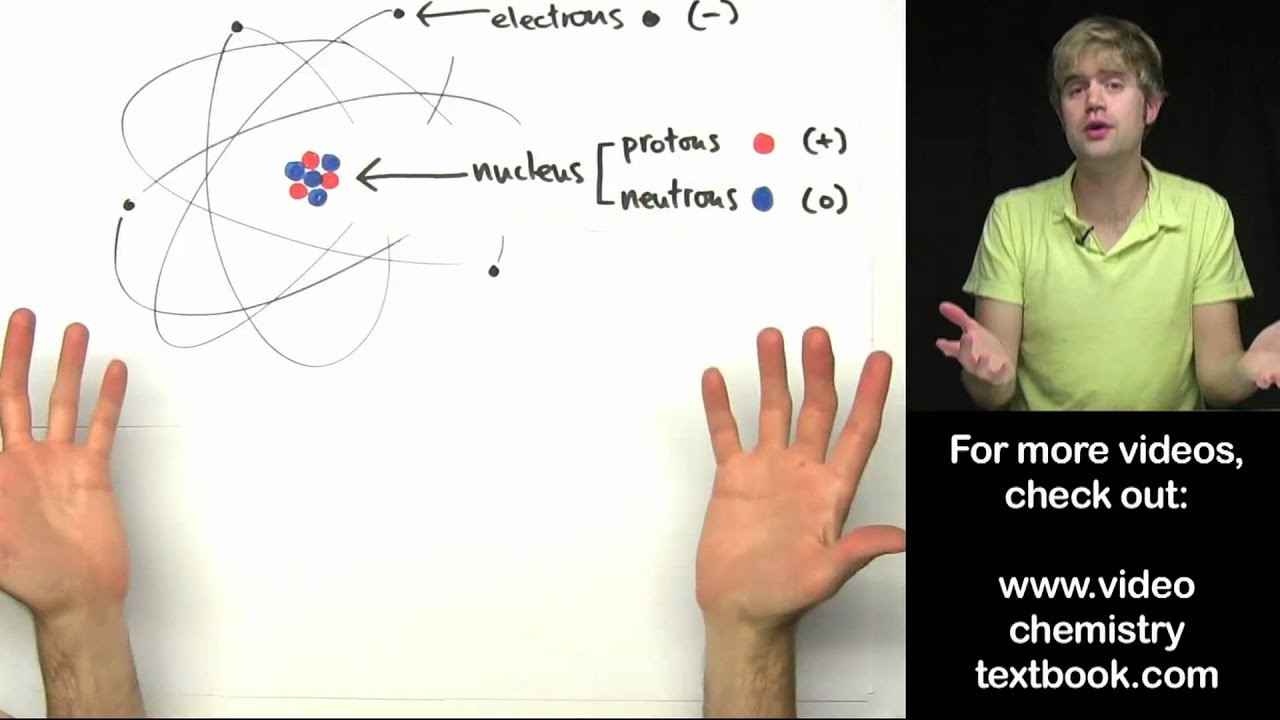
Added:Basic Atomic Structure: Understanding that matter is made of atoms, which consist of a nucleus (protons and neutrons) orbited by electrons.
The Concept of Fundamental Particles: Knowing the difference between composite particles (like protons) and elementary particles with no known substructure.
The Four Fundamental Forces: A basic introduction to gravity, electromagnetism, the strong nuclear force, and the weak nuclear force.
Key Particle Properties: Familiarity with the physical concepts of electric charge, mass, and spin used to describe subatomic particles.
Quarks and Hadrons: Exploring the other major family of matter particles (quarks) and how they combine to form protons, neutrons, and other hadrons.
Gauge Bosons and Force Carriers: Studying how particles interact via the exchange of force-carrying particles like photons, W/Z bosons, and gluons.
Neutrino Oscillations and Physics Beyond the Standard Model: Investigating how neutrinos change flavors and what this implies about their mass.
Antimatter and Conservation Laws: Learning about lepton numbers, conservation laws in particle decays, and the antiparticles of leptons (such as positrons).
Particle Accelerators and Detectors: Understanding how experimental physicists detect leptons and study high-energy collisions in facilities like CERN.
131 views6likes6:36Original Release: 2025-10-17
Welcome to this exploration of lepttons, one of the fundamental building blocks of matter. Leptons are a family of elementary particles that play a crucial role in the structure of our universe.
In this video, we'll discover what makes lepttons special, learn about the six different types, and understand how they fit into the standard model of particle physics. From the familiar electron to the mysterious nutrino, lepttons are everywhere around us, shaping the very fabric of matter.
So what exactly are lepttons? Leptons are fundamental particles that do not experience the strong nuclear force which is the force that holds atomic nuclei together. Unlike quarks which make up protons and neutrons, lepttons exist independently. There are six types of leptons organized into three generations. Each generation contains a charged lepton and a nutrino. Lepttons are an essential part of the standard model of particle physics which is our best description of the fundamental forces and particles in nature.
Leptons are organized into three generations each with distinct characteristics. The first generation includes the electron which has a negative charge and the electron neutrino which is electrically neutral.
The second generation consists of the muon also with a negative charge and the muon neutrino with zero charge. Finally, the third generation contains the tow particle with a negative charge and the tow nutrino which is neutral. Each charged leptton has an electric charge of -1 while all neutrinos are electrically neutral. This generational structure mirrors the organization of quarks in the standard model.
Let's start with the electron. The first generation charged leptton. The electron has a mass of 9.109 * 10 to the -31 kg which is equivalent to 0.511 mega electron volt per c^ 2. It carries an electric charge of -1 elementary charge which equals1.602 * 1019 kum. Unlike the heavier leptons, the electron is completely stable and does not decay. Electrons are responsible for all of chemistry as they form the electron clouds around atomic nuclei and participate in chemical bonding.
Moving to the second generation, we have the muon. The muon has a mass of 105.66 mega electron volts per c^ 2, making it 207 times heavier than the electron.
Despite this mass difference, it has the same electric charge as the electron one elementary charge. Unlike the stable electron, the muon is unstable with a lifetime of only 2.2 micro seconds before it decays. Muons are commonly found in cosmic ray showers in Earth's atmosphere, created when high energy particles from space collide with atmospheric molecules.
The third generation brings us the Tao particle, the heaviest of all charged lepttons. The Tao has a mass of 1,776.86 mega electron volts per c^², making it 3,477 times heavier than the electron. Like its lighter cousins, it carries an electric charge of -1 elementary charge.
The tow is extremely short-lived with a lifetime of only 2.9 * 10 -3 seconds.
Because of its large mass, tow particles are only produced in high energy events, such as those in particle accelerators or certain cosmic ray interactions.
Let's compare the three charged leptons side by side. In terms of mass, the electron is the lightest at 0.511 mega electron volts per c^ 2. The muon weighs in at 105.66 mega electron volts per c^ 2. and the TOAO is the heaviest at 1,776.86 mega electron volts per c^ squ. All three share the same electric charge of negative 1. However, they differ dramatically in stability. The electron is completely stable and does not decay.
The muon has a lifetime of 2.2 micro and the tow decays incredibly quickly in just 2.9 * 10 -3 seconds.
Now let's turn our attention to nutrinos, often called ghost particles.
Nutrinos are nearly massless particles with no electric charge. They interact only through the weak nuclear force and gravity, making them incredibly difficult to detect. Nutrinos pass through matter with almost no interaction whatsoever. In fact, trillions of nutrinos from the sun pass through your body every single second without you ever noticing. Their elusive nature makes them one of the most fascinating and mysterious particles in physics.
Just like the charged leptons, nutrinos come in three flavors, one for each generation. The electron nutrino is produced in beta decay and nuclear reactions such as those occurring in the sun. The muon nutrino is created when muons are produced or when they decay.
Finally, the tow nutrino is generated in interactions involving toao particles.
Each nutrino flavor is paired with its corresponding charged leptton in the same generation, maintaining the structure we saw earlier.
One of the most remarkable discoveries in particle physics is that nutrinos can change flavor as they travel through space. This phenomenon is called nutrino oscillation. An electron nutrino can transform into a muon nutrino or a to nutrino and then change back again. This oscillation behavior proves that nutrinos must have nonzero mass which was a groundbreaking discovery. The existence of nutrino mass requires modifications to the standard model. The discovery of nutrino oscillations was so important that it was awarded the Nobel Prize in physics highlighting its fundamental significance to our understanding of the universe.
If you like this video, hit that like button and don't forget to subscribe.
Visit codelucky.com for more such useful content.
[Music]
Up Next

8:31
Quarks Explained: Evidence, History & Types | Physics
@sixtysymbols
389.7K views•2010-05-28

12:53
21cm Hyperfine Transition in Neutral Hydrogen: Radio Astronomy Basics
@AaronRobertParsons
12.4K views•2011-10-13

32:32
NMR Spin Physics I: Zeeman Effect, Resonance Condition & Larmor Frequency
@nptel-indianinstituteofsci8064
2.3K views•2024-01-17

27:14
Entropy and the Second Law of Thermodynamics Explained
@veritasium
27.5M views•2023-07-01
Related Study Plans & Knowledge Roadmaps
Structured learning paths in Physics
physics
Nuclear Physics (Decay, Fission & Reactors)
01Atomic Structure and the Binding Force
02Radioactive Decay and Half-Life
03Nuclear Fission Mechanics and Chain Reactions
+ 2 more learning modules
12h5 modules
Explore Roadmap
physics
Soft Matter (Polymers, Colloids & Rheology)
01Foundations of Soft Matter & Thermal Forces
02Polymer Physics and Macromolecules
03Colloids, Surfactants, and Self-Assembly
+ 2 more learning modules
38h5 modules
Explore Roadmap
physics
Analytical Mechanics: Lagrangian & Hamiltonian
01Mathematical Foundations: Calculus of Variations
02From Newtonian Mechanics to Constraint Dynamics
03The Principle of Least Action & Lagrangian Mechanics
+ 3 more learning modules
28h6 modules
Explore Roadmap
physics
General Relativity (Spacetime & Cosmology)
01Foundations of Relativity: Special Relativity
02The Geometry of Spacetime: Equivalence Principle & Curvature
03Einstein's Field Equations: The Mathematics of Gravity
+ 2 more learning modules
55h5 modules
Explore Roadmap