
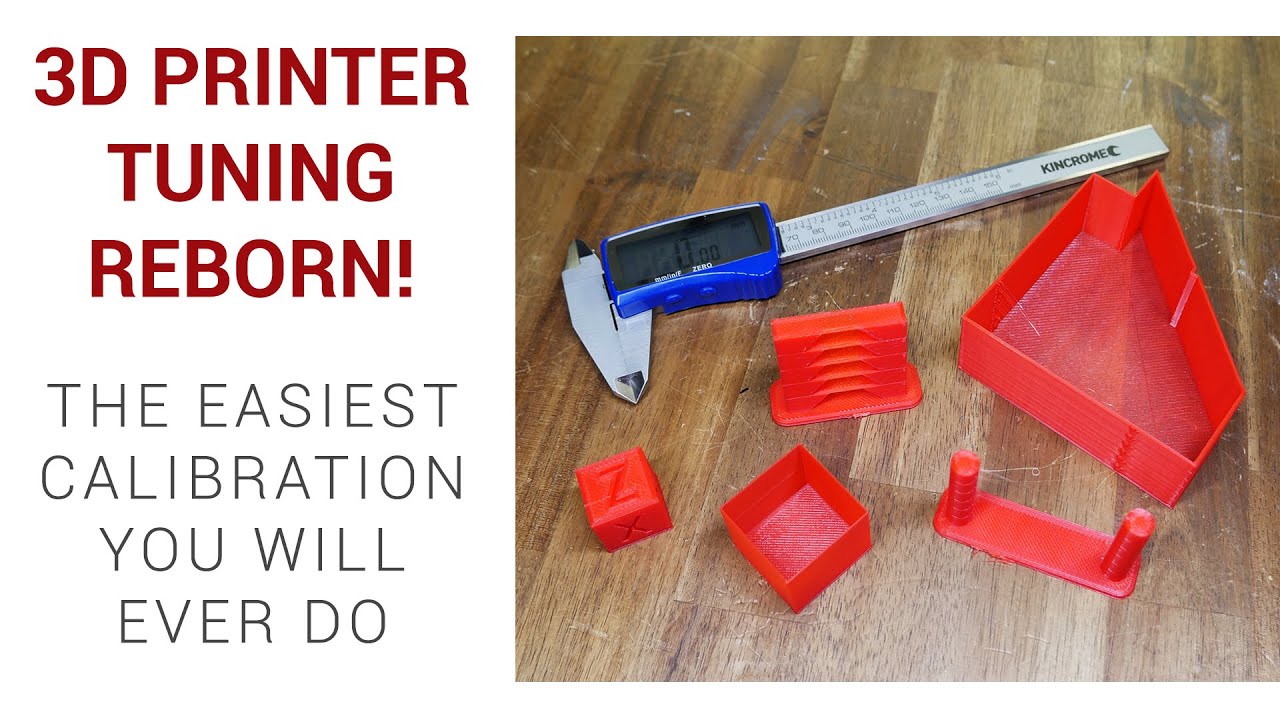

![[Устарело] Всё о настройках 3d печати. Как подобрать параметры в Cura?](https://i.ytimg.com/vi_webp/GInpsJu8bZE/maxresdefault.webp)
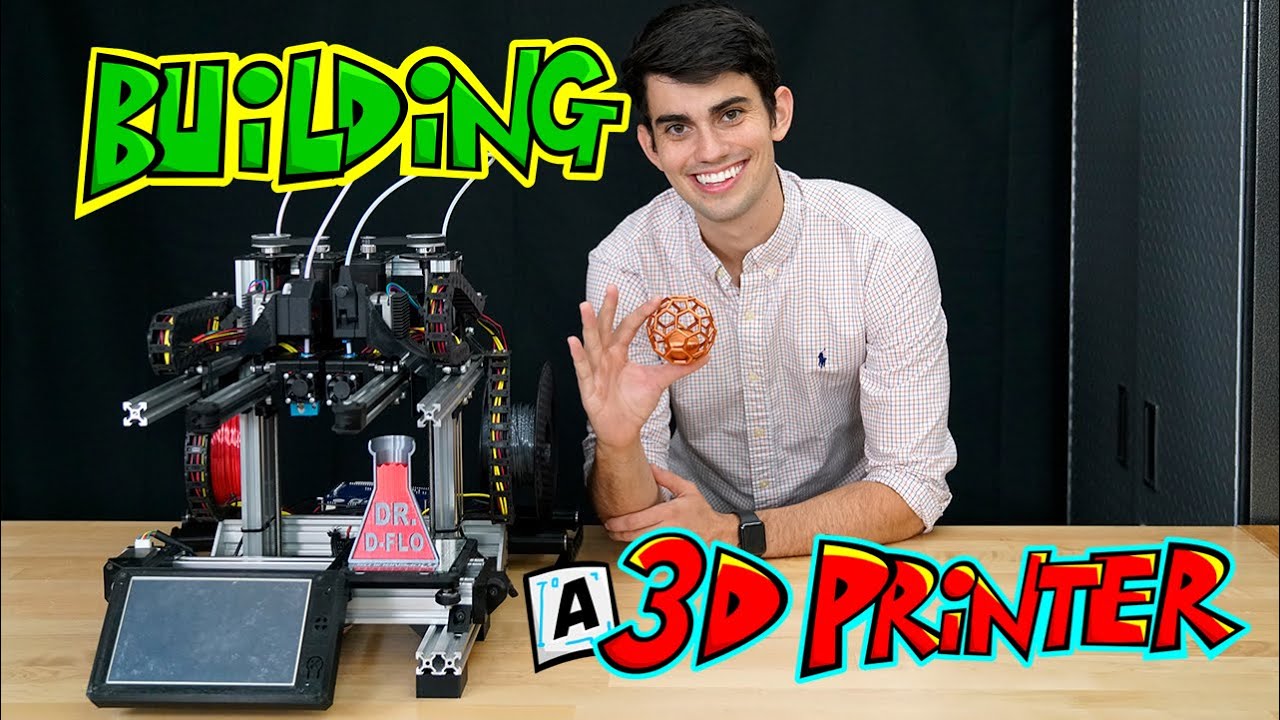

To calibrate a 3D printer's extruder, heat the hotend to printing temperature, mark the filament at a known distance (such as 150mm), command the printer to extrude 100mm of filament at a controlled speed, measure the actual extruded length, and calculate the new steps per millimeter value using the formula: (original steps/mm × desired length) ÷ actual extruded length; additionally, measure the filament diameter at multiple points along its length and enter the average value into the slicer software to ensure accurate extrusion.
Calibrating Your 3D Printer Extruder: Step-by-Step Guide
Added:Understanding of Fused Deposition Modeling (FDM) 3D printing fundamentals, including the roles of the extruder, hotend, and filament.
Basic knowledge of stepper motors and how rotational steps translate into linear physical movement.
Familiarity with sending manual G-code commands (such as M92 and M500) to a 3D printer via terminal software like OctoPrint, Pronterface, or a built-in console.
An understanding of what over-extrusion and under-extrusion are, and how they physically manifest in a finished print.
Calibrating filament-specific flow rate (also known as extrusion multiplier) within slicer software to account for material variances.
Understanding and tuning Linear Advance (or Pressure Advance) to manage nozzle pressure changes during acceleration and deceleration.
Calibrating retraction settings (speed and distance) to prevent stringing and oozing based on the newly calibrated extrusion rates.
Exploring dimensional accuracy calibration, including tuning the X, Y, and Z axis steps-per-millimeter for precise functional part tolerances.
377.2K views4.3Klikes8:06Original Release: 2014-04-06
I'm Tom and today i'm going to show you how to calibrate your printer's extruder.
Now let me start out with a bit of terminology: There are two parts on your printer that are involved in squeezing out plastic from the nozzle: One is the hotend which heats and melts the plastic, and the other is the extruder, or sometimes called cold end, which pushes the plastic into the hotend.
Usually, it sits right on top of the hotend, but it can also be connected to it with a long teflon tube in a so-called bowden setup.
So what we're going to calibrate today is the amount of plastic that the extruder is going to be pushing into the hotend.
Now, the extruder isn't a smart assembly that would know the exact amount of plastic that it is pushing at any time - basically, the printer's controller is only telling the motor how many steps it should move forward and, by default, it can't guess how much plastic it's feeding with each single step.
So the value that tells it that is the steps per millimeter figure, which is stored in the controller's firmware.
And that's exactly the value that what we're going to figure out.
So under- and overextrusion have a couple of distinct symptoms.
If you're under-extruding, as in your printer is laying down too little plastic, your prints will end up with gaps in the top layers, they won't be watertight and also not as mechanically strong as they could be.
Also, overhangs won't print well.
However, the surface quality on these prints will look pretty much perfect.
On the other hand, if you're over-extruding, so you have too much plastic laid down, your prints will end up too large, especially holes will be too tight, surfaces will look over-stuffed and the nozzle will probably be digging through the previous layer on the top surfaces of your prints - which will look ugly.
But, you will be able to print the radest overhangs, i've manage to print a perfect 20 degree one when i was trying things out.
But what you really need is a compromise where the amount of plastic laid down is just right, which is what calibrating helps you achieve.
Now, for the calibration to work you need to check a couple of things first: - You need to make sure that the extruder stepper motor isn't skipping steps.
- Your hotend should preferably not be clogged.
- The tension on the extruder's idler should be set so that the hobbed bolt doesn't grind through the filament - if you set it too loose, it will have too little grip and slide on the filament, if it is too tight, it will shred through the filament and lose its grip.
There's a wide range of tension that works as long as you don't try and print way too fast.
Also, once you find a tension setting that works, try and set that same tension each time you swap filament or open up the idler for some other reason.
- And make sure the filament isn't pulling on the extruder.
Now, if you have "calibrated" your X or Y steps per mm by, like, printing a 10mm cube and adjusting them until the cube was just the right size, go right ahead and toss those values- check out the Prusa calculator to figure out a proper set of values and use those.
It doesn't make that much of a difference for the actual calibration process, but using some arbitrary step/mm for X and Y makes a big difference to the results you'll be getting.
Plus, we're doing the calibration in the first place so that you won't have to mess with the X and Y steps to get good results.
So for the actual calibration, we're going to tell the controller to extrude a certain length of filament and we're then going to compare that to the length that was actually pushed through the hotend.
First, heat up your hotend to the temperature you normally print at.
While that is heating up, mark the filament at a known distance from a fixed point - i use the top of my extruder body as a reference.
100mm for the test extrusion is a good value, but because the extruder might end up pushing too much plastic, marking it at 100mm might have the marking disappear into the extruder, so i'm going to mark it at 150mm.
Next, tell the controller to extrude 100mm of filament at a speed that is similar to what it does when printing.
For 3mm filament,.5 to 1mm per second (30 to 60 per minute) is a good value to start, for 1.75mm filament use 1.5 to 3mm/s (90 to 180 per minute).
If the host you're using lets you extrude plastic, set the speed and length and use that - if not, use the command line and send G1 (go to a position) E100 (extruder, 100mm) F30 (at 30mm per minute) or F90 after you send it G92E0 to reset the extruder.
After the extruder finished, well, extruding, measure the distance to the mark again and subtract that from the original 150mm.
This is the length of filament that your extruder actually pushed through.
In my case, that's 150 minus 34mm, 116mm.
Now, to compensate for that 16mm offset, we're going to adjust the steps per millimeter value for the extruder.
If you don't know the value your printer is using at moment, send it a M503 and it will spit out its current settings.
To get the new steps per mm, multiply the old steps per mm with 100mm and divide all that by the actual length it extruded.
That is your new steps/mm value for the extruder.
To use it, you can either use the M92 command with the E argument and your new step per millimeter figure to temporarily set it and you can then send a M500 to get Marlin to remember the new value you just sent.
Or you can update your firmware configuration and re-upload the whole thing, which is how i do it.
Now, you can run the extrusion calibration test a second time to check the calibration.
However, the goal is not to get the value correct within.1 percent since the extrusion process is fairly tolerant to little errors like these.
However, to really get the amount of plastic coming out of the nozzle right, there is one more thing that you need to do, and that measuring the diameter of your filament.
Now, you'll definitely need to measure each new filament you're using and it's also a good idea to re-check the filament as you're using it up, since especially the cheap filament can have pretty large deviations from the start to the end of the roll.
What's important about measuring the diameter is that you don't just measure one spot.
Get a couple samples along about a meter of filament and also make sure to measure around the filament in case it is oval in any way.
Take the average of all those measurements and enter that into your slicer.
That's it.
So now you've got the basic calibration done and your printer should be really close to extruding the right amount of plastic.
You might need to tweak the extrusion multiplier if you find that your prints are constantly over-stuffed or on the other hand not watertight or have gaps even in the top surfaces that are many layers thick.
What i like to do is adjust the extrusion multiplier until the top surfaces are just filled and then add like another one or two percent, just to make sure my prints are nice and strong.
If you find that you have to adjust the multiplier more than about 10 percent, somthing might have gone wrong during the calibration - just try it one more time.
So that's it for today, i hope you found this video helpful and it ends up improving your print quality.
As always, thanks for watching and please like and subscribe if you enjoy what i'm doing.
Up Next

32:31
How to Make Recycled PET Filament for 3D Printing: A Step-by-Step Guide
@marianbuduroi6463
352 views•2022-09-26

12:54
Triumph of Orthodoxy Icon: Byzantine Art & History Explained
@BenCallan
2.1K views•2024-08-06

9:49
FastAPI vs Flask vs Django: Choosing the Right Python Web Framework
@TechWithTim
302.5K views•2024-05-26

1:42
Game of Thrones Opening Credits: A Cinematic Analysis
@gameofthrones
46.3M views•2011-04-18
Related Study Plans & Knowledge Roadmaps
Structured learning paths in General & Interdisciplinary Studies
general-studies
Elevator Engineering: History, Physics & Cities
01From Hoists to Safety Brakes: The Dawn of Vertical Lift
02Hydraulic vs. Traction: The Engineering Physics of Elevators
03Modern Speed, Safety, and Algorithms
+ 2 more learning modules
12h5 modules
Explore Roadmap
general-studies
Rubber: Material Science, History & Geopolitics
01Origins of Natural Rubber & Mesoamerican History
02The Chemistry of Natural Rubber & Vulcanization
03The Geopolitics of the Rubber Boom & Colonization
+ 2 more learning modules
12h5 modules
Explore Roadmap
general-studies
Containerization: Evolution, Logistics & Trade
01Ancient Trade & Bulk Cargo: Amphorae to Barrels
02The Industrial Revolution & Cardboard Packaging
03The Containerization Revolution: Malcom McLean
+ 2 more learning modules
12h5 modules
Explore Roadmap
general-studies
Textile Tech: Evolution, Labor & Global Impact
01Pre-Industrial Textiles: Handloom & Cottage Industry
02Mechanization: The Spinning Jenny to the Power Loom
03The Factory System & Global Labor Transformation
+ 2 more learning modules
10h5 modules
Explore Roadmap