














![DIY 1kW HAWT Wind turbine [Part 1] - Magnet rotors](https://i.ytimg.com/vi_webp/iAwHpSBk_50/maxresdefault.webp)






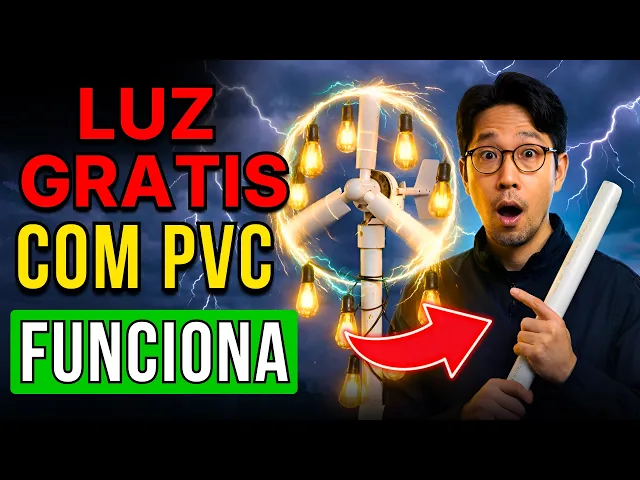




PVC pipe with 4mm wall thickness can be effectively used to fabricate wind turbine blades by tracing blade profiles onto the pipe, cutting them out with an angle grinder, and drilling mounting holes; the blade design can be optimized using online profile generators to achieve different tip speed ratios, with wider blades suited for lower tip speed ratios and thinner blades for higher ratios, while ensuring the material is tested for structural integrity before use.
How to Make PVC Pipe Wind Turbine Blades: A DIY Guide
Added:Basic aerodynamic principles, specifically the concepts of lift, drag, and how curved surfaces generate rotational force from fluid flow.
The physical definition and formula for Tip Speed Ratio (TSR), which dictates the optimal rotational speed of turbine blades relative to wind speed.
Fundamental workshop safety and fabrication skills, including the proper cutting, shaping, and finishing techniques for rigid plastics.
The mechanical properties of Polyvinyl Chloride (PVC), including its structural limitations, UV susceptibility, and behavioral changes under stress.
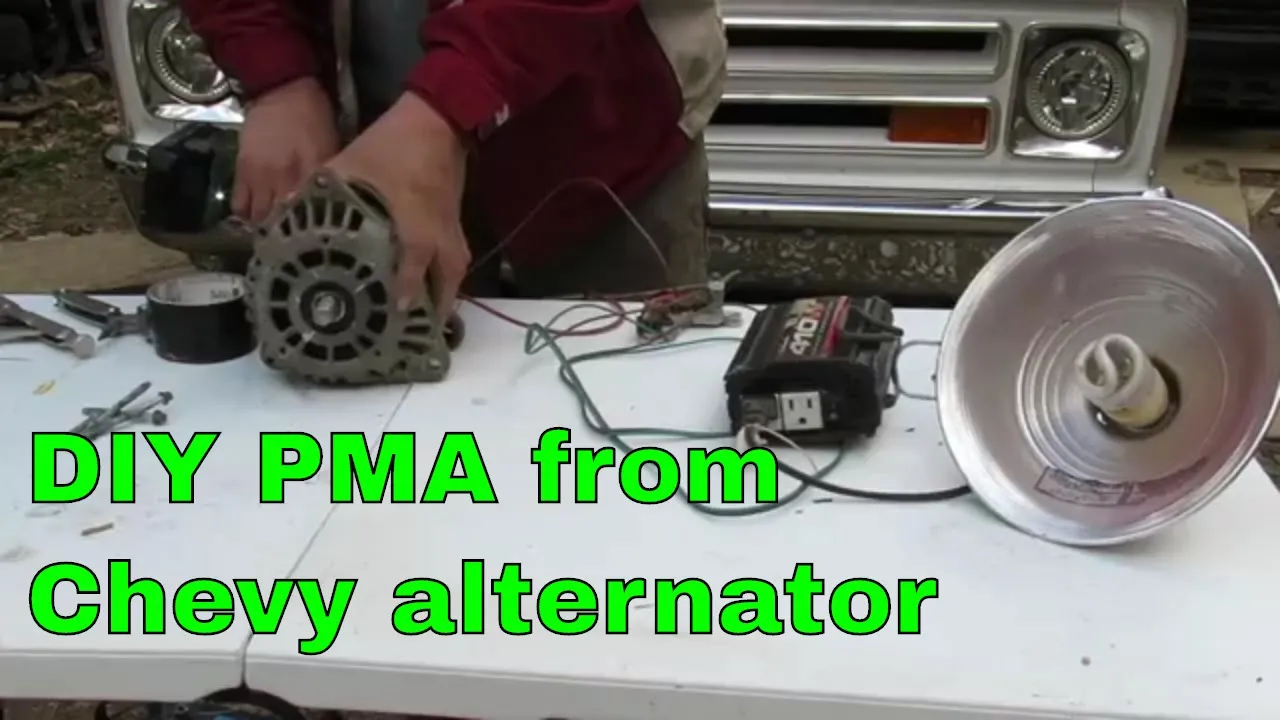
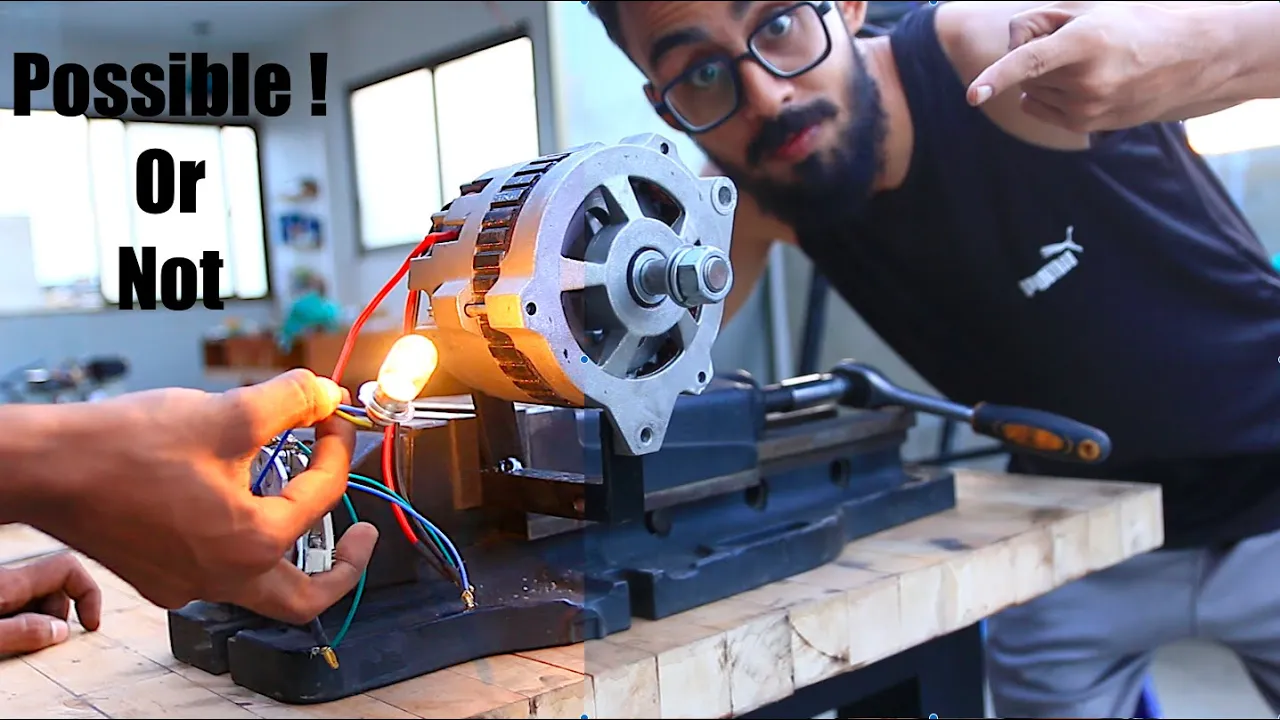
Methods for coupling the DIY rotor blades to a generator or permanent magnet alternator (PMA) to convert rotational kinetic energy into electricity.
Design and implementation of overspeed protection systems, such as mechanical furling or aerodynamic braking, to safeguard the turbine in high winds.
The fundamentals of wind energy storage and regulation, including the use of rectifiers, charge controllers, and battery banks.
Advanced blade design concepts, transitioning from constant-angle PVC blades to twisted, tapered airfoils utilizing fiberglass, carbon fiber, or 3D printing.
254.8K views722likes13:03Original Release: 2012-03-25
okay folks bit of info on the PVC pipe blades um you can see some up in the air they're spinning away and practically no wind they're uh the blades themselves are a meter long um to the hub nearly 1100 mil okay back here on the ground what we can see is um the result of an accident at Christmas time okay that's when I was trying to demonstrate the tail furling and uh I was somewhat stupidly pushing the uh pushing the tail around with a broom and I slipped with the broom off the tail and through the blades which had that kind of impact that's not a reflection on the PVC I think most materials would have done that turbine spinning about 300 RPM so it's a very stupid thing to do what I'm going to show you here is how easy it is to fabricate these blades to test various um wind speed scenarios to change the tip speed ratio and the profiles produced here have all been um made using the Warlock online um profile generator which is an excellent tool I have to to say so what we're going to do is going to take this broken one okay that's going to be trimmed down to a 600 mil blade um with a low TSR I just want to experiment and see what sort of speed I'm going to get by going from a meter down to 600 and the low tip to speed ratio means it's quite a wide Blade the one next to it is a 700 mil blade that one's already made with a higher tip to speed ratio as you can see it's effectively just a bit thinner along the whole profile okay and that's going to be another one of those blades there and the piece of scrap at the end is going to be the third blade so I've got some material to find to make up three of these ones here but might as well cut them at the same time that one there in fact okay so I'm going to show you next is how to actually cut these out or the method I've used for cutting them out which is very straightforward and very simple um again the reason for using the PVC is is extremely quick so if you want three sizes of Blade you mark them out very quickly cut them finish them drill holes in them job done so you don't have to waste the time and effort on making blades for your area if you're not sure how they're going to perform you can do several pretty quickly okay okay so the first thing we're going to do is we're going to um use an existing blade to trace around onto some of the scrap PVC and uh Mark out the other blade okay so we now got the Contour of the other blade one more new blade marked out here going to repeat this exercise and then we'll get busy with the angle grinder which might surprise you but it's a queen's way to hack these out okay so that's both of them marked out put back on because that'll dry up okay next is the grinder okay so next we're um cutting out these blades with an angle grinder and what I would say is I'm obviously very comfortable with this um don't use any power tools you're not comfortable with but this is the fastest way because of the curve of the pipe um you could do rather than going for a curve on the blades you could just cut them straight and do them with a hand saw uh but either way be careful all right [Music] [Music] he he [Music] [Music] [Music] I [Music] [Applause] he [Music] [Music] [Music] [Music] the [Music] [Music] hate there we have it one new blade okay here we have three completed blades couple of words about the PVC um I don't panic about it too much with regard to its structural ability it seems to be pretty flexible that's 4 mm thick um but as I've said in previous videos test any material you use to make sure you're confident that it's up to the job um the only other thing thing are the uh silver tips on the blades which everyone might think I'm obsessed by I just put something on the tips of the blades cuz there are a lot of birds around here although there are no recorded incidents of mini turbines killing birds uh I do feed the birds so I thought put something shiny on the tips at least it gives them a chance to uh see them when it's spinning around so it's that simple if you're living in a neighborhood um with Street lighting or a lot of lighting You' probably upset the neighbors by doing that okay let me just show you how flexible these blades actually are and like I said that's 4 mil PVC I wouldn't use anything less than that um and if you buy some material bend it and it shatters then just forget it okay okay um just for those people that are still worried about this PVC pipe like I say it must very much depend on what you Source but here's an example of how I'm trying to break this scrap up now okay and as you can see there's practically nothing I can do to snap it now the thing might be important here is the temperature today it's quite warm can so let's keep going at it and finally we managed to get it apart now when the blades previously pict is shattered it was [Music] December so obviously has a large bearing on the how this material performs okay let say it real quick one
Up Next

49:53
Engineering Design Process with KidWind: Wind Turbine Teacher Guide
@VernierScienceEducation
247 views•2024-07-19
30:32
Ultrasonic Transducers: Resonant Frequency Measurement and Horn Design
@imajeenyus42
229.9K views•2017-02-22

54:16
Polymer Environmental Degradation: Mechanisms & Stabilization
@iit
1.8K views•2012-07-10
33:39
How a Student's Question Saved a NYC Skyscraper from Collapse
@veritasium
22.8M views•2025-04-26
Related Study Plans & Knowledge Roadmaps
Structured learning paths in Engineering
engineering
Building Acoustic Levitators: Physics & Arduino
01The Physics of Sound and Standing Waves
02Piezoelectric Transducers and H-Bridge Drivers
03Arduino Programming: Generating 40 kHz Signals
+ 2 more learning modules
14h5 modules
Explore Roadmap
engineering
Building Peltier Cloud Chambers: Particle Tracks
01Cosmic Rays & Cloud Chamber Physics
02Thermoelectric Cooling (TEC) Fundamentals
03Custom Liquid-Cooling Loop Design
+ 2 more learning modules
18h5 modules
Explore Roadmap
engineering
Yagi-Uda Antennas: Modeling, Build & VNA Test
01Introduction to RF and Antenna Fundamentals
02Yagi-Uda Antenna Design Principles
03Antenna Modeling and Simulation in 4NEC2
+ 2 more learning modules
18h5 modules
Explore Roadmap
engineering
ECG Monitor Design: Op-Amps, Filters & Noise
01Electronics & Breadboard Basics
02Op-Amps and Instrumentation Amplifiers
03Bioelectricity and ECG Fundamentals
+ 2 more learning modules
18h5 modules
Explore Roadmap