








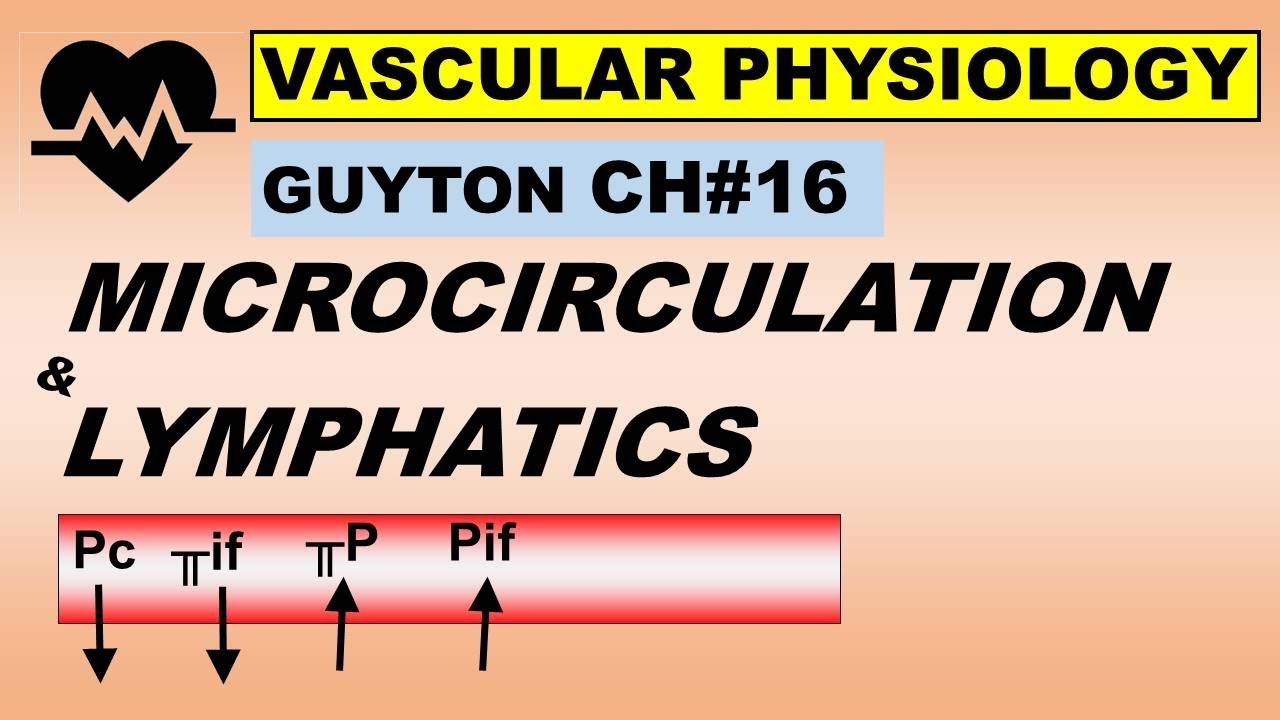





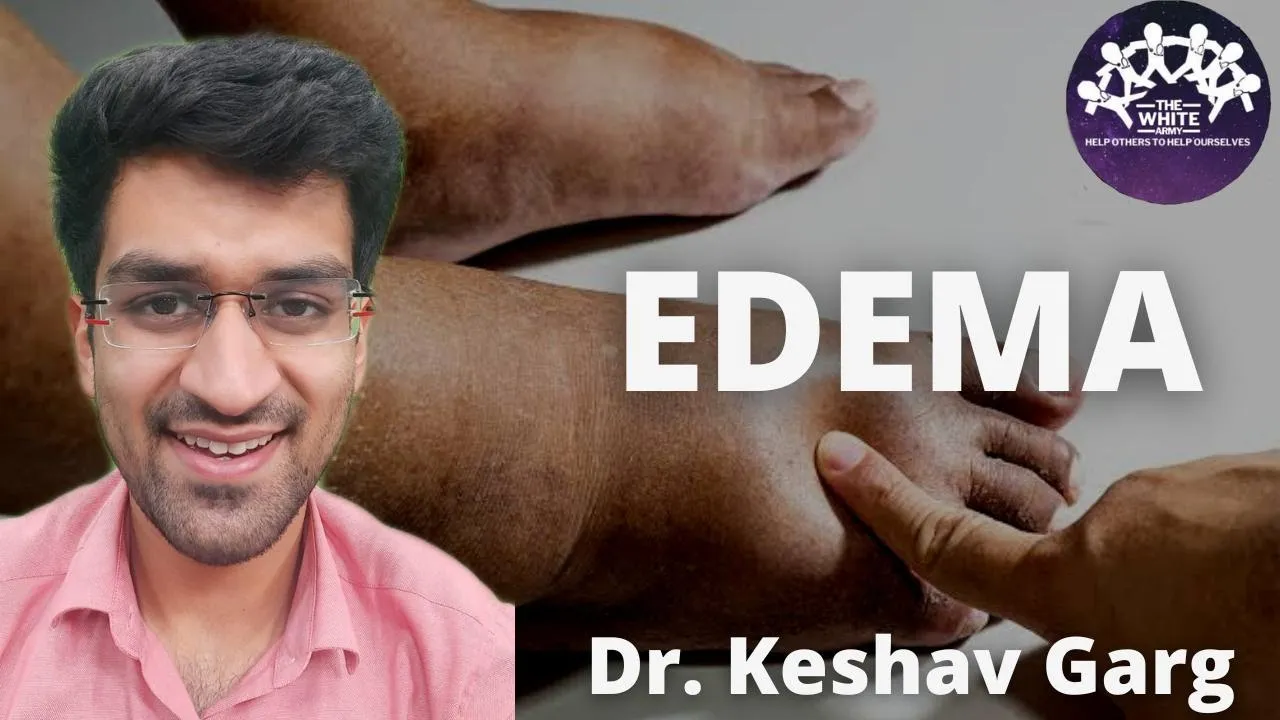





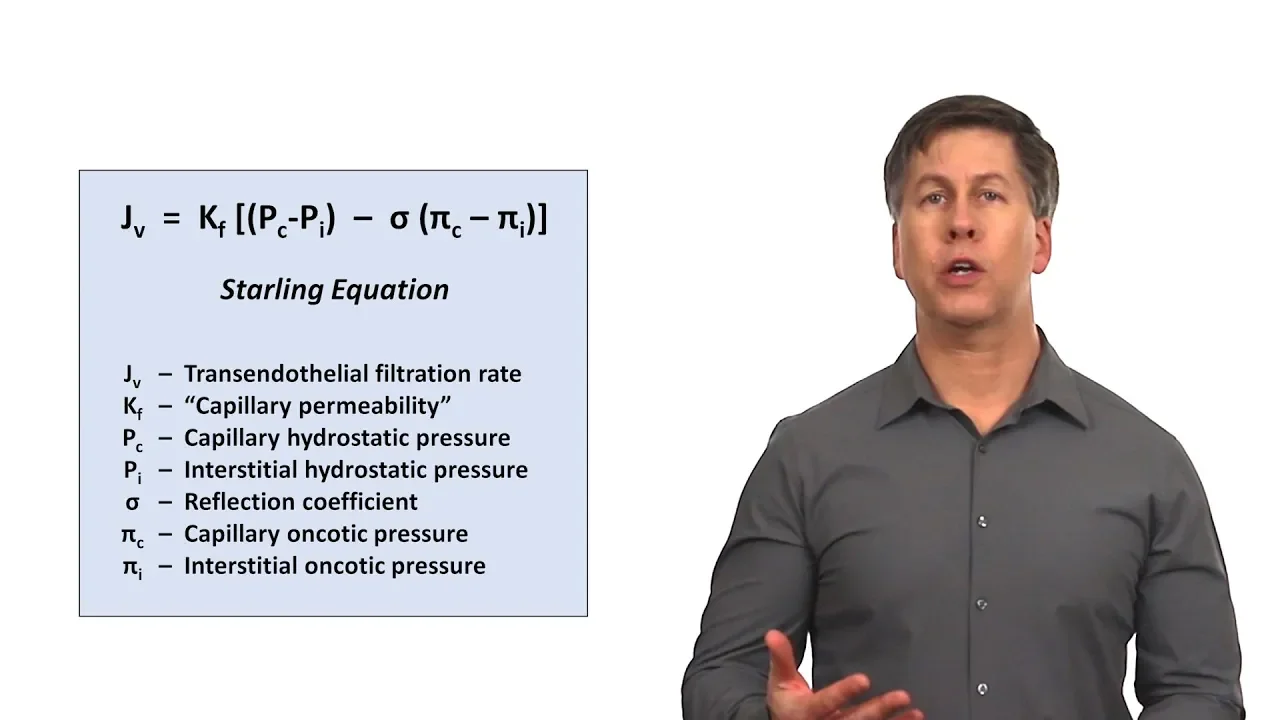
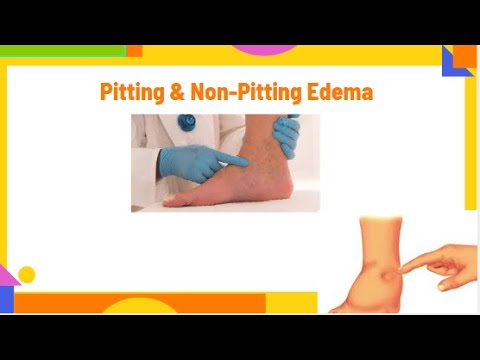


Edema is defined as abnormal and excessive accumulation of fluid in the interstitial space, and its pathogenesis is governed by Starling's Law, which describes the balance between hydrostatic pressure (outward pressure due to water in blood, 38 mmHg at arterial end and 12 mmHg at venous end) and oncotic pressure (inward pressure due to proteins, consistently 25 mmHg throughout). Under normal conditions, equal and opposite pressures (13 mmHg outward at arterial end and 13 mmHg inward at venous end) maintain fluid balance without edema. Edema occurs when this balance is disrupted through five main mechanisms: (1) Increased hydrostatic pressure (e.g., cardiac failure, postural edema), (2) Decreased oncotic pressure (e.g., malnutrition, liver cirrhosis, nephrotic syndrome), (3) Lymphatic obstruction (e.g., breast cancer surgery, filariasis, Milroy disease), (4) Sodium-water retention (e.g., heart failure, renal failure), and (5) Increased capillary permeability (e.g., inflammation, insect bites). Clinically, edema is classified into transudate (protein-poor, cell-poor, caused by first four mechanisms) and exudate (protein-rich, cell-rich, caused only by increased capillary permeability).
Edema Pathogenesis | Hydrostatic & Oncotic Pressure | Pathology
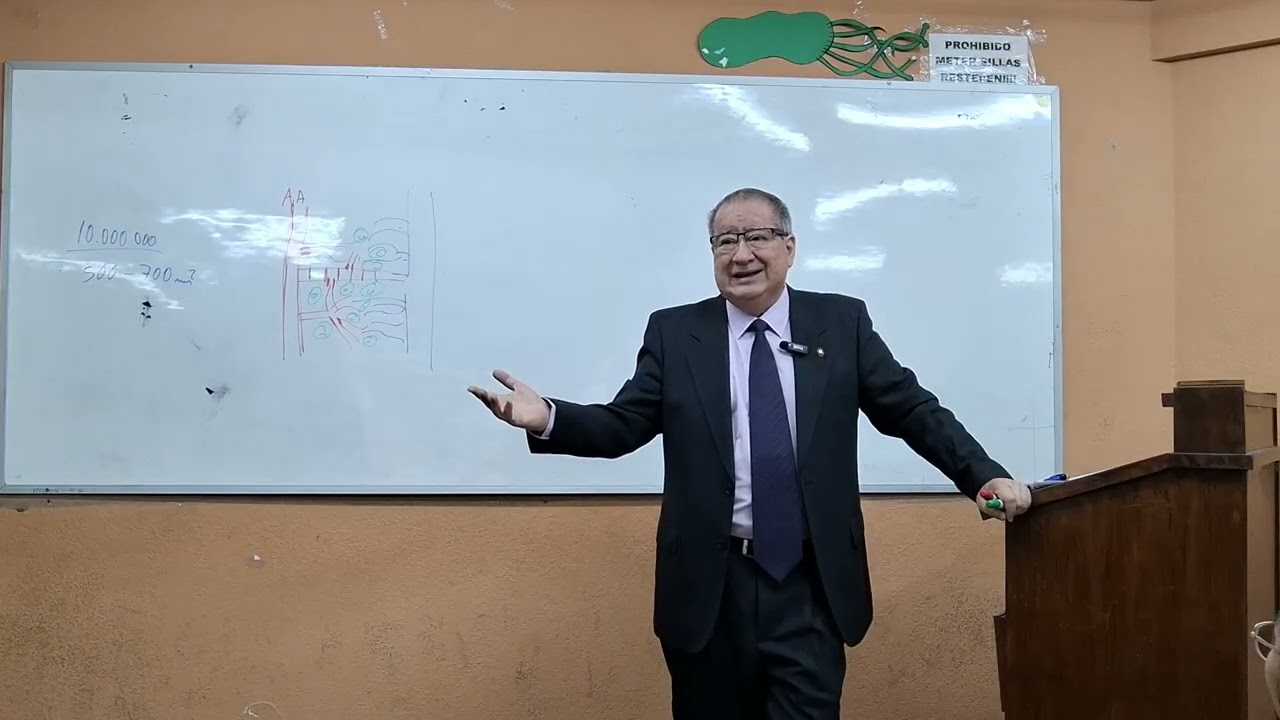
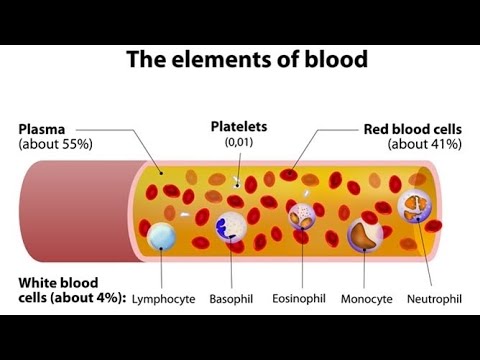
Added:hello everyone a very very good morning to all of you I'm alive am I visible and my audible give me a minute to confirm if I'm clearly visible audible I will start the session give me a minute to confirm it okay so I hope it's working good so I welcome you all for today's session a very very good morning to all of you I am Dr Priyanka sachdev here and today I am here to take a very very important topic just a second uh from the pathology from the general pathology a topic from hemodynamics the most important topic from hemodynamics the most awaited topic from hemodynamics is edema so many students demanded me uh to teach this topic in a simplified manner the pathogenesis of Edema is super duper important in your exams right am I right so uh if you're a second prop mbbs student this question is going to come in your long question so you have to write at least four to five pages on the topic edema the pathogenesis of Edema the causes of Edema the types of Edema so this topic is going to be very important and if you have already passed your second draft and preparing for some competitive exam you can't imagine how many questions can be asked from the various types of you know either the direct questions or indirect questions in the form of the clues so edema is something you can't miss at whatever stage you are studying right now either you are preparing for your University exam or you are preparing preparing for any of your competitive exam you can't miss you can't afford missing this topic so without wasting any further time let me start edema so let me first Define what is edema do you know what is edema in simplified language if I say what is edema so edema is you know it is like in simplified language in Hindi the patient comes to you and they will be say the doctor here in simplified language it is known as swelling it can occur at any part of the body from head to toe that is the edema now why it occurs how you will Define it so as I've told you it can occur in any part of the body see this is the organ this is the organ this is any any organ we know all organs we know that all organs are made up of cells so here inside the organs you can see the cells these are the cells the organ is made up of cell you can see this is the blood vessel of this organ this is the blood vessel of this organ all organs receive blood via person whenever the fluid comes out of the blood vessel and get accumulated in the interstitial space I am using the word interstitial space interstitial space the space between adjacences so because of which the organ will swell and this is known as edema so can you define the edema for me now this is the definition of Edema so edema is abnormal and accessive accumulation of fluid in the interstitial space so give me a thumbs up Amar accumulation of fluid in which space learn the name of the space its interstitial space so this is edema you all got the definition of the edema learn this diagram you will understand how the fluid get accumulated in the space between the cells that is interstitial space and this is known as idiom right now related to edema there is one more term which is known as effusion the pathogenesis of both edema and effusion is same so what is a fusion diffusion is also you know this definition is same it is abnormal and excessive accumulation of fluid fluid but not in interstitial space so instead of interstitial space we have body cavities here so compare the board definition only one word is changing here the fluid is accumulated in interstitial space it's known as edema if the fluid is accumulated in body cavities it's known as effusion what do you mean by body cavities in human body we are are having pure cavities for example surrounding the lungs we have pleural cavity say yes or no of course we have plural cavity surrounding the heart we have pericardial cavity every human being have it so when the fluid is collected in these cavities so it is not edema excessive fluid imagine excessive fluid accumulated here in the pleural cavity can you see here so what you will call it it is not edema of the pure cavity you will say it is effusion it is known as plural effusion imagine if axis of fluid you can see here axis of blood accumulated in the pericardial cavity it is known as pericardial effusion so that is the effusion so pathogenesis of both of them is same so I taught you the two definition what is edema and what is effusion pathogenesis I will teach now both of them have you got the definition give me a thumbs up it is abnormal and excessive accumulation of fluid accumulation of fluid in the interstitial space here accumulation of the fluid in body cavities so this also swells this also swells and the swelling is known as either edema or diffusion you got it yogita Sheikh Osama priyanshi padmavati Amar any doubt anyone having any doubt if you don't have any doubt I would like to proceed so we have learned the definition of Edema we have learned the definition of effusion now it's time to understand the pathogenesis which is very difficult but pathogenesis will be simplified if you know the normal fluid exchange so if you know what is normal now the understanding abnormal is very very easy you've got no point can you see this diagram this is the simplified diagram I drawn for you here you can see this is artery here you can see this is vein connecting artery carry pure blood brain carry impure blood and connecting the two other capillaries we can see the capillaries connecting the two so have you ever thought how pure blood get converted to impure when it passes through capillary when the blood was an artery it was pure but when it passes through capillary and reaches the vein it becomes impure so what is happening inside the capillary inside the capillary The Exchange is taking place by pure I mean oxygenated blood by impure I mean deoxygenated blood that you may be knowing right so let me draw so can you see okay so in the center there is a capillary so you all can see a capillary in the center connecting artery and vein so basically all capillaries have one and towards the artery and one and towards the brain so I am interested in capillary I am interested in capillary so can you see this is a capillary this is not artery no this is not way no this is a capillary in one end of the capillary there is arterial end and the other end of the capillary is bin and so arterial end of the capillary and vein end of the capillary but this is the capillary so here the pure blood is entering and here the impure blood is coming out am I right am I right Osama am I right priyanshi am I right so in a capillary when the blood enters it enters through arterial end and it is pure it is oxygenated and when it passes through the capillary and it comes out out of the other side the other side is known as brain and and when the blood comes out of the other end it becomes impure so exchange is taking place at this level you got my point now see again I guess everyone can see this diagram again this is a diagram of a capillary again this is a diagram of a capillary here you can see a beautiful diagram of a capillary right so this is the arterial end of the capillary so of course it is the pure blood and this is the venous end of the capillary of course it is impure blood right you can see it is a capillary right now all capillaries supplied that to some organ so see these are the cells of organ this is the organ made up of cells so I have drawn the organ here it is made up of cells the cells of the organ now when the pure blood is entering here listen the pure blood is entering here why all organs require blood my question to you all organs require blood why why are all organs required but Osama why all organs require blood none of the organ in our human body have which do not require blood the organs require blood for one thing oxygen all cells require oxygen and oxygen is coming from the blood only so whenever blood is passing through the arterial and now at the arterial and the fluid comes out the fluid comes out it happens in me you everyone the fluid comes out do the necessary exchange here it will go here see I'm drawing the fluid the fluid is going in the interstitial space doing the exchange in the exchange two things are happening number one the oxygen present in the fluid given to the cell the carbon dioxide present in the cell taken by the fluid so exchange taking place after all the exchange the fluid again come back and enters on the capillary so at arterial and fluids go fluid goes out and at the venous end of the capillary the fluid again come in so in the end the organ is dry there is no fluid after this the organ is dry the organ is dry in the end whatever coming out the same goes after the exchange there is nothing remaining in the organ so we don't have edema so it is happening in you me we don't think about it but it is currently not at this instant also it is taking in place inside all of us inside each and every organ but we don't have awareness about it you know we don't think about it but it is happening automatically so give me a thumbs up up so this is the exchange taking place right so how the fluid knows no fluid on things and do so actually it is the pressure pressure changes because of which the fluid is coming out and fluid is going in so let me talk about some pressures let me talk about some pressures there are two type of pressures acting in a capillary right now the first pressure is hydrostatic number is water water so blood is made up of water you know blood have two things number one cells number two water the water is the plasma the pressure due to water that pressure is known as hydrostatic pressure and it is always outward it is a rule that hydrostatic pressure is always outward so let me draw capillary inside which let me draw the hydrostatic pressure see the arrow it is always outward hydrostatic pressure it is due to water or water always pushes the fluid out that's why hydrostatic pressure is always outward it is a rule number one pressure number two pressure our blood have protein also can you see I'm drawing the protein here the blue dots are the protein this is protein so protein tends to tends to pull water protein Tendencies to pull water right so this pressure due to protein is known as oncotic pressure oncotic pressure the word pressure or osmotic pressure osmotic pressure whatever so it is the pressure due to protein not due to water and it has the tendency to pull the fluid inside so it is always inward see the arrows see the arrows the hydrostatic pressure is outward and the oncotic pressure osmotic pressure is inward hydrostatic is due to water and osmotic oncotic is due to protein have you got it do you have any confusion in that if you have even a slightest condition confusion please ask me anyone Osama Osama shake yogita you got this point the two types of the pressure the hydrostatic and the oncotic tell me the value so two type of pressures are present in a capillary can you help me with the values okay so again let me draw the capillary to help you the values so whenever it is a rule you draw a capital Arena I have drawn a capillary so always write this is arterial and this is Venus n because I will write different values at arterial end of the pressures and different values at the Venus and so let me tell you the values tell me the value of hydrostatic pressure and encotic pressure at arterial and tell me the values of hydrostatic pressure and oncotic pressure at the venous the poor values you will say ma'am common sense says that protein is always same whatever blood is entering here so whatever protein is entering here so protein protein protein protein same protein is going out a year so proteins nothing is changing in protein so oncotic pressure should always be same so yes oncotic pressure here also it is 25 mm here also it is 25 mm so oncotic pressure is always 25 mm at both ends at both ends let's talk about hydrostatic pressure so whatever water the same protein is going at the arterial end and same is going at the Venus and no change that's where pressure is same it's always 25 the arterial 25 the Venus throughout the capillary it's 25 but whenever water whatever water entering here in the blood water anterior the water is coming out due for the exchange here we have cells now I have told you these are the cells so for the cells it is coming out right and active the Venus and then it is entering again right so this is happening with the water so basically at arterial and hydrostatic pressure is more because water is entering more but gradually it loses loses loses outside so at Venus and Venus the hydrocity pressure reduces so let me tell you the values there the value of the hydrostatic pressure at the arterial end is 38 and the value of hydrostatic pressure at Venus and at Venus and it's 12. so 38 38 mm to 12 mm everyone give me a thumbs up everyone give me a thumbs up you got my point say either yes or no you got it so see the oncotic pressure is same it's 25 it's 25 but hydrostatic pressure differs and there is a reason it is common sense you don't have to learn your own protection hydrostatic changes protein is not coming out so protein is same throughout so important pressure is same throughout but water what is entering it is coming out for the exchange so it is decreasing decreasing decreasing so at arterial land we have more hydrostatic pressure but going towards Venus Venus Venus introduces everyone give me a thumbs up on this point everyone give me a thumbs up yes or no so these are the values learn the four values so osmotic pressure is always 25 25 mm whether it is arterial end of the capillary or venous land of the capillary right but hydrostatic pressure differs so at arterial and it's 38 mm and gradually the water is lost loss lost so it reduces reduces reduces reduces reduces okay okay so you got it I guess you got it yes or no now the second rule we have learned hydrostatic pressure is outward and osmotic pressure is inward we have learned this yes or no yes so we have learned two rules we have learned two rules the first rule and the second rule what is the first rule the first rule we have learned is hydrostatic pressure is outward and osmotic pressure is inward hydrostatic pressure is pressure due to water and it is always outward water push the fluid out right on putting osmetic pressure is pressure due to protein and it is inward because protein pulls the water I guess you know the meaning of pushing and you know the meaning of pulling so pushing is outward pulling up so it is inward so use these terms also pushing our outward pressure is hydrostatic which is due to water and pulling or inward pressure is oncotic which is due to protein you will never forget this now apply this law apply this law on the values I have told you the four values now so can you apply the law can this is the capillary this is the arterial end of the capillary this is the venous end of the capillary now you apply the lock so tell me hydrostatic pressure and oncotic pressure at the arterial end can you tell values just now I taught you can you tell me the two values that the Venus and hydrostatic and oncotic what are the values so oncotic pressure is always 25 hydrostatic pressure at arterial and is 38 at Venus and it's 12.
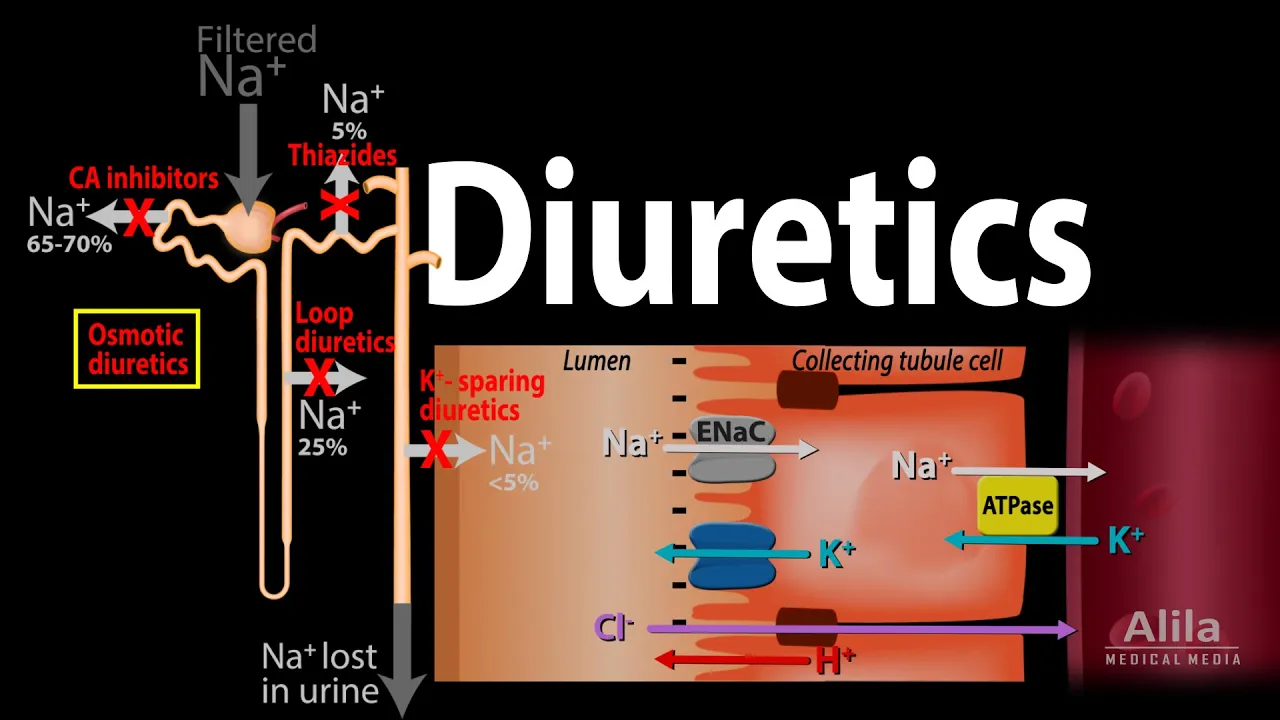
so you tell me what's the net pressure at arterial land so at arterial end this one is outward this one is inward so I can see outward is more than Inward and 38 minus 25 38 minus 25 answer will be 13 so net pressure is 13 mm which is outward so with 13 mm the fluid will come out the fluid will come out with how much pressure the fluid will come out with 13 mm pressure it will come out it will do the necessary exchange with the cell whatever cells it will do the necessary exchange here with the cells it will do the exchange and after doing the exchange see the venous pressures at the Venus and see the pressure so here you can see the two values 12 and 25 so 25 is more than 12. 25 minus 12 is also 30 25 minus 12 is also 13 but here inward is more than outward invert is more than so here also 13 mm so with the same 13 mm the it will come in again so look at the arrows you got my point so made a Point Arterial and pay 13 MMC fluid exchange that's why in the end tissue is dry and there is no edema everyone give me a thumbs up so this is the pathophysiology you can see the same here also so the pore values are written in front of you I guess hydrostatic pressure osmotic pressure at the arterial and hydrostatic osmotic at the Venus end now do the calculations here do the calculations here you can do the calculations so we have learned that osmotic is throughout 25 25 mm of energy but hydrostatic differs at arterial and it's 38 at Venus and it's 12 and we have done the exchange here here it's 13 mm outward here it's 13 mm inward give me a thumbs up so fluid entering at the arterial end with 13 mm it's coming out to the x exchange here and with 13 mm it's going in everyone give me a thumbs up do you have any doubt so same thing is written in front of you which I've explained your crystal clear so at arterial end net pressure is outward with 13 mm at Venus and net pressure is inward with 13 mm so equal and opposite pressure is there equal in terms of numbers and opposite it is outward and inward so in the end there is no edema in the and there is no enema you will see me just suppose it is 13 it is also 30 you got it 13 and 13 but imagine instead of 38 if it become 40 this is 25 is 24 or 23 a little bit change is there so you will see Mom it is an imbalance so more fluid will come out less will go in just suppose the fluid is coming out with 14 14 mm and it is going in by 12 mm so some fluid 2 mm fluid will accumulate here small amounts of patient will have edema no patient will not have edema because God is great God has given us a backup also could change so the backups are the lymphatics God has given a backup so that extra fluid is taken care by the lymphatic but if it is too much now lymphatic cannot take it a small amount lymphatic can handle So at the end there is no edema so lymphatics also have a role lymphatics are the backup you gotten a point so you will say my pressures are same so lymphatics are not required but if a little bit pressure changes their lymphatics are always there you got no point so that is the thing that is the thing same diagram is shown here that is the thing now you tell me what can be the causes of Edema we have learned the normal starlings law we have learned the pathogenesis you tell me what can be the causes so what can be the causes what are the outward pressure now edema will occur here in the tissue edema what is edema it is excessive collection of the fluid fluid collect cups if you understand Hindi yes so whenever more fluid comes out and less fluid goes in right so whenever more fluid is coming out and less is going in that is imbalance between the outward and inward pressure it is not equal and opposite outward is more inward is less don't do the opposite invert more outwards edema will happen when outward is more and inward is less you got my point so what is the outward pressure hydrostatic pressure so due to any reason if hydrostatic pressure increases so in that scenario outward will increase right due to any scenario if osmotic pressure decreases so in that scenario inward will decrease or both of them occurs together so that results in imbalance and the imbalance will result in edema am I right give me a thumbs up if you got it you got it so you bought me you bought the two reasons out of the pipe you got the two reasons either increased hydrostatic pressure yes either decrease on cortic pressure yes so these are the two main causes I will tell you the reasons right first understand the pathogenesis number three number three uh what is the number third cause number third the backup are obstructed the backup is obstructed you got the point the backup is obstructed the lymphatics are observed I've told you a little bit changes there that that is taken care by the lymphatics the lymphatics are the background imagine due to any reason the lymphatics are not working they are obstructed they are destroyed they are removed or they are not working they are not functional so in that case also changed in the body Dynamics so that can also result in edema so the third is the backup obstruction lymphatic obstruction so out of the five reasons we have understood three reasons say yes or no the fourth and the fifth I will tell you when I will tell you the details everyone give me a thumbs up right so have you got it till now do you have any doubt so we will study the examples now so can you tell me the few examples of increased hydrostatic pressure tell me the first cause increase hydrostatic pressure the outward pressure increase if hydrostatic pressure is increased but oncotic is same so outward is more inward inward is outward is more in about the same so that results in imbalance that results in edema can you tell me the causes yogita can you tell me the causes Shubhangi priyanshi shake and even can tell me the causes two causes of increased hydrostatic pressure two causes two examples I mean so the first example I'm telling you is the cardiac disease okay see this is the heart you can see the left side you can see the right side you can see the four chambers you know the blood vessels all the four chambers connected with I'm not repeating it you already know what is heart and what are the connections what is the cardiac cycle you know that now imagine due to uh any reason the right ventricle is not pumping the patient have right heart failure right heart failure the right ventricle is not pumping you will say okay ma'am what will happen then you tell me what will happen if the right ventricle is not a pumping it is not doing the systole blood will not go in the lungs for purification blood will not go in the pulmonary artery because it is not pumping it is not doing cystole so where the blood will go so due to this the blood go backward in the backward from right ventricle the blood will go into right Oracle yes or no harm voltage from the right Oracle the blood will go in SVC IBC Superior inferior vena cava and from there the blood will go in the organs so more blood more blood will go in the SVC IBC and more blood will go in the organ more blood must have more water more Bread is made up of water now so more blood more water more hydrostatic pressure so this blood vessel the SVC IVC and the veins will have more hydrostatic pressure but same oncotic pressure protein you got my point so imbalance will happen and in all the organs the the patient will have edema in all the organs all organs of the body the reason is same in all organs there is more blood more blood means more water more water means more hydrostatic pressure but on 40 pressure is cream so hydrostatic pressure is more oncotic is same so all organs have edema so this is the example yes it is so give me a thumbs up so that can be the reason so cardiac disease number one so cardiac disease that is due to increased hydrostatic pressure due to the back flow of the blood so much imagine a traffic policeman you have to imagine a traffic policeman or any person whose job is standing for more and more and more hours whose job is standing the person is standing for hours and hours and hours standing position so the job is like standing so you may have seen in such person there is edemas of the lag they have lag edema why have you ever thought if you ask any traffic policeman no he will he or she will complain why what is the reason the reason is the gravity you know Newton have discovered gravity now you may be knowing Hannah so uh the gravity is always functional right anytime it is working so in the lag there are veins these are the veins of the lag humans have five liters of blood we all have five liters of blood so due to gravity if the person is standing all the time most of the blood is going in the legs due to the gravity attraction so the blood is accumulated in the legs more blood due to the gravity there will be more blood more blood Matlab more water more water more hydrostatic pressure but protein is not increasing on body pressure is same so it results in imbalance and the imbalance results in edema such edema is known as postural edema what it is known as postural edema because it is due to the posture of the patient give me a thumbs up now all these details you have to learn right you have to understand don't learn so postural edema it is the transient edema of the feet and the ankle and the legs of the person like traffic constables whose job is standing for for many hours because of which there is more venous blood in the lacks due to the gravity give me a thumbs up everyone Usama yogita everyone got it say yes or no blood will go backward blood will go backward in the left Oracle it will go in the pulmonary vein and it will accumulate in the lung more blood more water more hydrostatic pressure it results in pulmonary edema so both ways can work here so some absolutely right you got my point so the cardiac edema and the postural edema are the edema due to increased hydrostatic pressure give me a thumbs up give me a thumbs up so write down two examples here can you write the two examples here increase hydrostatic pressure K heart failure right and left both and number two postural posturality edema the cause of the edema is increase hydrostatic pressure now coming on the second pause can you tell me three examples of decrease on cortic pressure see an example decrease protein the reason for the edema is decrease protein or decrease oncotic pressure more reason can you tell me can you tell me three examples I will tell you three examples so what is the main protein in the blood the main protein in the blood is albumin albumin so uh total protein in a human I am having eight gram per deciliter protein I guess you are also having the same all normal human being the protein amount is this this much amount of protein we all have in blood but instead of it if it becomes 5 or less than five due to any reason if the protein decreases the person will result in edema when the protein decreases oncotic pressure decreases hydrostatic is same but oncotics outward is same but inward is decreasing edema so tell me the three reasons can you tell me three reasons okay to understand the three examples you must tell me protein bread can you see this diagram here in this diagram tell me this is the blood vessel in the blood vessel protein can you see this is protein can you tell me Osama priyanshi yogita what is the source of the protein what's the source of the protein padmavati what is the source can you tell me anyone Source can yes very good priyanshi number one died so we eat the protein in the diet so whatever protein we are eating in the diet that get absorbed that get absorbed and reaches in the blood number one number two liver also synthesized protein she is absolutely right liver also synthesize some protein so that also comes in the blood so in the blood protein is coming from two sources number one git the absorption from the diets from the intestine number two liver yes yes yogita absolutely right yes padmavati from where the protein is excreted usually kidney do not excrete the protein no it does not but whenever there is some disease in the kidney the kidney excrete the protein in urine patient can have proteinuria so it can be excreted in case of kidney now I am talking what I'm talking I am saying in the blood there is less protein so there can be three possibilities either absorption is less so there will be less absorption is less right from the git or synthesis from the liver is less so it can be less or both are absorption and synthesis is normal but the kidneys are normal and whatever protein present in the blood it is excreted so excretion of the protein is more so that can be the three organs involved either in the git patient may have mild absorption or in the liver patient may have cirrhosis or in the kidney patient may have nephrotic syndrome nephrotic syndrome so these are the three causes because of which patients have less protein in the blood less protein less harmful depression and patient will have enema so all the patients who have malnutrition all the patients who have cirrhosis and all the patients who have nephrotic syndrome they all have edema the reason for their edema is not related to hydrostatic pressure the reason for their edema is decrease on cortic pressure so edema is same but you must tell the reason for the edema you got my point now imagine you are a doctor now of course a patient is coming to your Clinic Doctor I am having swelling the complaint the only complaint doctor I am having swelling an unliment language is a status dwelling from head to toe any part so give me some medicine right no patiently it is as simple as that but for you you have to rule out what is the cause of the swelling so first rule out whether the causes increase hydrostatic pressure or whether it causes decrease oncotic pressure or whether the cause is lymphatic obstruction take care in increased hydrostatic pressure we have in increased hydrostatic pressure we are having two examples the heart failure right and left and postural edema in decreased oncotic pressure there are three possibilities what are the three possibilities just now I told you the intestinal malabsorption the liver cirrhosis and the kidney nephrotic syndrome patients the patient have swelling that's it but you know the diseases are different the pathogenism the difference so treatment is different right being a doctor what treatment you will offer the first thing you will say I have to do the investigations based on which I will come to know what is the cause of your swelling what is the cause of your edema then I can give you a Curative treatment for that if it is available Curative means permanent cured right but meanwhile I am giving you a treatment which is known as diuretics diuretics what is the drug diuretics diuretics at these diuretics and pharmacology so diuretics are the drugs which causes which increases the urination urination urine come on so whatever extra fluid present in the patient body in the interstitial space whatever fluid causing edema that is excreted in urine and that will give temporary relief in the edema it is not permanent it is temporary so this diuretics is known as symptomatic treatment it is symptomatic treatment you got my bond it is not Curative treatment if the patient stop diuretic edema will come again because you have not fixed the cause of Edema you have to fix the cause you got my point imagine a patient is having fever now fever can be due to covet it can be due to malaria it can be due to typhoid it can be due to Dengue there are numerous thousands of causes of fever right but symptomatic treatment for all type of fever is paracetamol right so if you give the paracetamol the fever will subside till that medicine work but if the patients stop paracetamol again fever will come if you don't fix the cause of the fever so you have to symptomatic treatment and Curative treatment are different so if you give diuretics it is a symptomatic treatment but you have to find what is the actual cause if the actual cause is heart failure you have to give hinotropic drug that will fix it if actual cause is postural you have to ask the patient to change the posture don't stand for long hours right if the cause is malnutrition you have to give the drugs for the intestine that does absorption well so likewise you have to give a different treatment to the same edema patients patiently now that makes a difference between a doctor a graduated mbbs degree certified doctor and a crack you know coax practice so this is how we step by step approach the patient of the edema give me a thumbs up if you got my point so this is how so till now out of the five causes of Edema I have explained you examples of two what I have explained you I have explained you the reasons for increased hydrostatic pressure you know the two examples I have told you the reasons for degrees of aquatic pressure I have told you three examples now I am going to give you examples of lymphatic obstruction now imagine a patient is coming in my Clinic patient is saying doctor I am having edema I'm having edema right so if I have seen in this patient hydrostatic pressure is normal in this pressure the oncotic pressure is normal still patients have edema is it possible yes it is possible so both the pressures are normal the outward and the inward still patients have edema so hydrostatic pressure it is normal oncotic pressure it is normal still patients have edema so causes lymphatic obstruction the backups are obstructed so what are the causes of lymphatic obstruction the edema due to lymphatic obstruction is known as lymphodema it because it is due to lymphatic obstruction you know as I have told you the God has given us the lymphatics you can see the lymphatics are the backup right so whatever so whatever comes out the same goes in but thought about the Philippines that is taken care by the lymphatic lymphatic take that and give it into the bloodbath via thoracic drug give me a thumbs up everyone give me a thumbs up right so you got it so lymphatic obstacles anyone else who is watching me live lymphatic substrate lymphatic non-functionality so the first example is breast cancer you know imagine you are a breast surgeon you are a breast surgeon the lady is coming to you I am having a lump in my breast either right left whatever I'm having a lump in my breast so only treatment of breast cancer is the surgery I know if it is not matter static it is not stage four you will offer stage one two three you will offer the surgery so you will ask the lady that we will operate your lung we will take the lump out of your body we will cut it we will take it out but you know the cancer spread by by a lymphatics many cancers spread by our lymphatics so breast cancer is one of them so whatever cancer cells present here now inside the lump that is transmitting to the auxiliary lymph node of this lady can you see this is the auxiliary lymphatic so cancer is transmitting and after that it will it will become metastatic and it will come throughout the body in the blood vessel once it is coming now it will come in the blood via lymphatic and it will spread in all organs it will be stage four we do not want our patient to be stage four of course we do not want it we want to save our patient right we do not want metastatic cancer in this lady so we will ask the lady we will do two surgeries number one we will remove the lump we will remove the lump that is the cancer present in your breast whatever quadrant it is present number two we will remove your axillary lymph nodes of the corresponding limb if it is right the right lymph the right axilla if it is left the left axilla so the lady will ask why you are doing the surgery here I don't have any lump here so you have to explain you don't have any lump but maybe the micro particles the cancer cells have already invaded your lymphatic and we do not want to take a chance if we remove only the lump and we do not remove the lymphatics now it may happen that in future some of the cancer cells are hidden inside this lymphatic and future you will have stage 4 cancer so we have to do two operations in one sitting in one operation in one sitting only we will do both the surgeries so we will give an incision here take your lump out we will give an incision here take your lymphatics out so you have to constantly like this it is by default we do so so lady will say okay but the lymphatic is not a vestigian organ why the God has given this auxiliary lymph nodes to all of us we are having excellence in our axilla we all have lymph nodes it is not a vestigial organ yes or no it is not appendix so why the God has given the lymphatics are to taken care of the edema they are the backup so if you are removing the lymphatic after the surgery this is the scenario after the surgery so you can say the lady will have edema in that arm because you have removed the lymphatic from the axilla you have already removed but it is the side effect of the surgery you can say right it is the morbidity of the surgery operates a better thing at least patient will be surviving we will manage their demand future management we will give the diuretics occurring used to manage right some physiotherapy but if the stage four is there the lady will die right so we will select that option which is more suitable so that is the lymphedema after the breast cancer give me a thumbs up everyone if you got it what I mean so removal of the auxiliary lymph nodes we have removed the axillary lymph nodes in a patient with breast carcinoma so after the surgery the patient will have lymphodium of the affected arm or if you are a surgeon now if you are going to be a surgeon and operating this lady this type of lady you have to cancel before the surgery lymphatics so in future you may have lymphedema so don't blame us for that and if we don't do now if we don't remove it you'd say no however with lymphedema throughout my life so you have chances of having stage four cancer so choice is yours what do you want of course you don't want to die you want to live you want to survive but surviving with edema we will manage it we will manage it so you have to you know make it mentally prepared before the surgery only that this is going to happen in future so this is the thing and you will manage it it is not the thing in all ladies will happen depending you are taking complete auxiliary lymph nodes or partial agility notes so give me a thumbs up if you got it so that is the first example of Lymphedema shall I proceed swanand yogita number two have you heard about um uh disease pilariasis which is caused by a parasite known as wucheria Bank of time loves lymphatically that is going in the lymphatic and obstructing the lymphatic can you see this is the larva the larvas of the buchiria bankrupt are obstructing the lymphatics so lymphatics got obstructed it got obstructed they become non-functional they become non-functional so patient will have edema usually in the legs usually in the legs and this disease is known as early pentitis so because the food is looking like the elephant right elephant that is so basically the patient have edema in the foot and the genitals in the foot and the genitis patients have edema so that can happen the elephantitis can happen phylariasis they cause obstruction so patient have throttle edema and the laxity is the name of the disease that can happen the second thing the third thing congenitali Heritage lymphatics in India God has not given the functional lymphatics it is hereditary so the child will have edema throughout the body the child have edema throughout the body because the lymphatics are not functional and the disease is known as Milroy disease Milroy disease so can you tell me the three examples Now can anyone know you help me with the three examples so tell me the causes of Edema so first I taught you that is increase hydrostatic pressure decrease oncotic pressure and now I am teaching you lymphatic obstruction you got my point you have to tell me the examples the two examples here three examples here three examples here examples are important all these have edema but what is the cause of Edema right so lymphatic obstruction maybe we have learned three number one breast cancer breast cancer yes tell me the second the second is the filariasis known as elephantitis which area bankrupt type the third is the Milroy disease very good Osama it's melroy disease give me a thumbs up and others we have already seen we will revise in the end so coming on the fourth cause coming on the fourth cause the fourth cause of the edema the fourth cause of the edema is sodium water retention what do you mean by sodium water retention now we will see two things the heart failure and the renal failure um what do you mean by renal failure what is the function of the kidney why God has given us kidneys kidneys are given to excrete sodium and water out of the body in the form of the urine if kidney becomes pale renal failure is there kidney is non-functional so kidney will not excrete sodium and water in the urine patient have early urea patient have anuria so the soul patient will have sodium water retention now in this patient who is having renal period the hydrostatic pressure is normal the unquote pressure is normal the lymphatics are normal still patients have edema the patient have edema due to sodium and water retention basically the kidney is not excreting the urine the kidney is failed both the kidneys bilateral failure is there due to any reason the bilateral failure is there so urine is not coming out patient is having oliguri or anuria yeah so sodium and water is retained in the body that will gradually increase the hydrostatic pressure more water more hydrostatic pressure that results in edema so that can be the cause sodium water retention give me a thumbs up everyone give me a thumbs up yes yogita absolutely right you're writing the correct process so here I am teaching you the next cross sodium water retention the past is renal period because of renal failure there is sodium water retention that results in edema that results in edema right although pressures are normal but patients have a demon right number two if the patient is having left heart failure imagine the patient having left heart failure count your left heart left heart the left heart failure is there the left heart is not pumping the patient have left heart failure what will happen the blood will not go ahead the blood will not go ahead in the aorta so all the organs will receive no blood but most sensitive organ among them is kidney whenever kidney do not receive blood enough blood inside the kidney there is an apparatus there are cells known as GG apparatus JJ cells juxtap glomerular cells they will get stimulated oh my God as soon as they got a stimulated discrete ran in the blood and the ran in Angiotensin pathway will get activated because of which again aldosterone will come in the blood and that will cause sodium and water retention sodium is so that can result you got my point so there are two possibilities either the heart failure or the renal failure both results so heart failure and renal failure both results in sodium and water retention so more sodium more water more blood volume and that results in edema so the next cause of Edema is sodium water retention which can be due to heart failure and trailer failure everyone give me a thumbs up everywhere everyone you got my point the last reason the last reason then we will revise the last reason imagine a patient till now what causes I have taught you either the patient have increased hydrostatic pressure or the patients have decreased on cortic pressure or the patient have lymphatic obstruction or the patient have sodium and water retention will have edema we have seen various examples in each category now imagine a patient is there having edema I have seen hydrostatic pressure oh it's normal I will see okay lymphatic obstruction it's also normal sodium water retention no it's also normal still patients have edema yes as a hose and then what is the cause of Edema you are saying hydrostatic pressure oncotic pressure lymphatic sodium water retention everything is normal everything still patient have edema so what is the fifth cause of Edema what is it can happen it can happen the fifth cause of the edema is listen I am drawing a blood vessel for you to explain the fifth cause so this is a blood vessel inside the blood vessel this is the endothelial cell blood vessels are lined by endothelial cells and inside the blood the fluid is present so this is the fluid present inside the blood so the and now I am saying hydrostatic pressure normal pressure normal everything is normal so fluid will not come out you will see them okay we understand that no but imagine due to any reason there are gaps there are gaps in the endothelial lining gaps you know I mean gaps if the gaps are formed due to any reason normally the lining is continuous normally the lining is continuous so fluid do not come out but if the gaps are there imagine the gaps can you see the gaps I have drawn the gaps for you these all are gaps in the blood vessel this is known as gaps in the wall of the blood vessel if they are formed so even the hydrostatic and oncotic pressure are normal hydrostatic pressure is normal yeah hydrostatic and operating pressure is normal but from these gaps the fluid will come out the fluid will come out from these gaps you got my point the fluid will come out even on being the precious normal so this will result in edema so what is the cause of the edema the cause of the edema you will see when the cause of the edema here is the gap so Gap creating gaps is increase capillary permeability you are understood but say ma'am increase capillary permeability that means gaps increase capillary permeability so don't say ma'am increase capillary permeability which results in edema A1 on being precious normal you got my point even on being precious normal this can happen everyone give me a thumbs up yes or no okay one more important Point here if you got it um if the gaps are formed now so of course the fluid will come out of course the fluid will come out even on pressure normal but along with the fluid protein will also come out so in the fluid abundant amount of protein is present the edema here is a special edema that is known as translated that term sorry that is known as exudate absolute type of Edema having abundant protein also right so the last reason is increased capillary permeability right so I have shown the same thing here you can see please appreciate the lining in the first diagram it's continuous see the endothelial cells I'm drawing they are continuous if you can see Zoom it out see see the second diagram I'm drawing see the second diagram see this is first cell this is the second cell this is third cell appreciate the gaps if you can appreciate the gaps it's good if you can appreciate the gaps between it's good so it is increased capillary permeability from this Gap the two things are coming out number one fluid and number two the dot dot dot protein can you see the protein so can you see the background blue color the background blue color is the fluid with the protein that is absoluted type of Edema everyone give me a thumbs up everyone so can you so here generalized edema can also happen localized can also happen due to increase if the complete body capillary have gaps complete body so the complete body edema is there generalized edema is there which is known as anasaka and a sarca is complete body demand or it can be localized have you ever thought do you have a mosquito bite yes I have many right so in um you know rainy season especially we have mosquitoes right so whenever we have mosquito bite we have such elevation the point at which the mosquito bite have you ever thought this is edema what is the elevation elevation is Reema have you ever thought the mosquito bites right so why the edema happens after any insect bite mosquito bite the reason is increased capillary permeability so whenever any mosquito or any insect bite you the process of inflammation takes place and inflammation the gaps are formed the increased capillary permeability that results in a demon so that can happen give me a thumbs up everyone give me a thumbs up so we have understood the five causes let me device let me revise the master table the five causes of Edema who will help me who will help me the five causes of Edema the first causes increase hydrostatic pressure the second cause I want everyone to participate helper please everyone help me with example the second cause of the decrease oncotic pressure the third is the lymphatic obstruction the fourth is the sodium and water retention and the fifth and the last is increased capillary permeability gaps formation now you tell me two causes here you tell me three causes here again you tell me three causes here again you tell me two causes here and you tell me one or two cause here that's it who will tell me anyone interested okay padmavati have started okay priyanshi good so increase hydrostatic pressure it's heart failure heart failure and postural postural edema postural due to the posture you all are right decrease right so number one intestinal Mal absorption number two liver cirrhosis and number three kidney nephrotic syndrome right diagrams lymphatic method three causes one is breast cancer cancer breast cancer is surgery breast cancer surgery you got my point the second is right you all are right absolutely you all are such a fantastic students I love it I love it that you've got my point right I feel very happy thank you thank you so sodium water retention with the two main organ heart failure renal failure heart failure and renal failure and increased capillary mosquito bite or you can say insect bite insect bite or any type of inflammation generalized any type of inflammation so these are the causes now see everyone is heart failure coming at two places here and here occurs due to two causes number one due to increased hydrostatic pressure number two due to sodium water retention heart failure renal failure my second question is due to two causes sodium water retention and decrease so in the exam you will get confused oh my God heart failure so heart failure have two causes renal period have two causes but liver failure liver failure have only one cause liver failure that is decrease on body pressure so this is how you have to learn it this is how this is the approach you got my point so that makes the pathogenesis of Edema does anyone have any doubt till now does anyone have any doubt till now so the next and the last thing is the types of the edema there are two types of Edema translated absoluted what do you mean by that translated at exudate so whenever translated and exudate whenever edema have only fluid no protein no cell it is translated but whenever along with fluid it contains abundant protein and abundant cell so protein Rich cell Rich edema is excellent but protein poor cell poor edema is translated so what is the definition translated is protein poor cell poor only fluid is there accident is protein Rich cell Rich along with fluid so here protein and cell are absent here protein and cell are abundant so that is translated accelerate right you got my point so I told you the five causes the five causes of Edema right so okay you can see this is a normal blood capillary this is a normal blood capillary you can see there are no gaps everyone see understand translate accelerate so first four causes the first four causes them first four causes see the arrows but if either hydrostatic increases or oncotic decreases or lymphatic obstruction or sodium water retention so only fluid comes out only fluid comes out and that results in translated but the fifth cause what is the fifth cause it gaps our form so gaps so this edema is five causes of Edema increase hydrostatic pressure degrees aquatic pressure lymphatic obstruction sodium and water retention and the last one is important increase capillary permeability so in the first four only fluid will come out only fluid will come out and that results in translated but in the last one says gas burner so fluidic is known as eggs everyone give me a thumbs up I am crystal clear in my concepts are you give me a thumbs up give me a thumbs up so that's all about the edema do you have any doubt in the pathophysiology of Edema if you have please you are free to ask me if you have any doubt we are free to ask me right so that is the pathophysiology of Edema still if you have any doubt and you realize it later on so you can uh tell your doubt to me on this contact number you can see the contact number just a second why I can't write with the pan okay I am unable to write I've just closed it I'm sorry anyways if you have any doubt you can ask me on my contact number or uh you can send a WhatsApp or telegram message to me so thank you for being with me I really enjoy teaching you hopefully same from your side and just a second uh every day I will be live at 9 00 am in the morning so you have to stay connected I have sent you the schedule also on the groups I can see uh can you see it just a second yes I guess you can see it so my contact number is in front of you it's 983032-948 on this contact number you can ask your doubts and uh in the comment section there is a link given if you click on the link you can connect me on other social platforms that is on Instagram on there is a WhatsApp group link on the telegram so you can connect me on various platform I will share you the educational content the one minute learning videos and many conceptual learning there on the social media so please connect me on other platforms also thank you very much for being with me and if you like the lecture don't forget to click on the like button share the link with your friends colleagues everyone with all the Medicals you know throughout the growth and subscribe our YouTube channel press the Bell icon for getting the notifications thank you see you bye bye study hard all the best give me a minute so I'm ending it right and if you have any other topics which you want me to take in the YouTube classes kindly uh you can text me on the WhatsApp or telegram I will schedule it in upcoming weeks so many students have told me to teach the autocoides and anti-psychiatry drugs antidepressant drugs and antiarismic drugs many topics you have suggested so they all are in pipeline in future every week I am going to take their high demand topics anti-malarial drugs you have told me so whatever topics you are going to tell me I'm planning on YouTube free sessions and every day at 9am in the morning we will be live thank you very much bye bye study hard all the best and I'm ending the session
Up Next

Prions: The Science Behind Mad Cow Disease | Neurology Explained
@darkscienceyt
230.8K views•2024-03-15

Graphic Medicine: Comics for Collaborative Healthcare Communication
@nationalpatientadvocate
189 views•2023-12-04

Protein Synthesis Inhibitors Pharmacology | Antimicrobial Drugs Mastery by Dr. Priyanka Sachdev
@MedLiveByDrPriyanka
69.3K views•2023-12-18
Stages of Labor and Vaginal Birth | Childbirth Animation
@nucleusmedicalmedia
52.1M views•2017-08-18
Related Study Plans & Knowledge Roadmaps
Structured learning paths in Medicine