![Thorax 8 - Trachée, bronches, poumons, plèvre [Descriptive anatomy of the respiratory tract]](https://i.ytimg.com/vi/fOG_CXzk_Xc/maxresdefault.jpg)







![[#3] EQUILÍBRIO ÁCIDO-BASE: Sistemas Tampão Bicarbonato (PARTE 1) | MK Fisiologia](https://i.ytimg.com/vi/ilKjjkI2_Y0/maxresdefault.jpg)














This lecture explains that pulmonary mechanics follow principles similar to blood flow, where airway resistance increases with constriction and decreases with dilation; normal breathing uses negative pressure breathing (Boyle's Law), where contracting respiratory muscles enlarge the chest cavity, decreasing intrapulmonary pressure below atmospheric to draw air in, while relaxation reverses this process. Pulmonary ventilation is quantified as minute ventilation (breathing rate × tidal volume, typically 15 breaths/min × 500ml = 7.5L/min), with alveolar minute ventilation accounting for dead space (150ml/breath) to calculate only the air reaching alveoli for gas exchange. Gas exchange is expressed through partial pressures, with normal alveolar oxygen at 100mmHg and CO2 at 40mmHg, matching arterial blood gas values. Acid-base balance involves four categories: respiratory acidosis (hypoventilation causing hypercapnia), respiratory alkalosis (hyperventilation), metabolic acidosis (accumulation of non-CO2 acids like lactic or keto acids), and metabolic alkalosis (loss of acid, often from vomiting).
Respiratory Physiology: Mechanics, Gas Exchange & Acid-Base Balance
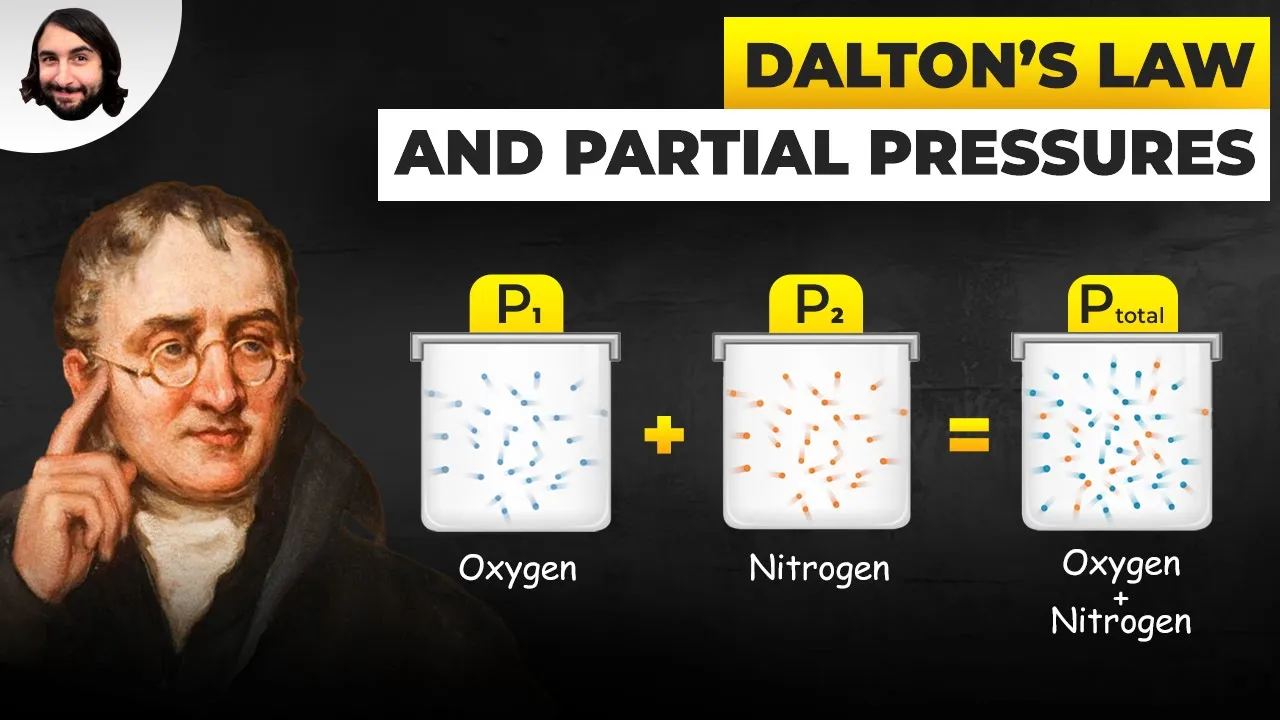
Added:okay uh this is Page 281 and I I want to start with a very simple concept let me put this in a broad context you can relate to many of us have heard of people who have asthma and in asthma which is very common their airways constrict it's hard for them to breathe and the medication they give them is they give them a spray to inhale which is called a Bronco dilator so the problem with asthma is the Airways are constricted the treatment is to make the Airways dilate now that's the setup let's before I come back I'll come back to that in a moment what have we learned about when blood vessels constrict when somebody has generalized arteriolar Vaso constriction what does that do to the resistance of of the ability of the blood to flow through through the vessels it increases resistance imagine a water faucet with a hose the water's on when you constrict the hose it's harder for the water to flow Downstream for where you're constricting it you've increased resistance and you've reduced flow Downstream all right similarly Bronco constriction constricting the Airways increases Airway resistance AR Airway resistance so just as vessels blood vessels constricting causes vascular resistance constricting uh Airways increases Airway resistance and if you increase that Airway resistance you constrict those Airways that reduces air flow again it works absolutely identical to vessels constricting now uh the uh what can cause what can cause Airways to constrict parasympathetic autonomic motor neurons constrict sympathetics dilate histamine constricts airwis and so does nicotine now this is interesting because what effect does histamine have on blood vessels it dilates blood vessels but it constricts Airways I'm sorry the world's not always so straightforward blood histamine makes vessels dilate which lowers peripheral resistance and drops your blood pressure but histamine constricts Airways now you know people who have allergic reactions carry around EP epinephrine adrenaline EpiPen now what does histamine makes blood vessels dilate what does epinephrine do to most blood vessels constricts them we've just now learned that histamine makes Airways constrict what does epinephrine do to Airways dilate them can you see why epinephrine is the exact reverse of histamine and that's why it's given for allergic reaction yes histamine dilates vessels adrenaline di constricts them yes histamine constricts the Airways adrenaline dilates the Airways it's a Bronco dilator so that's what we wrote sympathetic motor neurons and epinephrine are Bronco dilators when you dilate the Airways it lowers Airway resistance and improves air flow the concepts that we spoke of in blood flow are identical to those in air flow now on the next page 282 so in our limited time let's just remind you of how we breathe in a nutshell how we breathe you know in goes the good air out goes the bad air is an application of something called boils law if you've had chemistry you should have learned it Bo's law says that there is an inverse relationship between volume and pressure that if volume increases pressure decreases let's show you what we mean imagine imagine if we had a bottle with air molecules in it right got air molecules now these molecules are bouncing around and they create a certain air pressure certain pressure inside this bottle okay we got it closed off all right and now imagine we stretch the wall of the bottle bigger we've got the same number of molecules now in a bigger volume what happens to the pressure it goes down isn't that intuitive you've now got the same number of molecules in a larger space so the pressure inside the bottle goes down on the other hand now let's take this bottle and compress it smaller I've taken the same number of molecules and compress them into a smaller space What happens to the pressure inside the bottom goes up that's boils law well this is basically how our breathing works okay first I will demonstrate with myself all right when you contract your respiratory muscles diaphragm muscle and intercostal muscles between the ribs you do this the chest gets bigger and then you relax those muscles the chest gets smaller we've just said that if you enlarge your volume your chest volume in this case what will happen to the pressure inside your chest and lungs it will go down and then when you relax those muscles and your chest gets smaller the pressure increases let's just see how this works the diaphragm muscle when it contracts enlarges the volume of the chest from top to bottom here's why the diaphragm muscle in the relaxed State when the diaphragm muscle is relaxed it's actually arcs upwards like this kind of arcs upwards that's when it's relaxed now when the diaphragm muscle contracts what does the word contract mean get shorter when it gets shorter it becomes a straight line ever hear that expression what do we call the distance between two the shortest distance between two points a straight line so the diaphragm goes from being arked upwards to a straight line can everybody see when it does that the volume of the chest from top to bottom has now increased by this much so the chest volume is now larger and that's going to cause the pressure to go down the intercostal muscles the contraction of those other respiratory muscles like those between your ribs they enlarge your chest from side to side and from front to back overall the contraction of the diaphragm and the intercostal muscles enlarge the chest causing the pressure inside to go down now if it starts out atmospheric if you open your mouth right now and you're not breathing that means the pressure inside your lungs is the same as the air pressure no no air is Flowing there's no air flowing in or out so now when you enlarge your chest the pressure in your lungs becomes less than atmospheric subatmospheric and that creates a suction that literally sucks the air in it's very much like an accordion an accordion uh or a Bellow is as you stretch the accordion wider it draws air in into the Bellows of that accordion as you enlarge it right then you push in on the accordion and then forces the air out so that's all we're doing is we're creating a suction so just think of inhaling sucks that's what I wrote on 283 during inhalation I wrote air is sucked into the lungs your respiratory muscles contract that increases your chest volume according to Bo's law if the volume increases the pressure inside decreases this is called a decrease in Alvar pressure a decrease in alveolar pressure and air flows into the lungs until the pressure in the lungs returns being atmospheric so inhaling sucks now we wrote that since inhaling of air involves creating a suction a negative pressure negative meaning less than atmosphere sper that sucks the air in normal pulmonary ventilation normal breathing is called negative pressure breathing that's what they call normal breathing negative pressure breathing now uh the uh uh I'll come back to that point momentarily on the next page 284 so how do you exhale it's just the reverse when you uh the way we exhale is when relax our respiratory muscles our chest volume becomes smaller and that raises the pressure inside of our chest and lungs making it greater than atmospheric forcing the air out basically I always say that the way when we exhale air is blown out we blow out the air it blows when I mention this when I teach Anatomy I always say inhaling sucks and exhaling blows inhaling you create a suction exhaling you blow it out you raise the pressure in your uh uh lungs and that blows the air out so and then I always point out that you should always make sure you suck when you're supposed to suck and blow when you're supposed to blow you shouldn't be sucking when you should be blowing you shouldn't be blowing when you should be sucking it's all just a bunch of issues of sucking and blowing don't think about it all right so inhaling sucks exhaling blows we blow the air out under a high pressure now why this is relevant again we're Limited in time so I can't fully explain this but in the future when you deal with ventilators they call the ventilators or respirators that are commonly used ipbs has anybody ever heard that term an ippb stands for an intermittent positive pressure breathing device because with a ventilator respirator you don't create a suction drawing in the air in instead that air is blasted in at a greater than atmospheric pressure that's called positive pressure we're not we don't have time to talk about it but it's not the exact opposite of normal breathing and I being on a ventilator a respirator is really nothing like normal breathing because basically the way I try to have students imagine being on an ipb is take an air hose from a gas station there's not many gas stations that have air hoses anymore find one that has it stick the air hose in your mouth and turn it on that's what an ippp does it blasts the air in under high pressure that is not the way normal breathing works normally you create a suction you make create a subatmospheric pressure that sucks or draws the air in you don't blast the air in under high pressure so when you come off the respirator is that why you take such shallow breaths there's a lot of things going on okay I just don't have time to talk about it but it is very different from normal breathing all right uh now we're g to jump ahead because again we're Limited in time uh two page um 293 page 293 this is Page 293 whatever we're skipping it's not that what we're skipping is unimportant it's actually quite important we just don't have time to cover it but anyhow quantifying pulmonary ventilation now what we want to this to set this up what we want to do is to be able to express the amount of air we inhale each minute right you think that's important to know how much air you inhale each minute well if you're not sure if it's important it is important now before I explain how we evaluate the amount of air we inhale each minute I want to draw a parallel for you do you remember learning this for a test we just took cardiac output there are two major factors that affect cardiac output and incidentally what is cardiac output it's the amount volume of blood ejected by each ventricle each minute right it's the amount of blood ejected per minute by each heart we nor normally eject about five lers per minute is that right so what determines how much blood our heart ejects each minute two things how fast is it beating heart rate and how much blood did it eject with each beat stroke volume every stroke a everybody okay that then that tells you how much blood is ejected per minute now how do we figure out the amount of air we inhale each minute we the way we write it isv you'd say what's dot v v means volume and Dot means per minute that's the way they write it I didn't create these these abbreviations or terms this is what part of clinical science is about so that means volume per minute or what's commonly just called minute ventilation now the amount of air we inhale each minute depends upon the frequency that we're breathing how fast how slow slowly and something called the tidal volume which is written V sub T tidal volume what's the tital volume that's how much much air you inhaled with each breath now we wrote that pretty typically at rest you breathe your typical breathing rate at rest is about 15 breaths per minute that's very likely in the books they usually say 12 I wrote 15 now why did I write 15 because usually you're wondering what I'm doing it's when somebody when a patient becomes aware that you are watching them breathe we all become sub self-conscious and we start breathing faster so in the moment you start to count the breathing rate of your patient they start to breathe faster so even though if you were counting if you were able to just measure it without them being aware that you're doing it it'd be about 12 breaths per minute the moment you as a future nurse start to look and count their breathing it's it's going to be more like 15 you can't help it so uh that's how fast you're breathing the tidal volume is the volume you inhaled with each breath and we normally inhale 500 milliliters of air with each breath half a liter now I like that term tidal volume that's kind of cute you know why you know how we talk about the tide of the ocean and the tide comes in and the tide goes out and the tide comes in and the tide goes out and that's what our breathing is the air goes in and the air goes out the air goes in and the air goes out just like the tide so that's called your tidal volume and we normally at rest inhale 500 milliters with each breath now obviously just like with cardiac output this heart rate and stroke volume are what we typically what we learned is what happens at rest but we know during exercise these change similarly these change in breathing during exercise but we're just talking about at rest so notice that if we breathe 15 breaths per minute and we inhale 500 milliliters of air with each breath can you see that the breath units cancel out and the result is milliliters per minute 15 * 500 is 7,500 milliliters per minute or 7.5 L per minute can you see how similar this is to cardiac output cardiac out outut was how much blood was being ejected per minute by the heart minute ventilation which is what this is called is how much air you're inhaling each minute incidentally you should be exhaling the same volume of air each minute as what you're inhaling because if they don't match if you're inhaling a different amount than you're exhaling something's going to be really wrong real soon okay so uh it's it's got to be working right now what if you're if normal uh minute ventilation is about 7 and 1 12 lers per minute that if somebody is breathing significantly less than that we call we say they're hypoventilating under ventilating they're not breathing adequately on the other hand if that rest there're you're looking at them at rest and they're breathing like this something's wrong shouldn't be doing that it's there are conditions where that happens something called you'll learn about this called kusol breathing and diab diabetes and keto acidosis cismo rapid breathing don't have time to get into it but anyhow hyperventilation is too much breathing each minute now another fascinating concept is dead space Dead Space is written as V subd volume dead dead volume now what's dead volume uh I wrote not what it is right up here dead volume I'm not referring to the space between your ears that's not dead space it is the volume of air that doesn't reach your Alvi in other words it's the air in the conducting division of your respiratory system so you might say I don't get that so here I've highlighted that when you inhale air it goes down your throat down your trachea your bronchi bronchioles and eventually it is your alveoli the only place where oxygen can enter your bloodstream and carbon dioxide can leave your bloodstream is at the alvioli and Pulmonary capillaries at the microscopic level there is no exchange you don't G there's no exchange of air with the uh the gases with the bloodstream in your throat or your trache or your bronchi so Oxygen's not entering your lungs or entering your entering your bloodstream across your trachea or throat only at the Alvi is is there in exchange of gas which means even though we just learned that you typically inhale 500 milliliters of air in fact the last 150 milliliters of air that you inhale is up here in your trachea and throat in What's called the Dead Space and I wrote that on the next page on 294 we wrote that the Dead Space volume is normally 150 Mill thus with any inhalation the last 150 milliliters of air doesn't get down to the Alvi it's up there in your throat and your trachea so what while it's true you inhaled 500 milliliters of air with that breath we would actually really like to know not how much air entered your mouth but but how much air actually reached your alvioli cuz that's the air that did you any benefit not the air that's up in your throat and trach you so uh we have a we can take that into account and this is called V sub uh a capital letter A as a subscript all right this is called minute alveola minute ventilation alveolar minute ventilation without the a it's called minute ventilation this is called Alvar minute ventilation how much air made it down to the alveoli each minute so here's what we're going to take into account the Dead Space so what does it say okay how much air reaches the Alvi it depends upon how fast are you're breathing let's say 15 breaths of a minute but this time what we're we're going to do is we're going to subtract your tidal volume of 500 milliters per breath and we're going to subtract out the fact that the last 150 milliliters of each breath is up here in your throat and trachea not in your alveoli so 500 milliliters per breath minus 150 milliliters with each breath which is in your dead space 500- 150 is 350 so now it becomes 15 bre per minute times 350 so yes you're still in taking in 500 M of a breath but now we're just we've subtract it out part of that breath because it doesn't get down to your albola so 15 * 350 is 5,250 milliters per minute which is 5.25 lers per minute and you know what I find absolutely amazing about that number that's what a normal cardiac output is coincidence I don't think so so the the amount of air that actually reaches your alviola each minute is essentially similar to the normal cardiac output amount of blood ejected per minute after we took into account that dead space now there's another thing I can uh uh metion well we'll get to the other thing about the dead space in a moment uh now uh let's jump ahead again it's not like what we're skipping is unimportant but we're going to go to page 300 Page 300 this is Page 300 now we want to talk about how they express the amount of oxygen and carbon dioxide not only that's in the air you breathe but the amount of oxygen and carbon dioxide that's in your lungs and the amount of oxygen and carbon dioxide that's in your bloodstream now uh first let's analyze let's think about what air is now if you ask most people what's air mostly made of you know what most people will say oxygen are they right no what is air mostly made of nitrogen it's 79% close to 80% nitrogen molecules N2 oxygen makes up about 21% of the molecules in air it's really 20.8% we won't even worry about carbon oxide it's really really small so that's what there is now the way they express the amount of oxygen and carbon dioxide in the air and in the the lungs and in your bloodstream is they use a concept you learned about in a chemistry course called partial pressure I don't know if anybody remembers partial pressure but I will explain it if we had a container with different molecules different gases in it right it's closed so there's a pressure in here these molecules are bouncing around just as we said earlier and they're creating a certain pressure all right whatever pressure that is there's a total pressure due to all these gases if we knew let's say the blue molecules were oxygen that if I knew what perc of the molecules were oxygen and I knew the pressure inside the bottle if I multiplied what percent of the molecules were oxygen times that pressure then I would have the partial pressure due to oxygen so here's what that means you I don't get that we said said that oxygen makes up 21% of the molecules in air or.
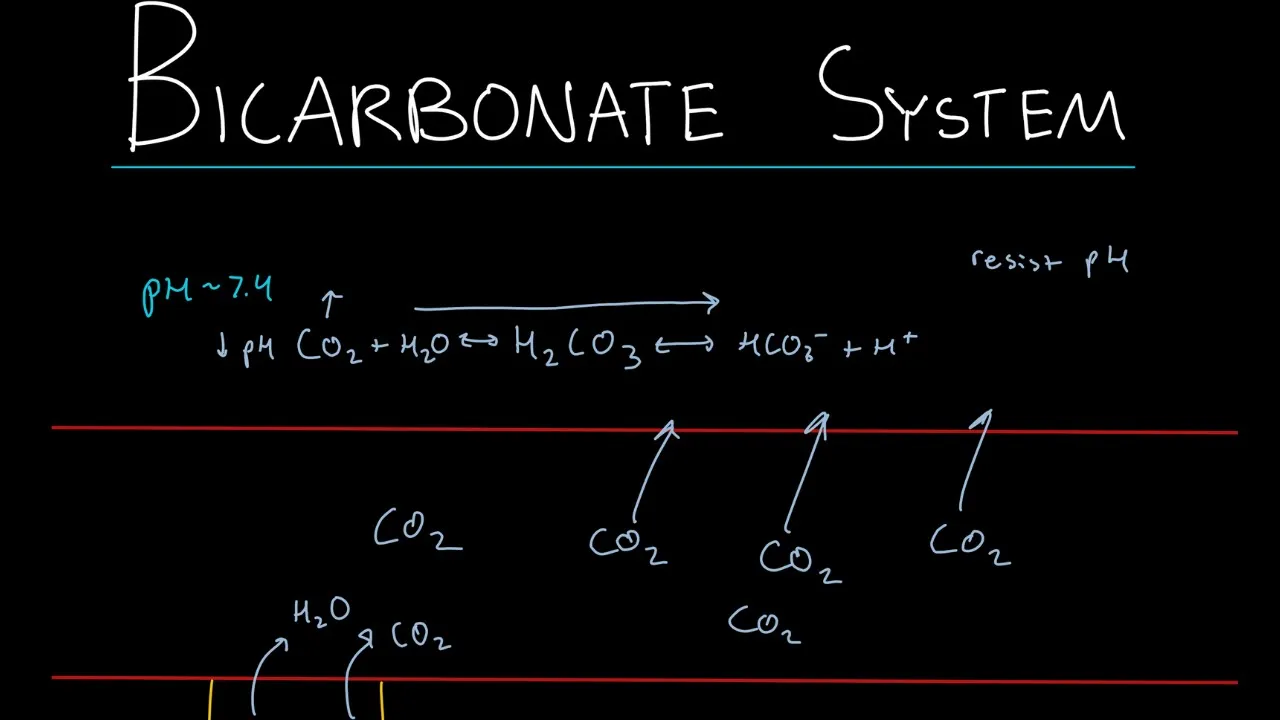
21 what's the atmospheric pressure here at sea level 760 millim of mercury that's the atmospheric pressure due to all the molecules in the air so if we multiply 21% which is what proportion of the air molecules are oxygen times the atmospheric pressure of 760 21% * 7 60 is.1 is 160 millim of mercury or 160 T you'd say I don't get that I'm really mixed up what we're saying is out out of the 760 atmospheric pressure 160 out of that 760 is the part due to oxygen that's called the partial pressure of oxygen who's making up most of the partial pressure of the atmospheric pressure nitrogen 6 00 mm out of 760 is due to nitrogen because it makes up almost 80% of the molecules so the way we express the concentration of gases in the air and in our lungs and in our bloodstream is it's always expressed as a partial pressure that's just the way they express it all right that so I'm not asking you to memorize any numbers here I just want you to understand what a partial pressure is you you learn this concept in a chemistry course whether you remembered it or not okay sh's nodding so it's fresh in her mind so she knows that that's of course she also studied a lot of chemistry okay but anyhow the uh now I want to uh go to page uh 234 oh my gosh scary scary page 304 all right now it looks scary but it won't be that bad page 304 now what this shows up here on the top your top left is it indicates the concentration of of gases in the air we inhale the capital letter P stands for partial pressure capital letter I is what we Inspire what we inhale these are the standard ways of writing these things incidentally this is not my cute little way of doing it this is the way it's done clinically and you'll notice what do they show is the concentration of oxygen that we normally inhale 160 that's what we just showed you that was the partial pressure of oxygen how do you get that 21% time 760 is 160 that's where that came from so that's what they would normally say the partial pressure of oxygen in our room is 160 okay and then uh here it gives the CO2 and the water vapor and of course the biggest number is nitrogen because most of what's in the air is nitrogen okay now let's look at the alveoli of our lungs what is the concentration of oxygen and carbon dioxide in our lungs do you think this is important to know if you're not sure the answer is yes first off we use that capital letter A subscript for Ali just like we used it for alveolar minute ventilation capital letter A always means alveoli so what is the oxygen level in our alvioli of our lungs 100 millimeters and you've just memorized it because you need to know it for the final you need to know what a normal oxygen level is the normal CO2 level not quite as nice a number is 100 for oxygen you still need to know it's 40 That's the normal CO2 level in you're l now the first thing I want to expl explain then is you'll notice that if the oxygen that you inhaled was 160 in your alveoli of your lungs can you see a decrease to 100 does everybody see that now I'm not I'm not asking you to memorize that number I am asking you to memorize this but it did decrease conversely carbon dioxide there was very little carbon dioxide in the air but in the loli it goes up why well it's really obvious all right you say how's it obvious here it's diagrammatically it shows the pulmonary circuit here's the right pump pumping the blood through the pulmonary circuit to the left pump now we know the blood that's being carried to the lungs in the pulmonary arteries low in oxygen and high in CO2 now that as this what happens as the blood goes through the pulmonary capillaries around the Alvi the carbon dioxide that's in the blood enters the alvioli can you see how why that's going to raise the CO2 levels the carbon dioxide that was in your blood is entering the air saxs so obviously whatever air you inhal is now gaining carbon dioxide in the alveoli from your bloodstream on the other hand you know how you had all this high amount of oxygen that you inhaled that oxygen is entering the bloodstream so it's coming out of the aloi and entering the bloodstream so clearly the oxygen level is going to go down however much it was when you inhaled it it decreases as it flows into your bloodstream does that make sense obviously that oxygen you inhaled entered the bloodstream the CO2 left the bloodstream and it entered your alvolo so of course these levels Chang so that explains those numbers now once we've got this Blood going through the pulmonary veins and even now pumped by the left pump through the systemic circuit we can measure the oxygen and carbon dioxide levels in the either the pulmonary vein or the way it's usually done because you can't get to the pulmonary vein is it's usually just measured in our systemic arteries the symbol that we use for systemic arteries is a small letter A a small letter A stands for systemic arterial blood that just means they draw blood from any systemic AR and uh they measure these oxygen and CO2 levels when they do they are called abgs what's ABG stand for arterial blood gases I knew she know okay that's the arterial blood gases so and they do this all the time in the hospital now I want you to memorize these numbers but what do you notice about those numbers they are the same as these numbers because this equalizes this just is is an equilibrium so in fact when they measure the arterial blood gases if the oxygen level in the arterial blood were lower than normal they know it's lower than normal in your lungs because if it these are these are always the same if this oxygen level in your arterial blood is lower than normal why the hell would the oxygen be lower than normal in your arterial blood unless your lungs aren't working right or or and so whatever the O2 and CO2 are in your systemic arteries that's what it is in your lungs so if the oxygen level is lower and the CO2 level is higher than normal look if you got a breathing problem somebody's got asthma empyema some a pneumonia if you're having trouble breathing you don't think that's going to reduce the amount of oxygen in your blood you think somebody with pneumonia or empyema has got uh ever see people with empyema carrying around an oxygen tank because their lungs are just crumming they're falling apart their lungs so uh this these are the same so that's the good news now I'm not I'm not going to ask you normally I would if we had time but I'm not going to ask you to memorize the oxygen and CO2 levels in the Venus blood we do use a small letter V to stand for systemic veins and when they draw blood and you know in the hospital they people who draw blood from veins are called FLOTUS because fled means veins so they analyze the blood they do that hematology blood work all those blood tests and they also will record what the they can measure what the O2 and CO2 levels are in the Venus blood too those are less important than the arterial blood GES but uh the these are the values so I'm not going to ask you to know but there is one last thing that I want to show you about this diagram which is really amazing and you're G to think I'm making a mistake but I'm not this is the air that you exhale out your mouth we use a capital letter E to represent the exhaled air or expired air means the same thing and here's what I'd like you to notice I'd like you to notice that the oxygen level in the air you exhale is higher than in your alveoli of your lungs and the carbon dioxide in the air you exhale is lower than the CO2 levels in your lung alviola of your lungs do you see what I'm saying I'm saying that the air you exhale has more oxygen in it than in the alveoli of your lungs how is that possible this is the Dead Space right here so I will read it and then explain it to you the air right below the diagram it exale OED air is actually a mixture of the air that was down in your alvioli and the air that was up in the throat that is the Dead Space now if you're still not sure what that means here's what that means when you when you exhale air let's say out your mouth right I inhaled air now I'm exhaling it the first air that you you exhale right out of your mouth was the air in your throat did it ever lose oxygen no it never lost any oxygen and never gained any carbon dioxide it is has the same amount of oxygen in your throat and CO2 in your throat as what's in air because no unlike your alveoli the air that went down to your alvioli some of that oxygen entered the bloodstream and it gained CO2 but the air up here in your throat in the Dead Space never lost oxygen and never gained CO2 that's the first air you exhale out the last air you exhale out with each breath is the air from deep within your Alvi that has lost oxygen and gained CO2 does everybody follow that so that's why the air you exhale actually is a mixture of the two and this explains one more really neat thing this is why mouth to- mouth resuscitation Works had you ever thought about this problem if all you were doing was blowing into your somebody else's mouth the victim's mouth your dirty air if all you were doing was blowing in air low in oxygen and high in CO2 how's that going to save them but that's not what's work now it's it's beautiful think about it as you blow into the victim's mouth the first air that comes out of your mouth was the air in your dead space in your throat that has as much oxygen in it as here out out here in the atmosphere it never lost oxygen never gained CO2 that air that you're blowing into their mouth is the first air that enters their mouth and goes deep into their alveola the last air out of your mouth that that's quote low in oxygen and high in CO2 from deep in your alviola that's the last air that comes out of your mouth is the air that fills their dead space their throat it works perfectly and that's why it works now we're not saying that the air you're blowing into their mouth doesn't have bacteria and cooties but in terms of oxygen and CO2 levels the first air out of your mouth which was the air that went deepest into their Alvi is as high in oxygen as the air right here that you're breathing right now and that's why mouth to mouth resuscitation works and this is why I love physiology because it basically allows us to analyze everything and see how it all works so that it's not just you know it's more than just memorizing numbers and more memorizing terms it's really seeing how we can take the human body and really break it apart and see how it's working all right so that's a neat diagram now uh we've got just a a few last minutes so let's jump to page 325 this is good because I if we're jumping to 325 This is the End okay page 325 so I guess everything in between was worthless just skipped it but I think you can see there's more to respiratory physiology then you know in goes the good air and out goes the bad air now and with the last remaining time I I want to tell you a little bit about what's called acidbase balance in the body a very very important clinical subject you will all hear more about and one of the more confusing subjects in your future clinical courses uh there are four categories of acidbase problems and these four categories are actually written right here in this chart they are they are respiratory acidosis respiratory alkalosis metabolic acidosis and metabolic alkalosis now I mostly want to focus on the respiratory acidosis and respiratory I'm sorry and metabolic acidosis I want to focus on the acidosis I'm going to tell you briefly about all four but I want to really want to focus on these two types of acidosis now respiratory acidosis is not actually totally new because it was actually described back in section A if you don't believe me you look all right imagine somebody is having trouble breathing there are many causes of breathing problems difficulty in breathing asthma empyema tuberculosis pulmonary edema all kinds of things so what do we call that when you're not breathing normally hypoventilating now if you're hypo ventilating and here let me just look right here first hypoventilation leads to both hypercapnea and hypoxia you'd say what let's look at the word hypoxia hypoxia has the root hypo which means low and oxy oxygen low oxygen does it make sense that if you're having trouble breathing you have less oxygen okay that sounds good what's hyper Capia that is the clinical word for increased carbon dioxide levels if you're having trouble breathing you're not getting enough oxygen in and you're not getting the carbon dioxide out so it's accumula now so this increase in CO2 called hyper Capia forms carbonic acid anybody remember us learning that before because carbon dioxide which you should now think of as the major source of acidity in the entire body that's the major s Source or cause of this acid combines with water of which there's no shortage of in your body you're 60% water forming carbonic acid so in other words anytime somebody is having trouble breathing and carbon dioxide accumulates whenever carbon dioxide accumulates higher than normal the amount of carbonic acid becomes higher than normal and that's called respiratory acidosis now just to uh look at the opposite of this not as important at the bottom of the page What If instead of somebody was under ventilating what if for whatever reason they're hyperventilating so if they're hyperventilating they're getting rid of carbon dioxide faster than normal there is a normal rate a normal amount and if they're lowering the amount of carbon dioxide in their body they're lowering the amount of carbonic acid so they're actually becoming alkalic we didn't there's a normal CO2 level in your body and there's a normal carbonic acid level if you're not breathing enough there's too much CO2 and too much carbonic acid if you're over breathing you're not supposed to be doing this when you're just sitting in a chair if you are your CO2 and carbonic acid levels become lower than normal and you become alkalic you don't have enough carbonic acid so just the reverse now on the last page 326 what is on 326 metabolic acidosis metabolic acidosis as I wrote is the accumulation of any acid other than carbon dioxide or carbonic acid if you have a buildup of any acid other than the CO2 carbonic acid that's called metabolic acidosis I'll give you three quick examples lactic acid that's not carbonic acid lactic acid we know can be formed in our muscles when they're not getting enough oxygen keto acids keto acids are form for example during diabetes uric acid gout so in all three and let's just use keto acids as an example so if somebody has keto acidosis that's a type of metabolic acidosis it's not a problem of breathing breathing problems cause a buildup of CO2 and carbonic acid this is a buildup of an acid form from a disorder of metabolism and so uh that's that's these are called metabolic exos so we don't have time to explain what's going on I will just briefly mention not I won't ask you about it the most common cause of metabolic alcalosis is vomiting you'd say what well look you have all this hydrochloric acid in your stomach is that right ever hear you got hydrochloric acid I'm looking around for any nods nobody's nodding all right if somebody vomits it out you've just lost acid from your body that acid was supposed to be in you so now that you've lost all that acid you're in a state called metabolic alkalosis you're too alkalic because you lost too much acid the last thing I'll just show you and uh we're not going to hold you responsible for it but it's pretty neat look on page 319 again if we would have had time we would have gotten into this this is Page 39 let's just show you what's here so on page 319 this is a lab form from the pulmonary function lab and you'll notice here what does it have V subt and F yeah you'd say yeah what's that title volume and what's it normal tial volume 500 millit with each breath F that's the frequency what's the normal frequency of breathing 15 breaths per minute what's the normal pH of our blood 7.4 between 7.35 and 7.45 if it's less than that you're in a state of acidosis if it's greater than that you're in a state of alkalosis this is not new this was section A if you don't believe me look what's the normal oxygen level in our arterial blood 100 you're going to memorize that for the test what's the normal partial pressure of CO2 in arterial blood 40 these are called your abgs your arterial blood gases these are monitored all the time now get one quick way of measuring this is a pulse oximeter you ever see this little device you put on the finger and it estimates it's an estimate it's not accurate is actually drawing blood but it estimates oxygen levels in the blood that's called a pulse oximeter all right now uh so that's how that works and then just to look at this you can actually know whether which type of acidosis or alkalosis you have just by knowing two things two things you need to know the pH of the arterial blood and you need this is printed right on the form incident and you need to know the partial IAL pressure of CO2 in the arterial blood now what's the normal pH 7.4 what's the normal carbon dioxide level in arterial blood 40 That's all normal so let's just consider two things real quickly what if somebody's got a pH of 7.2 7.2 means you're acidic You' got acidosis it's lower than 7.4 now let's imagine they measure the carbon oxide level and the carbon dioxide level is higher than 40 let's say it's 60 let me draw a line straight up here's acidosis here's CO2 hyper Capia and what does it say they've got respiratory acidosis the reason why they're acidic is there's too much CO2 carbonic acid that's called hypercum and the last Point what if you measure the pH it's 7.2 they're acidic you look at the carbon dioxide level and the carbon dioxide level is either normal or even less than normal then it's metabolic acidosis because if the carbon dioxide level is normal or even lower than normal and they're acidic and they don't they're not acidic because of too much CO2 if the CO2 level is normal they must have metabolic acidosis they must have some other acid that's causing them to be acidic like keto acids or uric acid this is known as acidbase [Music] [Applause] [Music] [Applause] [Applause] analysis [Applause] we can put a different song yeah yeah I missed the whole thing
Up Next

PEEP in Mechanical Ventilation: Definition, Settings, Nursing Care
@YellowPagesNursing1
3.4K views•2024-10-15

Graphic Medicine: Comics for Collaborative Healthcare Communication
@nationalpatientadvocate
189 views•2023-12-04

Neuroanatomy: Central and Peripheral Nervous System Divisions Explained
@AKLECTURES
136.2K views•2014-09-20

Stages of Labor and Vaginal Birth | Childbirth Animation
@nucleusmedicalmedia
52.1M views•2017-08-18
Related Study Plans & Knowledge Roadmaps
Structured learning paths in Medicine