
![[노후의 삶에 대한 인식을 송두리째 바꿔라] 건강한 노후 관리의 결정판, 80세의 벽│오디오북 책읽어주는여자 korean audiobook](https://i.ytimg.com/vi/jFebGLBRTFI/maxresdefault.jpg)


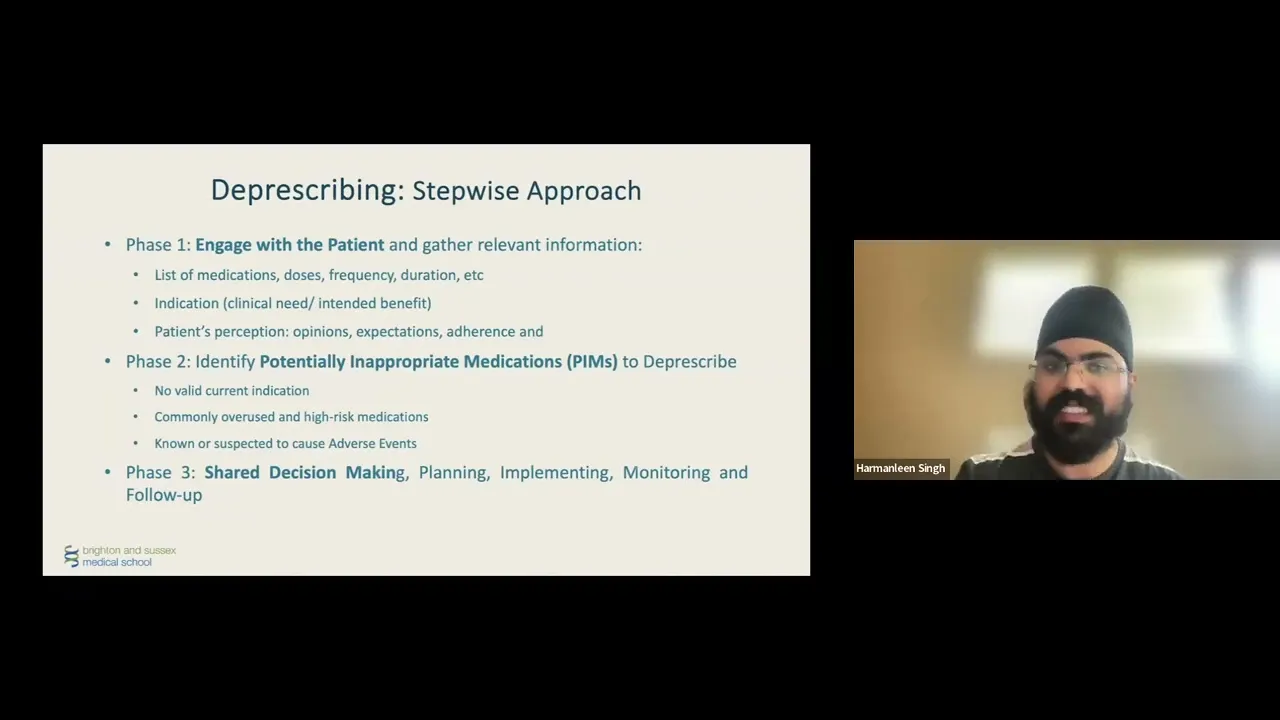
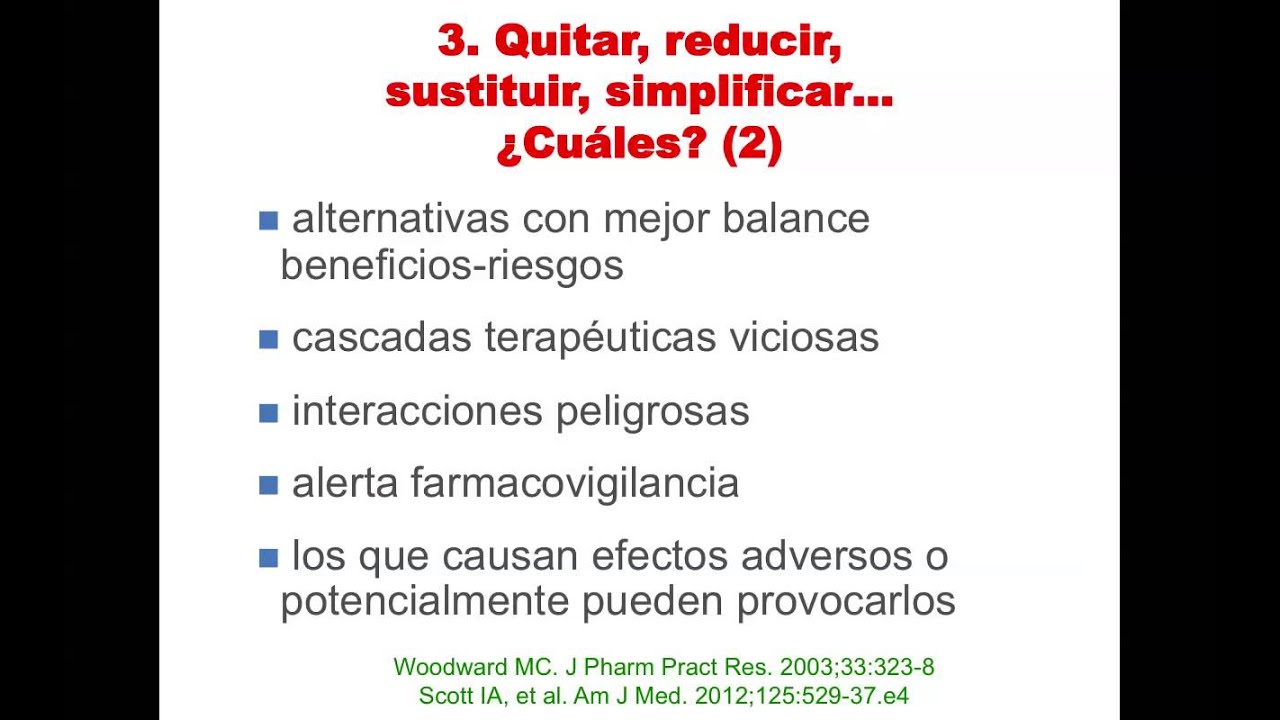



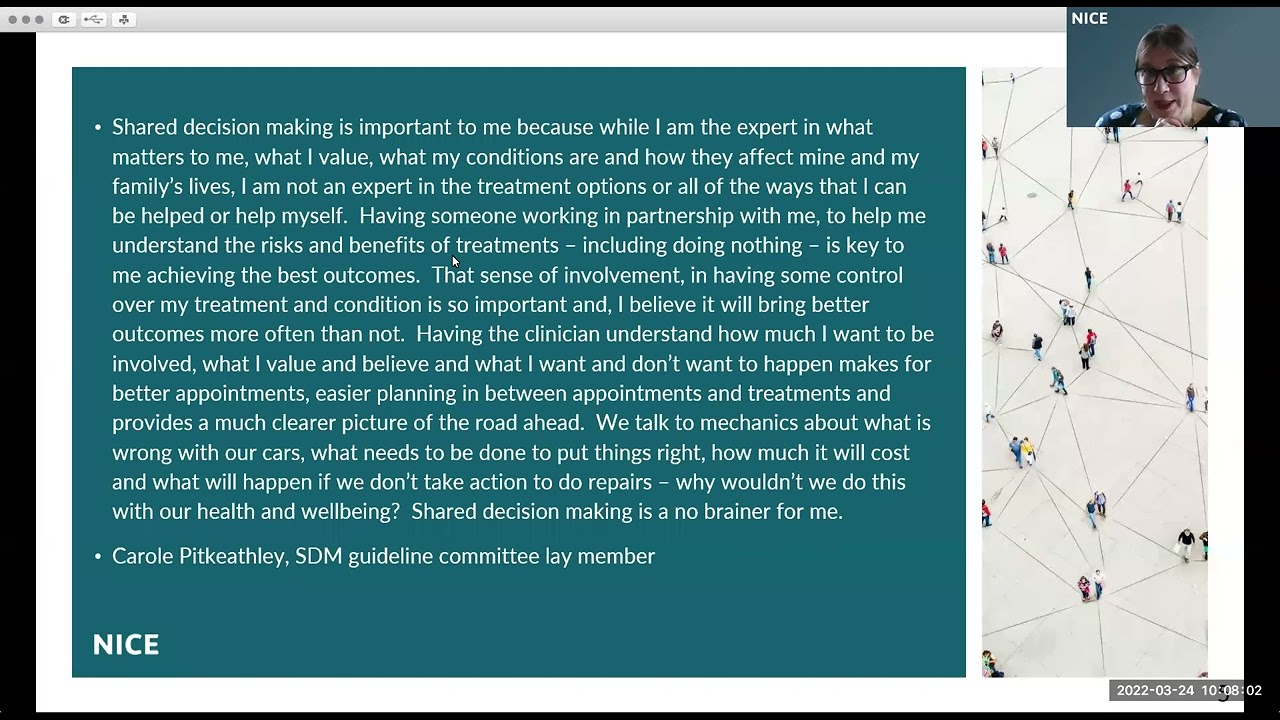
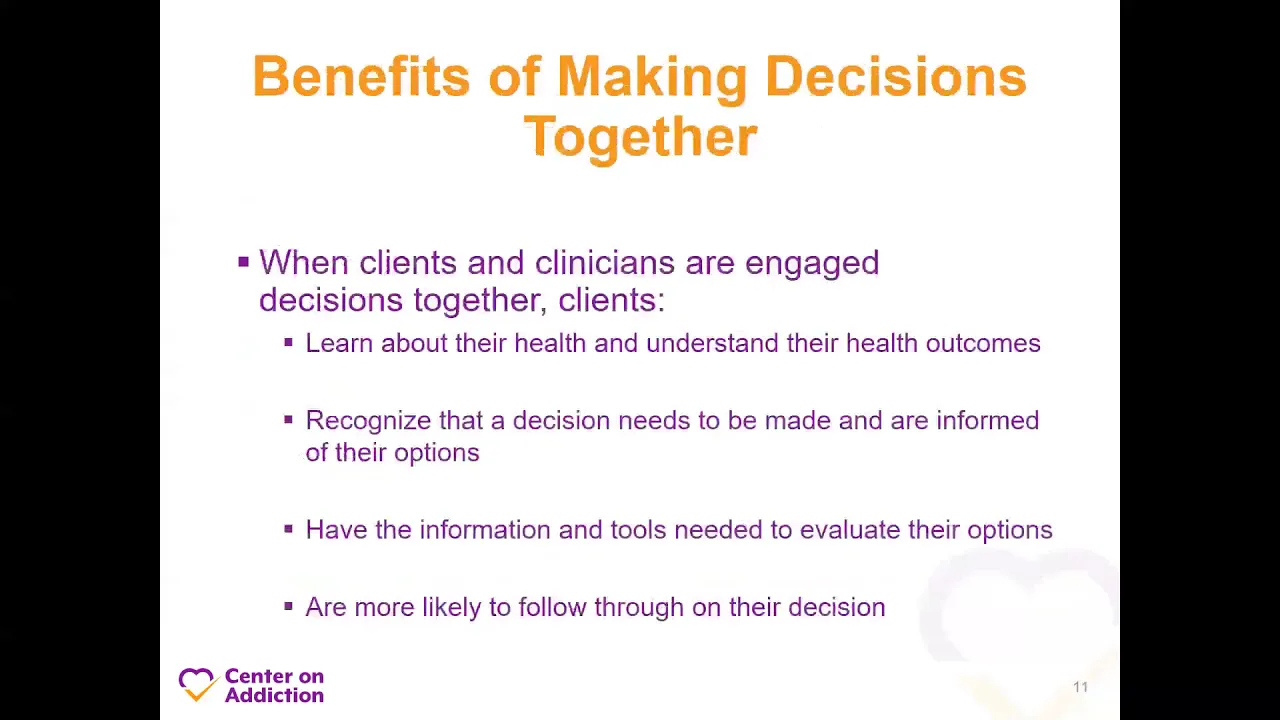











Deprescribing is the planned and supervised process of reducing or stopping medications that may no longer be beneficial or may be causing harm, and shared decision-making is essential because it addresses the gap between clinical evidence suggesting medication reduction benefits and patient behavior patterns that often resist such changes; effective deprescribing requires clinicians to create awareness of options, discuss benefits and harms transparently, explore patient preferences, and implement decisions through staged approaches like 'pause and monitor,' while recognizing that cognitive biases, communication barriers, and patient fears must be addressed to achieve successful medication reduction.
Deprescribing Steps: Shared Decision-Making with Patients
Added:The concept of polypharmacy and the clinical risks associated with over-medication, particularly in geriatric and multi-morbid populations.
Basic principles of pharmacology, including medication side effects, drug-drug interactions, and the definition of adverse drug events (ADEs).
The foundational definition and purpose of 'deprescribing' as a planned and supervised process of medication withdrawal or dose reduction.
The core tenets of patient-centered care and the general framework of Shared Decision-Making (SDM) in clinical practice.
Application of clinical screening tools and criteria, such as the Beers Criteria or STOPP/START criteria, to systematically identify medications suitable for discontinuation.
Designing evidence-based tapering schedules and clinical monitoring plans to safely manage potential withdrawal symptoms or the return of underlying conditions.
Advanced communication techniques to address patient barriers, health beliefs, and anxieties regarding the cessation of long-term maintenance medications.
Implementing interprofessional workflows that engage pharmacists, nurses, and family caregivers in the coordinated deprescribing process.
3.4K views19likes55:28Original Release: 2018-06-27
welcome to the Brer D prescribing guidelines research teams webinar the steps involved in D prescribing shared decision-making with patients hosted by dr. Barbara Farrell what I want to do in this presentation today is give you a little bit of brief background on some definitions and then really hone in on some of the literature on shared decision-making and how it relates to D prescribing with what I hope are some practical examples for you so just to start off I think it's really important that we recognize up front that medications are intended in a very beneficial way and are used to treat symptoms pain or shortness of breath slow the progression of disease reduce and reduce the risk of complications from disease Anna in a preventive way and we do have a lot of evidence that there is benefit for medications in all of these circumstances the challenge arises when people are taking many many medications and people are taking more medications than ever before sometimes we refer to a polypharmacy is just meaning more than a certain number of medications five or nine but more recently we've talked about as meaning more medications than needed or for which harm at waist benefit and the challenge here is that the more medications you take the more at risk you are for adverse drug reactions drug interactions Falls fractures functional cognitive decline non adherence with medications hospitalizations and higher healthcare costs and this is especially challenging for the elderly who handle and respond to drugs differently are often frail and are not typically represented in research today what I'd like to do as I said is focus on the common steps for D prescribing as well as this key literature in the field of patient and carer values and preferences around shared decision-making and e-prescribing not so much on the scope and impact of polypharmacy or general information about key prescribing so that's why I'm giving you so just the very brief overview of polypharmacy and I'll give you a brief overview of D prescribing as well and then we'll hone in on five papers in particular one that describes the shared decision-making approach a second which is a systematic review the effectiveness of decision aids a third which was conducted a study which was conducted with all their adults interviews on their participation in shared decision-making and then a study looking at focus groups particularly with all their adults regarding their attitudes toward deep prescribing specifically and finally a paper that proposes a model for shared decision-making in deep prescribing so in terms of definitions this is the definition that we are using every ere that D prescribing is the planned and supervised process that differentiates it from simply non-compliance reducing or stocking medications that may no longer be a benefit or may be causing harm and you will see a variety of different definitions in the literature but they're all essentially very similar in this regard so how I like to explained it to patients is that and even to other clinicians is that D prescribing is part of good prescribing backing off when doses are too high or stopping medications that are no longer needed or might be causing harm and one of the key points to get across and in talking to people about this is that D prescribing is something that's done in partnership with a health care provider versus making the decision on your own to stop and medications the other key I think important point to get across is that there can be reasons to continue taking a medication or reasons why close supervision is needed while stopping and so that's where the importance of involving the healthcare provider in the decision making is really important and there are systematic reviews two or three published now of medication withdrawal trials that show that reducing specific classes of medications can decrease adverse effects and improve quality of life so we know that there is benefit to D prescribing now there's a number of published generic approaches or steps for the acts of D prescribing and they're summarized here in a paper by Emily Reeve and these are kind of from the Clem the physician or the pharmacist nurse point of view the first step being to compile a medication history and I like to think of this as a history of the patient's medication experience not just a list of drugs but what has been their experience with their medications both good and bad the second step is identifying from that list potentially inappropriate medications those with less evidence or benefit or those with harm and you can use screening criteria for this like the stop criteria the biers criteria or the anticholinergic burden scales the third and the fourth steps I think are probably the most difficult and time-consuming and where the conversations with patients really need to take place assessing each medication individually for the eligibility for D prescribing and then prioritizing them developing a plan for tapering and monitoring is not so hard as it used to be there's a lot of different tools and guides available to help with that and and then the sixth step I I think is really key and something that can some things be forgotten is the importance of monitoring and in supporting the patient through the D prescribing process and documenting the results so this is a slide that I like to show to illustrate the trade-offs around continuing a medication or potentially stopping a medication so as I said earlier there's most often clearly a benefit to starting a medication there's either evidence for effectiveness evidence for an ongoing reason or indication according to a diagnosis for a medication where the risk comes in is the the presence of side effects or drug interactions the chance that those increase the more comorbidities and medications that you have and the age-related changes that I mentioned earlier as well as the impact of frailty and the consideration of changing goals and values as people age and this can affect this benefit risk waiting for patients and so this decision around stopping a medication is one that is a preference sense of decision and there's not enough evidence about the outcomes of different approaches to to really help people make clear decisions about the benefits and harms of stopping a medication which is I think why it why it's so important to consider shared decision-making in making these decisions so if we think about the the benefits risks of D prescribing as an action the benefits might include reduce side effects drug interactions reduced pill burden improved quality of life the risks however can include adverse drug withdrawal events which are often the signs or symptoms that are caused by the removal of a drug so it might be that symptoms of the underlying condition come back or you create a physiological type of reaction like rebound heartburn with stopping a PPI or maybe a new symptom that is related to a discontinuation type of syndrome and these kinds of adverse drug withdrawal events are more common the longer you two taking a medication the higher the dose if it's a short half-life for example in the case of benzodiazepines if there's a history of dependence or abuse and lack of patient buy-in has been cited as as a challenge or a risk that increases the potential forever struggle withdrawal events from deep prescribing and it's this piece I think that really caught my interest early on in trying to figure out how to address the issue of lack of patient buy-in so I think it comes about again because there's a gap between what we know about the risks or been for lack of benefit of medications especially with age and often patients continue to take drugs even when they say they want to take West so there's a disconnect there so it got me thinking about is there a process that could facilitate healthcare decision-making that would enable people to make decisions that would leave them feeling more confident that they were doing the best thing for themselves as an individual at that point in their lives their positive health comes and this is what leads us to a discussion of patient engagement and shared decision-making with the premise that shared decision-making facilitates engagement and more clear decisions so to to define shared decision-making I went to this paper by Glyn Elwin who defines it as an approach where clinicians and patients share the best available evidence when faced with the task of making decisions and where patients are supported to consider options to achieve informed preferences there's a number of other useful definitions or shared decision-making out there another one that I liked with clinician Cullen ition communicates personalized information on the options outcomes probabilities and uncertainties and patients communicate their personal value or importance that they play on benefits and harms so that agreement on the best strategy can be reached and this is of course as opposed to a paternalistic or informed type of model where information just flows in one direction from the clinician to the patient and in this paper the author's proposed a three-step model introducing the idea of choice to the patient the choice that there could be different options then describing the options and then helping the patient's explore preferences were on what matters most and making decisions and this paper actually I would suggest that people take a look at because it they've got quite a few conversation starters around those individual topic areas that were too large to really include in the presentation but I think are valuable for people to look at the second paper I wanted to highlight was a decision aid review published by Don Stacy's group in Ottawa on the use of decision aids and the decision aid is something that helps to prepare people to participate in decisions that involve when benefits harms and scientific uncertainty often contains graphic type information that helps people understand the benefits and harms and the level of uncertainty and helps to lead them to a decision and in this review they found 86 trials that supported the evidence from the trials and they were all randomized controlled trials showed that these types of decision aids result in knowledge gained by patients more confidence in making decisions more active patient involvement and in a lot of situations informed patients tended to elect for more conservative treatment options so the again the premise is that decisions made will be better understood based on more accurate expectations about the negative and positive consequences and more consistent with personal preferences so what is not knowing and I think this is an important thing to think about in terms of future research that we want to do is that we are not as clear about whether decision needs have an effect on adherence with the chosen option patient practitioner communication cost effectiveness and use with low literacy populations so all of these issues need for their exploration and there's also not a lot no.1 about the degree of detail that's needed within a decision aid to facilitate its successful use so this next study looked at the participation of very old adults in healthcare decisions and I thought it was important to include this because one of the barriers to D prescribing that's been cited is the physician's impression that older people want to defer decision making to the provider however other literature does show that the preference for decision making involvement is variable at all ages it's unclear whether they're not feeling knowledgeable enough about the their health or their medicine to make a meaningful contribution to the discussion is the issue or whether it's actually a wish to be uninvolved in the decision process and another barrier to describing it that has been cited is the patient/family resistance and physicians have also stated their own uncertainty about prescribing practices and D prescribing decisions leading to sort of fear to recommend D prescribing sort of a fear of repercussions and so I thought that all of these they all made me interested in exploring how patients could be more actively involved in decisions so in this particular paper Julie Bynum in her group interviewed 29 older adults and in the US and they identified a number of barriers their patients identified barriers to participation which are summarized here and the first is that patients often think that they have no options in use of words like routine routine blood work routine care etc that kind of wording can be a major barrier patients often don't realize that non-action can be chosen as an option the second barrier is around low patient activation and what we mean by this is that there's patient activation is the belief that they have an important role to play in their own health and whether you have low activation or high activation relates to how much people want to participate in decisions another barrier is around communication so from the patient's point of view hearing may be impaired speech may be impaired slow processing cognitive impairment those can all be issues that affect how the patient both speaks and hears and understands what the clinician is saying they also have the perception that clinicians were very rushed and that there was not really an opportunity to communicate with them the next barrier is when patients do not seek resources so those that saw more information about options tended to participate in decisions more highly there was also a belief and I found this really interesting that the physician already knows all the relevant information about their patient values and therefore would automatically make decisions that were consistent with what they thought and lastly there was an issue around patients not addressing disagreement with clinicians directly they tended to avoid conflict in a few different ways one by simply not commenting during the discussion and then choosing not to adhere with the recommendation without informing the physician the the second mechanism for avoiding conflict was actually to change physicians and then the third approach was to you know obtain more information and ask more questions and the next slide illustrates for you what can happen in this conflict avoidance mechanism where a patient simply chooses to not adhere to to the medication and this was an example I had of a patient who didn't want to tell their a physician or their pharmacist that they weren't using their nitroglycerin patches at the years worth by the way nitroglycerin patches so in this same study the team examined the decision episodes that were described by the patients and they were able to then identify steps that made up the decision process from the patient's point of view and they identified them as six steps recognizing that a decision is being made identifying the options getting medical information to build those options making their preferences no one making the actual decision and then reevaluating the decision and that last step was very common with regards to decisions that were made about medications as you saw from the previous slide people would often leave the encounter and then change their mind about the decision that had been made during the encounter so the implications of this that the authors describe is that clinicians need to be able to explain explicitly the options because all their patients might not perceive there are options and typically it's because they think the physician is recommending a clear action that has already taken their own values into account they also need to consider clinicians need to consider that values and goals may change as life expectancy shortens and that's again a very critical thing to be thinking about around the decision to stop treatment and that open communication with clinicians about the options must consider the patient values and potential disagreement and so asking that question about how do you feel about this decision helps you to you know to ward off the later disagreement that you might not know about as a clinician so this next study was published by Emily Reeve in this particular one they did focus groups with all their adults and their carers specifically around the issues of deep prescribing to try to understand their beliefs and their attitudes and they used a framework from a previous systematic review of consumer barriers and a blurs of D prescribing and categorized their findings into five themes appropriateness process influences dislike in fear and then also I did an inductive and analysis to ensure that they didn't miss any key themes and I just want to point out that they purposely included carers in this study because they felt that their agreement with treatment recommendations was really pivotal to adherence and attaining goals so in terms of their results then the first theme of appropriateness what came across was a really strong theme of why patients wanted to understand the reasons why medication might be stopped or what might be the benefit of stopping and in some things they identified both enablers and barriers that affected whether they felt drugs should be stopped or not stopped so the enablers were those ideas that were brought up by patients who felt they were more likely to stop a medication maybe they viewed there was a lack of benefit or necessity that there might be some potential for improved quality of life that they understood that alternatives were available or they were having drug interactions or side effects people were less likely to support medication withdrawal if they saw benefit or initially saw the benefit of medication use when it was first started if they had sort of annex and acceptance that they had a medical condition if they didn't see any current harm or if they had been taking the medication for a longer term in terms of process patients identified that a discussion was needed to make decisions that it needed time and support from the clinician including an explanation of why the decision was being made and what to expect and I think this is a key a key item I think to to think about in the prescribing process so people expected to be informed about the need for monitoring and follow-up and their willingness was enhanced if they understood that the withdrawal could be a trial so in my practice for example it's common for me to make a suggestion as an option for the prescribing and then to explain that we would make the change on the temporary basis that we would find out or monitor how how things were going and give them some specific monitoring parameters and assure them that if something negative happened we can simply increase the dose or add the drug back again and that seems to very much help people with their willingness to participate in the process and then they also wanted to know general consideration about what needs to be weaned they preferred to just do one drug be prescribing at a time and they also wanted to know if there would be a reversal of drug interactions so for the next theme the influences on willingness for D prescribing again that participants reported that they were quite willing to be prescribed if it was recommended by their family doctor but that they many of them had encountered situations where the physician used a warning case to convince them to continue the medication such as you know I had a patient who tried to stop that medication and they got really severe heartburn or they couldn't sleep so there's a bit of a disconnect there with patients wanting to go with the option of reducing or stopping and medication but being convinced otherwise patients also had an assumption that if the physician was providing repeats for the prescription that that was a confirmation that they had at each repeat period done a medication review and confirmed that the medication was still appropriate for the patient so I felt I found that interesting cheap because I'm not sure that that's always a part of the of the repeat process family and friends had variable influences there was one carer who said that all family members needed to be an agreement with medication withdrawal at the end-of-life some family and friends who had bad experience with stopping a medication could influence the patient's willingness to stop and there was also some discussion here about the patient's expectation to receive a prescription and the influence of family and friends on that the next category of themes that arose was around fear as a barrier to having medications be prescribed fear that the condition would return that they might miss out on future benefits that they might experience adverse drug withdrawal reactions and lastly there was a theme around the dislike of medications and this was actually an enabler to having medications D prescribed sort of a desire to minimize medication use a belief that lifestyle changes could be helpful to them as well as reducing cost and inconvenience and lastly I wanted to just say that in the inductive analysis here a carer theme you and that was around this idea that the discussion of quality of life and changing care goals was more prominent when you were trying to make decisions for others so the a summary of how these results might be applied by healthcare professionals and their practice to enhance deep prescribing was included in this paper as well and the first advice or implications I had was that family physicians according to the patient so seem to be the main driver for deep prescribing patients really recognize that their physicians have the knowledge and expected them to convey information in a way they could understand so the implication here is that physicians need to be aware of this influence and not have fear of patient resistance but that they likely need supports to enable the time that it takes to have these kinds of conversations in practice the second implication was that a process is required for deep prescribing that this discussion needs to occur why the medication is being considered for deep prescribing needs to be explained parents there certain patients and carers are open to be involved in monitoring and they expect to be informed what to monitor for and what to do if there's a change in their condition and the the other piece here again is to emphasize that medication withdrawal can be a trial part of the discussion here I found very interesting because there's some references to consumer literature around their understanding of benefits and risks and the idea that the concept of that they do understand the concept of competing risks and medication use needs to be individualized so I think being aware of that going into a conversation about benefits and risks is helpful and then where there is resistance from patients that further discussion might reveal the reason so again that asking people how they feel about the decision is helpful and that again that shared decision-making is needed to try to get that favorable outcome in to preserve relationships as well and to avoid that sort of select avoidance issue where the patient changes physicians so the last paper that I want to describe was published by Jessie Janssen and in this particular paper they've conducted a literature review that brings together evidence from psychology communication and decision-making literature focusing on the unique aspects for deep prescribing decisions and then they end with practical advice on overcoming challenges and highlighting where more work is needed and in the next few slides what I want to do is add further description from the paper for each of these major tasks in the shared decision-making process as it relates to deep prescribing and you'll notice in the next few slides I've got a little bit more information than I usually put on on slides but I think it's helpful in terms of understanding that the large amount of content that's in these papers so we'll go to the next slide which is talking about this first step creating awareness that options exist and this relates again back to that concept that older people may not be aware that they're that deep prescribing is a possible option so it's essential to simply identify that up front so they divide this into a few different steps the first is around when to initiate discussion about deep prescribing and there's a number of triggers that they recommend you could use when a patient reaches a certain number of medications when they have a new symptom that might be a side effect you can screen using beers or spot criteria you can look for a parent not an adherence and the community pharmacists can be very helpful and providing that kind of information or you can look for something that's happened that might change treatment priorities life transitions can be also another good point a hospital admission or new diagnosis or a new doctor that can trigger a medication review and we find in the day hospital because patients are typically referred because they've had Falls or cognitive impairment there's usually some major life events that results in them ending up at the day hospital it's you a good time to trigger a medication review and discussions about deep prescribing the next step is to consider their attitudes toward medication or toward medicine and here the challenge is that clinicians sometimes believe that patients value medication highly and would resist any discussion about communicating about deep prescribing so they they don't bring it up but it it is important to talk about and their patients willingness to talk about it is influenced by communication skills and experience of their prescriber and the degree to which they trust them having side-effects opens increases the openness of older people's interest in having a deeper scribing discussion and education and information also increases their willingness so having information available to give them about the different options the next important step in creating awareness is to keep cognitive biases in mind so the status quo bias is something that's very well recognized it's just simply the preference for not changing anything that the old don't rock the boat sort of a statement that we sometimes hear and because of this it can be it can be challenging to I guess to challenge the status quo therapeutic inertia is a recognition of a problem so that a patient is taking a potentially inappropriate medication but a failure to act and also considering omission bias so this is the sort of willingness to risk people are more willing to risk harm from inaction but then from action and once an education has been started and continued for some time unchanged continuing it is then perceived as inaction and can sometimes be interpreted as patient resistance to change versus you know identifying that really it's this omission bias that is at the core the next step is considering a language when starting medications to avoid some of these cognitive biases and that would be avoiding the kinds of statements like you're going to be taking this medication for the rest of your life or this is a lifelong medication and there's also a recommendation here in the paper that guidelines need to include information about winter review or stop medications to try to prevent these sorts of statements from being inaccurately made the next theme within this creating awareness component is around multidisciplinary decisions and companion involvement in here it's just a recognition that when there are multiple prescribers it's hard to know who should initiate deep prescribing and that it can be hampered by poor communication about prescribing amongst clinicians and and even amongst patients and carers so the next major component of this model is discussing options and the benefits and harms of those options so here you know it's important to understand that there can be changes in cognition and in effective processes that are going to influence how a patient can process and understand the information it's important to recognize that people they're people tend to Foles focus on positive information they tend to seek less information and they sometimes have difficulty understanding information about options hearing and speech loss can also complicate understanding as I mentioned earlier with the with the other model for shared decision-making and understanding potential benefits and harms can be challenged with poor literacy numeracy skills difficulty with quantitative or probabilistic type of information this is where some of the decision aid literature comes out of in terms of trying to use visual formats or pictographs that might be helpful to help people understand probabilities communicating uncertainty is probably one of the biggest challenges for deep prescribing just because the evidence is limited around benefits and harms physicians are not necessarily confident in communicating uncertainty better communication tools and needed to help put that and as well when you're discussing uncertainty with patience you can actually cause some cognitive overload a decision avoidance or worry that might impair decision-making so there's a fine balance there in terms of the amount of information or the type of information that's communicated and then lastly physicians have less confidence about D prescribing preventive medications and also fear that they're sort of feel that they're under more pressure to continue prescribing preventive medications due to their inclusion in clinical guidelines so one of the things I was thinking of is that it's notable that so far the D prescribing guidelines that we've developed here at Briere over the last five years are primarily for drugs that treat symptoms PTI's benzodiazepine receptor agonist antipsychotics which are among those groups of the symptomatic type medications that may actually be easier to de prescribe so the next component is exploring patient preferences for the different options and then helping patients address their preferences or goals their priorities and the challenge here is that preferences on older people can vary and they're not necessarily stable so people construct their preferences as they acquire more information their emotions can play a role and as I mentioned earlier this idea that their clinicians already know their preferences can kind of decrease their perceived need to be involved in a decision so weighing benefits and harms is a little more complex in older people because you need to take into account this issue of decreasing life expectancy which of course is often hard to estimate and this type of conversation can be challenging for clinicians to talk to patients about so that's something where I try to think what are what are the some good questions that might help the clinician to understand and patient preferences a little bit better and I think the questions that I use in my own practice are simple things like how do you feel about this or even explaining I think what would be helpful for a clinician who the patient might feel they already know their preferences you could actually overtly say I don't know how you feel about this tell me how you feel so the next step is actually making the decision integrating all of this information and either collaboratively making that decision with the patient understanding the decision that's made specifically by the patient or that's deferred to the clinician and here again we recognize that most older people do prefer to participate in medical decision making though that can be influenced by their health even those who prefer to delegate the decision and this is what some of the literature shows they still want to discuss options their preferences and they still want to receive information and we can support patient autonomy by eliciting their goals values inviting them to participate even if they don't actually make the final decision and then lastly I just want to highlight again that deep prescribing is an ongoing process and that decisions for deep prescribing are best made in the staged approach with careful monitoring for withdrawal or adverse effects and D Mangan uses a great phrase to refer to this that I found is caught on with both clinicians and patients is the pause and monitor approach you know one of the options is that we can pause this medication for months and we can monitor this this and this and see how you do and there's always the possibility that you know if you're not doing as well without the drug then we can restart it so in terms of advice from from this particular paper the recommendation again is that shared decision-making should be an integral part of the D prescribing process it's implementation and clinical practice can can seem complex so at a very minimum what we want to do is inform older people in their care is that there is an option to D prescribe and then invite and support them in trying to express their preferences and making a decision so understanding that it's time consuming the the paper also points out the protected time and dedicated resources and potential a specific remuneration are necessary in order to really make this happen and that we need more evidence on the best ways to communicate benefits and harms information and to elicit their preferences one of the things I would recommend that people do is actually go to this particular article and the references are included throughout the presentation in the slides as well as at the end of the presentation and bibliography because there's a great table in this particular article that has a summary of these four steps along with practical advice and priorities for future research so I've kind of just touched on the overview here and you can get more detail in the article so putting this all together there's no reference here because I just bought this helpful for the last few days when I think about all of the content in the articles I've just discussed I was thinking what are the steps of deep prescribing from the patient or carers point of view because we always see the steps explained from the clinician point of view what the clinician should do so thinking about this coming from a member of the public I think what my advice would be tell your clinician about your experience with your medications don't assume that the clinician knows that already asked for seek information about different options those could be alternatives to medication a safer medication it could be reducing or stopping the medication it could be options about how fast a taper and medication the third step think about and describe your goals or preferences with regards to that treatment and e-prescribing then contribute your input to the decision being made if you disagree with the suggestion explain why so don't just get the prescription filled and save them all up at home while you're not taking them and then lastly reevaluate the decision afterwards think about it have you have I missed anything in my discussion with my clinician or my feeling less confident do I need to talk to them again before I firmly make the decision and then in the next couple of slides I've included some ideas that clinicians could use to apply this process to D prescribing so this idea of introducing choice or creating some awareness of choice for the patient you can get up by saying you know several several of your medications could be contributing to problems with Falls I'd like to tell you about some different options to reduce the risks from these medications so that's creating awareness that there are options in the next step discussing the options and the benefits and risks it's helpful to ask questions like what do you already know about medications that might cause Falls and again everything in italics here is just the example of Falls it's possible that these particular drugs could all be contributing to Falls risks we can try reducing the dose or stopping one or more of these medications and then that here's the bit about the benefits risks actually using the language of benefits and risks which we know from some of the previous papers I described that people do understand this language if we reduce the dose or stop your sleeping pill there's a risk you might have difficulty sleeping for a few nights and we need to focus on how you can get a good night's sleep without medication on the plus side if the sleeping pill is reduced or starved benefits are that you may feel less tired in the morning and have fewer Falls so that's kind of an example of how I might go about this sort of discussion with a patient in the day hospital so the next category or step was to help the patient explore options so these are some of the questions that I think might be helpful to get to that from your point of view what matters most to you have you feel about these options is this something you'd consider um thing in particular patient I had last week it was on a high dose of per gallon and we discovered through the discussion that they were they had noticed in fact some increased confusion when the dose had been increased and so this was how I approach it you know how would you feel about reducing the dose is that something that you consider and then saying what if we reduce the dose to 100 milligrams twice a day is that something you consider and then helping them make the decisions are you ready to decide you need more time would you like to try to pause a monitor approach where we might temporarily stop the drug monitor it carefully and restart it if needed so what I wanted to do next is just demonstrate some of the tools that we've developed through the deep prescribing guidelines work that we think help to address that how to I guess have these discussions with patients so you know that we've we've published the prescribing guidelines we've created decision support algorithms for clinicians to use but they're not necessarily patient friendly so we've also produced these materials that we hope will inform patients that option so that if you're more comfortable either raising the issue with their prescriber and discussing the options in order to be able to participate and share decision-making in this particular one is an example of an infographic that has high-level information and pictures that help explain or illustrate some of the information that we're trying to convey to patients this is a more detailed patient pamphlet that could be used to communicate information to patients as well and it's each of these things are available on our website they'll provide the link at the end of the presentation and then our masters student Wade Thompson who's now PhD student in Denmark created a decision aid as part of his master's program around PPID prescribing and I he worked with members of Donne Stacy's group in putting this together and so I would urge people to take a look at that it's on our website along with a link to a publication on the on the development of the decision aid so in summary what I've done on this slide is just illustrated the steps and e-prescribing from the clinicians point of view the general steps for shared decision-making and then the steps that patients or carers could involve in order to try to have these types of conversations with their clinicians I am at this point finished the presentation itself I have some information here on the next couple of slides with links for websites that have more resources that could be helpful to you and I would be very happy to take any questions that have arisen I think we have about 10 minutes left and Steve was gonna pop over if there are any questions or if you want to put them in the chat box I would be happy to address them okay it's looking like there aren't any questions for the presentation so I'll let you know that this session was recorded and we'll be able to send around a link or we'll have that on the website if people would like to listen to the session again or if you have any questions you can certainly certainly send them along to our D prescribing at Bree or org email address and I would like to thank everyone for participating today in hand sorry I'm sorry I'm finishing the conversation or can I ask a question I'm sure you can ask a question all right so the questions you have developed them I think five guidelines for deep ascribing for and which of their groups do you find the most challenging to for patients to buy-in and then to follow through that's a very good question I am I'm trying to think about that because we haven't done a specific study comparing all five and in trying to get a sense from patients which are more challenging I can say in in my own practice I think I think it would be fairly equivalent to amongst them I don't know if there's anyone else on the call who has experience with all five that would like to comment certainly when I've done presentations with family physicians and and public members there's been great interest in all of them sites quite often pick the the PPID prescribing a guideline as one they'd initially like to try to implement I think because it's very easy to monitor for the recurrence of heartburn I what about the quetiapine or the the antipsychotics for insomnia or inappropriate for Scottie I did you find that difficult I mean you said it's all equal for those five but I was just thinking sleep is an important issue and mm-hmm yeah sleeping sorry I think we'll have to ask people to mute their microphones Thanks um sleep is definitely something that's very important to people I do a lot of work with people around the the benefits and risks of or that I should say the lack of benefit and the risks associated with sleeping pill use and because I'm working in an interprofessional team we also do a lot of Education around sleep hygiene we look at reducing other medications for example caffeine and alcohol that are impairing sleep so I I think I'm probably not personally having as many challenges with that group of drugs and I don't work in dementia in terms of beyond bps be EPS the treatment oh I've got another question here so I'm gonna move to that one because we want to a couple of minutes left is from Joanne LeClair and she rates the geriatric day program does not involve admission to hospital what happens when a patient needs monitoring overnight for withdrawal symptoms - you should salute eight admission the hospital so that's a good question so the way the geriatric day Hospital program works is that patients are coming to the day hospital two half days a week usually for a period of eight to ten weeks and so it does give us an opportunity for frequent monitoring for withdrawal symptoms and also for making a number of changes over the course of that time so it's it would not be common that we would need to monitor a patient overnight for withdrawal symptoms primarily because we tend to choose very slow tapering processes and we also initiate tapering at times when we expect that there might that withdrawal symptoms might occur so for example if let's say we had slowly tapered an SSRI over you know a couple six weeks and we were getting to the point where we're actually gonna stop the very last of the smallest pills and the patient was due to come to the day Hospital Tuesday and Thursday we might have them stop the actually stopped the medication the Monday or Tuesday so that we can see them very quickly after they stopped the medication sort of within the time period where we might expect them to demonstrate that they're having some withdrawal and we provide our information so that they can call us we're open five days a week so people can call at any time there have been occasional circumstances where people have had a symptom during the evening or at night that they haven't been able to manage where they have gone to to emerge or the very rare instance where you know because a number of changes were being made and there were others complexities of the patient's care where they've been admitted to rehab for some of the deep prescribing so I've got an another question here primary care providers are off from and to discuss the prescribing when the medications have been prescribed by other physicians what do you okay there's three questions here so yes um so this is sort of the challenge when you know there's multiple prescribers involved in the in the care of the patient we often take a bit of a coordination approach in terms of making recommendations not just to the primary care provider but also sending notes memos off to the specialist to get their opinion as well so that what we're bringing together for the patient is the perspective of all of the physicians involved in their care and trying to balance the the agreement or sometimes the disagreement between them the next question what do you do with patients who do not engage this this very rarely happens to me personally because I use a lot of these processes about making options available one of the things that I do at the very beginning of each of my interviews with patients is that I say my job is to make sure your medications are working and not causing any problem what questions do you have about your medications and this opens it up immediately to the idea that I'm there for them that I'm asking them what concerns or questions they have almost always ninety-nine percent of the time people say I'm taking too many medications what can I stop very rarely someone will say I don't have any questions but as we go through and I gather information from them about how well each medication is working what problems they've had with the medication etc they they tend to become more open and ask more questions one of the things I avoid doing during my initial interview is providing any kind of counseling advice or education about the medication my job is to collect information from the patient about their expiry with their medications and that helps patients engage as soon as you start pouring information you know into their ears they often stop listening because I think they hear from a lot of health care providers you should do this you should do that and they don't they don't very often get an opportunity to express what they think they should do and then the last question is have these processes being incorporated into electronic medical record as prompts not that I know of there is some work with each of the deep prescribing guidelines to incorporate them into an app we're working on that right now so the first app should be available in July for the PPI guideline that would be as close to you know what at the bedside decision support type of tool we have talked to a couple of other companies about incorporating them into the electronic medical record we've talked to cpha about incorporating them into our XTX so making them available to [Music] making that information available around the steps for the deep prescribing guidelines but not necessarily the steps for shared decision-making but that's a it's a good question and it's something that we can investigate a little further so that's the end of the questions and given the time I think we will wrap things up right now but again I encourage you to submit submit additional questions if you like and we can prepare some answers for these and I would like again to thank all of you for listening and we will provide information about how to link if you want to listen or share this recording with anyone else and we encourage you to participate in our next webinar which will be advertised via Twitter and Steve will be sending out some information to this week's participants to let you know when the next one is thanks again for participating bye bye
Up Next

50:38
Clinical Chemistry 1: Toxicology & Drugs of Abuse Testing
@DrAsClinicalLabVideos
6.2K views•2021-04-28

48:47
Graphic Medicine: Comics for Collaborative Healthcare Communication
@nationalpatientadvocate
189 views•2023-12-04
8:14
Deprescribing Guidelines: Managing Polypharmacy Safely
@deprescribing
39.8K views•2017-05-17

3:05
Stages of Labor and Vaginal Birth | Childbirth Animation
@nucleusmedicalmedia
52.1M views•2017-08-18
Related Study Plans & Knowledge Roadmaps
Structured learning paths in Medicine
medicine
Abnormal LFTs: Diagnostic Workup & Pathology
01Liver Anatomy and Basic Physiology
02Introduction to Liver Function Tests (LFTs)
03Hepatocellular vs. Cholestatic Patterns
+ 3 more learning modules
12h6 modules
Explore Roadmap
medicine
Analyzing Blood Smears: RBC, WBC & Platelets
01Introduction to Blood Components & Smear Preparation
02Normal Morphology of Blood Cells
03Erythrocyte Pathologies & Morphological Variants
+ 2 more learning modules
12h5 modules
Explore Roadmap
medicine
Mechanical Ventilation: Waveforms & Alarms
01Anatomy and Physiology of Breathing
02Introduction to Mechanical Ventilation & Core Modes
03Ventilator Settings and Waveform Interpretation
+ 2 more learning modules
12h5 modules
Explore Roadmap
medicine
Neuro Exam: Localization & Stroke Syndromes
01Foundations of Neuroanatomy and Vascular Supply
02The Neurological Examination: Step-by-Step
03Principles of Neurological Localization
+ 3 more learning modules
18h6 modules
Explore Roadmap