Microplastics—plastic particles smaller than five millimeters—are becoming a significant environmental contaminant because they persist in waterways for decades, absorb toxic chemicals, and accumulate through the food chain, potentially reaching humans who consume seafood; since most microplastics originate from larger plastic debris that breaks down over time or from microbeads in personal care products, addressing this issue requires understanding their sources and implementing targeted policies such as bans, fees, market changes, or education programs rather than broad plastic restrictions.
Microplastics in Water: A Growing Environmental Concern
Added:Deep Dive
Understanding the basic chemistry of polymers and the distinction between synthetic plastics and organic materials.
![시간이 지나면 자체 회복하는 플라스틱?! 플라스틱의 진화! (한국화학연구원 오동엽 박사) [플라스틱 1/2]](https://i.ytimg.com/vi/-ljae7hOvnM/hqdefault.jpg)
시간이 지나면 자체 회복하는 플라스틱?! 플라스틱의 진화! (한국화학연구원 오동엽 박사) [플라스틱 1/2]
61.2K
This comprehensive section covers the foundational concepts of polymers and synthetic materials. The speaker explains that plastic is a synthetic polymer, a man-made material created through chemical processes. Polymers are large molecules formed by connecting many smaller units called monomers together, similar to train cars connected in a line. The term 'polymer' comes from Greek: 'poly' meaning many and 'mer' meaning parts. Natural polymers include carbohydrates (starch from glucose), lipids (fats from fatty acids), DNA and RNA (from nucleotides), and proteins (from amino acids). The polymerization process, where monomers connect to form polymers, is explained using the snake game analogy. Materials are classified into three categories: metals (structural components), ceramics (semiconductors and electronics), and polymers (packaging and 3D printing). Organic materials contain carbon atoms bonded to hydrogen, oxygen, and other elements, while inorganic materials include metals and ceramics. The same monomer can form different polymers with vastly different properties depending on how monomers are connected, such as glucose forming starch (digestible) or cellulose (indigestible).
Click to watch →
Biologie und Chemie Allgemeinwissen || Doku Hörbuch komplett
204.1K
In 1909, Leo Baekeland discovered Bakelite, the first substance entirely synthesized from artificial starting materials. This heat-resistant material could be molded into any shape and was initially used for telephone apparatus and electrical plugs. Chemists define plastics as organic compounds produced through chemical synthesis, consisting of giant molecules (macromolecules) where over 100,000 small identical molecules (monomers) can be linked together. Plastics are classified as thermoplastics (soften when heated, like PVC and polyethylene) or duroplastics (retain shape once formed, like Bakelite). The most important raw materials are natural gas and petroleum. Plastics are increasingly used in vehicles, aircraft, ships, and household items, but have disadvantages including limited temperature resistance and difficulty in disposal.
Click to watch →
Watch This Before JAMB 2026! 40 Likely Chemistry Questions & Answers (Final Revision with AJAKS)
120
Synthetic plastics are primarily derived from petroleum products. Plastics are classified into thermoplastics (can be remolded, e.g., polystyrene, PVC) and thermosets (cannot be remolded once formed). The term 'plastic' derives from the Latin word 'plasticus' meaning to mold. In organic chemistry, compounds are classified as saturated (alkanes) or unsaturated (alkenes, alkynes). The decolorization test with acidified potassium permanganate distinguishes unsaturated compounds (which decolorize the purple solution) from saturated compounds (which do not).
Click to watch →

RRB JE Science | RRB ALP, Technician Science | Organic Chemistry & Reaction | Railway Exam Science
102.3K
This comprehensive section covers the chemistry of everyday materials. Soap composition involves sodium and potassium salts of fatty acids, with hard soap from sodium hydroxide for washing and soft soap from potassium hydroxide for bathing. Detergents were developed because soaps don't work in hard water. Polymers are substances with long carbon chains, with Nylon being the first synthetic fiber and Rayon the first semi-synthetic fiber from cellulose. Polyester is used in parachutes and T-shirts. Natural rubber from Kerala has high elasticity, and vulcanization with sulfur makes it durable. Glass is made from sodium silicate, silicon dioxide, and calcium silicate, with different types serving specific purposes. Fertilizers like urea (46% nitrogen) and ammonium sulfate (25% nitrogen) increase crop productivity. Plastics are carbon-based polymers from petroleum, classified as thermoplastic (recyclable) or thermosetting (single-use).
Click to watch →

Chemistry Polymer Chapter | Question On Polymer Chapter | Science Class for Bihar Daroga
19.5K
Synthetic polymers are man-made through chemical processes in laboratories. Common examples include PVC (made from vinyl chloride), polystyrene (made from styrene), and Bakelite (made from phenol and formaldehyde). Synthetic fibers include nylon (made from caprolactam or hexanedioic acid), Kevlar (used in bulletproof gear), and Lexan (polycarbonate for bulletproof windows). These materials have properties that natural polymers cannot match.
Click to watch →
Deep Dive
The concepts of bioaccumulation and biomagnification within ecological food webs.

Complete Ecology & Environment | Marathon with Madhukar Kotawe | UPSC CSE 2022/23
116.3K
Bioaccumulation is the accumulation of non-biodegradable substances in an organism's body over time. Biomagnification refers to increasing concentrations of pollutants at higher trophic levels in food chains. For example, mercury in small fish accumulates to higher concentrations in larger predatory fish, and ultimately in humans who consume them. This poses serious health risks as toxic substances concentrate up the food chain.
Click to watch →

L4: Bioaccumulation, Biomagnification and Biotic Interaction | Environment | Intense Prelims League
37.7K
Persistent Organic Pollutants (POPs) are toxic substances that cannot be degraded by natural processes. They are water-insoluble but dissolve in lipids, accumulating in fatty tissues. Bioaccumulation occurs when toxins build up within a single organism over time. Biomagnification describes how toxin concentration increases exponentially as organisms move up the food chain—from phytoplankton to small fish to larger fish to top predators. Examples include mercury and DDT, which biomagnify through aquatic food chains, reaching dangerous concentrations in apex predators.
Click to watch →
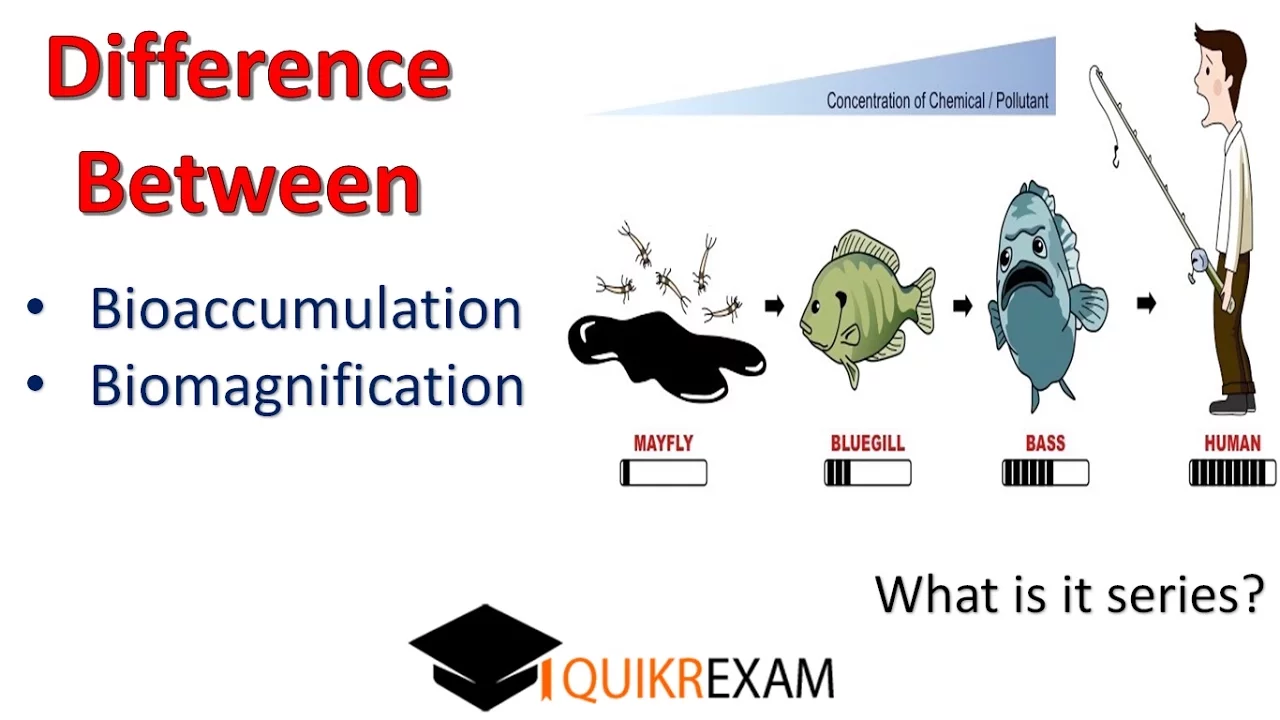
What is the Difference Between Bioaccumulation and Biomagnification
78.7K
Bioaccumulation is the increase in concentration of pollutants within a single organism when the intake rate exceeds the removal rate, typically occurring because fat-soluble substances cannot be easily excreted through urine; whereas biomagnification is the increase in pollutant concentration as you move up the food chain from one trophic level to the next, requiring pollutants to be mobile, fat-soluble, and biologically active. Bioaccumulation occurs within a trophic level, while biomagnification occurs between trophic levels.
Click to watch →

Our Environment in One Shot: FULL CHAPTER || Warrior 2026 || Class 10 Science Chapter 13
1.2M
Bioaccumulation is the accumulation of toxic substances in an organism's body over time. Biomagnification is the increase in toxin concentration as substances move up the food chain. Non-biodegradable chemicals like DDT, mercury, and pesticides accumulate in organisms and become more concentrated at higher trophic levels. Top predators (including humans) have the highest toxin concentration. This phenomenon occurs because toxins are not broken down and accumulate in body tissues. The 10% energy transfer law applies to toxins as well, meaning they become increasingly concentrated at each trophic level.
Click to watch →

6. Water Pollution and its sources - People & Environment | UGC NET Paper 1 | By Bharat Kumar
149.4K
Bioaccumulation is the process where pollutants accumulate in organisms' tissues over time through repeated exposure. Biomagnification occurs when pollutants become more concentrated as they move up the food chain. DDT and mercury are classic examples: mercury from industrial waste accumulates in fish, then transfers to humans who consume the fish. Non-point sources of pollution are difficult to monitor because they are diffuse and episodic. Most emerging water contaminants are synthetic chemicals, though not all pollutants are synthetic (some are naturally occurring but become pollutants in excess). Understanding these concepts is essential for environmental science and pollution control.
Click to watch →
Deep Dive
Fundamental knowledge of the hydrological cycle and how pollutants transport through aquatic ecosystems.

Explore More: Water Quality | Full Program
207.5K
The hydrologic cycle describes water's journey through evaporation, precipitation, infiltration, transpiration, and runoff. During any phase, water contacts pollutants and transports them to waterways. Human modifications dramatically alter this natural system: agricultural tile drainage speeds water to streams bypassing natural filtration, while urban impervious surfaces create rapid runoff carrying contaminants. These changes short-circuit nature's intended plumbing system, accelerating pollutant delivery to water bodies and reducing opportunities for natural purification processes.
Click to watch →

1° Ciclo de Charlas PRELA - La Cuenca Hidrográfica del lago Lanalhue
136
A watershed is a geographic area where all precipitation drains to a common point like a river or lake. The water cycle describes how water moves through the environment: precipitation falls, some infiltrates into soil, some flows as surface runoff toward water bodies, and water eventually evaporates back into the atmosphere. The watershed dividing line separates different drainage basins. Land use classification categorizes different human activities including agricultural land, native forest, exotic plantations, and water bodies. Major pollution sources include domestic wastewater from septic systems, industrial and commercial activities, urban runoff carrying hydrocarbons and debris, and accidental chemical spills. The water cycle functions as a natural transport mechanism for these pollutants.
Click to watch →
The Water Cycle and Water Pollution | Essentials of Environmental Science
192.5K
The hydrologic cycle is a continuous system driven by the sun that moves water between the atmosphere, soil, and living organisms through evaporation, condensation, precipitation, infiltration, and runoff; however, human activities such as urban development, agricultural runoff, and overfishing disrupt this cycle, leading to water pollution and resource depletion, which can be addressed through legislation like the Clean Water Act and sustainable management practices that consider the interconnected nature of watersheds and the Tragedy of the Commons.
Click to watch →

Let it All Soak In: a Rain Garden Webinar
299
The hydrologic cycle is a complex system where water moves between atmosphere, land, and water bodies. Before European colonization, forests intercepted rainfall, allowing only 1% surface runoff while 40-50% returned to atmosphere through transpiration. Modern urban development replaces vegetation with impervious surfaces, increasing surface runoff to 20-30% and creating stormwater pollution—the leading cause of urban water contamination. This pollution carries toxic chemicals, pathogens, and sediments that harm aquatic ecosystems, compromise drinking water safety, and damage infrastructure through erosion and flooding.
Click to watch →

Drinking Water Treatment
2.8K
The hydrologic cycle describes water's continuous movement across Earth's surface, involving state changes between solid, liquid, and gas. Key processes include condensation (forming clouds), precipitation (rain, snow, hail), evaporation (90% from oceans/lakes), and transpiration (10% from plants). Runoff occurs when precipitation flows down slopes, with some infiltrating to recharge aquifers. When runoff encounters pollutants like agricultural chemicals, water quality declines for both surface and groundwater sources. According to CDC (2012), US drinking water supplies are among the safest globally.
Click to watch →
Deep Dive
The physical and chemical processes of weathering, specifically how UV radiation and mechanical action degrade larger materials.

الحلقة١٠ التجوية الكيميائية والميكانيكية
40.7K
Weathering is the process that breaks down rocks into smaller pieces. Scientists discovered two types: mechanical weathering breaks rocks without changing their material composition, while chemical weathering breaks rocks while changing their chemical nature. The four factors of mechanical weathering are: (1) Temperature fluctuations causing freeze-thaw cycles where water expands when freezing, widening rock cracks; (2) Wind and sand causing abrasion that smooths and breaks rocks; (3) Moving water carrying sand and gravel that abrades rock surfaces; (4) Plant roots growing within rock cracks and exerting pressure. The three factors of chemical weathering are: (1) Air (oxygen) reacting with iron minerals to form rust; (2) Water dissolving and recrystallizing rock minerals; (3) Acids (including acid rain and lichen-produced acids) chemically breaking down rock materials. While weathering processes cannot be observed directly as they occur (taking years or centuries), their results (small rocks, gravel, sand, caves) are observable evidence.
Click to watch →

حل المتميز ساينس المراجعه النهائيه الترم التاني science المتميز final revision سنه رابعه
25.4K
Weathering is the breakdown of rocks through mechanical and chemical processes. Mechanical weathering involves physical breakdown where rocks break into smaller pieces without changing their chemical composition. Wind and water are primary agents that physically break rocks through movement and abrasion. Chemical weathering involves reactions that change rock composition, such as when iron reacts with oxygen to form rust. Plants growing on rocks release acids that cause chemical weathering by dissolving minerals. Water causes both mechanical weathering by moving rocks and chemical weathering by dissolving minerals and salts.
Click to watch →

1단원 지권의 변화
170
Weathering (풍화) is the process by which rocks break down into smaller pieces or change composition over time. There are two main types: (1) Mechanical weathering (기계적 풍화) - physical breakdown without chemical change, caused by: (a) Frost wedging - water seeps into rock cracks, freezes, expands, and breaks the rock; (b) Root wedging - plant roots grow into rock cracks and expand, breaking the rock; (c) Pressure release - when overlying rock is removed, the underlying rock expands and breaks; (2) Chemical weathering (화학적 풍화) - changes in rock composition, caused by: (a) Carbonation - carbon dioxide in groundwater dissolves limestone, creating caves; (b) Oxidation - oxygen reacts with minerals, changing rock color and weakening it; (c) Biological weathering - organisms like lichens release acids that dissolve rock surfaces.
Click to watch →

Weathering ( अपक्षय ) || Physical weathering || Chemical weathering || Biological weathering ||
40.6K
Weathering is the breakdown of rocks through three main processes: physical weathering caused by temperature fluctuations (thermal expansion and contraction) and water freezing in cracks, chemical weathering involving oxidation (oxygen combining with minerals like iron), hydration (water reacting with minerals such as calcium sulfate forming gypsum), hydrolysis, carbonation, and solution, and biological weathering driven by plant roots growing into cracks, burrowing animals, and human activities.
Click to watch →

Physical Weathering Processes
102.5K
Physical weathering is the mechanical breakdown of rocks at the Earth's surface into smaller fragments through processes like freeze-thaw cycles (where water expanding as ice exerts ~15,000 psi pressure in fractures), salt crystallization in arid regions, biological activity such as root growth and fungal hyphae expansion, and the formation of joints that create pathways for weathering agents; these processes increase surface area and accelerate subsequent chemical weathering.
Click to watch →
Prerequisite Knowledge
- Concept 01Understanding the basic chemistry of polymers and the distinction between synthetic plastics and organic materials.
- Concept 02The concepts of bioaccumulation and biomagnification within ecological food webs.
- Concept 03Fundamental knowledge of the hydrological cycle and how pollutants transport through aquatic ecosystems.
- Concept 04The physical and chemical processes of weathering, specifically how UV radiation and mechanical action degrade larger materials.
Subsequent Learning
- Step 01Advanced wastewater treatment and filtration technologies designed to detect and remove micro- and nanoplastics.
- Step 02The toxicological mechanisms of plastic additives (such as endocrine disruptors) on cellular and systemic human health.
- Step 03Environmental policy, international treaties, and circular economy strategies aimed at mitigating plastic pollution at the source.
- Step 04Developments in green chemistry, including the design and life-cycle analysis of biodegradable bioplastics.
Plastic Pollution
Chemical Impact
Plastic Pollution
0:00Playing Section
- 1
Plastic dumped in oceans persists, breaking into tiny pieces.
- 2
Over 300 species ingest this debris, contaminating food webs.
- 3
Samples are collected using a manta trawl to assess pollution.
Methodological Critiques and Overstated Health Risks of Ambient Microplastics
While the ubiquity of microplastics is well-documented, a significant scientific counterpoint focuses on the lack of robust empirical evidence regarding their actual toxicity to humans at current environmental exposure levels. Critics in toxicology and risk assessment point out that many laboratory studies exposing organisms to microplastics use unrealistically high concentrations of pristine, spherical plastic particles. These do not accurately represent the irregular, weathered, and far lower concentrations found in natural aquatic environments. Consequently, some researchers argue that the public health alarm may be premature and potentially diverts attention and resources from more immediate, well-established water quality threats, such as microbial pathogens, heavy metals, and untreated industrial waste.
Deep Dive
Advanced wastewater treatment and filtration technologies designed to detect and remove micro- and nanoplastics.

CONICET desarrolla un dispositivo de uso doméstico para remover micro y nanoplásticos del agua
158
This segment introduces a dual-stage filtration system developed by CONISET researchers to remove micro and nanoplastics from water. The technology combines photolysis VC (visible light photolysis) to activate plastic particles, followed by low-cost absorbent materials derived from industrial waste. The project, funded by the Franco-Argentine Innovation Distinction, aims to create a household water purifier prototype. Traditional filters with specific pore sizes can only remove larger microplastics, making this dual approach necessary for capturing smaller nanoplastics that pose greater health risks.
Click to watch →
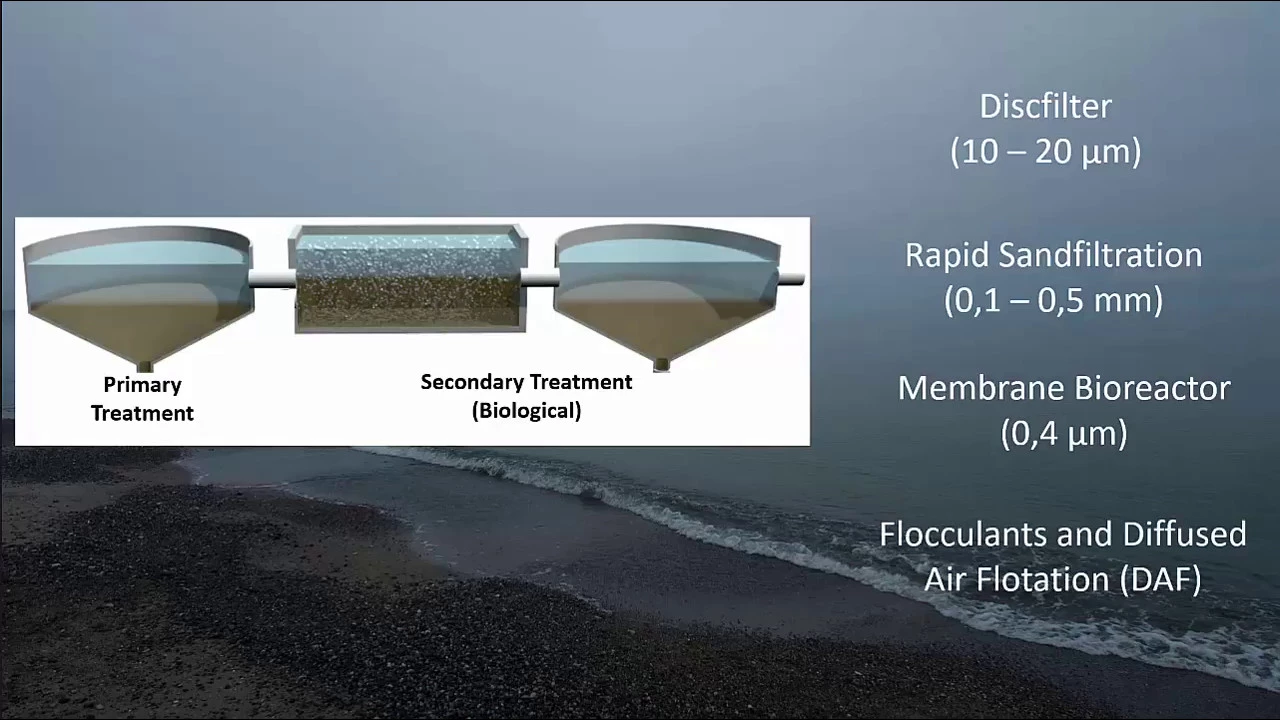
Microplastic Removal: Advanced Wastewater Treatment Technologies
17.2K
This video explains how advanced wastewater treatment technologies can effectively remove microplastics (plastic particles smaller than 5 millimeters) from treated water. The research, published in Water Research, tested four methods on water after conventional activated sludge treatment: disc filters (40-98.5% removal), rapid sand filtration (97%), membrane bioreactors (99.9%), and diffused air flotation with flocculants (95%). These advanced treatments target the finest microplastic particles remaining after conventional treatment, which already removes approximately 99% of microplastics.
Click to watch →

POLI EnergyFEST 2026 | Ceremonia de deschidere & Conferințe Tehnice
479
Advanced water treatment technologies are being developed to address emerging contaminants including microplastics and tire wear particles. Technologies include advanced oxidation processes (Fenton reactions, photocatalytic oxidation), electrochemical treatment, and capacitive deionization. The Inspire project (Horizon Europe) is developing technologies to remove microplastics from wastewater, with targets of 50% reduction in macroplastics and 30% reduction in microplastics by 2030. These technologies are being tested in wastewater treatment plants across Europe.
Click to watch →
![[1/13 TUE] 출근길 영어뉴스 I Morning Wave in Busan](https://i.ytimg.com/vi/fPWBlKeBEOM/maxresdefault.jpg)
[1/13 TUE] 출근길 영어뉴스 I Morning Wave in Busan
1.8K
Busan National University researchers have developed a method to remove microplastic and nanoplastic pollution from drinking water and wastewater systems. The technology uses plate-shaped iron oxide magnetic nanoparticles that can eliminate more than 95% of micro and nano plastics within 10 minutes. Microplastics are about 0.5mm or smaller in diameter (equivalent to a grain of rice), while nanoplastics are 0.001mm or smaller (invisible to the naked eye). The process uses dynamic confinement with a combination of a thin plate-like surface and an external magnetic field to cluster the particles together for easier extraction.
Click to watch →
MC 17 "Detección de microplasticos en las aguas residuales urbanas y su eliminacion en la EDAR"
501
Advanced capture technologies can remove microplastics from wastewater with efficiencies exceeding 90%. These systems use selective capture media that trap microplastics while allowing water to pass through. The captured microplastics can then be separated and revalorized, while the capture media is reused, achieving zero-waste operation. The technology addresses both the water line and sludge line, preventing microplastics from entering either pathway and achieving complete removal from the system. The technology can be integrated into domestic washing machines to prevent microplastic release at the source, significantly reducing the load on treatment plants.
Click to watch →
Deep Dive
The toxicological mechanisms of plastic additives (such as endocrine disruptors) on cellular and systemic human health.

Nutricionista explica porque NÃO bebe em garrafas de plástico | À Deriva Cortes
25K
Petrochemicals and heavy metals in plastic act as endocrine disruptors, interfering with hormonal systems and causing health consequences such as reduced male fertility (two to three times fewer sperm per ml compared to the 1950s), feminization of men, and altered brain development, as these chemicals mimic natural hormones and bind to cellular receptors, disrupting normal physiological development.
Click to watch →

Dr. Nicolás Olea: ¿Cómo nos envenenan los plásticos? (ep.54)
26K
Endocrine disruptors are chemicals that interfere with hormonal regulation by mimicking, blocking, or altering hormonal signals. With over 340,000 synthetic compounds in the market and only about 2,000 identified as endocrine disruptors, these chemicals essentially 'hack' the hormonal messaging system. Sources include plastics (bisphenol A, nonylphenol), food packaging (epoxy resins), and personal care products (UV filters). Environmental observations in wildlife (alligators without testicles, sex-reversed fish) led to recognition of endocrine disruption as a serious health concern. The EU has declared perfluorinated compounds 'public enemy number one' due to their persistence and health effects. Regulatory action has been extremely slow, with bisphenol A banned from food packaging only 29 years after its discovery. The plastic industry has transformed modern life, with 14% of petroleum going to fine chemicals and 5% to plastics. The average person is exposed to 40,000-50,000 synthetic compounds in their lifetime. Most plastics contain 600+ additives to achieve desired properties like flame resistance (organobromides), stain resistance (perfluorinated compounds), and color (heavy metals). Microplastics and nanoplastics fragment in the environment and carry environmental contaminants, forming what researchers call the 'plastisphere.' This creates a 'Trojan horse' effect where microorganisms can be transported through the digestive system via plastic particles in food. Endocrine disruptors have particularly severe effects when exposure occurs during critical developmental windows: pregnancy, lactation, and puberty. Research shows that prenatal exposure to bisphenol A in animal models leads to earlier cancer onset in adulthood.
Click to watch →

Unser täglich Gift Wie unsere Lebensmittel uns krank machen
50.8K
Endocrine disruptors are chemicals that interfere with the body's hormonal systems, causing effects at doses far below traditional safety thresholds. Scientists Anna Soto and Carlos Sonnenschein discovered in 1987 that plastics can leach estrogenic substances, causing breast cancer cells to multiply without estrogen. DES (diethylstilbestrol), prescribed to 4-8 million American women from 1940-1975, caused vaginal carcinomas in daughters decades later. The Wingspread Conference in 1991 coined the term 'endocrine disruptors.' A 2007 consensus statement by 38 international scientists stated that current human pathologies resemble those in animals exposed to very low BPA doses, including increased breast and prostate cancer rates, urogenital abnormalities, Type 2 diabetes, obesity, and behavioral disorders. The video argues that traditional toxicological approaches, based on linear dose-response curves, are fundamentally flawed for endocrine-disrupting chemicals.
Click to watch →

Dr Anthony Jay & Dr Berry (Plastic Dangers to Your Health)
57.9K
Plastic chemicals such as BPA, phthalates, and their substitutes (BPS, BPA-F) act as estrogen mimics that disrupt human hormone systems, with studies showing these chemicals leach into the body from various sources including food containers, personal care products, and even paper products lined with plastic; the primary routes of exposure are through heated liquids in plastic containers, ingestion of contaminated foods, and dermal absorption, making it essential to avoid heating plastics, use glass or stainless steel containers for hot foods and liquids, and carefully read ingredient labels on personal care products to minimize exposure to these hormone-disrupting chemicals.
Click to watch →
INVESTIGADOR DE TÓXICOS: CÓMO EXPULSAR EL PLÁSTICO DE TU ORGANISMO | Doctor Nicolás Olea
71.9K
Endocrine disruptors are substances that behave as if they were our own hormones or anti-hormones. They can block hormone synthesis, compete for movement in the blood, or act on target organs by binding to receptors. With only 50 natural hormones in the human body and approximately 220,000 synthetic compounds on the market, there are significant structural similarities that allow these synthetic compounds to interfere with hormonal function.
Click to watch →
Deep Dive
Environmental policy, international treaties, and circular economy strategies aimed at mitigating plastic pollution at the source.
What would a successful UN treaty on plastic pollution look like? | The Circular Economy Show
91.4K
A successful UN treaty on plastic pollution requires ambitious goals linked to concrete measures, including global definitions and standards for products and product design, regulations banning unnecessary plastics, and a proper institutional framework with scientific panels and financial mechanisms to support implementation; the circular economy is essential because it addresses the root cause of plastic pollution by keeping materials in circulation rather than treating waste at the end, which is necessary since plastic never disappears in the environment and we must reach zero plastic pollution on our finite planet.
Click to watch →

Jean-Yves Daclin (Plastics Europe) - pollution par les déchets plastiques - cese
267
An effective international treaty to eradicate plastic pollution by 2050 requires a comprehensive approach combining upstream measures (circular economy principles, eco-design guidelines, recycled material incorporation targets) and downstream measures (Extended Producer Responsibility systems with eco-contributions for waste management), supported by binding constraints on circularity and industry innovation through the 3R strategy (reduction, reuse, recycling).
Click to watch →
World Environment Day 2025 | Multilateral Geneva Collectively Acting to Beat Plastic Pollution
330
Countries pursue international treaties when they cannot solve problems alone—when collective action offers advantages over unilateral approaches. The plastic pollution problem requires international cooperation because it is transboundary, involves complex supply chains, and requires common international rules to reduce fragmentation of national regulations. Essential treaty elements include: clear objectives protecting human health and environment; shared goals guiding government action; common global rules addressing full life cycle; flexibility for different circumstances; dynamic evolution over time; transparency of government actions and product compositions; improved data availability; and ambitious implementation support. The treaty should be designed for decades ahead, requiring balance between ambition, effectiveness, and fairness.
Click to watch →
Go circular to end plastic pollution, UNEP report urges ahead of global meet
4.5K
According to a UNEP report, shifting to a circular economy could reduce global plastic pollution by 80% by 2040, saving $4.52 trillion while creating 700,000 new jobs, though delays would add 80 million tonnes of pollution and increase costs; the strategy involves three market shifts—reuse, recycle, and reorienting plastic use—supported by extended producer responsibility schemes and specific policies including design standards, recycling targets, taxes, bans, and labeling requirements.
Click to watch →

Reciclar está bien, reducir es mejor: combatir la contaminación por plásticos desde el origen
164
Addressing plastic pollution requires multi-level governance. Municipalities implement bans in public institutions and offer incentives to businesses eliminating plastic. The EU has adopted policies improving packaging recyclability and limiting marine plastic leakage. At the UN Ocean Conference in Nice, the Digital Ocean platform simulates pollution propagation, showing that reducing river and coastal plastic by 50% could prevent 10 tons of pollution over two years. International negotiations aim for a binding treaty addressing plastic's entire lifecycle, not just recycling. The EU and 95 countries call for agreements reducing plastic production and harmful molecules, with targets to protect 30% of oceans by 2030.
Click to watch →
Deep Dive
Developments in green chemistry, including the design and life-cycle analysis of biodegradable bioplastics.

Design Technology G9 U1L2 Green Design and Life Cycle Analysis
1.1K
Green Design is an approach to creating products that minimize environmental harm, and Life Cycle Analysis evaluates a product's environmental impact across all stages from design and raw material extraction through manufacturing, distribution, use, and disposal; for example, while plastic bags cause significant environmental pollution with short lifespans, aluminum cans can be recycled repeatedly using only 5% of the energy required to produce new aluminum, demonstrating how material choices and recycling capabilities significantly affect environmental sustainability.
Click to watch →
part-1 ch-16 Green chemistry and nano chemistry class 12 science Maharastra board new syllabus
225.4K
Biodegradable materials are substances that can break down naturally in the environment without causing harm. In Green Chemistry, designing products for biodegradability is crucial to prevent accumulation of persistent chemicals in ecosystems. Examples include biodegradable plastics and pesticides that decompose naturally. This principle helps ensure that products do not cause long-term environmental harm after their useful life ends.
Click to watch →
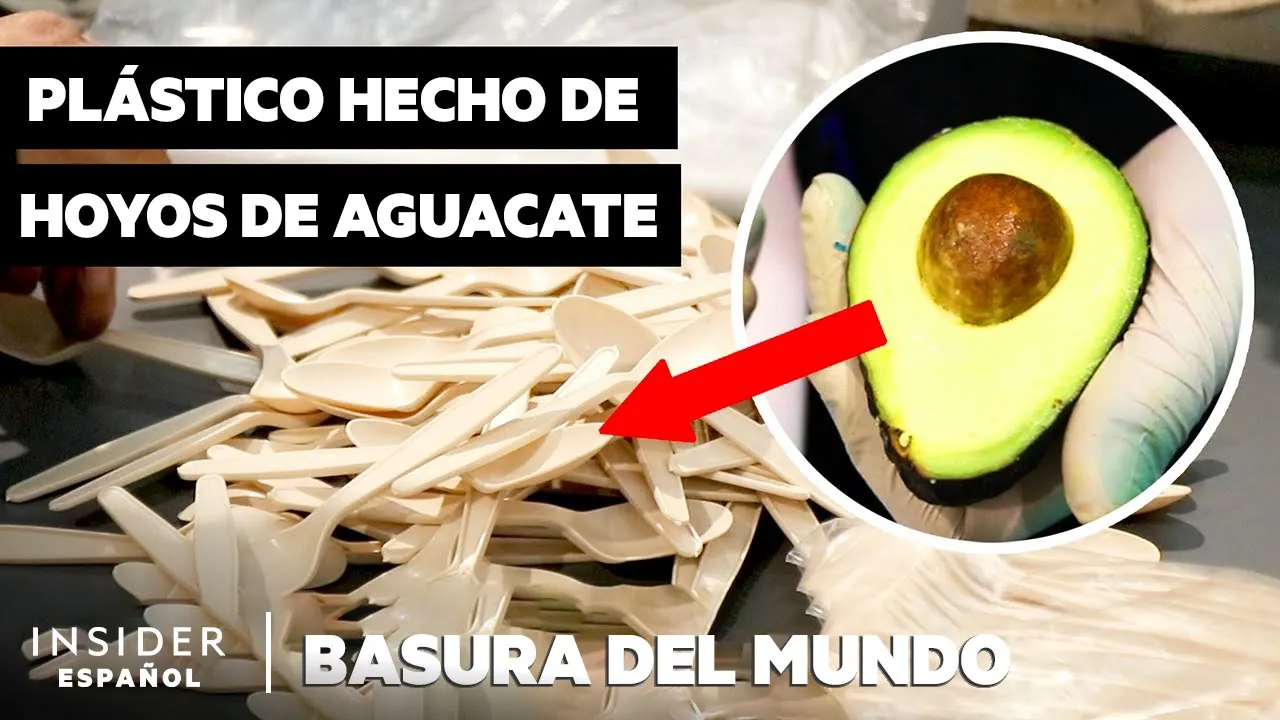
Cómo Los Desechos Del Aguacate Se Convierten En Plástico | Basura del Mundo | Insider Español
153.1K
A Mexican company called Biofase has developed a patented process to transform avocado seeds into biodegradable bioplastics, which decompose faster and require fewer fossil fuels than traditional petroleum-based plastics, though they still require special composting facilities and are more expensive than conventional plastics.
Click to watch →

#1 Diklat 38JP: Asesmen Literasi Kimia Hijau dan Rencana Pembelajaran di Kurikulum Merdeka
667
Green chemistry is built on 12 principles: (1) Prevention of waste, (2) Atom economy, (3) Less hazardous synthesis, (4) Safer solvents (water ideal), (5) Energy efficiency, (6) Renewable feedstocks, (7) Reduce derivatives, (8) Catalysis, (9) Design for degradation, (10) Real-time analysis, (11) Accident prevention, (12) Inherently safer chemistry. Plastic pollution from synthetic materials (containing phenol, formaldehyde) persists for centuries. Bioplastics from cassava peel offer a sustainable alternative using renewable agricultural waste, water as solvent, and producing biodegradable products decomposing in 2 months. This demonstrates multiple green chemistry principles: waste prevention, atom economy, safer synthesis, renewable feedstocks, and design for degradation.
Click to watch →

#3 – Plastiques : Au-delà des apparences ! – Étienne Grau
420
Green chemistry in polymer synthesis involves designing molecules to be highly reactive, avoiding high temperatures (400-200°C), minimizing solvent use, and reducing waste during production. A systemic approach to material sustainability requires considering the entire lifecycle: production (synthesis), use, and end-of-life. A material that is biosourced but has poor properties or a terrible end-of-life is not viable. The solution requires addressing all three phases simultaneously.
Click to watch →
Plastic Pollution
Chemical Impact
Plastic Pollution
0:00- 1
Plastic dumped in oceans persists, breaking into tiny pieces.
- 2
Over 300 species ingest this debris, contaminating food webs.
- 3
Samples are collected using a manta trawl to assess pollution.
Methodological Critiques and Overstated Health Risks of Ambient Microplastics
While the ubiquity of microplastics is well-documented, a significant scientific counterpoint focuses on the lack of robust empirical evidence regarding their actual toxicity to humans at current environmental exposure levels. Critics in toxicology and risk assessment point out that many laboratory studies exposing organisms to microplastics use unrealistically high concentrations of pristine, spherical plastic particles. These do not accurately represent the irregular, weathered, and far lower concentrations found in natural aquatic environments. Consequently, some researchers argue that the public health alarm may be premature and potentially diverts attention and resources from more immediate, well-established water quality threats, such as microbial pathogens, heavy metals, and untreated industrial waste.
Understanding the basic chemistry of polymers and the distinction between synthetic plastics and organic materials.
The concepts of bioaccumulation and biomagnification within ecological food webs.
Fundamental knowledge of the hydrological cycle and how pollutants transport through aquatic ecosystems.
The physical and chemical processes of weathering, specifically how UV radiation and mechanical action degrade larger materials.
Advanced wastewater treatment and filtration technologies designed to detect and remove micro- and nanoplastics.
The toxicological mechanisms of plastic additives (such as endocrine disruptors) on cellular and systemic human health.
Environmental policy, international treaties, and circular economy strategies aimed at mitigating plastic pollution at the source.
Developments in green chemistry, including the design and life-cycle analysis of biodegradable bioplastics.
251.2K views2.4Klikes2:51@NatGeoOriginal Release: 2015-10-27
[Music] it was completely legal to dump plastic in the ocean until the '90s and a lot of that plastic is still there because plastic lasts out there for a very long time it just breaks down into smaller and smaller [Music] pieces we know that over 300 species of wildlife have ingested this material it's been reported in animals and so as it is eaten by animals it actually can move up the food web and as the scientific literature on this issue increases literally almost every habitat they've gone to sea mounts Arctic Ice coral reefs deep sea it's become ubiquitous and I don't think anybody would fight anyone on an argument that plastic debris is not become a contaminant of concern we're collecting the samples by using a manta trol it's basically a big metal box with wings it looks like a manta with a very long about 12T mesh neet off the back 1 2 3 Splat and at the end is a piece we can take off that has collected all of the solids you rinse it all out filter it through another strainer and then put it into a jar this caught a lot of other stuff if you want to take a look at what we're rinsing out of the screen it's more tiny [Music] plastic what we're concerned about ultimately is what are the implications of trash going into the water getting into the food we Harvest and we're still connecting the dots there a bit we know that lots of trash goes out into the water we know that the Sun and waves breaks it down into small pieces we know that many many many species of animals eat it and we also know that bigger animals eat smaller animals and we also know that we eat those big trophy fish and so what we're really trying to figure out is how big a vector plas is for transporting chemicals into the tissues of the animals that we eat every day that's a big problem much bigger than big chunks floating out into the ocean we don't know exactly what that plastic is we don't know where exactly it's coming from and if we're trying to find policy and educational solutions to it we need to know what we're targeting we can't just ban plastic that's not going to work what kind of plastic is it and what's the best policy route to reduce it is it a ban is it a fee is it Market change is it education and behavior change work what's the best way to tackle it and until we know exactly what we're dealing with we're not going to be able to design the right programs to address it
Up Next

11:43
Ocean Plastic Pollution: Engineering Solutions for the Great Pacific Garbage Patch
@voyager205
3.2K views•2026-03-10

15:54
Life in Biosphere 2: Sustainable Ecosystems & Human Survival
@TED
334.9K views•2009-06-16
14:30
Microplastics Everywhere: How Plastic Impacts Our Lives
@TEDx
100.9K views•2018-05-08
10:28
Ice Stupa Artificial Glaciers: Solving Ladakh's Water Crisis
@SonamWangchuk66
3.2M views•2015-05-03
Related Study Plans & Knowledge Roadmaps
Structured learning paths in Environmental Science
environmental-science
Ocean Noise: Cetacean Impacts & Mitigation
01Fundamentals of Underwater Acoustics
02Marine Mammal Bioacoustics
03Anthropogenic Noise: Shipping & Seismic Surveying
+ 2 more learning modules
16h5 modules
Explore Roadmap
environmental-science
Road Ecology: Corridors, Overpasses & Fencing
01Foundations of Habitat Fragmentation and Carnivore Ecology
02The Road Barrier: Ecological Impacts of Transport Infrastructure
03Principles of Ecological Corridors and Connectivity Mapping
+ 3 more learning modules
14h6 modules
Explore Roadmap
environmental-science
Ocean Acidification: Kelp Buffering & Shellfish
01Fundamentals of Ocean Chemistry & pH
02Chemical Pathways of Coastal Acidification
03Bivalve Physiology & Calcification Under Stress
+ 2 more learning modules
18h5 modules
Explore Roadmap
environmental-science
Ice Stupas: Glacial Retreat & Water Security
01Foundations of Glaciology & Mountain Hydrology
02Climate Change and Glacial Retreat Dynamics
03The Science of Ice Stupas & Artificial Glaciers
+ 2 more learning modules
14h5 modules
Explore Roadmap