

























Orexin is a neurotransmitter that regulates alertness and wakefulness; exercise, fasting, and protein consumption increase orexin levels and improve energy, while carbohydrate consumption inhibits orexin and causes fatigue, explaining why people feel sleepy after large meals and how dietary choices impact daily energy levels.
Understanding Orexin: The Science of Alertness and Energy
Added:Fundamentals of synaptic transmission and how neurotransmitters signal between neurons.
The anatomical structure and role of the hypothalamus in maintaining bodily homeostasis.
Basic concepts of the sleep-wake cycle, including circadian rhythms and the two-process model of sleep regulation.
An overview of how the brain senses and regulates systemic energy balance and metabolism.
The pathophysiology of sleep disorders, specifically Narcolepsy Type 1, which involves the loss of orexin-producing neurons.
Pharmacological modulation of the orexin system, focusing on dual orexin receptor antagonists (DORAs) used for treating insomnia.
The biochemical relationship between diet, glucose levels, and orexin modulation, and how nutrition directly impacts daytime fatigue.
The role of orexin in reward pathways, motivation, and its implications in psychiatric conditions and addiction.
1.1M views51.1Klikes12:13Original Release: 2021-10-31
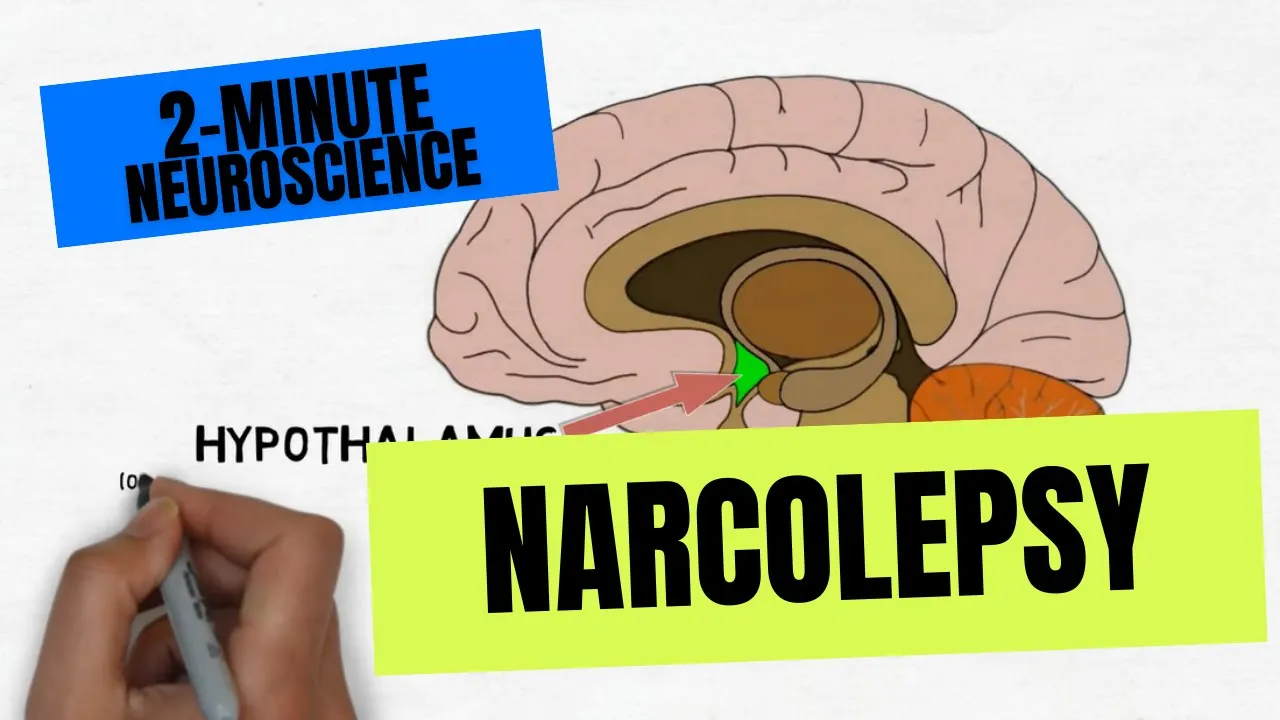
if you want to stop being tired all the time you need to activate the anti-tiredness neurotransmitter but first let's answer a couple questions like how do we stay awake for nine days straight this is exactly what a tendai monk of japan did in october 2015 kamahori colgan completed an endurance test called doidi for nine days straight he didn't eat anything and he didn't sleep a feat that was broadcasted on japanese television but here's what i'm wondering did the not eating make it easier or harder to stay awake for over a week imagine this a group of researchers are trying to figure out how to keep you awake and alert despite many hours of sleep deprivation they've been running a bunch of short-term memory tasks on you to get an idea of how your brain is functioning with and without sleep then after 36 hours of sleep deprivation they spray something in your nose and run the tests again somehow despite all your sleep deprivation you are able to perform even better than you did when you were fully rested all thanks to this nasal spray well in 2007 researchers found that when they sprayed a peptide called orexin-a in 30 to 36-hour sleep-deprived rhesus monkeys noses their cognitive function appeared to be even better than when they were fully rested orexin a is in fact a peptide neurotransmitter that our bodies release naturally in certain conditions so it can give us some hints on how to have more energy throughout the day you've probably heard by now about all kinds of hormones and neurotransmitters but what about anti-tiredness what's the alertness neurotransmitter well if something is making you more alert it's probably increasing orexin or increasing orexin signaling an obvious but very good way to having more energy is to get some exercise and one of the effects of exercise on your body is it increases erection erection levels in the cerebrospinal fluid of rats dogs and cats and erection levels in the blood of humans have all been found to increase after exercise in fact these researchers propose that erection a is one of the reason for the many benefits to cognition we see from exercise researchers have found that 20 minutes on a treadmill gives the brain as good a boost in working memory as a cup of coffee speaking of coffee one of the effects of caffeine is it activates orexin neurons on the other hand the medication suvorexant is an orexin blocker that is intended to help insomniacs sleep narcolepsy is a frightening condition where people suffer intense attacks of daytime drowsiness to the point where they can even fall asleep standing up this 2011 paper in frontiers in neurology explains that narcolepsy is essentially a deficiency in orexin in fact the intended purpose of modafinil is to treat narcolepsy if you're a college student you've probably heard about modafinil this is apparently the hot new drug to help students focus on their studies and stay awake modafinil does a couple things to brain chemistry but one thing is it activates erection neurons okay i'm not recommending you go out and get some modafinil let's talk about natural ways to be more alert scientists know of a simple intervention that consistently increases orexin signaling and makes animals more alert that intervention is fasting food deprivation seems to consistently increase erection signaling and alertness in animals and primates and if you destroy orax and neurons in mice fasting won't make them more alert and yes fasting has been found to make humans more alert as well so unfortunately more food seems to make us tired if you've had a big bowl of pasta at lunch and found yourself struggling to stay awake at your desk or you've simply attended any thanksgiving dinner you'd know this already had several meals and lapsed into a food cola now we have to eat some time but we've been told to be eating all the time here at the firehouse we always try to sit down and eat three square meals first it was three square meals a day now it's three meals and snacks the concept of eating frequent small meals is really key to not only losing weight but to maintaining weight according to work done by sachin panda and shubras gill the average americans eating window is 15 hours that means they're eating pretty much right when they wake up up until right before they go to bed no wonder people are wondering why they're exhausted throughout the day we're constantly eating and constantly lowering our erection for a very long time i was consistently eating one meal a day it was nice to lose a lot of weight but my favorite thing about it was i had way more energy and was much more focused throughout the day when i finally ate my huge meal sure i would feel sleepy and sluggish but that was around 6 p.m when i was already done with all my work eating once a day isn't realistic or maybe even desirable for most people so when we do eat what can we eat to not deplete our erection so much well let's take a look at this quote from this study it says moreover erection a release is stimulated by low glucose similar to glucagon secretion and inhibited by high glucose fasting increases plasma or xna essentially they're saying erection is quite sensitive to carbohydrate consumption basically if you're eating carbohydrates you're inhibiting erection and you can expect to be less alert fasting increases erection a and glucagon is a hormone usually released when fasting so it makes sense that glucagon secretion increases orexin a and eating carbohydrate suppresses glucagon this echoes james mcdonald's explanation for why we're so sleepy after thanksgiving dinner it's not the tryptophan in the turkey it's insulin inhibiting rexin and this insulin is released in response to eating large amounts of carbohydrate-rich foods interestingly one small study had narcolepsy patients do a very low carb ketogenic diet and these patients did see some modest improvements in their daytime sleepiness now as we're about to see this is not to say that everyone who eats carbs is going to be sleepy all the time or you can't have carbs in your diet and stay focused throughout the day look at bodybuilders for example they don't strike me as particularly sluggish or tired people yet they eat plenty of carbs about 60 grams of carbs coming from grits though they track their macros and stay lean and eat tons of protein what's interesting is there's some evidence that protein has the opposite effect to carbs this study suggests that the erection system is actually stimulated by the amino acids in protein in fact it even suggests that protein can blunt the erection-inhibiting effect of glucose meaning you shouldn't be as tired if you eat some protein with your carbs ironically when students pull all-nighters they usually reach for comforting snacks that are pretty much just carbs and no protein my favorite all-nighter snacks as a university student were pringles these chocolate cracker stick things and gummy bears so this brings us back to narcolepsy narcolepsy is curiously associated with type 2 diabetes and obesity in fact obesity has been found to affect over 50 percent of children with narcolepsy well you might think in people with a disorder where they are struck with the intense bouts of daytime sleepiness they wouldn't want to go out and exercise but could it have something to do with orexin well in a presentation by amber o'hearn someone i've interviewed on the channel before she points out that several lines of research show that there's a connection between sleep and weight gain basically if you're losing weight you sleep less you're gaining weight you sleep more and this study suggests that obesity is associated with low levels of erection and when people lose weight their erection goes up this might be obvious but if you're feeling more fatigued than usual it might be a sign that you're gaining weight and if you want to be more alert throughout the day maybe you could stand to lose a few pounds well that's easy for you to say you preachy egg-headed institute guy i've experienced this myself when i first started eating a low-carb keto diet i quickly felt like i had much more stable energy throughout the day but i started to push it by having two butter coffees in the morning and eight macadamia nuts by the handful and my feeling more and more sluggish woke me up to the fact that i was putting on weight oh marge how could you let me let myself go like this me i'm not the one who puts butter in your coffee knowing how alertness works should give you some insights into how to eat and when to eat if you want to maintain your energy and your focus recently i was listening to neuroscientist andrew huberman on the tim ferriss podcast and he says he doesn't eat any carbs until night time and he eats this way because he found it has him sleep really well this totally makes sense if you look at how orexin works going back to kamahodi colgan perhaps the erection increase from fasting and losing weight made his 9-day no-sleep ordeal a little easier however to be honest i imagine his success was due to the super-human mental toughness he developed over years of training because after all he wasn't actually supposed to drink anything either which i can't imagine would have done anything for him other than make him miserable now orexin isn't the entire story behind alertness things like catecholamines and effects on the sympathetic nervous system could also explain the alertness experience from fasting for example if you're still feeling tired even though you're not gaining weight you're not eating an excessive amount of carbs or calories and you're getting enough protein at your meals some other things to think about for now are some nutrient deficiencies for example folate vitamin b12 or iron can leave you fatigued now fasting making people more alert may seem counterintuitive because some people do feel fatigued and less energetic than usual when fasting especially if they're doing fasts that last longer than 24 hours but that can sometimes be due to low electrolytes and especially low sodium as in low salt when we eat really low carb and especially when we fast our insulin levels drop and this has the kidneys excrete sodium so if you don't replace that sodium you can feel quite tired and lethargic also caffeine is a diuretic which will have you excrete sodium so if you're drinking lots of caffeine you might want to try upping your salt intake and if you're fasting and drinking caffeine you'll really want to be replacing your salt another huge factor to having more energy throughout the day is optimizing your sleep not just the length of your sleep but other things like the time you go to sleep matters the best time to have the most refreshing sleep is a couple hours after sunset which would be around 10 pm for most people also you don't want to look at blue light before going to bed and you'll want to try and wake up around the same time each morning to set a good circadian rhythm you also don't want to drink caffeine eight hours before you go to bed as caffeine takes quite a while to metabolize so it can interfere with sleep let's try the audience let's see what they say we need your help audience but i'm curious to hear about you guys let me know in the comments if there's anything you do to maintain good energy levels throughout the day this video was sponsored by kiwiko kiwiko is an education company that provides hands-on projects and toys designed to expose kids to concepts in steam they offer 8 subscription lines so any age group can learn about science technology engineering art and math the boxes come with kid-friendly instructions a fun and educational magazine on the box's theme and it has all the supplies necessary to complete the project and even if you don't have kids yourself cubico ships to 40 countries so no matter where your nieces or nephews or grandchildren are you can get them a kiwiko box to encourage them to develop the problem-solving skills necessary to one day invent an orexin-based nasal spray so we can finally have a reasonable alternative to caffeine kiwiko is now offering 50 off your first month of any crate so head on over to kiwico.com what i've learned to check it out
Up Next
6:41
The Brain's Waste Removal System: Glymphatic & Lymphatic Discoveries
@neurotransmissions
81.9K views•2017-11-12
22:43
Ketone Ester Treats Angelman Syndrome Seizures in Mouse Model
@epigenixfoundation5302
1.3K views•2016-07-15

5:35
Enteric Nervous System Explained: The Gut's Brain | Neurobiology Lecture
@alumniu6029
438 views•2018-09-12
7:08
Bacteriophages: Earth's Deadliest Killers and Future Antibiotics
@kurzgesagt
34.6M views•2018-05-13
Related Study Plans & Knowledge Roadmaps
Structured learning paths in Biology
biology
Analyzing Animal Venoms: Genetics & Pharma
01Molecular Biology & Physiology Foundations
02Venom Evolution & Toxin Gene Recruitment
03Neurotoxins & Ion Channel Pharmacology
+ 2 more learning modules
18h5 modules
Explore Roadmap
biology
RNAi: Biogenesis, RISC & Gene Silencing
01Molecular Biology Foundations: DNA to Protein
02Introduction to RNA Interference (RNAi)
03Molecular Biogenesis of miRNA and siRNA
+ 2 more learning modules
10h5 modules
Explore Roadmap
biology
Mycorrhizae: Signaling, Biophysics & Ecology
01Foundations of Mycorrhizal Symbiosis
02Molecular Signaling and Root Colonization
03Biophysics and Bioenergetics of Nutrient Exchange
+ 1 more learning modules
11h4 modules
Explore Roadmap
biology
Circadian Clocks: TTFL, SCN & Periphery
01Foundations of Molecular Biology & Gene Expression
02Introduction to Chronobiology and Actograms
03The Core TTFL: Molecular Architecture of the Clock
+ 3 more learning modules
14h6 modules
Explore Roadmap