


















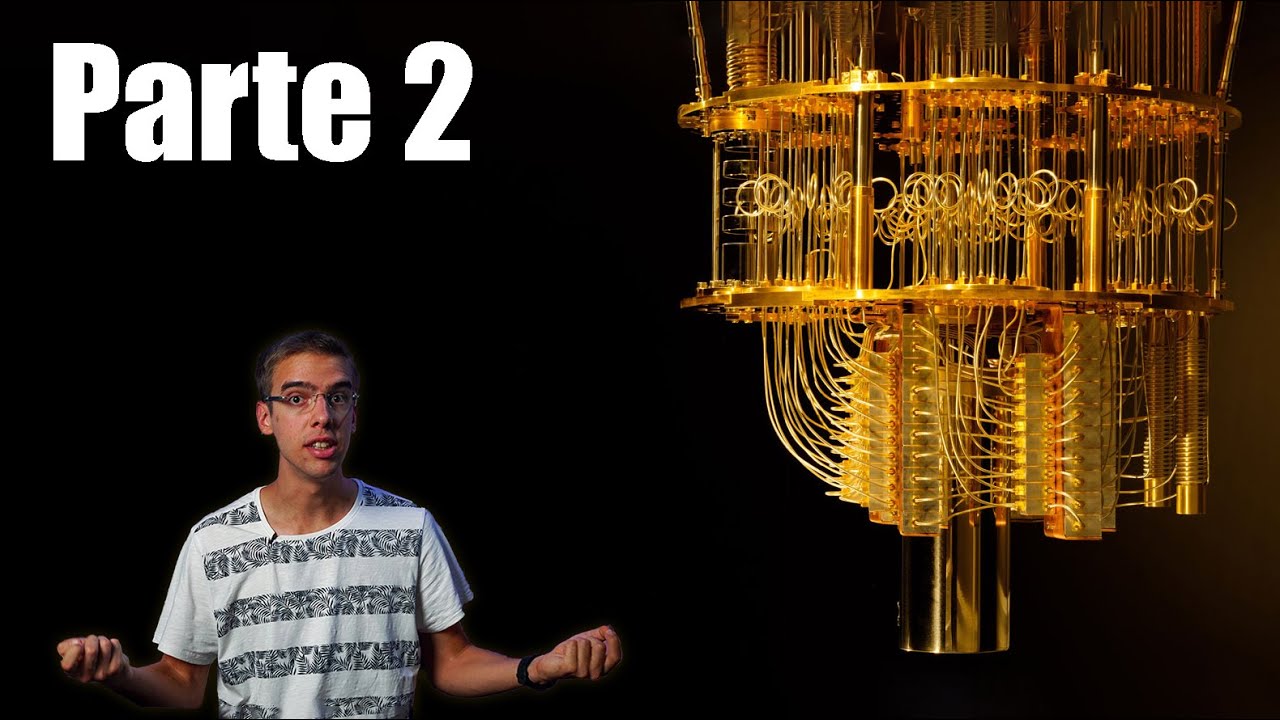
Quantum superposition is not a particle being in multiple states simultaneously, but rather a single quantum state that exists as a vector in an abstract vector space; while quantum particles are always in one state, most quantum states don't make intuitive sense to us, and the coefficients of superposition states represent probabilities for measurement outcomes rather than simultaneous existence.
Quantum Superposition Explained: Vector Spaces and Measurement
Added:Basic Linear Algebra: Understanding vectors, vector addition, and linear combinations of vectors.
Concept of State in Physics: Knowing how a physical system is described classically versus quantum mechanically.
Wave-Particle Duality: Understanding that particles can exhibit wave-like behaviors, which is fundamental to wavefunctions.
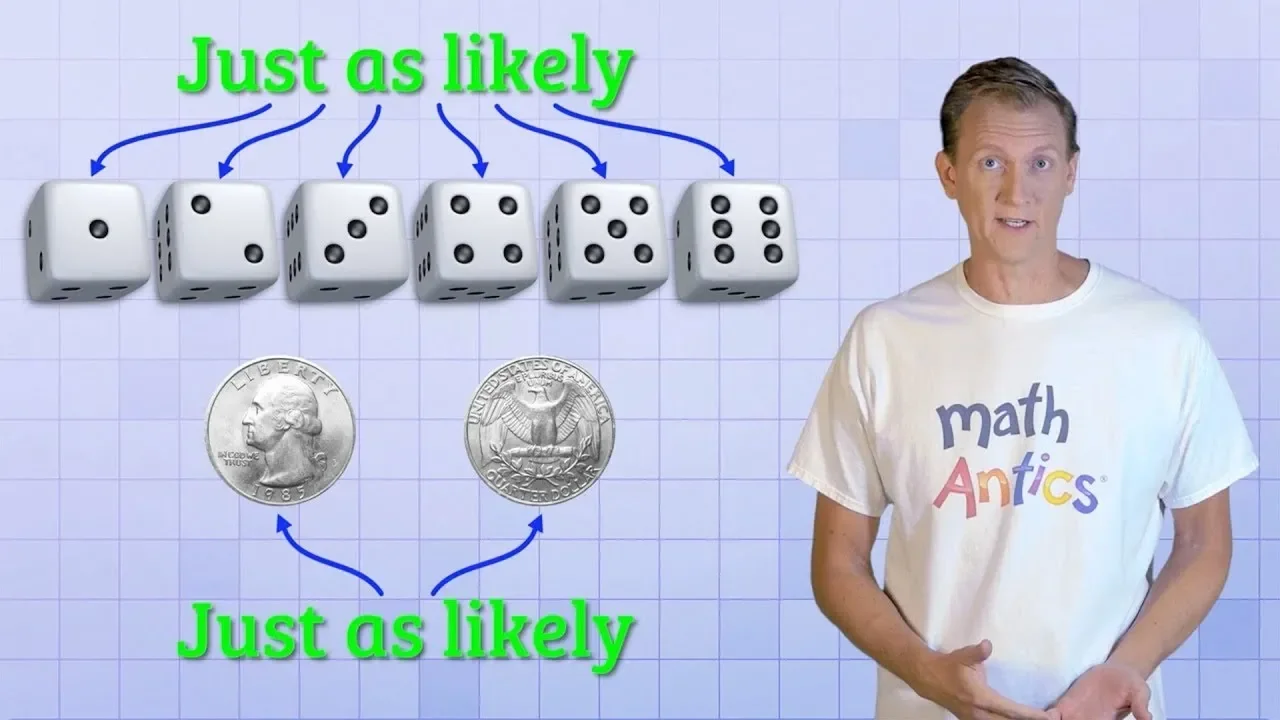
Basic Probability: Familiarity with probability amplitudes and the concept of likelihood in physical systems.
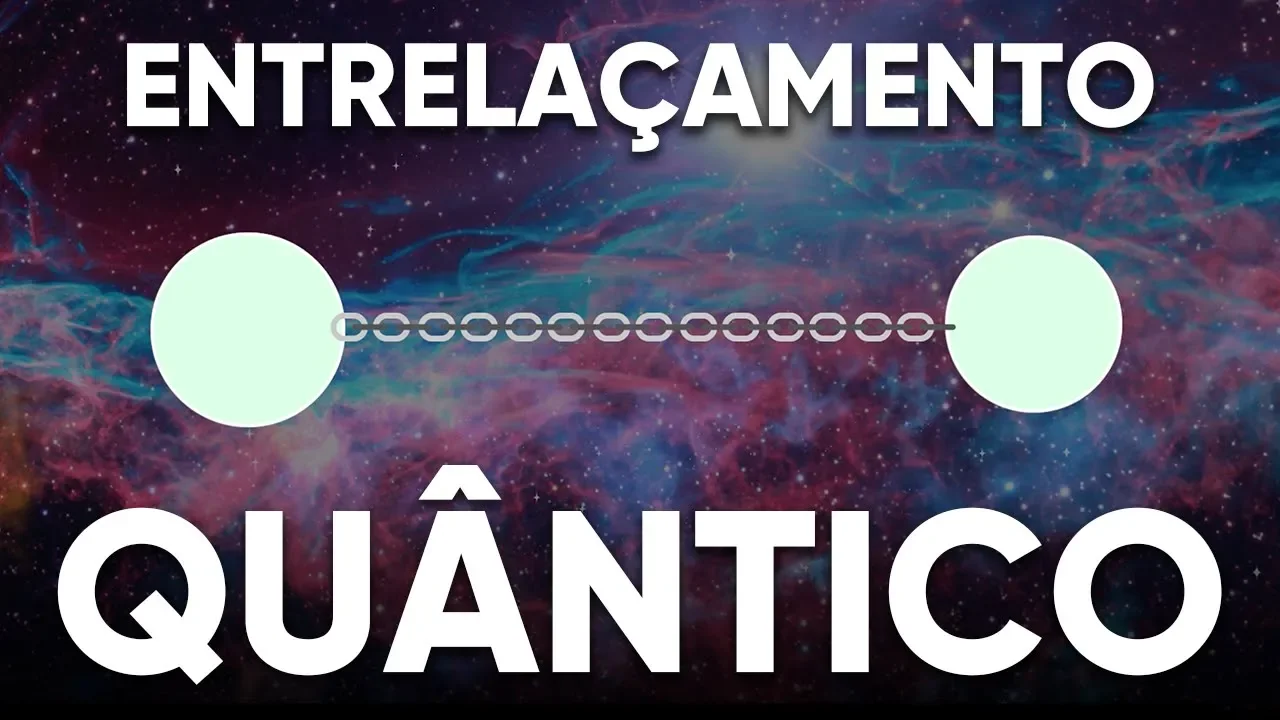
Quantum Entanglement: Transitioning from single-particle vector spaces to multi-particle systems using tensor products.
Operators and Observables: Learning how physical properties (like position or momentum) are represented as Hermitian operators acting on vector spaces.
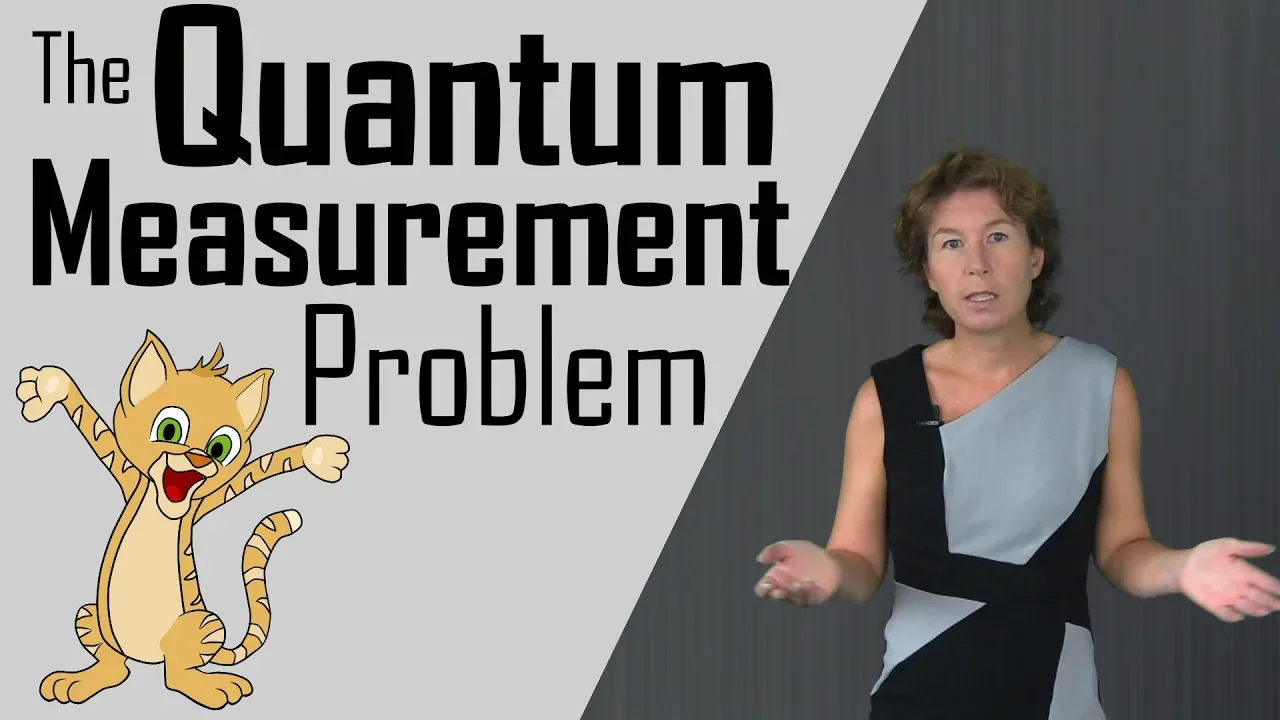
The Quantum Measurement Problem: Delving into interpretations of quantum mechanics (like Copenhagen or Many-Worlds) regarding wavefunction collapse.
Introduction to Quantum Computing: Applying superposition and vector states to understand qubits and quantum logic gates.
500.8K views27.3Klikes13:11Original Release: 2021-11-28
thanks to babel for helping support this episode hey crazies just about everyone that's heard of quantum mechanics has heard the following phrase the electron can be in multiple states at the same time but what if i told you that's a lie quantum particles are never in multiple states at the same time they're only ever in one state it's just that most quantum states don't make sense to us [Music] the quantum spin of an electron is the quintessential example to use here but that can get confusing real fast it's like a ball that's spinning except it isn't a ball and it isn't spinning so to keep this explanation as simple as possible we're going to remove all that baggage like the photon we're going to be traveling light oh [Music] no electrons no quantum spin no none of that stuff we're talking about balls in the land of make-believe actually i probably don't want to say balls a million times today we're going to be talking about orbs in the land of make-believe these orbs come in two different textures smooth and rough but texture is on a spectrum measured by the coefficient of friction i know but this isn't the real universe it's a metaphor just just go with it okay we'll see where this goes thank you these orbs are not stuck in their state we could send a rough one through a polisher and it would become smooth we could send a smooth one through a roughener and it would become rough so if we wanted to we could change the state of any of these orbs generally though we're not trying to do that but what if they're not just orbs what if they're quantum orbs you might imagine a third state that's both smooth and rough at the same time something we'd call a quantum superposition visuals like this are misleading though for multiple reasons first they give us the impression that these new combination states are somehow multiple states at the same time which they're not that's not how this works that's not how any of this works even quantum superpositions are single states we might not intuitively understand them but they're single states nonetheless second visuals like that make it seem like there's only three states available when there's actually an infinite number of possible states there are infinity minus two possible examples of this kind of state it's not the weird one these two are quantum superpositions are the norm to understand what's going on here we need to do a little review of how vectors work if you're not familiar vectors are just quantities that have a direction they're usually represented as an arrow like the velocity of this cookie let's pause the animation for a moment and say this cookie is traveling at 5 miles per hour this way if we impose an x-y plane on the picture we can define a couple special vectors one along the x-direction and one along the y-direction these are what we call basis vectors because they're the basis of any vector in the x-y plane surprisingly the name makes sense we can write any vector in the x y plane as a combination of these two basis vectors for the velocity that might be three miles per hour to the right and four miles per hour up the set of all vectors that can be written in terms of these basis vectors is called a vector space there are all kinds of vector spaces some more abstract than others see vectors are just a mathematical tool and sometimes tools can be used in unexpected ways you know like opening a walnut with a sledgehammer anyway the coordinates we used for the cookie measure location so we call it position space or since it's the default sometimes we just call it space it might be the only space you see in introductory physics but there are plenty of other options in my master's thesis i used momentum space to model electrons in a white dwarf but even momentum is an obvious vector so it's not too much of a stretch quantum mechanics uses vector spaces on things that aren't vectors speaking of which let's get back to our quantum orb what if we chose one direction to be smooth and the other direction to be rough instead of texture being on some kind of linear spectrum like nerdclone suggested earlier the texture state of our orb would be a vector in this abstract vector space if it's in the smooth state it looks like this if it's in the rough state it looks like this these two vectors are the basis vectors for our texture space they're also called the eigenstate because whoa whoa i'm gonna stop you right there that's a whole other video we need to stay focused on the topic at hand what quantum mechanics does is it opens up more options to a physical property it takes the state of any quantum particle and treats it like a vector in an abstract vector space any state of any particle the length of a state vector is always equal to one but the angle can change that means many states are available to it not just two these are only the two basis states the rest of them look like this all infinity minus two of them there's only ever one state arrow though so it's only ever in one single state to take this point home let's look back at the velocity of our cookie from earlier it doesn't point along either axis so it has components along both would you say this cookie is in two different velocity states at the same time no of course not it's in a single state 5 miles per hour in whatever direction it's moving another way to look at this is that there's nothing special about this particular xy plane i could have just as easily drawn it like this or even like this it doesn't matter if the coordinates looked like this the cookie's velocity is only along the x direction did it suddenly drop from multiple states to a single state no it was in a single state the whole time we're not changing anything about the cookie itself just how we represent it mathematically the same goes for our texture states no matter what states you're looking at it's only one arrow it's always only one single state the fact that you can write it as the sum of two other vectors doesn't change anything the orb does not care just a little note though before we move forward this notation i'm using is called bracket notation as in bracket notation each state is encased in a bracket when the bracket is on the right they're called ket vectors there is a such thing as a bra vector yes it's really called that but it isn't important until we start taking measurements if we're going to continue like this with our quantum orb at some point we're going to want to measure that texture you could feel it with your hand but humans are a bit biased plus remember that this is just a metaphor for particles and you can't feel particles with your hand so instead we'll be using a texture detector say that three times fast texture detector texture detector texture detector if an orb is smooth it'll come out one exit if it's rough it'll come out the other exit so what happens if one of those superposition orbs goes in there well how does that box work oh i have no idea but it doesn't matter wait where's nerd clone a causation backup i'm getting teamed up on now great all that matters about this box is that it sorts orbs into two distinct categories and it never fails at its job on the inside the box can work however you'd like as long as it meets those criteria so let's go through the options we know the orbs can't split and come out both exits my orbs are like particles so they're invincible invincible orbs invincible orbs how is this still sounding like innuendo anyway we also know they can't come out neither exit because the detector never fails that only leaves two options it comes out exit one or it comes out exit two a superposition orb goes into the detector and has to pick and exit in the process though it's no longer in a superposition you remember how the polisher box could make an orb smooth and the roughener box could make an orb rough well the texture detector can do either of those things under the right conditions texture detector texture detector texture detector the act of measuring the state of the orb changes the state of the orb and this isn't because we designed our detector wrong or our technology is limited any detector that meets these criteria has no choice but to affect the state of whatever it's measuring it doesn't matter how you design it now to be clear neither the detectors nor the orbs are making any kind of conscious decision the choice is made by physical rules those rules just happen to be based on probability the state vector actually tells us what those probabilities are and it does it with these numbers this is where those bra vectors come in say you've got an orb in the smooth state the chances of it coming out the smooth exit should be 100 right here's the smooth state written as a vector taking a measurement looks like this a bra vector next to a ket vector to make a full bracket squaring the answer gives us the probability which is one or one hundred percent in this case we can do the same thing with the rough state the chances of a rough orb coming out of the rough exit is one or one hundred percent the chances of a rough orb coming out of the smooth exit is zero percent the same goes for a smooth orb and the rough exit as long as you can remember those four options we can do this with superpositions too say the orb is in this state what are the chances it'll come out the smooth exit well you just use the smooth bra like before is it too much it is what it is what are you gonna do the bra vector comes in operates on both terms we plug in one or zero where needed square the answer and bam probability you can do the same thing for the rough exit or just subtract from 100 okay that's an acceptable analogy thank you what's the point of superposition again revere time quantum mechanics opens up more options to a physical property using vectors rather than just smooth or rough our made-up orb can be in any state in this abstract x-y plane no matter what it's always in one single state we just don't intuitively understand most of the options the coefficients of a superposition tell us the probabilities of getting one of the basis states specifically after passing through a detector that measures those basis states that's it that's all it is and that's true no matter how many basis states there are i kept my example at 2 for simplicity but it depends on the circumstances you could easily have an infinite number of basis states the point is though if someone says a quantum particle is in more than one state at the same time they're either not fully embracing the nature of quantum mechanics or they don't think you can so did this help you understand quantum superposition a little better let us know in the comments thanks for liking and sharing this video a special thanks goes out to my generous patreon patrons and youtube members like wacky who has been pledging at the einsteinium level for two and a half years don't forget to subscribe if you'd like to keep up with us and until next time remember it's okay to be a little crazy thanks again to babel for helping support this episode believe it or not i took two years of german in high school but that was a long time ago at this point i only remember how to count and maybe a few other words i'd really like to brush up on my german for you know personal satisfaction babel seems like a really good service for that the courses are divided into short 10-minute lessons designed by actual language teachers that means no machine learning or ai real people are behind how this works but babel teaches more than just vocab words it's real practical conversations it teaches you about that language's culture people history and more my favorite part is that it's not just a mobile app it works on your computer and laptop too if you're interested go to the link in the description below you'll get 65 percent off your first language subscription it'll also let babble know you heard about them from me which helps out the channel were so many people in the last video saying they didn't want to get called in the middle of the night first of all they shouldn't be calling you without texting to see if it's okay at any time of day secondly why isn't your phone on silent at night i'm not about to get woken up by a robocall anyway thanks for watching
Up Next
60:49
The Arrow of Time, Many Worlds, & Black Holes | Sean Carroll
@StarTalk
449.1K views•2026-01-27

12:53
21cm Hyperfine Transition in Neutral Hydrogen: Radio Astronomy Basics
@AaronRobertParsons
12.4K views•2011-10-13

5:36
Gravity and Falling Objects Explained by General Relativity
@ScienceAsylum
167.6K views•2018-03-06

27:14
Entropy and the Second Law of Thermodynamics Explained
@veritasium
27.5M views•2023-07-01
Related Study Plans & Knowledge Roadmaps
Structured learning paths in Physics
physics
Nuclear Physics (Decay, Fission & Reactors)
01Atomic Structure and the Binding Force
02Radioactive Decay and Half-Life
03Nuclear Fission Mechanics and Chain Reactions
+ 2 more learning modules
12h5 modules
Explore Roadmap
physics
Soft Matter (Polymers, Colloids & Rheology)
01Foundations of Soft Matter & Thermal Forces
02Polymer Physics and Macromolecules
03Colloids, Surfactants, and Self-Assembly
+ 2 more learning modules
38h5 modules
Explore Roadmap
physics
Analytical Mechanics: Lagrangian & Hamiltonian
01Mathematical Foundations: Calculus of Variations
02From Newtonian Mechanics to Constraint Dynamics
03The Principle of Least Action & Lagrangian Mechanics
+ 3 more learning modules
28h6 modules
Explore Roadmap
physics
General Relativity (Spacetime & Cosmology)
01Foundations of Relativity: Special Relativity
02The Geometry of Spacetime: Equivalence Principle & Curvature
03Einstein's Field Equations: The Mathematics of Gravity
+ 2 more learning modules
55h5 modules
Explore Roadmap