



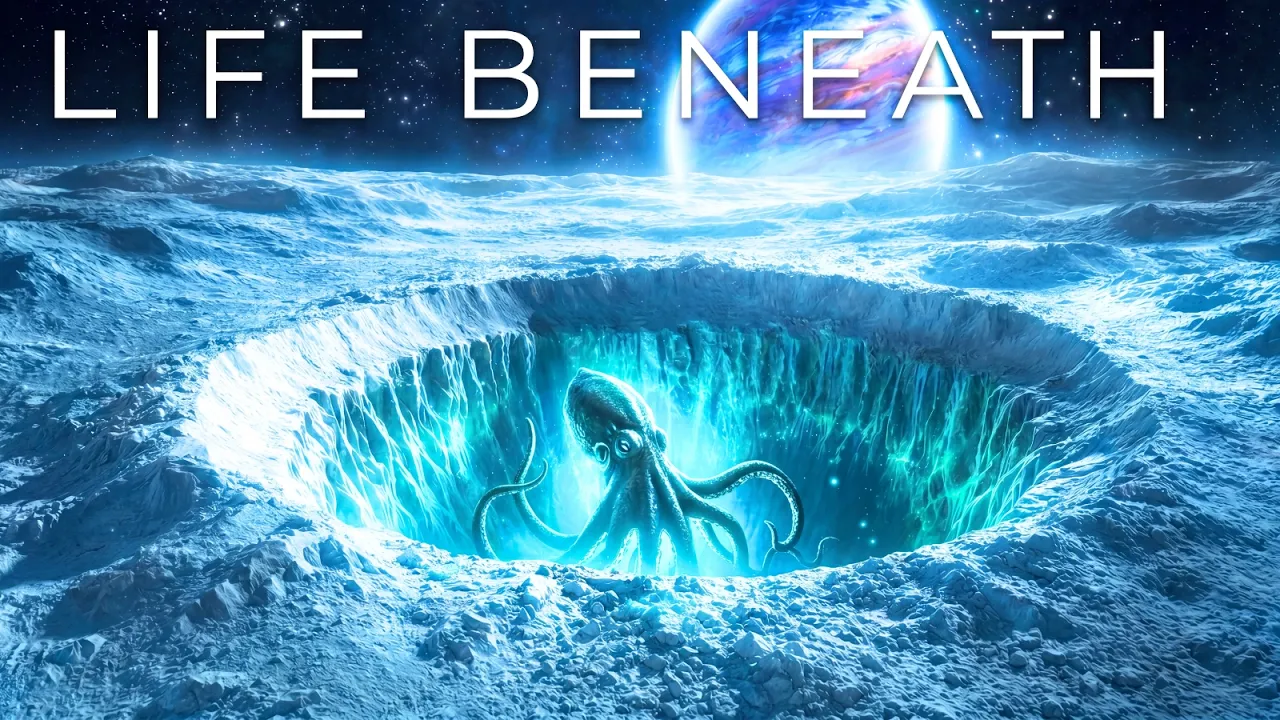





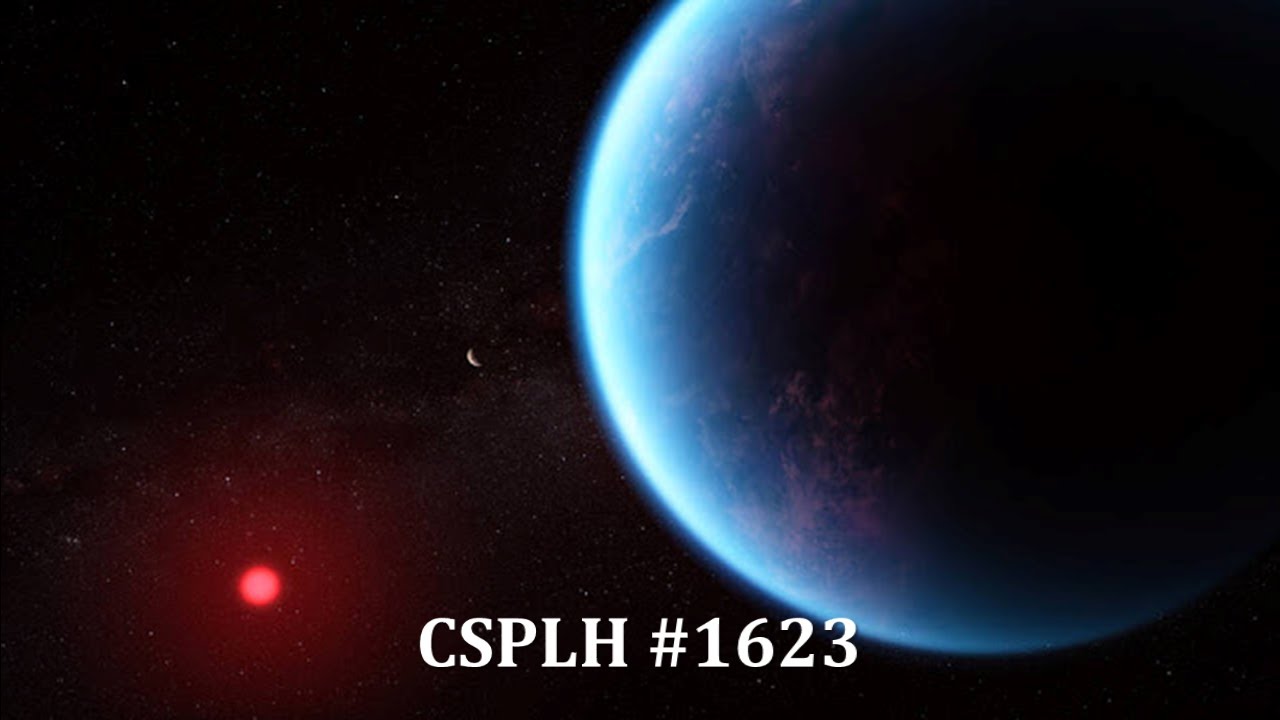









NASA's Cassini spacecraft detected hydrogen gas in the plumes of Saturn's moon Enceladus, indicating hydrothermal activity on its seafloor that could provide chemical energy for potential microbial life; simultaneously, Hubble observations revealed recurring water vapor plumes on Jupiter's moon Europa, suggesting active communication between its subsurface ocean and surface, demonstrating that ocean worlds beyond Earth possess the necessary ingredients for life including water, chemical elements, and energy sources.
NASA Oceans Beyond Earth: Enceladus & Europa Discovery
Added:The basic chemical and physical requirements for life (habitability), specifically the necessity of liquid water, essential bio-elements, and an energy source.
The mechanism of tidal heating, explaining how gravitational interactions with gas giants sustain liquid water oceans beneath the frozen surfaces of Europa and Enceladus.
The concept of chemosynthesis and hydrothermal vent ecosystems on Earth, which serve as the primary geological and biological analogs for these icy moons.
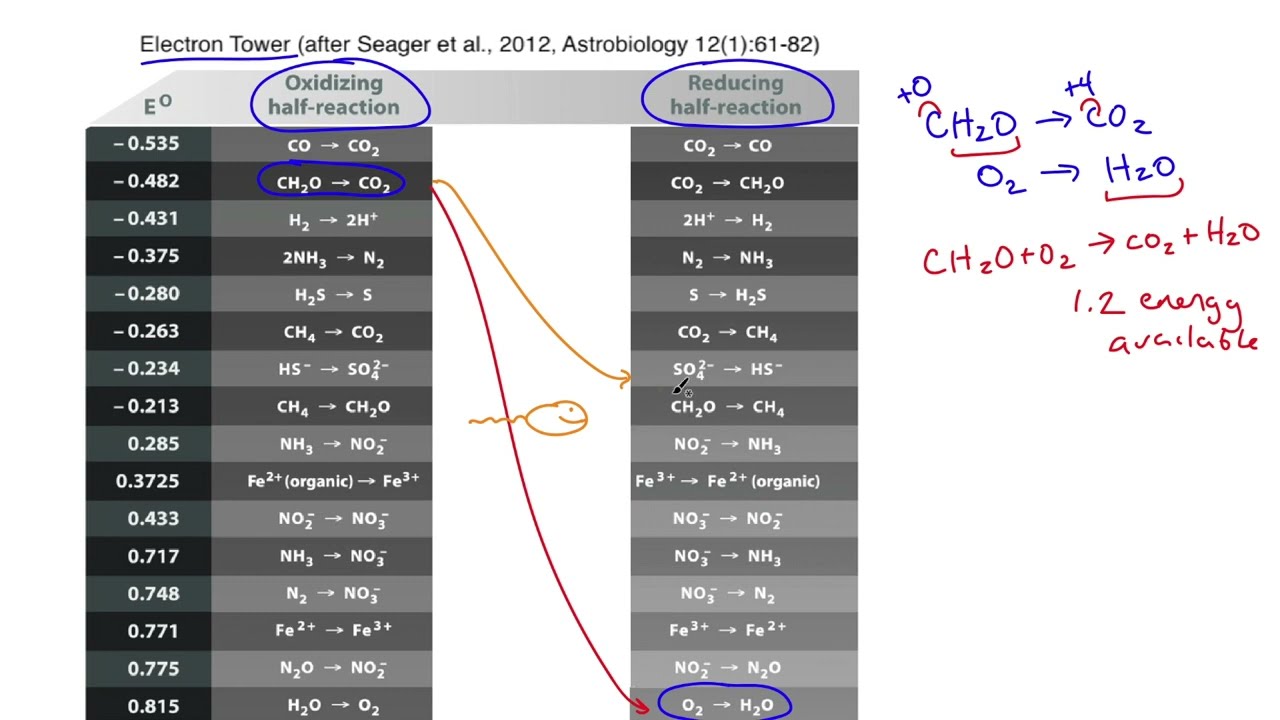
Basic chemical principles of methanogenesis, particularly how molecular hydrogen (H2) can react with carbon dioxide (CO2) to yield metabolic energy.
The scientific objectives and instrumentation of modern planetary missions targeting these worlds, such as NASA's Europa Clipper and ESA's JUICE (Jupiter Icy Moons Explorer).
Advanced methods in biosignature detection, focusing on how mass spectrometers analyze organic molecules and isotopic ratios in planetary plumes.
The framework of planetary protection, specifically the international protocols designed to prevent Earth microbes from contaminating potential extraterrestrial ecosystems.
How the discovery of ocean worlds shifts the traditional circumstellar 'Habitable Zone' paradigm toward a more inclusive definition of habitability in the universe.
127.2K views946likes48:22Original Release: 2017-04-13
[NO AUDIO]...we're here live in Washington, D.C.
Today, we have not one, but two scientific findings for you about oceans beyond earth.
We'll be going coast to coast and ocean to ocean to talk to experts, starting from people right here in Washington, D.C.. And then I'll also going all the way to the West Coast to talk to NASA's Jet Propulsion Laboratory in Pasadena, California.
And then we're going to go all the way to the East Coast to talk to NASA's Goddard Space Flight Center in Greenbelt, Maryland.
Today's panelists are Thomas Zurbuchen, associate administrator for the Science Mission Directorate.
Jim Green, director of Planetary Science.
Mary Voytek, lead scientist for NASA's Astrobiology Program.
The panelists at JPL in California are Linda Spilker, Cassini project scientist Hunter Waite Cassini I and Mars Team Lead with the Southwest Research Institute or Slippery in San Antonio, Texas.
Crystalline Cassini I and my team associate also from Swiss Re.
And joining us from Goddard in Maryland, we have William Sparks, astronomer and lead author of The Hubble Findings with the Space Telescope Science Institute in Baltimore.
The news today can be found at W WW dot nasa.gov and also the following web pages.
If you'd like to ask a question via social media, please use the hashtag Ask Nasser.
And with that, Thomas, can you kick us off?
Hey, thanks so much, Felicia.
It's another great day of science at NASA here and in the science directorate, we really focus on three objectives.
The first one is to understand and to improve life on Earth.
We also do fundamental research from here to the depths of the universe and understand processes we've never understood before.
And the third topic is one that this is all about, which is about a fundamental question that has has filled the thinking of so many in the past, and we can answer now, hopefully in the near future.
And that is, is there life elsewhere?
See, here on Earth, there's a number of things that help life.
There's water in a liquid form.
We have an atmosphere.
We have a magnetic field that protects us from the hazards of space.
There's many things we have going for ourselves.
So the question of why there is life out there relates to questions that we're making progress with all the time and questions that we have new questions that are coming forward.
We don't know yet whether there's life out there, but right now we're making a lot of progress, especially the outer solar system.
So this is exactly what today's stories are all about.
With this research, we're making a big step forward towards answering the question Is there life out there?
And with that, I'm really turning it over to the team.
Go team.
Thank you, Thomas.
So NASA's strategy for searching for life in the universe begins at home with an understanding of how life emerged and evolved here on Earth and what the limits to life are on this planet.
We then project that out onto other places in our solar system to see if we can find a habitable environments that could support life as we know it.
Just 40 years ago, NASA's sent two Viking landers to Mars to look for evidence of life on the Red Planet.
At the same time, oceanographers here on this planet on Earth, we're exploring the last frontier, the deep ocean.
And during that exploration, they found an astonishing or made an astonishing discovery that changed how we thought about Earth and how we thought about life here on Earth.
And that was an incredible oasis of life, supported thousands of meters beneath the surface of the ocean, far away from sunlight.
And it was supported by the energy produced by hydrothermal activity.
Now, this is actually this discovery was incredible for here on Earth.
It led to but it pointed out a new type of biology supported by chemistry that didn't require sunlight, which meant that we could extend our habitable Jupiter, as we imagine environments very much like our own hydrothermal vents here on Earth could exist out there.
So today's discoveries have to do with ocean worlds beyond our own planet.
And Jim is going to tell you about the missions that brought this to us.
You know, it really began in the late 1990 with the mission Galileo.
Galileo orbiting Jupiter was flying by the individual moons, the Galilean moons, and making observations of the atmosphere and many things in that solar system, that many solar system, what it discovered from its magnetometer, as it flew real close to Europa was a magnetic signature that's very familiar with our scientist, because we interpreted as a current within an ocean, underneath an ice shell.
In 2005, Cassini orbiting Saturn, flying by the moons of Saturn with close flybys of Enceladus.
It observed huge plumes of water emanating from cracks.
We now believe that Enceladus also has a huge ocean.
We call these bodies and many others that are like them ocean worlds.
They are protected by an ice shell, much like our atmosphere protects us.
Our life here on Earth and our ocean maintaining its liquid.
This is truly an exciting time for us to be able to probe those and really try to understand what's happening in these ocean worlds.
Well, we're going to talk about today are two really wonderful discoveries continuing back to Cassini, which has always been one of the major missions that we have, making huge number of discoveries.
And we're going to talk about Enceladus and what its found out.
We're also going to talk about Hubble observations back to Europa.
These two oceans worlds were going to link together because they're so similar in many, many ways that I hope you'll see as we go through our discoveries today.
So without further ado, let's go to JPL and talk to Linda Spilker.
Linda, what's Cassini been observing?
Well, thanks, Jim.
Well, Cassini has been in orbit around Saturn for almost 13 years.
And our unexpected discoveries about Enceladus have been some of the most surprising.
Today we're publishing a paper about our recent findings by Cassini on Enceladus.
We've detected hydrogen in the plume of Enceladus that hydrogen is coming from a hydrothermal vent on the seafloor of Enceladus, going out into space through the plume.
And so this is a very significant finding because the hydrogen could be a potential source of chemical energy for any microbes that might be in Enceladus Ocean.
So this is a very exciting finding for the Cassini team.
Now, Enceladus is too small to have retained the hydrogen when it formed.
And so the hydrogen we see today, the hydrogen gas is coming from inside Enceladus.
So let's take a quick look at some of Cassini's past findings.
With this first image, this is a view of the South Pole of Enceladus and the geysers or the jets are coming from those four cracks.
We nicknamed Tiger Stripes, those bluish fractures that you can see at the south pole of Enceladus.
In the next picture, you can see that these jets are shooting out into space, forming the giant plume around Enceladus underneath that icy crust.
As Jim said, there's a global ocean.
That global ocean sits on top of a rocky core.
And some of Cassini's findings pointed to hydrothermal vents, basically hot water coming out after it's been mixed with the rocky core.
And this final image shows a thermal map, the temperature of the South Pole.
We can see the warmest temperatures with the yellow and red are right along the tiger stripe fractures.
So what's new today?
The new finding is finding hydrogen coming from the plume of Enceladus and the fact that it could support potentially microbes with energy on the seafloor of Enceladus.
Now, this finding is the result of 12 years of Cassini investigations, and it really represents a capstone finding for the mission because we now know that Enceladus has almost all of the ingredients that you would need to support life as we know it on Earth.
Well, here I have a model of the Cassini spacecraft and Hunter, maybe you can show us where your instrument is that detected the hydrogen. Yes.
The enormous instrument, the ion neutral mass spectrometer is sitting on the fields and particle platform right here and it directly samples the gas that comes in as we fly through the plume as opposed to an ultraviolet spectrometer, an infrared spectrometer which would look for scattered, absorbed or emitted light coming from the molecules in a faraway land location.
So this sampling is extremely important for detecting trace species.
And we were able to, from previous flybys and previous measurements, find out that the plume is 98% water.
It has traces of ammonia, carbon dioxide and methane, as well as some organics. Now, the part that had been elusive to it or was the hydrogen.
And so let me back off here and pick up a similar model.
We have a simulation here of the Enceladus and the tiger stripes.
And so let me fly my spacecraft with the iron pointed in the direction of motion in the spacecraft, through the plume material, sampling the gas.
This is how it happened when we were making measurements.
It was about three kilometers above the surface.
And this happened in October of 2015.
It's interesting to put this together with the other measures, measurements we'd made of the disk of the composition to try to draw some infer inferences about what's going on in the interior of the ocean, because this material is telling us about composition of the ocean.
Well, Hunter, what was going through your head when you looked at the data and you saw hydrogen?
Well, of course, we were very excited because we've been planning this for quite a while and we've been thinking about what possible locations might be.
So to discuss that, let me talk to Chris and let him talk a little bit about that.
Well, into our team, considered numerous possibilities.
And after performing detailed analysis, we found that the best explanation is that the hydrogen is fixed by chemical reactions between warm water and rocks.
Here's a graphic showing what we think is going on.
We think that hydrothermal fluids are circulating below the ocean floor on Enceladus.
This exposes rocks to warm water, which drives geochemical transformations, an important process that produces huge amounts of hydrogen.
It's called suspension ization.
In this process, certain minerals that are rich in iron react with water to form new minerals and hydrogen is produced.
This is important because it shows that the geochemistry acts on Enceladus.
In addition to this, we think that these warm hydrothermal fluids contain dissolved minerals.
And when these minerals mix with the ocean water, which is called mineral precipitates form at the seafloor, these minerals precipitates on the earth form white solids.
So we call them white smokers.
Here's a video showing an example of one of these systems on Enceladus.
I mean, on the Earth, we don't know if the systems on Enceladus look like this, but this is an example from the earth.
These vents on the Earth support teeming communities of organisms anchored by microbes that feed on chemical energy rather than sunlight.
And important reaction at the base of the food chain is called methane to Genesis.
This is where microbes combine hydrogen with carbon dioxide to make methane, and they get a jolt of energy out of the process.
They use this energy to synthesize some of their complex biomolecules, such as sugar molecules.
What is intriguing about the data at Enceladus with the hydrogen detection is that we are now able to determine how much energy would be available from the methane to Genesis reaction at Enceladus.
We have made the first calorie count in an alien ocean.
This is a key step towards understanding the habitability of Enceladus.
Well, Chris, do you think there could be microbes or even shrimp in the ocean on Enceladus?
Well, that would be wonderful, Linda.
But we haven't discovered evidence of organisms on Enceladus, but I'm encouraged by the geochemical data which could allow for this possibility.
Well, thank you very much, Hunter.
Thank you, Chris.
Well, when Cassini was first built, we never thought we would see an active ocean world like Enceladus at Saturn.
So Cassini can look for habitability, but we don't have the instruments to look for life.
We've come as far as we can go.
So it remains for a future mission to take life at Enceladus.
And the Cassini team is so excited about these new findings.
And so, Mary, why don't you put this in a broader context for us.
Thank you, Linda.
Well, first of all, Chris, I recognize that footage from one of the NASA's researchers, Chris German, exploring the East Pacific rise, which was actually a hydrothermal system very close to the original observation 40 years ago at the Galapagos Rift.
So what we don't understand what the structures would be, and there may be no way for us to tell remotely until we actually get into these oceans.
Certainly this finding suggests that there is a significant amount of hydrothermal activity to produce such a strong signal of hydrogen.
And this hydrogen is a good source of chemical energy to support life.
Now, what else have we been thinking about that life need?
So I have a figure here to go over sort of the triad of what we need for life.
So can I have the figure, please?
So, of course, you know, we need water.
And here we are at ocean worlds.
So we have the water.
We need chemical elements that can make the building blocks that go into making cells and provide molecules for metabolism.
We need carbon, hydrogen, nitrogen, oxygen, phosphorus and sulfur, which are down in the lower left of the triangle.
And here we get to check off another box.
We have found energy to support life.
Hydrogen gas provides that energy.
Now all we need is to see if Enceladus had enough time or any of the other systems in the Saturnian or Jovian world had enough time to evolve life and have life make its imprint on its ocean.
So now we have another observation that kind of connects the worlds and is related to what we just heard about.
And Jim's going to tell you about this.
So indeed, the next discovery we want to talk about, which is also coming out this week in our science journals, is from the Hubble Space Telescope.
That famous telescope that just keeps on making wonderful observations has actually been observing Europa for many years.
So let's go to the Goddard Space Flight Center and talk to William Sparks.
Bill, give us a little backgroun Europa is one of the four major moons of Jupiter.
It's about the same size as our own moon, but it looks very different.
It's got a smooth, bright white surface covered in these dark cracks and red patches.
The reason for that and what makes Europa incredibly interesting is that it's thought to be in both by a global ocean under a thick crust of ice.
In fact, it's got twice as much ocean as planet Earth.
If we have a salty ocean in contact with a rocky core and energy from a variety of sources, as we just heard from Mary, we have many of the ingredients thought to be necessary for life.
In your observations from Hubble, what are you now seeing that's important to our understanding of habitability on Europa?
In 2014, we used the Hubble and accepted evidence of what are probably water vapor plumes emerging from the surface of Europa.
That's important because it could be giving us access to subsurface liquid water without having to drill through miles of ice.
In 2016, the new observations that we're just publishing, we saw a similar candidate, almost identical in appearance and at the identical location to one of the 2040 candidates.
It's very important in an intermittent phenomenon to establish repeatability.
It gives us a lot more faith in the observation.
The other thing it allows us to do, given the position of the Europa, given the position of the candidate on Europa, is to look with more fidelity at that position and see what else we can find there.
If we just look at the map of Europa, we don't see anything particularly remarkable.
The exact location of the plume candidate shown by the Green Ellipse.
But if we look back to the Galileo data, Galileo in the 1990 has published a thermal image and right at the peak of the thermal image, that's where the plume candidate is.
This hot spot on the surface of Europa on the Europa Nightside was identified at the time as a thermal anomaly, and it's sitting right on top of the position of our plume candidate for fill.
Wow. That's fantastic.
You know, we didn't know when Galileo was flying by Europa how the ocean could possibly communicate with the surface.
And now these plumes that Hubble may be observing is giving us that tantalizing glimpse, something exactly what we see on Enceladus may be going on.
Can you tell us a little more about how these plumes and that hotspot might relate to each other?
Yes, it's it's really intriguing.
It was quite astonishing, in fact, just to see the coincidence of the two.
But it wasn't an accident.
But we looked for the thermal imaging.
We did it by analogy within itself.
This is as we all know or as you know and the other people here.
Now, the plumes of and solidus are associate it with a heat source and it's very distinctive signature.
And so we looked to see if we could find thermal imaging of the surface of Europa.
And we did.
And the peak hottest point in the Europa, Nightside was right where our plume candidate is.
There's two like there's two possible explanations for a causal connection.
Obviously, coincidences could just occur.
But there are reasons to think there could be a causal relationship.
One possibility is if there's liquid water at a depth below the ice surface and the liquid water is obviously warmer than the surface, the heat can flow up through the ice and cause a thermal anomaly.
And cracks in the ice could give us the plumes.
Conversely, the plumes themselves could simply be venting water vapor high into space from the Europa's surface.
We see plumes rising to a hundred kilometers, 60 miles, and we would expect the water vapor to spread out over a much bigger area than that.
We're not at escape velocity, so it's got to come back there.
It's a fine mist of water vapor rains back down onto the surface.
Then it can change the thermal character of that surface and allow it to retain heat longer.
And so instead of heat coming up from below, it could be heat from above being slowly re radiated during the Europa night time.
And so it's a very intriguing pair of results.
We discovered a repeating plume candidate and when we looked at the Galileo data, we found the position of that repeating plume candidate that was right at the position of a thermal anomaly.
We look forward to the Europa Clipper mission, which Jim is going to tell us about and that will characterize this and other areas in great detail.
Thank you.
You know, the Cassini observations at Enceladus and the Hubble observations at Europa tells you you were using everything in our arsenal to probe these new ocean worlds that we've discovered.
This is truly a really exciting time.
Cassini, unfortunately, is near its end.
It will be plunged into the atmosphere of Saturn.
It's running out of fuel on the 15th of September.
And so these indeed are the last discoveries that we're talking about from Cassini as it relates to Enceladus.
The next big mission that we're working on is called the Europa Clipper.
And this particular mission is going to Enceladus.
It has nine major instruments on it.
And these discoveries are coming at just the perfect time.
It enables us to make the right set of observations that can tell us much more about these ocean worlds.
Europa in particular.
Can I have my video, please?
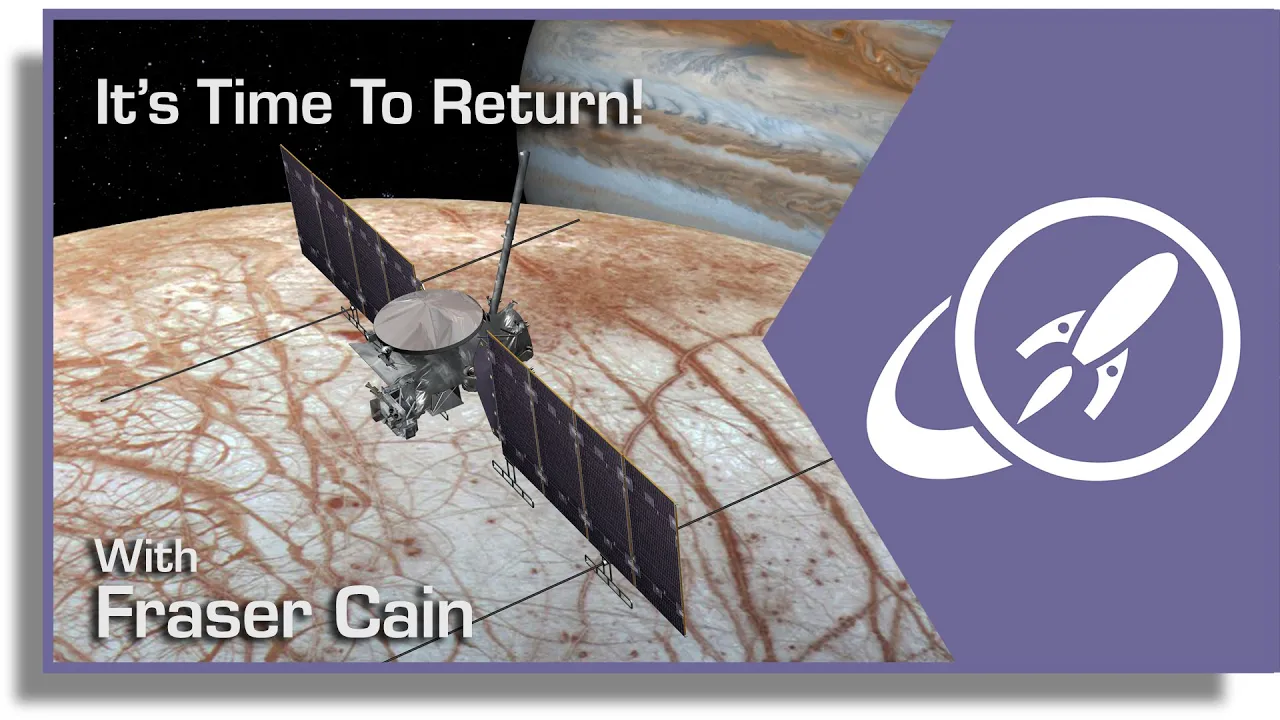
The Europa Clipper will orbit Jupiter, but it makes very close flybys of Europa.
It has instruments like the magnetometer once again that will make measurements of its ocean.
It also has an ice penetrating radar.
This radar will tell us how thick or thin these ice shelves are and how close then the ocean might be to cracks.
The next major instrument that it has is thermal Leonard Imaging.
Going back to what we learned from Enceladus.
How hot are these areas?
Are there cracks there like we see now with the plumes from the Hubble observations and the hot spots still being hot from Galileo observations?
More than 15 or so years ago.
In addition to that, we have a UV spectrometer.
This imager is going to be the plume finder.
So as we go back into orbit, out away from Jupiter, we're going to look back at Enceladus.
We're going to be looking for those plumes and then diving back in and hopefully if everything works right, flying through the plumes, much like Cassini has done at Enceladus.
But now we'll have the right set of observations to make on that spacecraft.
Europa Clipper will have an advanced mass spectrometer.
Actually, Hunter Waite is our principal scientist or principal investigator for that instrument.
So what a fantastic time coming up.
These observations are really informing us of major things happening in these ocean worlds right now.
What I really want you to walk away with is we're pushing the frontiers.
We're finding new environments.
We're looking in a way that we've never thought possible before for environments in our solar system, which may harbor life today.
With that, let me give it back to Felicia.
Thanks, Jim.
Now we're going to go into our Q&A session for those joining us online.
Please submit a question using the hashtag Ask Nessa.
For those in the room.
If you'd like to ask a question, please raise your hand and a mike will be passed to you.
And if you're pressed, please state your name and affiliation.
So let's start with questions from the room.
Okay.
Well, before we go to questions from the room, let's go ahead to the phone lines.
First, we have Camille Carlyle from the Sky and Telescope magazine.
Hi. Hear me? Yes.
Okay. Hi.
Thanks for taking my call.
Sure.
The question is, one, you mentioned that we essentially have a calorie count, no appetite.
And, you know, just how much energy is available.
Can you put some sort of detail on that?
And this is a logistics question.
Maybe I missed it.
Is there a website for all the press images that we can go to in and get them?
So, Felicia, can you tell us the press site and we'll go to JPL to get the calorie count.
So if you want more information about everything we've talked about today, definitely go to W WW dot nasa.gov.
Our press release will be on that page and that will link to additional materials, I believe, by going to the JPL Saturn page.
Also, there is materials, so please just go to the two pages that were just on the screen earlier and you should be able to get the materials you need.
And I guess for the second part of the question, let's go to JPL.
That's an excellent question.
The plume gas mixture from the hydrogen number we derived is equivalent to roughly 300 pizzas per hour in its energy content.
Oh, what does that next?
We have on the phone lines, we have Eric Berger from Ars Technica.
Hi. Thanks very much for having this call.
I was question about the plume evidence, Europa.
You said you found it in 2014 and 2016.
This evidence of water plumes.
How many times did you look and was it not there?
And I guess what I'm trying to get at, is there any sense of how intermittent this plume might be if it does indeed exist?
Of course, build now has been on the a number of major observations from Hubble and below can give you the answer. Yes, we looked 12 times and we saw it twice in that location.
We did see some evidence of plumes around the South Pole polar regions a couple of times too.
But it's much harder to locate the source when you're down at the polar region and there isn't any coverage by Galileo in that region either.
So we were we were lucky to find this one that did repeat was actually near the equator.
And so it was twice out of which was one in six.
And would you care to characterize how confident you are?
These are actually plumes.
That this statistics tell us that just from random photons, statistics, they're real.
They're what we call Four Sigma results.
Now, that's not quite as strong evidence as you'd really like.
You'd prefer it to be stronger than that, because at that level, there's always the possibility that there's some sort of instrumental effect that you don't know about.
We've covered our cells in terms of trying to understand what possible instrumental effects could have caused this.
And every single one that we can think of does not appear to be capable of doing it.
And so, for example, the two observations that I showed, although they look the same in the same position when we project them on the sky, when they were taken with the camera, the Hubble was in a completely different orientation for those two images.
And so they're in completely different parts of the camera with the telescope rolled around at a completely different angle.
And that eliminates a whole bunch of potential systematics that could cause it.
So from the Hubble perspective, well, we're I wouldn't say it's not completely unequivocal the way it is with an SOLIDUS We're still at the limits of what Hubble can do, but we're growing in confidence because of the repeat and because of, in my case, at least with I find the correlation with the Galileo thermal data quite, quite, quite intriguing and quite compelling.
You know, from my perspective, as as Bill mentioned, these plumes are up to 50 kilometers and perhaps as high as 100 kilometers.
Europa is the size of our own moon.
It's an enormous body.
And therefore, there must be enormous energy to be able to loft these potential water jets high enough for us to be able to observe it five astronomical units away.
It's really a remarkable set of observations, unfortunately.
You know, it's not as periodic as the Enceladus plumes, which are on all the time. And so going back to Europa, as Phil has and his team and looked at it periodically, is really giving us the confidence that they're there.
They may not be as periodic, but indeed now it looks like the water, the ocean is communicating with the surface.
Bill and his team is also talking about how they can make more observations between now and when we do indeed launch the Europa Clipper in the 2020s.
Let's go to the phones.
Okay.
Well, before we go to the phone, so let's go ahead to social media where Emily is helping field the questions.
So I'm sure we have a lot of good questions coming in.
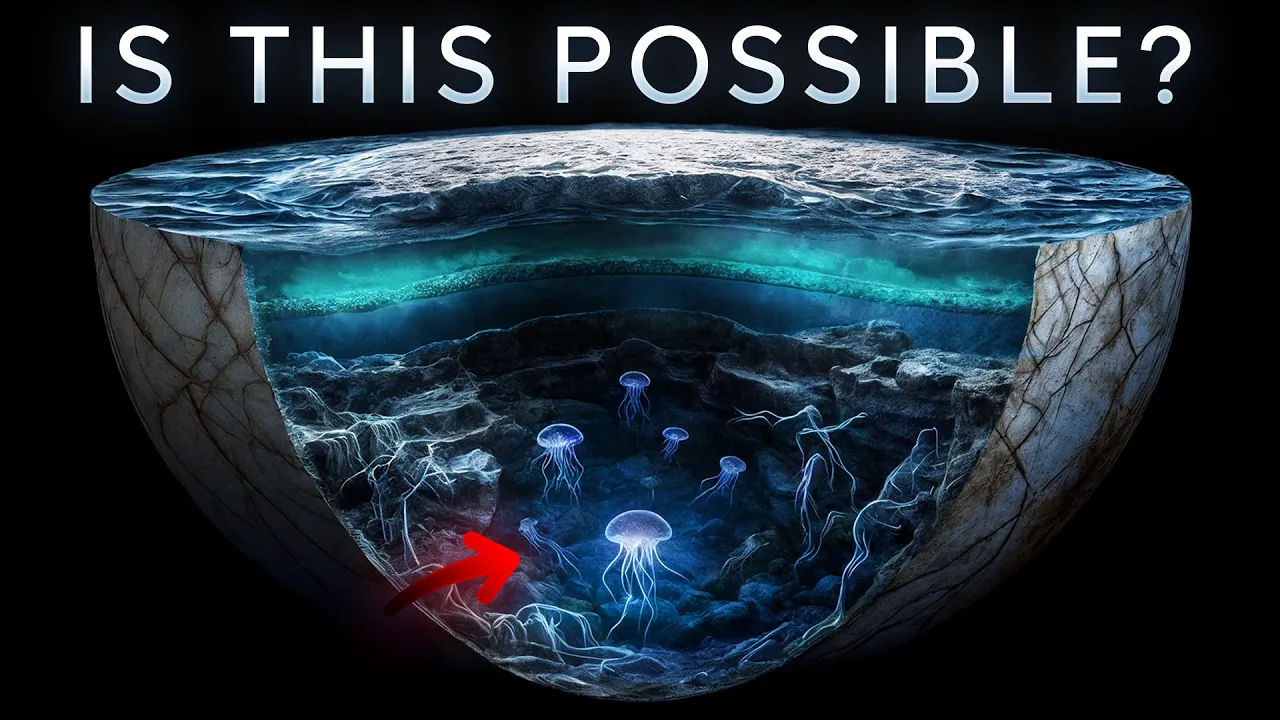
This first one is from Te Bertini on Twitter and she wants to know, are we talking about giant squid I think that most of us would be excited with any life and we're certainly when we're talking about the sources of energy, this has to be the base of a food web.
So we're going to start with bacteria.
And if we get lucky, maybe there's something that's larger.
You know, I think what's really also exciting about these discoveries is these ocean worlds with the with their protective outer shell.
If indeed there's life in there, it it has to be complete different than ours in the sense that it's generated in a way that's not related to our life.
We call that a second Genesis question.
The turn of the second question is from at decent maps I on Twitter.
And you want to know, could there be movement of ice surrounding Enceladus driven by ocean convection currents similar to plate tectonics here on Earth?
You know, that's a really great question.
And the reason why it was only within the last couple of years that we have started to look back at the Europa data that has been gathered by Galileo.
You know, Galileo only man made like ten or 11 flybys successfully by Europa.
And so we have very limited images, but there does appear to be a certain location for which some sort of subduction is going on in a crack or one element or plate of the of that icy shell is moving underneath another.
We don't know that that's true.
It may be in much greater locations all around that all around that body.
But you can understand the stresses when you think about the tidal forces.
Europa is in an elliptical orbit around Jupiter and it also has tidal forces being pushed around by the other Galilean moons.
And so when it's close to Jupiter gets squeezed and when it's further away, it relaxes every two and a half to three days as it makes its orbit, it is being squeezed and released and squeezed and release.
Our estimate today is that the surface moves as much as 30 meters.
You know, that's the height of an eight or nine storey building every every two or three days.
That heat is got to go somewhere.
And and the pushing and the stresses on the icy shell may indeed be like our plate tectonics.
Can I add one thing about it that actually is important for life?
So here on Earth, many people believe that we wouldn't have sustained life on Earth if it weren't for plate tectonics.
And so that kind of a process is very important on these icy moons as well, because we think about we've just heard about some sources of energy that are coming from the interaction of the water in the core.
We also think on Europa there are creations of oxidants at the surface as a result of the radiation at the surface and we need some sort of active shell of a ice tectonics, if you will, to actually bring those into contact.
Much like a battery where you have a positive and a negative pull to actually connect, to drive life.
And so this process is really important for life.
Okay. Well, thank you very much.
We're going to take one more question on social media and then we're going to go to the phone lines.
So, Emily. Sure.
This question is from Philip on Facebook.
And he wants to know, which moon do you think offers more possibility of life on Europa or Enceladus?
Well, that's a good that's a great question.
I wish I knew for sure. I haven't. I have.
All right, Mary.
Mary will give her give it a shot.
Well, so I think that this result of finding such a significant amount of hydrothermal activity and a lot of hydrogen is incredible.
It speaks to the habitability.
On the other hand, it also the fact that we can measure such high concentrations of hydrogen and carbon dioxide means that there might not be life there at all.
And if there is life, it's not very active.
Because when you have those stacks of pizza, much like in a graduate school department, it disappears.
So we have this build up of food that's not being used.
And part of that could be because we think Enceladus might be fairly young.
On the other hand, if the same process, which there's no reason to think it wouldn't be happening on Europa, we know that Europa and the moons around Jupiter were formed 4 billion years ago.
So that's a lot more time for life to have emerged and start taking advantage of these energy sources.
So my money for the moment is still on Europa but this that but it could be any on any of these moons and certainly would be great if it was on in all of them.
Well, thank you so much.
Next, we have Mike Wall from Space.com from the phone lines.
Mike, are you there?
Yes, I'm here.
Thank you, guys.
This is really exciting stuff.
And like, I guess another question for actually, Bill, about the plumes.
So just yeah, just so I'm sort of clear on this.
This is not a confirmation that the plumes exist.
I mean, I know you guys I keep seeing more and more signs that you're but you're stopping short of saying that.
But they definitely exist.
And and just understand, are these in the same location as the original 2012 detection or like do the plumes?
I mean, have they been spotted in multiple locations all around Europa?
Thank you.
Let's have Bill Marks, of course.
Answer that.
Okay.
It's not completely unequivocal, but in my mind, the pendulum has swung from caution to optimism.
The evidence is growing.
The fact that we saw repeated the same location.
That's one of the gold standards for dealing with an intermittent phenomenon.
It's not proof because we're right at the limit of what the Hubble can do.
It's not completely unequivocal the way it is on an solidus, on on solidus.
You've got movies of the of the plumes and you've got wonderful maps and temperature maps and mass spectrometer measurements of the composition.
And we've got a little smudge next to an image from the Hubble.
And, you know, it's a fantastic image and it's but it's right at the limit of what the Hubble can do.
The fact that we've got to repeat it tells you that in a formal statistical sense, it can't happen by chance.
So we have to look for systematic effects that might cause it.
We don't know of any, which is why most of us, some of us are leaning towards thinking that this is this this means they're real.
And then the secondary with the thermal imaging.
Since I went to look for the thermal imaging, that gives you some additional statistical evidence that, in fact, they're real.
It doesn't prove it because, you know, unfortunate coincidences kind of happen in the world in terms of the location.
The original detection by the Wrath team was around the South Polar region.
These are the dissociation products of water in high altitude down around the South Pole and in our transit observations where we were looking for absorbing material around Europa.
We did see a couple of of features in that in that area, but it's hot, it localized things around the poles.
This particular one was well localized.
It wasn't quite as high as the previous one and that's the one that repeated.
And so that's quite, quite interesting.
I believe a couple.
Thank you.
There's a couple other pieces of evidence that I think is also really tantalizing.
You know, when we look in Enceladus, particularly around those tiger stripes, there's absolutely no craters.
They're completely filled in.
As you go to the mid-latitudes and up to the north pole of Enceladus, you you do indeed see a number of craters.
If we look now at Europa, we can hardly see any craters.
This is always been a big puzzle in terms of how this surface is morphing, eliminating the craters that must have been there at one time and are continually bombarding the body.
But over the length of time that we've observed it with the Galileo mission, there was several years only a handful of craters were found.
The plumes, the plume idea that it is resurfacing and the subduction must be connected in a way that is eliminating those craters.
So this fits perfectly with these observations.
I think it's a zambo.
So next, we have two questions on the phone line.
Then we're going to go ahead and go to social media.
So the first call in person we have is Keith Cowing from NASA. Watch. Keith.
Two part question for Thomas Broken.
First of all, several years ago, NASA's was directed to create an Ocean Worlds program.
Now I see that phrase everywhere.
But have you formally established a program office?
Who's in charge of it? What's the budget?
And second of all, a question why is it that some news media were given advance access to NASA personnel on the this taxpayer funded research and others of us were not?
So let me certainly take on the first one as head of planetary science.
And we did indeed receive congressional direction about establishing an Ocean Worlds program.
We have indeed communicated back to Congress in our budgetary aspects that we are doing that in with respect to the next set of missions.
And that next set is indeed the Europa Clipper mission.
As far as the press interaction, that's that's done in another way.
So we've also we're directed to establish a program for investigating Ocean Worlds.
And we went to our Outer Planets assessment group and asked them to help us out by developing a road map for exploring these worlds.
And that is in Praia in process.
They're about to deliver that to us any day now or any month now week.
And so we're moving forward on setting the science, as we always do, setting the science priorities, and then filling in the technologies that we're going to need for it.
And and discussing the types of missions those would look like to the various ocean worlds that we have to explore.
Next, we have Tracy Watson from USA Today.
Tracy, Hi.
Thank you for Dr. Green.
Can you talk about now how this mission affects your desire to send see how these results affect your desire to send a mission to and solve this?
Does this make it kind of rise to the top of what should be next things?
Well, indeed, we announced in January, a program called New Frontiers.
And that is a very targeted list of of of objects on that list turns out to be in solidus.
This is an element indeed of recognition that this is an active world, that this is new discoveries that have been made by Cassini since the time our planetary decadal actually identified what those targets are.
So that's in competition, right now.
And and we'll be receiving the proposals soon and we'll be evaluating them and announcing the step one.
Select these by the end of the calendar year is what we hope.
Thanks, Jim.
Next, we're going to go to social media.
So, Emily, what are the netizens talking about today?
Yeah, there's a lot of interest on social media.
This question is from Lorenzo on Facebook.
So the Juno spacecraft just recently went into orbit around Jupiter.
Is there any possibility for that spacecraft to help with observations of the plumes around Europa?
Well, indeed.
Juno was launched in 2011.
May have had a hint of the plumes, of course, from Cassini, but absolutely nothing from Europa by that time.
And so it's concentrating on really orbiting Jupiter and understanding the structure of that large planet that, you know, the largest planet in our solar system.
It also is so important to understand that because the the remnants left over after Jupiter and sun accreted was the rest of the solar system.
So we're really, really quite interested in understanding the origin and evolution of our solar system and understanding how Jupiter was put together as a major segment of that.
So unfortunately, no Europa observations.
All right.
This next one is from Carrie on Facebook.
They want to know what chemicals are causing the coloration around the cracks on Europa.
So with that, perhaps Goddard could talk a little bit about that build.
I think the short answer is we don't know.
There are suspicions that they're salts from the ocean, but it's not known what sort of salts and that potentially there's a contribution from the Jovian magnetosphere of four ions being implanted from IO the next moon.
And that's definitely got plumes.
It's got sulfur volcanoes spraying sulfur into the whole environment.
But the detailed composition of the cracks and the dark areas, it's a it's an ongoing study of research.
People are trying to find out.
It's obviously a very interesting question, and it will be very nice to know the answer to that.
All right.
We'll take one more question from social media.
And this one's from Stephanie on Twitter.
She wants to know what instruments would be needed to detect life on Enceladus and how can we help?
Okay.
With that, let's go to JPL.
All right.
Well.
The instrument excuse me, the instrumentation that would be could be telemetry recorders or instruments to the ones that we were flying on Cassini there.
And they're certainly similar to the instruments that are presently flying on Europa.
And that spectrometer and think dust analyzer are both important in determining the habitability as well as looking for perhaps amino acids, fatty acids, looking at isotopic ratios and trying to determine signs of life as well as telling us more about the habitability.
Learning a little bit about the structure of the molecules themselves would also be beneficial, and that can be done through tandem mass spectrometry.
There are certainly other techniques that are being studied for landers, but for fly through missions which we think would be good enough.
In the case of Enceladus, this is the this is a next step.
That would be a good, good approach.
Okay. Thank you.
Now, so before we close, Jim, can you give us some closing thoughts?
Anything you'd like to talk about?
Indeed.
This is really an exciting time.
Our science is proceeding so rapidly we can hardly keep up with these discoveries.
You know, we really are looking forward more of the Hubble observations.
We may find that Europa is far more active in terms of not only one location but a number of locations.
And that bodes well with, as I mentioned earlier, filling in these craters.
These ocean worlds have just been discovered.
There are in our solar system, we need to probe them because they are one of the best locations.
We believe that may harbor life today.
Thank you.
And that's all the time that we have left.
Please keep those questions coming online using the hashtag Ask Nasser before.
Be sure to follow us on all our social media.
And for more information, please visit.
W w w dot nasa.gov as well as other websites.
Up Next

83:33
Titan: Saturn's Moon with Lakes, Rivers, and Possibly Life
@SVAstronomyLectures
142.7K views•2013-02-26

12:54
Triumph of Orthodoxy Icon: Byzantine Art & History Explained
@BenCallan
2.1K views•2024-08-06

9:49
FastAPI vs Flask vs Django: Choosing the Right Python Web Framework
@TechWithTim
302.5K views•2024-05-26

1:42
Game of Thrones Opening Credits: A Cinematic Analysis
@gameofthrones
46.3M views•2011-04-18
Related Study Plans & Knowledge Roadmaps
Structured learning paths in General & Interdisciplinary Studies
general-studies
Elevator Engineering: History, Physics & Cities
01From Hoists to Safety Brakes: The Dawn of Vertical Lift
02Hydraulic vs. Traction: The Engineering Physics of Elevators
03Modern Speed, Safety, and Algorithms
+ 2 more learning modules
12h5 modules
Explore Roadmap
general-studies
Rubber: Material Science, History & Geopolitics
01Origins of Natural Rubber & Mesoamerican History
02The Chemistry of Natural Rubber & Vulcanization
03The Geopolitics of the Rubber Boom & Colonization
+ 2 more learning modules
12h5 modules
Explore Roadmap
general-studies
Containerization: Evolution, Logistics & Trade
01Ancient Trade & Bulk Cargo: Amphorae to Barrels
02The Industrial Revolution & Cardboard Packaging
03The Containerization Revolution: Malcom McLean
+ 2 more learning modules
12h5 modules
Explore Roadmap
general-studies
Textile Tech: Evolution, Labor & Global Impact
01Pre-Industrial Textiles: Handloom & Cottage Industry
02Mechanization: The Spinning Jenny to the Power Loom
03The Factory System & Global Labor Transformation
+ 2 more learning modules
10h5 modules
Explore Roadmap