
























John Berryman (1914-1972) was a confessional poet who taught literature at the University of Minnesota and published '77 Dream Songs' in 1964, which helped establish confessional poetry as a distinct literary movement alongside Robert Lowell's 'Life Studies' and Sylvia Plath's 'Ariel'; unlike other confessional poets who taught creative writing, Berryman remained a traditional scholar of English literature, and his work features an imaginary persona named Henry who sometimes appears in blackface, raising ethical questions about Berryman's appropriation of African-American vernacular and the broader cultural construction of mental illness as part of artistic identity.
John Berryman's Dream Songs: Confessional Poetry Lecture
Added:An understanding of the mid-20th-century Confessional Poetry movement and its key figures, such as Robert Lowell and Sylvia Plath.
The literary concept of 'persona' and 'the speaker' in poetry, specifically the distinction between the biographical author and the fictionalized self.
Familiarity with post-WWII American social and cultural history, which influenced the psychological themes of anxiety, grief, and identity in post-war literature.
A basic grasp of traditional poetic forms, syntax, and meter, which is necessary to recognize how Berryman subverts these conventions.
A comparative study of John Berryman's 'Henry' with other famous literary alter-egos and personas in modern poetry.
An exploration of psychoanalytic literary criticism, examining how concepts of the ego, trauma, and grief manifest in 'The Dream Songs'.
A technical analysis of the unique 18-line stanza form, syntax, and linguistic hybridity (such as the use of blackface minstrel dialect and baby talk) used by Berryman.
An investigation into the evolution of confessional and autobiographical writing in contemporary poetry and memoir.
5.4K views54likes17:53Original Release: 2021-06-17
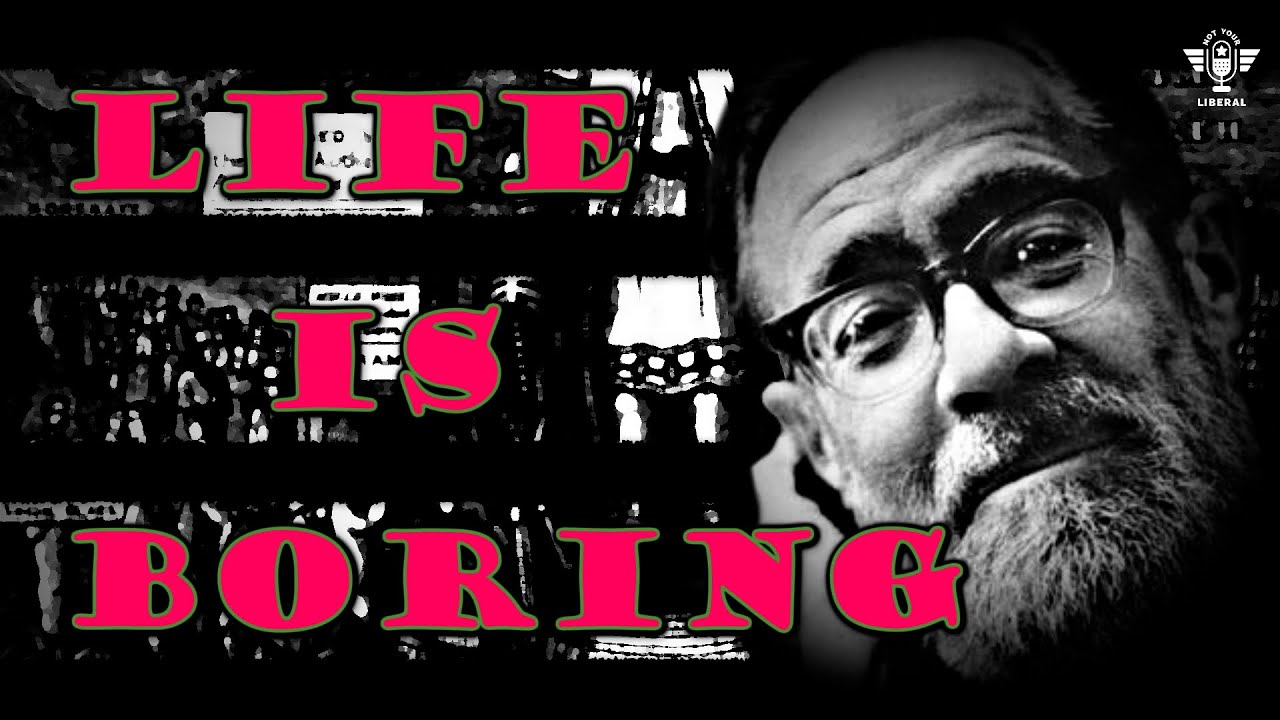
all right everybody welcome back to contemporary american literature this will be our final lecture on confessional poetry for this week we want to look at the poet john berryman who is another influential figure in this movement and i also wanted to discuss barriman because he has a local connection i think he's our first writer with a significant minnesota connection so that might be interesting for for some of you who are from around here and we'll meet um at least one other writer with a minnesota connection maybe more in the course of the semester so barriman was born in 1914 in oklahoma but in an event that would overshadow much of his life his father who was a banker shot himself when berryman was 11 and his mother then remarried and he moved to new york city and attended columbia so he grew up in a number of places from oklahoma to new york city an important thing to understand about barreman is that he was a scholar as well as a poet and he taught literature rather than creative writing so he's an interesting counter example to the trend we've been seeing in figures like flannery o'connor and philip roth and robert lowell all of whom and sylvia plath all of whom either took creative writing or taught creative writing or both this idea of creative writing as a field of higher education where you can become a professor of it if you're you know a teacher you can get a degree in it if you're a student behrman kind of rejected that and he stayed on the traditional side of being a scholar of english literature and a literary critic who wrote on topics um he read a book about the uh american late 19th century poet stephen crane but he also write on all sorts of subjects like um like shakespeare and other renaissance writers so he was a scholar and a teacher at the university of minnesota and that's i think where he taught the longest toward the end of his life he lived in minneapolis and taught at the university of minnesota but while he was teaching literature and undertaking literary scholarship here at the university of minnesota english department he was also writing poems and he publishes a book in 1964 called 77 dream songs which along with life studies and for the union dead the two big books by robert lowell of the late 50s and early 60s and with plath's posthumous volume ariel of 1965 these are the books that solidify confessional poetry as its own kind of distinct movement and barriman had a lot in common with lowell and plath he struggled throughout his life with alcoholism and with mental illness and he um he also had a lot of marital trouble and relationship trouble as lowell and plath did and he died by jumping from the washington avenue bridge in 1972 so um like them and i think as barriman as with plath this is kind of a an unpleasant feature of artists reputations but i think going back to figures like vincent van gogh in the 19th century there's this idea of the the suicide of the artist as being part of their image and i think beriman and plath both dealt with this and it it seems like maybe a a sick uh and unethical way of treating an artist but uh but the the suicide becomes part of the artist's romantic image which i think we can all probably agree now is sort of a damaging myth that we would want to dispel uh though it continues i would argue even on into the present and i but i think that i only mention it because i think that was part of the persona that these writers took on uh that their posthumous reputations uh sort of circled around was this this idea of the of romanticized mental illness which we've touched on again and again that i think that the confessional poets both were struggling against they wanted to dispel it but at the same time aspects of their work kind of confirm it in that in that struggle i think that we saw in both lowell and plath and i think it can probably be seen in barriman as well that to to cure them is also to to to cure the source of creativity this anxiety um and that's coming from you know i already mentioned that mental health is something that is sort of culturally constructed at any given time and this idea of mental illness as part of creativity as part of what it is to be an artist as a poet which goes back to the 19th century in romanticism i think they were still struggling with the legacy of that idea which i think arguably persists into our own time and so barriman like them writes confessional poetry and like them the he is compared to uh earlier romantic writers earlier american writers in his biography in the norton anthology of american literature they say barreman's attraction to a poetry that accommodated the nightmare antics of the dream world became apparent in his own long work the dream songs it was modeled he claimed on the greatest american poem whitman's song of myself in which the speaker assumes a fluid ever changing persona and so in this sequence of poems called the dream songs barriman notes that these are poems that um that as the title indicates they're not sort of fully about life they're about his kind of dream of his life and i want to quote what the norton editors give us in a footnote which is his own note at the head of one of the volumes of dream songs he says the poem then whatever its wide cast of characters is essentially about an imaginary character not the poet not me named henry a white american and early middle age sometimes in blackface we'll have to get back to that don't worry we'll talk about that troubling prospect who has suffered an irreversible loss and talks about himself sometimes in the first person sometimes in the third sometimes even in the second he has a friend never named who addresses him as mr bones in variance thereof request god in pache which means rest in peace so barriman is writing about this imaginary persona named henry who also speaks sometimes in the third and sometimes in the first person and who adopts other voices including troublingly and we'll talk about this on the next slide uh a an african-american vernacular and so it's not directly autobiographical writing and so in that sense confessional poetry is kind of a a wrong term for it and yet critics and biographers and scholars have generally come to identify the dream songs as poems about barriman's life and struggles and so i want to look at probably the most famous of the dream songs because it's a very long sequence of like 300 poems but they're all individual poems and some of them are famous on their own i think more people read individual ones than read the whole sequence this might be the most famous so i just want to look at one closely and make a few remarks and then i want to turn to discussing just as we did with plath with plath's identification with the jewish victims of the nazis i want to on a separate slide look at the ethical implications of barriman's identification with african-americans so this number 14 is probably the most famous of the dream songs life friends is boring we must not say so after all the sky flashes the great sea yearns we ourselves flash and yearn and moreover my mother told me as a boy repeatingly ever to confess your board means you have no inner resources i conclude now i have no inner resources because i am heavy bored people bore me literature bores me especially great literature henry bores me with his plights and gripes as bad as achilles who loves people and valiant art which bores me and the tranquil hills and gin look like a drag and somehow a dog has taken itself and its tail considerably away into mountains or sea or sky leaving behind me wag so what's interesting about this poem is that it's not confessional in the way that lol and plath was it's not specifically about a marital crisis a crisis in the life of a person as a child or a parent it's not obviously about mental illness it's not obviously about alcoholism but it's confessional i think in an even more fundamental sense which what it's confessing is the thing we're not supposed to say which is the depressive poet's boredom with life and with the things that are supposed to make life interesting like nature the sky flashes the great sea yearns um with literature great literature such as the epic poem of the iliad which stars the mythological hero achilles whom barriman doesn't even give a capital letter to his name um and he's bored with his very self he's you know henry is bored with henry or barron is bored with henry or beriman is born with barreman it's not clear where henry ends and barriman begins but in any case the speaker is bored with life and the self and in that case the poem is a confession of what depression feels like from the inside even though you're not supposed to talk about that even though we must not say so and the speaker's mother told him over and over again as a boy that you're not supposed to say that and if you say that you have no inner resources if you're bored it's because you're not a strong enough person so any kind of dissent any kind of emotional descent from how you're supposed to feel becomes a moral judgment against yourself that's enforced by your parents just as plath's father dominated her this this speaker's mother dominates him and they stand for this oppressive dominant culture that tells you what you must say and tells you what you must not confess and this idea of literature great literature being boring as i think important to confessional poetry to beat poetry into the coming counter culture that the canon c-a-n-o-n which are the sort of list of great works of literature that you're supposed to admire and respect that's beginning to fall out of the respect even of writers even of writers like barum and who are scholars of that canon that somehow its very greatness is oppressive and we're gonna see it being critiqued on the grounds that it's oppressive in very literal ways that it's a a kind of white male dominated institution that oppresses people who aren't white or male but even barron who is white and male is sort of oppressed by the fact that it kind of sets some standard of feeling and behavior and deportment to which he cannot live up and so he confesses his boredom with this he confesses in the face of a culture that would shame him for it his depression the end of the poem is interesting too though because he says it's a strange image that i don't quite understand a dog has taken itself in its tail considerably away into the mountains or sea or sky leaving behind me and so whatever it is that makes life interesting that attaches one to life he compares this is a metaphor to a dog who's gone away and all that's left is him but the interesting thing is the dog took its tail away and all that's left is him and he's the wag of the tail and i think this poem is the kind of wag of a tale that's gone there's no more passion there's no more subject of great literature but poetry still kind of wags along writing itself out of this zero point of depression and then there's a slight play on words because wag is both what a dog does with its tail but wag is also an older word for a kind of joking comedic person a wag a scallywag someone who was a jokester a punster a comic figure a class clown and so barroman all that's left is him cracking these dark jokes and this dark humor all that's left is me as a wag and this is all that literature is this is what literature has sort of bottomed out to is this empty joking wagging of a persona of which there is very little left so that's i think the explanation i think i don't know i'm not the world's great john barreman expert for the end of the poem i also want to discuss because the norton included an example of one of barroman's uh what are called blackface poems and they're called that not simply because he's adopting a african-american vernacular english as the language of the poem but because he's writing in the voice not of americans themselves but of the racist minstrel shows of the late 19th and early 20th centuries in which usually a white actor would wear blackface and perform as an african-american character and i think that this is um an important distinction and it's the grounds on which some later writers including some african-american poets who are admirers of berriman have somewhat defended this decision to write this way though it's it's pretty clear that no one will write this no a white writer wouldn't write this way today but in the context it's been sort of contextualized and i just want to give you an example of that so there's uh an essay on barriman by august klein's holler from an article in the london review of books a literary journal in 2015 in which klein's hauler says because of blackface henry who slips now and then into old-fashioned minstrels show black speech it's unlikely that the dream songs would find a publisher today much less stand as one of the last century's most significant and admired poetic sequences however kevin young an african-american poet who edited the selected poems of beriman for the library of america had this to say on the subject so this is kevin young an african-american poet the fearlessness with which barriman breaks through the polite diction of academic poetry into a liberating variety of idioms is a major part of his legacy if henry is a monoglot of english american version then henry's blackface mr bones persona a mask upon a mask allows him to speak in dialect to reflect on his condition so for young berryman writing in a time in which um there a lot of african-american poets still weren't finding publication and the ones that were tended to write in formal academic english verse barriman however problematically is kind of opening a door for a new kind of idiomatic voice in american english or for a new kind of variety of idioms and in adopting the voice of the minstrel show beriman isn't sort of claiming to speak for african americans he's claiming to speak as a white man whose concept of african americans has been constructed by prior racist discourses and in that sense there's a certain painful troubling fraught but a certain honesty to the gesture is how one might contextualize it in ways that would lead us not simply to throw it in the trash though we're free to do that as well if we judge that we don't accept this gesture so this like plaths appropriation of jewish identity and as in that case i i sort of turned to uh jewish critics to see what they thought in this case i turned to an african-american critic to see what he thinks um but you know no one critic can speak for everybody and so we each have to make up our own minds as to the as to the ethics of this but uh so this is where i will leave us with john berryman in the dream songs and this will be the last lecture on confessional poetry i will turn next to beat literature thanks very much and have a great day
Up Next

29:34
Anne Sexton: Poet in America (1966 Documentary)
@eclairbrut
3.5K views•2023-03-03

9:07
The Duchess of Malfi by John Webster | Summary Analysis
@asm-literatureandpoetry4604
4.5K views•2023-06-01

6:08
Point of View in Fiction: First Person vs. Third Person
@magicalthriftyteacher
153.8K views•2014-03-31

15:25
1984: Orwell's Dystopian World and the Mechanisms of Totalitarianism
@AlternateHistoryHub
7M views•2017-03-04
Related Study Plans & Knowledge Roadmaps
Structured learning paths in Literature
literature
Revenge Tragedy: Justice, Madness & State
01Foundations of Early Modern English Theatre
02Anatomy of Revenge: Structural Conventions
03Psychological Complexity: Madness and Melancholy
+ 2 more learning modules
15h5 modules
Explore Roadmap
literature
Victorian Sensation: Detective Novels & Anxiety
01Foundations of Victorian Society and Literature
02The Rise of Sensation Fiction
03The Birth of Detective Fiction
+ 2 more learning modules
15h5 modules
Explore Roadmap
literature
Romantic Sublime: Nature, Emotion & Industry
01Historical Backdrop: Enlightenment to Romanticism
02Philosophical Foundations of the Sublime
03The Sublime Landscape in Romantic Poetry
+ 2 more learning modules
12h5 modules
Explore Roadmap
literature
Confessional Poetry: History, Poets & Themes
01Postwar Conformity and the Rise of the Personal
02Robert Lowell: The Catalyst of 'Life Studies'
03Sylvia Plath: Myth, Trauma, and the Domestic Cage
+ 3 more learning modules
10h6 modules
Explore Roadmap