







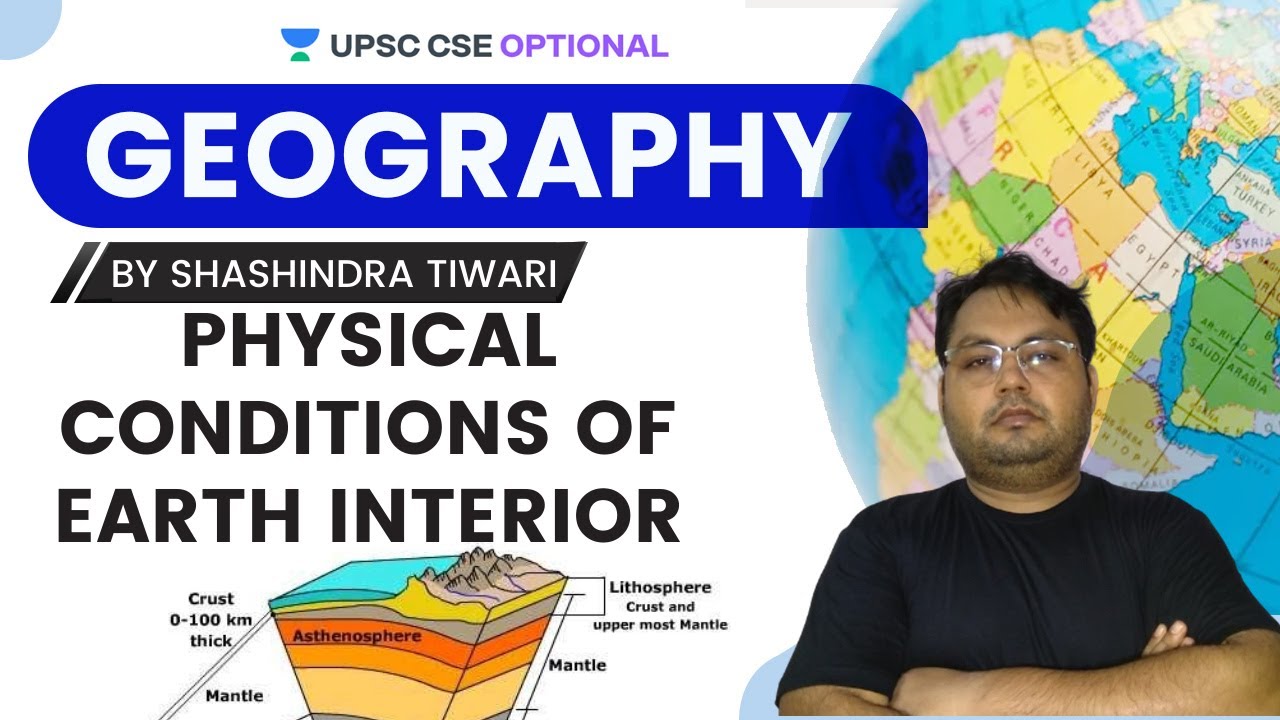






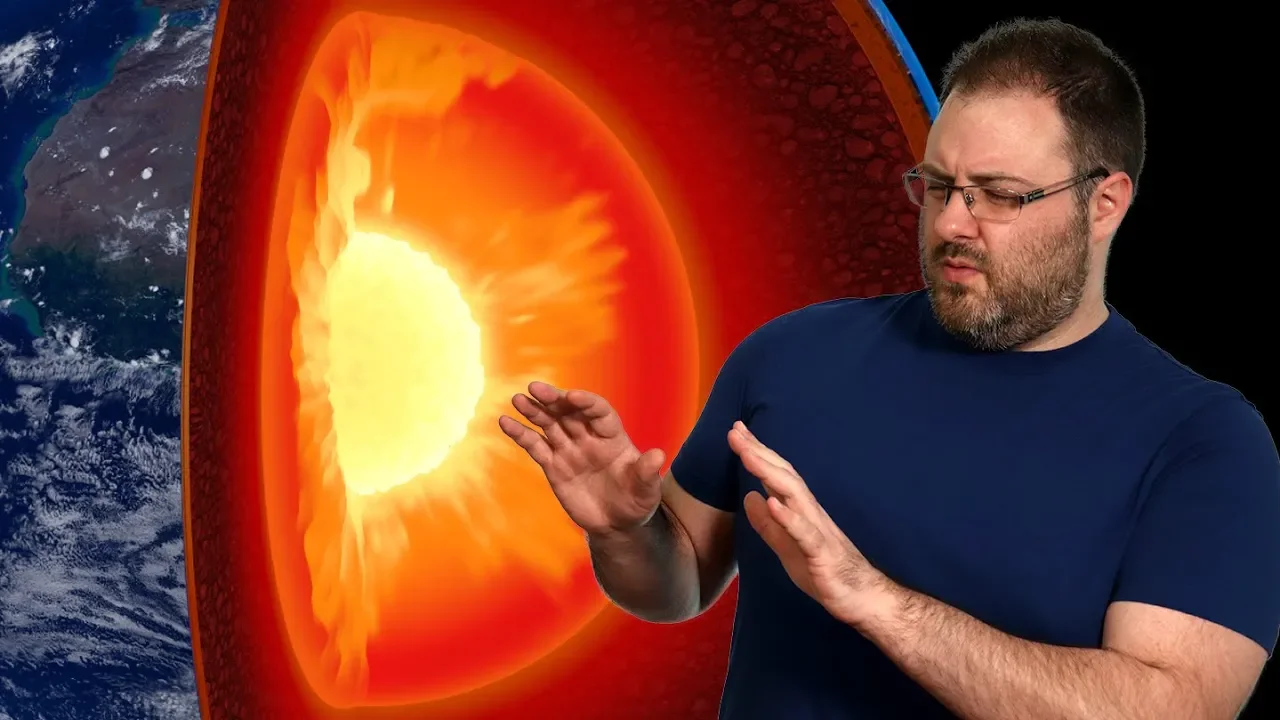

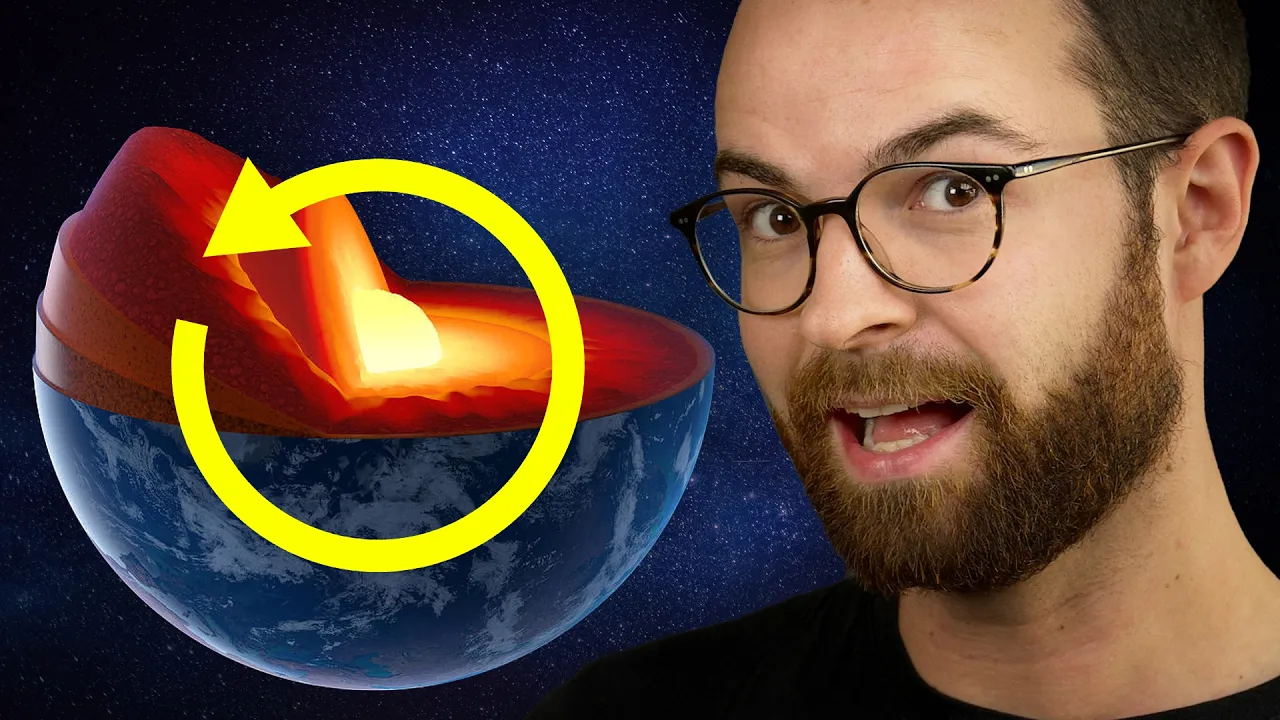







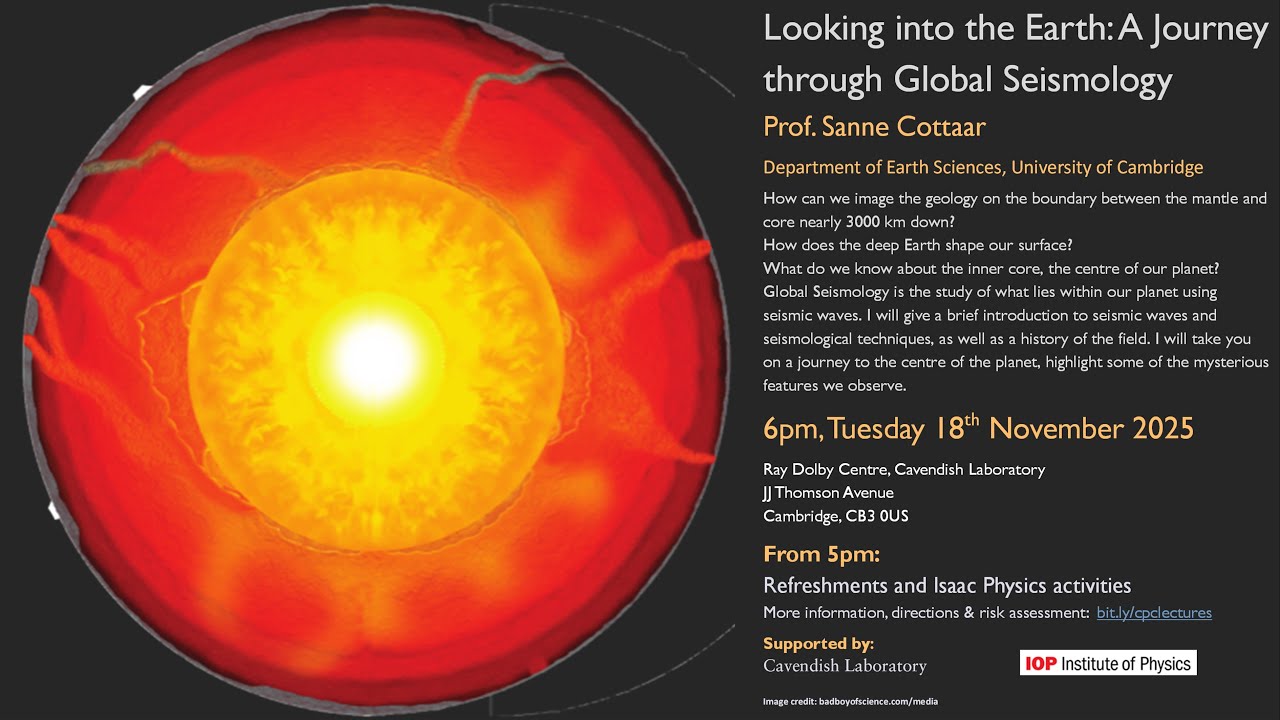

Scientists study Earth's interior through direct methods like mining, deep drilling (e.g., the 12 km Kola borehole reaching 180°C), and volcanic eruptions, and indirect methods including seismic waves (P-waves travel through all mediums while S-waves only through solids, revealing the liquid outer core), Earth's gravitational field variations, and magnetic field distribution.
How Scientists Determine Earth's Interior Structure
Added:Basic layers of the Earth (crust, mantle, outer core, inner core) and their general compositions.
Fundamental properties of waves, specifically how mechanical waves (like sound or seismic waves) propagate, refract, and reflect through different states of matter.
The concept of density and how temperature and pressure typically increase with depth in planetary bodies.
Basic understanding of plate tectonics and how earthquakes occur to generate seismic energy.
The mechanism of the Geodynamo, exploring how convection in the liquid outer core generates Earth's magnetic field.
Mantle convection dynamics and its role as the driving mechanism behind plate tectonics and volcanic activity.
Comparative planetology, applying seismic and structural analysis techniques to understand the interiors of other celestial bodies like Mars and the Moon.
High-pressure mineral physics, investigating how materials behave under the extreme temperatures and pressures of Earth's deep interior using diamond anvil cell experiments.
144 views17likes4:47Original Release: 2026-07-19
We know that temperature of earth is so high that rocks and metals exist in molten state. It restricts human and its technology to reach there physically.
Then how we know what is inside this beautiful planet of ours?
Well, there are direct sources like mining activity, deep drilling project and volcanic eruption and indirect sources like earthquake and seismic waves.
Let's discover how it help us to know about what is beneath our feet.
Mining exposes valuable minerals and ores formed deep underground.
Their composition and formation help scientists understand the geological process occurring inside the earth.
Mines allows geologists to collect rock samples beneath the earth. By studying these rocks, scientists learn about the composition, structure, and age of Earth's crust.
We know through mining activity that temperature and pressure increases with the increasing distance from the surface towards the interior in deeper depths. A deep drilling project is a scientific effort to drill deep into Earth's crust to directly study the rocks, temperature, pressure, and geological structure beneath the surface. The most famous deep drilling project is the Cola super deep bore hole in northwestern Russia. It has far reached a depth of 12 km.
The major findings of this are the temperature reached about 180° C, much higher than expected. Presence of water deep underground, fractured rocks at great depths, large amount of hydrogen gas released during drilling.
The next source is volcanic eruption.
Volcanic eruption forms another source of obtaining direct information. As and when the molten material that is magma is thrown onto the surface of the earth during volcanic eruption, it became available for laboratory analysis.
However, it is difficult to ascertain the depth of the source of magma.
Let's move ahead to earthquake. When an earthquake strikes, it releases a huge amount of energy. This energy travels through the earth as seismic wave. There are two types of seismic waves. Primary wave called as Pwave shown as blue color and secondary wave called as Swave shown in orange color. Each travels through the earth in different way reveals different clues about our planet's interior. Pwaves are fastest seismic waves. So they are first to reach the surface. They move by compression and expanding like spring. One of the most important characteristics is that it can travel in all medium. This allows them to pass through all major layer of the earth. S-waves are slower so they arrive later. Instead of moving particles forward and backward, they move them from side to side creating a shearing motion. It can travel only through solid materials. After major earthquakes, scientists noticed something strange. S- waves completely disappeared beyond a certain distance. However, [music] Pwaves continues to travel but changed direction and slowed down. The only explanation of this was there is liquid present inside. This led to conclusion that outer core is in molten state.
Another source of information are meteors that at time reach the earth although it is not a part of earth interior but it has developed out of the materials same as or similar to that of earth. Gravitational field of the earth also acts as a source to know about earth interior. The gravitational force is not the same at different latitudes on the surface. It is greater near the poles and less at the equator. The uneven distribution of mass of material within the earth influences this value and hence they act as a source of information. Earth's magnetic field also provides information about it. It gives insight about the distribution of magnetic materials inside the earth.
Even if we have never reached the interior of the earth.
Yet by studying different natural phenomenon, scientists has tried to uncover the secrets hidden inside our planet. But still we know little about it. So next time when you stand on the ground, remember that beneath your feet lies a vast, dynamic world still full of mysteries waiting to be explored.
Up Next
12:08
Exploring Earth's Core: 7 Scientific Methods to See Inside Our Planet
@SciShow
1M views•2020-03-01

12:53
21cm Hyperfine Transition in Neutral Hydrogen: Radio Astronomy Basics
@AaronRobertParsons
12.4K views•2011-10-13

32:32
NMR Spin Physics I: Zeeman Effect, Resonance Condition & Larmor Frequency
@nptel-indianinstituteofsci8064
2.3K views•2024-01-17

27:14
Entropy and the Second Law of Thermodynamics Explained
@veritasium
27.5M views•2023-07-01
Related Study Plans & Knowledge Roadmaps
Structured learning paths in Physics
physics
Nuclear Physics (Decay, Fission & Reactors)
01Atomic Structure and the Binding Force
02Radioactive Decay and Half-Life
03Nuclear Fission Mechanics and Chain Reactions
+ 2 more learning modules
12h5 modules
Explore Roadmap
physics
Soft Matter (Polymers, Colloids & Rheology)
01Foundations of Soft Matter & Thermal Forces
02Polymer Physics and Macromolecules
03Colloids, Surfactants, and Self-Assembly
+ 2 more learning modules
38h5 modules
Explore Roadmap
physics
Analytical Mechanics: Lagrangian & Hamiltonian
01Mathematical Foundations: Calculus of Variations
02From Newtonian Mechanics to Constraint Dynamics
03The Principle of Least Action & Lagrangian Mechanics
+ 3 more learning modules
28h6 modules
Explore Roadmap
physics
General Relativity (Spacetime & Cosmology)
01Foundations of Relativity: Special Relativity
02The Geometry of Spacetime: Equivalence Principle & Curvature
03Einstein's Field Equations: The Mathematics of Gravity
+ 2 more learning modules
55h5 modules
Explore Roadmap