





![Welcome to Illium - Let's Play Mass Effect 2 Legendary Edition Part 33 [PC Gameplay]](https://i.ytimg.com/vi/xg32IDMYW9k/maxresdefault.jpg)







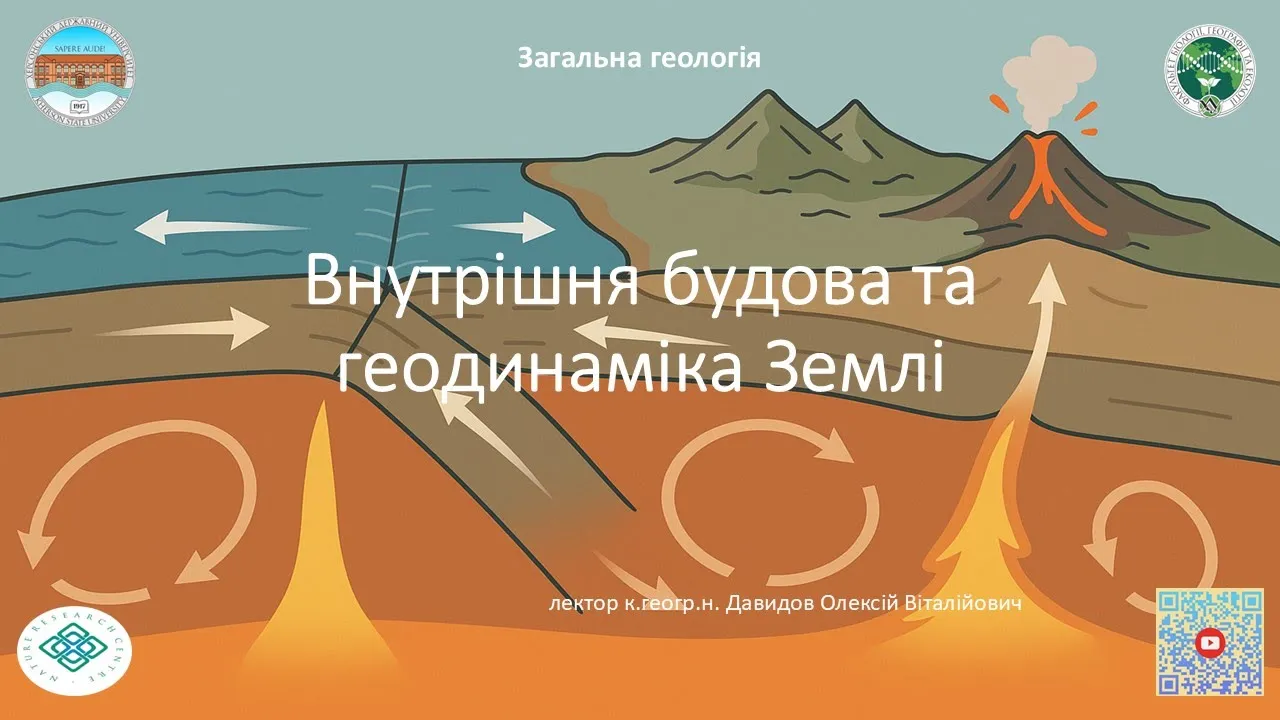





Scientists use multiple innovative methods to study Earth's interior despite never drilling through the crust: seismic wave analysis (where vibrations from earthquakes bounce off different layers, revealing the solid inner core), magnetic anomaly mapping (detecting variations in Earth's magnetic field caused by different rock compositions), electrical conductivity measurements (using ground electrodes to detect subsurface properties), gravitational field mapping (via satellite missions like GRACE to identify density variations), diamond anvil cell experiments (recreating extreme pressures in labs), and meteorite analysis (comparing space rocks to Earth's oldest materials to understand planetary formation).
Exploring Earth's Core: 7 Scientific Methods to See Inside Our Planet
Added:Basic layered structure of the Earth (crust, mantle, and core) and their general physical states (solid, liquid).
Fundamental properties of waves, specifically how mechanical waves (like P-waves and S-waves) travel through and reflect off different mediums.
The concept of density and gravitational force, and how they relate to the overall mass and composition of planetary bodies.
A basic understanding of meteorites as remnants of the early solar system's planetary building blocks.
The Geodynamo Theory, which explains how convection in Earth's liquid iron outer core generates the geomagnetic field.
Mantle convection dynamics and how heat transport from the core drives global plate tectonics.
Comparative planetology, applying Earth-based interior exploration methods to analyze the structures of Mars, Venus, and the Moon.
High-pressure mineral physics, studying how chemical elements behave under the extreme temperatures and pressures of Earth's deep interior using diamond anvil cells.
1M views18.2Klikes12:08Original Release: 2020-03-01
[♪ INTRO] In 2003, the journal Nature published a paper describing a rather unusual proposal.
The author suggested that scientists use a nuke to crack open the Earth’s crust and then toss in a vibrating, grapefruit-sized recorder filled with scientific instruments.
The whole mess would sink through molten rock and metal until it reached the Earth’s core a couple of weeks later.
Now, this article was not actually a supervillain announcing their dastardly plans.
It was more of a tongue-in-cheek thing.
The goal was to illustrate just how hard it is to study the inside of the Earth.
I mean, we can see billions of light-years through space.
But when it comes to understanding what’s beneath our feet?
That is actually much harder.
After all, space is see-through.
Rock is not.
Still, today we know a lot about how the Earth’s interior is organized.
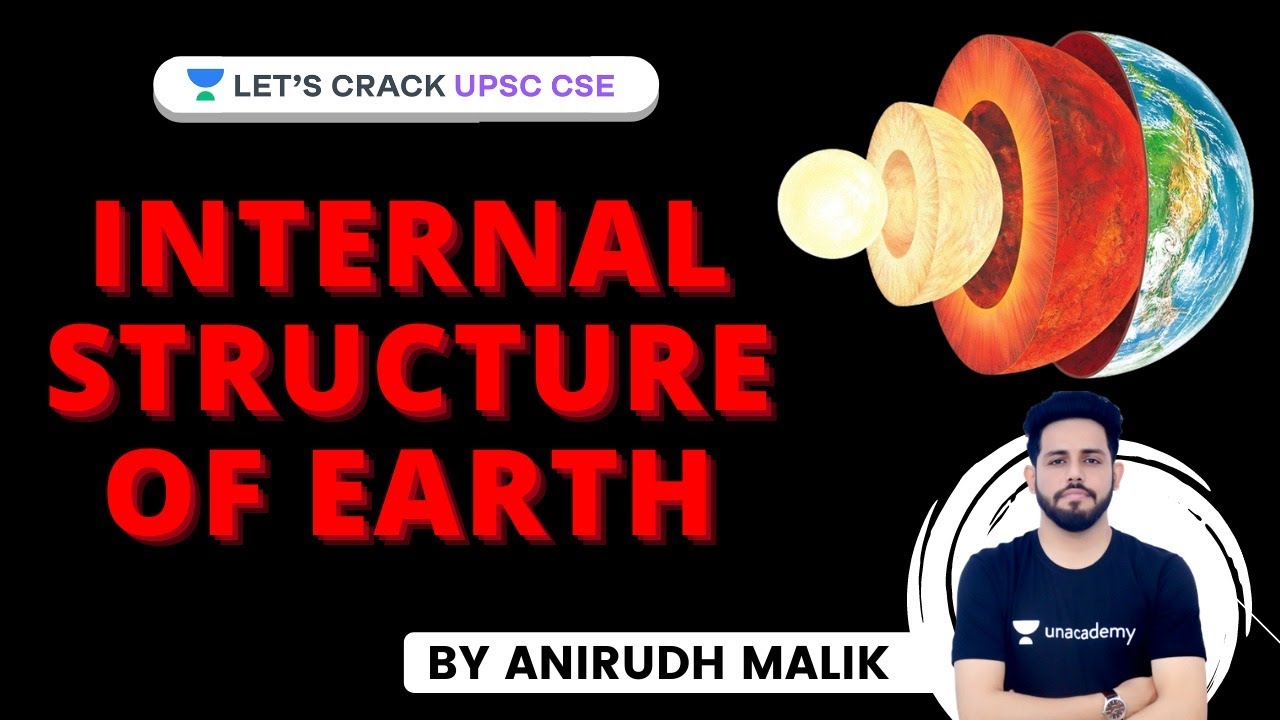
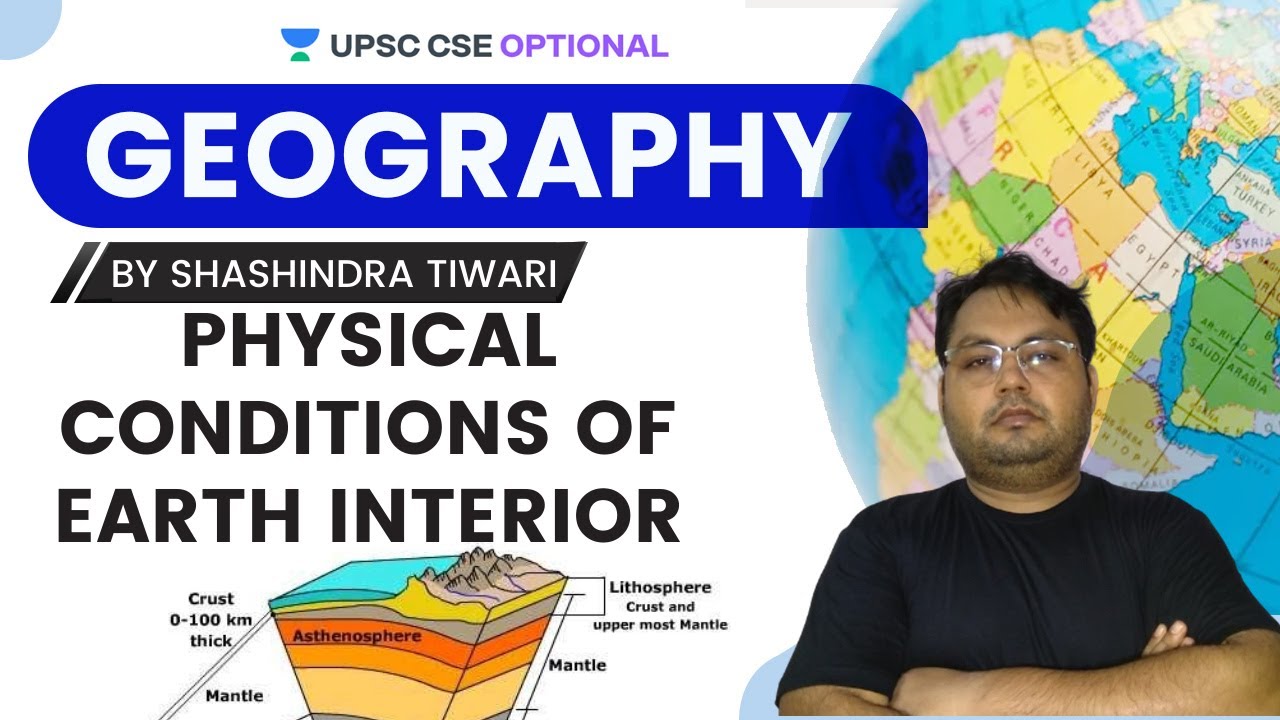
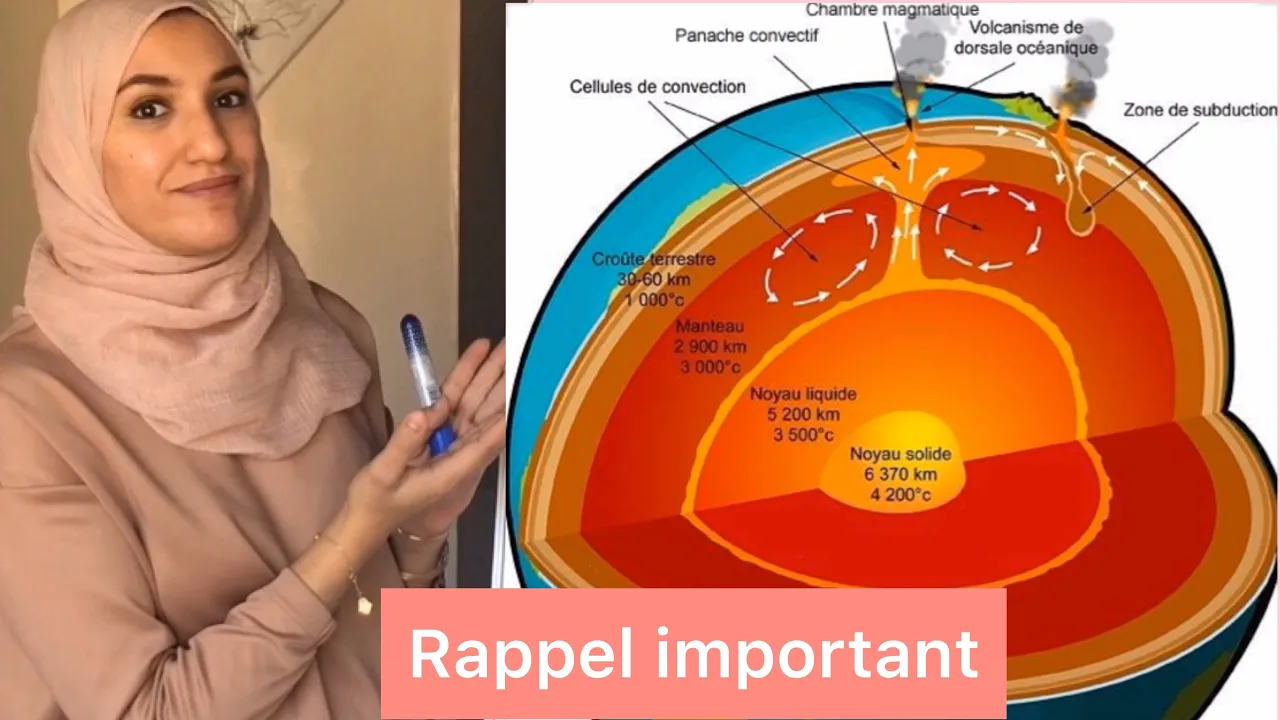
There are distinct layers, for instance — the crust, the molten mantle, a liquid outer core, and a solid metallic inner core — with even more transitions and subdivisions in between.
But figuring it all out has involved some inventive thinking across multiple scientific disciplines, and it’s taken scientists to some surprising places.
So, here are seven ways we have peered inside our planet.
Let’s start with the obvious one: just digging a big hole.
No one has been able to dig down to the mantle yet, but that doesn’t mean people haven’t tried.
In 2005, for example, an international group of researchers called the Integrated Ocean Drilling Program set out to reach the crust-mantle boundary.
To do this, they targeted a thin point of crust located on the floor of the North Atlantic ocean.
In the end, they weren’t able to get there.
After drilling down for more than 1.4 kilometers, they missed the thin patch by only about 300 meters.
Even if they haven’t successfully made it through, these types of projects have helped scientists learn more about the crust and seafloor, such as the unique microbial communities we can find down there.
And we haven’t given up drilling yet.
A team of Japanese researchers, for instance, is looking at trying their hand somewhere near Hawai’i in the future.
A simpler idea is to study rocks and geological activity right here on the surface.
Studying volcanoes and fault lines, for example, can teach us more about plate tectonics, where hotspots in the mantle might be, and how magma reservoirs form underneath volcanoes.
There’s a lot we can learn just from looking at rocks -- especially older ones.
Xenoliths are parts of Earth’s mantle brought to the surface trapped inside other bits of volcanic rock.
The most informative -- and spectacular -- type of xenolith are diamonds.
Diamonds form only under very specific conditions at depths of 150 kilometers or more in the upper mantle.
So anything trapped in the diamond — or anything that comes up alongside it — must’ve come from at least that far down.
Scientists can also examine the chemical makeup of ancient rocks.
That’s revealed that, among other things, some of what spews out from volcanoes isn’t fresh mantle material, as you might expect -- but rather elements from old, recycled crust.
In 2016, researchers measured the ratio of magnesium isotopes in solidified lava from the French island of Martinique.
Then they compared that to the ratios previously seen in other crust and mantle material.
They found that the magnesium seen in the Martinique lava looked like crust stuff.
The team thinks that certain elements might get squeezed out of the rocks along with water to travel towards the surface as bits of old crust sink.
In other words, bits of surface stuff seem to sink deeper into the Earth, then get brought back up.
Understanding how these fluids travel could help us better understand how volcanoes and earthquakes work.
Digging, looking at rocks, and studying volcanoes is all pretty hands-on stuff.
But there are also ways to look inside the Earth without heading into the field.
Such as using seismic waves.
These are the vibrations created not by us, but by earthquakes that spread through the Earth like ripples across a pond.
Different densities of rock bend or reflect those waves.
By analyzing the pattern, researchers can make inferences about the shape of things underground.
This approach was key to one of our first big breakthroughs in understanding Earth’s interior.
In 1929, Danish seismologist Inge Lehmann was examining seismic waves.
At the time, scientists knew that Earth had some solid and some liquid layers -- but they thought the core was molten.
If that was true, the waves from an earthquake should spread out smoothly from its epicenter.
But Lehmann noticed that some of the vibrations seemed to “bounce” back towards the surface.
The only explanation, she figured, would be that they were reflecting off something big and rigid at the center of the Earth.
We now know that thing is our planet’s solid inner core.
Today, we’re still using seismic waves to learn more about Earth’s interior.
In 2019, for example, scientists found a kind of iron “snow” falling from the outer core towards the inner one using seismic wave data.
We can also learn a lot from noticing when things get weird.
Irregularities in the planet’s properties happen for a reason, and sometimes that points towards a cause that we can’t actually see.
For instance, there is a line known as the Brunswick Magnetic Anomaly that runs through Alabama and Georgia where Earth’s magnetic field seems unusually weak.
Scientists can map it thanks to magnetometers, which measure the strength of a magnetic field.
Magnetic anomalies can be caused by the composition of rock in an area.
A streak of magnetite ore, which contains iron, may have an unusually strong magnetic field.
On the flipside, a particularly weak field might mean there’s a significant lack of magnetic material.
Sedimentary rocks like sandstone often contain relatively little metal.
These anomalies can also teach us about geologic history.
For example, a 2014 study suggested that the Brunswick anomaly was due to rock left behind millions of years ago as the supercontinent Pangea split up, separating North America from Africa.
We can also look for anomalies in how well the crust or upper mantle conduct electricity.
Earth’s magnetic field varies naturally over time, and changing magnetic fields create currents of electricity.
Scientists can measure that current by planting electrodes in the ground.
Then, by comparing how changes in the magnetic field lead to changes in current, they can calculate how well the rock below conducts electricity.
Depending on how things are set up, this technique can peer hundreds of kilometers below the surface, revealing properties like the temperature and even composition of the material down there.
It can also help researchers calculate how much water is trapped in the rock.
In fact, one study found that there might be as much water in the mantle as in all the oceans, locked up in water-containing minerals like ringwoodite.
So far, we’ve looked at real measurements in nature.
But figuring out what those mean often relies on Scientists’ models and lab experiments.
The pressures and temperatures deep within Earth can be extreme, resulting in physics and chemistry that behave differently than up here on the surface.
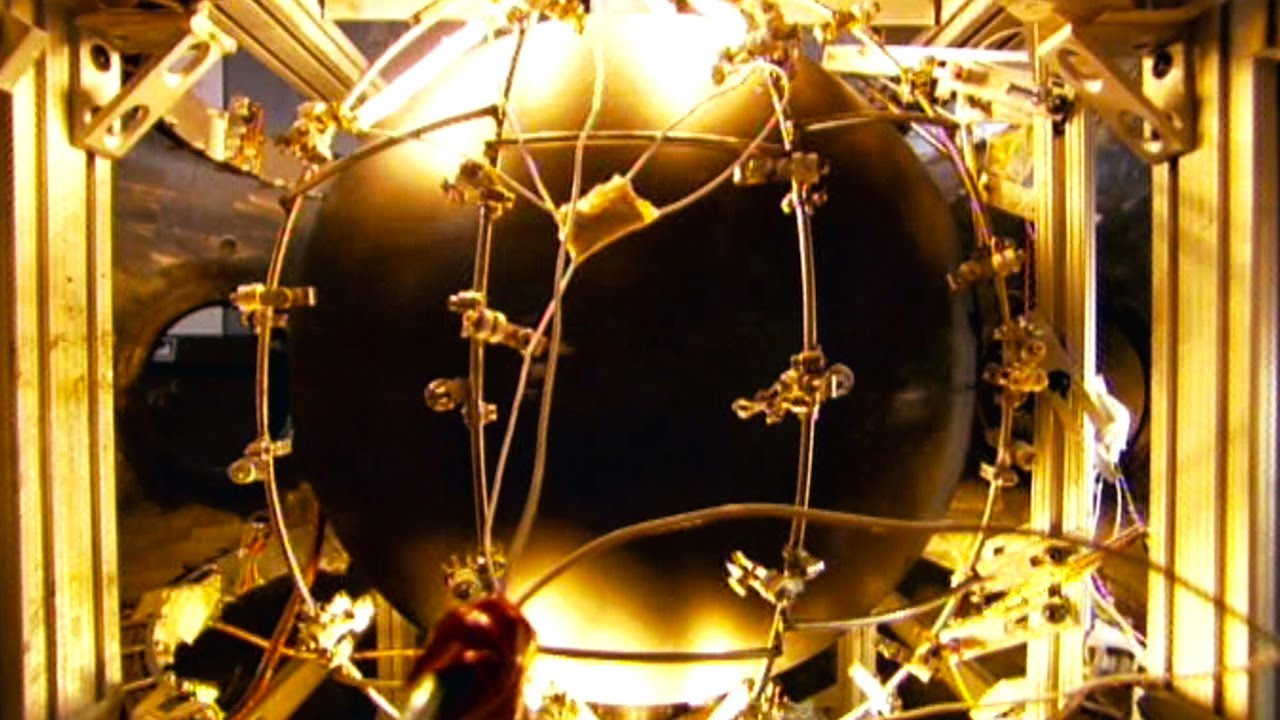
One tool scientists use is the diamond anvil cell, which consists of two small, flawless diamonds ground to precision points and mounted on pistons.
Since pressure is force divided by area — according to the math — when the pistons apply their huge force to the tiny points of the diamonds, the pressure can be ridiculous.
In 2009, for instance, scientists reported subjecting an iron alloy to two hundred billion Pascals of pressure — more than half of what it would be inside the inner core!
Amazingly, to find some of the planet’s interior anomalies, we actually have to go to space.
This is especially true for one particular kind -- gravitational anomalies.
From 2002 until 2017, NASA’s GRACE mission used two spacecraft more than 500 kilometers above the Earth’s surface to map out fluctuations in Earth’s gravitational field.
The result was maps like these that show where gravity is oddly strong or weak.
If you think back to high school physics, you might remember that the more mass something has, the more gravity it exerts.
That means fluctuations in Earth’s gravitational field can point to parts of the planet that are more or less dense than others.
And since the crust, mantle, and core are made of stuff with different densities, scientists can translate these variations into physical understanding.
For example, if the crust in an area is known to be less dense than the material in the mantle, weaker gravity might point to a bit of crust getting sucked down into the mantle.
The precision of these measurements can get even more specific than that, though.
GRACE has also helped map the disappearance of aquifers and measure the rate at which ice sheets are melting.
And this is wild - scientists have even used ground-based gravity measurements to locate abandoned mineshafts in England.
Finally, not only can we examine the interior of the Earth by going to space -- we can also let space come to us.
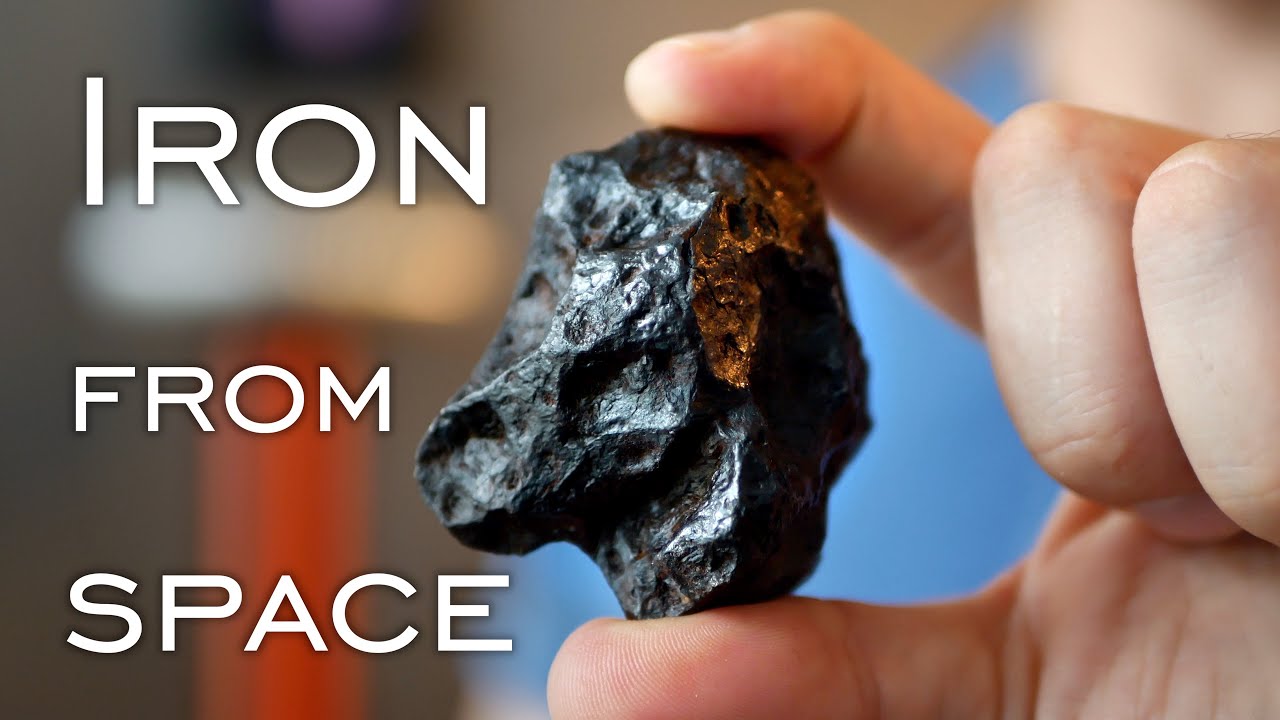
Meteorites can represent the solar system’s building blocks -- the same stuff planets like Earth formed out of billions of years ago.
By studying them, scientists can learn about the Earth’s starting conditions and how things have changed over time.
For instance, in 2005 a group narrowed down the date that early Earth’s crust turned from a sea of molten rock into an actual, solid surface.
They did it by examining the ratio of a radioactive isotope of the element lutetium, to the element it decays into, hafnium, in samples collected from both a meteorite and Earth’s oldest rocks.
Both of these elements were present on Earth way back when the planet’s surface was still molten.
The material Earth formed from had a particular ratio of one to the other, but they got split up unequally as the crust separated from the mantle.
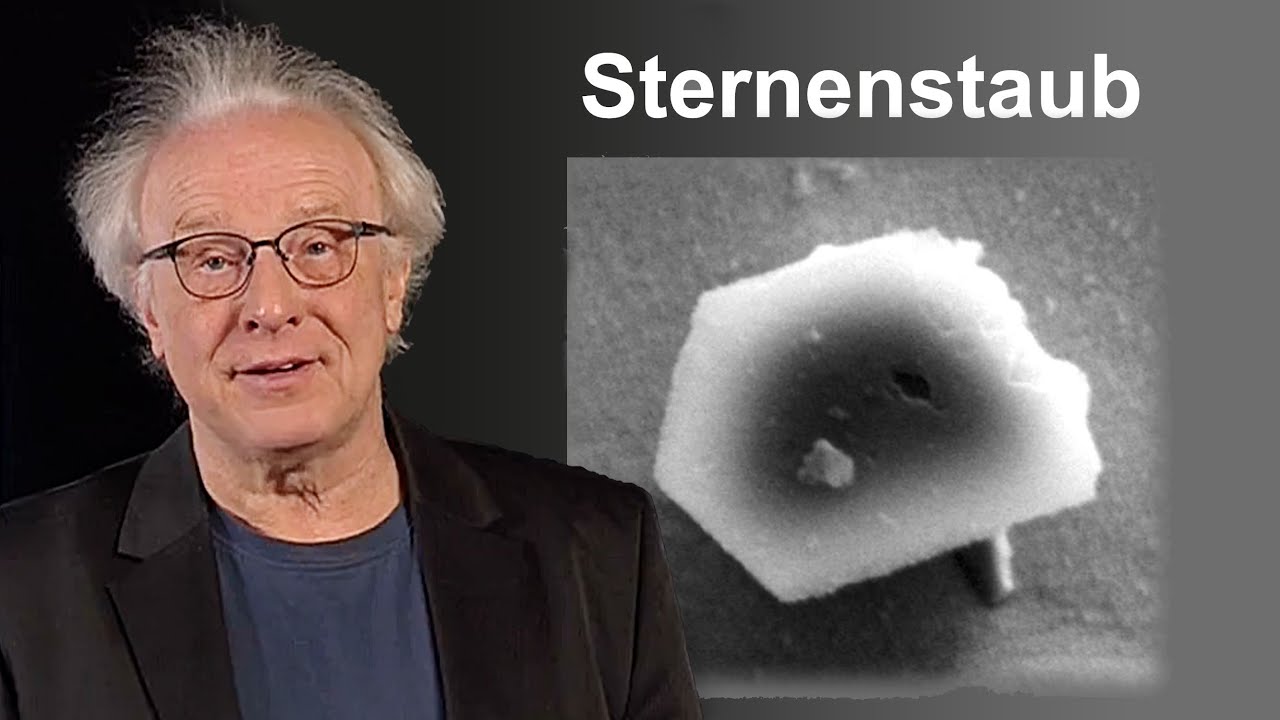
As that happened, crystals of the mineral zircon trapped bits of lutetium and hafnium inside, but in this new, different ratio.
All the stuff that didn’t form into Earth stayed in space with the original mix.
Billions of years later, bits and pieces arrived trapped inside meteorites.
By comparing the lutetium-to-hafnium ratio from Earth’s oldest rocks to these new samples from space, scientists were able to work out when the crust must’ve formed.
Their answer -- around four billion years ago -- suggests the crust started solidifying less than a hundred million years after the Earth itself formed.
So, yeah, unfortunately, the Earth isn’t see-through.
And yet, thanks to a range of careful, often clever observations, we can still picture to a remarkable degree the complicated, roiling world beneath our feet.
Thanks for watching this episode of SciShow, which was brought to you with the help of our amazing patrons.
Patrons don’t just help us do what we do here -- they get access to fun perks, like blooper reels and our patron-only Discord.
If you’re interested in joining up and helping us exist, check out patreon.
[♪ OUTRO]
Up Next

43:09
Geophysics Lecture 1: Introduction to Geophysics
@togetherforthefuture3550
19.4K views•2016-05-16

12:53
21cm Hyperfine Transition in Neutral Hydrogen: Radio Astronomy Basics
@AaronRobertParsons
12.4K views•2011-10-13

3:50
How Do Whales Avoid Deafening Themselves? Hearing Explained
@SciShow
187.4K views•2018-06-30

27:14
Entropy and the Second Law of Thermodynamics Explained
@veritasium
27.5M views•2023-07-01
Related Study Plans & Knowledge Roadmaps
Structured learning paths in Physics
physics
Nuclear Physics (Decay, Fission & Reactors)
01Atomic Structure and the Binding Force
02Radioactive Decay and Half-Life
03Nuclear Fission Mechanics and Chain Reactions
+ 2 more learning modules
12h5 modules
Explore Roadmap
physics
Soft Matter (Polymers, Colloids & Rheology)
01Foundations of Soft Matter & Thermal Forces
02Polymer Physics and Macromolecules
03Colloids, Surfactants, and Self-Assembly
+ 2 more learning modules
38h5 modules
Explore Roadmap
physics
Analytical Mechanics: Lagrangian & Hamiltonian
01Mathematical Foundations: Calculus of Variations
02From Newtonian Mechanics to Constraint Dynamics
03The Principle of Least Action & Lagrangian Mechanics
+ 3 more learning modules
28h6 modules
Explore Roadmap
physics
General Relativity (Spacetime & Cosmology)
01Foundations of Relativity: Special Relativity
02The Geometry of Spacetime: Equivalence Principle & Curvature
03Einstein's Field Equations: The Mathematics of Gravity
+ 2 more learning modules
55h5 modules
Explore Roadmap