
















The Hertzsprung-Russell (HR) diagram is a fundamental astronomical tool that correlates a star's luminosity (energy output) with its surface temperature, enabling astronomers to determine a star's size without direct measurement; this relationship reveals that while temperature indicates atomic motion speed and heat indicates total energy output, comparing these two properties allows classification of stars into distinct categories such as main sequence stars (burning hydrogen), giants, supergiants, and white dwarfs, each occupying specific regions on the diagram based on their size, mass, and evolutionary stage.
Hertzsprung-Russell Diagram: Star Luminosity & Temperature
Added:Understanding the difference between absolute luminosity and apparent brightness, including how distance affects observed light.
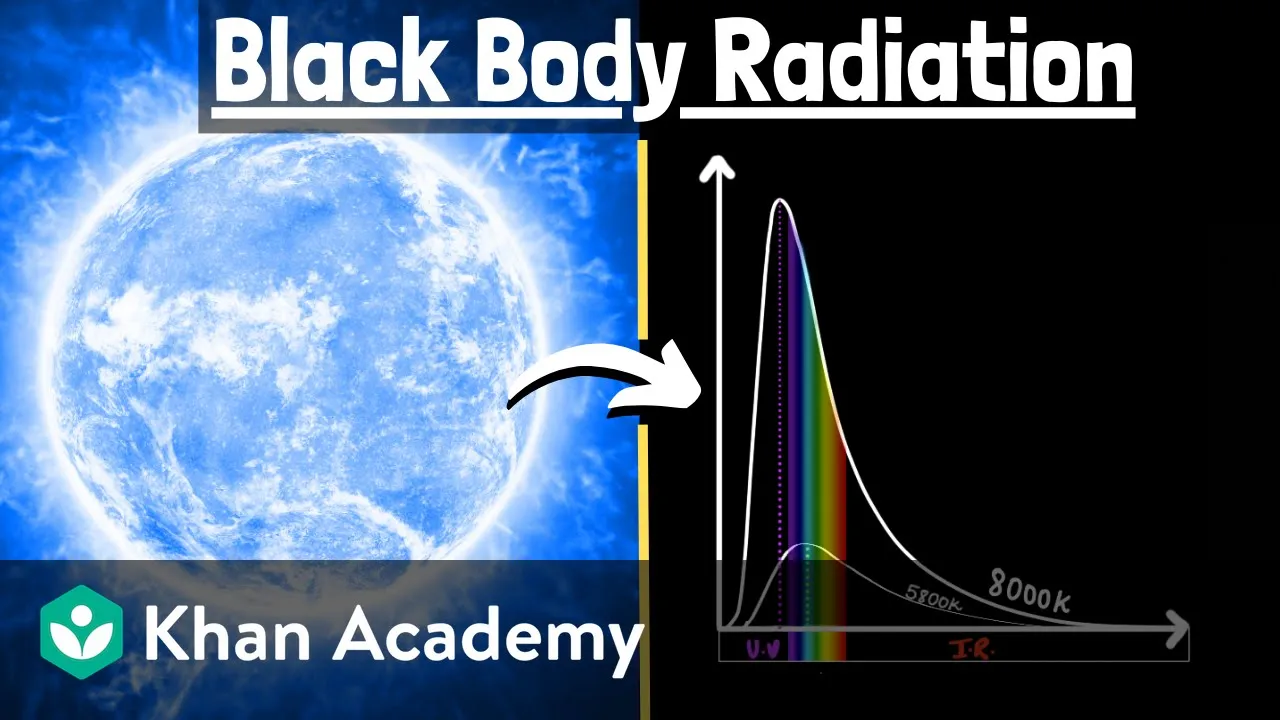
The relationship between a star's surface temperature, peak wavelength of emission, and color (blackbody radiation and Wien's Law).
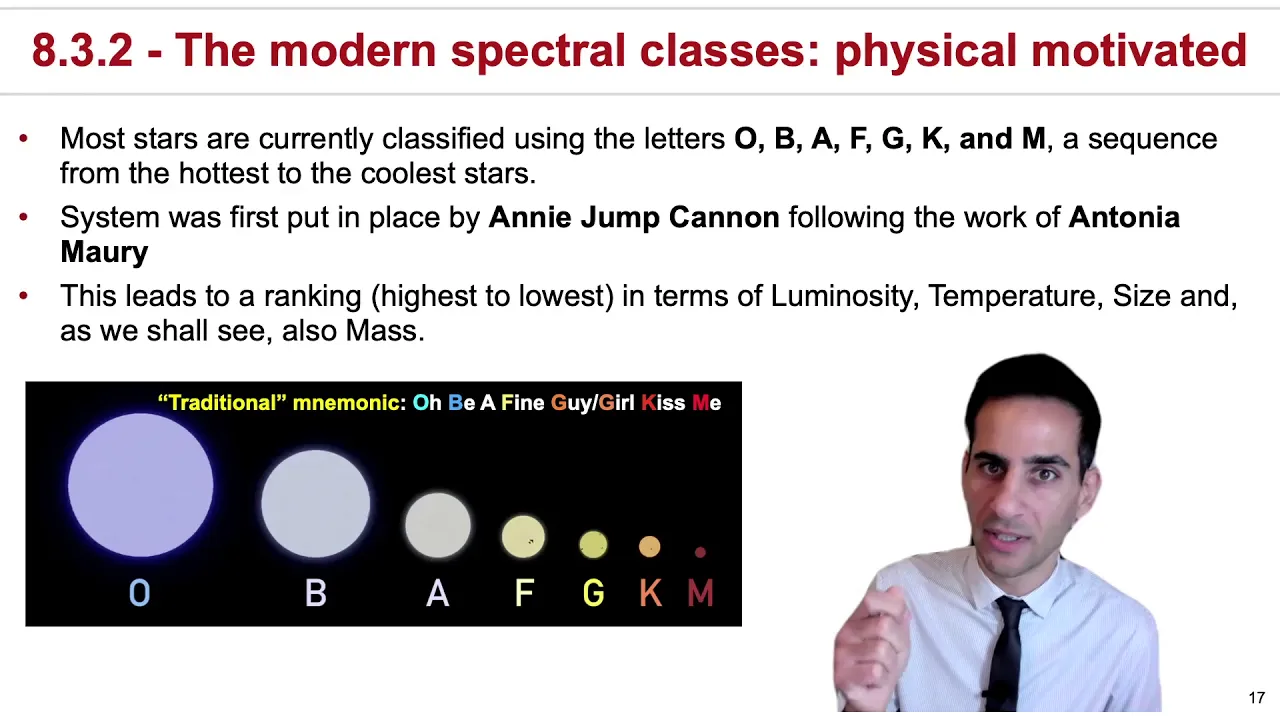
Basic stellar classification and the concept of spectral types (O, B, A, F, G, K, M).
The fundamental concept of hydrostatic equilibrium and nuclear fusion as the energy source of stars.
Tracing stellar evolutionary pathways (tracks) on the H-R diagram for low-mass versus high-mass stars.
Using H-R diagrams of star clusters to determine the cluster's age via the main-sequence turnoff point.
The physics of stellar remnants, such as white dwarfs, neutron stars, and black holes, and where they plot on or off the diagram.
Applying spectroscopic parallax to determine astronomical distances based on a star's position on the H-R diagram.
266.5K views2.7Klikes9:53Original Release: 2015-04-03
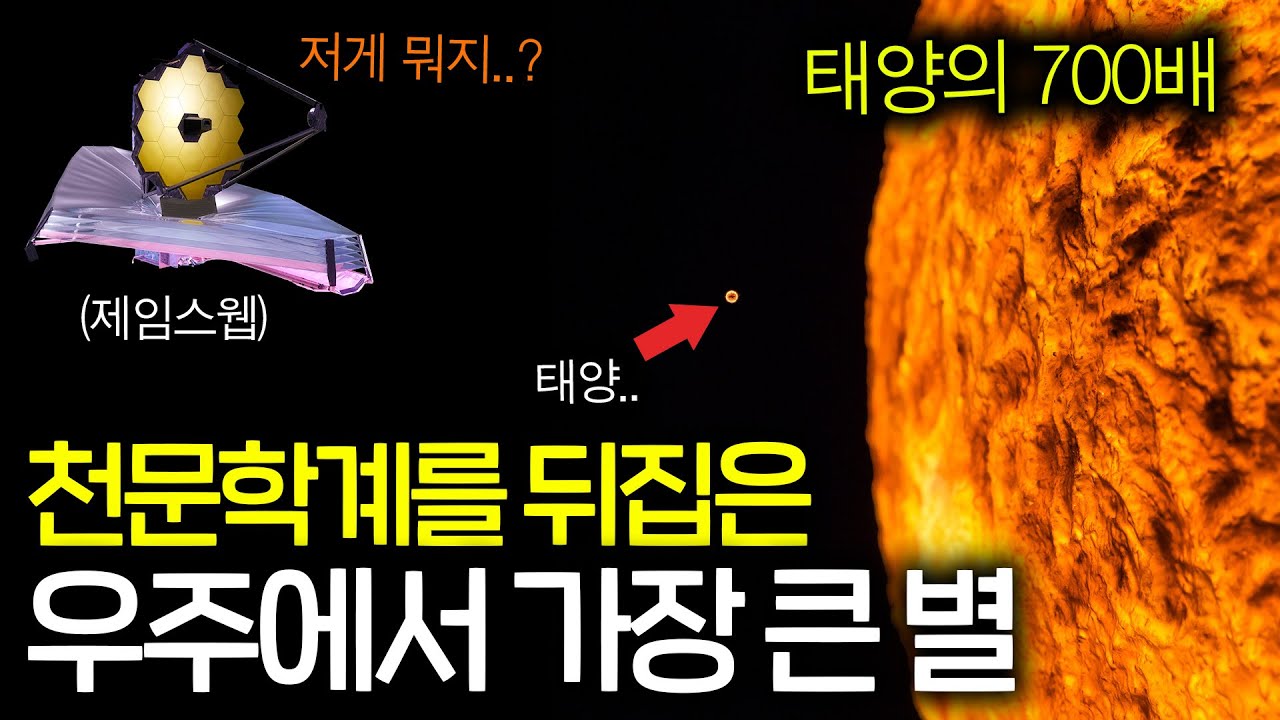
[Music] you should understand that temperature and heat are not the same thing temperature is a measure of how fast the atoms of a material are moving heat is a measure of energy output and of course heat always flows from a region of higher temperature to lower temperature these are Concepts you should hopefully recall from your study of physics well now's the time where you're going to see some amazing application of these VAR Concepts let's take this step by step starting with an analogy which has a higher temperature a campfire or a warm compost heap indeed the campfire which is to say the average speed of the atoms in the campfire is much faster that's why you wouldn't want to put your finger in the campfire but the campfire and the compost heap are both releasing energy energy to the environment right the campfire releases it real quickly because of its higher temperature and the compost he releases energy much more slowly because of its lower temperature got that now what if the compost heap were much bigger say it has the very same temperature but it's much much bigger like the size of many city blocks because it's bigger do see that the total amount of energy it releases each second is also much bigger any bit of the compost tap might not be that much but add it all together and wow that's a lot of energy so let me ask you which releases more energy the small campfire or this humongous compost heap sure the campfire has a higher temperature but it's quite small by comparison so you see this lower temperature compost heap puts out much more total energy than the higher temperature campfire temperature and heat are not the same thing if you understand this you'll understand the same thing happening with stars the star prion has a toasty surface temperature of about 6,500 Kelvin remember we get the surface temperature from the star's color its Luminosity is a mere 6 n oh and remember from the last lesson that Luminosity is a measure of a star's energy output relative to our own Sun so pran is 6.9 times more luminous than our sun okay the star Bal juice has a surface temperature of about 3,000 Kelvin so because it's cooler you might expect its Luminosity to be less than 6.9 huh well that might be true if they were the same size as shown here here but that cool to the touch Bal juice has a Luminosity of about 120,000 huh how can something this cool put out so much energy think of the compost heap your conclusion yeah they obviously cannot be the same size that Bal juice puts out so much energy and is yet cooler tells us that Bal juice must be much larger a Luminosity of 120,000 Bal juice must be extremely large indeed the calculations made by astronomers show Bal juice to be astoundingly large the point here is that by comparing the Luminosity of a star to its surface temperature we gain a measure of that star's size now that's crafty because it means we don't have to actually travel to a star in order to measure how big it is it also allows us to study and compare stars to each other in doing this we can get a sense of all the different kinds of stars there are this in turn allows us to reveal the potential histories and life cycles of stars the graph that correlates Stellar Luminosity to temperature is called the Herz sprung Russell diagram or the HR diagram for short it's a rather important diagram in many ways what the periodic table is to chemistry the HR diagram is to astronomy as a chemist myself I like to call it the Periodic Table of astronomy of course don't memorize this thing rather let's learn how to read it luminous stars are at the top and dim Stars toward the bottom note that Luminosity is given in exponents so for example when you go from here to here the Luminosity is 10 times as great from here to here you're talking about a hundredfold increase in Luminosity on the horizontal axis the higher surface temperatures are shown to the left anything about 10,000 Kelvin or greater is indicated as a bluish star anything cooler than 4,000 Kelvin is shown as a reddish star most stars fall within a diagonal line which we call the main sequence our sun is an example of a main sequence star all these stars are burning primarily hydrogen as their nuclear fuel above the main sequence are the Giants Super Giants and even the hyper Giants here Arcturus is an example of a giant Bal juu is a super giant well maybe a hyper giant it's subjective but VY Kennis Majoris now that would definitely be a hyper giant the HR diagram plots Luminosity using exponents it it has to otherwise the range of luminosities wouldn't fit on a regular siiz piece of paper likewise it's not very practical depicting the relative sizes of stars on a regular piece of paper so HR diagrams when printed on regular paper are limited in their ability to give us the sense of star sizes but here in video we don't have that limitation nice eh oh we should talk about densities get this as large as Bal juice is it's only about 15 times more massive than our sun so while it's huge it's only huge at the expense of not being very dense its outer Photosphere for example is less dense than the air you're breathing right now that's billions of times less dense than our much smaller but much more compact Sun speaking of compact below the main sequence we have stars that are necessarily tiny this includes the white dwarfs we'll be talking about white dwarfs in more detail in a bit briefly our sun is destined to become a white dwarf when that happens it'll have a density that's out the roof like a million times that of gold oh what's the difference between a blue super giant and a red super giant well one has a higher temperature right which good but why might the blue super giant have a higher temperature oh it must be cranking out more thermonuclear Fusion so which do you suppose would be more dense a blue super giant or a red super giant if you're going to have more thermonuclear Fusion you're going to need a good concentration of fuel right so the blue one hey excellent H you might even be in a position now to answer why it is that the average blue super giant is smaller than the average red super giant how nice if you could talk about these and other questions with classmates or better yet with classmates and your course instructor Al together in the classroom don't think that you're going to have command over these Concepts just by watching these videos over and over again no you need to try articulating these Concepts yourself if you want entertainment just sit back relax and watch like you might do at some sporting event that's not bad we all appreciate good entertainment all I'm saying is if you want to be a player you got to play if you want to do well on your exams you got to do more than just watch you got to interact you got to get your mouth moving are we interacting no I'm just lecturing to you and you're listening that's not good enough well that's your basic introduction to the herzsprung Russell diagram in the next lesson we're going to use this diagram to explore the various potential life cycles of stars fascinating stuff till then good science to [Music] you
Up Next

42:38
The Nature of Stars: Luminosity, Temperature, and the HR Diagram
@FolletteAST102IN
6.1K views•2014-03-26
61:17
First Billion Years of the Universe with the Square Kilometre Array
@iaaudc
121 views•2022-05-26

6:25
Kepler's Laws of Planetary Motion Explained (Educational Astronomy Video)
@Peekaboo_Kidz
404.9K views•2023-02-17
6:10
Gamma-Ray Bursts: Cosmic Snipers Explained | Astronomy
@kurzgesagt
15M views•2016-07-31
Related Study Plans & Knowledge Roadmaps
Structured learning paths in Astronomy
astronomy
Reionization: Pop III Stars, IGM & 21cm Line
01Foundations of Cosmology & the Early Universe
02Population III Stars & Cosmic Dawn
03Physical Mechanisms of Reionization
+ 2 more learning modules
17h5 modules
Explore Roadmap
astronomy
Planetary Rings: Dynamics, Roche & Resonances
01Foundations of Gravity and Orbital Mechanics
02Tidal Forces and the Roche Limit
03Structure, Composition, and Collisions
+ 2 more learning modules
10h5 modules
Explore Roadmap
astronomy
Asteroseismology: Stellar Waves, Ages & Cores
01Foundations of Stellar Astrophysics & Wave Mechanics
02Stellar Oscillation Modes: P-modes and G-modes
03Mathematical Framework of Asteroseismology
+ 2 more learning modules
35h5 modules
Explore Roadmap
astronomy
Adaptive Optics: Physics, Engineering & Control
01Foundations of Wave Optics and Wavefronts
02Atmospheric Turbulence & Optical Distortion
03Wavefront Sensing Technologies
+ 3 more learning modules
35h6 modules
Explore Roadmap