













Cross-linking is a biochemical technique that forms covalent bonds between two or more molecules to study molecular interactions; it can be performed using homobifunctional (identical reactive groups) or heterobifunctional (different reactive groups) reagents, which may be nonspecific or site-specific. Common reactive groups include NHS esters for lysine amines and maleimides for cysteine thiols. Photo-reactive cross-linkers like benzophenone and phenyl azides offer temporal control through light activation, with fluorinated azides showing enhanced reactivity due to suppressed ring expansion pathways. Successful cross-linking requires careful consideration of buffer conditions, pKa values, redox states, and linker properties to achieve specific labeling and avoid unwanted side reactions.
Cross-Linking Methods Overview: Photo-Reactive Approaches in Biochemistry
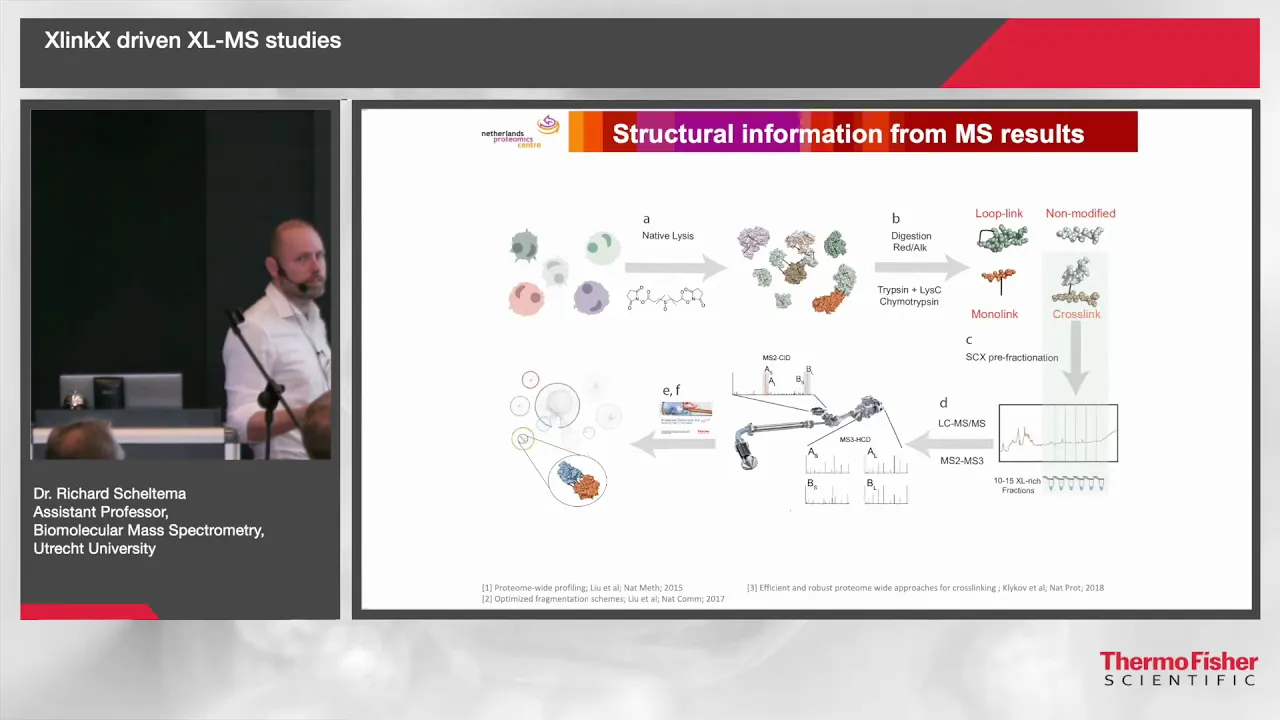
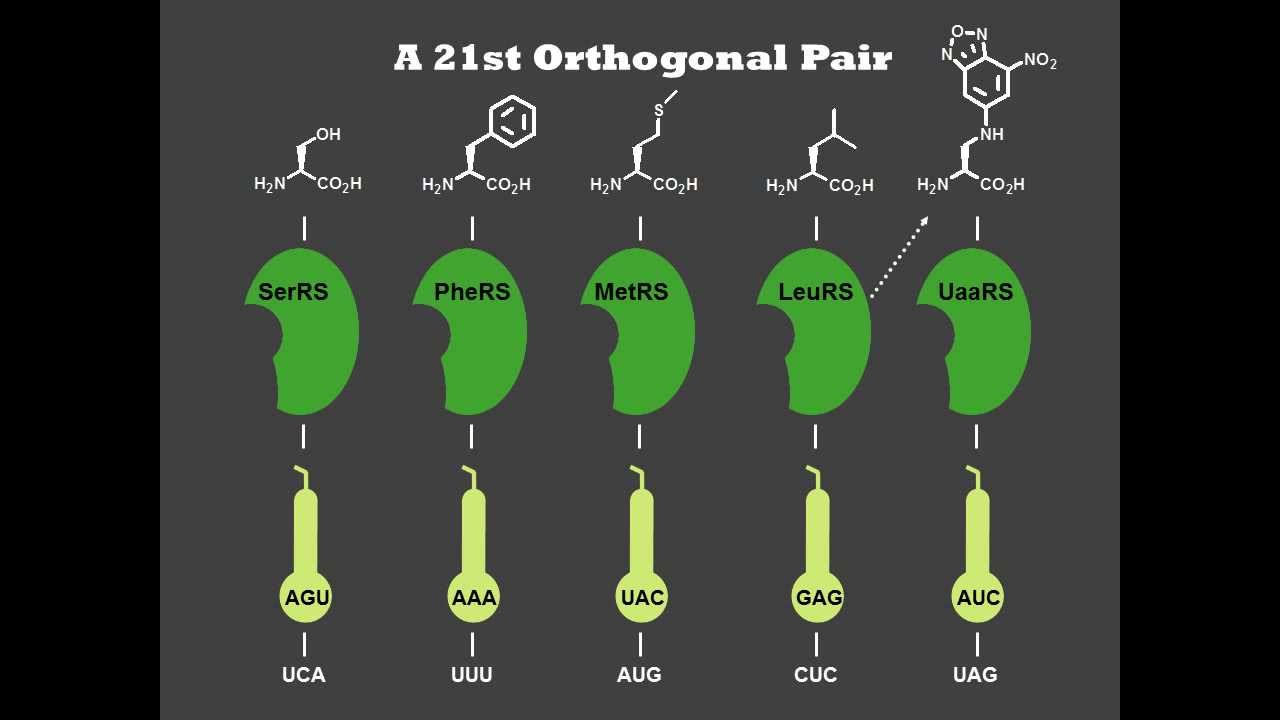
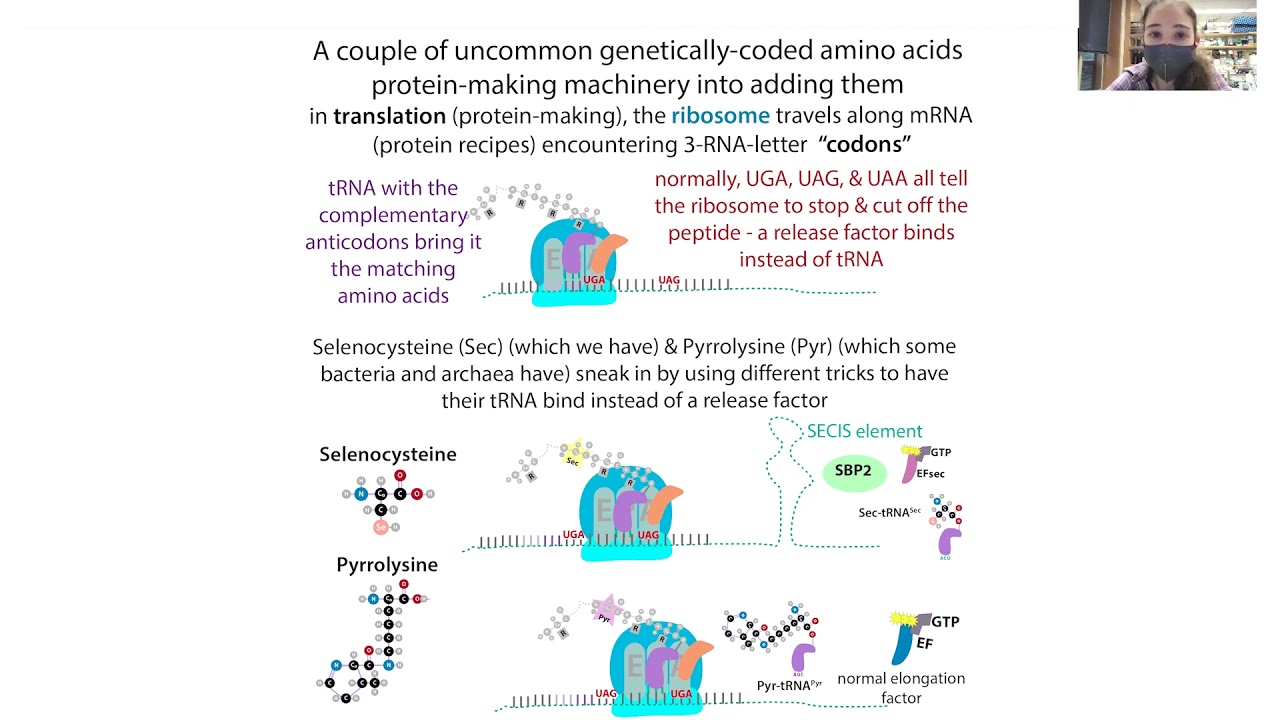
Added:the following content is provided under a Creative Commons license your support will help MIT OpenCourseWare continue to offer high quality educational resources for free to make a donation or view additional materials from hundreds of MIT courses visit MIT opencourseware at ocw.mit.edu what we're gonna do today is just discuss a few aspects of cross-linking so we decided it was important to introduce this within recitations this year because cross-linking comes up time and time again and there's different ways to do this and different strengths and limitations to different approaches so I guess I'm just thinking about this what is cross-linking so if you say oh I'm going to use a cross linker for my experiment what does that that mean yeah so there's gonna be formation of some sort of right covalent linkage between two or maybe more right because some cross linkers can have more than than two reactive groups okay of study right so we're chemically joining two or more molecules so why might we want to do this what are possible applications yeah so that's one so protein protein interactions right and that could be identifying unknown protein protein interactions or maybe you know two proteins interact but you don't know how right and you decide to use cloth cross-linking as a way to probe that so how might cross-linking help with studying unknown protein protein interaction Yeah right so maybe there's an unknown one and you fished that out because a cross linker was used right and that you know what one of them are or maybe say we know right that these two proteins interact somehow but we don't know how right so you know is it at an interface on this side right versus maybe the other side right versus maybe behind the board etc right and so there's many ways to study protein protein interaction and really how well present cross-linking today is in the context of this particular application but there many others right but if we just think we've seen a lot of protein protein interactions in this course right so just even today clip X peas an example right we saw protein nucleotide interaction with the ribosome Gro Al Groh es is an example of protein protein interactions right and they've been studied by many other methods like crystallography for instance but sometimes maybe it's not possible to get a structure right and you want to define an interaction surface or no like exactly what residues are important right so here is protein protein but that could be generalized to any other type of biomolecule like RNA DNA right what about a single protein right so can you use cross-linking to learn more about tertiary structure quaternary structure right so imagine for instance rather than two separate proteins right we have one protein where there's some flexible linker and we have reason to believe these different domains interact right but how do they interact again you know is it something like you know this undergoes some conformational change and they're like this you know versus other possibilities here so what about just other applications of cross-linking chemistry before we look at some examples of molecules so we can you know capture and identify binding partners as Lindsey indicated we can study known interactions where else could this come up right and well it wasn't defined in this way we've seen certain technology that takes advantage of cross-linking chemistry often Yeah right so general general exactly general bio conjugate or conjugation chemistry right so maybe you want to attach a tag to a purified protein maybe you want to modify an antibody similar chemistry can be employed and likewise even like from application standpoint immobilization so say you need to make your own resin to do some sort of affinity chromatography and you want to attach a protein or an antibody to that you can use the types of chemistry shown here so we're going to talk about a few different types of cross linker and the chemistry and pros and cons and just as a general overview how I'll describe types okay so we just heard the word homo by functional so although by functional versus hetero by functional okay and this refers to the reactive groups so we need to talk about what types of chemistry is going to be used to do cross-linking so this refers to reactive groups and then another classification will be nonspecific versus specific and so this doesn't refer to say the chemical reaction between the cross linker and whatever it's hitting but rather whether or not the cross-linking reagent is site specifically attached to a protein or biomolecules interest or not okay so this okay okay so if we just think about this nonspecific versus specific if we want to attach a cross linker at some specific site in a protein how can we do that so think back to the ribosome discussion right where unnatural amino acid incorporation was attached was not attached but was introduced right so that that's one possibility if you have an amino acyl tRNA synthetase and a tRNA that can allow some sort of cross linker to be introduced site specifically and it works for your experimental situation you can you can do that right so we saw benzophenone which is a cross linker in the evolution of that orthogonal ribosome Rybak's but let's say you can't do that right so for instance as far as I know there's no tRNA a AR s pair for benzophenone and now eukaryotic cell right or maybe in some some circumstance what is something just using standard biochemistry you could do so what what type of residues can be modified in a protein yeah so cysteine lysine these are common side chains that are modified and what would you say is more typically employed if you want to introduce a site-specific modification using chemistry cysteine right so if you have an individual cysteine that's in the protein or maybe you use site-directed mutagenesis right you know where that cysteine is and then you can modify it with some reagents there we'll come back to that in a minute so in terms of reactive groups then on the protein we can think about lysines right we have the epsilon amino group cysteines we have the thigh all what do we need to think about for our chemistry when thinking about these types of side chains and wanting to do a reaction so under what conditions do we have a good nucleophile pardon yeah so we need to think about the basicity right the pKa of these groups right that's that's very key here for that what else do we need to think about what what other factors might govern reactivity just thinking broadly so PKA right for your amine it will be type of amine alright for a cysteine redox will play a role right you can't have your cysteine and a disulfide it needs to be the free free thigh all form right so these are all things to keep in mind yeah so alex has used a homo by functional cross linker why did you use a homo by functional cross linker to stabilize the nanoparticle okay so very different type of application here so okay that's fine so yeah we're not doing much with with nanoparticles here but let's say we want to use you know a nonspecific homo bi-functional so this was nonspecific cross linker to look at some protein protein interaction right so if we just suppose for instance we have some protein a and we think it interacts somehow with protein B how can we use cross linkers to study study this so let's take a look at an example of a homo by functional cross linker in terms of design so this one will be a mean reactive okay and it's name is DSS here so effectively if we want to dissect this structure into different components what do we have yeah so we have two reactive groups or leaving group separated by a linker and in this case we have two NHS or six sentimental esters right that are amine reactive so what's the product of reacting an alpha amino group or a lysine epsilon amino group with an NHS ester what do we get dynamic right we got an amide bond and then we have this linker or spacer region okay here so two amine reactive groups and a linker spacer and in this particular case this link of our spacer is about 11 angstroms and it's flexible here and it's stable right and cannot be cleaved here so in the case that Alice makes project this was used to stabilize the nano particle and the nano particle did you have a pure nano particle or was this in a very complicated mixture okay so what's going to happen if this reagent say is added to cell lysate what are you going to get yeah so there's a high high likelihood right of a lot of different cross links right so potentially a big mess right high likelihood right because you have no control over where these reactive groups are going to hit right and the most proteins have lysine residues yeah right all proteins have an alpha amino group right so well some might be you know modified but anyhow your very little control with this type of reagent so then the question is if you use it how are you going to fish out your desired protein protein interaction right or even if you're working with two purified proteins and they have multiple lysines you can end up getting multiple cross links right so maybe that's helpful for initially identifying that an interaction exists but in terms of getting more detailed information in terms of how do these actually interact that that may be tough here okay so easy to come by but potential complications just in terms of thinking about this in the linker why is it important to think about the linker in your choice of a some reagent here so what properties does the linker give mm-hmm yeah so there's some constraints employed and posed by the linker in terms of you know how close together or far away or groups that react what else comes with the linker how does it affect the properties of the molecule yeah may be able to so what's an inherent property of the mullick of a molecule yeah yeah right and may affect solubility right so linkers can be this is you know a bunch of ch2 groups relatively hydrophobic right there can be more hydrophilic linkers or other strategies and then the question is does that matter right does does the solubility properties work with your experiment or not right but imagine if you want to do cross-linking in a live cell you need that cross linker to get into the cell right so you need to think about membrane permeability and what happens after that here so the linker is another critical aspect and so if you're ever working with the cross linker that's something you want to think about in addition to what types of side chains or what types of biomolecules do you want to modify so let's look at an example of a hetero by functional linker and this one or snot linker yeah cross the Apple it is crosslinker okay here for this so this one will have a different type of spacer group so it'll be with a cyclohexyl so what do we have in this case Yeah right so there's a bunch of interesting aspects to this molecule so we have the NHS ester to react with an amine right here we have a Malay Amud which will react with thiols so hetero by functional because there's two different reactive groups for different types of side chains and then as Steve mentioned we have this group here right and so this is to improve water solubility this okay and then what do we have in this linker region yeah and what does that give yeah exactly like cyclohexyl right think about share conformation rather than I have drawn here but they will give a more rigid linker and also shorter than what we see up here so this is on the order of eight angstroms okay so how might this molecule be used what could you do with it that you can't do with this one yeah well that's the first point right you can have two different groups right one end will react with the sistine one with some lysine right so is this specific or nonspecific or both yeah right could depend on the context right and then from the standpoint of specific cross-linking which I would argue was a better use of this compound what can you do right you can have just imagine you have some protein of interest and maybe you want to label it here right and you have some sidechain so site directed mutagenesis to put in a cysteine right and then you can modify that there right such that you have cross-linking reagent right here right and then you can imagine you know whatever your experiment is here so again thinking about using this compound and say a complicated mixture like a cell lysate I want to see if there's any binding partners or whatever what's the limitation in terms of reactivity of this amine group that you'd use in that second step where do you lack control what do you mean by that so okay so that that could be an issue right so dude lysines and n-terminal alpha amino groups have different reactivity do they have different PK's and is that something you could could control maybe maybe not but more broadly than that so you have an issue that it will react let's say with any amine right can you control when it reacts so what are you thinking right so if you think about just experimental design right and say you were to try to use pH to control reactivity and I'm defining this broadly reacting with any you know amino group so we're not going to try to do something to selectively label one right this this is reactive it will react right so would you pH change your whole buffer or pH change the cell lysate and then switch to turn on reactivity probably not probably not right that that I'd say is not very likely right so the issue I'm getting at here is that you have little temporal control or spatial control of an NHS ester right it will react with an amine provided you know your conditions are appropriate so just getting back to this pH issue in a little digression if you want to use something like an NHS ester you know in a test tube experiment what you need to think about beyond pH right yeah so what you need to think about with the buffer so this is the key a key point you need to think about cross reactivity with the buffer so if you have Tris buffer you have a mean if you have a buffer that's like glycine there's a mean right and your buffer concentration is in most instances much higher than whatever the concentration is of the molecule you want to actually modify right if you think about 10 millimolar Tris or 75 milli molar triskin 2 micro molar or nano molar of some protein so you need to have a buffer that's not reactive right you need to have an appropriate PKA those are important considerations you need to know that your reagent is good or sorry appropriate pH what about the thigh all here what you need to think about if you're doing a test tube experiment and want to modify a file with a Malayan that or something else like IO to a sediment that we saw last time so what's dtt yeah or be any beta mercaptoethanol right even before that step what you need to make sure so what if there's you know multiple cysteines yeah right so either inter or intra molecular right so if a reducing agents added and the reducing agent is thigh all based again you're gonna have much more reducing agent than your protein of interest right so you don't want your thigh all reactive probe to react with the reducing agent in the buffer here okay and so that needs to be removed and then if you remove it you need to ask does the thigh all stay reduced right or does it is it susceptible to air oxidation right so these are just all practical considerations to keep in mind like if a reaction doesn't work why doesn't doesn't it work and was it something that wasn't right with the buffers there okay so back to this issue of you know not having much control about you know timing control for reactivity of these types of groups what could be done to overcome that so what other types of cross linkers are out there yeah photoactive photoreactive cross linkers so what's the idea here yeah so what do we have and what can we do so just the first point to make right is that we want to think about specific labeling here okay so we can attach site specifically okay to protein or if you know some other biomolecule right maybe it's by cysteine modification with something like a Malay amid maybe it's unnatural amino acid incorporation okay and it's chemically inert no Kelly until irradiated okay and so basically you're radiating this photoreactive cross linker will activate the photoreactive group and then you get cross-linking okay so this type of approach is often used to capture binding partners and it can be used in the test tumor in cells what are the types of photoreactive cross linkers here yeah so aerial ace eyes are one type okay what's one we find class although we didn't talk about photochemistry yea benzophenone and there's some other examples so what's another example yeah so they fall in here right so we can think about either just phenyl azide right or fluorinated phenol a sides so another way to do this is to generate carbines via dye a serines here okay we're pretty much focus on these types on what your major major types so where did this idea come from right how how new is this this type of work might just stick a photoreactive group on a protein and then use it in a cross-linking application and where did the idea come from kind of in the first place so what types of chemists often study photochemistry well more broadly yeah yeah so physical organic chemistry right there's a whole component of photo chemistry there okay let's take a vote mm first photo cross linker 1990 80 70 60 just no clue so around 1962 was the first paper using a photo reactive group on a protein here Westheimer and then Jeremy Knowles in 1969 was the first example of an era a site okay so this work came out of physical organic chemistry and at a time where like physical organic chemistry transitioning in Tanzania G right here so we don't have time to go into a lot of the photo chemistry of these different moieties but is quite rich there so how does this work what and you know what types of reactions and and groups get modified here in the cross-linking so let's think about them so let's consider an arrow aside so what happens when arrow a sides or eight sites are irradiated with UV light mm-hmm get a nitrene yeah so if we just think about nitrenes for a minute what types of chemistry to nitrenes do are they reactive so can they insert into Ch bonds and H bonds add two double bonds can they do other things as well okay so here we have our protein what's going to happen as Steve said we're going to generate a nitrene so how does that happen we are radiate with light okay to get our nitrene so what happens with these arrow eyes azide is some interesting photo chemistry when you're at it say room temperature so rather than this nitrene reacting say with a CH bond or an NH bond it actually undergoes a ring expansion okay and so what we get and this is very fast so on the order of 10 to 100 picoseconds so this happens before it has a chance to react with something else okay to give us this intermediate okay and so this species has very different chemistry than a nitrene and what happens is it will react with nucleophiles so imagine our amino group to give the cross-linked so this pathway is the dominant pathway if just a narrow eighth ID is used here to think about from the standpoint of wanting to do cross linking so let's say you attach this arrow azide to a protein of interest okay and then you use you irradiate with light and look for it to cross link with something is this an issue it will form a cross link would you rather have a nitrene react or for the seven-member reaction with the seven membered ring okay so why why would you argue for the nitrene Yeah right there's a lot more CH spots and there are life scenes or Unterman I write so that that's one aspect we've lost that that chemistry and then to another point just as you know what kind of how well do these reactions work so nitrene reactions are very fast relatively speaking this is kind of sluggish there and so you know the question is what can be done in order to improve upon this okay and Steve mentioned these fluorinated fennely sites there and so you know photochemical work unrelated to any sort of you know biological cross-linking chemistry showed that if you Florin eight area lays ides you get you can get nitrene reactivity rather than this other pathway here okay and so if we just take a look at that what happens right so for instance imagine we have this tetra fluoro analog here right we can imagine radiating this and getting to our nitrene I'm going to skip the steps okay now what can happen imagine maybe have some CH bond nearby maybe get this cross link okay and this reaction is very very fast here very very fast so can ring expansion occur in this situation okay so I'm pointing this out because the language in the packet with a little strong if there's something for this nitrene to react with nearby it will react right but this can undergo ring expansion it's just much slower than the case above so um the studies I've read say about 170 fold slower there so it's not that the pathway is completely blocked and it also - depends on on the experimental conditions but anyhow this is you know quoted to be near diffusion controlled here for that so I mean this is pretty interesting when you think about it right because azide airily sites they can be fed to cells to do unnatural amino acid incorporation right they're used in click chemistry for instance types of conjugation chemistry but here the photochemistry can be taken advantage of right to give a cross linker that can be controlled in a temporal manner there so what about the bends of the known what does bends of the known react with after being irradiated with light so imagine you have your protein and maybe in this case you did unnatural amino acid incorporation to site specifically attach it benzophenone what happens what happens is that there's formation of a triplet dye radical okay and what will this do just can react with some CH Bunge to get the cross-linked so let's say you have this guy here and you want to do a cross-linking experiment right so we can imagine some different possibilities what do you think you'll get out are you only going to get out your desired cross-linked what might happen to 150 on a Friday get some like jumping jacks come on [Laughter] should I just miss all of you because there's a major energy low today to say um there yeah so you can go get one product 10 products 100 yeah right there's still the possibility for many side reactions right and you always need to be aware of that so if you cross link something right the next question is is this something that's actually relevant or not or is it an artifact there so the analysis can be very complicated right and so that's just something to think about say you have cross-linked species from cell lysate what are you going to do to analyze that right so just think about some of the things that have come up in other contexts here right we talked about protease digests and mass spec right for looking at substrates of grow al girl yes that's something that can be applied and there's many sophisticated new tools to to get a lot of information about out of the mass spec which we won't talk about but like having tags within within the cross linker right so then you need to ask how well is the coverage going to be right so even after this step there's a lot more work which we won't won't go into details and this recitation today what about kind of inherent like efficiency of cross-linking in terms of these funds of the knowns versus the early sites we want to think about relative cross-linking efficiency any sense of that yeah the former right just thinking about the reaction right they there's the possibility of cross reactions for all of these they're highly reactive like a nitrene is highly reactive that themself unknown triplet dye radical is highly reactive a carbine right if you're going to get that from some dye anserine it's very reactive here I mean it's something important to think about in terms of your your experiment what is the relative efficiency of the reaction right so I said that aerial AIDS I'd feel little sluggish compared to the others you know something to consider right you know kind of what is the time scale of whatever it is you're trying to to trap so the wavelengths what is it about these wavelengths that might be undesirable so what wavelength would you like so so that's actually just closed right so so one of the questions I asked in the discussion section is is it worth the effort right if you're going to site specifically put in a cross linker and imagine you find this protein printer tree and interaction right if you choose if one chooses you can do quite a bit more experiments in terms of where you place this cross linker and mapping out you know that interaction region there and so that's I think also just a take-home is often you need to put you know your reactive group in more than one place to really get at the answer to the question you're asking and so you know there's folks around doing that there but you know with it 20 positions is it 10 is it 50 right because if you don't know at the beginning you may need to do a lot of just this pneumatic trial-and-error for that yeah so I think you should all read the packet and there are some suggestions for reading if you're curious to learn more one of which is a manual from thermo so often the companies give a lot of like good general background information and there's many different types of chemistry included in that as well I'll also point out at is here for those of you who don't know Eddie so he'll be presenting next week on cryo-em and you should definitely read the fatty acid synthase paper beforehand the structures are incredible and fatty acid synthase serves as a basis for our discussions of poly ki type and poly ki types and faces which is where we'll begin module 4 in thinking about the synthesis biosynthesis of natural product there okay have a good weekend
Up Next

Bioconjugation Fundamentals and SoluLINK Technology Webinar
@vectorlaboratories
8.9K views•2022-05-31
Quantitative Real-Time PCR (qPCR): Principle, Method & Data Analysis
@animatedbiologywitharpan
129.2K views•2023-09-06

Microbial Degradation of Plastics: Biodegradation Pathways & Sustainability
@majeedhammad
2.9K views•2021-04-11
CRISPR and Genetic Engineering: How Gene Editing Works and Why It Matters
@kurzgesagt
30.5M views•2016-08-10
Related Study Plans & Knowledge Roadmaps
Structured learning paths in Biotechnology