












![chem842 lecture [12-8-21]: part 6b (antibody drug conjugates)](https://i.ytimg.com/vi/53gdW24N1h8/maxresdefault.jpg)

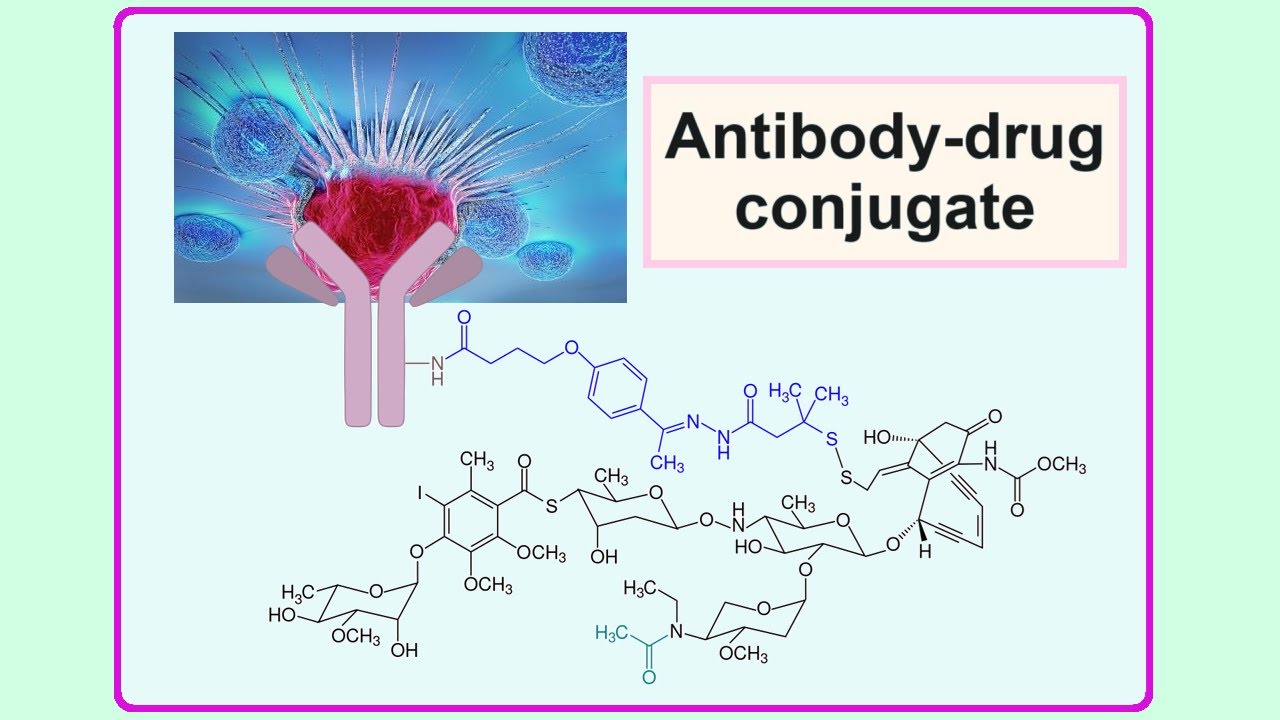
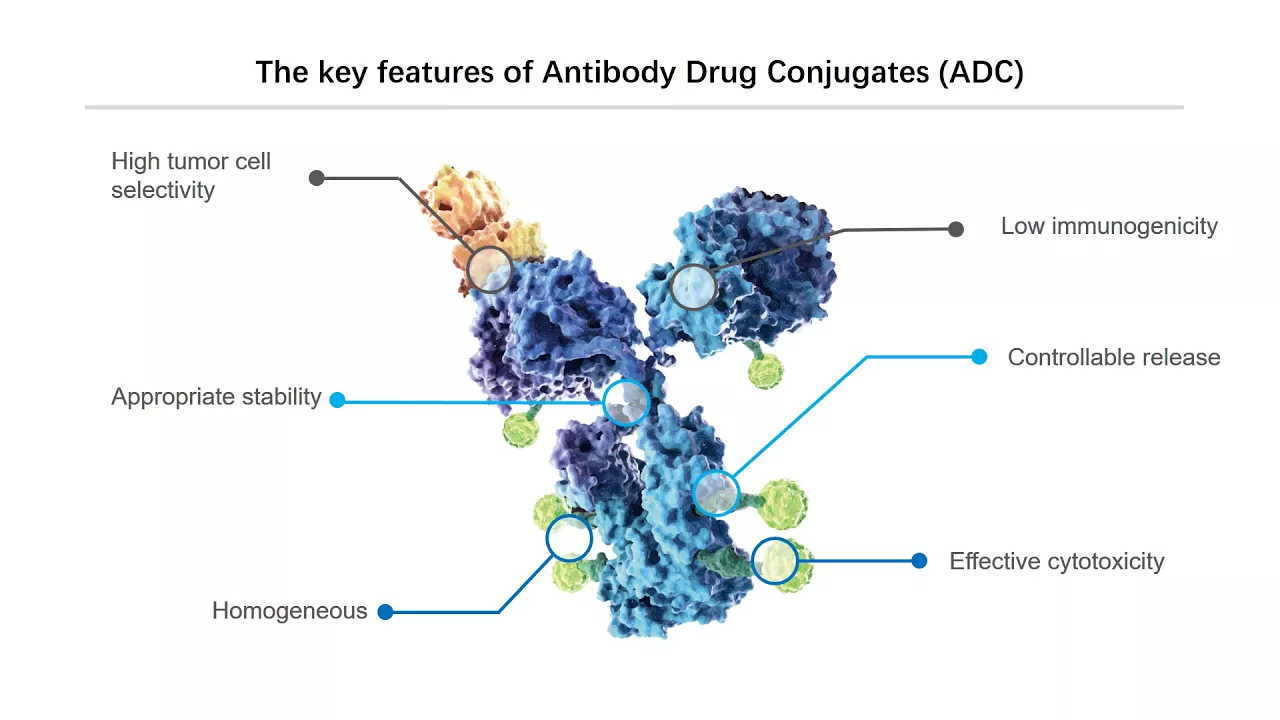










Bioconjugation is the chemical linking of two molecules to form a single hybrid unit, where at least one component is a biomolecule such as an antibody, peptide, protein, or oligonucleotide. The process involves targeting functional groups (such as amines, sulfhydryls, or aldehydes) on biomolecules using bifunctional linkers—either homo-bifunctional (same reactive groups on both ends) or hetero-bifunctional (different reactive groups)—to create bioconjugates that retain the activity of each original component while providing additional functionality. Key considerations for successful bioconjugation include determining the intended application, selecting appropriate reactive groups based on biomolecule accessibility, choosing appropriate spacer arms, ensuring solubility and stability, and removing unincorporated label. Applications range from antibody-drug conjugates for targeted cancer therapy to multiplex immunofluorescence and DNA-barcoded antibody arrays for high-throughput protein detection.
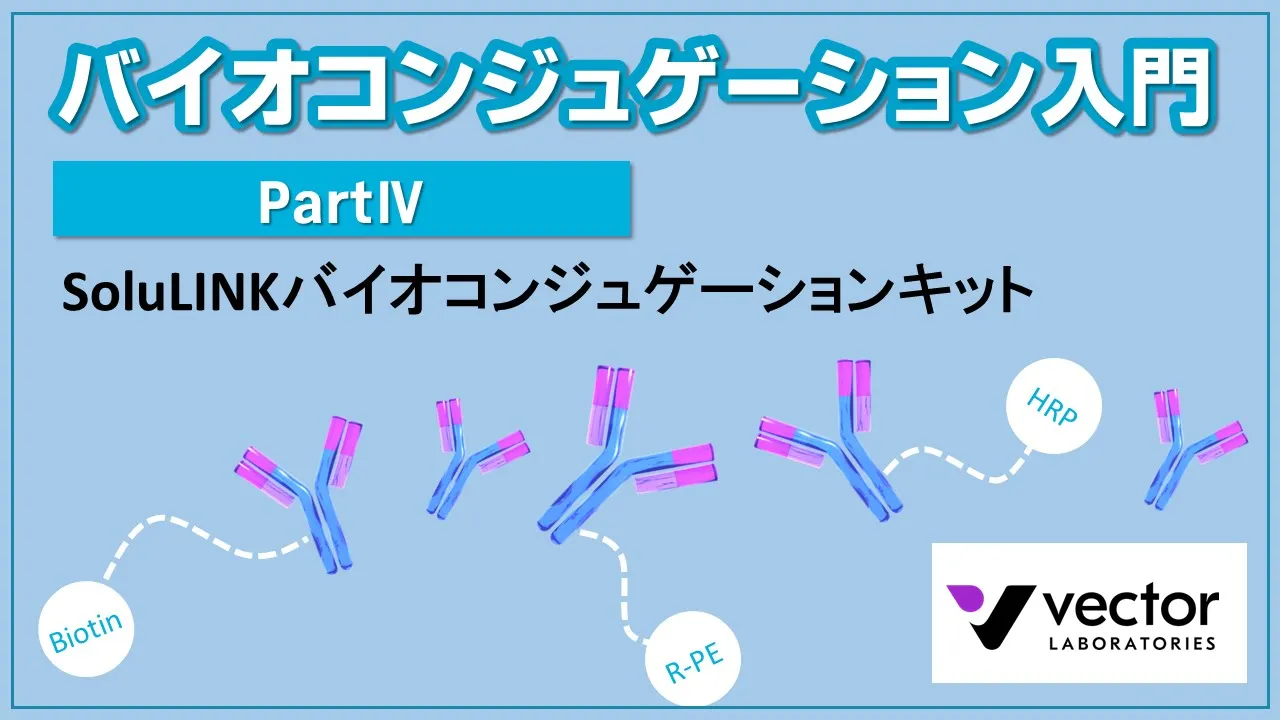
Bioconjugation Fundamentals and SoluLINK Technology Webinar
Added:hi uh thank you for joining a webinar today today's topic is introduction to bioconjugation this will be presented by my colleague dr craig powell he is the director of technical services at vector labs today's webinar will be about solid link bio conjugation chemistry and its applications during the one hour presentation we will have a quick faq session at the end please submit any questions you may have using the chat fun to webinar site i now introduce you dr craig powell over to you craig thanks very much byron and hello to everyone joining us for today's webinar you know some listeners may be familiar with our previous webinars or webinar series that focused on applications such as immunohistochemistry and immunofluorescence now as byron mentioned today's webinars on the topic of bioconjugation which is a little different from our previous webinars though it's not unrelated as you'll soon see once we get into the presentation all right so here's a quick overview of what we'll be discussing today we'll look at what is bioconjugation we'll look at a bit of a definition on that we'll look at some common examples of bioconjugation some of the nomenclature and phrases that are used we'll dip our toe a little bit in some organic chemistry then we'll pivot over to look at some really interesting case studies on how bioconjugation is being used to push the frontiers of both medicine and science hopefully that might pique some interest for some of you then we'll look at the actual solulink chemistry itself the bioconjugation technology that's incorporated in those products then we'll have a look at what the product portfolio is focusing on some of the kit formats and i'll mention why we're focusing on that a little later on and then tips and tricks or do's and don'ts for bioconjugation some tools and resources that we can make available for you and then as byron mentioned at the end we'll have us some time for a little bit of a q a all right so let's dig right into it here what is bioconjugation and the image i've got here on the left hand side is probably the easiest one to talk from or visualize at your end so i've got a molecule over here a biomolecule that looks suspiciously like an antibody and you want to conjugate the squiggly line to it let's just call this squiggly material peroxidase or horseradish peroxidase and i'm going to use this example throughout the presentation because it'll be easier just to stick with the one example to try and convey some of these concepts about bioconjugation so again we've got our biomolecule the antibody here we want to attach peroxidase to it and that's basically what we do using chemistry to generate a bioconjugate and this is in fact then a peroxidase conjugated antibody and this could be a primary or a secondary antibody for example so bioconjugation is the chemical linking of two molecules to form a single unit or a hybrid but since this is bioconjugation of course at least one of those molecules in this union or hybrid you know would be a biomolecule such as an antibody a peptide a protein or indeed an oligonucleotide now one thing that's very important is uh the conjugate retains the activity of each of the components in the example that i've got over here the antibody of course you want that to still bind to its target antigen and you want this enzyme the example we're using here peroxidase to still be reactive with a subsequent chromogen or substrate that you might apply in a given application however another important point is when you do put these two together you get an additional functionality that you don't get with either molecule alone so this is the nuts and bolts of bioconjugation and some of you might be thinking hey that sounds a little familiar and so yeah indeed it is some of you are probably using bioconjugates in the lab on a daily basis and on the left hand side here i've got an example of a fluorophore conjugated antibody indeed this could be a primary antibody it could be a secondary antibody such as an andy mouse an andy rabbit something like that where you would have a fluorophore could be a fluorescein you know your favorite dye on there an alexa a dialite whatever it might be indeed you could swap out the word fluorophore for something like an enzyme such as the example we just gave on the previous slide indeed for a secondary antibody or even a primary that could also be biotin or degoxigenic and we'll be talking about some of those examples a little later on so hopefully this sort of allays some fears for you about bioconjugation what it is and in fact you are probably using bioconjugates in the lab routinely or almost on a daily basis another example in the right hand side i've got here is an agarose bound lectin this could be certainly an agarose-bound antibody as well but these are agarose beads conjugated with say this glycoprotein or lectin whatever it might be and then apply it in a column format for isolation or capture of whatever it might be so that's another example of bioconjugation whereby that entity whether it be an antibody or glycoprotein is bound to that matrices these beads in the example i've got here and then utilized as a tool to extract or capture or isolate a given target antigen or protein for example of choice all right so now that's what i should put up here or what i should have put up here is is a little warning flag saying organic chemistry ahead so just bear with me over these next couple of slides and don't be too concerned about some of these structures i'm going to walk you through these but after these couple of slides uh we'll get into some of the case studies but i feel it's very important particularly with with an introduction to bioconjugation to become familiar with some of the nomenclature or phrases that are used out there otherwise if you're unclear on that then then you don't get the full appreciation of what we're talking about so here are a couple of commonly used names or phrases when we're talking about bioconjugation and one of them is a functional group and this is part of a molecule that reacts with the reactive group to form a bond and the example i've got here again is our antibody and we've got an amine group here and usually on antibodies the idea is to target primary amine groups there's a lot of them usually through lysines that are present and it's very easy to use this functional group to then attach other molecules or link as i should say to the antibody and i've got an example over here here's the linker this one over here those of you who may be familiar with some organic chemistry or perhaps have done some by bioconjugation before may identify this molecule as biotin nhs and basically uh just to walk you through it this is the biotin component here this is the part that will be accessible for an avedon or a streptavidin subsequent detection conjugate or indeed an antibiotic antibody and then the reactive group over here this particular group binds to this functional group linking chemistry and this is part of the link the reactive group is part of the link that reacts with this functional group on the molecule to form a bond now so we've just discussed what a functional group is that's part of the molecule the reactive group reacts with that functional group uh and it's part of the linker another part of the linker here is this spacer arm which separates or joins i should say these two ends of the linker now spacer arms come in a lot of different flavors i will say and we'll touch on that a little later on but basically a spacer arm as you can see separates the reactive group from the business and the biotin and in this case of that linker to give it accessibility for subsequent binding by an antibiotic or a strep dab or evident molecule all right so just become familiar with some of these terms functional group reactive group and space around as we go through the presentation all right so here is another couple of terms you may encounter when you look at some of the options for bioconjugation one here is termed a homo by functional linker this particular phrase up here another phrase is a heteroby functional linker and the example i've got for a homo bifunctional linker is actually glutaraldehyde and many of our listeners out there might be familiar with using aldehyde based fixatives for tissue or cell staining for subsequent immunohistochemistry or immunofluorescence and indeed this is a great example of their action or function in that they do crosslink proteins and if you look at glutaraldehyde here it has on either end these actual aldehyde groups and you can imagine if you do apply glutaraldehyde with an antibody you it would react with the amine groups you would get an antibody binding here and similarly you get an antibody binding here so these homo bifunctional linkers have the same reactive group on either end of the molecule you can imagine if an antibody was bound here and you had another glutaraldehyde you get another antibody and of course the linkage would go on so my functional link is uh limit what you can do a little bit uh with the bio conjugate afterwards and indeed the example i've given here you'd simply get just get a big ball or polymer of antibody which you know may be useful in some applications but certainly not for more specific applications so usually investigators use something called a heteroby functional linker which is different from a homo by functional linker in that it has different groups at either end of the linker the example here is a sulfo nhs ester this reacts with the mean functional groups you can remember on a previous slide we were talking about a functional group on an antibody so this would bind this end here would bind to the antibody and then it has a different end over here this melamide that reacts with these thio or sulfhydryl functional groups of a different molecule so you can certainly then utilize this and this is a molecule called sulfo smcc you can certainly look at that it's a very popular molecule for conjugating uh to to antibodies and other [Music] other components as well all right so this is pretty much the extent of the the biochemistry we'll be talking about organic chemistry now we'll look though at some of the other selections or choices that are commonly used for binding or bioconjugating proteins and we have used the term previously in some other slides amin groups we've looked at some sulfhydryl groups and so here's the accessible group this is the name of the particular group his and this is the actual target structure of it and then it reacts usually with something like one of these and we have mentioned nhs esters before so whereby you'd have this amine group on an antibody you'd react with say a biotin or say a fluorescein nhs ester and that's the way you would then get a biotin or a fluorescein attaching directly to that antibody some of these other groups sulfhydryl groups aren't freely available on an antibody and so the antibody itself would have to be modified usually through a reducing agent to cleave the antibody to make these sulfhydryl groups available for subsequent reactivity with the malayamaid group and that malayamite indeed may then be conjugated with a biotin or a fluorescein itself but the antibody itself would have to be modified and the same thing with some of these other particular groups like aldehydes and azides are not present on antibodies so the antibody itself would have to be modified in order to use a given or reactivity or bioconjugate methodology and so certainly this is just an abbreviated list of some of the many ways you can attach linkers to proteins for example and i'd say the most commonly used ones are the amines that's listed up here as i mentioned very prominent and available and accessible that's another key word you know while something might be present on an antibody or indeed a target that you want to bioconjugate the the quick question is you know is it accessible or do you have to modify it somehow to get access to that functional group so you can then put a linker on it so since the means chromium mean groups are readily accessible on things such as antibodies uh if usually the most popular method of targeting or conjugating antibodies and then i'd say the next is probably the use of these sulfhydryl groups through some modification we'll be talking a little bit about the linkage of an aldehyde and hydrazine which is the basis of the solulink chemistry a little later on all right so some of you might be thinking hey this is great craig so you know i'm getting pretty interested here in bioconjugation i've always wanted to know about it so what are some of the considerations if i want to you know launch into a project well you want to step back a little bit and have a consideration about well what is the actual intended application and how is it going to be performed is this going to be performed in solution for example or indeed is it going to be a [Music] bioconjugation on a hard surface or a matrices a bead such as we mentioned before in agarose b and what is that biomolecule that you're going to be conjugating and indeed the two points there what is the intended application and what is the biomolecule will probably lead you then into the choice of chemistry you know what is available for conjugating or accessible what reactive group or functional groups i should say are available on that biomolecule and once you've sort of looked at those options a further one would be a spacer arm selection if you can remember back to the diagram i showed earlier on of that biotin nhs ester we had that spacer arm that essentially joins the reactive group with you know the biotin of that example and the spacer arm can vary in a number of different ways i mentioned it comes in a different flavors and what i meant by that is it comes in different lengths and different composition which may affect things such as solubility uh and also uh there is another factor there that could be important and we'll touch on this a little later on is whether or not you can actually cleave it and what that means by is by splitting it using something such as reducing agent or or indeed as we'll see later on a uv light for example and that may add functionality to that bioconjugate certainly solubility and stability you know are you working with a labial molecule uh that might not be uh soluble in you know aqueous phases or you know does it precipitate out in organic solvents like a dmf or dmso for example and also then stability uh in solution prior to the conjugation and also stability after conjugation does it have a very short half-life does it as i mentioned just then crash out a solution can you actually use that in a functional way and then consideration once you've done the bioconjugation you know think about what you're going to do with it for subsequent you know detection or capture visualization methodologies isolation and things like that so you can see this is again it's just an abbreviated list of considerations when you're starting to get into bioconjugation it can get complicated quickly and indeed you know the title of this particular webinar is introduction to bioconjugation and so you could certainly go off right now and we could wave you off and say good luck with uh using separate linkers like the biotin nhs esta but i think you'll find pretty quickly that there are a number of other considerations uh that you'd have to take um under considerations such as you know ph you know buffers salts things like that uh how are you going to purify it as well that may not be readily available it may be expensive to do or a little complicated so we're going to have a look at some of the kit formats coming up here that i think would be a great way to introduce yourself or indeed a lab member or your lab to bio bioconjugation but let's just take a step back and have a look at some of the applications where bioconjugation can come in and it doesn't sort of happen in a vacuum no one sort of wakes up and goes hey i'm going to conjugate an antibody to fluorescein today usually and i'm walking through this slide usually it starts with a research project over here on the left hand side you're thinking you know what we've got whatever it might be you know you're looking at something you want to capture or indeed isolate a given protein you want to detect it or visualize it uh maybe you're trying to up regulate something and you'll want to quantify it i've got the word there perturbation maybe you want to interfere with a cellular cascade or pathway and you want to inhibit something or stop it and see what happens uh and that's just an abbreviated list then again and you're thinking well how am i going to probe this how am i going to uh you know undertake this particular research project what you do then is think of various investigative sort of techniques in doing that whether it be using flow cytometry or fluorescently conjugated antibody some stellar tissue based staining microscopy such as electron microscopy for example or immunoassays such as lateral flow protein or western blotting maybe you'd quantify something with an elisa surface plasma plasmon resonance uh is certainly gaining popularity out there maybe you want more defined drug delivery and i'll show you an example of that coming up or indeed maybe you're working with an omics platform what i mean by that is whether it's proteomics or a genomics platform and indeed when thinking about that and indeed all of these investigative sort of techniques do incorporate the use of bioconjugates and it might be that you know your favorite vendor for example whoever that is you know doesn't have all of the repertoire of conjugates you know that would help you probe or uh generate the results you want in a given research project maybe you could take it further by having you know an antibody conjugated to a a novel enzyme or a fluorophore or you need to plate it somewhere to capture isolate material and the same thing for some of these other uh particular biomolecules as well hopefully the idea of this slide is to is to start getting the the juices running in your mind and thinking okay how can i push my research project further or what if i could quantify you know perturb or whatever it might be you know a given cascade or or signaling pathway in my study could you push that particular research further and probe new areas and this is where the bioconjugate tools come in okay so we've just gone over what is bioconjugation some of the common examples and the nomenclature as i mentioned we just dipped out a bit in some of the organic chemistry uh and looking at some of the applications here hopefully this is starting to get you a little interested let me show you a couple of case studies where people are using bioconjugation and well say with bioconjugation is vitally important in in generating the results they want the first case study i hear is i've got here rather is using an antibody drug conjugate and essentially some investigators conjugated a humanized antibody and to a given drug and let me work from this particular image on the right hand side so we've got a human t cell here that expresses this particular antigen cxcr4 the investigators were trying to get this particular drug that's made by our friends at bristol myers squip to be a little more selective in the way it does target its particular antigen or an and uptake in that given cell type so it's not particularly specific the drug so the investigators were thinking well you know what if we target this particular expressed antigen on these human t cells with an antibody we conjugate the antibody and they did that using cellulite conjugation chemistry to this drug it can then get incorporated into the cell and work on these particular you know tyrosine kinase pathways and effect t cell activation so hopefully that makes sense so the drug itself actually is a tyrosine kinase inhibitor and so by using the specificity of that antibody to bind to that target antigen and they did studies to it to identify that once it binds to that antigen it actually does get incorporated inside the cell and therefore acts specifically and because it has that drug payload there it can actually act in situ in that given cell and so i thought that was a pretty neat way of looking at bioconjugation and i'd call it actually i did i did read somewhere someone called it a vectorized or i'll call it targeted chemotherapy rather than a whole systemic chemotherapy this is directed toward a given cell type and antigen so i think this is pretty neat and uh there are now i think in a last count around about 80 or so anybody drug candidates using various you know conjugation methodology uh under evaluation uh by the fda so pretty neat stuff that's going on there with with bioconjugation here's another one uh it's where they use bioconjugation that with the ceiling technology are dna antibody bar coded arrays these particular investigators uh uh developed this platform called a missed platform a multiplexed in inside you targeting excuse me tagging platform whereby they had a monolayer of single stranded dna microbeads on i think this was like a glass surface if i remember correctly but these are all immobilized they're in the one place and they've got a different single strand on them that's the idea of the of the colors there but by using bioconjugation what they did was attach complementary dna to antibodies that then hybridized those single strands which allowed these antibodies specifically to capture different proteins in solution and then using a fluorescent sandwich eliza they could quantify that later on in the study if you're going to look at it they actually then eluded off those complementary dna strands and they could do several rounds or multiple rounds of detection so this allowed them to do high throughput with high sensitivity but it was this conjugation of the antibody uh with a complementary dna strand that allowed them to undertake this given methodology okay one more case study we'll look at that might be of interest to investigators out there this was actually just came out last year and these investigators really wanted to develop a straightforward method to to probe or investigate tumor heterogeneity without going the way of what i would refer to as maybe a a complicated complex and indeed a high cost platform that i know are out there and what these investigators did was they developed what they referred to as a cyclic or a cyclic immunofluorescence methodology basically they conjugated 14 different antibodies two oligos oligonucleotides and they and they put these particular uh oligonucleotides down on the tissue at the one time so there was not subsequent incubations of separate different antibodies there's 14 antibodies with defined oligonucleotides unique oligonucleotides on the tissue at the one time and then they put on a complementary fluorophoroligo strand and did some visualization and identification with that because it also had a photo cleavable linker if you remember back we did uh talk about spacer arms and how they could have an option of having a cleavable arm this was a photo cleavable arm uh or linker arm that they could break off using uv light exposure and therefore that allowed them to do re-probing later on with some other targets so this actually uh is a very neat way for those of you out there who may be doing multiplex immunofluorescence or things like that some of you might be thinking hey there's no secondary antibodies here that's exactly right these investigators were not hobbled if you will hamstrung by having to use to find andy mouse or andy rabbit or any goat secondary antibodies and constrained with those parameters they utilize these antibody oligoconjugates and these unique complementary strands and they and didn't have to worry about uh secondary antibodies so i think that was pretty neat and this is certainly going to be uh something that's developed forward and i do believe that that other platforms are very similar out there at the moment so hopefully this gives you some idea about how bioconjugation is being used out there and it's certainly coming to prominence in a lot of methodologies okay so we've just had a look at some interesting case studies let's have a dive now into the solulink chemistry you know the question i've got here what is solulink bioconjugation and let me walk you through this slide it's really a couple of different steps but it involves the use of this molecule called high neck and another molecule called 4fb and obviously there are abbreviations for much longer chemical names but nonetheless let's break it down a bit and we'll use the example we've been using uh since uh pretty much the first slide here in the webinar here's our antibody and we're going to conjugate this enzyme horseradish peroxidase to it so for the cellulite conjugation first off you attach high neck to the antibody and in a separate step you attach 4fb to the enzyme so they're two separate steps and you do those number one and once they're done once they're performed then you mix them together and given the high affinity of the high neck for the 4fb that linkage you get essentially this bio conjugate peroxidase andy mouse is i just made that up it could be anything you want it could be a primary antibody a secondary antibody but the idea being that you've got a peroxidase conjugated antibody and the nuts and bolts the the heart of the solulink bioconjugation chemistry is the use of this high nic and 4fb molecule to link together and form these bioconjugates all right just take a deep breath another couple of chemical structures here but i think this is important just to get into it a little bit more here's the high neck molecule right here this particular end reactive group will bind to the amines on the antibody and similarly on the 4fb that will bind target amine groups on this particular enzyme the peroxidase and some of you might be looking at this 4fb molecule and just thinking hey didn't we see that on the glutaraldehyde and the answer is yes you did so this is actually an aromatic aldehyde that links to an aromatic hydrazine and with under certain conditions once they're bound to their given targets there they give you this particular bioconjugate and interestingly you'll see right in the middle here is this hydrazone chromophore and the idea here of the graphs to show you you can actually use that or utilize that linkage that chromophore in the linkage to identify that yes it actually has been conjugated and how much is there all right so we're using this particular example as a again throughout the webinar just to get some of these concepts across so again here's our antibody here's the peroxidase enzyme here's the linker and this particular linkage using hynek 4fb has this hydrozone bond that enables quantification of that actual linkage to occur and so that's one of the the key benefits uh or advantages of using the solution chemistry is that you can quantify how much material is bound to your biomolecule and i've listed here some of the other features or advantages of the cellulite chemistry certainly these the the reactions occur under relatively mild conditions and that's very important what i mean by that is it's not at extremes of ph not high alkalinity or very low ph uh because you know certainly if you are working i've used the word labile before you know with some or delicate i'll use that phrase maybe that's a little better some delicate specimens uh you want to retain maximum activity or binding activity and certainly for antibodies you want them to bind to their target antigen you don't want to break them up or things like that so that's very important some other linking technologies can be rather harsh and you do lose activity so just be aware of that some of the binding gets very close to 100 in terms of labeling efficiency if you selected or chose a linking methodology that only put a linkage on 10 of your biomolecule you're obviously using losing i should say about 90 percent of your biomolecule and that's going to flush down the sink and you'll lose a lot of that so you really want a high efficiency labeling methodology which this is you also want it to work relatively quickly you don't want to be sitting around for hours to have the the linkage occur so indeed cellulite chemistry incorporates a catalyst called aniline which drives the reaction very quickly to format conjugation stability 2 is is a key factor and i hinted on that earlier on under the considerations for bioconjugation you want the certainly the reagents and and the conjugates to be stable once formed and certainly you know a year in storage at four degrees is a very good time for a bioconjugate consistency between lights is pretty crucial particularly if you're trying to duplicate studies scalability if you if you're going to amp it up instead of just uh you know a very small you know maybe milligram amounts you want to go to or microgram amounts rather you want to go to milligrams or even gram quantities uh certainly that's a methodology you can consider or an approach and we did mention quantifiable but also it's very versatile and flexible it can be used in many applications and if you think back to the slide we mentioned about the bioconjugate applications with the image of the cell layer all of those particular methodologies we listed flow cytometry microscopy etc you know these this particular bioconjugation methodology can be used in those studies all right let's have a dig now into the soiling product portfolio and i did mention earlier on we're going to be looking at the kits themselves are focusing on the kits and i've split them into two groups we'll look at the antibody and protein conjugation kits and we'll look at oligonucleotide conjugation kits so here's the selection of antibody conjugation kits and the reason why again i'm focusing on the kits just to just to reiterate or emphasize the fact in that again this is an introduction to bioconjugation and i think a very easy way to become familiar with the techniques the requirements would be to go with complete detection kits something that includes all the the necessary components and reagents to perform the bioconjugation reliably to give you confidence then to go forward and perhaps use separate linkers later on or explore other opportunities so that's why i'm focusing on the kit formats these are complete detection kits or complete conjugation kits i should say rather that include all the necessary components a great segue into exploring the really exciting field of bioconjugation so there is a biome to doxogenin endodoxygenin kits we've got a ficurithrin kit fluorescein labeling kit and perhaps not surprisingly hey aprox today's conjugation kit as well so very quickly uh we have two bio con biotinylation kits uh one is specifically for antibodies uh it's referred to as a one shot antibody biotinylation kit and another one would be for proteins other than antibodies i've listed it here and biotin's used for a lot of different reasons and i'm sure that most of our listeners out there have used biotin conjugates uh in in one another different formats so both of these biotinylation kits referred to as chromalink biotin kits use this particular compound and this is similar to the biotin nhs that i showed earlier on as you if if you look at it you'll notice very quickly that yeah you know these biotin compounds are indeed you know heteroby functional linkers you know here's the uh reactive group that'll bind to your primary amine groups uh on your antibody and here's the biotin over here that will be accessible for subsequent avedon streptavid or indeed an anti-biotin antibody what is different here though is there is a very long chains spacer arm it's a hydrophilic peg spacer arm that helps in solubility of the particular linker and also it separates the biotin a little further away from the antibody to prevent things such as steric hindrance to enable this bite to be accessible for subsequent binding and you will see here as we've been mentioning about the conjugation of the high neck and the 4fb you do get this hydrozone chromophore being incorporated in this linker and that's important for a couple of reasons particularly with these biotinylation kits number one you'll see here that there is a significant time saving in that you don't have to run a harbor assay a haberassay is a colormetric assay and i've got here that that some other kits do include that or recommend running a haber assay for bias and quantitation but with the hydro zone chromophore you can get it away which is the five minute uv scan to identify the conjugation has occurred and you can actually quantify the biotin but the other thing that my colleague byron always reminds me of is is that the haber assay under reports the amount of i'd say consistently under reports the amount of biotin is actually incorporated on a given target so in that case um it's a an inferior way of of measuring or quantifying biotin in these particular bioconjugation methodologies and certainly this just shows you how you can use this particular chromophore you read it at 354 nanometers and this is actually a bovine igg biotinylated with one of the chromalink biotin kits this shows you you know buy it into protein molar equivalents obviously when you read it under the spectrophotometer at that given wavelength you can easily quantify the amount of biotin that's on there okay this brings us to the doxogenin kit very quickly here's the ditch over here that'll be bound by an antidigi antibody incorporated here is this long chain hydrophilic peg spacer performing uh very similar you know solubility roles that i mentioned earlier for the biotin here's this particular chromophore again to allow or enable quantification with that quick uv scan and here's the reactive group that'll bind to your amine groups on the antibody so this particular kit the deoxygenum antibody labeling kit allows you to link the oxygen onto an antibody for example you know thinking okay that's great craig what sort of applications can i use these for and i've just listed over here on the right hand side just some bullet points on how they can be applied one of the more interesting applications here actually was multi-plexed immunofluorescent staining whereby two mouse primary antibodies um i should say one was conjugated with the biotin another one with the dedoxagenin kit and then subsequently detected using other fluorophore conjugates but nonetheless i've got an example here of a sandwiser using a chromalink biotin kit this particular capture anybody was plated the any the antigen was captured and then this detection antibody was conjugated with chromalink here's your streptavidin your enzyme and then they read that particular reaction this just gives you some ideas of how these kits are used out there we also have the point here about using magnetic beads as well it could be a strap david and magnetic bead for pulling out biotinylated antibodies or proteins for example right so let's toggle now to just some of these other complete antibody kits that we've got and uh one is the fico urethra kit it puts a red fluorophore 5k urethra on antibodies and we've got the peroxidase antibody kit as well and this particular diagram here just shows uh what we've been uh representing all through the webinar your antibody being bound by the high neck compound the hrp enzyme conjugated to 4fv and then under the certain conditions and using the analyte aniline catalyst driving that reaction to get this linkage and the hydro zone bond that you can then quantify the particular one kit that there's a bit of a standout here is the flourishing antibody kit and i've got a couple of key points there about it it actually does not use high neck and 4fb so it's a bit of an outlier it actually uses an nhs fluorescein to perform the conjugation but nonetheless this particular kit it is a complete kit that enables labeling and purification within about 90 minutes so that might be of interest to some investigators out there some of the other applications that these kits would be useful here are these fluorophore antibody conjugation kits probably flow cytometry would be a very popular methodology uh can certainly be used for blossoms various amino acids and the peroxidase conjugated excuse me the peroxidase uh antibody conjugate kit uh certainly for very similar applications as well immunoassays could be something such as uh you know an alley spot or i've got there or maybe a lateral flow assay uh one further kit i'd like to draw your attention to is a protein protein kit uh whereby let's just say i know maybe you want to conjugate a hormone with a fluorophore or an enzyme or something like that or maybe just uh you know bsa for example or albumin as a control with whatever it might be uh you know certainly this particular kit does incorporate the use of high neck and 4fd as well and and enables that hydro zone linkage to occur and some examples of the applications would be in vitro assays and i do have an example here of an antibody whether it be a primary or secondary to a novel enzyme or a fluorophore but also in vivo assays and we did touch a little bit on these abcs or antibody drug conjugates in one of those case studies earlier on uh indeed it could be a an antibody digest you know there's a lot of work going on with antibodies and fab fab2 or something like that uh to it you know various uh drugs or whatever it might be so hopefully this is giving you some ideas uh about how bioconjugation you know could potentially be be looked at through a different lens let me let me put it that way all right this brings us to the oligo conjugation kits and there's there's two choices one is a protein oligonucleotide kit and the other one is an antibody oligonucleotide conjugation kit and both of these use again the high neck four fb linkage technology you do get this hydro zone bond that allows you for chronic quantification of the conjugation to occur and examples i've got here of where they might be used and some of you may even be using these applications or techniques out there proximal ligation assays whereby you might have different antibodies labeled with different oligos and when they're in close proximity obviously you get that hybridization occurring similar would be an immunopcr reaction and also targeted oligo delivery and you know i would say that that's probably something that's coming to the forefront and what i mean by targeted oligodelivery would be you know maybe the use of something like an si rna or like a a small interfering rna which which really acts um i'd say through enzymatic breakdown of complementary mrna whereby you can then interfere or perturb there's that word again uh you know various you know progression of of cancer or something like that and you know there's been uh i'd say a lot of work being done about how to extend the the half-life of sirna uh to be more of a targeted approach so so there's some interesting work going on about that but that's where one of these oligonucleotide you know conjugation kits would be of interest all right um tips and tricks or i've got here in the table do's and don'ts so really quickly do determine the antibody volume and concentration and don't automatically assume that what's provided to you by a vendor is actually the uh correct volume or indeed concentration you know the vendor might be over filling the material by a five or ten percent so that they so you're guaranteed of getting whatever it is concentration they say you're getting so make sure that you do then um validate that make sure you adjust the volume and concentration as required and work within the given parameters as per the kid instructions don't use too little don't use too much get into that sweet spot of volume and concentration do remove preservatives and what i mean by that is things such as azides or antimicrobial agents that may interfere with the conjugation and don't automatically assume that oh my antibodies purified i can continue straight away with the bioconjugation you know some of these purified antibodies may be supplied in buffer with carrier proteins such as a bsa or indeed i've got here other amine molecules and what i mean by that is contaminants or or indeed buffers like a tris based buffer is how the antibodies supplied which which tris can be actually conjugated so through the use of you know nhs esters or something like that so just get rid of those before you continue with the bioconjugation certainly if you are using oligonucleotides or peptides you know ensure the appropriate purity that's been run through hplc for example and modified so for example don't use i would call it dirty material you know something from a serum bleed or something like that and for certainly for the heineken 4xb conjugation methodology uh make sure they are amine modified so that you can link the 4fb onto those or the high neck onto those given molecules and at the end i would highly recommend removing unincorporated label and don't leave it around you know that can cause a lot of problems uh with uh perhaps interference with binding subsequently or high background or something like that so do remove the unincorporated label all right this brings us to the end here we do have some tools and resources available on our website you can access these through this particular linkage we've got a a white paper here talking a little bit more in depth about the solar link technology and we've recently made available a bio conjugation resource guide that highlights the products and kits i've just spoken about but also some of the separate linkers and magnetic beads that are available as well some of the other tools and resources available on our website we've got product manuals online calculators i've listed here uh that you can that i should say would make the process a little easier for bioconjugation troubleshooting guides you can i go through and make sure that everything is looking uh as you would expect we're building out an faq section and we do have some published references available as well okay so that brings me to the end of the presentation and with that in mind now with the the information i've bestowed upon you go forth and conjugate with confidence uh but i'll open the floor up now to any questions you may have thank you uh thank you craig for that great presentation we will proceed with the q a uh the first question is if if i am using expensive material antibodies or oligos how do i maximize conjugate yield with the heineck and 4fb chemistry yeah certainly um number one i was just talking about some of the do's and don'ts there you know what you want to do is use a highly purified material you know certainly as i mentioned for oligos pass it through hplc make or indeed you'd want to de-salted as well uh and and in some of these complete kits there are things called zebra columns that get it into a buffer uh format uh that make it uh more appropriate for bioconjugation so you want to get rid of the contaminants the preservatives uh do a buffer exchange to get it into a into a good buffer initially uh to perform that bioconjugation make sure also that these particular biomolecules are within the appropriate concentration range uh certainly if you use uh too little you might not get appropriate labeling if you use too much that's going to be problematic as well there might be issues with solubility it may crash out of solution another point would be volume as well don't use very small amounts because otherwise you just might lose the material when you go through a purification step at the end trying to remove the unincorporated or indeed using too much material you've just got everything slopping around there and you might uh reduce the labeling efficiency there um you know one other point i didn't really touch on in the presentation was that with the high nikken and 4fb linkages there are actually what you what what we refer to as checkpoints during the bioconjugation methodology and what you do is you you check the msr the the molar substitution ratio which is really you check how much high neck is attached to for example the antibody and you check how much 4fb is on your for example enzyme that same example i've been using and make sure you've got the appropriate you know molar sub molar substitution ratios of those molecules on those given entities before you continue with the bioconjugation because that's the great thing about the cellulite chemistry their their midpoint checked to make sure that yeah okay i've got you know my estimated you know three to five four fb on my enzyme and three to five high neck on my antibody you know it you know all signs point to a successful conjugation and therefore you move forward and then you can use that hydro zone bond uh or chromophore uh to just again confirm the conjugation has occurred and you can quantify that amount so so they're the sort of points i'd uh look at if you're working with expensive material uh or maybe precious material great thank you the next question is what is the difference between the protein oligo conjugation kit and the antibody oligo kit yeah i didn't really expand on that uh in the presentation so as you saw for both the the oligonucleotide kit we've got an antibody and a protein oligonucleotide kit and also for the the biotinylation kits we've got an antibody and a protein biotinylation kits and and that does pose the question okay if i'm not using an antibody i can use the other you know another protein for the other kid and then i and and the thing is they are different a little bit in the way they are set up in that the antibody kits um have what i would would say more of a highly uh stringent sort of uh step in terms of the purification because we know that antibodies are you know around 150 to 160 kd in size and therefore we can we include in those kits appropriate cleanup steps to make sure the material at the other end is highly pure so with protein ah you know oligokit or the protein biotinylation kit you know it's a little difficult to identify what given protein you might be using you know it could be you know much bigger than an antibody or it could be uh smaller and so therefore it's a little more difficult to include in there a given cleanup step for that so it gives you a little bit of an insight into into those different or the differences i should say between those those two kit formats okay great the next question is why should i choose solid link over other bible conjugation kits such as lightning link yeah fair enough uh you know i didn't touch on other technologies that are out there in terms of bioconjugation i did show that there are other ways to perform protein conjugation with that abbreviated table we looked at sulfhydryls and things like that but i will say that um you know the lightning link technology uh certainly does highlight how quickly it can be done uh interestingly though there's no cleanup step at the end uh they put in a quenching reagent but as i pointed out there i think you know if you're working particularly with precious material or you're trying to maximize labeling efficiency you really need highly reproducible results i'd highly recommend performing a clean up step such as what we recommend uh in some of the some of the uh methodologies for the slowly in chemistry but again uh what i've stressed throughout the presentation here uh for the solute chemistry is the use of the high nick and 4fb and the fact that they enabled one as i just spoke about in an earlier question this mid checkpoint molar substitution ratio check but also that hydro zone chromophore that allows you to do a quick uv scan to quantify that yes the conjugation is successful and yes i do have a known amount of whatever it is biotin for example on my given protein or antibody and that i think is invaluable for investigators who want that consistency that reliability that reproducibility uh between uh manufactured lots that they're doing in their lab otherwise it's a little bit of a crap shoot with some of the lightning link stuff and particularly if if uh you know you're not using highly purified material there could be a lot of problems with background and inconsistency in labeling poor labeling efficiency and things like that so that's why we incorporate you know things such as these zebra columns for cleanup as well i also will say that we do have some online calculators and and other tools and resources that i think would be helpful for investigators to to look at as well okay great the next question is about si rna antibody conjugates can you elaborate on this application and how do you remove excess si rna yeah fair enough so i did i did touch on that a little bit you know and that was with the you know oligonucleotide kit i spoke about targeted oligonucleotide uh delivery whereby you'd use one of those kits maybe you'd have an any a protein for example and basically what what some investigators are looking at uh with the si rna is trying to increase its its its longevity once injected i think it gets cleared pretty quickly by either kidneys or liver uh or something like that uh and you know the idea is to to apply it conjugate it uh to a given target protein uh and so it can then be incorporated into a cell or cells the target cells uh and then it can it can do its business in terms of breaking down you know complementary rna so introducing them has been an issue and their longevity uh in this as in when delivered systemically uh so i think investigators are looking at things called protein cages i think you can probably look that up in some of the methodologies that are there um and and certainly uh i think those protein cages act to protect that small interfering rna from getting gobbled up by the body uh and allow significant or substantial amounts then or um i'll just say quantities to get incorporated into the cell at that at the place of entry so so once you do that yeah just certainly follow through the same methodologies uh that you would as per the you know the protein oligonucleotide kit in terms of cleaning that up um as per those instructions all right thank you craig our time is up for the q a session thank you for attending the webinar we will send you the entire recording tomorrow uh through email and if we were not able to answer your question we will personally answer your question at a later time and have a great day thanks for attending the webinar thank you okay bye-bye
Up Next

In Vivo Click Chemistry: Molecular Imaging Tools for Cancer Detection
@SocietyforTranslOnc
204 views•2019-01-29

Quantitative Real-Time PCR (qPCR): Principle, Method & Data Analysis
@animatedbiologywitharpan
129.2K views•2023-09-06

Microbial Degradation of Plastics: Biodegradation Pathways & Sustainability
@majeedhammad
2.9K views•2021-04-11

CRISPR and Genetic Engineering: How Gene Editing Works and Why It Matters
@kurzgesagt
30.5M views•2016-08-10
Related Study Plans & Knowledge Roadmaps
Structured learning paths in Biotechnology