














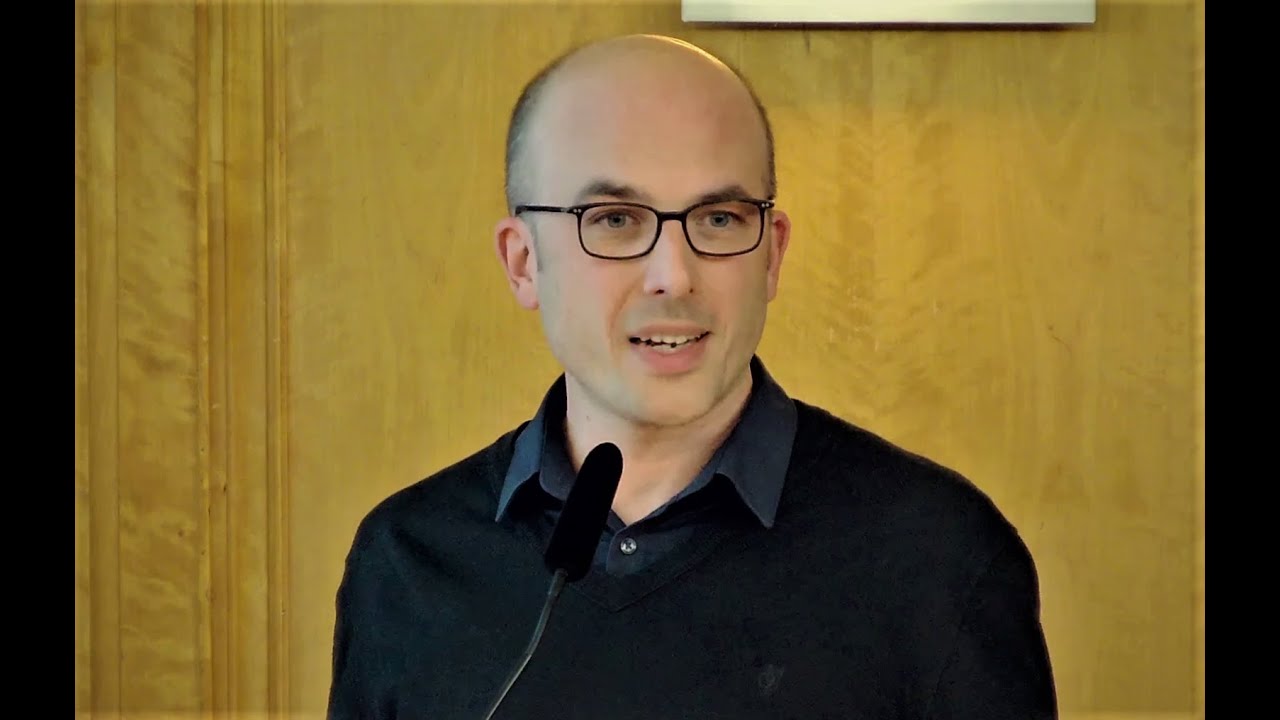


Bioorthogonal chemistry refers to chemical reactions designed to occur selectively in living biological systems without interfering with natural biological processes. This field emerged from the need to study sugar molecules (glycans) in living cells, as traditional chemical reactions cannot be easily controlled in complex biological environments. The foundational concept involves identifying chemical functional groups that do not exist in nature, allowing chemists to perform reactions in living organisms for applications such as imaging, drug delivery, and therapeutic targeting. Key examples include the Staudinger ligation (azide-phosphine reaction), copper-free click chemistry using strained alkynes, and tetrazine ligation for rapid bioorthogonal reactions. These technologies have been translated into clinical applications including site-specific antibody-drug conjugates for cancer treatment and targeted drug delivery systems.
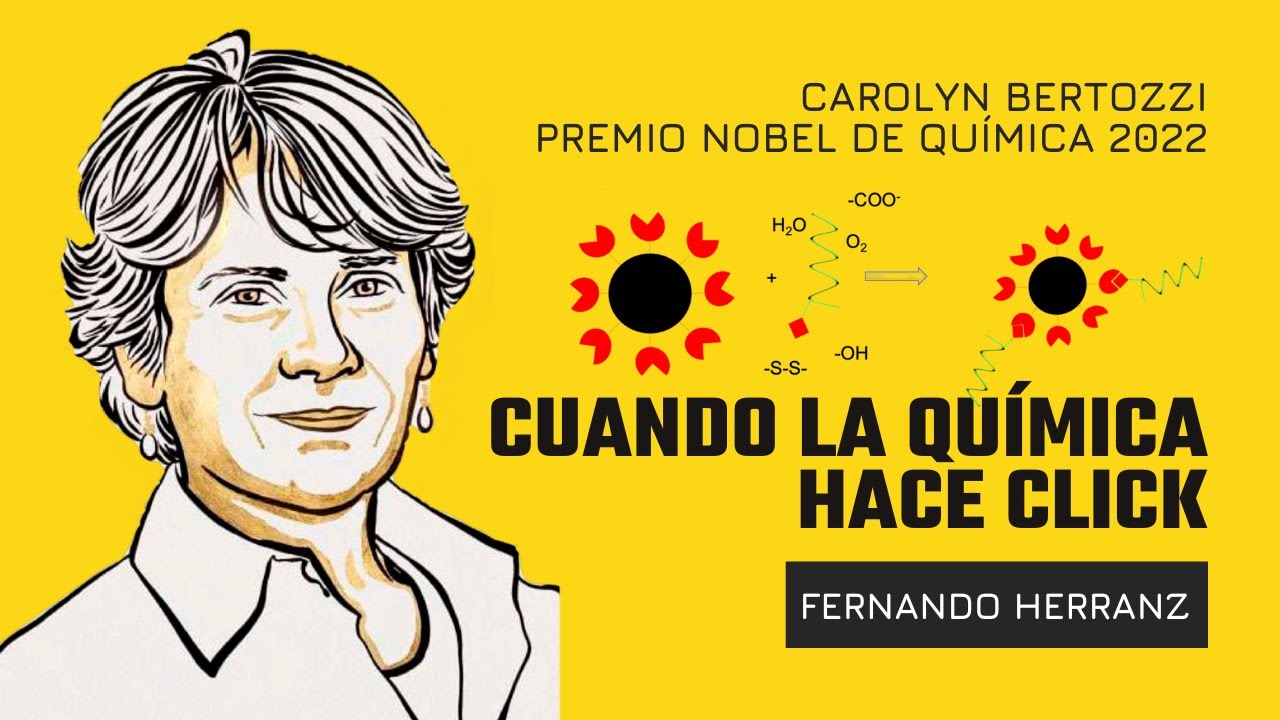
Bioorthogonal Chemistry: From Bench to Bedside | Carolyn Bertozzi
Added:I didn't realize that there was like a Stanford Berkeley thing happening in this audience how many people here from Stanford how many people from Berkeley [Applause] Stanford I'm disappointed man it's not so much the numbers it's the enthusiasm that we're missing anyways both fantastic institutions and um I thought what I would do is um take the time here to give you the backstory of Bio orthogonal chemistry which is as happy as I am at Stanford it is truly a Berkeley story so I'm actually going to talk about work that we did at Berkeley between the years roughly 1996 to around like 2010.
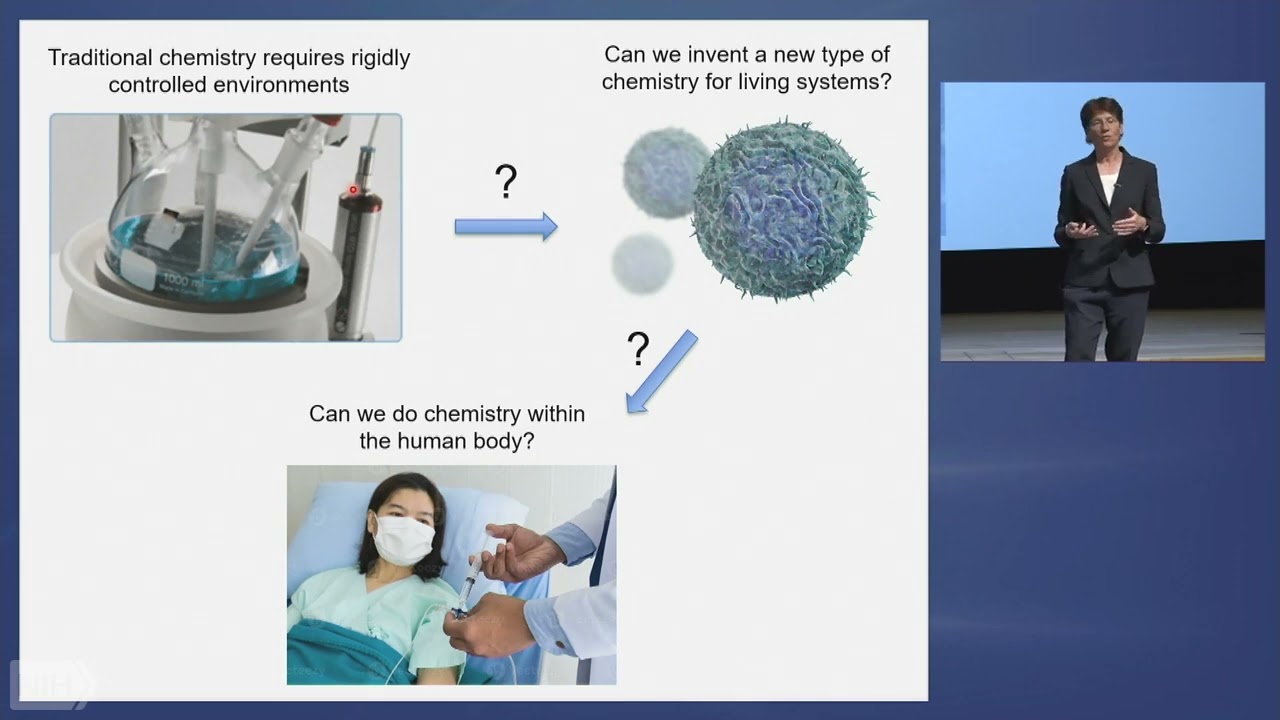
and that's what I consider the kind of uh first part of the title here which was the the basic science part and then I moved to Stanford in 2015 and my lab has really shifted a lot more towards the translation part so at the end of the talk I'll just give you some some examples of what people are doing right now in the biopharma industry using bioorthogonal and click chemistries as foundational tools um but to kind of give you the origin story I have to back it up a bit and and take myself back into the mind frame that I was in uh back during my PhD and postdoctoral training when the idea of what I later termed by orthogonal chemistry came into my mind as a tool that would enable fundamental studies in the field of glycoscience so that's another area that my lab has a long-standing interest in which is the biology of sugar molecules or glycans and particularly how they contribute to cell cell interactions in immunology and in oncology um so when I was a grad student my focus was in synthesis in organic synthesis and how many people here in the audience are organic chemists because I'm talking to you today where's all the cheers you know like go go organic chemistry and for those embarrassed people in the audience who are not organic chemists but let me let me introduce what we think of as like the fundamental tool of the organic chemist and and it's the round bottom flask so when I was a grad student I did a lot of chemical reactions where I combined two reagents or more and to form a product and um and and the organic chemist is is accustomed to doing those kinds of reactions in the round bottom flask using the gadgetry that you see here and the reason that we have this gadgetry is because this allows the chemist to have full control over all the parameters of their reaction meaning that the chemist can control the concentration of reagents the solvent that they're dissolved in the atmosphere above that solvent because many of the reactions we like to do in organic chemistry are sensitive to Air and moisture we have to exclude them so we purge the atmosphere with nitrogen gas or with Argon gas we control the temperature so we can heat up the reaction if we need it to go faster we can cool it down if there's some unwanted side reactions going on and having all of that control allows the organic chemist to perform thousands of reactions that have been developed and described over more than 100 years um but as my own training progressed and I became more and more interested in studying processes in biological systems I got interested in the idea of doing chemistry not in this well-controlled round bottom flask but in much less controllable biological settings for example I became interested in in the idea of doing chemical reactions in living cells for purposes of attaching Imaging probes to molecules of Interest so that one could study them in living systems I started thinking about doing chemical reactions in laboratory animals like the mouse or the zebrafish to study biological processes in in even more authentic settings compared to a plastic dish with cells growing in it and I started wondering whether there might be a time when one could do chemical reactions in perhaps the most complex vessel one could think about which would be the human being for purposes of drug delivery or for Diagnostic applications to improve human health basically um and it was that thought process that ultimately led to this concept of bio-orthogonal chemistry which if you haven't heard the term before literally means chemistry that is orthogonal to biology or put another way chemical reactions that neither interact with nor interfere with a biological system and the way that my lab over many years has thought about coming up with these bio orthogonal chemistries is to contemplate the different galaxies of chemistry in the universe of all possible chemical reactions and it's a pretty vast universe but there is a defined Galaxy within it which is the biological reactivity space and that space defines all of the chemical reactivity of molecules you could say on Earth or we could just focus on the human body right all the different chemicals in your body constitute the biological reactivity space and it's it's a large space but it's not infinite and elsewhere whoops I clicked something elsewhere in that Universe oh no I don't know what I did there we thought could be a bio orthogonal reactivity space a collection of chemical functional groups that don't exist in nature so these would be chemistries invented by humans for humans and they would be chemicals that would be so different from the biological chemicals that there would be no crosstalk between them and this is the space that my lab set out to discover way back in the mid 1990s when I started my first academic position now it wasn't in a total vacuum that we thought about this concept of bioorthogonal reactivity space there was a very specific application that I had in mind that drove our lab to focus on this new chemistry and and this again takes me to my own interest in glycoscience which started during my PhD years but really blossomed when I was a postdoctoral fellow at UCSF and who here is from UCSF cheers do we have a mascot at UCSF I don't there's no animal I guess when you don't have undergrads you don't really need a mascot because there's no sports teams or anything but anyways I worked in an Immunology lab over on Parnassus this was before the Mission Bay Campus was built and in that lab I was studying changes in the patterns of cell surface glycans that accompany disease and at that time it had already been well established that there are particular phenotypes that are defined by cell surface glycans that are quite stereotypically associated with malignancies and one of those was the observation that healthy cells have a certain pattern of sugars that terminate with a particular building block a monosaccharide building block called cyalic acid and so the glycoscientist has a symbolic lexicon that we use to describe our structures and cyalic acids are always shown pictorially as these pink diamonds and then for those organic chemists that's what the actual chemical structure looks like and all of our normal healthy cells have what I like to think of as a well manicured Garden of these sialo glycans these sugars that terminate with the pink diamond but the observation was made decades earlier actually that if you analyze the cylloglycans on cells in a tumor cancer cells you find that they are basically that well manicured Garden has overgrown into like a tropical jungle and there's an increased density of these cyaloglycans on the cancers and at that time it was just an observation it was correlative no one really knew why but it's true that whenever you can observe a molecular difference between the disease and the normal tissue that is a potential opportunity for Diagnostic Imaging targeting or even therapeutic targeting and so I became interested in this observation and I couldn't help but wonder if there was some mechanism by which you could image those sugars the cyalic acids maybe you could detect and monitor tumors in patients through non-invasive Imaging techniques like magnetic resonance imaging or pet scanning for example but at that time and this is now in the kind of early 1990s there was no technology available for Imaging of sugars by contrast there was a lot of exciting work going on in the Imaging space for other kinds of molecules at the research scale people were really excited about genetically encoded fluorescent proteins so now you know you take for granted that you can fuse the green fluorescent protein or M Cherry right to your protein of interest and image that protein in cells or animals but in the 1990s that was a brand new technology and and everyone was really excited and those of us who study sugars were really jealous because we didn't have anything like that to study the structures and the changes of these sugars so I became interested in that problem and I was in my head thinking about how could you image a sugar in a living system and you know science is a funny thing where there's so many breakthroughs that we have intellectually just by virtue of random collisions with people from different areas of science that we might chat with at a conference like this for example which causes us to think differently and to go back to our labs and you know switch entirely the directions of our research in some rare occasions and I had that experience when I was a postdoc so my advisor whose name was Steve Rosen he was an immunologist he had agreed to go to a kind of little Boutique conference in Southampton England to give a short talk on the research in our lab and this was the conference it was the joint anatomical societies of Germany and Ireland they don't even exist anymore actually today but at that time there were these two societies would get together and have a conference and and I went to this conference in place of my boss because at the last minute he regretted he had agreed to go and he said who from the lab would like to have a free trip to Southampton England to give this talk for me and I was like pick me you know so so there I was and I went to that meeting and I was a fish out of water in so many different ways I was the only person there under the age of 65 and I was about 27 at the time I was the only female speaking at that conference and I was the only person at the meeting who was not an anatomist talking about organ systems in the body you know I was going there to talk about cell surface glycans and there was one other speaker and participant at that meeting who was almost as out of place as I was and it was this gentleman Werner reuter a German biochemist who also had agreed to give a talk at that meeting and regretted that decision because like me he didn't fit in either but amazingly enough he was also interested in glycoscience and was studying the biosynthesis of cyalic acid and what Varner's group had discovered and he talked about at this meeting was that one could basically introduce chemically modified metabolic precursors of cyalic acid into cells and the cells would transform those precursors into chemically altered cyalic acids which would then appear on the surface of the cell and so what his group had done was to take this metabolic intermediate called n acetyl monosamine and replace what's normally an acetyl group so the r would be a methyl group if this is an acetyl group and he would replace that with extended derivatives where the r group was a little bit longer like an ethyl group or a propyl group or a butyl group so one carbon homologues as we would call them and as long as that modification was not too large and disruptive those altered derivatives would get processed in the Cell by about six different enzymes converted to the corresponding cyalic acid where now that side chain is right here and eventually they would make their way into those cell surface glycans where that modified side chain just came along for the ride and this was an observation that I don't think anybody in that room cared about but when I saw this I couldn't help but wonder what if you could slip a little chemical reactive group into that modified side chain and then use that chemically reactive group to do a chemical reaction with an Imaging probe okay and so it just so happened that I heard that talk and I and I had a lunch with Werner during that meeting and we chatted and I asked him a million questions about what works and what doesn't work and all these things and then a few months later I was ready to apply for academic jobs and many of you are going to do this yourself at some point and so what you'll find is that when you apply for jobs you have to write some research proposals that describe the work you plan to do in your future lab and so I did that and my sort of main proposal was a two-step idea for Imaging sugars in living systems which would leverage that principle that Werner reuter had established so this is literally the graphic from my job application back in 1994 this was a very sophisticated graphic at the time and I was really proud that I figured out how to make the lipid membrane and everything because things weren't we didn't have bio art okay you had to do everything using very primitive packages um but the idea was to put a chemical group into a simple sugar feed it to cells let the cells metabolize it the cells will put it in their cell surface glycans and now it's outside the cell and available to do chemistry with a probe and the probe would have its own chemical modification so let's call that group Y where y would be complementary to X and X and Y if they encountered each other in the living system would react to form a bond and now there's an Imaging Probe on the sugar and that was going to be my platform technology for Imaging cell surface sugars now of course to do this in a living system in in live cells or in laboratory animals or maybe human patients those two chemical groups have to be bio-orthogonal they have to not react with other functional groups in the living system they have to be mutually selectively reactive with each other and I had not coined that term yet we've came up with that term a few years later all I said in my research proposals is that we would choose chemical functional groups that would be very selective for each other and amazingly enough at that time I actually did not know what functional groups could work in this context and so I didn't even include any ideas for functional groups in my job application proposal and nobody even asked me so there I was you know defending my proposal in interviews sweating like what if somebody asks me what are X and Y going to be and I'll have to say yeah we're going to figure that out later you know because at that time you could flip through the thousands of chemical reactions known to the organic chemist not one of them really had the qualities of Bio orthogonality so there really wasn't a chemistry that was suitable but I kind of slipped through the cracks and and I got my job at Berkeley and I started recruiting students and the first thing we started to focus on was like we'd better come up with a reaction because that's a fatal flaw of this proposal otherwise so the first reaction we developed which I think of as really the foundational bio orthogonal reaction was a modification of a well-known chemistry called the classic stoudinger reduction and this was chemistry that was first reported by a famous chemist Herman stoudinger who in fact won the Nobel Prize in chemistry back in the previous Century not for this work he won the Nobel Prize for work in polymer science actually which was very impactful but more than a hundred years ago schaudinger published on this really cool reaction between triphenylphosphine and an azide where the azide is this three nitrogens linked together this was a chemistry I was very familiar with because I had performed shoutinger reductions during my graduate school days and so what happens in this reaction is that the phosphine is a soft nucleophile and it reacts with the azide as a soft electrophile and through the expulsion of nitrogen gas which is a thermodynamic driver of this chemistry an intermediate is formed which is called an Aza illid so that's where you have phosphorus and nitrogen bound together with a negative charge on one and a positive charge on the other so that's the first intermediate that forms in this reaction then a person adds water and water will hydrolyze the PN bond to generate a primary amine and the phosphine oxide so the amine is the reduction product of the azide and the phosphine gets oxidized in the process what I loved about this chemistry as I had performed it is it's very selective you could put your azide into really complicated synthetic molecules and do this reduction with triphenylphosphine without any interference of the other functional groups it's it's very mild very selective you do this reaction in water so it proceeds in water and water is a reagent you know in the second step so in my mind this was almost bio orthogonal because neither phosphines nor azides are known in nature these are made by chemists for chemists and they react with each other and not with other biofunctionality but the problem here was that although these two reagents the phosphine and the azide will form this linked adduct that adduct is not stable in water it falls apart it hydrolyzes so if there was some way a person could convert the azaleid intermediate into a stable product that doesn't fall apart that might allow us to do the Imaging in biological systems I should also point out that azides are very small functional groups there are three atoms but the radius of the azide is on par with a simple methyl group so I thought we could put the azide into sugars and it wouldn't be a big structural perturbation right so all of that led us to develop a just kind of slightly altered version of this Classic 100 year old reaction that we call the stoudinger ligation and in order to form a stable adduct we simply introduce this methyl Ester on one of the Benzene Rings Ortho to the phosphorus and so by doing so the intermediate Aza illid now has A New Path of reactivity where that nitrogen atom can cyclize into the Ester cleave the Ester form an amide Bond and those kinds of intramolecular five-membered ring forming reactions are extremely fast they're so fast that even if you run this reaction in water as the solvent which of course you would have to do in a biological system the water does not compete with this cyclization you get quantitative conversion to the cyclic amide and now water can Mosey along cleave the phosphorus nitrogen Bond no harm done there because the amide keeps the two components linked together so this was the first bio orthogonal reaction that we took into living systems to do imaging experiments with sugars and we already knew from the work of Werner reuter that getting the azide into cyalic acid might be as simple as putting this azito acetyl group onto that metabolic precursor which is the monosamine derivative feeding it to cells letting the cells metabolize it and then watching the acidosciallyic acid appear some hours later in the cell surface glycans and that worked beautifully and that became the Playbook by which we and others went on to introduce azides into other kinds of sugars we did a lot of work in those early days putting azides into fucos which has its own interesting biological story as well as other sugars like n azito acetyl galactosamine or galnak which also has some interesting biological stories behind it and anywhere we put these azides we could conjugate them with a phosphine reagent by via the stoudinger ligation I had two Fearless grad students who were the first to do this chemistry in live animals those folks were Jen pressure who's now a professor at UC Irvine and Danielle Dube who's a professor at Bowdoin College and what they found is that you can inject into mice this azito-acetyl monosamine derivative let the cells take it up and metabolize it and then find the acidoscyalic acids on the cells and tissues of those animals with no harm to the animal that we were ever able to observe and then if you inject into those same animals probe molecules that have that stoudinger ligation Motif you will find the product forming on the cells inside those animals so that was kind of like a big milestone for the group and really for the chemistry Community because it kind of set the precedent that a chemist should expect that they can do chemistry in a living animal it just has to be the right kind of bioorthogonal chemistry but we also learned about some limitations of the stoudinger ligation during the course of these experiments and during these years and it had to do with the kinetics of the reaction so when you do reactions in round bottom flasks you can control the rate of your reaction in a number of ways you can change the concentrations of the reagents and you can heat up the reaction right those are tools at your disposal but you don't really have those tools to work with when you're doing the chemistry in living systems okay so for people who I think you probably all took chemistry classes even though you're not chemist now which means you know what a second order rate law looks like huh yeah sort of it's all right I'll remind you that for second order reactions which is true for most of these like bimolecular Reactions where two things come together um the rate is equal to an intrinsic rate constant times the concentrations of the two reagents so for us that would be the azide and the phosphine and in a flask you can control these concentrations to make the reaction go faster but in living systems you really don't have much control over these concentrations for us we put the azides into self-surface sugars so there's just an inherent limitation on on the density of these sugars as they're displayed on cells and then for the phosphine reagent there are some practical limitations regarding how much of that you can inject into an animal without kind of saturating its liver metabolic capacity and their solubility limitations and things like that and also unlike the round bottom flask which is a closed system the animal is not an equilibrium setting the minute you put reagents into an animal they're getting cleared out of the system either through metabolism or just getting filtered through the kidneys and and urinated out so the clock is ticking on your reaction and if the re the rate is too slow three agents might get cleared before the reaction can occur and what we discovered with the stoudinger chemistry is that as great as it is and as clean as it is it's kind of sluggish it has an inherent rate constant around 10 to the minus 3 per molar per second and what that means on the ground is when we did these experiments in animals you know we had to inject the animals every day for multiple days in order to get enough reaction to occur so that we could visualize the product and that was really too slow for many of the uh Imaging applications that we had in mind so we decided we needed a faster bio-orthogonal reaction and probably at least two orders of magnitude faster to get where we wanted to go so this is around kind of this is the early 2000s like 2001 2002.
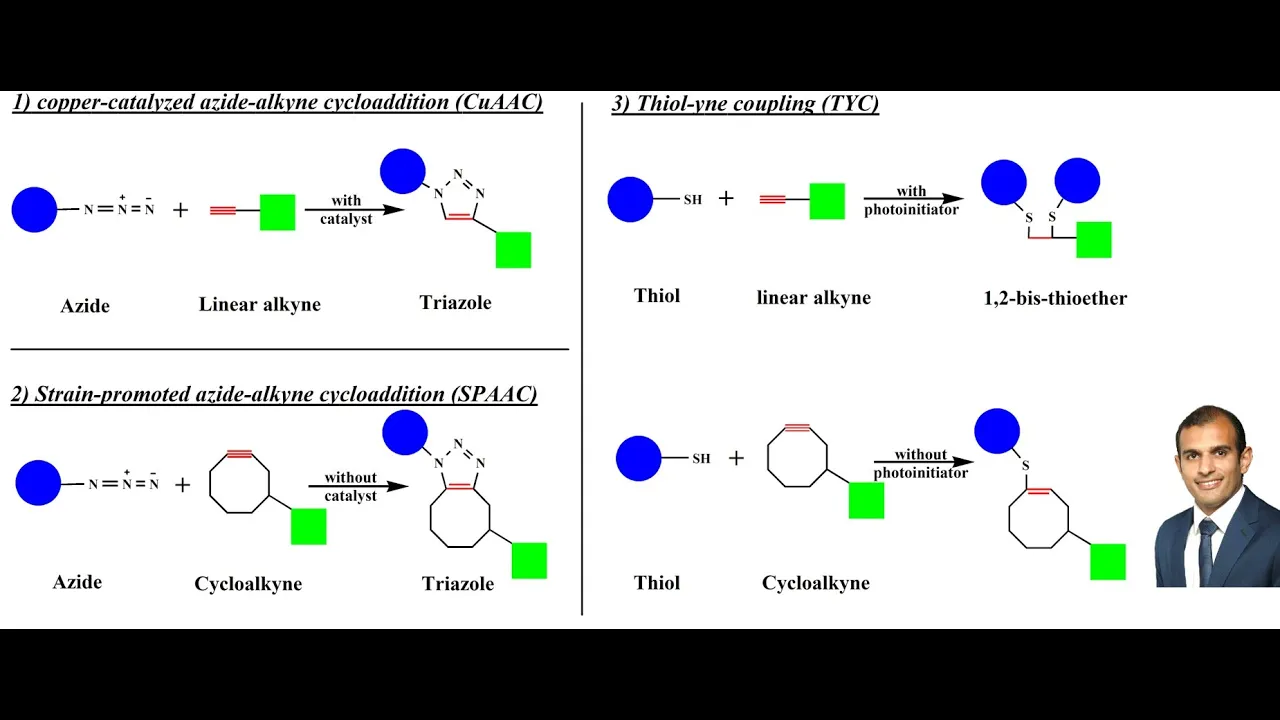
and we were playing around with some ideas and I should mention that around that time there was an uptick in interest around a different reactivity of the azide and we love the azide the azide was just great so easy to put into sugars so small had such interesting reactivity totally inert in the in the bodies of animals and the other thing that azites can do is they can act as one three dipoles and do dipolar cycle additions with alkynes and this was a chemistry that was published on extensively back in the previous Century by another very famous German chemist named Ralph kuiskin from University of Munich so it turns out that this other chemistry which forms a product called a triazole is to my mind almost bioorthogonal and almost not quite because as slow as the stoudinger chemistry is this chemistry is even slower so when people run these cycloadditions to make triazoles in the laboratory they have to heat up the reaction usually to like 100 degrees in order to accelerate the kinetics so the reaction will go in a reasonable time frame and again you can't do that to cells or animals right you can't reflux them in toluene the way that you can do molecules in your fume Hood so we knew that the classic huiskin cycle Edition would be too slow for our needs now in 2002 my uh Nobel Laureate comrades Morton meldahl from copen University of Copenhagen and Barry sharpless who collected his second Nobel prize from Scripps um published just within like two months of each other on a mechanism to accelerate that dipolar cycle Edition through the use of a copper one catalyst and what is now synonymous really with this term click chemistry which I learned in Stockholm was coined by Barry's wife she's a writer and she's really good with like the written word right and so he was describing the attributes of a chemistry where two things come together and very cleanly form a product in very high yield and she said oh it's almost like they clicked together and that became click chemistry and one thing I've learned is even if you're not a chemist especially if you're a biologist you might have heard of Click chemistry so how many non-chemists have heard of Click chemistry and for how many of you is that the only chemistry you know of probably yeah it's not surprising um so this this reaction where you combine in this situation a terminal alkyne with an azide to form the triazole with a copper catalyst this is now one of the most important chemistries in certainly chemical biology it's extremely fast so this chemistry is done in under an hour at room temperature you can do it in water you can do it on complex biological molecules so people including us use click chemistry to conjugate things to proteins and so on incredibly powerful but we also knew that this wouldn't solve our needs either and and the reason is that that copper catalyst is toxic to cells and to animals so as great as this reaction is as a tool in the chemistry laboratory it's not that useful if you need your system to be viable okay so so we were thinking along kind of a different trajectory about how you might accelerate the azide alkyne cycloaddition but without using a toxic metal catalyst and I teach organic chemistry I've taught that class really pretty much my entire career and by that I mean sophomore pre-med organic chemistry right and at Berkeley that class was chem three how many of you tied come three nobody took chem three took him three with me maybe even you know since I was there for 20 years teaching chem three no all right at Stanford we call it now chem 35. how many people T8 chem 35 took chem 35 yay a few people so you suffered through either me or someone else uh teaching you about Ring string and this is a standard set of lectures that everybody hears when they take this class and at Berkeley we would teach this classroom either volhart or StreetWise or in havecock both faculty at Berkeley and and all of these books have a chapter where we describe what happens when you take a very comfortable ring such as a six-membered ring which people think of as essentially an unstrained ring and it's unstrained because the bond angles in cyclohexane are almost exactly what an sp3 hybridized carbon atom would like and students what's the preferred Bond angle for sp3 hybridized carbon tetrahedral so you don't have to really be a chemist pretty good 109. okay and you're pretty close to the ideal Bond angles in in a six-membered ring in the chair confirmation right memories are coming back but as you compress the ring down and you force those Bond angles to be far away from 109 degrees for example 60 degrees like in this little cyclopropane that uncomfortable Bond angle uh creates strain in the system and very strained Rings like to react so that they can release the strain and this is really clear when you look at what happens when you put double bonds into these small rings so double bonds these carbon atoms are SP2 hybridized do you remember the preferred Bond angle for SP2 120 degrees right so now you're forcing these Bond angles very far away from 120 and that's a lot of strain and so the double Bonds in these very small ring systems are really reactive they want to do anything they can to get out of the SP2 hybridization even if they can only get to sp3 and that's a well-known phenomenon so there I was writing that lecture to give like I always do to my students and when you're teaching you often have thoughts that can help in your research as well and the thought that came to mind was has anybody ever looked at the reactivity of a strained alkyne with an azide and so I talked to my students about this and I said go to the library this was before the internet okay so I said go to the library and see if you can find any example of this in the literature and sure enough one of my students found this incredible paper published in German back in 1961 by another famous chemist German chemist named Georg vidig who also won the Nobel Prize in chemistry in the previous century and oh by the way was a visiting scientist in schaudinger's lab before he became famous in his own right so it's like a six degrees of some kind of German chemistry separation or something that I am now a part of apparently but what was published in this paper they were looking at the reactivity of different kinds of alkynes with azides to react to form triazoles and they made the observation that this crazy looking molecule where the alkyne is now constrained in an eight-membered ring that's called cyclooctane is very reactive compared to linear alkynes okay which is the more standard alkynes that huiskin had studied There is almost 20 Cake House per mole of strain in this ring you can't go any smaller with an alkyne in the ring if you want it to be stable at room temp so cycloheptine the seven-membered ring alkyne that was known but had only been studied at very low temperatures and wasn't stable at room temp so so this is pretty much as strained as you can get and have a molecule you can work with and this was a German paper we didn't speak German and I had no German postdocs which was an oversight at the time but you don't have to speak German to understand what happened here you can read right here that when they combined phenylazide which is this with cyclo octane which is this they got an explosion and we're like wow that's promising but then when we dug a little deeper we were comforted by the realization that in this paper what they had done was combine neat cyclooctane and neat phenolazide they're both liquids they just mix them together no solvent no dilution so boom went off like a rocket but it turns out if you dilute them down to concentrations that a person would think about you know doing using in a biological setting you wouldn't expect to have an explosion okay so we thought this might be a precedent for a so-called copper-free form of Click chemistry where we used ring strain as the accelerant rather than a copper catalyst so I had a sequence of students and postdocs who worked on this over many years and I don't have time to talk about all their work but I'll show you all of their faces here Nick agard was the student who found this paper and kind of launched this whole project in my lab then he passed the torch to Jeremy Baskin who's now a professor at Cornell and Scott Laughlin worked with Jeremy he's now a professor at Stony Brook Ellen sletton contributed to this she's a professor at UCLA John Jewett at Arizona Gabby Dale Mito is a consultant at BCG and over many years they made all kinds of derivatives of cyclooctins decorated with all kinds of ornaments as we figured out how to tune the reactivities and these are some of the molecules we made and I'm just going to pull out four examples to illustrate some trends that we learned in this process so up here in the upper left is one of our early derivatives it's kind of vanilla you know in its ornamentation and we measured the second order rate constant of its reactivity with azides and it clocked in at around 1 times 10 to the minus 3 per molar per second which you might remember is about on par with the stoudinger ligation so that was where we started and we knew that that would be too slow and we needed a couple orders of magnitude and one of the big breakthroughs is when we got to this molecule which has two fluorine atoms next to the alkyne and we engineered those fluorine atoms there because they have a perturbing effect on the energetics of the molecular orbitals that we thought would be beneficial and we were right about that because just by putting the two fluorine atoms we boosted the rate constant almost two orders of magnitude so this molecule which we called difo for the difluoro cyclooctane that became one of our most useful reagents for in Vivo Imaging as I'll show you next but just to complete the chart here you could get another boost of reactivity by fusing two Benzene rings in what I call the west coast and the east coast of the molecule so this molecule was laboriously given the acronym Barack by John Jewett who made this molecule who came to my lab in 2008 from Chicago so this was on his mind but now we're almost three orders of magnitude faster than where we started and then you can get another kick by shrinking that eight-membered ring to a seven-membered ring but you have to put a large atom in the ring otherwise it's too reactive so sulfur you know serves that purpose to kind of Relax The Strain a little bit and this molecule was up to four thousand times faster than where we started um so now that we had figured out how to create a faster bio-orthogonal reaction still using the azide as one component we thought we were ready to go back in Vivo and by this point we had become interested in using sugar Imaging Technologies to study changes in glycosylation in a more tractable model animal for optical Imaging which is the zebrafish and what's great about zebrafish is they are translucent so you can see right through them and image their body parts as they are alive you know in floating around in a dish also they're a really nice model of vertebrate development because they can develop through in vitro fertilization all the way from the Single Cell embryo to a larval fish which is kind of like a young adult fish just in five days and you see the entire developmental program unfold before your eyes literally so it's really great to work with if you want to do imaging platform development so these are the kinds of experiments that Scott and Jeremy were doing back then and this now takes us around 2007 eight in that that time frame uh they would fertilize the embryos in a dish and then add one of our azito sugars to the media bathing that embryo and the cells and the fish would just take up these sugars from the media and metabolize them and the azito sugars would end up on cell surface glycans on the different cells of the embryo then in another step they would add difo linked to a fluorescent dye like Alexa floor 488 is an example and label all of those sugars with the fluorescent dye and now you could image the sugars that were integrated into cell surface glycans during that pulse of treatment with this metabolic substrate and then you could do this multiple times at different time points to label different kinds of sugars or sugars that were born at different time points during development so what Scott and Jeremy would do would be to take their labeled embryo after one round of metabolic and chemical labeling quench the unreacted azides should there be any left over through a stoutinger reduction with tricarboxyethylphosphine and then add more azito sugar to label a new round of cell surface glycans either with a different sugar or sugar at a different time point and then you could distinguish the two populations of visitor sugars with different color fluorescent eyes so we would basically make fish with the different colors of the rainbow where each color reflected either a different type of sugar or a sugar born at a different time and that's what led to images like these um it's kind of hard to see in here because the lighting but um I don't know hopefully you can see this is the head of a five day old zebrafish that was labeled with three different sugars at different time points and you can see the different colors are distributed in a very discreet way which helped us to understand you know the origins of of different tissues in the embryo where they came from and when this is an earlier embryo this is about 24 hours of development and at these early time points we could actually watch each cell on the surface of the embryo undergoing a round of mitosis or cell division which is what's happening as they differentiate and different tissues are forming and these arrows are pointing to cells that are in the very late stage of a round of cell division and if you blow up one of those and then take a time-lapse image of that actual mitotic event you would see what's shown in these panels so each panel here is the exact same frame it's a Mother cell which is dividing to form two daughter cells but we have different molecules labeled in the different frames so on the far left here there's a fluorescent dye on the DNA on the chromosomes so you can see the chromosomes are duplicating and then segregating during mitosis as the mother cell right now duplicates and forms two daughter cells so that's what cell division looks like through the window of the DNA and same exact thing is going on here but now there's a different color dye and it's on the membrane so you can see the Mother cell is surrounded by a membrane and eventually the membrane fills in the junction of the two daughter cells as they form right there there's a new membrane and now you've got two separate cells so that's what cell division looks like through the window of the membrane but now we kind of added glycans to the list now we can monitor cell division through the window of the glycans and you can see it starts out with kind of like a fuzzy coating around the Mother cell and it's fuzzy because the sugars are literally like hair all over the surface of the cell but then late in mitosis there is a concentration of these sugars at the junction between the two cells they build up right there and they don't actually fill in with the new membrane they just stay right there at the junction and it turns out that the sugars we were labeling here which are on a certain class of proteoglycans they are playing a role in segregating the two daughter cells which was something that was invisible to the world before we started making these observations and that sent us down a really interesting path of studying sugars during development but you know as we were publishing these papers I think it became clear um in other sectors of chemical biology that this General platform of introducing a bioorthogonal or clickable functional group into a biomolecule and then using that as a handle to introduce Imaging probes biotin groups for enrichment studies that that would be quite useful far beyond glycoscience which was our particular application of interest at that time so other labs started you know publishing on related work where they would put the azide not into sugars but for example into proteins which you know on this pie chart makes up more than half the mass of the cell not counting water and there's a number of different ways that groups have now put azides into proteins for example by introducing them into unnatural amino acids which can be genetically encoded in proteins of Interest or just used as metabolic subject rates for temporally specific protein labeling people have put azides into covalent enzyme Inhibitors to basically study the activity of those enzymes in living systems or to look for On Target and off targets of drugs of Interest people have put azides into nucleosides to image rnas and dnas and people have put them into lipids to image lipids as they move around in the cell so this concept is now I think sort of baked into the fabric as a platform technology for the life scientist and you can buy azide or alkyne modified amino acids sugars lipids probes now from dozens of different reagent catalogs okay so this is accessible to everybody in recent years I've become like I said originally more and more interested in the translational applications of bioorthogonal and click chemistries and there's a number of them out there now so I think the biopharma industry has already embraced these Technologies for their own purposes some standout applications are for example use of these chemistries for making antibody drug conjugates which are have gone hot and cold over the years since I've been in this business but right now they're super hot as a new kind of targeted therapeutic for oncology and Beyond and one of the applications of bioorthogonal chemistries in this space has been to make antibody drug conjugates where the drugs are attached to the antibody in a site-specific way which was not a capability that the industry had really until these chemistries came along so now there's a number of different companies that have platform Technologies for making site-specific antibody drug conjugates using these chemistries one of them is a company that I co-founded called Redwood bioscience which was acquired by another global company called catalent and I'll just show you what we do in that company we developed a different bioorthogonal reaction that we can perform on proteins that we have pre-functionalized with aldehyde groups and we developed a technology we call the aldehyde tag technology wherein we simply introduce a five amino acid Motif into a protein of interest just by cloning so we clone in the sequence cysteine X Proline X Arginine where the X's are variable residues of interest and that Motif is recognized by an enzyme called the formal glycine generating enzyme or fge for short which is naturally found in all of our human cells and what that enzyme does is it oxidizes the cysteine to formal glycine which has an aldehyde group so now there's an aldehyde on the protein at this at this Motif that you genetically encode so now what we do is we introduce that sequence into the sequence either of the heavy chain or the light chain of a monoclonal antibody and we express that plasmid with the other chain of the antibody sometimes with a little bit of extra fge so that the cells will just produce antibodies with aldehyde groups ready to go now we had to invent a chemistry for the aldehyde group that was bio-orthogonal and we came up with this thing we call the hips ligation it's basically an adaptation of the pictet Spengler reaction anybody heard of that one one organic chemist who memorized named reactions when they were in grad school I'm guessing so picked at Spengler chemistry is another 100 year old German reaction and our adaptation was to introduce this dimethylhydrazine group on the indole so that the product is a stable carbon-carbon bonded product which was formed through an electrophilic aromatic substitution anyways that chemistry allows us to attach linkers and and drugs specifically to these aldehyde sites and nowhere else on the molecule and if you're interested in the mechanism one organic chemist over there this is what happens this hydrazine reacts with the aldehyde to form an iminium intermediate which is then reacted through this intramolecular electrophilic aromatic substitution to form the product and anyways anyone here in the biopharma industry can Avail themselves of this technology by simply reaching out to catalent because they will partner with you and all you have to do is send them the sequence of the heavy and light chains of your antibody of interest and they will make it with aldehydes and put drugs on it as you demand so this is the bioorthogonal reaction that we have translated into a site-specific antibody drug conjugate platform but other companies have used this and other types of click chemistries to make adcs and in fact I thought I would point out one of the FDA approved antibody drug conjugates which is on the market today which was originally developed by a company called immunomedics but then acquired by Gilead this this drug called trodelvi if you scan through the sequence here you'll see there's the protein on the left that's the antibody this is the drug on the right it's a toxic drug that kills the cancer cells that the antibody directs it to but built right into the middle you'll notice there's a triazole and that triazole was a site where the chemists who manufacture this drug were able to conjugate two things together and because and probably with copper I'm assuming this was a copper click chemistry reaction fine in a test tube fine in a manufacturing plant you just can't do it in a living but this is now a drug that was enabled by click chemistry finally I'll show you one other type of bio-orthogonal chemistry that came from almost simultaneously from the labs of Joe Fox at um he's at University of Delaware and Neil devaraj who developed this when he was a postdoc in Ralph weiselators group at Harvard Med school and they published these papers almost at the same time this is a bio-orthogonal reaction called the tetrazine ligation and I'm a big fan of this chemistry this is what happens when you take another strained cyclic system but instead of an alkyne it's an alkene so this is transcyclooctane and it's very reactive in an inverse demand deals Alder reaction another ancient organic chemistry with this molecule which is a tetrazine that's why it's called the tetrazine ligation so these two things will react to form an adduct which tautomerizes to form another adduct this is a very fast reaction it's a couple orders of magnitude faster than our fastest copper-free click chemistry so that's why I love this so much the other thing is you can do cool things with this reaction like engineer it to release cargo so um Mark robyard who's a chemist in in Europe showed that if you introduce like a a leaving group at this position then when the transcyclooctane reacts with the tetrazine you make an intermediate which is prone to eliminate that payload so not only do these two things click together but they spit something out and that so-called click to release mechanism has been used by a number of groups as a pro-drugging strategy and I thought I would mention the work of a company called chasky which is a Bay Area biotech company because these are the first folks who've actually done a bio orthogonal reaction in human beings and as a disclosure I'm I have been an advisor of this company for eight years or so and what they do is this they have a mechanism to use click to release in order to have a drug become active only in a tumor microenvironment and the way they do this is they make a hydrogel polymer that has been chemically functionalized with the tetrazine and they will inject that hydrogel polymer directly into a tumor like a intra-tumeral injection and they've done this with a particular kind of bone cancer as their first indication and the polymer just sits in that tumor and it does nothing it just sits there and by the way the polymer here is called hyaluronic acid it's the same polymer that's used in cosmetic as a cosmetic filler right so it's a totally safe material that's a natural polymer that is injected into people's faces especially here in Southern California all the time but now it's got a tetrazine on it so so that polymer just sits there doing nothing meanwhile they put the other reactant for this click to release the trans-cyclooctene they put that on a toxic drug in a place that causes the drug to be inactive so it's a pro drug and this is a chemotherapy called doxorubicin that's normally really toxic and has horrible side effects in patients but when this modification is on it it's inactivated so they'll Infuse that pro drug into the patient through an IV and the pro drug is everywhere doing nothing at all totally inert however when the pro-drug encounters that polymer which is sitting in the tumor the chemistry occurs in the human causing release of the doxorubicin at a very high local concentration which then kills the tumor without the horrible side effects normally experienced with this drug so they just concluded a phase one study of this platform gearing up for phase two and I'm really excited to see what they're doing with bioorthogonal chemistry in the human patient so a big Landmark at shasky but let me just leave you with this last slide because I introduced the concept of bioorthogonal chemistry I showed you the origins of a few reactions like the stoudinger ligation The copper-free Click chemistry and then our pictet Spangler ligation and then finally this tetrazine ligation from other labs those are the handful of Bio orthogonal chemistries that are now in common practice in the world but I'm of the mind that the future is very bright for the discovery of even more of these chemistries from that Galaxy so one of the challenges I like to put forth especially in an audience that's rich with students um especially chemists if you're thinking about ways that you could contribute as a chemist in the future I would say inventing or discovering new bio-orthogonal reactions there's lots of open field to play there so with that um let me thank my group integrated over 25 years which is impossible to do on a naming slide so I'll just show you a couple of photographs so this is a fairly recent rendition of my group at Stanford you can see the sun is shining and it's warm and beautiful and sorry UCSF but that's what we get down in Palo Alto wearing the bertozi shirts that we had printed just about a month before the Nobel Prize announcement so it was great we all got to go put our uniforms on for this picture a few years earlier during covid we had to do our group meetings outside with masks and six feet of separation and the only way to film the group in that setting is with a drone so I hear you had a drone Battle Competition yesterday so it's fun isn't it so we rented a drone to take a picture but after the Nobel Prize announcement some of my alumni are kind of pinged the whole network of alumni and organized a zoom party to celebrate faith and we managed to pull about 150 people together on very short notice from all kinds of different time zones where we all did our best to have a cocktail so we could toast on zoom and so here here's a lot of people from my my group historically but pretty much all the work I showed you here was done at UC Berkeley so this this really was a Berkeley story and I owe them in that University a great debt of gratitude so with that thank you very much and I think we can do our q a discussion thank you there's some handheld mics I think so Carolyn uh one question I had for you was uh there's machine learning is having a big impact on protein science and protein engineering as a result of things like the protein Data Bank Casp Alpha fold to David Baker's work on RF diffusion um do you think that there's an opportunity for an alpha fold two-like moment for chemistry uh and what would it take to enable that given that a lot of the data sets are behind a paywall at ACS and elsevier that's a really loaded question um so so first of all machine learning algorithms and techniques have already you know certainly made their Mark in chemistry in a number of different areas reaction development groups especially catalysis groups have are benefiting now from these methods you know any area of chemistry where you generate a lot of data and make decisions based on empirical observations is ripe for disruption with artificial intelligence methods and so already people are publishing some really nice papers where you know based on a training set you could predict what might be the best choice of a catalyst for a particular transformation of Interest that's already happening where there could be an enormous disruption is in the pharmaceutical industry where you have dozens you know Decades of Legacy data correlating structures with activities but like you said for the most part those data are not minable outside of those companies and even within those companies they're hard to mine because the data have different storage formats and they're not an easy way to sort of get them all in one place and searchable but it's happening now people are have a mind for collecting data in a way that does make it useful for future efforts like this things things that are so hard to predict like um when you make a molecule what will be its oral bioavailability totally empirical and you can't figure that out until you go into animals and it's very expensive at that point so so it's really hard to screen thousands of molecules in animals to look for bioavailability Trends it's just prohibitive so if you could make better predictions based on machine learning that would be a disruptive space things do does your is your molecule going to cross the blood-brain barrier you know is your molecule going to be metabolized in the liver at this rate or that rate you know these things are hard to predict they're all empirical but there's tons of data so I think machine learning algorithms could help make better predictions along those lines material scientists are really benefiting so so people who who make Composite Materials where historically you know you just Blended things together at different ratios and Screen them for a function right and and some screens are cheaper than others and so I think having predictive power could be useful there too in glycoscience glycoscience is a big data problem generally speaking the structures are complicated the the structural diversity of the glycombe outstrips the proteome and the genome by orders of magnitude and we have to make decisions based on sparse so I so I think there's probably opportunities there for disruption but not much has happened yet but you know we're I I definitely feel compelled to hire undergrads in my lab who understand these things and can help us think about how we could leverage those techniques yeah sorry there's a you have to point yeah who's going first let's all go um I was wondering um so so a lot like uh the three sort of characteristic reactions that you that you cited there all have their origins in like the 1960s I was wondering to what extent do you think that um uh what is otherwise bioorthogonal can be mined from sort of like scifinder like databases given what we know already or prior is on um sort of whether the nucleophile electrophile or other participating group has additional reactivity to other uh moieties in Vivo yeah that's it's a great question and it's sobering to think about how much chemistry is in the literature that's not searchable using today's internet tools so scifinder is pretty good for anything from the 1980s or more recent but below that you miss a lot especially if it's not there's no English translation and an organic chemistry is a field that's old enough right that that field started to mature in the early 1900s right it was in the it started in the 1800s but in the early 1900s there was kind of a burst of big big pivot breakthrough kind of error there and and a lot of that a lot of the really amazing basic Discovery chemistries were done in Germany and in Japan and they're not they're not in English so and the structures you know are not searchable this they you know the graphics that were primitive Graphics in those old papers right they were all made on printing presses so all the molecules had to be printed with horizontal and vertical lines you know and I mean it was just it's not chem draw right so um so so so the idea that that knowledge is lost to the world because of today's chemist doesn't know how to go to a library is a really scary thought to me and I I still tell my students I you do still have to actually literally pull books off shelves and flip through them to get to some of that knowledge but there's so many gems of chemistry in that knowledge because that was a time when especially in Germany there was a lot of resources and funding for basic curiosity driven chemistry so so people like you know Herman stoudinger didn't study Aziz and phosphines because he wanted to image glycans and mice right I mean they were just curious about what's what's up with these three agents you know um at one follow-up question which is very expensive okay thank you so much for your talk I'm curious for Bio orthogonal reactions in humans for real clinical applications um I imagine one of the major challenges is getting site specificity or cell type specificity for the delivery of the orthogonal compounds so I'm curious in addition to the hyaluronic acid example you gave what are some methods that you're excited about or optimistic about for achieving more yeah um so that's a great very insightful question and I'm of the mind that what bioorthogonal chemistry could bring to drug Discovery is better spatiotemporal control of drug action and I have another company that I'm right now assembling which is going to be directing by orthogonal chemistries to cells in a cell type specific manner using instead of these intra-tumoral injections with polymers for example using reagents that can be systemically delivered and we have some ideas for how to basically allow drugs to assemble in situ right from fragments that might have better properties than the assembled drug has on its own um and there's there are examples of real of types of molecules that once they get to their target they're amazingly effective but they have a hard time getting to their target they might not be orally absorbable or they might not cross the blood-brain barrier right the problems like that but they're fragments can get places right so so the idea of like using the fragments for the delivery part and then having them assemble into the drug once they get to the Target space I think is an interesting idea to explore um so at the end you showed these few bio-orthogonal chemistries that have been described thus far and I'm wondering if you can draw out you know even just from these few examples um are there some principles that unify them I imagine it's much more complicated than just using functional groups that are not found in biology there must be a lot more you know that can go wrong so I'm wondering what's the uh what's the universal aspect of this I mean so we started out um the the azide was such a standout functional group because it is so inert in biology and yet it has more than one mode of reactivity and yet it in nature in your body it doesn't next to nothing and we knew that because you know when I I'm a I was sort of came of age in the during the AIDS crisis so so during my graduate work I worked on HIV drugs and stuff and AZT was one of the first approved you know HIV drugs back in the late 80s early 90s which is a zetothymidine and so people on ezt were taking grams of drug per day and that azide went right through their system unmetabolized so I knew the azod was a winner even for human studies right just because of that AZT and Other Drugs that have azites in them and then after that we started thinking about Pi systems so alkenes and alkynes especially alkynes because there are no alkynes in the human body that we know of we do have alkenes we have unsaturated fatty acids but but not alkynes so that's where we started but then later we started thinking more about maybe we should be thinking about the periodic table more because the elements in your body are pretty restricted right there's a lot of interesting elements on the periodic table that are not in your body and for example bismuth is one that I've always had a fascination with bismuth is not in your body it's not an element people use much in in organic chemistry but it's actually quite well tolerated in the human body and if you've ever sucked down a bottle of Pepto-Bismol you know you are full of bismuth and you're fine you know um so so that's another way to think of it is is to is to is it you know it's kind of landscape the periodic table for interesting reactivities um yeah over here thanks um you were talking earlier about the importance of big data in moving various Fields forward and how that intersects with machine learning and I think one of the things that's been super important for nucleic acid chemistry is being able to read and write nucleic acids and being able to you know get these massive sequencing data sets um I know you know people have been talking about protein sequencing for a long time and that's sort of a Holy Grail are we anywhere on being able to do this with glycans can we read and write glycans what do you see as the leading Technologies in maybe being able to do this yeah so that's that's a great question and um we are now much closer to reading them than we ever used to be because of advances in Mass spectrometry so so the most powerful methods for sequencing glycans at the glycombe level from complex mixed samples and stuff is by mass spec that's another area where my lab we have a project in what we call glycoproteomics where we're trying to sequence the glycoproteum not cutting the glycans off but the whole glycopridium holistically by mass spectrometry you couldn't really do that 10 years ago because you didn't have the resolution you know you didn't have the sensitivities and also we have better tools now for isotopic labeling and machine learning has become as a big part of glycomics because Mass Spec data sets are huge and complicated and full of data that is not searchable with sort of commercial software package so so that's been really transformative the writing part is more complicated um the enzymes that build glycans and enzymes that degrade them and you can use those enzymes to create glycostructures by genetic engineering or in vitro biochemically but it's much more it's much more difficult than just like reverse transcribing oligonucleotides and and in part and also the structures have a lot more variety and they're not based on a template right so you can't amplify them so it's it's it's different and much more complicated and and I and I I do have a mantra in my lab where I tell my students and this has probably been your experience too any problem that you can somehow convert to DNA sequencing you win whatever the problem is right if it's sensing something or whatever if somehow you can manipulate it so that at the end of the day you're just sequencing DNA you always win uh so if you could find a way to read the glycombe by trans somehow translating it to DNA you win so think about how to do that if there are questions I'll ask on that you've published on glyco RNA sorry who's talking hi oh sorry sorry you have a paper on glyco rnas with Ryan Flynn have you followed up on any of that work oh yeah so uh yeah do you know Ryan have you met him okay so Ryan Flynn was a postdoc in my lab he's now a professor at Harvard uh and his labs are in uh where is he he's in Boston Children's Hospital or no no he's in children's right PCH yeah he's a Boston Children's but his appointment is in the stem cell department at Harvard um and when he was in my lab so he had come from he's an MD PhD student who did his PhD with Howard Chang and Howard is a you know nucleic acid biochemist extraordinaire and so Ryan came to my lab with deep expertise in RNA biochemistry and he came to my lab because he wondered whether there was an intersection between RNA biology and glycobiology and it was a reasonable proposal at the time because um I won't go into the backstory but but there was a form of glycosylation that occurs in the cytosol and nucleus and it often happens on RNA binding proteins so he wanted to study this relationship between RNA binding proteins RNA and this particular glycosylation motif and then through pure Serendipity he discovered something completely unexpected which is that certain small structured rnas make their way into the secretory pathway in the ER and the Golgi where they actually get glycosylated with the same kinds of structures everyone thought were restricted to proteins and this was a mind-blowing discovery in many ways because there was no there was no framework in cell biology in any textbook that would explain this phenomenon like there was no framework where you would understand how rnas could get into the secretory pathway that had not been described and how rnas and glycans could get chemically connected there was no known mechanism for that either so we put out a preprint on that because I barely believed it myself and we were like we need to get some feedback from it and two years later we published a paper on that um and and Ryan took that finding with him to launch his own new Lab at Harvard where he has continued to work on that he's got two papers under review right now um and he most importantly we now have figured out what we think is the chemical structure of the connection between the sugars and the RNA so keep your eyes on Ryan Flynn and you'll see all these papers coming out of his lab yeah I'm pretty excited for what he's been showing um I think my question was kind of in line with David's um David Palmer from earlier I was wondering sort of to what extent do you think that the um based off of functional noise the space of Biore orthogonal groups have already been explored to some extent or like in the limit of like the diversity um yeah I would like to think that we've just scratched the surface of what could be a much larger compendium of bio-orthogonal chemistries so you know there's like a handful now that people use kind of oh there's a sign I can't read my I don't have my glasses on okay I see like someone's like this and I'm like hi it's like your mother is calling oh okay but anyway so um yeah I'd like to think that there's more to discover I mean you know we we worked on this for the first you know maybe 15 years when I was at Berkeley and then we kind of transitioned into working on other things and other labs have made contributions and so right now my lab is kind of focused on other in other project areas but um I do think that there's a lot more to discover and develop but there has to be a need and a motivation so if everyone is satisfied with the five options on the table right now then the motivation isn't there but if someone's motivated I can ask you yet another question or I have some non-technical question um how do you manage and think about the Divide between your foot in the academic world and your foot in startups oh good question um so I have really enjoyed working on projects where there's an opportunity to take it Beyond just the publishing of the paper or the filing of the thesis you know and the older I get the more important this has become for me so you know in the early days I mean I can't when I again turning my mindset back to where I was back in the 90s you know when I started my job at that time I really just wanted to do something that I thought was cool and useful and when I said in my mind useful meant other chemists and you know would use it in their labs and stuff um and even though everything always had a a high level you know potential impact in human health it wasn't that important to me early on whether I was the one who tried to sort of like you know realize that impact like it was enough for me just to publish papers and then let other people use it as they want you know but then you know you get older right and and you start to see potential impact and you realize that the runway especially in biomedical science right the runway between the discovery and the impact on patients can be you know is decades sometimes if ever right and so the older you get you run out of decadal units right of time so you know I mean it right now like if I have an idea today and I hope that impacts patients if I don't you know it put in the energy to try to make that happen it might never happen and there's not much I can do about it because 20 years from now if I'm still alive right I'll probably be retired and who knows right so um so the older I got the more important that became so when I was at Berkeley for 19 years I started a company that was Redwood bioscience the Catalan company the aldehyde tag so the ADC company I moved to Stanford in 2015 and I've started 11 companies in eight years so that's you know because I'm starting to feel like oh my God you know every year I get older you know and the other thing I've found is students now seem on average more interested in not just filing their thesis and walking away from the science but taking it and being a founder of their own company with me you know so I I even have students who they meet with me they're thinking about what lab to join and they say you know I'm interested in the science that you do but if I join your lab I want to work on a project where there might be a chance for me to start a company with it down the line like they're thinking about that before they even choose their thesis project not all of them but like it happens right and and that's kind of a more recent phenomenon so so I think just the um the culture the ambition you know the career vision of of students today is more favorable towards entrepreneurship than it was in the 90s you know and my experience as a manifestation of that I'm delighted when I have a student who's like I'm so pumped up about this now that I've published these papers I want to translate this let's form a company and I can be helpful is that your experience too as students thank you so much thank you
Up Next
Coolant Analysis Testing Techniques and Best Practices
@ALSLimited
3.4K views•2020-07-23
Biocatalysis and Catalysis in Islatravir Synthesis | Merck Webinar
@SCIwheresciencemeetsbusiness
675 views•2020-10-08
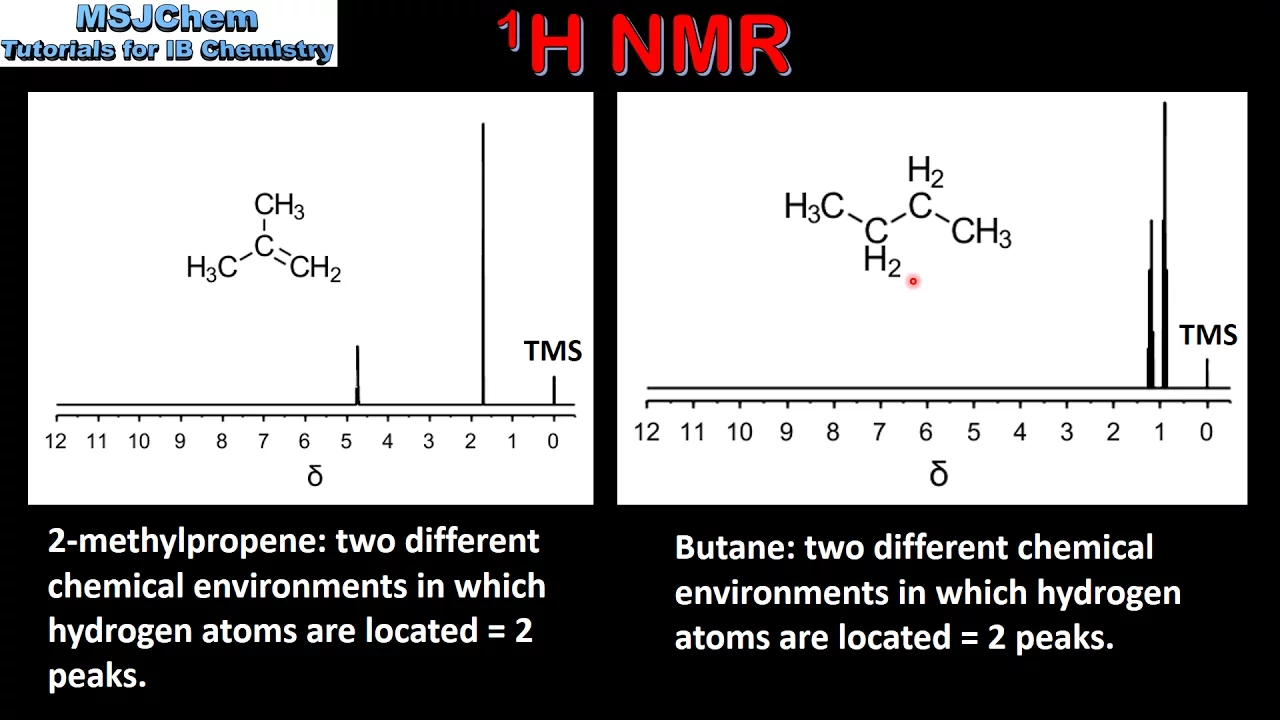
1H NMR: Determining Number of Peaks from Structure
@MSJChem
59.2K views•2017-04-06
Edible Water Bottles: A DIY Guide to Sodium Alginate Spherification
@ryan
10.5M views•2019-06-21
Related Study Plans & Knowledge Roadmaps
Structured learning paths in Chemistry