





















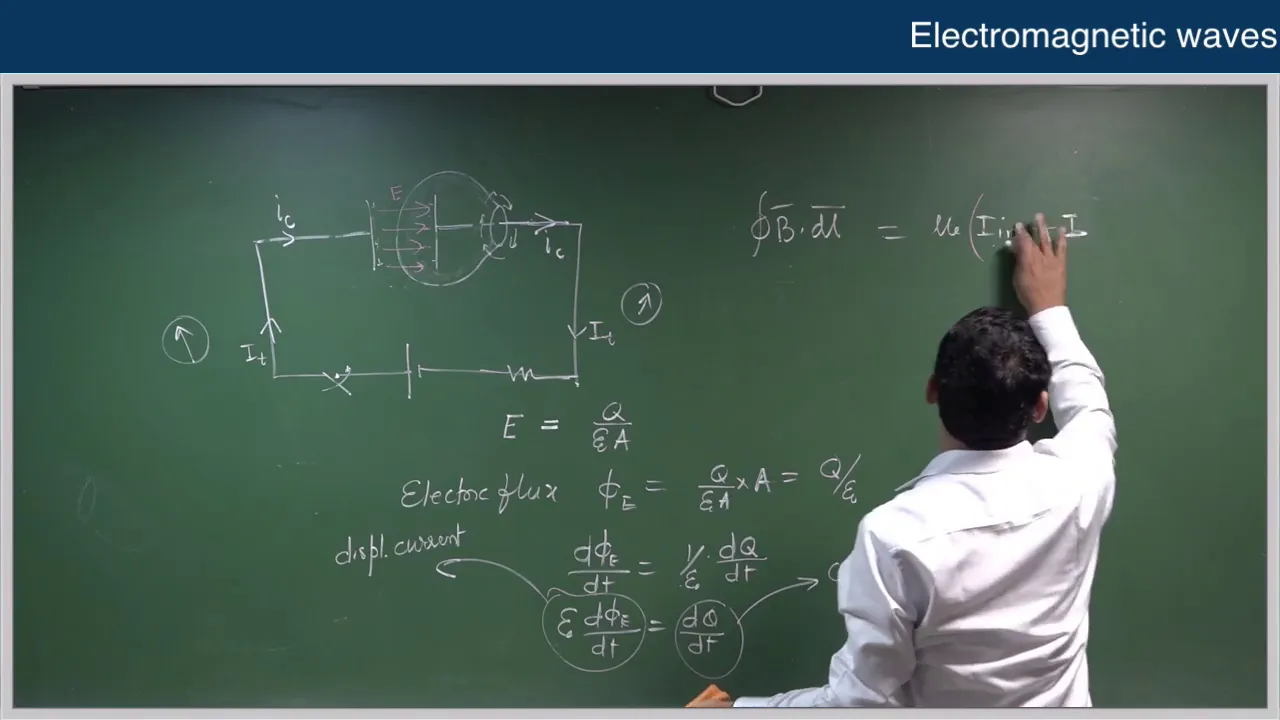



Electric fields are invisible force fields that surround charged particles and push on other charges in the same direction as the field lines (like charges repel), while magnetic fields are invisible force fields that only affect moving charges by pushing them sideways perpendicular to their motion; together, these fields combine into electromagnetism, where oscillating electric and magnetic fields create electromagnetic waves that carry energy through space, forming the basis for technologies like computer screens and medical imaging devices.
Electric and Magnetic Fields Explained | Physics Intro
Added:Understanding of electric charge, including the properties of positive and negative charges and Coulomb's Law.
Basic vector algebra, as physical fields and forces are represented as vectors with both magnitude and direction.
Classical mechanics fundamentals, specifically Newton's Laws of Motion and the definition of work and energy.
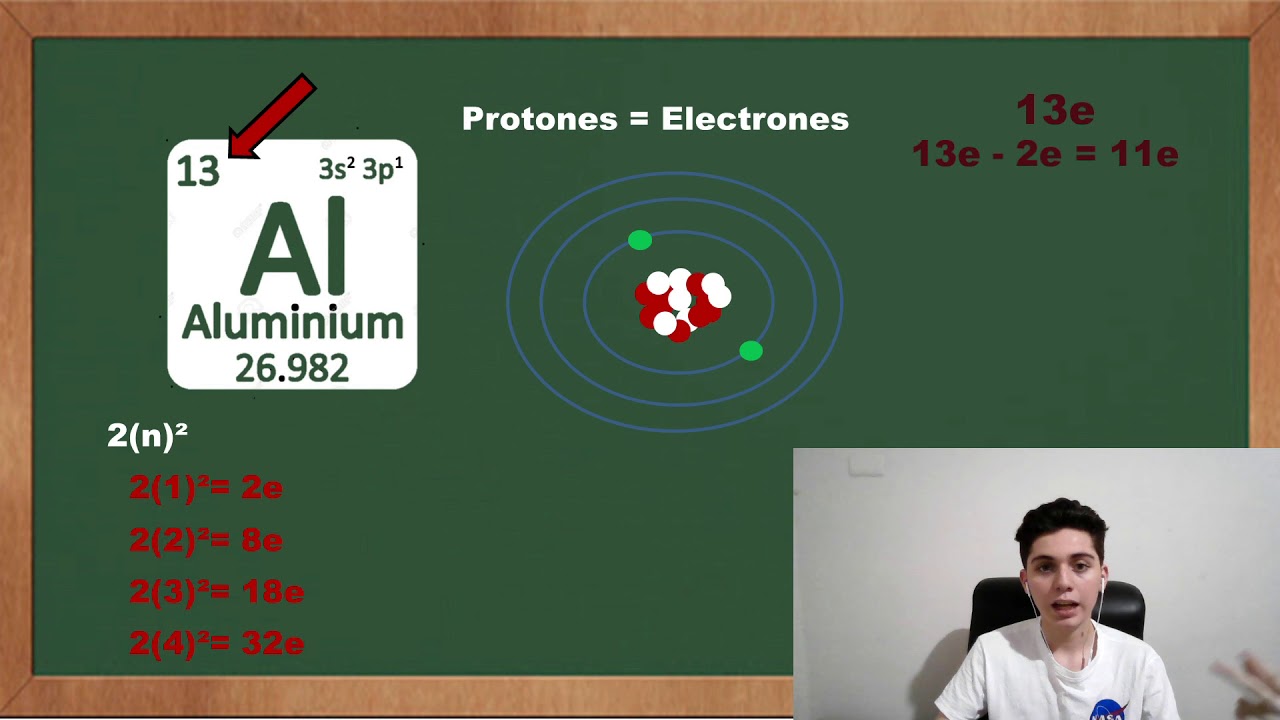
Basic atomic structure, including the behavior of electrons and protons within conductors and insulators.
Faraday's Law of Induction and Lenz's Law, which explain how dynamic magnetic fields generate electric currents.
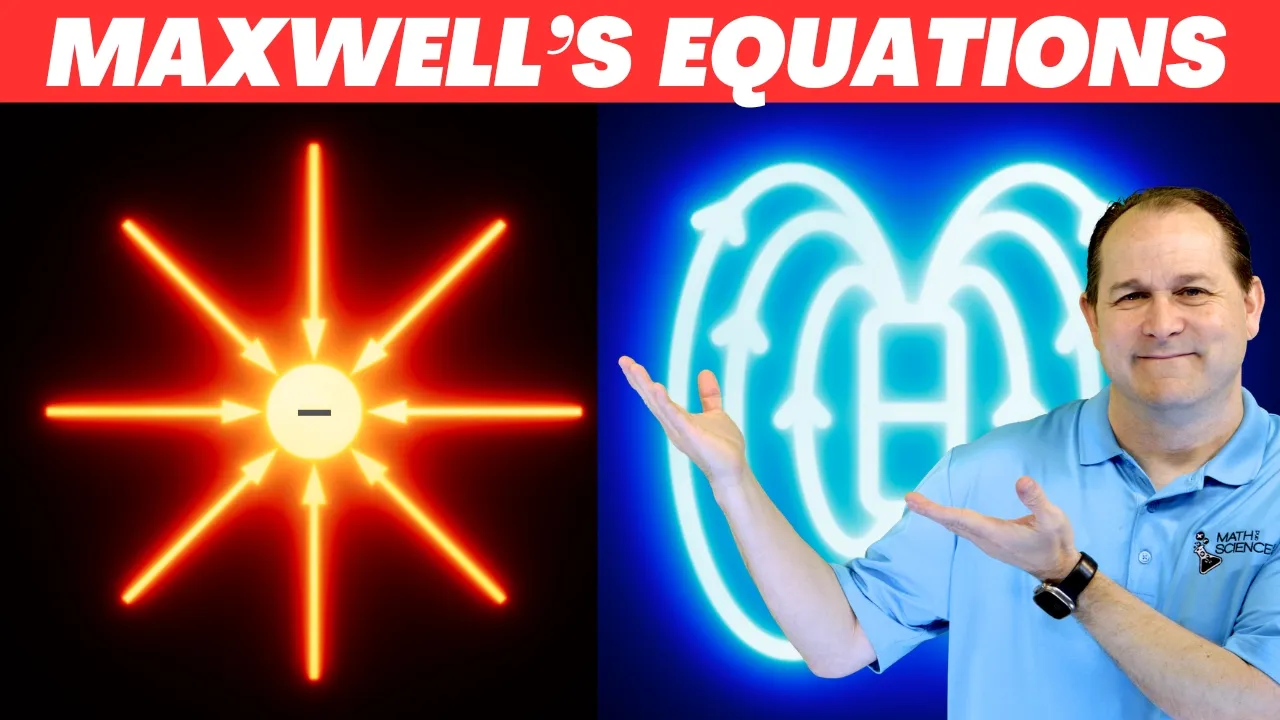
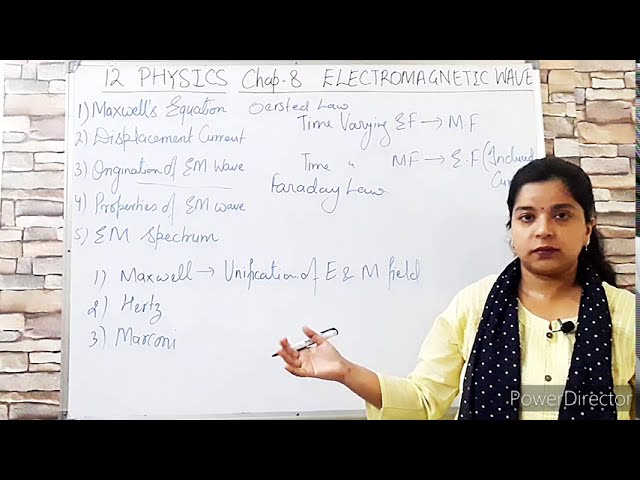
Maxwell's Equations, which provide the complete mathematical unification of electricity and magnetism.
The study of Electromagnetic Waves, analyzing how self-propagating electric and magnetic fields travel through space as light.
Practical applications of electromagnetism, such as the operation of electric motors, generators, transformers, and particle accelerators.
13.7K views511likes14:48Original Release: 2025-03-20
so now we've basically talked about the general concepts of physics 1 and physics 2 and next we're going to talk about the concepts associated with physics [Applause] [Music] [Applause] [Music] [Applause] 3 now I think I briefly told you one of my favorite parts of physics is actually the electricity magnetism part I don't know why just for some reason always you know fascinated me so everybody here has some idea of magnets right whoops magnets so we call it uh what surrounds a magnet we call it a magnetic field right which you can actually do an experiment at home and try to check it out yourself but if you have a bar magnet here right North Pole South Pole remember all that stuff when you were a kid it turns out that we in physics talk about this invisible field that surrounds it we can't see it we can't really touch it but we know it's there because it it can make it can influence the environment so this uh has mag what we call a magnetic field lines which are kind of invisible lines of kind of a force you can think of it that way that surround this guy and then we have and analogously to this in magnetic field I told you an electric field they kind of like peanut butter and jelly so if this is the peanut butter the jelly is called the electric field so if we have for instance a proton with a positive charge there there's an invisible field that we say surrounds this uh guy but it doesn't form these closed Loops like this it forms kind of these radial kind of arrows that kind of emanate from the uh the charge particle so it it works for uh proton and it also works for any charge particle so there's an electric field that surrounds an electron also but it goes the other direction and so what we basically say is you can see there's some similarities here but there's obvious differences I mean these guys form Loops these guys don't form loops and the the other main difference is sort of like how they were discovered to begin with if I were to take a another proton like and stick it inside this electric field right here like this is a test particle what's going to happen it turns out that this electric field is going to push on this charg particle and it's going to push with a force F and it's going to push it directly away from this guy remember like charges repelled and Opposites Attract so we what we say in physics is that instead of just saying like charges repel what we say is that this charge generates an electric field and that electric field is what pushes on the proton with a force F and we're going to learn how to calculate that and then if you go in here with the magnetic field interestingly uh and and fascinating from my point of view if I were to take the same proton and put it inside of this magnetic field and if I just have a stationary uh particle here inside the magnetic field nothing at all is going to happen the magnetic field will not push on that particle right but if I have this particle if I start to move this particle myself right in in some kind of uh uh Direction whether it's this way or whether it's whether it's this way or whatever if I start moving it in motion uh inside of this magnetic fi then a force will pop up and push that particle the magnetic force will push that particle but it will not push it along the direction of motion like this one it'll push it sideways so it's really bizarre not only are the fields they look different but they actually push on charge particles differently the proton is pushed away in the same direction of the field lines and the other guy only when it's moving is pushed kind of tangental to the magnetic field right but only when it's moving when it's stationary nothing happens at all so we know they're similar electricity and magnetism but they're not quite the same I should revise that and say that modern physics has combined electricity and magnetism which seem to be very different things into a single thing called electromagnetism you may have heard of that electromagnetic waves electromagnetism it turns out that if you take an electric field and a magnetic field and you oscillate them then in an oscillating fashion like we talked about the water waves then what will happen is an electromag magnetic wave will form it'll be oscillating in the electric field and it'll also be oscillating in the magnetic field and it will propagate just like that water wave throughout space but it'll even go through a vacuum throughout deep space with nothing there it'll just travel by itself and it carries energy that's how you get a sunburn it hits your skin and it carries energy from the Sun so why do we care about electromagnetic waves well because you're bathed in it every single day the light you see now is visible light also we have x-rays Gam Rays infrared light uh I could go on and on basically all of those are electromagnetic waves it's just that they're oscillating at different speeds or frequencies we call it so visible light is a tiny tiny tiny portion of electromagnetism that you can actually see with your eyes all the other stuff is exactly the same but oscillating in a region of of of frequency that you can't see because your eyes just aren't sensitive to it but it's the same physics involved okay so now we've covered physics 1 physics 2 physics 3 overview and next we're going to talk briefly about one of my favorite things relativity and quantum mechanics now truthfully you're living in an amazing time because you can you can open up a book or watch a lesson or get a lecture from from knowledge of that was handed down before you about some of the craziest wackiest stuff that we've discovered to be absolutely true about our universe and that's relativity Einstein's theory of relativity and quantum mechanics which was developed by many people both of these theories were done in the early part of the 20th century so about 100 years old uh and to be honest with you we still don't quite understand these theories totally I mean we understand a lot about relativity we don't understand quantum mechanics that well even today and there's tons of problems real problems that we can't solve in either Theory just because the math is too hard but we understand how we would do it we just the math gets so difficult sometimes but the basic idea about relativity I talked to you about before is that time and space I didn't mention the space before time and space are relative to your state of motion if I move really fast near the speed of light time and space will behave differently for me than it does for you if you're not moving and that seems weird because if I take two clocks and they're synchronized tick tick and they're they're both the same you think that time would exist the same for both of us that's our everyday experience but in fact if you actually go fly that second clock in a spaceship and get really close to the speed of light which we can't do but if you could do it then when it came back you would find that that clock has a different time elapsed than the clock on home at home how close well we have to do some problems to illustrate that but when I say how close I'm talking like 99999 times the speed of light which is incredibly fast because the speed of light can go seven times around the planet Earth in one second so think about that's one second that's another second that's another second every one of those seconds light goes around the planet seven times times it's incredibly unfathomably fast so to be honest with you wrapping your brain about the idea around the idea that time can be different for two people depending on their state of motion how fast they're going is very very hard to accept because we don't we don't see it every day and the reason we don't see it is because we don't travel very fast we're traveling at a snail's pace but we've proven that these things are true by looking at accelerating electrons and other particles in particle accelerators because we can get electrons going very close to the speed of light we can get other particles uh that that exist they're going very near the speed of light and we can it's a long story with the way the experiments are done but we can definitely show that time travels differently for different people we've actually taken atomic clocks very accurate clocks and flown them on airplanes very that's not near the speed of light but it's it's as fast as we can go and we get those clocks and we compare them when we come back uh down to earth and we see that the clocks don't agree anymore because time actually it wasn't because the clock is broken it's because time actually ticks differently depending on how fast you're moving now the second part of kind of modern physics there's a lot to it but we call it quantum mechanics and I know that you've heard that term but it's a nebulous scary sounding thing and to be truthful as I said before nobody really understands why quantum mechanics works the way it does but what we do know is that it absolutely does describe our reality so one thing we know remember I told you light was an electromagnetic wave well it turns out that light when you actually do detailed experiments on it it behaves as a wave in some experiments like we talked about oscillating electric electromagnetic uh fields and it also be behaves as a particle the particle is called a photon so I know you've heard the term Photon Photon of light well in some experiments light can um light can behave like a wave and we'll get into the details later but in other experiments it behaves very much like a like a particle like a like I don't want to call it a solid object but a discrete object called a photon so is it a wave or is it a particle well truth is it's both it's it's something else that we don't have a word for but it's called a wave in a particle now here's the other part that'll blow your mind matter meaning electrons protons pretty much anything can behave obviously as a particle because we've done lots of experiments with electrons we know they're little particles things but it can also have characteristics of a wave that should blow your mind because it's absolutely crazy that I can take an electron and it can behave in some experiments like a like a little discret particle but in other experiments it can interfere like waves interfere so our electrons particles are waves is photons particles are waves well it turns out that when you really zoom into the microscopic level of our reality a different set of rules apply actually all the same rules are applying all the time but they just manifest differently at these large large scales scales that we live in but when you zoom in you can see the the rules for what they really are and photons and electrons and protons they all behave what we call Quantum mechanically they they have characteristics of a particle and also characteristics of a wave what are they who knows we can't really see them we can't touch them we can't poke them with a pair of tweezers but we can do experiments and we know that they behave with these different characteristics what we also figured out with quantum mechanics is that if you have a proton in a nucleus of an atom right that the electrons you probably already learned in kind of chemistry class you might have you might have like an electron like right there and we say it's going around the nucleus well it turns out it doesn't really behave like a solar system going around and round and around we'll get into the details later but these electrons they can only exist in what we call certain energy levels so this might be energy level number one and this might be energy level number two the electron can never ever ever ever exist in between these energy levels which is weird because the moon or satellites in space they're going around the earth we can put a satellite anywhere we want in the Earth's gravity field but you cannot put an electron here in between the energy levels it has to be in discrete energy levels but what you can do is I can put some electricity into this and I can pump this electron up into the higher uh state so I can excite it I can excite it maybe with electricity so what happens when I do that well then I'm going to have the proton the same place I'm going to have energy level number one I'm going to have energy level number two and the electron when I excite it with electricity is going to move from this guy it's going to pop up temporarily up to the higher energy state but it's not going to stay there forever as soon as I stop exciting it it's going to Decay right back down to the lower energy state that it likes to live in so I'm going to put a little arrow here and I'm going to say it's going to Decay now what happens when it decays that's the interesting part what's going to happen is you have a proton you have energy level number one energy level number two it drops back down in here here and when it drops back down it actually releases a photon it actually releases a photon so matter can be electrons can be excited to a higher energy level and then they can Decay back but when they Decay back they release a photon that is what is happening when you take a piece of iron and you heat it in a campfire and you pull it out of the campfire and it's red why is it red have you ever thought about that why is it glowing it's because all the electrons have been pumped up from the fire from the energy and there're a lot of them are existing in this higher state but when I pull it out they start decaying down there's billions of billions and billions of them they start decaying down and when they do they start releasing photons which are light light particles which we already told you could be a wave or a particle right why do we care about this because we can use matter to make photons that is how all computer screens are made like actually screens on your phone we use this quantum mechanical effects to make those screens we use these effects of of the way energy levels work to make things called transistors which make computer chips so literally without quantum mechanics there would be no computer chips and there definitely wouldn't be any computer screens like iPhones or or Androids or whatever none of that stuff would exist so to wrap up everything that we said starting with the very basics of physics one and learning Force motion energy thermodynamics waves electricity magnetism on into quantum mechanics and Rel ity Humanity has started from basically just learning how to make shelter and fire to being able to go into space to build computers to calculate things to make communication devices to make Medical Imaging you know x-ray machines things like that all by understanding this thing that we call physics so Journey with me as we go into the forest and when we come out the other side of the forest you will know and understand these Concepts you'll be able to solve problems obviously to do well in class but also just so that you understand how the world works and then some of you will go on and make further discoveries and figure out why is this the way it is why is relativity the way it is and come up with the next big theories which will take Humanity on into the next step learn anything at mathand science.com
Up Next

32:58
Maxwell's Equations Explained: A Beginner's Guide
@upandatom
404.3K views•2024-10-21

12:53
21cm Hyperfine Transition in Neutral Hydrogen: Radio Astronomy Basics
@AaronRobertParsons
12.4K views•2011-10-13
80:30
Simple Harmonic Motion in Physics | Oscillations Explained
@MathAndScience
127.7K views•2016-02-04

27:14
Entropy and the Second Law of Thermodynamics Explained
@veritasium
27.5M views•2023-07-01
Related Study Plans & Knowledge Roadmaps
Structured learning paths in Physics
physics
Nuclear Physics (Decay, Fission & Reactors)
01Atomic Structure and the Binding Force
02Radioactive Decay and Half-Life
03Nuclear Fission Mechanics and Chain Reactions
+ 2 more learning modules
12h5 modules
Explore Roadmap
physics
Soft Matter (Polymers, Colloids & Rheology)
01Foundations of Soft Matter & Thermal Forces
02Polymer Physics and Macromolecules
03Colloids, Surfactants, and Self-Assembly
+ 2 more learning modules
38h5 modules
Explore Roadmap
physics
Analytical Mechanics: Lagrangian & Hamiltonian
01Mathematical Foundations: Calculus of Variations
02From Newtonian Mechanics to Constraint Dynamics
03The Principle of Least Action & Lagrangian Mechanics
+ 3 more learning modules
28h6 modules
Explore Roadmap
physics
General Relativity (Spacetime & Cosmology)
01Foundations of Relativity: Special Relativity
02The Geometry of Spacetime: Equivalence Principle & Curvature
03Einstein's Field Equations: The Mathematics of Gravity
+ 2 more learning modules
55h5 modules
Explore Roadmap