
















![Simple Harmonic Motion Concepts [Periodic Motion]](https://i.ytimg.com/vi/ssk_ucK_oEU/maxresdefault.jpg)
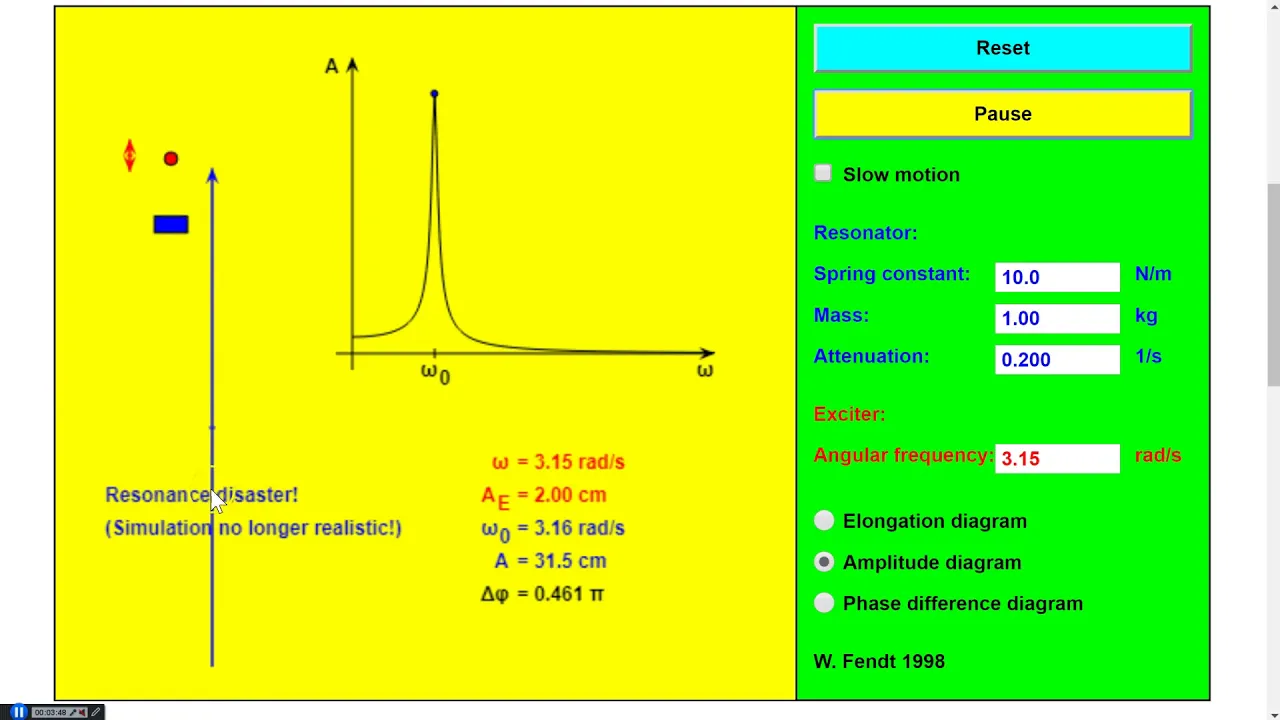

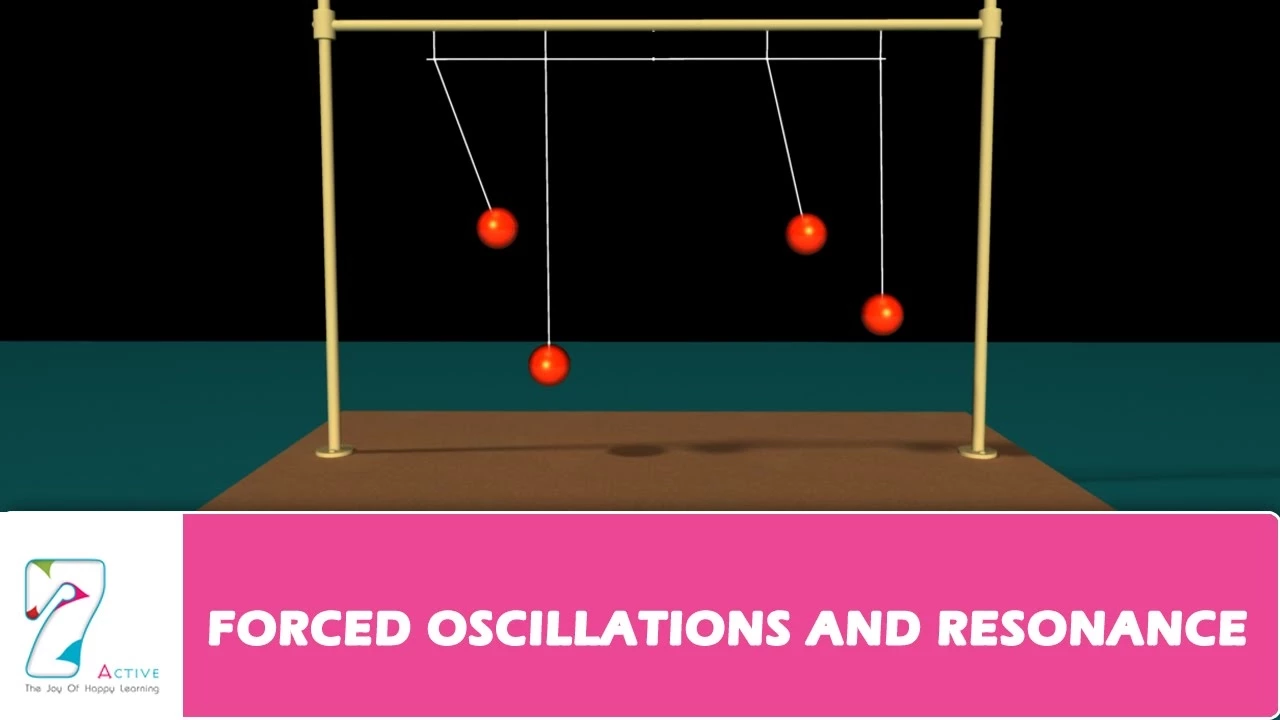
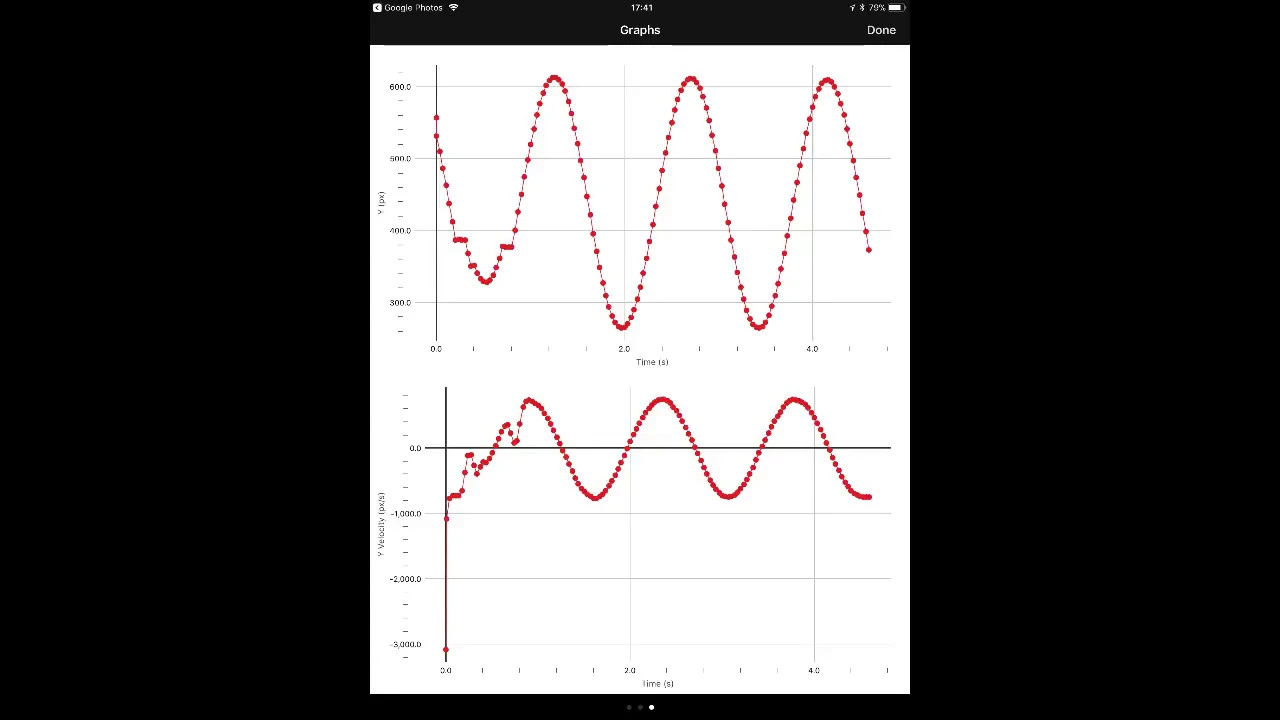

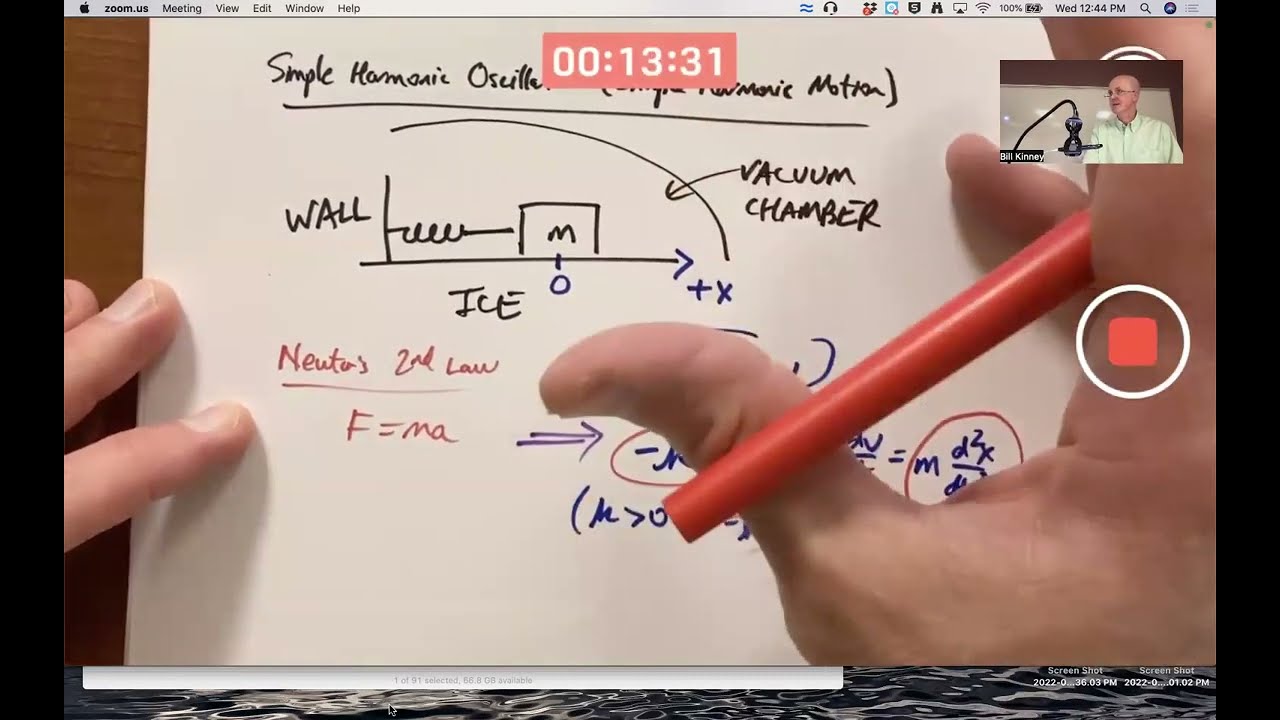





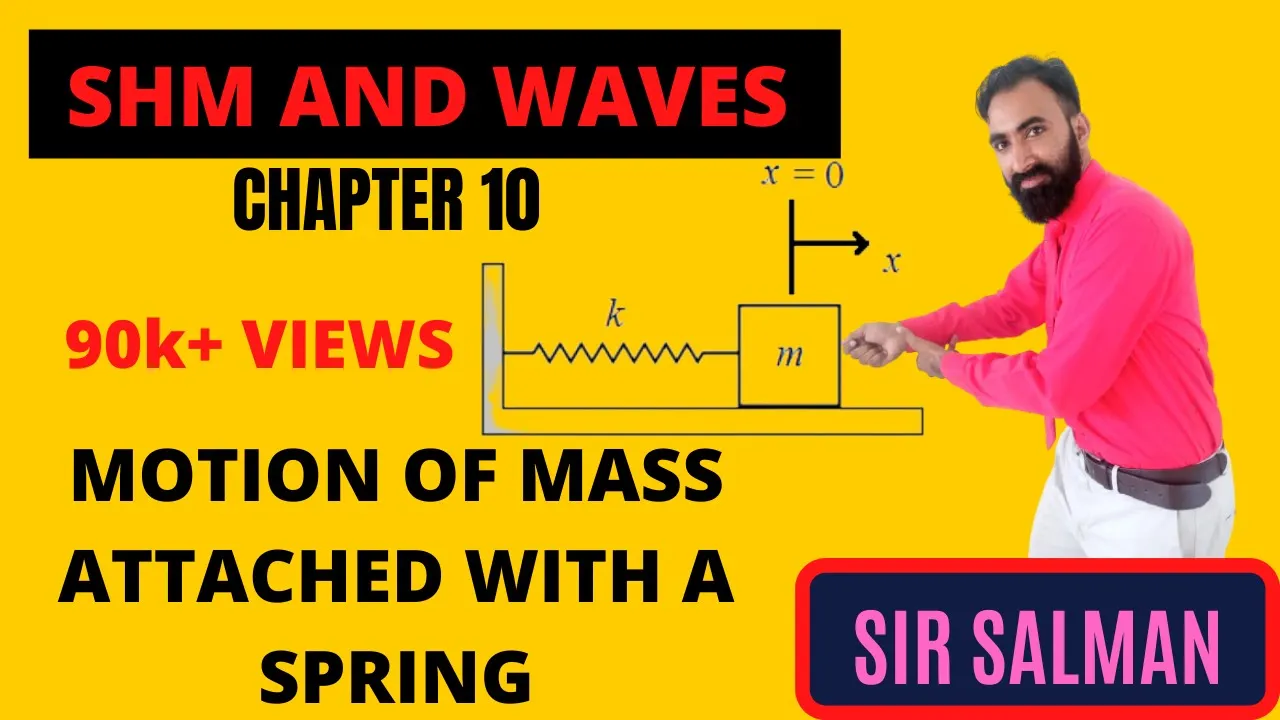
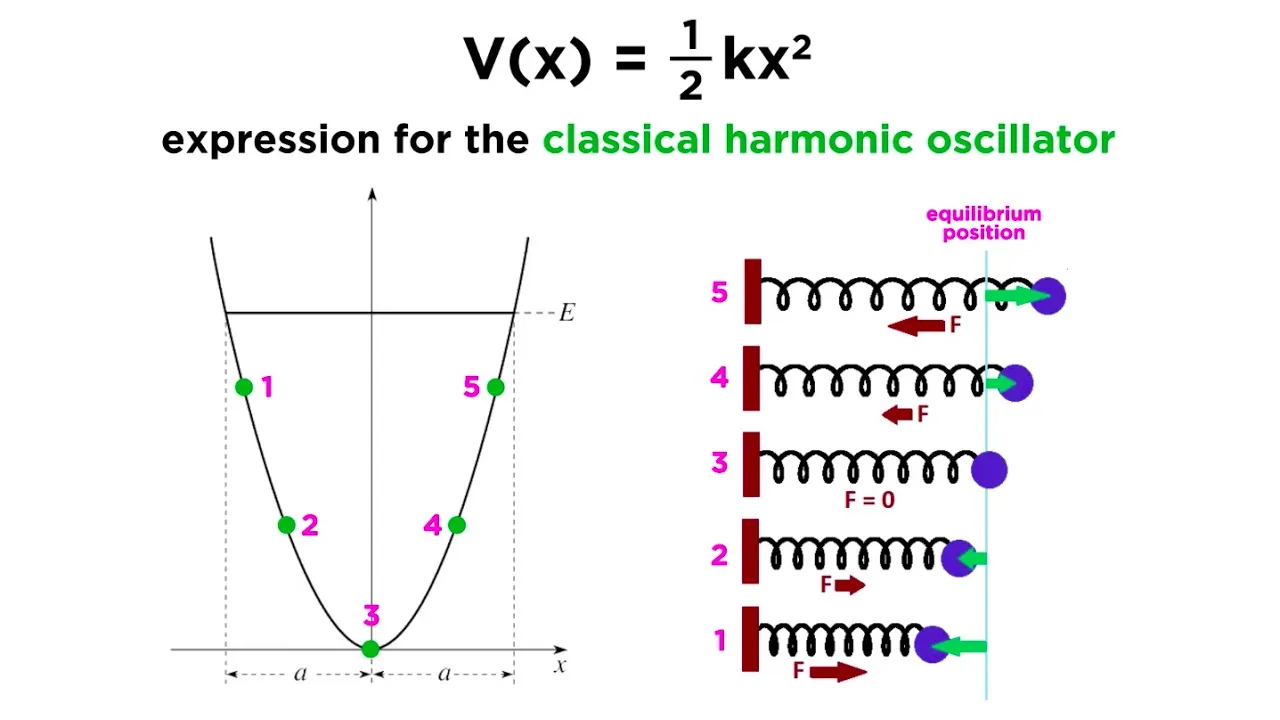
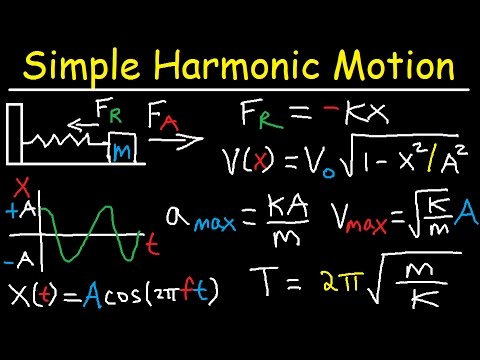
Simple harmonic motion is periodic back-and-forth motion about an equilibrium point, characterized by three key parameters: amplitude (maximum displacement from rest position), frequency (number of oscillations per second measured in Hertz), and period (time for one complete oscillation). The motion follows a cosine function mathematically, described by the equation x(t) = A × cos(ωt + φ), where A is amplitude, ω (angular frequency) equals 2π times regular frequency, and φ is the phase angle. For spring-mass systems, Hooke's Law (F = -kx) governs the restoring force, and the angular frequency is given by ω = √(k/m), where k is the spring constant and m is the mass. Velocity and acceleration are obtained by taking derivatives of the position function, yielding v(t) = -Aω × sin(ωt + φ) and a(t) = -Aω² × cos(ωt + φ) respectively, showing that acceleration is always opposite to displacement.
Simple Harmonic Motion in Physics | Oscillations Explained
Added:hi and welcome to the ultimate physics 2 tutor volume two and the entire concept and topic of of really this DVD set here is all going to be on the topic of waves okay let me give you sort of a brief history of where we've been with the courses so far and sort of a peek at what we're going to do after this course to let you know where this one really fits in the sequence all right usually when you take physics one either in high school or in college the very first thing you study is Newtonian motion which is dealing with projectiles really how how do things move when you throw them in gravity collisions all the things associated with motion and uh and and collisions and energy transfer and things like that that's physics one and that was covered in the very first physics DVD that I released the DVD that comes after that is physics 2 but that course is too long to do in one in one actual uh DVD release so I split it up into volume 1 and volume two physics 2 volume 1 is the DVD on thermodynamics which which is a big fancy word that just means heat transfer anything related to heat uh temperature uh entropy laws of thermodynamics engines things like that were all covered in the DVD right before this one physics 2 volume 1 now this DVD is physics 2 Volume 2 and it covers the remainder of the material that you'll typically see in a University Physics 2 class and of course you cover some of these Topics in high school physics as well and the topic here is all going to be about waves so just a brief outline of this course that we're going to study here this DVD set here all about waves basically in this section we're going to start the uh discussion by talking about oscillations you've all seen waves you you have an idea in your head what a wave is the goal here is to solidify that show you what it really means in terms of physics and the very first way to do that is to start talking about oscillations how do things oscillate up and down what does that mean mathematically and what does it mean in real life and let's look at some real examples so that's going to be the topic here then we're going to go off and start formalizing that in terms of energy transfer and an oscillation and how that can be set up into a wave and how that wave can travel and propagate and go and hit something and deliver energy um to whatever it is it's it's hitting we're also going to talk about interference of waves which I'm sure you've heard of before at least in terms of music and and interference of of sound waves like that we'll talk a lot about sound waves we'll talk about Doppler shift which may seem like a familiar term to you uh and we'll make sure that it's it's rock solid before you get done with this class and we'll talk about quite a bit of that now this is all in in preparation for physics 3 in physics 3 you learn all about electricity and magnetism and you've probably heard that when you have electricity and magnetism interacting you get an electromagnetic wave right and those are those are light waves those are radio waves those are microw waves those are X-rays all of those waves that have different names they're all electromagnetic waves so this course is really laying the Bedrock the foundation that you're going to need to understand electricity and magnetism in terms of the waves that you're bathed in every day of your life here on Earth waves are hitting you electromagnetic waves right and that's exactly what this course is going to help you uh get ready for so this topic in this section right here section number one is titled simple harmonic motion and hooks law now one thing I always say when I begin these physics lectures is that you always are going to get these really fancy complicating sounding names okay and they're going to maybe throw you off a little bit maybe you think something's really difficult just because it has a a fancy sounding name right this is one of those things where it looks like it's it's it's maybe going to be hard simple harmonic motion what does that mean it certainly doesn't sound like easy uh thing to think about but in fact you've seen simple harmonic motion all of your life every day of your life I imagine that probably seen something with some kind of simple harmonic motion so let's dig into that figure out what that is and we'll understand why it's so important to learning about waves so in order to do that rather than just flashing a definition up here I actually prefer to write them because it forces me to slow down and it also looks exactly like you're going to see it in your uh in your physics lecture when you go off to class because the teacher hopefully will be writing these things down too so it's it's kind of forcing me to instead of throwing a whole paragraph up and you have to soak it in I mean you can look at it word by word simple harmonic motion all right what is it basically it's the motion of something could be anything could be a washer could be a a garbage truck it could be a you know a a um Acorn whatever any any piece of mass motion of something back and forth about some point in a periodic manner okay simple enough so far motion of something back and forth about some point in a periodic manner now this is something I'll so very important this motion will look like a cosine all right now I threw something crazy at you a cosine what is that well let me give you a piece of advice okay if and I mean this seriously if the word cosine and sign okay from back from your trigonometry days or maybe your Advanced algebra whatever classes you took Co sign and sign if those words just just confuse you and maybe you don't know what they mean maybe you can't remember any of that stuff please take a few minutes pause this video and go off and just look that up I'm going to go over it here with you I'm going to draw lots of examples so don't think I'm going to just drop you in grease but you really do need to know what this is because because everything in life Builds on each other you learn how to learn your ABCs before you can learn words if you didn't learn your ABCs then words and sentences would be basically incomprehensive princi you wouldn't be able to learn that well this entire course on waves is all going to be about cosin and signs that's what a wave is there I've I've laid it out for you anytime you write a wave down in fact I I can almost with certainty say anytime you write a wave down whether it's electromagnetic wave sound wave pressure wave um you know anything like that that simple harmonic motion which is what we're learning about here is always going to be a cosine or a sign if you remember back to your trig cosine and have basically exactly the same shape and I'm going to draw some pictures here in a second they all go up and down about the axis like this they go up and down just like a little roller coaster the only difference between a cosine and a sign is that they're shifted relative to one another if you actually plotted a cosine and then you plotted a sign they would look exactly the same it's just one is displaced a little bit with respect to another okay so they're exactly the same thing but you really do need to have a familiarity with what it is doesn't mean you have to be a trigonometric expert at this point we're I'm going to walk you through it but you need to know what the basic shape of a cosine is you need to have a basic understanding of what a cosine is if you don't know then please do yourself a favor and and refresh your memory on that a little bit and you could do that with the trig the trigonometry DVD that I have it'll get you going really really quickly but I think you'll you'll get the hang of it here we'll just walk through it slowly so what is this simple harmonic motion stuff it's the motion of something back and forth um and this motion will look like a cosine and we're going to draw a lot of pictures of that what is the simplest thing you can possibly think of that has motion of something back and forth periodic that's what simple harmonic motion is it's something that's periodic which just means it happens over and over again with a certain period it just starts over again it starts over again it starts over look at my fingers what does it look like looks like a swing set right from your from your playground days or it looks like a grandfather clock with the pendulum that's swinging back and forth back and forth you might say yourself that doesn't look like a cosine how can that possibly be a cosine we're going to draw some pictures and I'll show you that those examples the swing set the grandfather clock um the slinky if you shoot a wave up and down through a Slinky right that's that's simple harmonic motion too and that if you break it down really does look like a coine so let's dive into that before we can really get into understanding how it really looks like a cosine and really write down the math behind what what simple harmonic motion is okay we need to Define some terms so the first thing we're going to Define is the term that you all heard frequency okay and by the way we're not even really talking about a wave yet okay we haven't even really gotten to the concept of a wave a wave is just like at the beach when you think of a wave it's something cresting and just kind of coming in and that wave is delivering energy to you it starts out 50 miles out and it rolls on in it's some sort of disturbance right that's what a wave is and when it hits you it literally can push you over so it's delivering energy to you that's a wave we haven't even gotten to waves yet we're just talking about about motion that goes over and over and over a pendulum doesn't really go anywhere it just stays in the same place back and forth a slinky if you hold it and just kind of shake it like this you know you you you have some some motion in there but it's not really going anywhere that Slinky is not moving down the road or or a swing set when you push someone he goes away and he comes back goes away comes back those are simple harmonic motion they're not waves really going anywhere right 50 Mi down the road and delivering energy that's just harmonic motion so when we talk about the frequency of that motion that harmonic motion what are we talking about when we talk about the frequency the frequency is simply the number of oscillations per second okay now typically when you talk about the number of oscillations per second you have the unit of Hertz which is HZ hurts okay now if you have a child on a playground okay and you have him in a swing and you push them and then they they go away from you and then they come back and then you don't touch them again let's say that's going to slow down a little bit but let's just say it doesn't let's say it's a perfectly frictionless swing away from you back away from you back if you time your watch however many cycles that that swing completes in 1 second is the frequency it's the number of Hertz so if you push that child pretty slow and let's say they go away from you and then they come back that's one cycle he's come exactly where he started that's one cycle okay now if it takes one second for that person on the swing to come back one cycle every second that's one Hertz that the frequency of that harmonic motion is one Hertz if you uh you know somehow excite that person push him in a different manner so that that person swings five complete times in one 1 second then they would have five cycles per second or five oscillations per second so it would be five Hertz right so obviously that person would have to be going faster in order to do five Herz five times per second but that's the idea of what frequency is these are things that you have experience with all the time they just have fancy words like oscillation frequency now when you tune the radio when you tune to a frequency in the FM band let's say it's 100 let's call it 100.1 usually like in your radio 100.1 or 102.5 right those frequencies are frequencies too but they're in megahertz so instead of cycles per second that's millions of cycles per second so when you tune to 102.5 that means that the radio wave hitting your antenna is oscillating back and forth okay uh at 102.5 million times per second okay that's pretty darn fast and by the way what's oscillating I'm getting way ahead of myself what's oscillating that's the electric field coming in hitting your ant an switching directions 102.5 million times every second and that's just because light is super high frequency right that's what what like everything hitting your eye is super high frequency your eyes are adapted through Evolution millions of years to uh to respond to to high frequencies like that so that's the concept of frequency super super super Central super critical to anything talking about waves so that's why I'm spending time on it next what is this thing called the period I've actually used this word several times already and hopefully I've given you an idea what it is um just through you know through context it is the time in seconds it takes for one I'm going to underline it oscillation okay the time it takes in seconds for one oscillation so when you're going to find we're going to write this mathematically down here in a minute I'm just giving you some definition what you're going to find is period and frequencies are inverses of one another they're related in other words there's an equation a really simple equation that relates them too okay uh so you can see that they're both related because they both deal with the oscillation this is the number of oscillations that fit in one second and this is the time in seconds it takes for one oscillation so if I'm pushing that person on the swing okay and he comes back to me and it takes 1 second the period is 1 second if I push him in a different Manner and it takes 10 seconds really slow for that person to go away five more seconds for that person to come back for a total of 10 seconds to make that one cycle then the period would be said to be 10 seconds period is always in seconds it's in time and frequency is in hertz which is oscillations per second cycles per second so I'm not going to get too deep into this now because you'll see it really really easily with the mathematics that we'll do in a second but frequency and period are basically inverses of one another they are directly related to one another by a really simple formula and that's because they both deal with the oscillations this is the number of times you get of oscillations in one second this is how long it takes for one of those oscillations to actually happen in in seconds Okay the third definition I'll give you before we we'll finally draw some pictures here is the concept of the amplitude that's another thing that has a fancy word uh that is uh super easy to understand just like most everything in life you know things are usually not so hard to understand uh once you you know once you dig into it but they can usually intimidate you amplitude it's how far I'm going to put in parentheses in meters okay how far in meters the maximum displacement from rest position from rest position okay how far in meter so it's a distance the maximum displacement from rest position now displacement is a big word but you know displacement just means distance it means how far something's moved that's all displacement means okay so when you read about amplitude what you're really saying is going back to the swing set analogy I walk up to the swing it's empty there's nothing there I put somebody in there right and I'm I'm about to push him or her the swing is completely vertical that's its rest position that's the position that the thing is in if I don't even touch it that's what is called rest position and we'll we'll draw lots of pictures here just just a second and show you where that is on a graph okay now it's sitting there now I decide to push him first thing I do is I pull him back or her back and then I let go now in real life the swing slows down over a period of time that's just because of friction here in the top where the chain connects to the top it's it's it's slowing it down but let's say there's no friction let's say it's this perfect you know ice or something up there that's just causing it to Glide by and not slowing anything down if I pull that person back and then let go in theory if there's no friction at All That Swing would continue to swing in the same way exactly forever forever and ever and ever and it would just go up and down gravity would pull it down all the time and it would go up and down and up and down now if I stand to the side and I look at the swing that's going like this back and forth and let me do it toward you let's say it's swinging back and forth like this this is the rest position right here in the middle because that's where the swing was so if I go over here the swing is going to travel this far before turning around then he's going to come back he's going to travel this far before turning around now yes in real life the swing is curving but let's just forget about the curve for a second he's traveling past the midpoint he stops he turns around comes back stops turns around this distance from the rest position to wherever it is the the cycle starts over again where he turns around that's called the amplitude all right that is called the amplitude very important it's the distance from the rest position to wherever he turns around how far in meters the maximum displacement from the rested position this is the maximum displacement because he goes no farther than that he just turns around and goes the other way the amplitude is always going to be the same on both sides of the rest position because oscillations are always symmetric about the rest position right so if you go off and look at a you know anything that has a oscillation to it you're always going to find something turning around and going the other way and turning around and going the other way that rest position is always in the middle over here on one side side of it that's called the amplitude and it's the same as on the other side that's called the amplitude it's the distance from the rest all the way up to the maximum so let's finally draw some pictures I love pictures pictures can help I hope you have a good idea here with the swing set to understand how how this uh works but um you know a lot of times pictures can really help so let's do that so what I have here is a wall we're going to move a little bit away from the swing set and we're going to draw um a spring and right here I'm going to draw a mass so this is a mass this could be lead or wood or whatever it could be whatever but it has a certain Mass here okay so I'm going to put you know M mass m and this spring has a certain stiffness we'll talk about it later but basically has a stiffness to it and and here we are now let's say this is the rest position let's say I have a wall and the spring is attached to a mass and that spring you know has a natural place that it sort of likes to settle if you just let it go that's called the rest position so that is exactly what this is so we're going to just kind of draw a dotted line here down to down here and we'll say that this is we'll call this the rest position right so this is the middle I haven't done anything to it yet now let's say I take the spring and I grab it and I stretch him out let's say to here and then I let him go what do you think's going to happen well I pulled him I let him go he's gonna fly over here the spring is going to get compressed right and then he's going to turn around and fly this way and he's going to get stretched and he's just going to keep doing that because when I compress the spring Spring's going to push back and then when he finally gets here I've stretched the spring so the spring also pulls back so if the spring system has no losses in real life you do have losses and everything slows down but if you had no losses then this thing would just keep oscillating forever and ever and ever and we call it simple harmonic motion so let's say that I did pull it back and I pull it back to here right so let me do my best let me draw this wall down here so once I pull him back the spring is stretched okay there and I have the guy here and I let him go he's going to fly through here and then he's going to go and he's going to be compressed let's say he gets all the way to here and the spring is incredibly compressed right here up against the wall so I've tried to draw that symmetric I may not have succeeded this distance here should be exactly the same as this distance right here because the mass I think maybe I need to move a little bit closer more like maybe like this just to make it clear this Mass should be should have the same distance on this side of the rest position as it does on this side of the rest position okay so let me put this here all right now why did we draw this because okay this distance from right here to the the rest position is called the amplitude right it's exactly the same distances from here to here because it's all symmetrical right so I could have easily drawn an arrow from here to here and said this is the amplitude this distance is in meters I can actually measure it with a ruler and I would say in real life I would say the amplitude of this spring system is 0.5 M or whatever I would say 0.25 M it would be a number that would be the amplitude when you tell somebody that they would know right away that's the maximum distance that that thing mov moves past the rest position okay now while I have this drawing up here I mainly drew it to show you what the amplitude really uh really looked like but while I have it up here I want to take the time to draw something else let me ask you a question here right what what do you think the speed of this uh this guy is going to be right here and what do you think the speed of this guy is going to be right here well I pull it back let's say he starts oscillating he gets compressed here stretched here compressed here and stretched here do you think what do you think the speed is going to be right here and right here this where I've drawn it is the exact moment that that thing slows down and turns around so what do you think the speed is going to be right at that point at which he turns around the speed at those points on both sides where he turns around is going to be zero literally zero because even if you think about the swing set if you push someone they go up up up up up up and there's a moment of weightlessness right at the top where you just turn around you get the butterflies in your stomach that's because you're not moving at all right there but then gravity pulls you right back down and you start moving again so right here you're moving the slowest and literally you're moving at zero right at the end here you're also moving at the slowest because you're literally turning around about to go back the other way now what do you think the relative speed here is right in the center here just think that think about that for a second I've turned around the spring is fully extended and it's pulling me as hard as it can pull me and I start to speed up right through the center line here what do you think my relative speed is there well at the midpoint there you're going to be going the fastest in this motion here and it's exactly like the swing set when you think about it you sit down someone pulls you back let you go and then let's say that you don't have any losses and you keep going at the moment you turn around on both sides you're not moving at all at that instant in time right when you turn around you're not moving but then you start speeding up as you go down to the bottom of the Swing as you pull through that that that U rest position right in the center you're moving the fastest right there every Point beyond that point you're slowing down as you reach the top of the next Hill so right here you're moving the fastest all right I want you to try to keep that in your head because it really helps we're going to be doing a lot of things with springs uh and it's going to also help when we get into you know uh um sound waves and other things to to visualize what's really happening here because a lot of times you can think of air molecules with the forces between the air molecules you can kind of think of them as having a little spring between them even though there really is no spring there it's useful to think about that so this is a graphical picture of what um of what the uh of what simple harmonic motion is so you see I want to show this as a as kind of a bragging Point here something as complicated as simple harmonic motion which sounds really really complicated is nothing more than something you played with all your life something attached to a spring and a thing moving back and forth or a swing set right so what I want to do next is I want to graph this this is just a picture showing you what's happening but what we want to get in the habit of doing is actually graphing it showing what the distance looks like as a function of time because we know we pull the spring back we let it go and we start a stopwatch well that thing's going to be moving back and forth as time goes on the position of that mass will be different places because it's moving back and forth we want to plot that because that will be um basically how we are able able to look at this simple harmonic motion okay so what we want to do is switch gears a little bit and say draw a little a little um XY axis here so over here is time okay and over here along this axis is displacement in other words how far from the rest position how far away from the rest position have you have you made it so let's say you pull the spring back and you let go so you start you start the graph and the moment you let go so you've pulled back to the maximum position that you ever planed to be so you're going to start off being relatively high this is the distance in meters away from the rest position so at time zero right when you let go I'm the farthest away okay now I let go and I travel and I I I get over here to the uh the center to the rest position and then I go through that position and I make it all the way over here uh in which case I basically turn around again so what your motion's really going to look like just like I told you in the beginning is a cosine that a that is a cosine it goes on and on forever I mean you could continue drawing it because if you plot a cosine you'll see it goes on forever and of course if there's no friction here this motion will go on forever so it matches a cosine cosine always starts at the top like this and goes down and up and down and up it starts at the maximum displacement here let's say I pulled it back by whatever if I wanted to put some some numbers into this I could say well I pulled it back by 0.5 M I pulled it back.5 M that was the top thing it goes through zero because this is this is a uh the distance from the rest position as it makes it through this point we cross down through here and we go negative the reason we go negative is because this is defined as the zero position one side of that position is going to be defined to be positive the other side's going to be defined to be negative so if this is my reference point these let's just say are positive and this anything on this side is going to be called negative so we go negative but then we turn around we go back through the rest position here and then we get back exactly where we started over here and then it just keeps going over and over and over now the reason I'm really drawing this is because the period if you remember which is over here the period um is the time in seconds it takes for one oscillation so one oscillation starts up here and exactly where you end up which is right here so this from here to here is a period it's a period because that's one complete oscillation that's one complete back and forth I started over here on the left and I ended up exactly where I started with on the left you have to go all the way back to where you came in order to have one period okay so you have to have one complete cycle one complete oscillation which is what I said over here one oscillation this is one oscillation so I cut it off right there and I say the distance between here and here is one period so this is this is a Time axis here so if this were you know let's call let's say this is 1 second this time from here to here if if I was marking it off and actually had a scale here if it were 1 second I would say that the period of this oscillation the period which is the time it takes takes for one oscillation to happen this time would be 1 second because that's exactly where I came back to it took 1 second to do that okay and then if I wanted to to to graphically show where the amplitude was the amplitude is the let's read the definition again how far in meters from the maximum um the maximum displacement from the rest position this is the rest position here this this uh uh this zero point right here up here is is one side and down here is on the other side of the rest position so this guy right here the literal distance from here to here would be the amplitude a we call the amplitude a it's usually how you write it down when you write an equation or something you put the letter A there so this literal distance here which let's say in this case we put 0.5 that's as far as I pulled it back 0.5 MERS we would say that's the amplitude so if I were going to going to draw this thing and label some things this distance would be the amplitude from the axis up to the very top of the motion and the distance in time for one period one period would be one complete cycle of the wave and I would just look at the scale and I would read the time off I'm telling you these things because a lot of times on your test especially you know in the beginning you'll be they'll just draw you a picture and they'll say what's the amplitude of this wave and at first it will kind of freak you out a little bit because you're looking at this weird wave and it looks kind of complicated it looks high-tech or whatever with a bunch of oscillations back and forth but you see if you just know what a look for it's really not hard at all this is the amplitude how far it swings in One Direction okay and the period is how far in time how long it takes for one oscillation to happen now to give you a comparison let me just draw another wave that looks different just to show you how they can look different let you kind of solidify this a little bit so again this is no different it's time and this is same thing displacement on this axis here displacement about that rest position so what if I drew a different wave totally different characteristics let's say I went down like this and then up and then down and then up then down and then up and then down and then up whatever and it goes on and on forever and I try I didn't do a great job but these these things here really should you know be exactly it should look exactly the same on the bottom and they should be at the same distance above and the same distance below exactly the same like this right cuz that's how it would look if you tried to plot it or if you tried to measure it in the laboratory it's exactly how it would look too but you can see that that the basic shape of these things they do look the same the basic shape of a sign looks the same because when you plot a sign in the calculator they basically look exactly the same they have the same shape but the only difference between them um here is that this one looks squished right it looks squish like this so if I were going to on a test say what's the period of this wave well I know that the period is how long it takes for one oscillation to happen so here I start at the top I go down and I end up at the top here so this distance here would be a period like this and you can see that this distance here in time is going to be less than this one here so the period of this wave is less than the period of this wave because the oscillations are happening faster so it's it's the time it takes for one oscillation to occur so because the oscillations are happening much faster the period is much smaller right the period is much smaller now I've drawn the waves in this case where the amp ude looks about the same the amplitude of this wave could be way up here it could go way up high and way it could have a totally different amplitude too but I just wanted to point that out just to show you that basically when you have a smaller period like this the oscillations seem to be happening faster now if you look at your definition the frequency is the number of oscillations per second let me ask you a question which of these waves do you think is oscillating more rapidly or with a higher number of oscillations per per second right if we look at our scale If This Were 1 second If This Were 1 second down here you have more oscillations happening in that one second right if I were to if I were to actually put a tick mark here and say yeah this is actually 1 second well here I've had one oscillation and here I've had effectively I've had two oscillations right in the same one second so the frequency here is higher because frequency is a number of oscillations happening every single second you look at a second and you see how many are happening that's the frequency in Hertz so you see period and frequency really are related when the period is shorter the frequency is higher so I'm going to write that down when the period when the period is lower whoops got to spell period right period when the period is lower smaller then that means that the frequency is always going to be higher and that's just because they're directly related now I haven't shown you mathematically why there's a simple formula that that shows you this that relates these two things together we'll get to it here in just a second but graphically when you draw something with a higher frequency by definition it means the period has got to be smaller because the thing is oscillating more it's oscillating faster okay and likewise if I wanted to change it if I had room to draw a third graph I could take this spring and I could pull it back really really far way over here let's say and then let it go in which case the amplitude is going to be much higher because I'm going to have pulled it back farther so they're going to be going higher above the X uh above the time axis here so that means it's the amplitude would be higher so you see amplitude is basically how far you pull back if you're looking at like a spring system like this okay the um period is how long it takes for one oscillation and the frequency is how many oscillations happen every single second so what we're going to do now is erase the board and then we're going to write down some simple relations that show you how the period and the frequency are related to one another and then we're going to actually write down an equ that shows you how this oscillation happens mathematically okay now let's go ahead and write down mathematically um how the period and the frequency related to one another and then let's go ahead and write down an actual equation involving the cosine we've talked about cosine since the first sentence out of my mouth we've drawn cosiness but we haven't actually written the word cosine down to show you how the actual thing's written mathematically so we'll do that here all right and then you'll actually have an equation to work with and see how it works so these are things that you'll see in your book you basically are going to end up memorizing these I wouldn't even say do it on purpose because it's just going to happen naturally now when we have the period right the period being the time it takes for one oscillation we always write that with the letter t uh because t for time I know you would think P for period but because it's always time the period is always the number of seconds for one oscillation we always use the the um letter T the frequency that we use in hertz is always f f for frequency so that's really simple and that's the number of oscillations per second or also called cycles per second that you might hear all right so what we need to know is the following these are really important things the period in any simple harmonic motion that's always going to be a cosine is always going to be one over the frequency okay and likewise if you solve this equation for f if you actually multiply both sides by the little F so you get one on this side TF over here and then divide by T all you're doing is let's say solve for f then just by solving this for f you'll get the frequency is one over the period make sure you understand that there's no magic here I just move the F over here by multiplying and then I divide both sides by T so on the left I have my f and on the right I have one over the T that I divide by there's no magic here it's really the same exact relation so literally in the first part of the course when I told you and sort of describe to you without any math that the period and the frequency were inverses of one another I literally meant that they really were inverses of one another the period is literally one over the frequency the frequency is literally one over the period they literally are inverses of one another what that means in words when something's inversely related to one another is all it means is that when the frequency is high really really high frequency okay this bottom number is high so one over a big number is going to give you a small number for the the period so what you're really saying is when the frequency is high then it means that's what this double arrow it means it means that the period is low okay the period is is a small number and that's exactly reflected down here we said that this bottom graph down here had a higher frequency of motion because there's more oscillations per second and when we did that we noticed that the period was smaller so when the frequency is a big number higher number of cycles per second the period is always going to be lower and you can see that with the graphical form down there that's what this relation means so likewise when the frequency is low very low frequencies the period is going to always be high going to be a high period or a larger period so this is a lower frequency uh oscillation here a simple harmonic motion lower frequency lower relatively speaking than this down here so lower frequency means longer period and that's because they're both basically connected you can't talk about frequency without implicitly talking about the period because they're both really dealing with how the thing's oscillating so you draw that oscillation and your period and your frequency are basically fixed you read them right off the graph or you measure them once you know the frequency you always know the period once you know the period you always know the frequency and actually I want you to remember that or try to because when you work your problems you'll you know you just need to know what you you can work with what you can solve for and you should always know when you're given in your problem some kind of frequency right that you automatically know the period okay now the book may not give you the period they may want you to know that you can find the period to solve the problem but they may not tell you they may not give you that so you should know that when you know the frequency you automatically know the period and vice versa all right write one more thing down and then we'll draw some more pretty graphs the shape of the oscillation is a cosine and we've said that Al together and you can prove that to yourself just because I've drawn these pictures over here and you can go plot a cosine on your calculator or on your computer and you can see that they look exactly like that now the following is going to be the equation in mathematical form of one of these these simple harmonic motion cases it's going to look a little crazy at first but I promise you it will not be complicated all right X of whoops I already started out wrong X is a function of time right all this means is that when we look at these graphs we're always plotting the distance we call it X the distance X away from the rest position here which is the rest position let's say of a spring system the distance above and it's always going to be a function of time because you see as I go along in time this way then the distance above or below the axis is going to be different no matter where I'm at so it's a function of time the position of that mass is a function of time that's what this is saying it's equal to a which is the amplitude we talked about the amplitude the distance above the axis times the cosine of I haven't even shown you this yet so I'm going to kind of give you a little double whammy here Omega this is lowercase Omega it's just looks like a curly W time time plus this Greek symbol th right here all right that is the equation of of a of of these things that we've drawn right here of these simple harmonic motion cases now I'm throwing you a little bit for a loop because I haven't ever told you what Omega really is and I have never told you what fi is the reason I didn't is because they make no sense unless I actually have this equation on the board you already understand what Omega is and you already understand what fi is I just never told you that you did so just if you're getting a little anxiety by seeing a complicated looking equation like this just calm down you'll understand it here in just a second now we already said that this is just simply the distance um from the rest position that's all X is that's that's what we're plotting here okay this we've already said we know what that is that's just the amplitude right amplitude is the maximum distance above or below it doesn't matter it's the same Above the Rest position or away from the rest position a for amplitude super simple we know there has to be a coine because we said the shape of this thing is a cosine so all we have to do is figure out what's on the inside T is time you know that time has to be involved here because we already said that the distance of the U the mass connected to that spring from the rest position is always going to be a function of time we know this so what are Omega and what are F all right this is going to be really simple all right this Omega is called the angular frequency it's the angular frequency and I'm just going to write it down and show you why it has to be written like this Omega is equal to 2 * < * f f is the same frequency we've been talking about since the beginning the frequency in hertz all right so the units of this just to show you because you'll see it in your book it's radians per per second all right now let me spend a little bit of time talking about why you care about this that it has to be Omega first of all I told you we qualitatively looked at this and we said this has a higher frequency in hertz than this because it has a more cycles per second than this one does so it's a higher frequency the more squished it is more oscillations the higher the frequency right once you know that frequency in hertz multiplying by 2 pi those are just numbers the number two is just a number the number Pi is just a number 3.14159 whatever goes on and on forever right that's just Pi so if you take the frequency in hertz which we've been talking about since the beginning and you multiply it by two and you multiply it by pi you get something called Omega Omega is what we use in here for frequency the reason that we have to use uh Omega 2 pi * F instead of just f is because when you when you go back to your trigonometry you basically need to anything that you put inside of a cosine to try to take the cosine of something has to be an angle you have to go back to your trig a little bit is why I was saying that at the beginning you really need to sort of remember a little bit of trigger otherwise you might get a little bit lost but just in layman's terms anytime you take the sign of something or the cosine of something or the tangent of something or the cotangent of something or whatever whatever is on the inside which is this number inside here that it's a bunch of letters but it's going to reduce down to a number whatever's in here has to be an angle the only way you're going to get an angle is if it's in radians or degrees there are other systems too but those are the only things that we're going to talk about so when you're in physics or or chemistry or any of these things like this you're almost always going to be dealing even in calculus in radians so whatever you feed into this cosine in your calculator has to be in radians but the the the Hertz that we were talking about before the number of oscillations per second had nothing to do with radians that was just the number of oscillations per second I mean there's there's no radian involved in that but if you take the number of oscill per second and you multiply by 2 pi by the way why do you think it's 2 pi if you remember back to your trig you have a unit circle right how many radians are in a unit circle all the way around it's 2 pi radians one Circle in other words one cycle around that Circle that unit circle from trig is 2 pi radians so we take the frequency of our oscillation which is how many oscillations every second we multiply by 2 pi because that's the number of radians in every unit circle and what we end up with is the number of radians that this wave goes so to speak every second now that's Omega we multiply it by time okay so we're going to have radians per second getting a little head of myself radians per second and we multiply by second because this is Omega time T the seconds cancels with the seconds and we're only left with radians so and this F I haven't even talked to you about here but this is and radians also so the bottom line is you have to deal with Omega because you have to deal with radians because when you take the coine the cosine of something it has to be in radians uh effectively is really the answer so those that's a little bit of theory but if that doesn't float your boat or it really don't totally quite follow it you know try to try to understand it I really do want you to try to understand it but if it's just not quite making a lot of sense it's simpler just to mechanically remember what to do you take your F whatever it is multiply 2 pi you get a number it's a number we call it Omega here little W this number sits right in front of t for time okay that's it that's a number this is a number this is a number and we'll find out in just a second that this is a number but it's called the angular frequency and you always know what it is once you know what the regular frequency is you have to deal with angular frequency that's the number one thing that people do wrong in physics to is when in the beginning when you are given a frequency somebody says oh this this way this um oscillation is 15 Hertz write down what the equation looks like and you stick a 15 in here because you're not really you know you're think oh it's a frequency you put 15 in front of the time completely wrong because there's no angular information you have to take 15 * pi * 2 then that number is what you put here for Omega which is the angular frequency all right that's enough of that we'll we'll see a lot of this when we get into the problems all right what is this this is called the um phase angle all right this is the phase angle and I'm not going to write down a lot of words but it's just a number it's a number in radians so what you have here is a number in radians plus this thing which once you do this multiplication Omega time time because the units we talked about a minute ago you'll also get radians so you'll have radians on the inside cosine of some radian gives you a number multiply it by the amplitude and then that's going to give you the distance above the axis for that particular unit in time you go forward in time you multiply by a different value of time everything in inside changes a little bit cosine of that changes a little bit and so you just plot the number as you go and you'll see that it it shapes shaped like a cosine okay so what does this phase angle really mean I I don't want to spend a lot of time on it but I do want to tell you generally what it really means it's just a number okay first of all it's all it means but what it's really doing is it's telling you where this graph starts so if you notice all the information should be in here to reproduce exactly the shape of this motion the amplitude tells you how high it is the frequency which is 2 pi F the angular frequency tells you how fast the oscillations are effectively this number is basically telling you where to start the graph in other words you see it's periodic like this right you see that it's periodic do I start the graph here or do I start drawing it from here or do I start drawing it from here or from here or from here how do I know when to start the thing well that's what the phase angle does and basically it's relating back the initial condition of the motion here in my example I pulled back the string and spring all the way and then I let go so I knew that I had to start the graph at the maximum displacement uh right but depending on what your problem is it may not be quite so simple this phase angle is basically going to show you where to start the graph basically it lets you shift this graph around and if you remember back to um I'll give you one little aside that hopefully will help a little bit here if you remember back from algebra f ofx is equal to x² you you all know what x squ looks like it's a it's a parabola right it goes something like that now you you learned somewhere in algebra in the depths of your brain a long time ago that if I have a new function f ofx and I say it's like x - 5^ squ you see the function really looks the same it's a squared and there's an X in there it's just that I've taken and I've sort of taken my variable and I've subtracted something from it before squaring it the effect of that is I've shifted this function I've shifted it 1 2 3 4 five units to the right right I've shifted it five units to the right that's what I've done so when you take your variable and you subtract something from from it and then you you have the rest of the function the way it was the net result of that is you push it to the right if I have plus here x + 5 the net result is I take my original function I shift it to the left right so this phase angle is just letting me do that with this cosine when you draw a cosine in your calculator just cosine of t or something you're going to get a cosine that starts up here and it goes on and on forever if you plot cosine of T minus 10 then no it's not going to look quite like this it'll look it'll have the same shape but it'll start in a different position because it's shifted if it's a minus sign minus here it'll be shifted to the right more and if it's a plus sign it'll be shifted to the left more that's nothing more than your than your algebra that you studied a long time ago um and and you should be able to just sort of look at this and see you know why you think that's the case I mean if you if you look in here basically if you put X is equal to 5 in here 5 - 5 gives you 0 0^ SAR gives you zero so it's basically moving that zero point of the function way over here to the right this Shi is basically moving to the right the only thing you have to remember is when it's minus it shifts it to the right when it's plus it shifts it to the left that is exactly what this phase angle and radians does and in real life when you're modeling a problem that's going to be related back to you know what we call the initial conditions of your motion what how how was it started or alternatively maybe not how it was started but when did you start measuring maybe you know maybe we uh started the motion and didn't turn our computer on for maybe uh 10 milliseconds later so we didn't maybe we didn't quite catch the first part of this motion because it just started already and then we turned the cameras on and we saw it and was already moved a little bit so when you write that equation down if you're if you're going to say t is equal to zero is maybe right here it doesn't quite look like a full cosine T let's call it t0 because I just turned my computer on well I would have to have some kind of phase angle in there um to take to to take that into account if I'm going to call that t is equal to zero so it's basically letting you talk about that initial condition okay one more thing I'll draw to kind of drill this home is just a little graph here I hope I can draw it without uh without screwing it up too much but this is the same thing it's time over here uh and over here up and down is going to basically be the displacement or X so actually just to make it clear I'll just call it x a t because that's what you're measuring the distance from from that so if you were to look at a regular old cosine it would always start up here and then it would go down and then it would go up exactly to the same height not exactly the best cosine but you see what I'm trying to do here and then it goes down and so on it basically goes up and down like this this I'm just going to draw a little arrow this is regular cosine Omega * t Okay Omega * t with zero being the phase angle here there's zero because there's nothing else written so it's a regular cosine when there's no phase angle at all now if we throw a phase angle in there maybe it start then maybe maybe it starts down here and it gets to a maximum here and then it goes down like this go down like this maybe something like this okay so you can see the shape of this looks exactly like the shape of the first one it's just that it's shifted if you in fact if if you kind of take this and kind of pretend that it keeps going you can see that this is exactly moved over that's all that you've done if I were to write an equation for this one down here it would be cine Omega * T minus pi over two pi over 2 is just a number but it's a number in radians pi over 2 now one thing I want to show you while I have your attention at this here first thing I wanted to show you is is this is illustrating the phase angle just like I did just a second ago when I have a phase angle here it's a minus so that means I've just taken my original function shifted it to the right I've shifted it by pi 2 radians which is if you remember your unit circle unit circle here Pi / 2 radians is right up here right so you shifted it by one4 of a circle this is Pi / 2 pi 3 pi/ 2 and 2 pi so this is one4 of a circle or one qu of an oscillation so I've shifted The Thing One qu of an oscillation you can kind of see that this is about it's shifted about a quarter of an oscillation over okay that's what I wanted to show you when you have a phase angle with a minus sign it shifts it to the right that's all it's doing that's all a phase angle is but while I have your attention let me ask you what does this actually look like this guy right here well if you or sharp on your trig when it starts here at the origin and it goes up with a sinusoidal shape like this it's not a cosine but we call it a sign right so I told you at the beginning cosine and S are exactly the same things it's just the they're shifted versions of one another shifted relative uh to one another that's exactly what I'm trying to show you here cosine and S are exactly the same thing so most of the time here in the beginning we're going to be talking about cosiness because that's how most books do it so I'm trying to do things that you'll see familiar in your book all right now when we get later down the road some books switch over and start using sign now when you look in your book if it has sign instead of cosine and you're like man he's got a typo here this guy doesn't know what he's talking about cosine and S are exactly the same thing the only difference is they're shifted with respect to one another so you can see that this guy cosine Omega T minus piun / 2 is equal to S of Omega T and all I'm trying to say here is in your books when you sometimes you might see sign sometimes you might see in cosine they all describe the same shape they're just differ with a phase angle that's all I'm trying to say so as we go through the core sometimes we'll see cosin sometimes we'll see sign don't get too worried about that they have the same shape they just different by by uh phase angle here so this is the most important thing I wrote here you need to know what this is this is the form of all simple harmonic motion they always have a sinusoidal shape this case we wrote it as a cosine there's an amplitude out front don't forget cosine swings between when you plot it always swings between plus and minus one so when you multiply by the amplitude you're allowing the swing to go from plus or minus whatever the amplitude is so that's why the amplitude is out in front the stuff on the inside is simply the parameters of of the actual oscillation this is how fast it's oscillating how many cycles um per second but converted to radians per second and this just tells you where you started uh where you started the graph from basically so let's go ahead and erase the board write a few more really important things down uh and then we'll move into some problems okay so what we're going to do now is write the equation down the position position of the body that's oscillating as a function of time and then we're going to go and step through and find the corresponding velocity and the acceleration we're going to write those equations down because those are going to be used in your problems time and again and then we're going to draw a little graph to kind of show you how the position the velocity and the acceleration are related and in the end what's going to happen is hopefully you'll be able to look at those graphs and look at those equations and in your mind equate it back to that swing set that we've been talking about or that block on a spring and what it's doing is it's going back and forth don't ever get into the situation in physics where you're just blindly looking at equations always try to take them and apply them to what you know and they'll stay with you forever okay so here's what we're going to do the first one is the familiar position as function of time and we already said that's the amplitude uh which is the how far it's doing The Swinging times a cosine which gives it the the sort of the the sinusal shape there Omega t plus a phase so some fre quency here's the function of time that gives us the time dependence and here's some phase angle which basically tells you um the starting position or or sort of the starting conditions when you start that oscillation okay and we're going to call this uh which is what you already know this is the position as a function of time position as function of time okay now how would you calculate the velocity now here's sort of where I have to Fork a little bit in the class if you've taken uh calcul or if you're taking calculus right now you should know that any function that is a position as a function of time or position function you can take what we call the derivative of that function and that will spit out the velocity as a function of time you can also then take the velocity take the derivative of that and out will spit out something called the acceleration those are just mathematical techniques just like in the early days in algebra you learned how to solve an equation once you learned it then you could apply it to lots of equations these are just the tools and calculus we use to go from position to Velocity to acceleration uh it can be used for an electron moving down the road or it can be used for a block I mean it's the same sort of thing so if you've taken calculus these derivatives are really simple if you haven't taken calculus then the answers the things that we're going to get to here in circle and second are going to be the things that are important to you okay so how do you do it the velocity as a function of time if you look at this and try to remember how do you take the derivative of this this is a constant okay so he's just going to sit out and front there and what you're going to end up having here when you think about it this cosine the derivative of cosine is negative sign all right it's negative sign so what you're going to end up having in the end is you're going to have negative s Omega t + 5 but then you have to take the derivative of the inside this is just a constant so the derivative of this doesn't even matter the derivative of Omega T is just going to be Omega and he comes out so this Omega is going to come out and the amplitude is there from before because the constants always hang around when you're doing derivatives in the outside they don't really go anywhere they just stay out front so in the end this is the derivative of the position is we call it the velocity negative Omega time the amplitude that we were given here this Omega by the way is the same thing you were given here it's the same number that was inside in front of the t s Omega t + 5 everything else here stays the same this is a simple derivative from calculus one derivative of cosine gives you NE sign uh derivative of the inside just gives you this Omega which comes out and that's why you're you're given that there so we're going to label this and we're going to call it this is what we call the velocity as a function of time all right a velocity as a function of time so obviously this is going to be a very important equation that you're going to use all throughout this course this is a very important equation that you're going to use all throughout this course now if you take the derivative of this of this velocity here so actually let me write one more thing just to make it clear so we put take derivative okay then you get this down here now if we take the derivative of this velocity then what we're going to have is what we call the acceleration so the acceleration which is a as a function of time is going to equal what well we take the derivative of this what is the derivative of the S function well that's just a straight up cosine no no sign change or anything so you can put a cosine Omega t + 5 but you have to multiply by the derivative of the inside this is a constant so that derivative doesn't count the derivative of this part is just Omega Omega time time because by the way in all these derivatives we're taking the derivative with respect to time because that's the variable that's oscillating that's causing the oscillation the time variable derivative of this with respect to time the Omega just comes out multiplied by all of this stuff you're going to end up with Omega 2 * a cosine Omega t + 5 so there's the magical acceleration now if so let me go a and write this this is this is the acceleration as a function of time all right now if you've taken calculus hopefully these derivatives don't scare you too much they they're pretty Elementary once you once you get into your Calculus if you haven't taken calculus or if you're in high school physics maybe you don't have calculus under your belt really it doesn't really much matter because in the end these steps here that go from here to here and from here to here that's in the realm of calculus those are things you learn you know in the future from now but they're just mathematical tools like anything else just like you learn how to add at one time in your life addition was really scary and you didn't really understand it once you understood it you understood how to apply it same thing here taking the derivative let you go from position to Velocity to acceleration the details that we were talking about here to go from those steps uh forward are important to to be able to do certainly when you go on into into advanced stuff but if you're not taking calculus then it really is isn't that much important so that's why I Circle these guys because these equations are the ones that you you need uh to have so this is the position this is describing the position from that equilibrium from that starting position that rest position on either side plus or minus of that rest position this is the velocity how fast it's moving as a function of time and this is the acceleration how much is it speeding up and how much is it slowing down let's draw a quick picture to see how these three um graphs really look uh compared to one another and then we'll go from there so what we're going to do just to kind of make it I guess easy what I will do is use some colors so what we're going to have is three graphs top graph is going to be for the position the bottom uh the middle graph is going to be for the velocity and the bottom graph is going to be for the acceleration so here is the position so we're going to call this x of T and just in case you forget I'll put position position as a function of time so actually this is this is time this is time over here and this is the position as a function of time this is the distance on either side of that equilibrium that rest position that spring with the mass here and you leave it alone and it sits in one place pull it back Let It Go and it starts to oscillate well this distance that we're plotting X of T is how far away from that rest position it is as a function of time and you know it's going to slide around both sides of that rest position so it's going to go up and down um this axis and that's why it's a cosine because cosines do that okay so this is basically what it's going to go like this is basically what it's going to look like let's go and put some evenly spaced hopefully even evenly spaced Marks here I'm not going to draw you know real numbers and all that stuff I'm just trying to give you the basic shape so what you're going to have is uh this graph is basically going to start up cosiness are always start up like this they're going to go maximize up there maximize up there and do like that that's basically a coine he's going to start up at a maximum he's going to come down to a negative maximum here he's going to go up he's going to come right back down okay and then what we're going to do and that's the position okay and we're going to talk about these in just a second let me go ahead and get them on the board and here's the time and now this guy is going to be the velocity is a function of time now notice that we redw this over here this is a cosine so we drew a cosine graph this is a sign right here so we know that signs start a little bit differently normally a sign starts like this and goes goes down like this but notice we don't have a sign we have negative and then Omega a Time s so this stuff out here is multiplying the The Thing by by a number so this stuff out here is important if you're really going to graph it with numbers but since I'm just trying to show you the shape I'm not going to worry too much about this the negative sign makes that makes that entire sign function flip over so essentially what you're going to want to do to make make it easy to draw this you want to draw some some dotted whoops you want to draw some dotted lines here to help you get your bearings so let me do that here get my bearings right here and all The Crossings of the of the axis there just so I can help draw the thing now normally it's a sign function which goes up and down like this but when you have a negative out front it basically multiplies and gives you the mirror image so this sign is is since it's a negative sign it's going to start start on the bottom so essentially what it's going to do is it's going to start out like this and then it's going to cross the x-axis right here it's going to go up to a maximum here cross the x-axis here and then like that right so that's essentially what it's going to look like I think that's a pretty good I think that's a pretty good representation here okay now the final one I'm going to draw is the acceleration so I'll put that as T and this would be acceleration as function of time now if we look back over here we're back to a cosine again cosin start at the top and they go down and and they look just like this guy but it has a negative out front also with some junk multiplied out on front I'm not going to worry about for the purpose of these graphs here but this negative sign is going to cause this cosine to be a mirror image so it's going to start out if I were going to draw my little helpful purple lines just to get my bearings basically those are going to be the U The Crossings so it's going to start here it's going to cross up here maximum it's going to cross down here and it's going to cross right there so that should be a pretty good representation now let's think about what we're drawing here first of all let me say I have drawn no numbers here and have put no numbers here this these graphs are only to show you the general shape okay obviously in front of all of these functions there are numbers these omegas and A's these are just numbers and that would you know if you actually built the system and measured it you would have a a frequency a mega and you would have an amplitude and those would be numbers that would be sitting out here so when you really plotted it you would have a different scale here but I don't care about scale I'm just trying to show you the shape you have a cosine you know what that looks like negative sign so you take a sign function flip it over and then negative cosine so you take cosine function and you flip it over I'm stacking them up to show you how they relate to one another when you take a block when you think about it or a swing set on the playground whatever you're comfortable thinking about but that let's think about a block and it's in a spring and you attach it to the wall and it's in this rest position now you pull it back right to to whatever distance you're going to pull it and you let it go well at that moment you pull it back that is it's basically its amplitude how far away from that rest position you pulled it back is is the the maximum that it's going to end up traveling back and forth so when you start the clock here you start off at a maximum now as the time time ticks on obviously you go closer and closer to the to the rest position to the to the normal rest position which occurs here this is basically uh at X is equal to zero this is right here in the Middle where where the rest position is and then it flies right through that and it goes over to the other side and then it turns around and it comes back and that's what the shape is showing you here now look at the velocity what this is showing you here the velocity is zero right here where we start the clock and that makes sense because when you pull the block back and you let it go right at the moment you let it go I'm not talking about once you you watch it zip away from you but right at the moment that you let it go right as the acceleration is starting that block is not moving at all at the moment you let it go of course as soon as you let it go it goes and it flies you know and it starts zigzagging back and forth but at that moment it's zero all right now as the block goes through its rest position right through its rest position right in the middle where everything sort of if you leave it alone it's going to going to sit right there as it Go travels through that point right here its velocity becomes maximum that makes sense because if you pull a block and you let it go as it zips through that middle point on the way over to the other slide its maximum velocity is going to be right as it zips through the middle right there as it continues on and goes through to the other side so you see the point then it finally goes and and uh over here whenever it gets to the other side and it starts to turn around and come back the other direction the velocity over here is again zero because it's turning around now that's the velocity now when you look at the acceleration that hopefully should make sense as well too because when you think about it right uh oh let's say right right here let's look at the very beginning when you pull it back and you let it go you're stretching the string to the maximum point so that's why this is here your velocity is zero because you just let the block go it hasn't really moved yet well at that moment your acceleration is a maximum in other words your acceleration is the maximum value plus or minus don't get too wrapped up on the plus or minus that's just because of the direction of thing zigzagging back and forth but the acceleration is a maximum way down here and that's because when you pull a string I mean a spring or the block and you let it go at that moment the force that that spring is pulling on your block is maximum it's it's pulling on at the maximum that it's ever going to pull and so that block is accelerating as fast as it can that's why you start out with a with a big number here eventually as you go through the rest position here right through the sort of the the position where the where the where the spring would would just sort of sit there if you let it all go right as it zips through that point right there the spring isn't pulling as hard on the Block and so it's acceleration isn't as much so the accelerations happen on the extremes whenever the thing turns around that's another way to think about it as it goes and it turns around and it turns around and it turns around it's slowing down and going the other way slowing down and going the other way that's whenever the acceleration is maximum and that's why the acceleration is always going to be a maximum right here whenever the uh guy is turning around so I just wanted to draw these to kind of give you a feel try not to get too too scared of them basically the the cosine the sign functions are very important because in science and engineering they represent real life if you actually took a spring and stretched it and measured the velocity and acceleration and such you would see these shapes these sinusoidal shapes s cosine um and all the the trigonometric functions like that they're all very important for that reason because they do help um they do help describe nature so s cosine and uh position velocity and acceleration and hopefully this will allow you to see how they all relate to one another all right there's one more thing I need to talk to you about before we can work the problems we have to return a little bit to the spring for a second we had a mass m we had a spring and we had it attached to some wall we left out a lot of details here I really didn't talk at all about the spring but you all know that different Springs can have different stiffnesses and that stiffness is obvious viously going to completely impact what these graphs look like and what the motion looks like I mean if you think about it if you have a really stiff Spring right it compr and it pushes back a lot that's going to totally change the motion it's going to make it oscillate faster than if you had a really whm wimpy spring with really hardly any stiffness at all like a real Slinky or something you push on yeah pushes back a little bit but it doesn't really push back very much so you're not going to get a really wild motion out of that so the spring is going to matter a great deal how how do you represent the spring here into into these equations right well you assign a value K which is what we call the spring constant and that comes from something called hooks law which every Physics course is probably going to cover and it just says that the force exerted by a spring is equal to K times the distance I've compressed or I've expanded that spring this is called hooks law K is called a spring constant K is called a spring constant okay the higher the K the stiffer the spring the lower the K the wimpier the spring and you can see from here what this is saying is that as I take a spring and I stretch it X gets bigger this is the distance the displacement from the neutral position so if I stretch it going to multiply by the stiffness and I'm going to get a force in Newtons and that force is always going to be pulling me away from the direction I'm stretching it so that's why there's a negative sign if I pull this way the force is going to push me back against my pole and if I compress it this way and squish the spring the spring is going to push against my um my pushing this way so basically the force of the spring is always going to be opposite the direction that I'm compressing or expanding it that's why there's a negative here so basically it tells you how much force this spring is exerting all right that's exact what it's telling you now I'm not going to prove this at all but you can show yourself that the angular frequency Omega of this simple harmonic motion stuff is always going to be equal to if you have a spring system like this the square root of K Over M so that's super super super important so I'm going to box that f is equal to KX and if you know what the spring constant is which most of the time they give it to you in the problem and you divide it by the mass it's attached to and you take the sare root that's going to give you Omega in radians per second this is ready made to plug into this any of these equations that have omega in there this is the angular frequency and of course you could go get the regular frequency F by using the other formula we talked about earlier now if I take this okay and I rearrange it and solve for uh kind of doing some some math here I can find the period and the way I'll do that is I'll start right here and I'll remember that let me just draw a little box here CU I'm going to to do a little side we know that Omega is equal to 2 pi F we know that that's just something that was given to us before and we also know that f is one over the period the frequency is one over the period we talked about that just a few minutes ago that they're inversely related so Omega is going to be 2 piun / T just taking F and plugging it in 2 pi over T right we know that now if I solve for T by just basically moving him over here and taking Omega and moving him back T is going to be equal to 2 piun / Omega and that's just simple algebra you take the T you multiply get it over here divide by Omega moves it down here that's all I've done to solve for T right now we already know what Omega is in this spring system so let me put it in over here so the period which is what I'm trying to solve for here I'm trying to give you an equation for the period is 2 pi over theare root of what this Omega is k m and you could leave it like that but if you if you do a little bit of algebra you can flip this over because the fraction is on the bottom the period is equal to 2 pi * < TK of M over K and that's what I was trying to get to 2 pi * theun of M K because this is basically a fraction on the bottom just because there's a square root around it it doesn't really matter if it's a fraction you can kind of flip it over and multiply it well you just leave the square root around it and it's exactly the same thing so these are just three formulas that you're going to have to have for your homework in this section you need to know what Hooks law is this is just telling you the force the spring is pushing back on you as you're trying to move it around and push it off and compress it or expand it this is given without any proof at all you can measure it in a laboratory actually if you know the spring constant you know the mass attached to it you know automatically what this this system is going to oscillate at so the oscillation frequency in radians per second is always going to be dependent on the spring stiffness and the mass you know those things you know how fast it OS also if you know those two things you can calculate um the period and that and that's just this is something that you'll see in your books but it comes directly from this because they're interrelated you see we know Omega is 2 pi F we know how f is related to T and you plug it in using this result and you get this and you you could easily do this yourself but most books give you a little equation for the period there if you know M and K you can immediately get the period and the frequency uh there and and of course you know what the spring constant is here so we've covered a lot of material in this section we haven't done any problems yet what I'm going to do at this point because this has been a very long section is I'm going to stop for right now okay the very next section from now we'll do our problems we have quite a few problems to go through to address everything in here so if you need to watch the section again I'll cut it off here because it's getting kind of long that way you'll have it nice self-contained all the equations all the explanation of what this stuff really is it's really really really important that you understand everything in this section everything is going to build on this because when you think about it a wave which we haven't even talked about yet even though everything we were're drawing on the board looks like a wave these things aren't traveling anywhere these aren't traveling waves something doing this this is just a graph of that motion back and forth we haven't actually talked about a wave traveling from me to you and delivering energy to you it's going to look a little different than what we have here not too much different but a little bit different but this stuff is crucial because every wave has oscillations in it you know oscillations of adjacent elements and that's what deliver the delivers the energy off from me to you so you have to understand how things oscillate or you'll never understand how waves move and that's the whole point of this stuff right so we're going to do that we're going to stop now and then when you go to the very next section we're not going to really recap any of this stuff here we're not going to write our equations back on the board we're going to go straight into the problems so this is Jason I hope you've understand this uh section I hope you you learned from it I hope it's clear for you go ahead and Stop Now go to the next section and we'll tackle our problems
Up Next

Current Electricity Part 3 | Class 11 & 12 Physics | JEE & EAPCET 2025 | Vedantu Telugu JEE
@VedantuTeluguJEE
9.4K views•2024-11-06

21cm Hyperfine Transition in Neutral Hydrogen: Radio Astronomy Basics
@AaronRobertParsons
12.4K views•2011-10-13

Electric and Magnetic Fields Explained | Physics Intro
@MathAndScience
13.7K views•2025-03-20

Entropy and the Second Law of Thermodynamics Explained
@veritasium
27.5M views•2023-07-01
Related Study Plans & Knowledge Roadmaps
Structured learning paths in Physics