E-waste chemicals from burning electronic waste in Ghana pose serious health risks to pregnant and breastfeeding women, as toxic pollutants enter the human body through contaminated food, water, and inhalation, then transfer through breast milk to infants, potentially causing cancers, brain defects, hormonal disorders, and learning disabilities.
E-Waste Toxins Threaten Breastfeeding Mothers and Infants in Ghana
Added:Deep Dive
Understanding what electronic waste (e-waste) is and the specific toxic materials (such as lead, mercury, cadmium, and brominated flame retardants) commonly found in modern electronics.
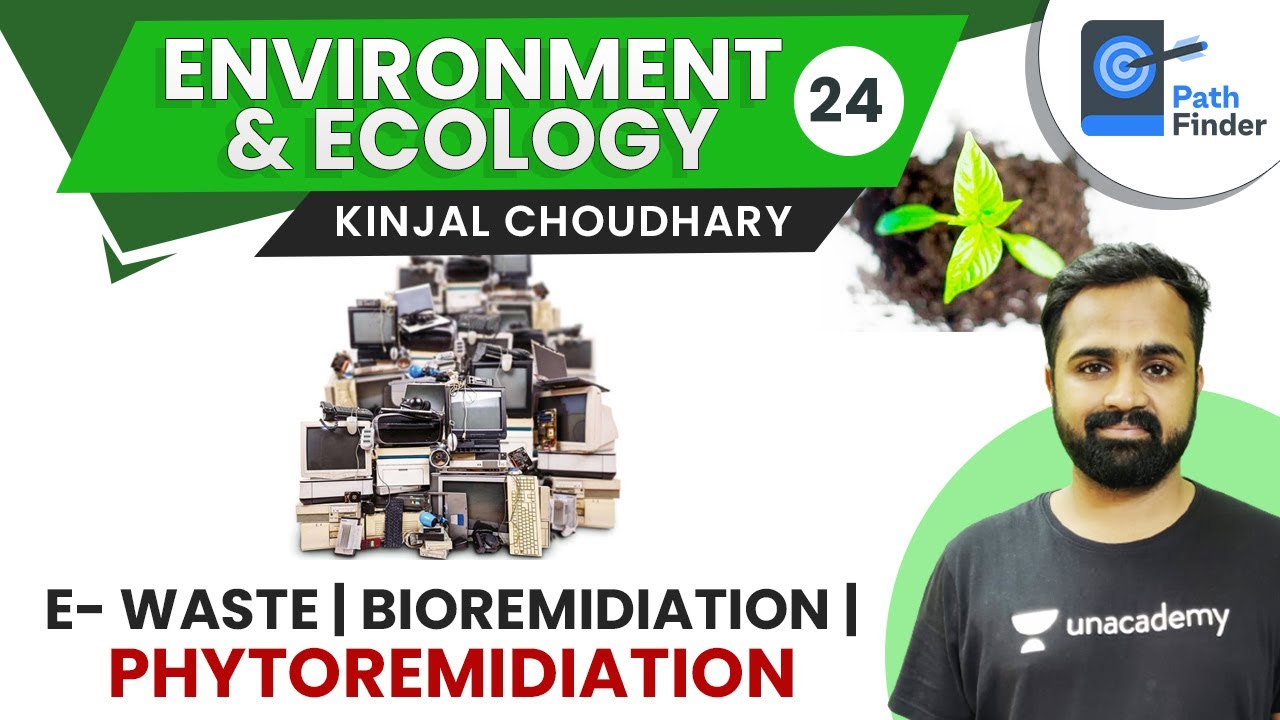
L24:E- Waste | Bioremidiation | Phytoremidiation | UPSC CSE/IAS 2021 | Kinjal Choudhary #ecology
41.9K
E-waste refers to discarded electronic devices including mobile phones, computers, and appliances. Improper disposal releases toxic substances like lead, mercury, cadmium, PVC, and brominated flame retardants into soil and groundwater. These hazardous materials cause neurological damage, hormonal disruption, kidney damage, and developmental problems in children. Lead in CRTs causes neurological damage; cadmium in infrared receivers impairs mental development; mercury in thermostats causes severe neurological damage. PVC releases toxic fumes when burned; brominated flame retardants cause diabetes and hormonal imbalances. Global e-waste reached 1.7 million tons in 2014. In India, Maharashtra generates 20%, Tamil Nadu 22%, and Uttar Pradesh 10%. Overall recycling rate is approximately 70%, with mobile communication equipment having the highest recycling rate.
Click to watch →

JIAP 2015 Basura electrónica y riesgos para la salud - Facultad de Medicina - UdelaR
561
E-waste contains over 1,000 chemical substances including heavy metals (lead, mercury, cadmium, chromium), brominated flame retardants, and plastics. Specific components contain specific toxins: CRTs contain up to 1 kg of lead; toners contain cadmium; fluorescent lamps contain mercury. Exposure occurs through environmental contamination via waterways, occupational exposure during manual dismantling, open-air burning for metal extraction, and household contamination from workers bringing contaminated materials home. Epidemiological studies document associations between e-waste exposure and health damage.
Click to watch →

class 11th | Informatics Practices | chapter 7 | E Waste
241
Electronic waste (e-waste) consists of discarded electronic devices containing toxic materials like cadmium, mercury, and brominated flame retardants that can damage human health (nervous system, kidneys, liver) and contaminate the environment; proper e-waste management through recycling is essential because electronic devices contain valuable recoverable materials (such as 10-15% gold from computers) that can be reused, reducing the need for mining and minimizing environmental pollution.
Click to watch →
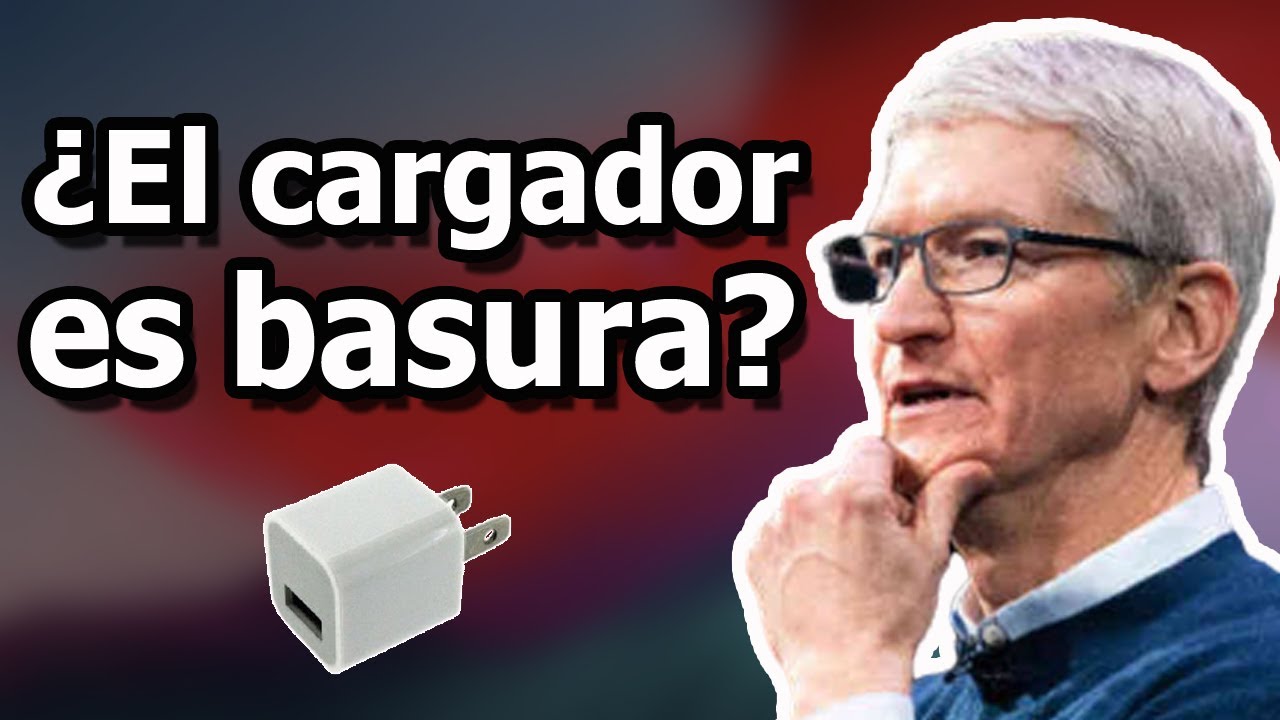
¿EL CARGADOR ES BASURA? 🤔 Giocode
28.4K
Electronic waste (e-waste) refers to discarded electronic devices and accessories like phones and chargers. This waste is highly contaminant and dangerous due to hazardous materials including lead, cadmium, brominated flame retardants, beryllium oxide, sulfur, and mercury, which pose serious health risks. Landfills containing e-waste often endanger nearby communities and workers. However, proper recycling enables urban mining, extracting valuable materials like copper, aluminum, and gold from discarded devices. For example, a CRT monitor contains approximately 450 grams of copper, 227 grams of aluminum, and 5.6 grams of gold. This approach reduces the need for traditional mining, conserves natural resources, and decreases overall environmental impact.
Click to watch →

Elektronik atıklar -eşref atabey
110
Electronic devices contain approximately 41 different minerals and elements, including toxic heavy metals like lead, mercury, cadmium, and arsenic, as well as chemical compounds such as brominated flame retardants and PVC. When discarded, these devices become e-waste, which constitutes only 2-5% of global solid waste but accounts for 70% of landfill toxicity. These toxic substances leach into soil and groundwater, contaminating the food chain and threatening human health. Children face particular risks from lead exposure, which impairs cognitive development, while mercury damages the nervous system and flame retardants disrupt hormonal balance.
Click to watch →
Deep Dive
The basic ecological and biological concepts of bioaccumulation and biomagnification, explaining how toxins build up in living organisms and move up the food chain.

L4: Bioaccumulation, Biomagnification and Biotic Interaction | Environment | Intense Prelims League
37.7K
Persistent Organic Pollutants (POPs) are toxic substances that cannot be degraded by natural processes. They are water-insoluble but dissolve in lipids, accumulating in fatty tissues. Bioaccumulation occurs when toxins build up within a single organism over time. Biomagnification describes how toxin concentration increases exponentially as organisms move up the food chain—from phytoplankton to small fish to larger fish to top predators. Examples include mercury and DDT, which biomagnify through aquatic food chains, reaching dangerous concentrations in apex predators.
Click to watch →
Complete Ecology & Environment | Marathon with Madhukar Kotawe | UPSC CSE 2022/23
116.3K
Bioaccumulation is the accumulation of non-biodegradable substances in an organism's body over time. Biomagnification refers to increasing concentrations of pollutants at higher trophic levels in food chains. For example, mercury in small fish accumulates to higher concentrations in larger predatory fish, and ultimately in humans who consume them. This poses serious health risks as toxic substances concentrate up the food chain.
Click to watch →
Revisão final para o ENEM - Biologia - Prof. Landim
76.1K
Bioaccumulation is the accumulation of non-biodegradable substances (like mercury, lead, and DDT) in an organism's tissues over its lifetime. These substances are not broken down and build up in the body. Biomagnification is the increasing concentration of non-biodegradable substances at higher trophic levels in a food chain. Each predator consumes many prey organisms, accumulating all the substances from their prey. Top predators in food chains accumulate the highest concentrations of non-biodegradable substances. To determine which organism has the highest contaminant concentration, identify the top predator in the food chain. This organism will have accumulated the most contaminants through biomagnification, making apex predators particularly vulnerable to environmental contamination.
Click to watch →

Our Environment in One Shot: FULL CHAPTER || Warrior 2026 || Class 10 Science Chapter 13
1.2M
Bioaccumulation is the accumulation of toxic substances in an organism's body over time. Biomagnification is the increase in toxin concentration as substances move up the food chain. Non-biodegradable chemicals like DDT, mercury, and pesticides accumulate in organisms and become more concentrated at higher trophic levels. Top predators (including humans) have the highest toxin concentration. This phenomenon occurs because toxins are not broken down and accumulate in body tissues. The 10% energy transfer law applies to toxins as well, meaning they become increasingly concentrated at each trophic level.
Click to watch →

LTR Prelims Preparation | Environmental Issues & Concerns | One Shot Video | Adda247 Odia
17.5K
This segment explains bioaccumulation (substance accumulation in organisms) and biomagnification (increasing concentration at higher trophic levels). Toxic substances like mercury and DDT accumulate in organisms and become more concentrated up the food chain. This process poses serious risks to top predators and humans who consume them. Understanding these concepts is essential for environmental toxicology.
Click to watch →
Deep Dive
The distinction between formal and informal recycling sectors, including the rudimentary methods (like open-air burning) used in informal sectors to extract valuable metals.

Web enabled counseling CSWM 13.05.2024
114
Informal collectors who do not know the value of this waste will pick up this waste and sell it to other traders in return of money. These traders will channelize it to informal recyclers. Formal and informal recycling - it goes through informal sector, it creates a mess, and then in very few quantities it reaches formal recycling. It gets recycled in proper way but we see later how the technology is still lacking. Most of the recycling in not only in India but in most of developing countries is done by the informal sector. The workers who work on this detail, who recycle and extract components with precious metals, do not use any safety equipment.
Click to watch →

RevScience 1: Electronic waste, what? where? who?
146
Formal e-waste recycling involves collecting products, shredding them, and smelting at high temperatures to extract metals. Only about 10 large smelters operate worldwide, with the US lacking domestic facilities and shipping waste to Canada. Formal facilities can recover 99% of metals. In contrast, informal recycling in developing countries occurs in backyard operations without safety equipment, exposing workers to toxic fumes. Informal operations recover only 25% of metals, representing significant resource loss while creating health risks for local populations.
Click to watch →
Waste, Work and Worth | Centering Waste Pickers in India's Circular Economy for Plastics
100
Informal recycling refers to units where workers are not paid minimum wage, units are not environment compliant, and workers work 24/7 without formal leaves. The recycling value chain involves multiple levels: waste pickers collect and segregate valuables, small aggregators aggregate materials, larger aggregators categorize by polymer type, and recyclers accept only one type of polymer with one color. At each level, prices increase as intermediaries add their effort and profit margin.
Click to watch →

IELTS Reading Analysis/ Consumerism/ Recycling
2.3K
The recycling system operates through formal and informal sectors. In formal sectors, recycling is done through official channels, while informal sectors involve rag pickers and middlemen. In some countries like Canada, everything is done formally, while in India, informal recycling plays a major role. Rag pickers begin work at 4 a.m. and continue until late afternoon, separating materials according to 30 different categories. They wash materials in makeshift water resources, contributing to river pollution. The poor undertake recycling work while the privileged preach about environmental responsibility but do not participate themselves.
Click to watch →
How Unmanaged e-Waste Can Be Hazardous To Man Pt.3 |Earthfile|
176
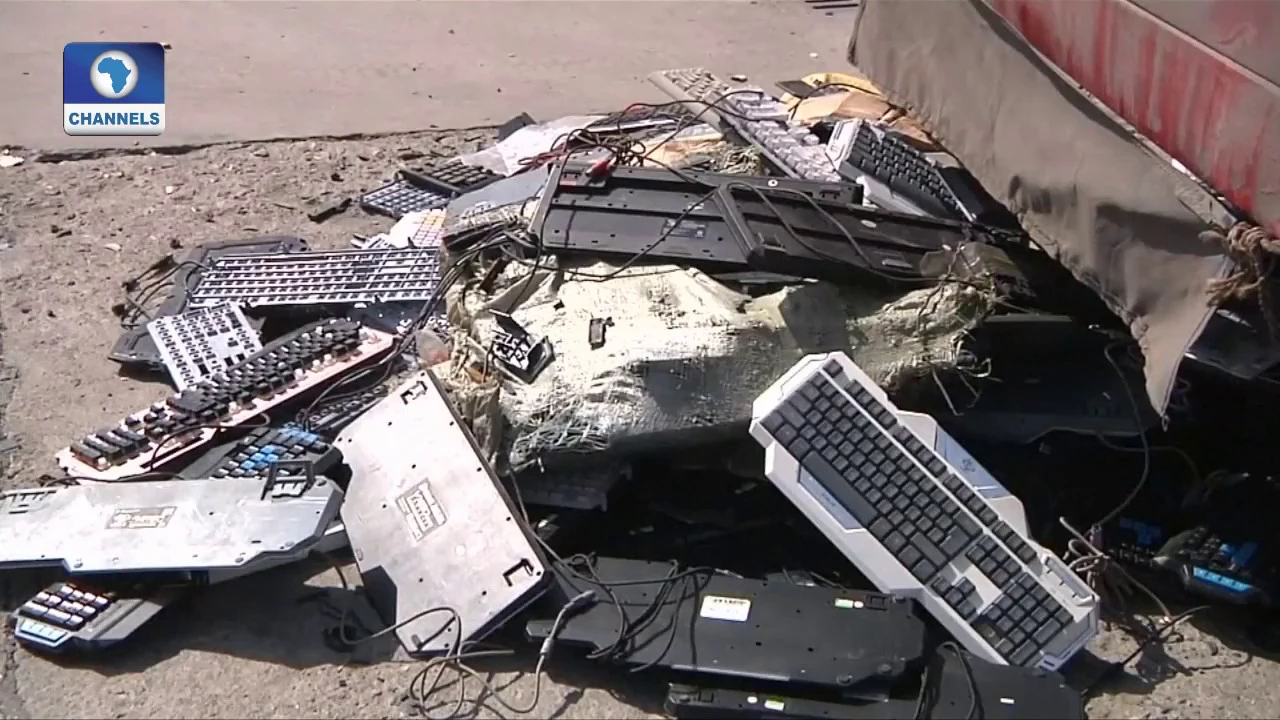
Five years ago, more than 5,000 small household businesses in the area were in the recycling business. These informal operators would dismantle electronic products by hand, melt down cases with cigarette lighters, and apply dangerous acids during the extraction process to extract valuable metals like copper and shred plastic into usable pellets. Now, small informal operators are completely banned from handling electronic waste, with truckloads delivered directly to industrial parks for regulated processing.
Click to watch →
Deep Dive
Basic maternal-fetal medicine concepts, specifically how heavy metals and endocrine-disrupting chemicals can cross the placental barrier or be transferred through breast milk.
Wie schützen vor Chemtrails, Elektrosmog, Impfung - Schwermetalle ausleiten nach Dr. Klinghardt
14.7K
Heavy metals can cross the placental barrier between mother and fetus, meaning there is no protective boundary preventing transfer. If a mother has dental amalgam fillings, the heavy metals can pass from her bloodstream to the developing fetus. This creates a chain of exposure that can be transmitted from generation to generation if not addressed, affecting not only the mother but also her children.
Click to watch →

Entrevista Dr. Nicolás Olea. Disruptores endocrinos, los tóxicos que dañan tu salud.
3.3K
Many environmental chemicals can cross the placental barrier and affect the developing fetus. Studies measuring contaminants in umbilical cord blood provide direct evidence of fetal exposure. These same chemicals are also found in breast milk, meaning mothers transfer accumulated body burdens to their infants through breastfeeding. This transfer mechanism means that a woman's environmental exposures before and during pregnancy directly impact her child's health from the earliest stages of development, highlighting the importance of maternal health behaviors during reproductive years.
Click to watch →

Die harte Wahrheit hinter Allergien & Autoimmun-Erkrankungen (Dr. John Ionescu)
7K
Dental amalgam releases mercury that is transferred transplacentally to the fetus during pregnancy. The mother's metal burden accumulates in her body and is also transferred through breast milk. This means both the fetus and infant can be exposed to maternal metal burden, contributing to early-onset allergic conditions. Breast milk should be tested for environmental toxins (pesticides, PCBs, Lindane, DDT metabolites, heavy metals) before and during breastfeeding. High concentrations in breast milk (3.5x normal values) indicate the mother's body burden is being transferred to the infant.
Click to watch →

Underkastelsen - Del 2(2)
33.5K
Chemicals transfer from mother to fetus through the placenta during pregnancy and continue to be transferred through breast milk after birth. The placenta is designed to allow nutrients to pass through, and fatty substances can easily cross body membranes. Long-lived chemicals that are fat-soluble can pass through the placenta and even the blood-brain barrier, reaching the developing brain. This means that the developing fetus is not protected from environmental chemical exposure, as the mother's body serves as a conduit for these substances.
Click to watch →

Metale ciężkie i choroby przewlekłe – o czym się nie mówi? Część 1/2
181.2K
During pregnancy, the placenta transfers not only nutrients and vitamins from mother to fetus but also accumulated heavy metals from maternal tissues. This prenatal transfer occurs because pregnancy acts as a natural detoxification process where the fetus draws minerals and vitamins from deep maternal tissues, inadvertently pulling along stored toxins. This represents one of the most underappreciated sources of early-life heavy metal exposure.
Click to watch →
Prerequisite Knowledge
- Concept 01Understanding what electronic waste (e-waste) is and the specific toxic materials (such as lead, mercury, cadmium, and brominated flame retardants) commonly found in modern electronics.
- Concept 02The basic ecological and biological concepts of bioaccumulation and biomagnification, explaining how toxins build up in living organisms and move up the food chain.
- Concept 03The distinction between formal and informal recycling sectors, including the rudimentary methods (like open-air burning) used in informal sectors to extract valuable metals.
- Concept 04Basic maternal-fetal medicine concepts, specifically how heavy metals and endocrine-disrupting chemicals can cross the placental barrier or be transferred through breast milk.
Subsequent Learning
- Step 01Exploring international waste management frameworks and treaties, such as the Basel Convention, which regulates the transboundary movement of hazardous wastes.
- Step 02Investigating the principles of Extended Producer Responsibility (EPR) and how circular economy design can reduce e-waste toxicity at the manufacturing stage.
- Step 03Analyzing public health intervention strategies, occupational safety regulations, and soil/water remediation techniques tailored for developing nations' informal economies.
- Step 04Examining the socioeconomic and global trade dynamics that drive the flow of electronic waste from high-income countries to low- and middle-income countries.
E-Waste Crisis
Health Impacts
E-Waste Crisis
0:00Playing Section
- 1
Ghana faces severe e-waste dumping and burning issues.
- 2
Toxic fumes threaten the health of mothers and infants.
- 3
Crude recycling methods expose workers to dangerous chemicals.
The Livelihood and Inclusive Formalization Perspective
While the health risks of toxic e-waste exposure are undeniable, an alternative perspective from development economists and local advocates cautions against a purely hazard-centric narrative. This viewpoint argues that informal e-waste recycling provides a vital economic lifeline for marginalized populations in Ghana, where alternative employment is scarce. Overly restrictive policies or bans driven by sensationalized 'digital dump' narratives can inadvertently worsen poverty, which poses an even more immediate threat to maternal and infant survival than chemical exposure. Proponents of this perspective advocate for 'inclusive formalization' rather than prohibition. This approach respects the agency of informal workers and seeks to integrate them into safer, regulated recycling systems. By providing protective gear, training, and safer technology, policy-makers can mitigate health risks for breastfeeding mothers and infants without destroying the essential livelihoods that support them.
Deep Dive
Exploring international waste management frameworks and treaties, such as the Basel Convention, which regulates the transboundary movement of hazardous wastes.

Best 200 MCQs May Month 2022 General Studies MCQs For All Exams by Dr Vipan Goyal l Study IQ
304.1K
The Basel Convention on the Control of Transboundary Movements of Hazardous Wastes and Their Disposal is an international treaty adopted in 1989 to protect human health and the environment from the adverse effects of hazardous wastes. The convention regulates the movement of hazardous wastes between countries and requires prior informed consent from the importing country. The convention has been ratified by most countries and has been instrumental in reducing the illegal trade of hazardous wastes.
Click to watch →

The Basel Convention On The Control Of Transboundary Movement of Hazardous Wastes and Their Disposal
794
The Basel Convention is an international treaty adopted in 1989 and effective since 1992, with 182 parties, aimed at reducing the transboundary movement of hazardous wastes, particularly preventing transfer from developed to less developed countries; it covers hazardous wastes like biomedical waste, used oils, lead acid batteries, and persistent organic pollutants through two annexes (Annex I for hazardous wastes and Annex II for other wastes), while explicitly excluding radioactive waste, and was established following incidents like the 1988 Côte d'Ivoire case where 8,000 barrels of Italian hazardous waste were dumped in Nigeria for $100 monthly rent, which environmental activists termed 'toxic colonialism'.
Click to watch →

Introducing the Basel Convention
16.4K
The Basel Convention on the Control of Transboundary Movements of Hazardous Wastes and their Disposal operates through a three-pillar framework: (1) soft law commitments for waste minimization and environmentally sound management, (2) hard law obligations controlling transboundary waste movements requiring prior informed consent procedures, and (3) obligations to prevent illegal traffic; unlike some treaties, it lacks a formal financial mechanism but offers technical assistance through regional centers, and its compliance regime relies on COP mandates rather than an express legal basis.
Click to watch →
GK FOR SSC CGL 2024 | PYQ SERIES PART 4 | LEC-5 | PARMAR SSC
650.4K
The Basel Convention, signed in 1989 in Basel, Switzerland, is an international treaty to control the transboundary movements of hazardous wastes and their disposal. The convention aims to reduce the generation of hazardous wastes and ensure their environmentally sound management. It prevents wealthy countries from exporting hazardous waste to developing countries.
Click to watch →

Basel Convention | Hazardous Waste | UPSC | In Hindi | transboundary movements of hazardous wastes
8.2K
The Basel Convention is an international treaty adopted in 1989 (effective 1992) that regulates the transboundary movements of hazardous wastes and other wastes, with the primary objectives of minimizing waste generation, ensuring environmentally sound management, and reducing transfers to developing countries; it currently has 190 parties including the European Union, with its secretariat located in Geneva, Switzerland, working in collaboration with the United Nations Environment Programme and the World Health Organization to protect both the environment and human health from the harmful effects of improper hazardous waste disposal.
Click to watch →
Deep Dive
Investigating the principles of Extended Producer Responsibility (EPR) and how circular economy design can reduce e-waste toxicity at the manufacturing stage.

Closing Workshop of the Plastics Awareness Project
244
This section explains Extended Producer Responsibility (EPR) and circular economy principles: (1) EPR is a policy mechanism where producers are responsible for the entire lifecycle of their products, including post-consumer packaging. (2) In Nigeria, the industry-led model requires manufacturers to form Producer Responsibility Organizations (PROs) to manage waste. (3) FIBRA (Food and Beverage Recycling Alliance) manages packaging waste for the food and beverage sector, with 49 member companies. (4) The circular economy aims to eliminate waste by creating a loop where materials are continuously reused, contrasting with the linear economy (production → use → disposal). (5) The section demonstrates circular economy in practice through PET bottle recycling: consumers use bottles, waste pickers collect them, recyclers process them into raw materials, and manufacturers use recycled materials to produce new bottles. Companies like Nestle now use 50% recycled content, with regulations requiring 25% by 2028.
Click to watch →

GAP for EPR | Responsibility for the Circular Economy: New Aspects of EPR & Producer Responsibility
220
Extended Producer Responsibility (EPR) must evolve beyond its traditional focus on recycling to address the full spectrum of environmental impacts throughout a product's lifecycle, including design-stage considerations, pollution prevention, and geographic leakage issues; this requires implementing complementary mechanisms such as true cost internalization through penalties for non-performance and virgin material reduction targets, while ensuring these policies work within a broader circular economy framework that integrates multiple policy instruments to achieve sustainable resource use and reduce environmental harm.
Click to watch →

From waste to value: EPR beyond packaging
117
Extended Producer Responsibility (EPR) is a policy framework where producers are responsible for the entire lifecycle of their products, including end-of-life collection and recycling, requiring coordinated systems between producers, PRO organizations, recyclers, and municipalities to create effective circular economy solutions; successful EPR implementation depends on adequate funding for recyclers, strategic investment conditions, appropriate technology matching to waste stream complexity, and transparent fee allocation that connects consumer payments directly to recycling infrastructure, with different waste streams requiring different recycling approaches such as mechanical recycling for clean streams, chemical recycling for mixed streams, and gasification for highly contaminated materials.
Click to watch →

Seminario Permanente de Derecho Económico Circular 2025
235
Product-as-service (servitization) involves companies retaining ownership while providing services, promoting extended producer responsibility and incentivizing durability. E-waste presents challenges due to growing volumes from accelerated consumption and toxic substances, with much waste flowing to developing countries where recycling occurs under precarious conditions. Extended Producer Responsibility (EPR) frameworks create legal obligations for producers to manage products throughout their lifecycle, with examples including EU directives requiring PET bottle manufacturers to incorporate 25% recycled plastic by 2025 and Chile's EPR law for tires. Pyrolysis converts end-of-life tires into pyrolysis oil, steel, and carbon black, addressing environmental problems while transforming waste into reusable resources.
Click to watch →
A circular economy for packaging: Extended Producer Responsibility
9.2K
Extended Producer Responsibility (EPR) is a policy mechanism where companies that introduce packaging into the market are legally required to pay for its collection, sorting, and recycling after use, providing dedicated, ongoing, and sufficient funding that addresses the economic gap where current recycling costs exceed revenues; this mandatory approach creates a level playing field among all stakeholders, incentivizes better packaging design, and serves as a structural foundation for building circular economy systems, as evidenced by the recent alignment of over 150 organizations including major FMCG companies, retailers, and governments behind EPR as essential for solving packaging waste and pollution.
Click to watch →
Deep Dive
Analyzing public health intervention strategies, occupational safety regulations, and soil/water remediation techniques tailored for developing nations' informal economies.

WIEGO Project on Occupational Health & Safety
110
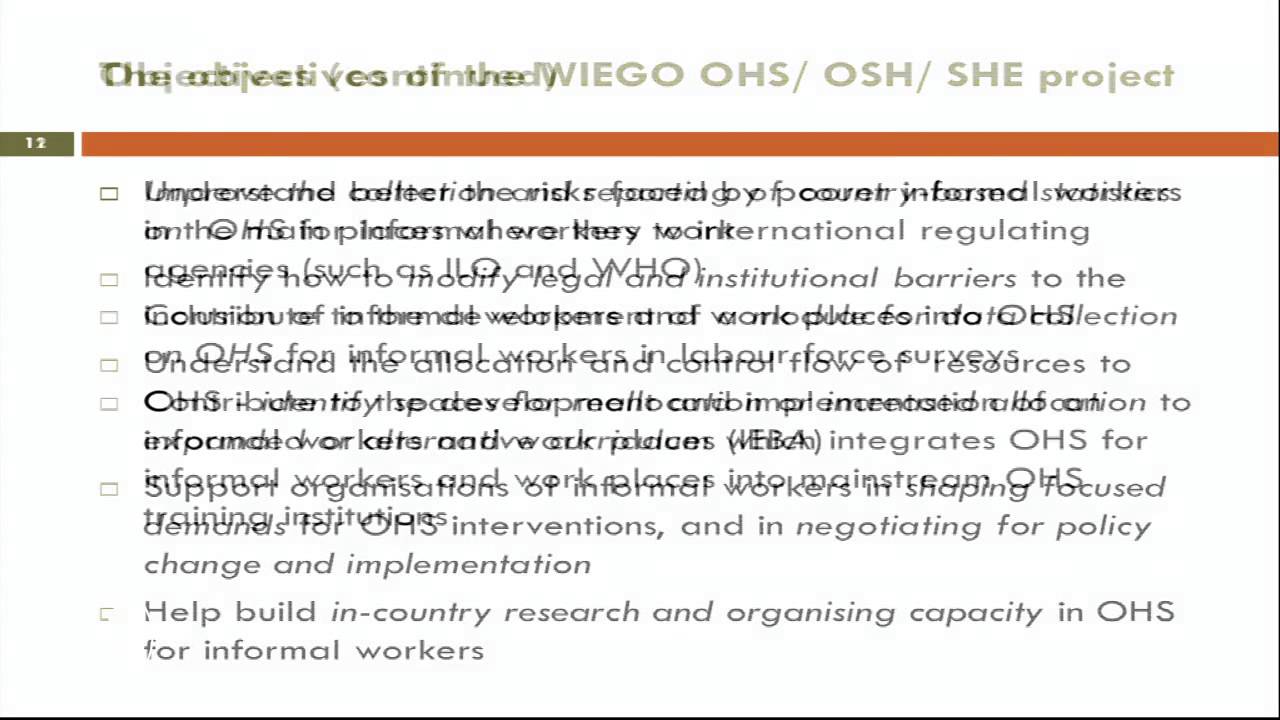
Effective occupational health and safety interventions for informal workers require a multi-pronged approach combining participatory design of ergonomic tools, multi-stakeholder policy platforms, municipal worker-linkage programs, and participatory hazard mapping, as demonstrated by WIEGO's five-year project across India, Tanzania, Peru, Brazil, and South Africa working with waste pickers, street vendors, homebased workers, and domestic workers.
Click to watch →
7/29, Session 6 - Lund
131
Effective occupational health and safety interventions for informal workers require a sectoral approach that disaggregates workers by their specific places of work (such as sidewalks, public parks, private homes, construction sites, and waste dumps), as different sectors face distinct risks and require tailored solutions; this approach recognizes that informal workers often lack autonomy and control over their working conditions, and that extending OHS beyond formal employment requires addressing barriers including insufficient government resources, lack of political will, poor inter-departmental coordination, and the need for worker-driven interventions that build on existing organizational capacity.
Click to watch →

Foro para la Salud Pública- SST en el Sector Informal
109
Occupational safety and health in informal sectors requires a multi-level approach combining national policy frameworks, tripartite dialogue (employers, workers, government), and adapted communication strategies that reach vulnerable populations through accessible channels like radio campaigns and simplified training methodologies, as demonstrated by the ILO's successful interventions in Colombia's coffee sector where 730,000 workers face unique challenges including seasonal employment, limited social protection access, and high informality rates.
Click to watch →
WHWB OHS Fundamental Principle and Right at Work ILO Dec 4 2024
206
The ILO addresses occupational safety and health challenges for informal workers through a multi-pronged approach: formalization efforts to bring informal workers into the regulatory system with access to credit and protections; extension of protections to informal workers since accidents occur regardless of formal status; adaptation of messages and materials for low-literacy populations using pictograms and simplified communication; and participatory training methodologies like paratory training in agriculture, working with extension workers and farmers in field settings with practical components. This approach acknowledges that informal workers represent approximately 60-80% of workers in many developing countries and require culturally appropriate, accessible interventions.
Click to watch →

NEDLAC/NIOH Training Programme Launch: Management of Occupational Health and Safety
490
Approximately 5 million of South Africa's 17 million workers operate in the informal economy, yet this sector receives minimal attention in occupational health policy discussions. Addressing this gap requires coordinated action by NEDLAC and other institutions to develop appropriate policy and governance frameworks.
Click to watch →
Deep Dive
Examining the socioeconomic and global trade dynamics that drive the flow of electronic waste from high-income countries to low- and middle-income countries.

Worlding Electronic Waste
433
The concept of 'worlding electronic waste' examines how citizens, consumers, corporations, materials, and geographic sites connect through use and disposal practices, forming organized geographic patterns. Traditional 'first world/third world' narratives are challenged by data showing mobile subscriptions in Ghana surpassed Canada and Mexico by 2010-2011. Under the Basel Convention, countries are classified as Annex 7 (US, EU, Canada) or non-Annex 7. Research from 1996-2014 reveals dramatic reversals in e-waste trade flows, with Indonesia and China becoming net exporters to the US and Europe. The Agbogbloshie dump in Ghana exemplifies complex realities beyond media portrayals of toxicity, with repair shops building custom PCs from scavenged parts. Singapore participates in regional recycling networks, collecting unwanted electronics for shipment to Africa, South Asia, and China, where Bangladesh hosts specialized street-level repair ecosystems achieving profit margins exceeding 200%.
Click to watch →
CES 540 Lecture 16 & 17 Part 2 Global waste trade, climate injustice, environmental racism
114
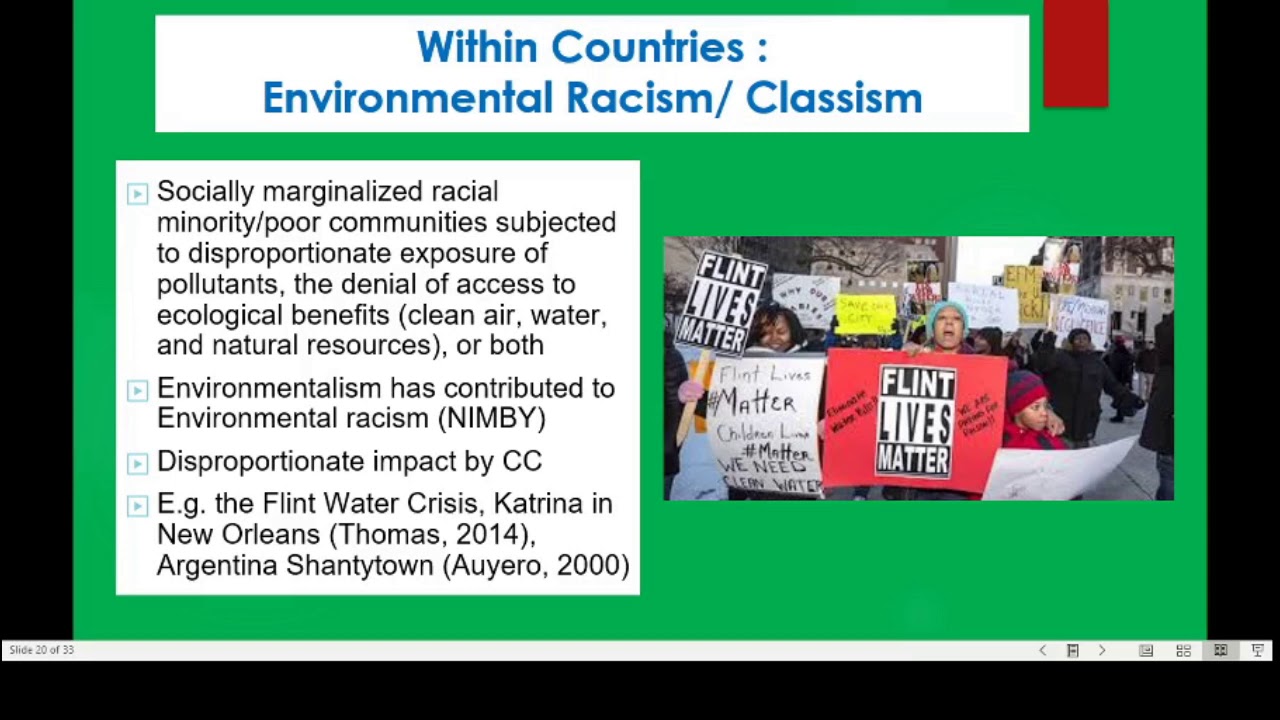
Global waste trade represents a form of environmental inequality where wealthy countries export waste to poorer nations. While only 5% of the world's population produces 19% of global waste, residents of the richest countries generate 1,763 pounds per year compared to less than 440 pounds in the poorest countries. E-waste generation varies dramatically: China generates 1.2 kg per capita while the US generates 19.4 kg and Germany 22.2 kg. Successful environmental movements in wealthy countries create incentives to export waste to countries with weaker regulations. Countries like Malaysia and Turkey have fought back against becoming 'rubbish time of the world,' demonstrating growing resistance to environmental dumping.
Click to watch →

The Digital Dump: Exporting Re-use and Abuse to Africa
17.5K
Electronic waste such as scrap computers is classified as hazardous waste containing toxic substances. Up to 80% of e-waste collected for recycling in wealthy developed countries is exported to developing nations like China and India, where it is processed through dangerous methods including burning, acid treatment, and dumping. This creates environmental injustice where the electronics industry avoids responsibility by passing toxic impacts to the world's poorest communities. The practice exploits weak regulations in developing countries while generating employment in repair and recycling sectors.
Click to watch →
A Week in a Toxic Waste Dump
27.8K
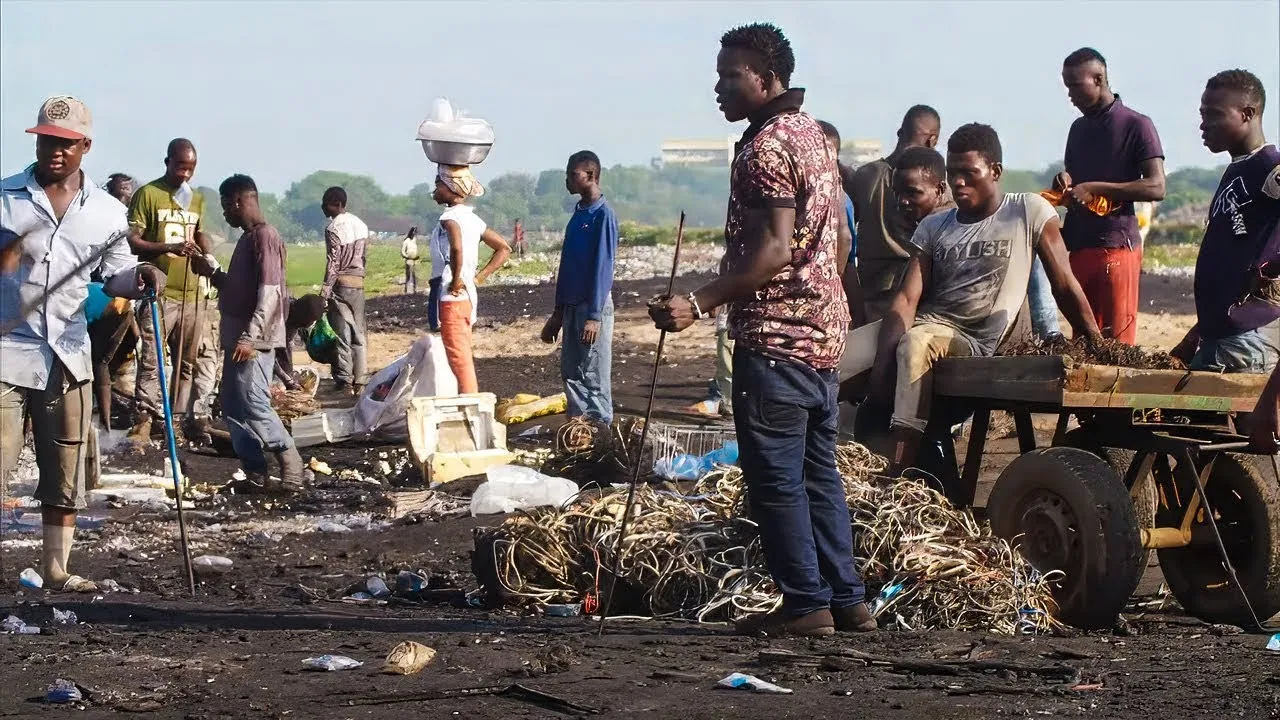
The e-waste recycling chain operates hierarchically: burner boys perform dangerous work for minimal reward while middlemen control supply chains and earn significantly more. Ghana receives electronic waste from around the world, including the UK and USA, despite the Basel Convention prohibiting such exports. Broken items from retail stores like Currys and PC World are marked as faulty and sold to third parties who transport them abroad. Local traders like Baba specialize in computers, paying workers to break down goods into raw materials. This creates a complex global trade network where Western consumers contribute to environmental harm in developing nations. Workers attempt to profit by buying scrap goods at local markets, but success remains uncertain.
Click to watch →
세계 최대 전자쓰레기 마을을 가다 (KBS_2013.11.30.방송)
113.6K
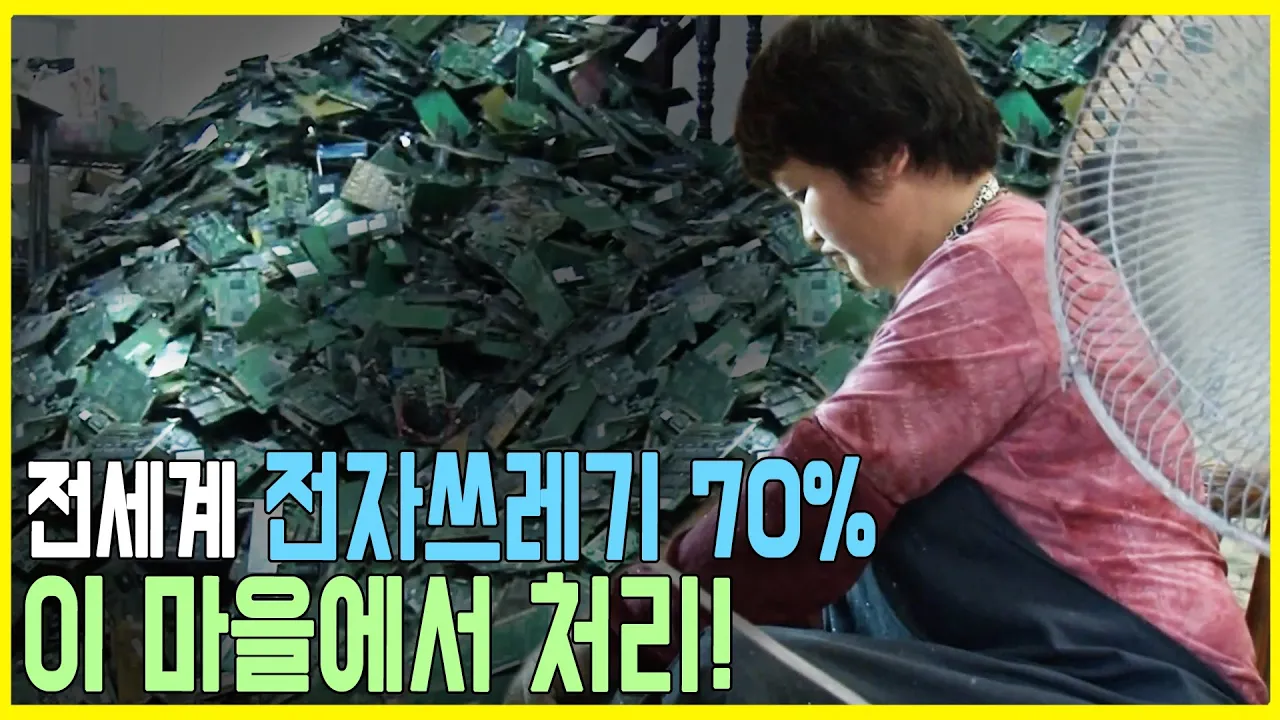
Electronic waste (e-waste) consists of discarded electronics like computers and phones. Developed nations generate massive amounts—America discards 30 million computers yearly, Europe 10 million phones—with much flowing to countries like China for processing. Guiyu, China processes 1.5 million tons annually, employing 70,000 of its 150,000 residents. Workers use primitive methods: heating circuit boards to melt solder, hammering plastics, and water-based sorting to separate metals from plastics. Despite international agreements like the Basel Convention (1992) and South Korea's 2000 ban, illegal trafficking continues due to enforcement challenges and economic incentives.
Click to watch →
E-Waste Crisis
Health Impacts
E-Waste Crisis
0:00- 1
Ghana faces severe e-waste dumping and burning issues.
- 2
Toxic fumes threaten the health of mothers and infants.
- 3
Crude recycling methods expose workers to dangerous chemicals.
The Livelihood and Inclusive Formalization Perspective
While the health risks of toxic e-waste exposure are undeniable, an alternative perspective from development economists and local advocates cautions against a purely hazard-centric narrative. This viewpoint argues that informal e-waste recycling provides a vital economic lifeline for marginalized populations in Ghana, where alternative employment is scarce. Overly restrictive policies or bans driven by sensationalized 'digital dump' narratives can inadvertently worsen poverty, which poses an even more immediate threat to maternal and infant survival than chemical exposure. Proponents of this perspective advocate for 'inclusive formalization' rather than prohibition. This approach respects the agency of informal workers and seeks to integrate them into safer, regulated recycling systems. By providing protective gear, training, and safer technology, policy-makers can mitigate health risks for breastfeeding mothers and infants without destroying the essential livelihoods that support them.
Understanding what electronic waste (e-waste) is and the specific toxic materials (such as lead, mercury, cadmium, and brominated flame retardants) commonly found in modern electronics.
The basic ecological and biological concepts of bioaccumulation and biomagnification, explaining how toxins build up in living organisms and move up the food chain.
The distinction between formal and informal recycling sectors, including the rudimentary methods (like open-air burning) used in informal sectors to extract valuable metals.
Basic maternal-fetal medicine concepts, specifically how heavy metals and endocrine-disrupting chemicals can cross the placental barrier or be transferred through breast milk.
Exploring international waste management frameworks and treaties, such as the Basel Convention, which regulates the transboundary movement of hazardous wastes.
Investigating the principles of Extended Producer Responsibility (EPR) and how circular economy design can reduce e-waste toxicity at the manufacturing stage.
Analyzing public health intervention strategies, occupational safety regulations, and soil/water remediation techniques tailored for developing nations' informal economies.
Examining the socioeconomic and global trade dynamics that drive the flow of electronic waste from high-income countries to low- and middle-income countries.
310 views2likes2:51@ThomasNaadiOriginal Release: 2019-03-08
now while the world struggles to deal with climate change another big problem is what to do with the enormous amounts of electronic waste being generated much of it is dumped and burned in Africa and Ghana is the main digital dumping ground Tamas Nada's in to this report from Accra Ghana quizzed on tight budgets redo from refrigerators television monitors to car batteries are dismantled here using a very crude method the Scott Deal has basically been these cables to extract a short copper and that is where the danger lies this is where the burning takes place and has serious health and environmental implications it's even more worried now the researchers have discovered that the toxic fumes emitted here is endangering the half of breastfeeding mothers and their babies salamu ala is seven month cool pregnant woman flies a treat here selling water and brings two scrap dealers when I walk around the market the smoke worries me it affects my child too because I do get stomach upsets when I inhale it I have chest pains too when the scrap dealers want to buy water from me I don't go near the burning site but the smoke is still all over the place so yes I am affected studies have shown that pregnant women like Salah and breastfeeding mothers exposed to E with chemicals are likely to have their breasts more contaminated the pollutants get into the human body through food fish consumed from us polluted water bodies and when inhaled and their effects will be devastating during the formation of milk fat is being mobilized to form work so they also get alongside in the formation of milk and once we get bread and we are breastfeeding our children we aren't just giving them nourishment or food we also reduce in our body better of this chemicals to these chemicals cause all forms of cancers brain defects hormonal defects learning disabilities scrap dealers are keenly aware of the dangers of what they are doing we know it affects everyone including pregnant women a lot of people don't like what we are doing here but it's our only means of livelihood it makes us sick and we are concerned about it but we need alternative means of survival the authorities in Ghana cedi enforcing the new law on azad use an electronic waste control to tackle this problem Thomas Maddy BBC news a craft
Up Next
13:46
Understanding the Right to Repair Movement | Educational Guide
@rossmanngroup
185.5K views•2020-03-05

12:54
Triumph of Orthodoxy Icon: Byzantine Art & History Explained
@BenCallan
2.1K views•2024-08-06

9:49
FastAPI vs Flask vs Django: Choosing the Right Python Web Framework
@TechWithTim
302.5K views•2024-05-26

1:42
Game of Thrones Opening Credits: A Cinematic Analysis
@gameofthrones
46.3M views•2011-04-18
Related Study Plans & Knowledge Roadmaps
Structured learning paths in General & Interdisciplinary Studies
general-studies
Elevator Engineering: History, Physics & Cities
01From Hoists to Safety Brakes: The Dawn of Vertical Lift
02Hydraulic vs. Traction: The Engineering Physics of Elevators
03Modern Speed, Safety, and Algorithms
+ 2 more learning modules
12h5 modules
Explore Roadmap
general-studies
Rubber: Material Science, History & Geopolitics
01Origins of Natural Rubber & Mesoamerican History
02The Chemistry of Natural Rubber & Vulcanization
03The Geopolitics of the Rubber Boom & Colonization
+ 2 more learning modules
12h5 modules
Explore Roadmap
general-studies
Containerization: Evolution, Logistics & Trade
01Ancient Trade & Bulk Cargo: Amphorae to Barrels
02The Industrial Revolution & Cardboard Packaging
03The Containerization Revolution: Malcom McLean
+ 2 more learning modules
12h5 modules
Explore Roadmap
general-studies
Textile Tech: Evolution, Labor & Global Impact
01Pre-Industrial Textiles: Handloom & Cottage Industry
02Mechanization: The Spinning Jenny to the Power Loom
03The Factory System & Global Labor Transformation
+ 2 more learning modules
10h5 modules
Explore Roadmap