













![ЯВЛЯЕТСЯ ЛИ СОЗНАНИЕ АЛГОРИТМОМ? [Квантовые теории сознания ч.1]](https://i.ytimg.com/vi/7UQRJ3q-7Qc/maxresdefault.jpg)












Intrinsic plasticity of cerebellar Purkinje cells is essential for motor memory consolidation, as demonstrated by STIM1 knockout mice showing severe vestibulo-ocular reflex memory consolidation deficits despite intact basal firing and synaptic plasticity; optogenetic manipulation during the critical 0-90 minute post-training period disrupts this intrinsic plasticity and impairs downstream vestibular nucleus plasticity, revealing that synergistic modulation of intrinsic and synaptic plasticity in Purkinje cells is required for systems-level memory consolidation.
Memory Consolidation and Intrinsic Plasticity of Purkinje Cells
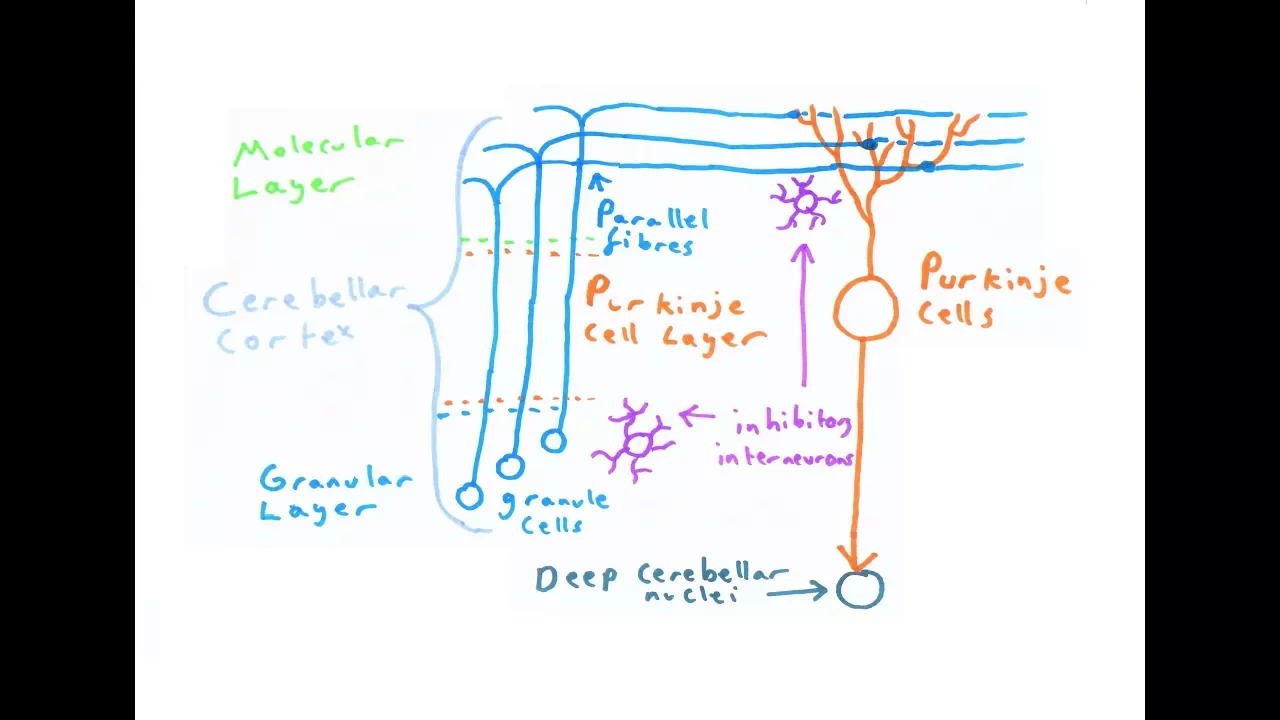
Added:Basic neuroanatomy of the cerebellum, including the organization of the cerebellar cortex and the specific role of Purkinje cells as the sole output neurons.
Fundamental concepts of synaptic plasticity, specifically Long-Term Depression (LTD) and Long-Term Potentiation (LTP) at parallel fiber-Purkinje cell synapses.
The physiological definition of intrinsic plasticity, focusing on how changes in ion channel expression alter a neuron's excitability independent of synaptic strength.
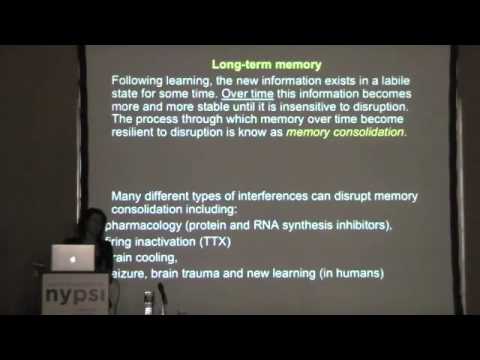
The general cognitive and behavioral process of memory consolidation, whereby labile short-term memory traces are converted into stable, long-term representations.
The role of the cerebellum in motor control, error detection, and motor adaptation (e.g., vestibulocular reflex or eyeblink conditioning).
The synergistic interaction between synaptic and intrinsic plasticity mechanisms in Purkinje cells during different phases of learning.
Computational modeling of cerebellar neural networks that incorporate intrinsic plasticity to simulate motor learning and memory retention.
Pathophysiological consequences of Purkinje cell dysfunction, such as cerebellar ataxia, and how impaired intrinsic plasticity contributes to movement disorders.
The application of optogenetics and chemogenetics to selectively manipulate Purkinje cell excitability in vivo to study real-time motor consolidation.
Comparative analysis of intrinsic plasticity in other brain structures, such as the hippocampus or neocortex, during declarative and spatial memory consolidation.
214 views4likes48:20Original Release: 2024-06-12
okay hi everyone um Welcome to our series on sarabella research um uh today I have as our guest sang Jong Kim sang Jong was trained as a physician at Soul National University and received his MD in 1990 then he stayed on to complete a PhD in 1996 he was a post-doctoral fellow at Johns Hopkins with David Lyndon and Paul Worley and during this work he discovered that in addition to uh typical mechanisms of synaptic plasticity ltp and LTD there are also other mechanisms that with which neurons can store memories he then returned to Soul National University where he's now the chair of the Department of biomedical sciences and the director of the memory Network Medical Research Center he's won a a number of awards including when he was young when he 1999 he received a young physiologist award from the Korean physiological society and then more recently 20 21 he received a Joseph Jin Chang research award at the 2021 Korean national Neuroscience Society um he studies cellular and molecular mechanisms of long-term memory focusing on the cerebella and it's a pleasure to have you with us uh look forward to your talk s John uh thank you very much for your kind uh introduction and for inviting me to this wonderful wonderful seminar series I'm so delighted to share the stories of my uh uh brilliant students uh hun and Chan and J on uh regarding on U memory consolidation in the cereum uh allow me uh begin with my my neurot tree and as I as I as I as you introduced uh I I did a post start at at John Hopkins at at um David Lindon and Paul W lab and I learned cereum uh at John Hopkins uh David uh uh traveled all the way to Soul to celebrate uh the opening ceremony of my memory network uh memory medical research center uh nsnu I'm I deeply appreciate my mentors uh professor John Kim and David Lindon and uh PA Ry uh and John Hopkins okay um uh to me cereum looks like a a conductor of a of a symphony oing orchestrating PR function uh bing cell uh uh at the in the in the ca cortex uh is kind of a a very very talkative it it talks a lot and uh I don't know whether you can hear the sound uh this this capture of exra recording uh sounds very talkative BR and BR and so it shows beautiful uh simple Spike and and and complex Spike so as a neurophysiologist this uh talking really uh ining and then really triggers my curiosity how does P cell maintain this firing and why P fires uh a lot and during the P firing um the C influx is unavoidable so uh ping cell uh need to manage this com influx to sustain uh pinell firing for for for this end uh ping cell is equipped with a very effective handling strategy uh which is a abundant buffering molecules like carb and pamine also it has uh e store and steam one is an Steam one is an ER sensor which binds to uh pump uh in the MBR of store uh CH new currently a post uh at MIT uh uh decided to uh I mean hypoth hypothesize that steam one may contribute to custom handling in ping cell and overall uh contributing to uh p p firing and and to this end he he generated ping cell specific steon mice and he crossed uh floss steon and P cre mice line and this imunohistochemistry uh revealed that uh the absence of expression of steon in the Perkin Soma uh and the dendrite this uh could I mean flux steon line is General gift from Port W lab and and CH uh measured the concentration in the Poma and the uh membrane depolarization and also pin firing uh induced an increase in the intracellular calcium concentration and The Knockout or ping I mean the steam knock ping specific p stimon KN out uh delayed cytool clearance compared to Wild time uh from now on uh the the blue represent wild type and the red represent nak mice so this uh delay in CYO uh clearance um may affect you know dependent membrane conductors and then that even eventually uh affect the uh ping cell firing and we uh measured per cell firing with cach mode and found that uh the per cell specific stim knockout reduced uh intrinsic excitability of the pering cell compared to Y type so um to understand why ping cell uh fires even with this enormous energy consumption uh we decide we invested the impact of ping firing D in Steam knockout on cereal specific behavior uh which is a vestibular ocular reflex so you can see the uh turn turn table and mouse on the turn table and then you can the screen of the uh screen of the the the equipment this uh Bas ocular reflex system was uh transferred from uh to lab I do appreciate uh her contribution to this story and the V uh uh learns uh adapt uh in in in the uh training during the training for example uh if the turntable and turntable and screen uh turns turns in opposite direction the movement of our eyeball gain increases uh on the other hand the if the turntable and screen turns rotate in the same direction the eyeball movement gain goes down gain gain decreases and we tested this uh vual gain for example this gain down learning uh to ours surprice this pishing sale uh specific Ste uh the V gain learning was intact so I mean this is is gain down and there's no difference in the I mean the memory uh in of the we are learning but uh when we come back to this mice and next day uh this mice uh forget the previous day uh memory so you can you can see the memory gain goes back to a baseline after uh 24 hours so uh this stim nise shows uh kind of phase specific uh deficit in the memory consolidation compared to I type and also if when we did the gain up training like this this also gain of learning was okay but the gain of consolidation showed deficit deficit in in steon per C KN mice so uh so we we found that steon knockout in the P cell uh induced a memory consolidation deficit but the basal firing deficit which I have shown you may not explain this very specific deficit so to understand underlying uh plasticity mechanism we decide to uh study temporal cion between the neural plasticity and memory uh hun shim and D did this uh work together and uh so we know that uh uh there are two types of plasticity and for example uh parall fiber burth induction induces synaptic ltp and intrinsic plasticity potentiation together which are called ltp and also our lab also reported that uh different uh uh induction pattern induces synap LTD and then ltdi together so this is uh data from you know a few slides uh in vitro uh induction protocol so our lab decided to to uh test I mean investigate training induced plasticity uh during V learning and memory cons consolidation so uh we did uh in this case uh gain of training and then this is the gain uh gain is uh increased by this train of 30 minutes and then is the memory uh consolidation was intact in white Ty animal and we uh sacrifice uh this animal at at every point of this uh behavioral measurement and we investigated the intrinsic excitability of ping cell and we uh so this gain of training induced uh ltdi which means that depression of inin excitability at 1 hour and it returns uh back to Baseline after 24 hours uh so we we did this recording from the flatless which is uh reported to be to to be the site of the uh V memory uh storage and then we tested uh nakal mice and as I shown you before nakam Laars okay but the memory uh consolidation does not uh wasn't okay so so memory uh gain returns to the Baseline and then we we checked the uh intrinsic plasticity and then uh we found that uh the uh uh at one hour we we could not see any uh change in an uh intrin plasticity ltdi and 4 hour and even and and 24 hour so the steam on uh n showed memory consolidation and and uh ltdi deficit after gain of training and how about synaptic plasticity in uh which is induced by VR training so uh in contrast to Intrinsic plasticity the um synaptic plasticity was uh intact in both both Y type and steam onise as you can see here after um we are training gain up uh training the uh after one one hour the there there was a synaptic depression both in uh right time and knockout and it return returns to the Sharm level at after 24 hours so um then we uh tested that whether uh P cell instruct instruct VN neurons for memory transfer it is uh so we we tested the vular nucleus uh uh wash fiber to vular nucleus synaptic plasticity and also vular nucleus intrin plasticity uh for the uh due to the time limit I I want only sh uh show the um intrinsic plastic your B nucleus so uh the training we after the train I at at each time for the point of after training uh we uh we measured the uh intrin plasticity from the V nucleus uh in in in X or H recording mode so in white time mice uh after 1 hour there's a tendency of increasing in in intrin stability and 4 hour and 24 hour it keeps uh keep increased but um in steon up in a uh this kind this this uh ltpi training in to ltpi in neuron showed deficit it did not show any um intrinsic plasticity uh in in Brien so I can some I may I'd like summarize this part uh and then I I I I'm showing you that uh this is a behavior data so uh gain up and then is it it is um Consolidated after 24 hours in white Ty and I've shown you that shown shown you that this uh for training induced uh synaptic plasticity inting cell also in plasticity uh in P cell and also subsequently there is a there was there is a u synaptic and intrinsic plasticity in vular nucleus which I which you can see here so this is white Tye but in in The Knockout there's a deficit in in intrinsic plasticity and and then the uh synaptic and and intrin plastic deficit of VN uh follows uh this uh intrin plastic deficit of P cell also this uh deficit has a correlation with the uh uh memory consolidation of the V uh train so we can say that um deficit in P cell in plasticity uh correlate with um with deficit in memory consolidation and vular nucleus plasticity so um uh then uh this uh temporal correlation uh does not H May does not uh prove the causality uh between um inin plasticity and subsequent uh memory consolidation and plasticity may not so uh J my student uh decided to test the causality between uh Bin cell in plasticity and memory consolidation to test uh this cality uh we uh uh we developed oogenetic manipulation of ping cell intrinsic EX excitability uh using uh Channel adoption which is a step function option ssf4 which means um we can turn on this option with a blue right and and turn off this option with uh yellow light and we targeted uh fluxless and then we spress uh General Road option also uh control e efp and we made acute slice and and measure the uh um intrinsic uh excitability uh in each condition so in in control uh this uh later uh turn on and turn off uh did not change the uh intrinsic excitability of bring cell uh uh on the contrary um Step function option uh uh this uh activation of step step function option increase the pering cell filing and and then the step function uh option turnoff uh decrease the booking fire here so you can see this uh step function ssf4 uh increase the B firing so then we we applied uh this oogenetic manipulation uh during uh consolidation phase here you can see that we train this uh mice in this case we we used actually uh uh uh op the kinetic reflex training and we we trained uh 15 minutes and then uh we in so we we compareed between uh e efp control and uh and then ssf SS s for mice so so uh this is okay I'll training um configuration and after uh 15 minute learning the there's a increase in uh gain in the ey eye movement and it here here you can see and then you there's a memory uh consolidation in after after 20 24 hours uh compared to this e e control uh this optogenetic manipulation uh during consolidation F period uh with ssf4 uh the the uh the memory uh consolidation show that is it so just post uh post training there is a uh uh comparable memory I mean the again increase after okay okr training but uh this uh manipulation SS for manipulation uh induced uh gain uh okay gain uh back to Baseline so here here you can see the uh consolidation percentage so in in YF control you can see um uh uh 100% consolidation but in in ssf4 condition you can see a deficit uh in in memory consolidation so uh then we we we investigate uh so so you may remember that uh that vual uh vual training the intrinsic plasticity uh potentiation I mean Depression was uh was strent like uh between 1 hour and 4 hours so we tested whether there's any uh critical period uh for the uh in plasticity uh to uh for the for the memory consultation so uh so this is uh data uh uh manipulating from a whole 24 hours which I have shown you uh last slide so we can see there's a um there's a memory consol consolidation deficit in in 244 hour uh optic manipulation and and and in this right side we we change it the duration of um optic manipulation from uh from from 1990 minute after uh training to the 24 hours so we we spared uh this 90 minutes period uh for um Spar that uh spare this period without any optogenetic manipulation so you can see that this 90 to 20 90 minute to 204h hour uh manipulation uh did not uh um affected uh memory consolidation if uh both in in eyp and and step function of in um uh condition so uh then so it means there's there there is a uh early phase uh period is critical for the uh for the memory I mean the how can you say in excitability contribution and we test this this uh finding uh again uh applying uh this um Opa manipulation only from uh 0o minute uh to the 90 minute post training so as you can see here um this eyp didn't affect um memory uh consolidation but uh from uh this step function option SF for condition uh the0 to 90 minute optogenetic uh manipulation of pingi cell firing uh affected the memory consolidation uh like this so there in in uip there's a one 100% uh consolidation but in ssf for manipulation during 0 to 90 minute post trining uh uh induced deficit in memory consolidation and uh J confirmed that uh that the uh the P P cell intrinsic excitability uh Dynamics uh during the critical period window as I have shown you from 0o to 9 minutes and he did the uh um same exible um measurement of ping cell excitability as we did with uh uh V training so after um Oka training in this case Oka training he he sacrifice the animal and slice the flus and then patch the FL ping cell here and zero minute after after uh training and then also he he did the 90 minute uh after 90 minute he did also SCE preparation so you can see see you can see here that uh compared to control uh intrinsic excitability uh the uh zero minute Zer minute um P cell showed decrease in intrin excitability uh you can see here and then this this decreased uh inity excitability uh returns uh back to control after uh 90 minutes of um of training so uh the uh in excitability depressed and then returns to Baseline in in in in 90 minutes so you can see here the uh uh the parameters of real based current and AP stold and amplitude and this kind of a uh data here and and what and how about the VN um plasticity in uh in this oogenetic manipulation configuration so we um we we we did a um same care training and we um we prepared in this case uh uh vular brain stem slice including vular nucleus and we also uh in injected um general ropion or EIP in ping cell and this ping cell Aon goes to B nucleus and we can see this um we can see that right here you can see that uh the pingi cell uh terminal uh projects to uh uh F targeting Bas nucleus and we can we can we can ID identify um that Bas nucleus um uran which received the uh terminal ex xon terminal of the per cell uh and then we patched this uh flux targeting V nucleus and then we measured in excitability of w nucleus so um as you can see here uh this is uh ey control and this is s ssf for condition and then um in in control so you we measure the uh in excited best nuus uh pre pre training and after training and after and after 24 hours training so compared to uh before training after training you can see uh increas in uh membrane excitability in basula nucleus uh neuron uh in in in E control and in function option uh condition uh you can you can see that um this uh opting manipulation for for 24 hours of of ping the cell inability uh this disrupted disrupted uh this kind of uh long-term potentiation of intrinsic cability of uh V nucleus so you cannot see any difference in uh intrin excitability between pre and post uh 24 hour uh training conditions okay then uh as a last part uh so so so we we um we we were we were curious we are curious about uh simple Spike uh contribution to to uh memory uh C memory memory and then which is uh which which is really spont firing but also there's another uh I mean Spike complex Spike also you know uh regularly uh in uh uh shows uh like uh every one one one second fires a complex Spike also so so we we questioned about uh uh compx Spike also contributing um memory consolidation or memory acquisition or uh memory uh retrieval or so we asked uh uh this kind of questions and J also J then decided to uh investigate a complex by contribution uh to the uh motor memory acquisition and consolidation and retrieval so um uh you can see as I so yeah yeah as you can see here the uh the CLI fiber uh ping C Fires uh complex Spike uh driven by uh inic uh exed input from uh comp uh clim fiber and then so we uh he um expressed um hell adoption uh in the uh olary nucleus which uh projects client F fiber to the pering cell and he injected uh here in the olivary nucleus and then we can see the expression of Halo redution uh in the climbing fiber in the in the cerea cortex you can see here is a molecular layer and you can see Cent fiber uh uh fibers which express um Halo hello R uh efp or this case is a g control efp and we made we made a fluous slice and and tested whether this uh hello gion suppress uh client fiber uh complex bike so we we made a host recording here and then we stimulated uh client fiber and then we we measured the client fiber evok EPC here and then um this uh control e egise um optogenetic uh stimulation didn't not change uh this uh client fiber induced epsc and but in on contrary the Hellion uh expressing P cell uh showed uh show show showed that optogenetic manipulation inhibited this uh client fiber eok uh epsc here so you can see the uh suppression is pretty pretty compl complete uh in this condition and then we we atically uh uh uh manipulated uh clent fiber transmission uh uh at the specific uh phase of the memory process in this case we interrupted memory uh we interrupted the client fiber trans trans transmission uh uh during a memory tion phase so as you can see here um we applied uh applied laser stimulation uh during um memory acquisition period during training period so so we we trained uh this animal like a fif uh five 10 minutes training so here you can see the uh uh optogenetic uh inhibition of clim fiber transmission uh uh during accus and in uh in in gfp control you can see uh um uh uh the autogenetic I mean the the ler stimulation did not uh affect the uh learning phase learning process but uh this Hal absortion activation in in the complex um climbing fiber climing fiber um uh interrupted uh memory acquisition as you can see here in the game so there is a compared to g g gfp uh condition H redution condition there's a uh interruption in the memory acquisition so you can see the row row Trace here and then uh compared to JB uh did not Lear pretty well and how about yeah memory consolidation phase and we apply uh this opting manipulation uh during uh um consolidation phase as you show in in in in in red col and yellow color so in this case we applied like a 30 minutes case and this 30 minutes um oogenetic suppression of client fiber uh did not show any uh change in uh memory consolidation percentage here and and and but maybe this 30 minutes was not long enough com because we have shown you that uh maybe 90 minutes after training is critical for the memory uh consolation uh instructed from P so we increased the duration of uh totic manipulation uh to uh 6 hours and this 6 hours manipulate also uh did not uh affect um memory consolidation also we tested that we tested we tested uh the oen manipulation uh uh um during uh memory retrieval So after 24 hours we um applied uh op manipulation but memory retri was not affected by this uh manipulation uh so uh let me uh summarize my presentation today so I have shown you that um steon P specific steon n m showed memory uh consolidation deficit in in vual uh learning and memory and and we also showed that uh bu are training IND just uh intrinsic plasticity in in ping ping cells uh but uh in in the steon this in plasticity um was impaired but uh but synaptic plastic was intact and to to test uh cality we optogenetically manipulated P cell uh in plasticity uh during uh memory consolidation period and then manipulation impaired uh memory consolidation and also uh VN uh plasticity and finally uh ating manipulation of client fiber transmission interrupted memory consolation but not uh memory consolidation so I'd like to suggest that um intrinsic plastic pering cell is required for the um changing um Downstream plastic BN contributing to the systems memory conation of M mot memory and here is the uh here's a one one fine day in Soul it's beautiful Skies and this is like a Teachers Day so we we we got me and Yong who's running uh this neurop physiology lab together uh was so happy to be together with uh all the um very motivated students uh thank you and also I'd like to express uh my really uh uh thankful this to uh PA and D Lon thank you for your understanding I I mean thank you for your attention thank you very much well thank you very much uh that was uh that was just wonderful um so uh please if you have questions just raise your hand and I'd be happy to uh uh give you an opportunity to uh ask sang Jong your your questions um the the changes in intrinsic uh um intrinsic plasticity the the can I interpret in the preni cells can I interpret that as a baseline firing rates that change after the adaptation phase and then return to Baseline to within 24 hours that's right that's right yes it's kind of a engaging during the critical period and returns back to Baseline that's what we have seen um and and is there any change in the pingi vestibular nuclear synapse you showed that there was a change in the mossif fiber um vestibular nuclear synapse what about the P cell uh synapse yeah we we haven't we haven't recorded that that synapse are you are you are you are wondering the Sy between puking and the V nucleus plastic no I don't have any data about that yeah yeah yeah that's it's it's it's really it's it's a it's an amazing I feel it's an amazing result the the changes that take place in the synapses that then somehow persist in the activity of the cell during the offline period that then becomes important for Downstream plasticity in the v nucleus anyway I found it amazing I don't know if you have any any questions for uh for S Jo I'll follow up I guess but um you know the climbing fiber activity uh you showed was uh critical for acquisition but then its suppression during the the uh the consolidation period did not have any effects on maintenance of that uh the downstream effect so what's the relationship between climbing fiber activity and intrinsic plasticity um yeah I mean uh uh in in Ute slice preparation so uh it's like a it's like a syneptic plasticity um if if I um pair par fber and client fber together the CLI fiber contusion is the polarity of plasticity goes to to depression if I just uh uh induce plasticity by uh stimulating par fiber only without CL fiber activity the synaptic and in plasticity poity is to the direction of potentiation so that's kind of a um a slice finding so but uh in in VI configuration uh we did we haven't checked so we need to we need to do kind of XO experiment and then uh before and after manipulating client fiber um you know activity so so we we haven't that we haven't done that experiment yet so but that's really uh exciting experiment I would be yeah you know systems uh consolidation was first hypothesized for the hippocampus and the the cerebral cortex um What mechanisms do you think U maybe in common between what you've shown here with the cerebella cortex and nucleus and and systems consolidation and you know like episodic memory um that's associated with the hippocampus yeah um so uh maybe so I mean the you know it's a qu very critical question I mean so in for example uh in the hippocampo I mean the episodic memory or or that kind of a hippocampus related memory wise people has recorded you know the uh offline activity like uh you know shopway rep or something like that so or or during sleep yeah yeah during sleep yeah so that's a pretty good evidence or or or or possible candidate to to support uh that kind of um offline um teaching I would say uh instruct instru instruction signal from hippocampus to you know final um destination uh brain areas so uh comparing to that uh hippocampal uh field uh we need data from from several area that kind of a offline activity is really uh engaging we don't know any any kind of of a brain wave or kind of a uh instruction uh really um is uh is a really uh should be measured and then tested so uh this kind of a further uh experiment I'm you know interested right very good um can I ask a question really yeah David go ahead in um in humans uh we're quite we're quite fiate uh when we do these up and down V adaptation experiments uh especially with up we often see the subject incorporating uh psychotic eye movements to catch up to the Target if you will and that becomes automatic uh also a learn thing so my question is in in your model do you ever see any change in the uh quick phases or The Psychotic mechanism uh trying to also incorporate uh some correction for the retinal image slip oh yeah I mean oh I haven't checked oh yeah I I so my my quick answer is we haven't uh looked that that much carefully so yeah I so I I will come back to our our data and then uh yeah I will I will um analyze that I mean send send me an email yeah yeah yeah yeah yeah thank very much okay thank you wonderful s JN it's been a pleasure to uh watch your work it was really wonderful I learned so much much from it and and I hope everybody enjoyed it as well thank you so much for your time and uh have a wonderful evening yeah thanks very much I mean thank you very much for participating so early in in in in the eastern time now I'm going to bed thank you very much good night bye bye yeah yeah yeah have a good day
Up Next

51:23
Adaptive Cerebello-Forebrain Coupling in Health and Disease
@shadmehrlab1352
438 views•2023-03-07
21:55
Deciphering Neural Circuits Controlling Anorexia in Mice | Richard Palmiter
@AllenInstitute
2.3K views•2011-10-10

4:10
Vagus Nerve (CN X): Anatomy, Nuclei & Functions Explained
@Alilamedicalmedia
305.2K views•2022-10-31
13:03
How Exercise Benefits Your Brain: Science Explained
@TED
11.4M views•2018-03-21
Related Study Plans & Knowledge Roadmaps
Structured learning paths in Neuroscience
neuroscience
Appetite Regulation: Brain Circuits & Hormones
01Foundations of Endocrinology and Brain Anatomy
02Introduction to Energy Homeostasis
03Peripheral Signals: Leptin, Ghrelin, and Insulin
+ 2 more learning modules
14h5 modules
Explore Roadmap
neuroscience
Neuroeconomics: Value, Risk & Brain Mechanisms
01Foundations of Neuroscience and Brain Anatomy
02Introduction to Neuroeconomics and Subjective Value
03Dopaminergic Prediction Errors & Reinforcement Learning
+ 3 more learning modules
18h6 modules
Explore Roadmap
neuroscience
Spatial Navigation: Cells, Grids & Brain Maps
01Foundations of Brain Anatomy and Memory
02Place Cells and Head-Direction Cells
03Grid Cells: The Brain's Coordinate System
+ 2 more learning modules
12h5 modules
Explore Roadmap
neuroscience
BCIs: Neural Decoding & Prosthetic Control
01Neuroscience Foundations: How the Brain Signals Intent
02Signal Acquisition: Recording the Brain's Activity
03Neural Decoding: Translating Brain Waves into Data
+ 2 more learning modules
25h5 modules
Explore Roadmap