





![Homeostasis II Feedback system, HAP [Unit-I, L-6] B. Pharm, D.Pharm, NEET, Nursing](https://i.ytimg.com/vi/HHwmzaqtnn0/maxresdefault.jpg)








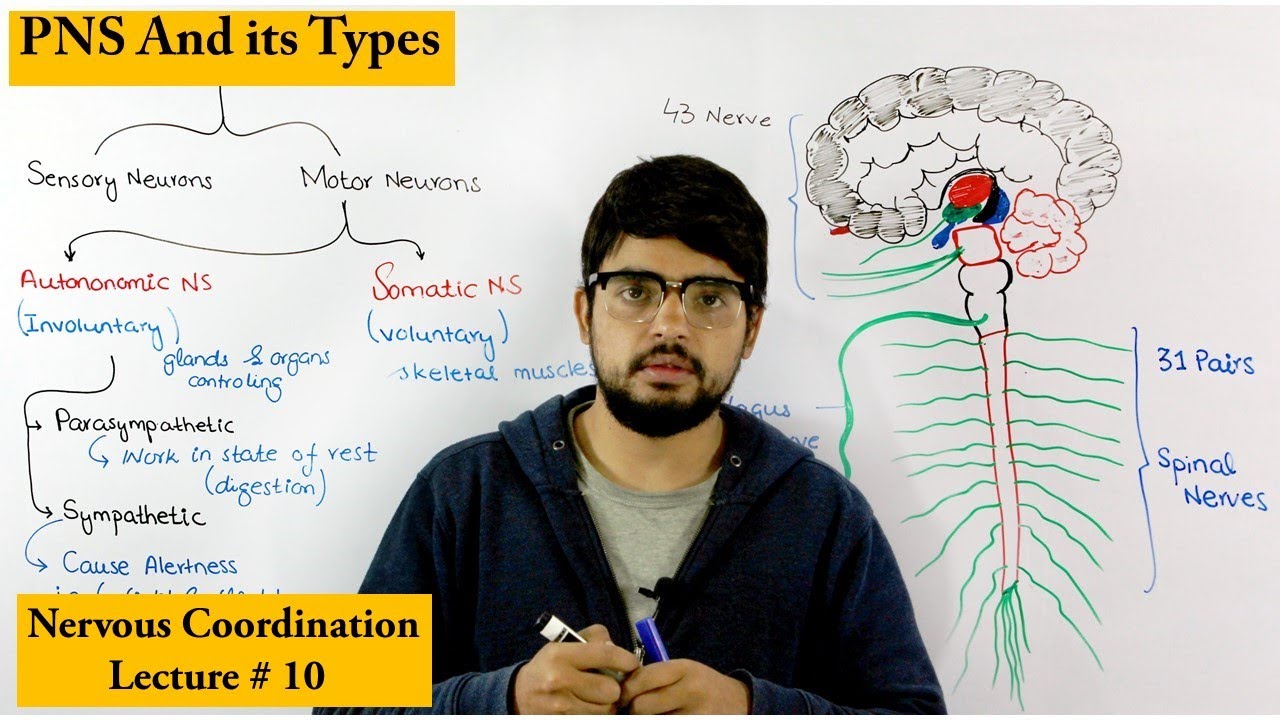

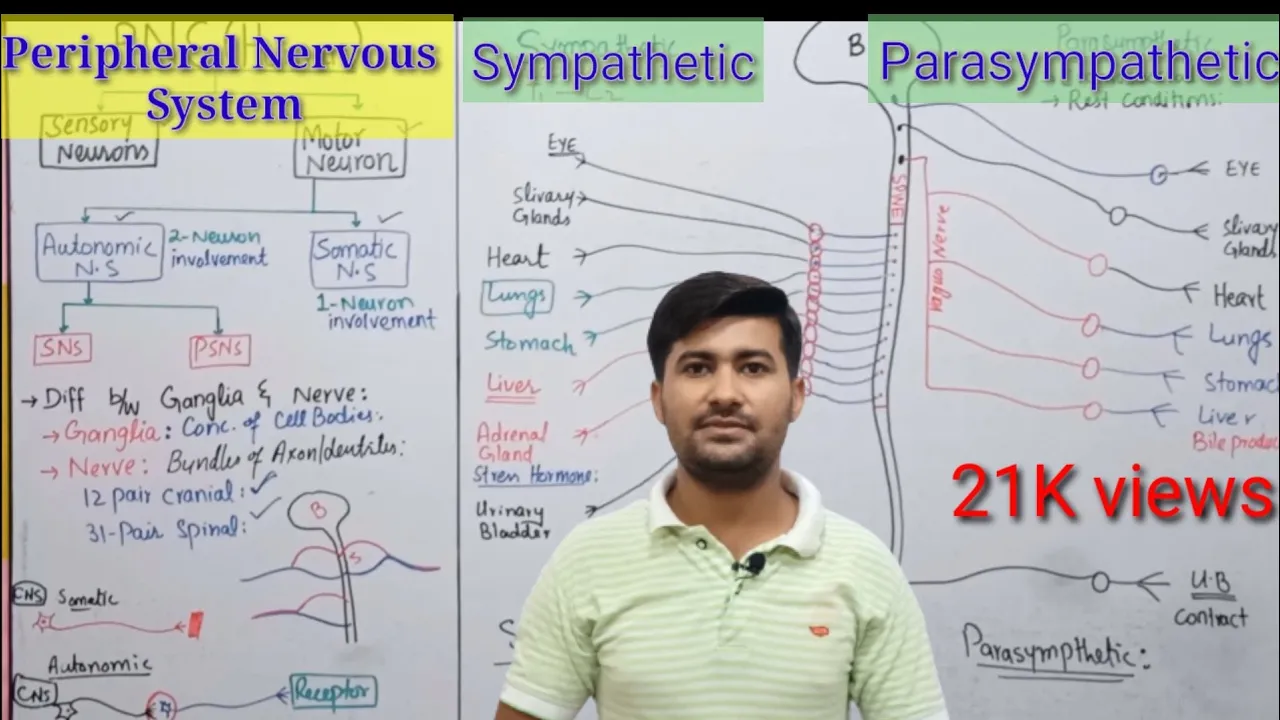


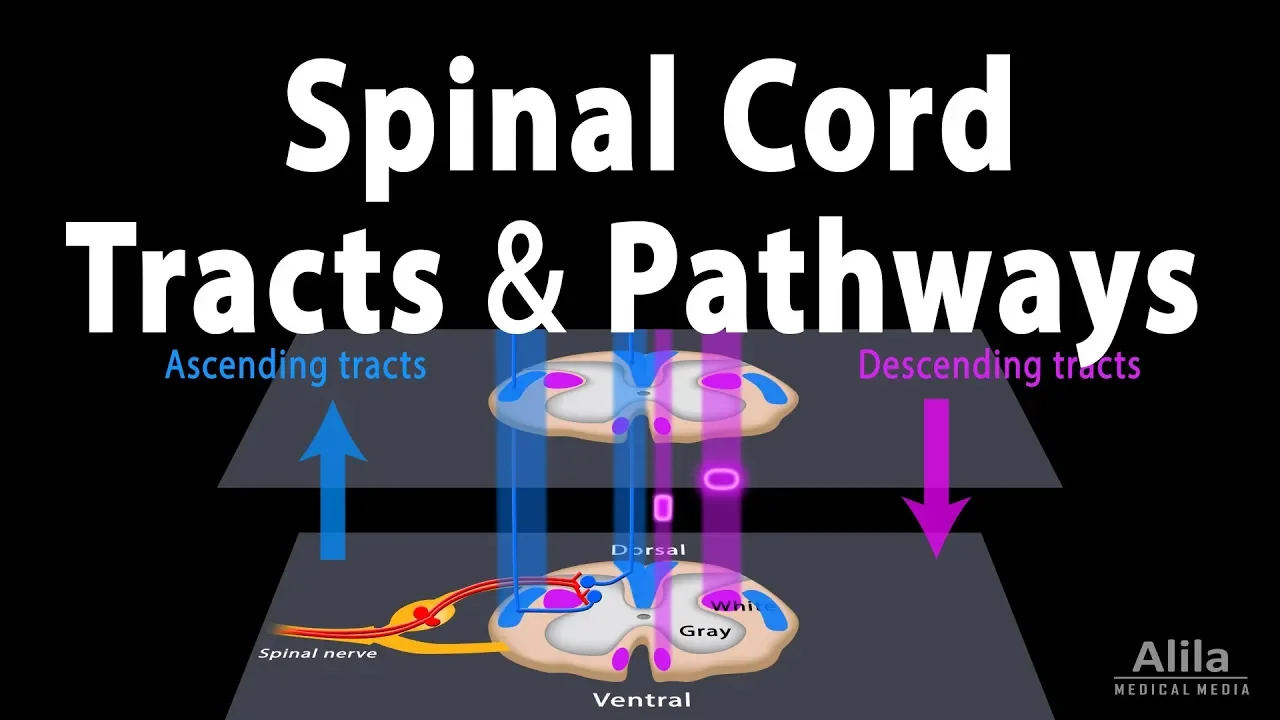


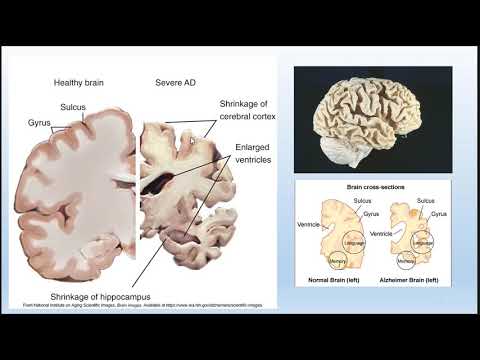

The nervous system is divided into the central nervous system (brain and spinal cord) and peripheral nervous system, with the CNS responsible for receiving sensory input, processing information, integrating past and present experiences, and generating motor responses; the peripheral nervous system is further classified into sensory and motor divisions, with sensory information categorized into special senses (vision, hearing, taste, smell, equilibrium) and general senses (touch, temperature, pain), while motor responses are divided into voluntary somatic responses (controlled by skeletal muscles) and involuntary autonomic responses (controlled by the sympathetic and parasympathetic systems); structurally, the CNS contains gray matter (cell bodies of neurons) and white matter (bundles of axons), with gray matter organized into cortex (surface layer) and nuclei (deep structures), and white matter classified into ascending tracts (carrying sensory information upward), descending tracts (carrying motor commands downward), commissural fibers (connecting left and right brain hemispheres), and association fibers (connecting anterior and posterior brain regions).
Neuroanatomy: Nervous System Basics | CNS & PNS
Added:right today we are starting with the neuroanatomy very very basic concept extremely basic concept right now what is central nervous system what is peripheral nervous system what is gray matter what is white matter so and so forth right so first of all we start with that nervous system consists of two important components number 1 s central nervous system right and number 2 is peripheral nervous system right so nervous system is basically divided into central part and the peripheral part right now in the central nervous system central nervous system consists of brain and the spinal part central nervous system on sister off brain brain and spinal cord now this area this all shaded area this is your spinal cord right and this upper structure all the you can see red area this is considered yes please brain so central nervous system consists of brain and the spinal cord right now what is the basic function of central nervous system in a very basic concept we will study detail later on what is the basic function of the central nervous system anyone your definition of functions the central nervous system is no no no no what is the very basic function of central nervous system what central nervous system is doing yes please it is regulating one of the function is thermoregulation what okay we also send signals what else okay let me tell you very basic function of central nervous system where it collect the information from environment in the whole body this is a number one function what is the function of number one function of central of the system is it should take the information from the environment and from the all body it collects the information through the sensory system so whole sensory system is giving the information to the central nervous system and central nervous system function number one is it should receive the sensory information is that right let me make it a very simple diagram that if we say that this is your central nervous system right what is the function of this first very basic function of central of a system is that it should receive the information right this information about the self and the environment should go to the central nervous system this is sensory input this is sensory input and this sensory system sensory nerves which are taking information to the central of the system they are part of the peripheral nervous system number one it collects the sensory information number two once the information come here it compares and contrasts the recent information with the past information let me give you an example I'm standing in this room giving a lecture anyone who is present in the room right my sensory system is collecting the information here is Irene here is Carlos is amol he dances ah he is Ronald how I know that my central nervous system knows that because sensations are being collected in central our system through the sensory system for example my visual pathway is the right number one number two if someone new enters through the door again that information is taken to the central nervous system but as soon as information will go to the central nervous system about the new person I will compare the new image with the past image and see that can I recognize the person is he totally stranger for me or is a familiar face so what center of a system is doing whatever new information is coming it should compare and contrast with the past information because senator nervous system is stored lot of information already so central nervous system receives the sensory input it stores the centricity input it compare and contrast and process the sensory input integrate the present and past experiences and then it decides about the motor response that what should be your response to incoming sensory input right then some central nervous system we generate there to CN so what should be done now for example friend of your calm sensory input is you see the person motor maybe you give a smile or a very good food come with a very good smell sensory input is smell is going sensory input is you see the good food and motor output will come from central nervous system maybe it will start passing saliva or gastric juices so what is happening if someone asks you what is a very basic fundamental function of central nervous system you must say a central nervous system has Duty number one that clear to the that it should receive all the information which is coming to it through the sensory nerves is that right once we receive the sensory information it should process the sensory information compare and contrast the present in the past and three experiences it should integrate the new information with previously stored information then threaten our system should make a decision what to do right and then it should it should generate some modern response mortar response right which may be movement through a muscle or locomotor system or which may be secretion by a gland or may be change in the smooth muscle activity light JIT motility change after the food right now this part which receives the information which integrates information which processes information makes that difference and sends the motor output this system is central unit of the brain this is the central nervous system and all this system which is taking the information to the central nervous system and taking the motor information from the central of the system to the peripheral tissue these two together are Chi very feral nervous system so what is the duty of peripheral nervous system due to your peripheral nervous system is to take the information from the periphery to the center plus to take the motor decisions from the center to the periphery that's so simple this is the right we'll discuss the functions of central nervous system in big detail later on right but this was just the beginning right now we go to the peripheral nervous system and see what is there peripheral nervous system is naturally divided into two part yes there is motor peripheral nervous system motor peripheral nervous system and yes there is sensory peripheral nervous system so peripheral nervous system is two part one part is working as motor part other part is working as sensory part is it clear now okay so we were talking about the central sensory nervous system is taking the information from the periphery so we say information will flow in this direction right and information is going to central nervous system so the Sentry now and of course you know that according to this diagram motor system will generate the response so direction of response in our sketch will go like this so here is the motor response am i clear so this is our central unit that is information input and then information output now sensory nervous system is further divided into yes there are special senses there are special senses senses yes and there are yes general senses general sensations there are special sensations and there are there are special sensations and there are general sensation is that right now what is the real difference between the special senses and general senses what is the difference between the special sensations and general sensations which are going to the central nervous system anyone yeah don't tell me special senses or special senses and general senses are general senses what is the real difference specificity you mean special senses are specific and general senses are nonspecific you have to be more specific in your answer yes what is the difference between special senses and general senses there are many differences the most important differences special senses are generated only from a specific part of the body and general senses sensations can be elicited or initiated from any many parts of the body for many parts of the body for example touch you can feel from multiple part of the body touch so it's a general sense is the right but you can see only through your eyes can you ear see can you see with your lips you cannot write this is one specific part of the body which is concerned with the sensation of VN is that right so that should be considered a special sense so we can say special senses or senses which cannot be elicited or sensed through multiple part of the body or from most part of the body special senses can be elicited by specialized designed you can say receptor system which are present in only some specific part of the body for example VN sense of Ian is only from eyes is that right then another special senses olfaction the smell you can smell with your nose can you smell with your eyes or with your fingers you cannot right again our refraction is from special area or faction so now then this taste you can taste with your tongue but can you taste with your finger no now your tongue your tongue has special sensations as well as general sensations special sense in the Tongass taste the general sense in the tongue is touch temperature now touch and temperatures you can feel with maybe fingers as well as with your tongue but taste you can only feel with your tongue but not with your fingers so taste sensation become a general sense or special sense special sense okay then can you tell me some other special sense hearing yes you can hear with your ears you cannot hear with your tongue or you cannot hear with your fourth try it someday you will be frustrated right so we can say sense fearing there is also special sense then sense of balance you know in inner ear as to part here as to part one is concerned with the hearing which is called cochlear system another it's constituted the balance which is called vestibular system right vestibular system right there's a specialized you can say functional unit which can very accurately determine the sense and generates and sends the sense of about position to the central nervous system so sense of yes please position right it will Librium equilibrium and position sense of position which is mainly generated by vestibular operators of the inner ear right so these are some examples of special senses again let me repeat it what is whole nervous system about nervous system is having number one to collect the information from the periphery take the information to the center integrate the information cross process information make a different and bring the motor response is that right information is going to the central of a system through sensory system information is coming from the center of a system through motor system sensations which are going to the central nervous system some sensation that special sensations right which are elicited from some specialized areas in the body and there are other general sensations which can be initiated or elicited from multiple parts of the body these are called general sensations the general sensations can be further divided into yes somatic sensation then somatic sensations and visceral sensations visceral sensations can you tell me some example of visceral sensation sensation which is coming from within them from the viscera to the central nervous system the classical example of that is when you develop abdominal cramps and diarrhea those sensations are coming from GI T right but visceral sensations are usually from the viscera which may be dull pain pain from the viscera is usually dull but pain from skin is very sharp so dull pain may be coming from the viscera or there may be discomfort due to distension of viscera distension of viscera may lead to discomfort related with the visceral right or sometimes withdrawal abnormal movement give a sensation to you right so there's certain sensations which are coming from the viscera right or from deeper part of the body right then there are some sensations which are called somatic sensations who will define somatic sensations for me what are somatic sensations anyone have you heard of this word or never heard of it what is really meant by somatic sensations anyone have you heard of the word somatic sensations which you will include pain temperature touch vibration proprioception so what is this how do you define somatic sensations somatic sensations are sensations from the yes from the skin right subcutaneous tissue superficial areas of the body you can say most of the somatic sensations are coming from superficial part of the body as visceral sensations are from the deep part of the body so somatic sensations are coming from superficial part of the body and somatic sensations are also coming from loco motor system loco motor system what is the locomotor system yes amar loco motor system somatic sensations are for example from the skin right also from the fishes and also coming from loco motor system what is loco motor system the system in the body which is general which is used for locomotion locomotion wind movement it means skeletal muscles it means joints like capsules ligaments tendons all the sensations from there are also considered somatic sensations I know of course meta sensation that general senses somatic sensation may be coming from the temporal mandibular joint or may be coming from the knee joint is that right so they're generally illustrated in the body right so somatic sensations are like touch pain temperature and proprioception first I told you the origin of somatic sensation main origin of somatic sensation is skin and related integument and so medicine sessions come from locomotive system mainly these two areas and some other areas what are the types of somatic sensations that may be pain temperature touch proprioception have you heard of the word proprioception all of you have heard it okay who is going to impress me by telling the this very personal concept of proprioception Irene okay this is one component of proprioception she is talking about the sense of position right so yes Ronald what is your concept of proprioception okay this is yeah this is partly right the same definition you are giving word Irene give that you say proprioception is concerned with how the body parts are oriented in the space right any more simple concept all the sensations coming from the locomotor system all the sensations which are coming from locomotor system and going to the central nervous system as a group they are called proprioception plus especially sense of position with these two people are telling right so it means that if with my closed eyes if I'm moving my hand for example this my hand is here okay I move in the air and now I'm not seeing my hand it is it I can still bring this finger there how about central nervous system new there where is my right finger right hand and how much rent another system could generate the motor response so that left hand can come accurately at that point and sensory information was going through this area sensory information from joints ligaments skeletal muscles the tension in them all of that were computed by the cerebellum to generate the image position of this part and then it then what happens when traverses from order the left hand to go and touch it and then even corrected it went it overshoot did you think if this information was not going to the central of a system could central of a system bring this in right position no proprioception is very important all the time central nervous system is computing all the sensory input which is coming from joints ligaments skeletal muscles capsules right even from skin and from computation of that all information from constantly incoming information central nervous system is making its position of the sense a sense of the position of the body part thank God there is proprioception that when you are walking do you sometimes you while you are walking by mistake do you lift your both legs off the ground you ever did and all the RJ why you didn't do it because when you are walking center of a system is computing all the information coming from your lamps and it knows when one limb is lifted off and other should be grounded is that right for example another concept of proprioception for example you want to sock right your ear central nervous system already knows where is the ear even with closed eyes and central nervous system really knows where is my finger and it knows I should scratch in this movement so all this information trillions and trillions of action potentials are moving from different sensory systems to the central nervous system and it will compute like a computer and every moment it is deciding how the different parts of the body are oriented in the space for example will you close eyes right now you can tell what is the position of your legs you are with open legs she has crossed her legs he's with open legs right if I asked you to touch your nose even with closed eyes can you do that or not how you know that that you are knowing that lymph is approaching position of the limb you know it very well proprioception is going on so this is very important to know that somatic sensations which are going to the central nervous system right they are having a very important component called proprioception why I'm concentrating on this because later on in advanced lectures we will study that there are many diseases disrupt the proprioception and then you cannot walk well can you walk well or you can coordinate your movement you cannot is that right so this is something about somatic sensations will do every part in detail later on with the sensations okay so this is all sensory system information going to that another concept all the sense sensory information which is going to the central nervous system are you aware of all the information or not know some information you are aware and that sensory information which is going towards the central nervous system and you are aware of that information we say these are the sensations which are going up to the consciousness level you're conscious of those sensory experiences but there are some sensory experiences you may not be aware of there's some sensory information which is going to the central nervous system and central nervous system is processing that information but those informations do not reach to your conscious level and you are not aware of that information can you give me some examples of that information that is called as a unconscious oh yes most of the time you are not aware of your peristalsis until really something terrible goes with your JIT right excellent example is blood pressure you know blood pressure is measured by the special sensory systems for example carotid sinus from the carotid sinus there are nerves carotid sinus right with changing blood pressure carotid sinus has special nerve endings of the ninth now glossopharyngeal love and information goes to the central nervous system about the changing blood pressure you are not aware of that is that right then okay this was one classical example so all the sensations which are going to the central nervous system some do go to the conscious level then most of them many of them do not go to the conscious level okay just by the way there's a question which part of the scent which part of the central nervous system determines the level of consciousness I mean I say that sensory input has come to the central of the system if it goes to a specific part you will become conscious of the sensation if it does not reach to a specific part you will not be conscious of the information for example I will tell you while you are sitting one minute back you were not thinking about your sense of position so sense of position while going only to a level which was not processing the information at a conscious level but if I say concentrate on your sense of position then you certainly know what is the position of your feet what is the position of your legs what is the position of your hand you are doing like this right so then suddenly it go jump information jump and it is escalated up to the level of conscious seat so what is the part of the central of a system which are really processes the information and make you the conscious of the information who will tell me down sir yeah limbic system is more concerned with the memory with emotions and with some visceral activity and mood will talk that later which part of the central nervous system is concerned with the conscious helema says very little conscious appreciation of pain but not everything for example um you may be very or I'm very conscious that I'm giving the lecture what is the temperature here I know who are the people sitting here I'm conscious about my activity that I'm delivering the lecture right I should not really reveal my true self in front of the camera right some conscious of so many things and you are also conscious very careful about answering even though your answers are not coming into audio because the camera system is not taking only my idea it is sort just hidden you can say way that it is not recording your answers but you are conscious so which part of the central nervous system processes the information at conscious level that if information does not go there sensations are there but you don't know what if sensations go there to that part of the center of the system you become aware of the senses yes excellent Irene has given a very good answer that is cerebral cortex so this is the cerebral cortex right which is concerned with the consciousness or whatever information comes right it will take it up to the conscious bring to your conscious level if some sensory input is going to the central nervous system but that sensory input does not reach the cerebral cortex right then you will not appreciate that sensation in the conscious way you will not be conscious of those sensations for example sensation of blood pressure are you aware of that no because that does not go to the cerebral cortex but if someone touches me information is going to the cerebral cortex so I become aware of that am i clear that's very good answer right the suite of consciousness is cerebral cortex okay let's go to the motor responses that once the sensations go to the central nervous system central nervous system will decide make some decision about decision maybe not to respond or decision maybe to respond and if certain level system is going to generate a response then through the motor system motor neuron the nerves information will come to the peripheral part right there are two types of motor responses some of the motor responses can be voluntarily controlled some of the motor responses can be under your will for example you want to shake a hand with your friend or you do not want to shake your hand is it under your bill or not right you want to take cup of tea or you do not want to touch the cup of tea this is an under your control so some motor responses are under your control right and the other motor responses which are not under your control for example there is a chicken piscina play it now to hold that chicken piece and to put in your mouth and chew that is under your control but once the chicken piece has gone to your stomach can you tell the stomach just today I will digest it after two weeks gid will work as it wants it is not under your control is that right if there is some lemon here or if there are two three cut lemons here in the plate right to take those lemons and taste them is your conscious but if sliver is being produced is it under your well under your control No so it means motor responses that you will take the lemon and taste it this is under your will but if you even if lemon remain there and you start salivating that celebration is not under your control so we can say all the motor responses which are generated by the central nervous system some of them are under your willpower and under your voluntary control and some sensations are not under your voluntary control the sensations which are motor responses which are under your voluntary control these are called somatic motor responses somatic motor responses or voluntary motor responses is their right opposite to that those motor responses which cannot be controlled like secretion graph glands they cannot be controlled voluntarily or movement of the smooth muscles cannot be controlled voluntarily or heart rate can you change your heart rate willfully until you are not very specifically trained in some certain type of special trainings we cannot control our heart rate you cannot decide to tell your girlfriend that you are very angry but you show her that my pulse is going up this is it right heart rate is not under your control so it is voluntary or involuntary involuntary so voluntary responses are somatic motor responses and involuntary responses involuntary responses are automatic responses or we simply call them autonomic Auto nomic motor the sponsors so what did we learn here that all the motor responses can be categorized as voluntary motor responses an involuntary motor responses voluntary motor responses are also called somatic motor responses and involuntary motor responses are also called our two nomic motor responses this is the right can you give me example of somatic motor response for example when I move my hand this is somatic motor response this is a right voluntary motor response right but if my GI T is right now digesting the grains which I eat in the morning that is involuntary J it is producing secretions it is producing peristalsis right another example if you see a dog and you see dog size is really big and dog looks very unfriendly you decide to run away now running may be voluntary but with that your heart rate goes up that is involuntary so autonomic nervous system is operating at without your control rights in voluntary system automatic system again the motor output in autonomic nervous system is divided into two sympathetic nervous system yes and parasympathetic para sympathetic nervous system right usually right now when you're comfortably sitting there is some sympathetic activity in the body as well as some parasympathetic activity but if you undergo some stress sympathetic activity will go up and if you are very comfortable and relaxed parasympathetic activity will dominate in your body yeah yeah actually all the skeletal muscles we say the skeletal muscles are under your will right you can control them as you want if you wish to right but smooth muscles and Cardiff muscles you cannot control the landowner activities you cannot control right so they are said to be controlled by autonomic nervous system and skeletal muscles which are under your control their control they are by the somatic motor system is there right for example there's a muscle biceps here right this isn't done why don't you control thank God if your limbs are under involuntary control it will be a terrible situation you are sitting with the Irene and some very beautiful girl pass and you have involuntary legs she will be in a terrible embarrassing situation and maybe for other people disappointing situation so thank God so the many many muscles and locomotion is under voluntary control doesn't right and what goes with your poor heart and someone beautiful passes thank God it is not revealed usually to your girlfriend that is going inside does that right so you just imagine that your limbs are having all infrared involuntary control do you think life will be good problem will be especially with the kids you cannot take them past the sweetshop if they have involuntary movement of the limbs all the kids sticking to the sweetshop you get it but there are other things like GI T activity or heart activity or many glandular activities they are under what is that involuntary control or autonomic control now this autonomic control which is mainly visceral control again that is adjusted autonomic motor output has two part one is sympathetic output other is parasympathetic output you can say that motor output which is coming to the end pollen tree muscle either some of it is going to sympathetic output other is parasympathetic right sympathetic output become dominant in the body or increase in the body when you are under stress fear response response to fear you know when you're afraid your sympathetic activity increases this is the right and what sympathetic activity does it prepares you for that fright flight response right when you want to run away it depends on what kind of threat is there if you have a small dog very small dog biting at you where is your sympathetic nervous system go up no maybe dogs sympathetic nervous system go up when you respond to dog if dog is very small but a dog is big then your sympathetic nervous system goes up you get me now this is automatically for example if a very big dog is chasing you right one thing is you run away that is voluntary skeletal muscles and you know where to run towards the dog or away away but sympathetic nervous system increases its activity and automatically heart rate goes up automatically the blood vessels to the skeletal muscle dilate blood vessels to other viscera construct so that blood should be diverted to the skeletal muscles right where dog is after you and you are really afraid and trying to fly away what about you GID activity it should go up or down it will go down you don't want to digest at that very moment the chicken piece you eat otherwise dog may take your leg piece does that right so what really happens that sympathetic nervous system moves which organ activity should be enhanced in the stress and which organ activity should be reduced for example cardiac activity didn't go up and stress but GID activity can go down opposite to that when you are not in stress you're very comfortable there is no threat in environment you are in a cozy you can say bed temperature is good no memories coming which are disturbing you you have eaten a very good food do you think you are under stress or you are with less stress less stress so then sympathetic activity will go down and parasympathetic activity will go up this is the right that will take the heart rate down there are two parasympathetic activity when it increases heart rate becomes less but gid activity becomes more is that right so this was very briefly an introduction that what is central nervous system and what is peripheral nervous system we already know that peripheral nervous system has sensory nerves which are taking information to CNS and peripheral nervous system has motor nerves which are taking information from CNS to the periphery right and then we discuss there is central nervous system has a brain and spinal cord and important part of the brain okay let's discuss what is this part of the brain yeah this part of the brain this is for brain this is called forebrain in the forebrain this superficial area right this is called cerebral yes please cerebral Hemisphere okay let me make a diagram from the frontal view as you see that will make it more clear if I'm standing like this and you make a section of the brain right now this is for brain here it is midbrain here these structures hind brain and this structure is spinal cord now cerebral cortex is the gray matter which is present on the surface of this right that I will discuss later now first of all this is spinal cord what is this this structure medulla what is this structure bones and what is this in the back cerebellum now pons medulla and cerebellum this is as a group called hind brain hind brain or other name for this is other name for the hind brain is rhombencephalon rhombencephalon this is their right then this is the hind brain here is the forebrain in between the hind brain and forebrain we are having this structure and this structure should be called midbrain what is it called mid brain or other name for the midbrain is missing Cephalon that's very good reason Cephalon so brain has rhombencephalon and mesencephalon after that the top area is called for brains this top area and this for brain is for brain is also called frozen Cephalon frozen Cephalon again please listen central about system consists of brain in the spinal cord brain has hind brain midbrain and forebrain hindbrain is called also rhombencephalon midbrain is called also mesencephalon and for brains called presence of law right then out of this frozen Cephalon right this outer part outer part right this is called for example this outer part has a different name and this part and deeper structure has a different name who will tell me the name out of prose encephalon this outer part superficial area frozen settle on and their deep structures of rosen's have long this superficial structure of the rodents Efron's are also called cerebral hemispheres these are their deeper structures of cerebral hemisphere now these outer structures what are they called Dylan Cephalon they are called Talon Cephalon and what is this diencephalon how you can remember their diencephalon as in and telencephalon is out you have seen the video that is why you are seeing so well okay I will ask Carlos mr. Carlos how you remember that Elam salon is outside and diencephalon is inside you remember there was some princess beautiful charming Diana she was there Rose of England you remember her right you just imagine what was happening with Diana wherever she was she was the center of attention and there are many many telescopes from every we are trying to Norton to detail so what happened here out in central of a system here is Diana and what are here what are these telescopes from every direction do you think this image is a bit emotionally loaded image can you remember it for a long time so Diana has to be in the center and telescopes has to be from everywhere beautiful princess our brain is also designed like that diencephalon is in the center and telescopes Elin Cephalon is from every direction so cerebral Hemisphere in the deepest part as which structures diencephalon and an outer part what are the structures telencephalon diencephalon am i clear any question up to this now again let me repeat it that diencephalon is the deepest part of cerebral Hemisphere and what is this telencephalon the outer part of cerebral hemispheres but both of them together are called frozen Cephalon am i clear to everyone right after this now before we really go into detail of neuroanatomy I want to introduce some very basic concepts and basic terms related with the nervous system right now nervous system is made of two types of cells basically right our system is made of two types of cells one type of cells are called neurons and others are what are the neurons neurons are the real true functional cells of the central nervous system neurons are basically the cells which conduct the information the electrochemical information that is called the action potentials so action potentials are passing through the neurons from one area of the nervous system to the next area of the nervous system so we can say one group of cells in the central nervous system collectively called neurons have very long long processes called axons now basically neurons are those cells of the nervous system which are concerned with the communication signals is the right they are taking the action potentials then there are other cells which are not neuronal cells but they are present in the nervous system the other group of cells are sporting cell - the neurons there are true functional cells of the central nervous system as neurons and their other cells which sport the neurons right they act as a connective tissue for the neuronal cells now what those cells are called as a group again let me repeat central nervous system is made of primarily two types of cells one type of cells which are conducting the information which is the true central nervous system cell right which are doing the true function of nervous system taking the action potential from one area to another area is the right releasing the neurotransmitter generating the action potentials is that right those cells are called neurons then there are many other cells we sport the neurons we call them connected we call them connective tissue cells of the nervous system these connective tissue cells of the nervous system as a group they are called glial cells neuroglial cells what are they called neuro glial cells this is their right neuroglial cells so central liver nervous system has two types of cells there are new roman' cells and neuro glial cells neuronal cells are the two functional cells of the central nervous system which are generating the action potentials and conducting action potentials and neuro glial cell data supporting cells of the nervous system about the nura clan's health i will go into detail later but I will now introduce some very basic terms about the center of a system in relation to the neurons for example when you study neuroanatomy and neurophysiology you come across two terms very frequently one term is grey matter another is white matter everyone who is studying neuroanatomy and neurophysiology even neuropathology he comes across again and again their terms of gray matter and white matter so ronald is going to tell us what is grey matter these are the cell bodies of the neuron let's suppose cell bodies of the neurons are connected present in the ganglion also what anima ganglia do you think autonomic ganglia gray matter no no by your definition it is but it is they are not agreed by other doctors he says their cell bodies of the neurons are called grey matter mostly he is right but I put an objection to him that cell bodies are collected in the autonomic ganglia and also cell bodies of neuron but autonomic ganglia are not called gray matter because gray matter is only in central nervous system and autonomic ganglia are a part of that if of nervous system his definition need a little refinement actually collections of cell bodies within the central nervous system are called gray matter let me tell you cell bodies of what cell bodies of neurons neurons are like Mouse rats so this is one neuron and what is this long tail what is this tail exon what is this tail axon now in some part of the central nervous system if there are many rats together and these are the tails right now these cell bodies because they have the nuclei right they look gray now this collection of the cell bodies within the central nervous system within the central nervous system this collection of cell body is called grey matter when we say there is cerebral gray matter it means in the cerebral Hemisphere in some area lot of cell bodies of neurons are collected together so when all these body of the rats together this is gray matter and all their tails put together are called white matter so when in the central of a system we are talking about here is gray matter and there is white matter what really should come to your mind gray matter mean that in that area there are lot of cell bodies of neurons and white matter means that that is the area where there are lot of advance together because exams I have some myelin sheath and they look somewhat white color and cell bodies when they're collected in one area cell bodies have you know nucleus DNA RNA all those structures impart darker color to the brain substance right so now again I will repeat in central oval system of cell bodies of the neurons are put together that is called very matter and if lot of exons are put together that is called white matter is that right now we can say now that nervous system again will divide into central nervous system and yes please very few nervous system but now we are talking not functionally we are talking of structurally in the central of a systems where a lot of cell bodies are collected these are the cell bodies right collection of cell bodies what is it what is that gray matter right so we divide it like gray matter and plus central system has yes white matter this is that right gray matter we can show by many many cells their neuronal cells right this is the gray matter and what is this going yes white matter I hope you'll remember this now whenever someone say it is a disease of white matter it means this is concerned with axons if we say there's damage to gray matter it means lot of cell bodies are damn it is that right then gray matter is further divided into two types in the central nervous system gray matter is divided into two specialized type some are called cortex and others are called nucleus have you heard of light third of nucleus vagus nerve nucleus have you heard of it vagal nucleus and central nervous system right now some of the gray matter is called cortex and some of the gray matter in central nervous system is called nucleus what is the difference between cortex and nucleus question goes to venture ah your heart effect there is cortex in the brain and there are some nuclei in the brain what is your real concept Jessica please she is going to impress all of us yes we have a new friend there do you have any idea there are difference between the cortex and nucleus when we study neuroanatomy we say there is cerebral cortex there is cerebral cortex the many diseases related with that we talk about third of nucleus 6 no nucleus do talk or not we talk about nucleus for salivation nucleus for lacrimation women are very much special you know nucleus for unlikely mission nucleus for taste we call it nucleus of practice solitarius Vegas nucleus so what are these nuclei or and what are these grain what is this cortex should I tell you or you can guess yourself among try to guess something because a very basic of central ngerous yeah that's very good she come up with some good idea let me tell you here is suppose I draw the central nervous system side view right now listen the gray matter the gray matter which is applied on the surface of the central nervous system is called cortex sometimes actually there are lot of cell bodies you know which are collected which are collected on the surface off what is this forebrain cerebral Hemisphere so what is this area there are a lot of neurons with their yes cell bodies and these neurons with their cell bodies right all the structure where the neuronal cell bodies are abundantly present this this is a gray matter of course but because this is applied on the surface of the cerebral Hemisphere it is exposed on the surface of the cerebral Hemisphere this is called cerebral cortex what is it called cerebral cortex opposite to that you know that here is cerebellum here cerebellum and there's also a lot of neuronal cell bodies here and they're making this gray area and this gray area which is also exposed on the surface of Surrey belem this is called cerebellar cortex so this is cerebral cortex this is Sarah Beryl context what is cortex cortex is just a gray matter exposed on the surface of the brain what is grey matter grey matter is the collection of neuronal cell bodies it's a difficult concept they're so easy isn't it now this is cerebral cortex this is cerebral cortex now from here let's suppose that from these neurons there's what is this their axons suppose the axons are going down now what this all collection of exons which are going down what is this white matter what is this white matter many axons connecting like this here so what is this white matter many of the fibers coming from the top and then going to cerebellum what is this white matter many fibers going from down to top is there right and then going here what is this white matter many connections from here going to the backward what is this white matter many connections from here connecting to the front again what is this white matter this is the right now you know the real difference between gray matter and the white matter that in central of a system where cell bodies are connected is gray matter and when there is abundance of the advance together they are called white matter and when gray matter is applied suppose on the surface of the central nervous system then it is called cart X and there's another term used nuclear pls nucleus of the central nervous system should not be confused with those nuclei which are present in the cell which are called nuclear which have DNA nucleus sperm is used in two different meaning number one you know within the cell there's a nuclear membrane housing all the chromosomes that is called nucleus but in central nervous system nucleus term is also used in a different different context when we say there's third of nucleus what does it really mean yes who will tell me have you heard of this concept is Vegas nucleus third of nucleus fifth love nucleus you never heard of these things anyone heard of you Jessica must have heard when you study neuroscience you say third of nucleus is damn right and person will develop some problem with the eye movement yeah a nuclei are with special now let me tell you one thing before you tell me something totally in you listen ah sometimes what happened there are some cell bodies collected here is there right and this collection of cell bodies of course great piece of gray matter but this piece of gray matter from all side is surrounded by what is this is founded by what white matter so pieces of gray matter which are embedded within the central nervous system and strong goodbye white matter are called nuclei they are called nuclei now if from this piece of gray matter all the exams are going out and making the seventh cranial nerve let's suppose all these axons going out and making cement care in your love then this nucleus will be called nucleus of the seventh cranial now can we say that seventh cranial nerve have a nucleus it means that in the central nervous system there's a small piece of gray matter and because and it is surrounded by white matter so this must be called nucleus and from this nucleus many fibers are going out these are the rats from here where tails are going out and making No so we should say this is a nucleophile seven huh so next time when you study this nucleus of third now or nucleus of twelfth hypoglossal nerve you must get an idea what is meant by the nucleus this is a small piece piece of gray matter surrounded by the white matter and if it is twelfths no nucleus it means twelfths nerve axons are connected to that gray matter rather those axons are coming suppose if here it is salmon of advance they are coming from the nucleus of the salmon all right so what we can say that grey matter grey matter is divided into cortex and nucleus right what is cortex cortex is the gray metal which is exposed in the surface of the brain what are nuclei nuclei are the gray matter pieces of gray matters in the deeper part of central nervous system surrounded by yes from did by white matter for example there are many many big collections of gray matter in this area in the very deepest part of cerebral Hemisphere the multiple pieces of gray matter here surrounded by the white matter so as a group and they are controlling many motor functions so these pieces of gray matter in the deepest part of cerebral Hemisphere rather these pieces of gray matter in the base of the cerebral Hemisphere in the base of cerebral Hemisphere these are called basal nuclei what are they called basal nuclei is there right now I will ask a question and you have to answer in the central of us in central a central nervous system has two types of cells some cells which are doing the true function of conduction what are those neurons other group of cells which are supporting the neurons what are this neuroglia we'll go into detail of neuroglia later now neurons have a cell body and usually a long process called as on those area of central nervous system where cell bodies are put together they are called they are called a matter they are called gray matter where cell bodies are put together and these gray matter if the surface of the some brain this is called contacts if the species of gray matter that embedded with deeper part of the brain and surrounded by the white matter then they are called nuclei am i clear now let's come to the some detail of white matter right you already know that white matter is that part of the brain in which there are a lot of exons put together they are not rats but their tails of the rats is the right so that is white matter there are the cables right now white matter can be classified in many ways one of the ways their direction in which directions in which these exams bundles are moving for example some axons of bundela moving up and down along the neuronal access neuro axis right for example many many sensory information fibers come in and then they go upward and lot of motor information is decided from here and motor fibers come down so it means there there is some white matter which is of course group of exons which are taking the information to the upper level and there is some more white matter right or a group of exons which are taking the motor responses downward this is the right for example some one scratch on your feet so what will happen from your fort this information is going like this now what is this this is white metal system taking the information up and then you decide to remove your foot then what will happen that from here information will come down and go to the muscles here so it means in neuronal system there are a lot of fibers which are going up and down these are called as a group because some fibers are taking pain information some fibers are taken such information some fibers are taking vibration information some fibers are taking pressure information in the same way the fibers coming down which bring somatic motor responses some fibers coming down and brain autonomic responses so all these fibers which are going up and going down as a group they are called yes please who knows excellent they are called prax right so when we say that any fibers which are moving you can say from down to up in central of a system or up to down as a collection they are called tracks and those bundles of axons which are taking information from lower part of the central nervous system and taking information to the upper part of the central nervous system those are called ascending tracks what are they called ascending tracks so we can say there are some white matter which is taking information yes finically and called le so physically it's physically mean upward and caudally mean downward and these bundles are called yes tracts so now you know the tracks in the central nervous system their tracks are the bundle of AG neurons which are taking information up and down is there right of course then perhaps which are taking information upward they are called ascending tract sending tracks which are taking the information upward and then those tracks we take the motor sponses and information from top to down they are called yes descending track am i clear so water tracks tracks how the white matter bundles which take information up and down in the center of the system right fine now there are some more bundles or white matter or axons which connect the right part of the brain with the left and connect the left part of the brain with the right for example if I draw the central of a system like this tracks are moving up and down is that right then there are some pathways which are connecting right to the left and left to the right in the spinal cord as well as in cerebral hemispheres and many other areas there's some bundles of white matter which are connecting today I have a little bit flow so my sound is something the friend now what I'm talking about that there's some white matter connections there which are connecting the central nervous system components right to left this is the right what are those called corpus callosum is one of the example of that but there are many connections one of that is corpus callosum which is the largest corpus callosum is a very big bundle of white matters which are connecting the right cerebral hemisphere with the left and left with the right of course right but there many other which are also connecting right in left areas in central nervous system as the group such fibers are called what type of fibers they are called commercial fibers have you heard of commissure they are called yes commissioner all fibers so next time when you think there's some fibers in the central nervous system which are cracked you know they're connecting up and down and next time if you read somewhere there are some commissioner fibers then these a group of fibers which are connecting to the central nervous system right and left am i clear commissioner all fibers is that right corpus callosum is the largest commissioned corpus callosum is a very big heavy information cable between the right hemisphere and the left hemisphere corpus callosum then not only attention please central nervous system not only should be connected up and down not only should we connect your right and left it should be connected front and back also for example for frontal lobe information it should be connected with occipital lobe and information from occipital lobe must be connected with the frontal lobe right it means that there should be bundle the white matter we should connect brains central nervous system components and draw posteriorly or post draw anteriorly am I right or not so that cable system that neuronal system that enzone system that white metal system that information cable system which connect entry nearly and posteriorly central nervous system that cable system is called what type of fibers when we sell tracks they are up and down connections when we say commissure they are right in left connections now we want front and back connections what are those fibers Carl it's just a B C of neuroanatomy we are doing you must be knowing they associate the interior part with the posterior part of the brain and they associate the information from posterior part of the center of a system to the anterior part thank God they have they have no complex name these fibers which associate that information from entra posteriorly they are simply called yes Association fibers they have called Association fibers right so you can say look here now the fibers which connect from here here our fibers which connect from here to here these black fibers are Association fibers red fibers are up and down these are the cracks and some fibers right in left and these are Commission or fibers how you heard of these things oh you know what is gray matter what is white matter grey matter has contacts which is exposed on the surface it has nuclei which are embedded within the white matter pieces of gray matter your white matter white matter is vertical tracks they are right left commissioner fibers they are entropic layer and they are called Association see Asian fibers they are called Association fibers right then I will tell you something interesting have you heard of the term reticular formation have you heard of the term radical of formation a neural net fee you have heard it isn't it what is the reticular formation you don't want to share your knowledge very secretive about knowledge you know as old hook Mama's there all time the people who are healers the key keep the knowledge to them they don't share and tell anyone what is the reticular formation let me tell you actually in the spinal cord if I make a section of spinal cord in the spinal cord this is the gray metal which is in the center in the spinal cord gray metal column is moving in the center and on the side what is there white matter this is the right and in the top part of the brain drain matter is outside are you getting me here in the spinal cord gray matter is in the center and white matter is outside in upper level to the brain gray matter is outside and white matter is inside so when these white matter fibers are going up and down they make here is your brainstem this is your brainstem from here to here right now these gray metal column is going centrally gray metal column is going centrally upward this is gray metal column and on the side what it has white matter now what really happens as these fibers are going up as well as fibers are coming down right actually in the brainstem these fibers make major crossing sensory fibers go to the opposite side and go to the opposite hemisphere in the same way fibers which are coming down murder they also make in the brainstem crosses because fibers from the left hemisphere are coming to the right spinal cord right motor fibers which are descending fibers and from the right hemisphere they are going to the left side it means when motor fibers are coming down they dk8 the cross in the same way and sensory fibers are taking the information up right some of the fibers as the entering spinal cord they cross but some of the fibers they cross in the brain stem it means in the brainstem there are major motor crossings and the major sensory crossing so when in the brainstem sensory fibers are crossing and motor fibers are crossing you think gray matter will remain intact no because cross use will occur through the gray matter so gray matter will break down into small pieces and you will have some area you will have some area in which gray matter and white matter is mixed this is the area in which central gray matter is there but lot of fibers are crossing motor and sensory so gray matter become into small pieces it becomes fragmented into small pieces and through these pieces white matter is passing exams so we say this area become a network of gray matter and white matter this part of the brainstem become network of gray matter and white matter this network is called reticular formation what is it called reticular formation so what is the reticular formation radical formation is just that part of the deeper part of the brainstem where due to cro major sensory and motor crossings gray matter and white matter mix and that is called that is called reticular formation right but during this crossing some gray matter pieces are intact as large pieces and these large pieces are called nuclei that is why in the brainstem many gray matter when they disintegrate due to major crossings gray metal braid down to fragments some fragments are large and these large pieces of gray matter called nuclei so brain stem has lot of nuclei and brain stem has a-- also reticular formation reticular formation then gray matter and white matter truly mix and nucleic there's some big pieces of gray matter are surrounded by the white matter within the brainstem is that okay okay then one simple question what is nerve of course its peripheral nervous system what is nerve collection of axons outside the central nervous system now listen careful a collection of exons within the central nervous system is white matter collection of exons within the central nervous system is white matter and collection of exons outside the central nervous system are called nerves that is so simple those are right it means when we say there are tracks in the central of a system tracks are just bundle of axons going up and down but bundle of axons going from sense central nervous system to the periphery are motor nerves and bundle of hangs on collecting information from Paree part of the body and taking to the center our sensory nerves so what our nerves rather question can be put like this to make a concept very clear what is the difference in nerve end track you say there's something common something different what is common practice are also bundles of axons nerves are also bundles of axons their difference is that nerves are outside central nervous system and tracts are inside tribes are also information cables going up and down and those are also information cables this is their right another very big difference which are later on I will tell you that for insulation purpose nerves have special cells called Schwann cells I will teach you later and for insulation purpose tracts have for white matter a special cells called oligodendroglioma neuronal axons of the nerves there are Schwann cells and around the tracks or white matter in the center of a system there are no Schwann cell rather different type of cells which are called holy God and decide why I am highlighting this point because some diseases are attack only Schwann cells so they D myelinated d malign eight peripheral nervous system other diseases which attack only oligodendrocyte so there d mullen 8 central tracks the some diseases which attack the Schwann cell as well as oligodendrocyte so they produce demyelination or conduction problem with the peripheral nervous system as well as central our system right there solve for today
Up Next

Cerebral Cortex & Cranial Nerves: Complete Anatomy Guide
@AZ-sv8yg
319 views•2021-11-17
Deciphering Neural Circuits Controlling Anorexia in Mice | Richard Palmiter
@AllenInstitute
2.3K views•2011-10-10
Hypothalamus Structure & Function | Neuroanatomy Lecture
@DoctorNajeeb
335K views•2017-09-27
How Exercise Benefits Your Brain: Science Explained
@TED
11.4M views•2018-03-21
Related Study Plans & Knowledge Roadmaps
Structured learning paths in Neuroscience