







![Journey to the Edge of the Universe [4K]](https://i.ytimg.com/vi_webp/QhM5zAVvOI4/maxresdefault.webp)


![Which Planets and Moons Have Magnetosphere? [Universe Sandbox 2]](https://i.ytimg.com/vi_webp/rwCsFRk55RU/maxresdefault.webp)






The James Webb Space Telescope has detected glowing hydrogen in a galaxy at just 330 million years after the Big Bang, which challenges our understanding of when reionization began because this glowing hydrogen should not be visible until much later in the universe's history.
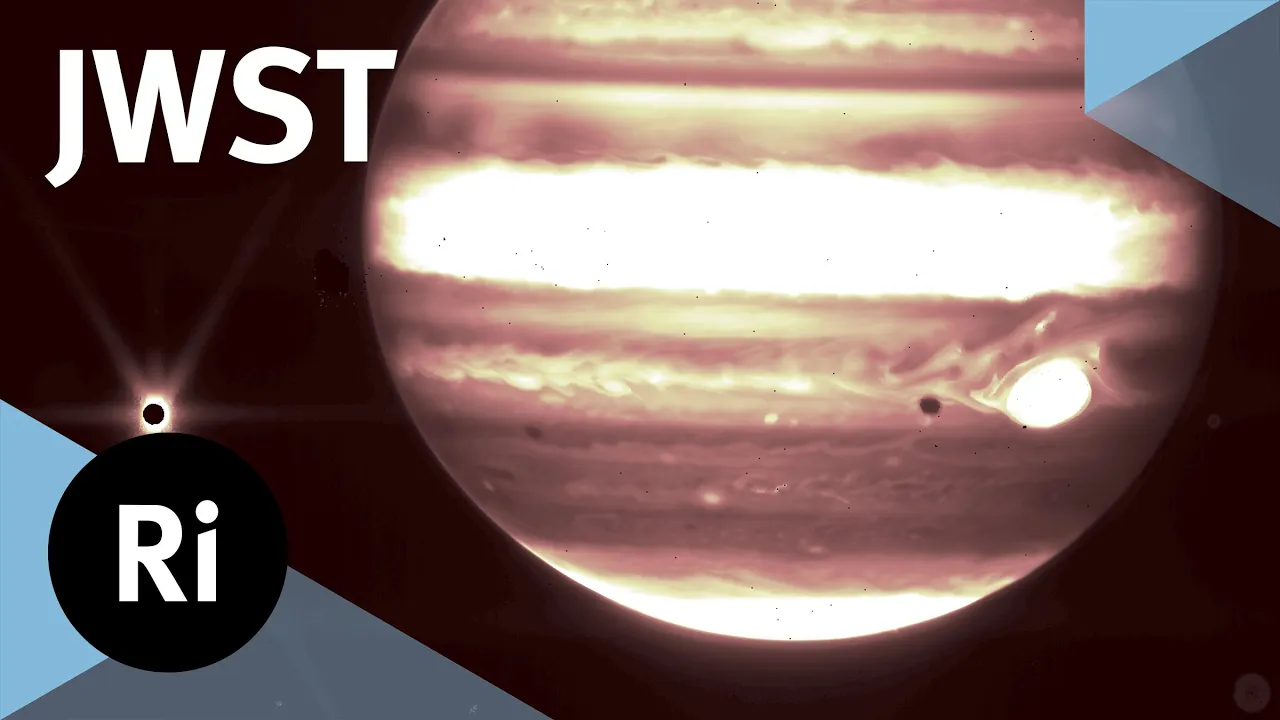
JWST Spots Most Distant Hydrogen Glow Ever | Night Sky News April 2025
Added:Cosmological Redshift and the Expansion of the Universe: Understanding how light from distant sources shifts to longer (infrared) wavelengths as space expands.
The Electromagnetic Spectrum and Spectroscopy: Knowing how elements like hydrogen emit specific wavelengths of light (e.g., Lyman-alpha emission) when excited.
Infrared Astronomy and the Role of the JWST: Grasping why space-based infrared telescopes are necessary to see highly redshifted light from the early universe.
Planetary Magnetospheres and Auroras: Basic understanding of how charged particles interact with planetary magnetic fields to produce auroral glows.
The Epoch of Reionization: Investigating how the first stars and galaxies ionized the neutral hydrogen gas that filled the early universe.
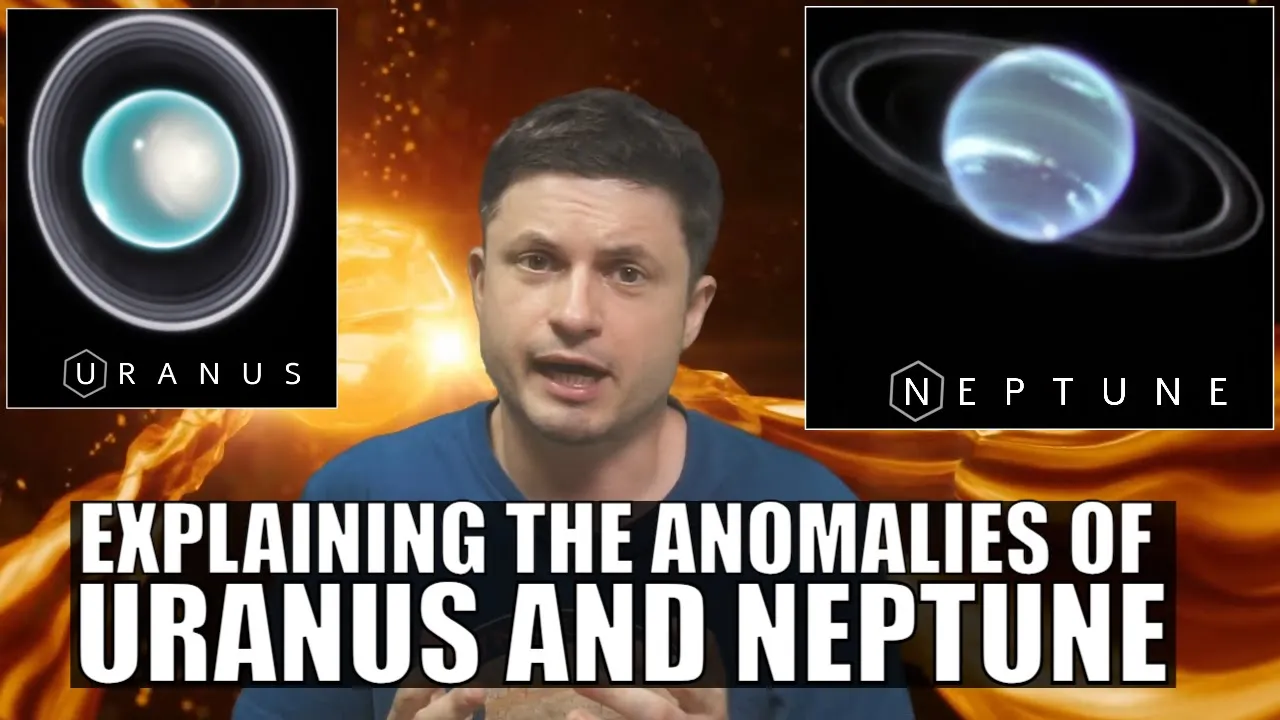
Ice Giant Magnetospherics: Exploring the unique, asymmetrical magnetic fields of Neptune and Uranus, and how their auroral processes differ from Earth's.
Orbital Mechanics and Asteroid Hazard Assessment: Learning how astronomers calculate the trajectories of Near-Earth Objects (NEOs) and assess potential impact risks.
First Light and Cosmic Dawn: Studying theoretical models of Population III (the very first) stars and the assembly of the earliest protogalaxies.
145.3K views8Klikes31:38Original Release: 2025-04-17
Hello and welcome to this episode of Night Sky News for April 2025 with me, astrophysicist Dr. Becky Sur. This is the show where we chat about what you should look out for in the night sky in the next few weeks and then we chat about what's been happening in space news in the past few weeks. In this episode, we're chatting about all things James Webb Space Telescope. From the announcement of the observations JWST will be making in the next year to how it spotted Neptune's aurora for the first time to the images it's captured of the no longer hazardous to Earth asteroid 2024 YR4 and JWT's discovery of the new record holder for the most distant detection of glowing hydrogen in the early universe. Plus, I've got some new merch to announce, including this J planets design that I'm wearing at the minute. So, stick around to the end to hear more about that. There's also chapter markers down here if you want to skip ahead to any specific news story.
Plus, any scientific research papers I mentioned are all going to be linked in the video description down below, free to read. So, without any further ado, let's kick things off and start by looking up. All right, first up this month, you might hear people talking about the Liids meteor shower, which this year is peaking on the night of the 22nd of April into the morning of the 23rd of April. It's a fairly average meteor shower with anywhere from 10 to 20 meteors per hour. So, shooting stars streaking across the sky caused by just tiny lumps of space rock burning up in the Earth's atmosphere. So, that's only a shooting star every 3 or 4 minutes or so, which is why, you know, with so few mutuals, this is just kind of like an average shower. It can be a bit hit and miss whether you even see them depending, you know, on how dark your sky is. The darker the sky, the more you're likely to see because you'll see the faint ones as well. Although this year the moon is only just a sliver of a cresant on that night. So there'll be no bright moon to wash out any of the fainter ones. To have the best chance of seeing meteors, you want to be out around about midnight if you're in the northern hemisphere or in sort of like the wee hours of the morning if you're in the southern hemisphere. So if you are planning to get up early, whether that's to spot meteors or not, then why don't you also look out for Venus and Saturn in the east before sunrise. The further south you are, the better chance you'll also have of spotting Mercury much closer to the horizon as well.
Plus, on the morning of the 25th of April, my favorite, the cresant moon, aka the toenail moon, will come to join the party. The closer you are to the equator, the better for this one, as those of us a bit further away from the equator, like me up north, will struggle to pick this out low on the horizon in the glow of the early morning sunrise.
So unless you're getting up that early anyway, like I wouldn't make a special effort to do so unless you are closer to the equator. And speaking of being closer to the equator, there's also the Eater Aquarians meteor shower which peaks this year on the night of the 6th of May and into the morning of the 7th of May. This is a much more spectacular meteor shower than the Lid's meteor shower. But the further south you are for this one, the better. And that's because the radiant, which is the place in the sky where all the meteors appear to be streaking away from, will be much higher in the sky in the southern hemisphere. So you should see up to like 60 meteors an hour in dark skies.
Whereas up here in the northern hemisphere, it will be closer to the horizon in the southeast. So we're actually going to lose half of them as they streak below the horizon. So that means only like 30 meteors an hour. So that's, you know, one every two minutes or so, at least in the darkest of skies.
But what is fun about spotting a meteor from the Eater Aquarians meteor shower is that all these little lumps of rock that are burning up in the Earth's atmosphere are debris left over by the famous Hal's comet, which I always think is a nice fun bit of trivia. And if you are going to make a night of watching the meteor shower, then just remember it is a bit of a long game. It's a waiting game. So, you know, bring a blanket to lie down on or a chair to sit on and just get comfy. You don't need any specialist equipment. You don't need a telescope. You don't need a binoculars.
You just need your eyes. But remember, they are sort of like a blink and you'll miss it kind of situation because of how fast that they streak across the sky and sometimes how faint they are as well.
So, the more people you have together watching the meteor shower looking out for things, the better. Well, if you are stargazing, two weeks either side of the 7th of May. So, two weeks before, two weeks after, before is a good idea. I know because it's a bank holiday weekend here in the UK. So, people might be traveling somewhere dark, somewhere remote. If you see a shooting star in that period of time, most likely it's from the Aquarians meteor shower. Now, you might remember that in last year's night sky news for April, I talked about the star Taroni Borealis, which we think could go nova at sometime soon. And you might have seen this reported more in the media in the past few weeks is how a new star might appear in the sky, which is technically true, but let's first just re in those expectations of what that's actually going to look like and then chat about why this has been popping up in the news again and on your social media feeds now. So in this area of sky in the constellation of Corona Borealis, there's a star right here that normally you cannot see with your naked eye. It is fainter than Neptune. But 80 years ago and 80 years before that the star had a little mini explosion where it got a lot brighter and we call this a nova. If it does that again around about now on this 80ear cycle then yes it will become visible with the naked eye even from like the suburbs of a city.
However, it is not going to get so blindingly bright that it will be so obvious in the sky. We're talking about say as bright as the stars in the constellation of Cassiopia the W. So here's the thing. If you're not familiar with that part of the sky where you have the constellation of Corona Borealis, you're not going to notice if one more sort of bright sort of faintish star pops up. If you just look up, it's just going to look like stars. So, if you want to be able to spot this, if when it does happen, you need to do some astronomy homework, right? You need to get really familiar with that part of the sky. You need to figure out what direction you need to look for it from your house's back garden or from the balcony or of your flat, whatever, wherever you're going to actually look at the sky from. You need to figure out, okay, what can I normally see so that if it does happen, you're actually able to, you know, spot the difference. But the reason that this keeps popping up again in the news is because astronomers keep making inaccurate predictions of when it's going to go nova based on all of the historical data that we have for it.
So yes, it was observed going nova in 1787, 1866, and 1946 on this roughly 80ear cycle. Meaning it is going to go nova again soon. We just don't know exactly when. So some people predicted it would be last summer after it dipped in brightness like we saw before the last Nova in 1946. That was the prediction from this paper by Schneider who estimated these dates based on all the previous observations that we have.
The August 2024 date last summer obviously came and went and the hype ramped up again for the 27th of March 2025 date this month. But sadly, once again, that day came. Nova Christmas came. No weeny whistle. So the hype will most likely die down again a little bit over the summer if you know nothing does pop up. Probably build again around that November 2025 date and then crop up again in June 2026 if there's still no activity by that point. In the meantime though, do your homework. Find Corona Borealis in the sky from your house and commit that part of the sky to memory.
While you're there, you might as well check out the planets as well, cuz we've still got the reddish Mars and bright Jupiter hanging around in the evening sky for a bit longer. They're right by the constellation of Orion, which as the days crawl on into May is going to set earlier and earlier until we lose it from our skies until next winter. So, spot it while you can. Similarly, Jupiter won't be around for as long after sunset as we get into May.
Although given how bright Jupiter is, it's still visible in that sort of glow after sunset, which makes it a really pretty site. The best time to look out for Jupiter and Mars this month though is when the cresant moon will also be in that part of the sky from the 30th of April when it's closest to Jupiter and up to the 3rd of May when it's moved closer to Mars. If you're not sure what you're looking for though for either the planets or for Corona Boralis, you can always download a star chart for your location from the internet. But before you do that, you should make sure you're protected online thanks to Surf Shark, the sponsor of this week's video. Surf Shark is a VPN, a virtual private network, and it's essentially a middleman between your computer, and the scary internet, which means that your private information, your location, and what you're doing is all hidden from anybody who happens to be snooping. Surf Shark is crucial for me as an academic cuz I'm always working on public Wi-Fi networks, whether that's in my office or in the university library or when I'm traveling for work. means that no one can snoop on my, you know, unreleased research paper, but also my credit card information as well. Plus, Surf Shark helps you get the best price when shopping online. Websites usually show you prices based on your location, especially when it comes to flight prices. Surf Shark helps you get the best deals, which means I can make the most out of my very small research travel budget. I also love that Surf Shark has an antivirus software as well, so it'll just help shield all my devices from viruses, malware, and ad tracking.
But there's no risk in trying Surf Shark. They offer a 30-day money back guarantee. So why not try them out today by heading to surfshark.com/dbecky or you can click on that link in the video description down below or use the promo code Dr. Becky and you'll get four additional months free on your subscription which is a great deal for you all. So a big thanks again to Surf Shark for sponsoring this video and protecting us all online. And now let's come back down to Earth and chat about what's been happening in space news in the past month. All right, first up, let's have a bit of fun because this month it was April Fools and it's become a bit of a tradition now in the astronomy community to post some, you know, funny tongue and cheek research papers to the astronomy preprint server archive on the 1st of April. So, let's have a look at a few of my favorites. I particularly enjoyed this one on promo plots in which the authors pointed out that many plots in scientific papers have wasted space which could instead be used for advertising purposes. As both a scientist and a YouTuber, I am just annoyed I didn't think of this myself to be quite honest. Then there was this paper on catarosismology which is a pun on astroismology. It's the study of like you know the interiors of stars from all of their pulsation modes. here instead though the author is applying this to try and better understand cats through direct detection of their purr modes.
Then there was this paper on the Wasowski configuration which modeled X-ray data from pulsars using a model of the face of Mike Wasowski from Monsters Inc. Then we also had a follow-up paper in this year's round of April Fool's paper. So, I don't know if you remember this from last year, which was called pasta markers, which was a Python package allowing you to use pasta shapes as data points on your plots. Well, now they've released pasta markers 2, where the pasta shapes are filled, and so it can be colored with your new pasta source related color scheme so that you can have a third axis on your plots, which is just mult. And of course, we have to talk about the two perfect Taylor Swift themed April Fool's papers on the Astronomy Archive this year. This one, which matched the eras of the universe's evolution to the eras of Taylor Swift albums. I approve. this one which analyzes the number of astrophysics mentions across each of Taylor's albums splits it by field within astronomy itself and then shows how the number of astrophysics references is increasing as a function of album number which I can't help but come to the conclusion that Tay is a space nerd just like the rest of us I also particularly love how this paper ended with we are never ever ever getting published together perfection all right moving On to all of the JBR tea news for this month. For those who missed it, I actually had a research paper published this month looking at featureless disc galaxies in the early universe in JB T data. I made a whole video explaining that one. If you want to check it out, I'll link it in the video description down below. But now here, let's chat about the thing that everybody has been asking each other in the astronomy community this past month.
Did you get JWST time? with the announcement of the successful cycle 4 proposals for JWST. So this was the announcement from NASA over which proposals are actually going to get time on JST in its fourth year of observation. So everyone's had to go through this process of writing a big research proposal to be like this is why I want to use JWST to do this really cool science. Here's all the things that we'll learn and why it's important and here's why you should give me time to do this over anybody else that also wants time as well. So, all those scientists that wrote those research proposals were informed a few weeks ago and now the big long list of successful proposals has been made public. I'll pop a link in the video description down below if you want to scroll the list yourself. But here's a few that caught my eye. So, first on the exoplanet side of things. So, you know, planets in orbit around other stars in our galaxy, the Milky Way.
There's a few proposals that are aiming to detect an atmosphere on a rocky exoplanet for the first time. Like this one, for example, for 55 Canree E, which is 40 lighty years away, or this proposal to observed LT 1445AB, which is 22 light years away. Then there's the efforts to try and take a direct image of exoplanets in orbit around their star. Like this one for example, which is going to see if there's any planets orbiting Sirius B, a star almost the same mass of the sun, which is just 9 light years away. But as of yet, we still do not know of any exoplanets that are orbiting Sirius B, which is weird.
It seems like most stars do have planets in orbit, so hopefully they're there.
Then from the galaxy side of things with proposals, as always with JWST, there's always people that are going to be trying to break, you know, the the distance records of like the most distant galaxy known. Thankfully, my video I made on that is still not out of date just yet, but I don't think it's going to be very long until it is.
Especially with these two proposals to follow up on galaxies that have been spotted in images that are so red, we think they must be incredibly distant.
But we just need to get a spectrum of those galaxies to confirm that. That's where you take the light from a galaxy and you split it into its rainbow to get like a trace of how much light of each wavelength we actually receive. And with that, you can pinpoint how much the light has been stretched by traveling through the expanding universe, something we call red shift. There's also a few proposals following up on JST's little red dots discovery. So these are distant objects which are as yet unexplained. There's still some debate about whether they're growing super massive black holes or super compact starburst galaxies. So, this proposal is going to monitor some of them to check whether the light from them is variable, in which case they're most likely growing super massive black holes in the early universe cuz that process is very turbulent and will cause a lot of variation and flickering. And then there's this proposal which is going to do a full census of their properties so we can really try and understand these objects better. Then of course there's the cosmology side of things. So, of course, there's a lot of proposals that are aiming to get a much more accurate measurement for the current expansion rate of the universe known as the Hubble constant or H N.
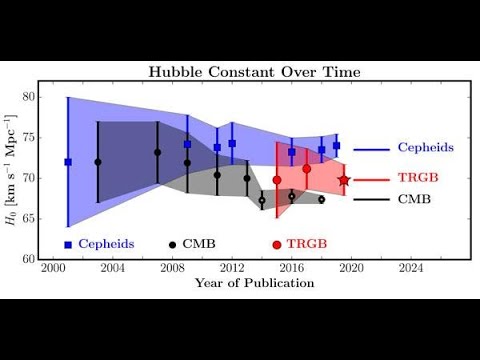
This is all part of the crisis of cosmology that I've talked about many times on this channel before. So, I'm sure you're all as excited as I am to eventually see the results published from this proposal from Wendy Freriedman and Barry Mador that's going to give us four new independent measures of the Hubble constant. But then also there's this proposal as well. It's led by Brett Tully that's focusing on understanding the systemic errors that might be contributing to the crisis in cosmology.
That was just a small handful of the 243 successful proposals in this cycle.
So lots of great science to come and I can't wait to report on it all for you on this channel in the future as well.
Now, those are what's known as general observer programs that go through that sort of yearly cycle of applying for time and waiting to find out if they've got time and then waiting to get the data. But the team at Space Telescope who manage JST also keep some time back for any unexpected things that do crop up that are very timesensitive that we need to observe right then and there.
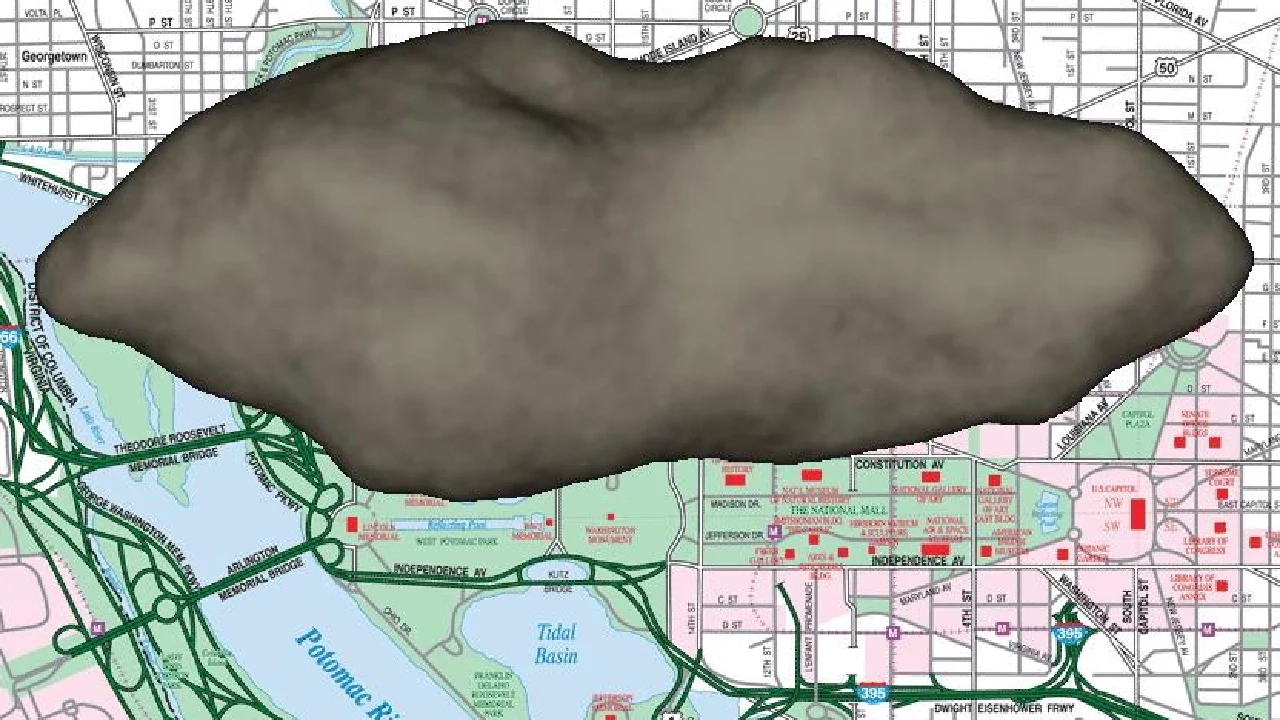
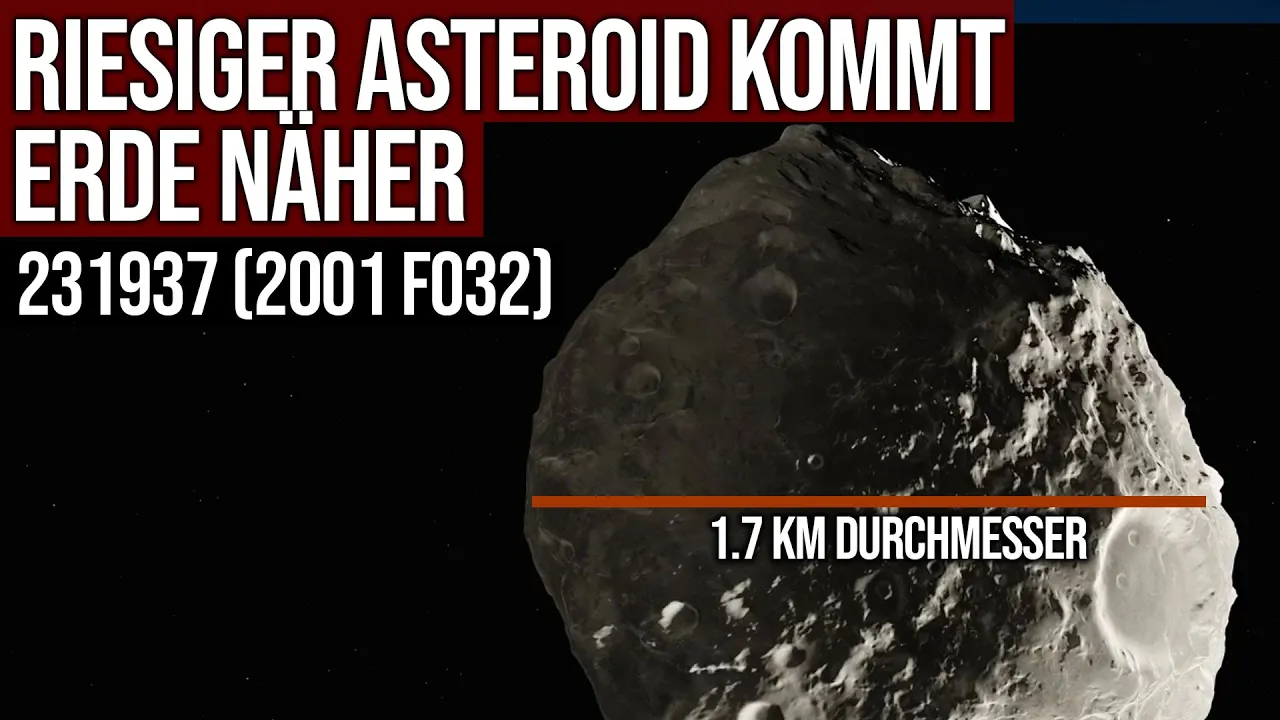
things like supernova or novi that go off, but also asteroids, which is exactly what Just did this month when it observed the asteroid 2024 YR4. Now, we've been talking about this for a few months now after this asteroid was discovered back in December, and the initial observations gave it a very small percentage chance of impact with Earth in 2032. Now, thankfully with more and more observations of this asteroid, we now understand its orbit a lot better. And when we plot things into the future, we now know that there is not going to be a danger to Earth at all.
But if you remember from last month's night sky news video, I did say that there was still a small percentage chance that it could impact with the moon, which again wouldn't be anything for us to worry about. It would just be a spectacular show to watch. Now, in the time period where we thought there might have been a chance of impact with Earth, JWST observations of 2024 YR4 were scheduled for early March, making it the smallest object targeted by JWST to date and one of the smallest objects to ever have had its size directly measured. It was observed with both the near instrument on board JWST, which detects short wavelength infrared light. So, that's going to be sunlight that's reflected off the asteroid surface. And then also the mirror instrument on board JBST which detects much longer wavelength infrared light which is what's thermally radiated by the asteroid just from its own like internal heat. Both of these observations are incredibly useful because with them we can get a much better idea of the asteroid size than we can ever get with groundbased telescopes. And it also tells us how reflective the surface of the asteroid is and therefore what it's made of. So thanks to JWST, we now know the asteroid is 60 m across. Previous estimates put it around about 40 to 90 m. And if it was a threat to Earth, then the size would be really key information that we need to know because then we'd know, okay, well, if we say, you know, sent a mission to try and deflect that asteroid from a path that would have it impacting with Earth. Light was tested with the Dart mission very recently by NASA. Having the size means you'd know, okay, how much energy do I actually have to like impart to the asteroid to be able to change its trajectory so it wasn't a threat to Earth. Then the reflectiveness of the surface is also really important as well because that can actually also have an impact on an asteroid's orbit. you know, you've got particles of light from the sun impacting with the asteroid that transfers energy and it's enough that it can actually mean that, you know, if we don't take that into account in our models of the asteroid's orbit, then our models are going to be really inaccurate. So, understanding that better would have been key if there, you know, still was sort of all up in the air about whether it was going to impact with Earth. So, thanks to these observations with JWST, we've refined the orbit again, and now the chance of impact with the moon in December 2032 has actually gone up from the 1.7% that it was estimated back in the end of February to 3.8% thanks to this new JBT data. I have really got my fingers crossed for this one that it will actually impact with the mood cuz that just feels like a once in a lifetime. Heck, even like a once in a millennia chance of seeing something like that, an asteroid hitting the moon.
Oh my gosh, that would be the coolest thing ever. Next up in JC's very busy month, though, is that JST has seen Aurora on Neptune for the first time.
This is a big deal cuz we had hints of there maybe being Aurora on Neptune during the Voyager 2 flyby back in 1989.
And since then we've detected aurora and all the other gas giants of Jupiter and Saturn and Uranus. And despite the fact that a load of models of the atmosphere of Neptune predicted there should be aurora on Neptune, it had remained elusive. So, aurora or the northern lights as they're commonly called here on Earth occurs when high energy charged particles from the sun interact with the planet's magnetic field and get funneled down to the magnetic poles of the planet where they impact with atoms in a planet's atmosphere which glow with a really specific color depending on the atom. So, oxygen for example glows with a bright green color, nitrogen with like purplish blue colors, giving us those spectacular colors of the northern lights, the aurora that we see here on Earth. The gas giant atmospheres though are made from mostly hydrogen and helium which again glow with very specific colors but this time in ultraviolet and infrared light that we actually can't see with our eyes. So with JWT we have a hope of detecting any of the infrared aurora that might be present on Neptune which is what Melanin collaborators have done this past month searching for the glow of the trihydrogen cation molecule.
So H3+. So that's three atoms of hydrogen all bonded together but just missing one of the electrons. So it's positively charged overall which is why it's a trihydrogen cat ion. And if you have a high energy particle that comes in from the sun, impacts with that trihydrogen cation molecule, it can absorb some of that energy, transfer some of that energy, causes it to vibrate, and then give that energy back out in a few specific colors of infrared light. So Melanin collaborators managed to get a spectrum of Neptune using JWST again where you split that light to get a trace of how much light each color you receive. And within that data they spotted that telltale signature the fingerprint of light emissions from this H3+ which let us know that it's there in the atmosphere of Neptune. The next thing that they can then do with that data is then you know map on the face of Neptune. Okay, where is this emission actually coming from where you have these specific colors from trihydrogen cation. So here is that data as an intensity map. You've got two shown here at different longitudes. So different sides of Neptune as it rotates. Yellow colors mean more emission from these H3+ ions, more aurora basically. And then purple means less H3+ emission, no aurora. What you can then do is then take that intensity map and like overlay it on a, you know, like normal color image of Neptune, like what you'd see with your eyes taken with like a visible light telescope like the Hubble Space Telescope. And here's what that looks like. This is the data visualization that was shared so widely by NASA. So, the cyan colors here are the H3+ emission where you've got lots of aurora. And just to reiterate, you wouldn't actually see this with your eyes cuz our eyes aren't sensitive to the infrared light that JWST is, which is what the aurora is glowing with here.
What's cool though, and what you might have noticed already, is that the aurora sort of like a splodge in the middle of Neptune, right? They are not at the poles like here on Earth. At least not the geographic poles that Neptune spins around, but the aurora are around the magnetic poles of Neptune. So just like here on Earth, the magnetic north pole does not line up with our geographic north pole. And that's cuz the moving charged particles in like the liquid core of Earth actually generate our magnetic field. Like they're very turbulent. They slash around a lot. and actually the magnetic north pole will drift. That's also why when you see like the auroral oval maps of where the aurora are going to be visible tonight on Earth, they're not centered over the geographic north pole. They're always skewed to be over Canada because the magnetic north pole is over that way.
Similarly for Neptune, the magnetic north pole is actually offset by 47° compared to its geographic north pole that it spins around. If that was true for here on Earth, the magnetic north pole would be somewhere like back smack in the middle of France or, you know, somewhere like Seattle's latitude, which would mean the aurora would be visible like in the tropics. This is why when we look at this image of Neptune, the aurora just splodge right there on the face of Neptune rather than up at the poles like we're used to seeing, not just for Earth, but also for the other gas giants, too. And finally, speaking of hydrogen emission, we now turn to the most distant detection of glowing hydrogen that's ever been made with this paper published by Witstock and collaborators who using Jabus T have spotted a bright spike of hydrogen emission from a galaxy that we're seeing just 330 million years into the universe's history. And this is a big deal. Not because it's the most distant galaxy that has ever been found. There's a few more that have been found at slightly further away like at red shift factors of 14 rather than 13 like the one here. Red shift is a measure of how much the light has been stretched out by the expanding universe. So it tells us you know how long has the light been traveling through the universe and therefore okay how far away is that galaxy and how early in the universe's history are we seeing it when we detect the light from it. And this is a big deal because we shouldn't be able to see this glowing hydrogen that early on in the universe's history. So in the early universe after everything had cooled down after the chaos of the very early universe, all you had was a load of neutral hydrogen gas. So two atoms of hydrogen bound together H2, which is great because that is the fuel that you need to make stars and the first stars were born out of that. The problem with H2, neutral hydrogen gas, is that it is opaque. it does not allow light to penetrate through it. So in the early universe, you had to have this sort of like fog or haze that blocked a lot of the light. It was only when the first stars formed and started giving out ultraviolet light that when it impacted with one of these H2 molecules could split it apart and also ionize it. So separate it into just your positive hydrogen atom nucleus and then a free electron that the hydrogen gas then became transparent and light could actually penetrate through the hydrogen gas of the universe. We call this period of the universe's history reionization when the universe went from opaque to bubbles of clarity around newly formed stars until the whole universe was eventually transparent to light after about a billion years or so. And because of JWST's massive mirror and light sensitivity, the hope was always that we could pinpoint when this reionization process started. When we first started to detect emission of light through this fog of the early universe, specifically emission from hydrogen itself. You know, the hydrogen that didn't quite make it into the stars, but is still surrounding those stars. And when it gets hit by ultraviolet light, it glows with a very specific color or wavelength of light in the same process that causes the aurora.
We call this hydrogen emission lyman alpha emission. But crucially, only once that reionization process has happened could that lime and alpha emission actually pierce through the fog so that we could detect it. And here we have a galaxy with a stoningly bright lime and alpha emission peak that we're seeing when the universe was just 330 million years old, not a billion years old, which is originally when we thought reionization would finish. This really put the cat amongst the pigeons because to be able to see this, there must be a very large bubble of ionized hydrogen surrounding this galaxy. And to get that at this time in the universe's history when it is still very young and we think the first stars have only just formed then you can only get this with one of two things right either you have got a very weird and very hot and very massive collection of stars that is giving out so much more ultraviolet light than the stars that we see forming today.
or you've got a growing super massive black hole which is accelerating material around it to huge speeds so that it glows and then it's the energy from that material that can then ionize the hydrogen in the bubble. But that would have to be a very massive black hole to do that. And again, how do you get a super massive black hole that early in the universe? Either way, there's something we don't understand here, right? Either there's a weird population of stars that we've never come across anything of. It's like, or there's a super massive black hole that shouldn't exist yet, right? It shouldn't be that big just 330 million years into the universe's lifetime. Once again, just adding to that pile of things that JBST has shown us about the early universe that don't make sense yet. At least not on their own anyway. Because hopefully with time and with more analysis and with more science, we'll start to pull together those individual pieces of the puzzle that don't make sense on their own until a coherent big picture of what's going on in the early universe starts to appear. All right, that's it for night sky news for this month, except to tell you that I have some new merch. I'm currently wearing my new JWST Planets shirt. You're probably thinking, planets, planets, what planets? You've just got this cute little JWST logo on the front, but bam, on the back it's the gas giant planets of the solar system as seen by JWST. And they are to scale with each other as well, which I absolutely love. We've also got this one celebrating the most iconic space telescopes of the past few decades, from Hubble to Plank to the recently retired Gia mission. Uklid also makes an appearance on there. And without fail, whenever I make a video about Uklid, one of you, or maybe even 10 of you, will make the great pun of, "Here's looking at Uklid," which riffs off the famous line in Casablanca.
"Here's looking at you, kid." Here's looking at you, kid. So, obviously, I had to put that on a shirt as well. I love this one because we also have some uklidian geometry space in the background as well, you know, for all the super nerds out there like me. And finally, if you prefer a more minimal style of a tea, we have this classic list of space agency names. Right, we've got the US's space agency, the European, the Canadian, the Japanese, and the Indian space agencies all listed. The link is in the description to grab either one of those that tickle your fancy along with my original merch designs as well that also are still available. Pit likes merch, too, don't you? You like to put your hair all over the black t-shirts. Yes, you do. Anyway, as always, if you spot any space news stories that you want me to explain in a future night sky news episode, or if you have any pictures of the night sky that you'd like to share, then tag me over on social media. I would always love to see them. But until next time, everybody, happy stargazing. And you spot a shooting t a shooting tar. If you spot a shooting star, I don't remember what month it was. Actually informed, you know, a few a few weeks ago. They were yeetated out a few weeks ago. those emails and see those, you know, the the moto. I'm not sure if I'm saying that properly, but that motto, you can correct me in the comments, all of you Italians, but that would have to be a but that would have to be a very ma but that would have to be a very massive black hole to do that. Then there's also efforts to to take D to take the Looney Tunes called that was just pip pit pet the distant record of the distant record. The distance record this is covered in pit pit. I have worn it once.
Hey, where are you? Help yourself some say hi. No. Okay.
Up Next

28:06
Why Icon Veneration Matters: Nicaea II Explained
@TruthUnites
64.4K views•2024-11-13

12:54
Triumph of Orthodoxy Icon: Byzantine Art & History Explained
@BenCallan
2.1K views•2024-08-06

9:49
FastAPI vs Flask vs Django: Choosing the Right Python Web Framework
@TechWithTim
302.5K views•2024-05-26

1:42
Game of Thrones Opening Credits: A Cinematic Analysis
@gameofthrones
46.3M views•2011-04-18
Related Study Plans & Knowledge Roadmaps
Structured learning paths in General & Interdisciplinary Studies
general-studies
Elevator Engineering: History, Physics & Cities
01From Hoists to Safety Brakes: The Dawn of Vertical Lift
02Hydraulic vs. Traction: The Engineering Physics of Elevators
03Modern Speed, Safety, and Algorithms
+ 2 more learning modules
12h5 modules
Explore Roadmap
general-studies
Rubber: Material Science, History & Geopolitics
01Origins of Natural Rubber & Mesoamerican History
02The Chemistry of Natural Rubber & Vulcanization
03The Geopolitics of the Rubber Boom & Colonization
+ 2 more learning modules
12h5 modules
Explore Roadmap
general-studies
Containerization: Evolution, Logistics & Trade
01Ancient Trade & Bulk Cargo: Amphorae to Barrels
02The Industrial Revolution & Cardboard Packaging
03The Containerization Revolution: Malcom McLean
+ 2 more learning modules
12h5 modules
Explore Roadmap
general-studies
Textile Tech: Evolution, Labor & Global Impact
01Pre-Industrial Textiles: Handloom & Cottage Industry
02Mechanization: The Spinning Jenny to the Power Loom
03The Factory System & Global Labor Transformation
+ 2 more learning modules
10h5 modules
Explore Roadmap