









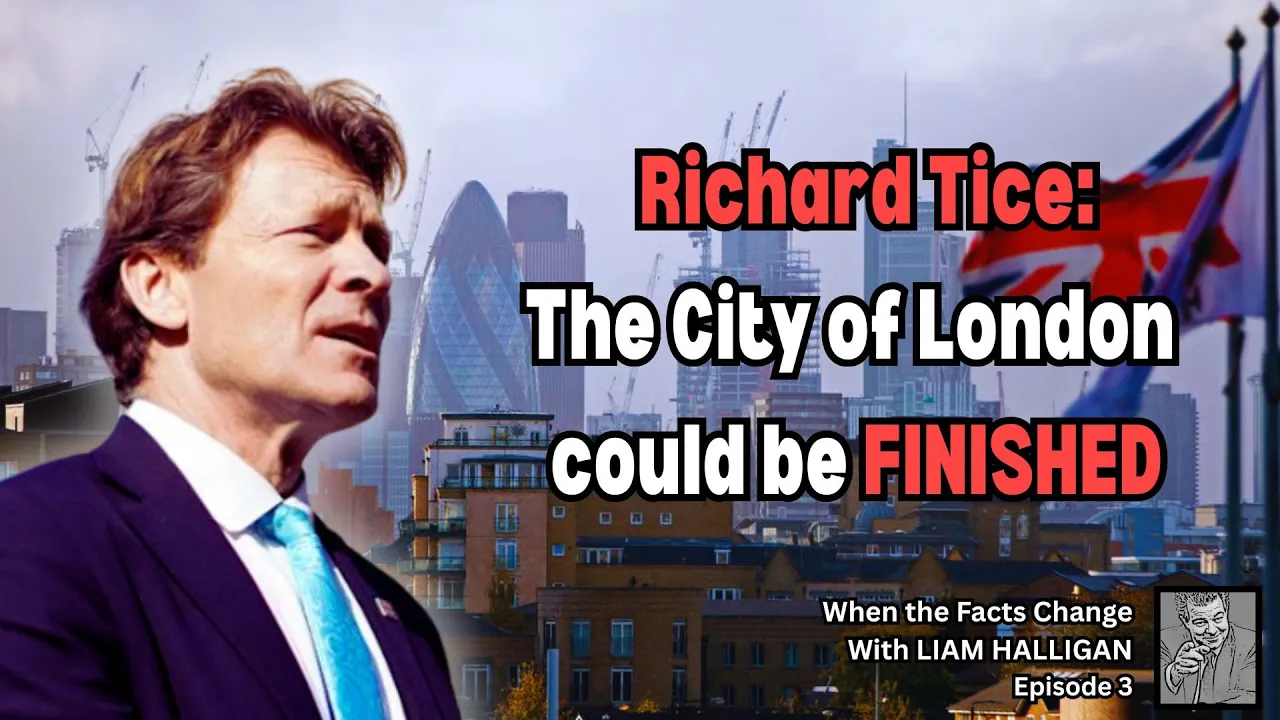


















The UK financial sector operates under a tripartite regulatory system established after the 2008 financial crisis, consisting of the Financial Policy Committee (FPC) which monitors systemic risk and conducts stress tests, the Prudential Regulation Authority (PRA) which regulates banks' stability through capital and liquidity requirements, and the Financial Conduct Authority (FCA) which protects consumers and ensures fair market conduct; this separation between macro-prudential (FPC/PRA) and conduct-focused (FCA) regulation ensures comprehensive oversight of the financial system while protecting public interest.
UK Financial Regulators: FPC, PRA & FCA Explained
Added:Understanding the basic structure of a financial system, including the roles of commercial banks, investment firms, and central banks.
The concept of systemic risk and how failures in one financial institution can cascade through the broader economy.
The historical context of the 2007-2008 Global Financial Crisis and why it exposed flaws in previous regulatory frameworks like the Financial Services Authority (FSA).
The fundamental difference between macroprudential regulation (system-wide stability) and microprudential regulation (individual firm safety).
Analyzing the 'Twin Peaks' regulatory model and comparing the UK's approach to other global frameworks, such as the US or EU systems.
Exploring the implementation of Basel III and Basel IV standards by the PRA to manage bank capital and liquidity requirements.
Investigating the FCA's role in market conduct, consumer protection, and recent regulatory interventions (e.g., the Consumer Duty principle).
Examining how these regulatory bodies adapt to emerging sectors like FinTech, decentralized finance (DeFi), and crypto-assets.
116.1K views1.4Klikes8:15Original Release: 2017-05-28
hi everybody let's in this video consider who the major Regulators are of the UK financial sector in more detail since the financial crisis of 2008 there have been major changes made to regulation of the financial sector in the UK the UK now adopts what's called a tripartite system of Regulation where you've got three major organizations that regulate the financial sector you've got two who work for the bank of England I.E parts of the bank of England they've got one organization that will work directly for the treasury so a government-run organization here crucial to remember your basics of Regulation there is only rationale for regulation if their public interest is being harmed okay so that's why that is in the middle there only if the public interest is at risk or is being harmed is the rationale for regulation to take place let's start by looking at the two organizations that work within the bank of England these organizations have been formed directly as a result of the financial crisis to hopefully prevent something like that happening again let's start by looking at the financial policy committee the financial policy committee was set up at after the financial crisis to hopefully protect against systemic risk these guys are macro Prudential Regulators that means that their job is to monitor the entire financial sector to regulate the whole financial sector here their job primarily is to identify Monitor and to protect against systemic risk remember what systemic risk is this is when there is a great chance of complete financial sector collapse in meltdown like we saw in 2008 something starts which then leads to a ripple effect throughout the financial sector and leads to entire sector collapse so their job is to identify to Monitor and to protect against any systemic risk they also have a very important role if they identify a source of systemic risk what they can do is then instruct the pra the Prudential regulation Authority and also the FCA the financial comment Authority in tackling any Financial stability issues so maybe that's advising the pra on Bank regulation that needs to be set to protect against systemic risk or maybe it's to advise the financial conduct authority over encouraging more competition or Banning certain products that will again protect against systemic risk here they also have a very important advisory role to the government maybe advising the government if these if these guys have seen potential systemic risk a source of systemic risk to warn the government that this could happen to warn the government of a macroeconomic shock that's likely then the government maybe can think about that and enact certain policy to protect against that risk but also maybe to advise the government of bank bailouts that might be necessary to protect against systemic risk the financial policy committee also will enact stress tests stress tests are very important as of 2017 there'll be two annual stress tests that will basically enact the worst case scenario that can happen within the financial sector and will test whether Banks within the financial sector in the UK are okay to deal with that potential shock do they have enough Capital maybe to offset any losses and loans that this scenario that this scenario might take into account do they have enough liquidity if the stress tests will look at potential liquidity crisis so stress tests there to make sure that banks are safe in case of a real shock in the financial sector they have also got the power to provide emergency liquidity through the liquidity Assurance scheme of the bank of England to protect against systemic risk if there is liquidity crisis that banks are suffering from let's now look at the Prudential regulation Authority the Prudential regulation Authority is another branch that works within the bank of England again set up after the 2008 financial crisis but these guys are micro Prudential Regulators meaning their regulation is more targeted and it's targeted to maintain the stability of banks that's their job to regulate and maintain the stability of banks within the UK financial sector their job is to supervise the management of risk so to make sure that banks are not taking on too much risk which could destabilize the financial sector their job is to make sure that industry standards are set to make sure that the conduct and management of banks are being upheld and enforcement of those standards their job is also to specify ratios and also to specify reserve requirements of specific regulations to create stability in the financial sector these are regulations purely for Bank activities so for example Capital ratio setting setting those or making those stricter liquidity ratios let average ratios so again setting those or making those stricter and also maybe to set or tighten up reserve requirements that's their job as well so this is clearly micro Prudential regulation a targeted regulation for banks in the UK economy to make sure that any threat of bank failure is limited which therefore reduces the gain the threat of systemic risks but on a micro level purely looking at the stability of banks here that's the Prudential regulation Authority let's now move into the financial content Authority well the financial conduct Authority is different in that they do not report to the bank of England they report to the treasury therefore they are a government-run organization a government-run regulation body here they again are micro Prudential Regulators but they've got very different roles to the Prudential regulation Authority their mission statement is this to protect consumers and to increase confidence in financial institutions and in financial products so their job is to really look at the public interest in detail and to make sure that that is being protected as much as possible and they do this in four ways by supervising the conduct of firms and markets to ensure that all business activity within the financial markets is legal so basically to make sure for example that there is no collusion of a setting of interest rates of a setting of exchange rates for example I need to make sure there is no Market rigging which would clearly harm consumers their job is also to make sure that there is competition within the financial markets within the banking industry so that consumers get better deals what does that mean what better deals in terms of lower interest rates for borrowing higher interest rates for saving and one way they could do that is to deregulate the banking industry for example reduce red tape is one example of that deregulation so that's one way in which they can promote competition their job is also to ban the selling of financial products that are clearly against the interests of consumers so in this case to ban any missed selling you might have heard of the payment protection insurance Scandal the PPI Scandal that's rocked the UK financial sector over the last five years or so or to ban the missed selling of such uh Financial products like PPI where consumers are not aware that they're even paying this PPI Insurance here but also maybe Miss selling of something like life insurance where individuals are sold life insurance where they don't have any dependents who can gain from life insurance payout so that's a Miss selling Scandal here so the FCA will make sure that any uh Miss selling is banned completely to protect the interests of consumers but also to ban or to change any misleading adverts for financial products that might be out there in the financial sector so for example Loan Sharks need to companies that will offer Emergency Loans to Consumers who are in Dire Straits who need emergency cash to pay off debts for example while the financial conduct Authority will make sure that these companies if they are advertising their products for example we're advertised with full information over the conditions necessary to get those loans but also the very high interest rates that are charged to Consumers if they go for such loads to make sure that that information is clear to protect the interests of consumers who want to go for such loads and to make sure that they're well informed before they get those loans otherwise they could be bitten very hard by the tight conditions that these loan charts can impose on them and they extortionate interest rates that these loan sharks can charge so that covers all the major Regulators of the UK financial sector stay tuned for the next video where we look at the different types of Regulation that can be imposed I'll see you all in that video
Up Next

32:11
Rethinking Monetary Policy: Financial Stability & Growth (LSE)
@theLondonSchoolofEconomics
460 views•2011-01-06

5:07
Impact of Yuan in Indo-Russian Trade Amid Sanctions
@WION
261.9K views•2022-07-01

7:14
Keynesian AS/AD Model: Sticky Wages and Fiscal Policy
@EconplusDal
235.6K views•2015-02-28

113:18
The Age of Easy Money: Fed & Inflation | Full Documentary
@frontline
21.2M views•2023-03-15
Related Study Plans & Knowledge Roadmaps
Structured learning paths in Economics
economics
Sovereign Debt: Defaults, IMF & Restructuring
01Introduction to Sovereign Debt & Government Bonds
02Debt Sustainability & Credit Ratings
03Anatomy and History of Debt Crises
+ 2 more learning modules
12h5 modules
Explore Roadmap
economics
Market Design: Matching Theory & Gale-Shapley
01Introduction to Market Design and Price-Free Markets
02Two-Sided Matching & The Gale-Shapley Algorithm
03School Choice Systems and Mechanism Design
+ 2 more learning modules
10h5 modules
Explore Roadmap
economics
Impossible Trinity: Forex, Capital & Policy
01Introduction to Monetary Policy and Central Banking
02Exchange Rates and International Capital Flows
03The Mundell-Fleming Model
+ 2 more learning modules
8h5 modules
Explore Roadmap
economics
Healthcare Economics: Market Failures & Systems
01Introduction to Healthcare Markets and Market Failure
02Asymmetric Information and Adverse Selection
03Moral Hazard and Insurance Design
+ 2 more learning modules
12h5 modules
Explore Roadmap