















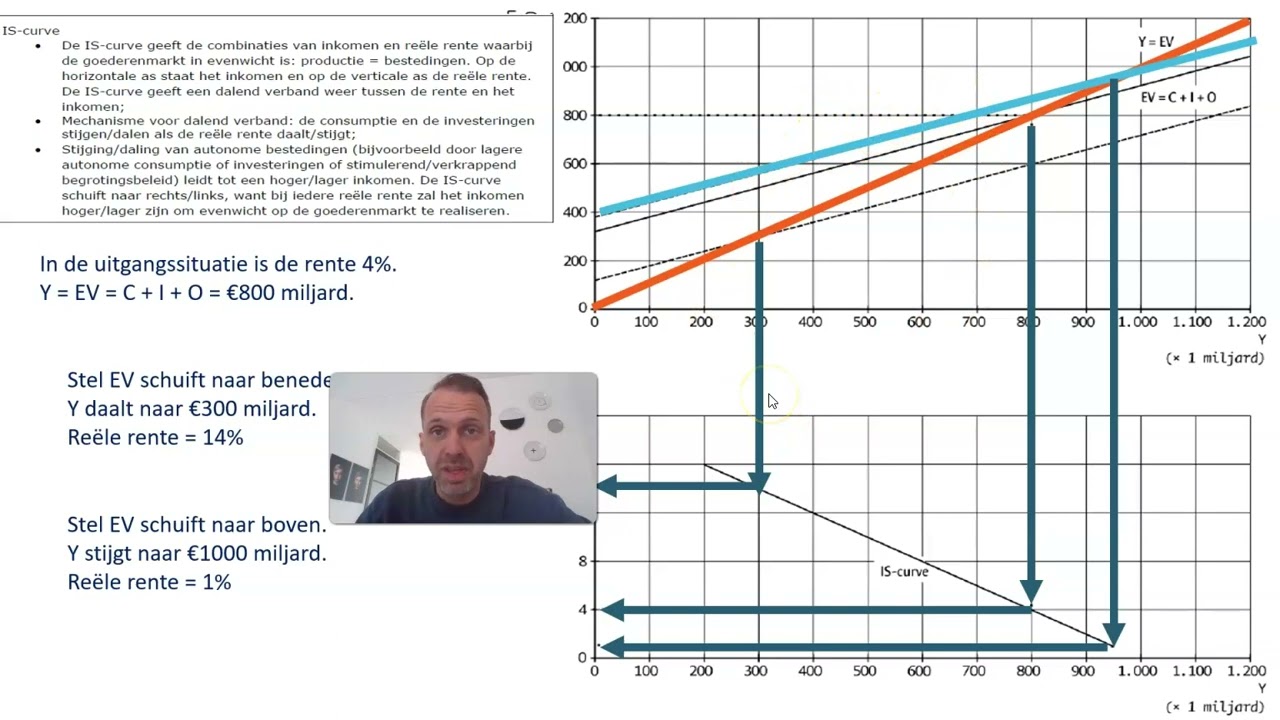
![Mentoring UAS Semester Genap 2026 [Pengantar Ekonomi-2]](https://i.ytimg.com/vi/zXhJjwX7ZtU/maxresdefault.jpg)




The Keynesian model of aggregate supply and demand fundamentally differs from the classical model by arguing that wages are sticky downward (workers resist pay cuts) and that the economy can get stuck in a recessionary gap below full employment for extended periods, requiring active government demand-side policies like fiscal stimulus to restore full employment rather than waiting for natural self-correction.
Keynesian AS/AD Model: Sticky Wages and Fiscal Policy
Added:The basic Aggregate Demand (AD) and Aggregate Supply (AS) framework, including the factors that shift these curves.
The difference between the Classical view of flexible wages/prices and short-run versus long-run macroeconomic equilibrium.
Basic definitions of fiscal policy instruments, specifically government spending and taxation.
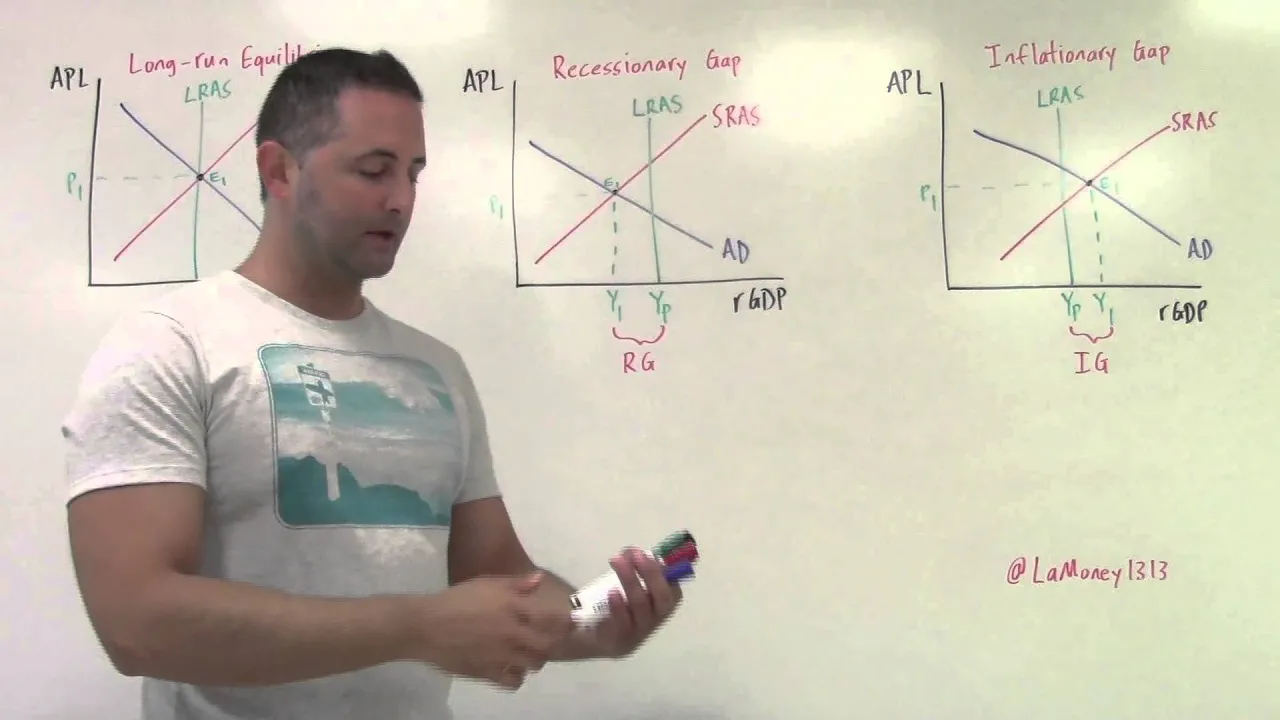
The concept of potential GDP (full-employment output) and how recessionary or inflationary gaps are represented on a graph.
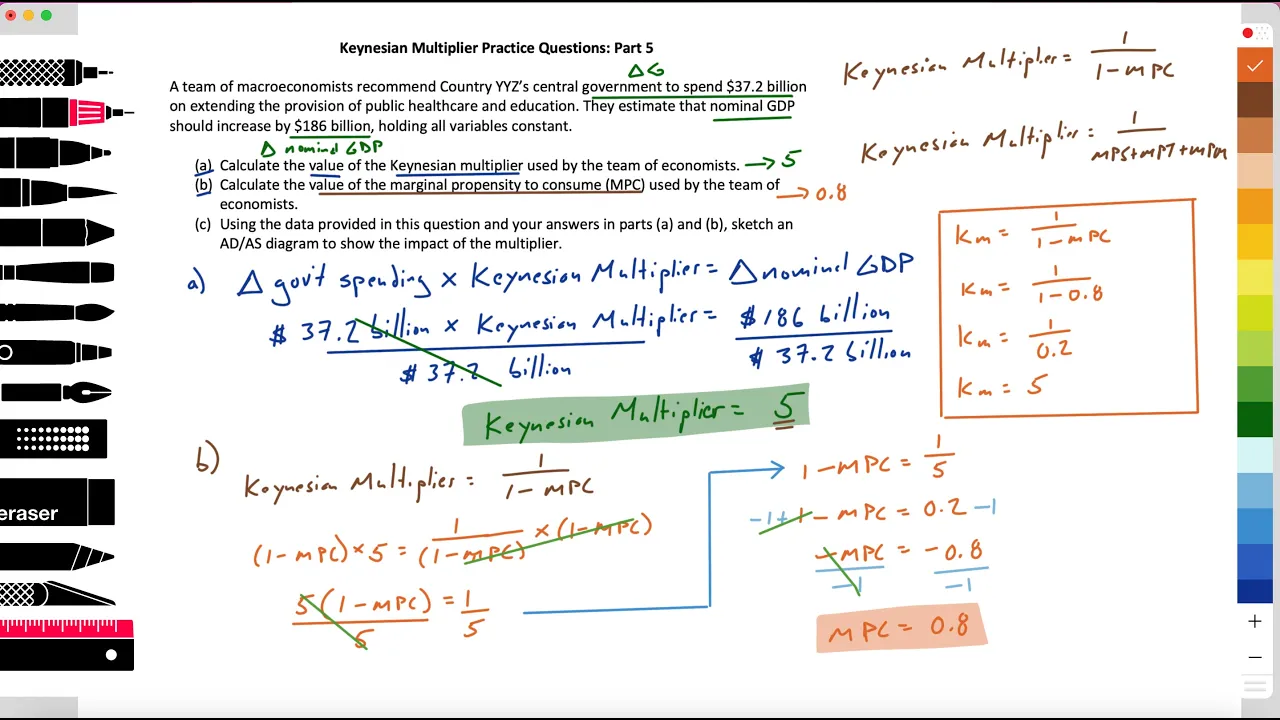
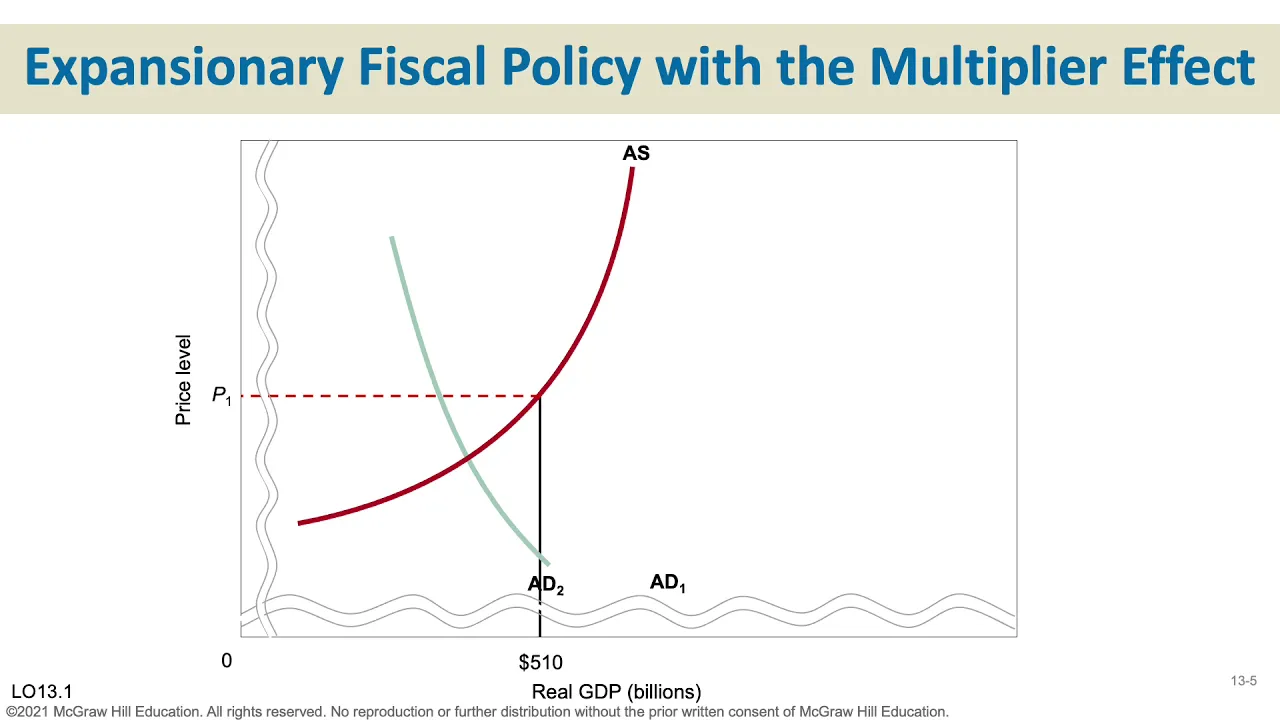
The expenditure multiplier (Keynesian multiplier) and how to calculate the total impact of a fiscal policy change on GDP.
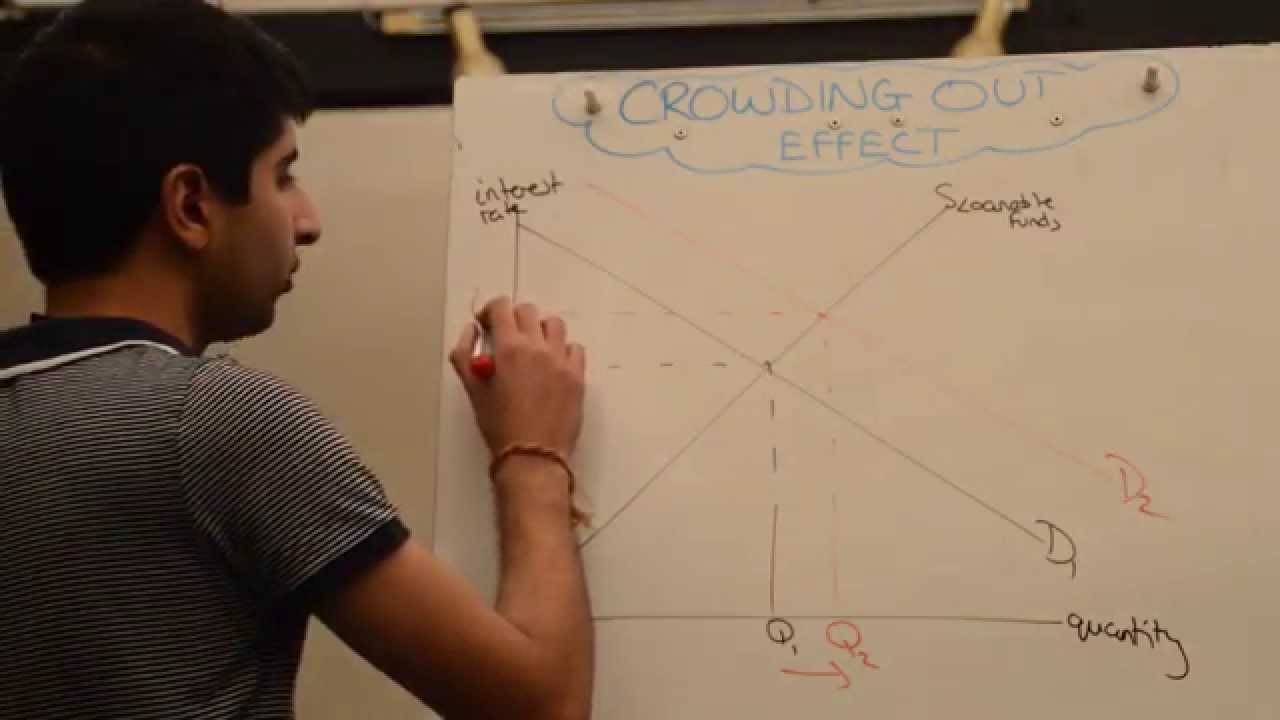
Critiques of Keynesian fiscal policy, such as the crowding-out effect, time lags, and the accumulation of national debt.
The Phillips Curve, which explores the short-run trade-off between inflation and unemployment.
A comparative analysis of Keynesian economics versus Monetarist and New Classical perspectives on economic self-correction.
235.6K views2.9Klikes7:14Original Release: 2015-02-28
hi everyone let's now compare the clasica model to the Keynesian model of aggregate demand and aggregate supply KES fundamentally disagreed with the classical model and its assumptions especially he said this whole short run long run difference is complete rubbish doesn't exist in the real economy he talked about wages being variable in the long term as a crazy assumption and therefore he came up with a very different idea of aggregate supply and a very different idea of macroeconomic management in the economy uh first of all he talked about aggregate supply not being different in the short RM and the long RM he just said aggregate supply is aggregate supply full stop and it looks like this it's determined by the level of spare capacity in the economy so he did agree that there comes a point in the economy where production cannot increase uh sustainably and that is the Full Employment level of output which represents the same idea in the classical model which is maximum use of all factors of production in the economy at sustainable levels and he agrees there comes a point at one output level where the economy can't move beyond that um sustainably and that's the Full Employment level of output so there is a point where the long run aggregate supply code becomes vertical but he argues that it's not always vertical no way there are times where it can be be horizontal as well which represents a point in time where there is so much spare capacity in a recession for example in which case um an economy can be stuck uh way way less than full employment uh and therefore need some sort of macromanagement need some sort of policies to actually get back to full employment the economy will not self heal itself back to YF he also argues that when there is lots of spare capacity uh output can increase without any inflationary pressure at all which is why this curve can be horizontal and that's simply because during periods of lots of spare capacity when output increases there isn't much pressure put on resources on factors of production therefore the price of those resources doesn't have to rise in which case there might not be any inflation as output increases at all which is why the curve can be horizontal as well so his fundamental disagreements come with this notion of short run and long run the fact that W wages change in the long run and become variable and the classical economists believe that when that happens the economy will self-heal Kan says no that's a terrible assumption to make because workers do not like to especially reduce their wages in a period of recession and he said in recession this is where my major problem exists way workers don't revise down their weight expectations who likes to take a payer nobody in his terminology wages are sticky going downwards workers are very resistant to a pay cut in which case if you wait for the long run you wait for wages to reduce for the economy to self-heal well then as you keep waiting for that long run we'll all be dead using Kane's terminology right there that's exactly what you said he said well you're going to keep waiting waiting waiting waiting and the problem is as you're waiting we're going to be suffering as an economy with very high levels of unemployment and all the social unrest and problems that that can bring in which case you wait for wages to adjust downwards we'll all be dead by the time that happens and he said that during the Great Depression in the late 1920s and early 1930s when politicians were very much following a classical school of thought waiting for wages to revise downwards and for the economy to self heal there was no evidence of that taking place uh and this was uh this is what fueled kan's in argument this is what fueled canes to come up with his general theory and to say no let me revise what aggregate supply looks like and therefore let me come up with a new Theory and basically he said in periods of recession so over here where output in the economy is way less than the Full Employment level of output known as a deflationary or recessionary Gap in the kynan model so deflationary or a recessionary gap K's argued that that could well be a long run equilibrium that doesn't just have to be be a shortterm equilibrium like the classical Economist would argue that could well be a longterm equilibrium why because wages don't adjust he said wages are sticky downwards we're not going to see revised down revision downwards of wages at all we could be stuck there for the long term in which case the economy is going to suffer from mass unemployment it's going to suffer from unrest and the social issues that that can bring therefore he said what we need is not to wait right waiting would just lead to more problems he says we need active demand side management in the economy policies that will increase aggregate demand that will move the economy closer to our full employment levels of output and he said in a recession the easiest way to do that the most direct way to do that is to use active fiscal policy an increase in government spending and a reduction in income tax or corporation tax to increase aggregate demand to take us closer to YF Bas to do something like that and he said if that means borrowing money the government has to borrow then so be it because in times of boom that money will come back to the government with higher tax revenue collection and lower government spending necessary so he says yeah fair enough take uh a budget deficit in that year accept borrowing accept the PSNC whatever do so um to increase aggregate demand that's un necessary otherwise we'll be stuck here and the economy will suffer now it's no surprise that politicians like this idea like this Theory very much because it promoted a greater role for government it meant that government could increase in size um it also meant that if it worked politicians can you know very much you know Target the fact that they got involved and used that as a great way to actually uh gain popularity so politicians liked it for that reason too but also it was a a nice theory for politicians to follow because it meant that maybe they could increase ad without much inflationary pressure According to kan's which again meant that they can achieve their macroeconomic objectives without the conflict of inflation that normally would come about from an increase in ad so there's no surprise that in the during the Great Depression this became quite a quite a successful Theory quite a a popular Theory to adopt for those reasons there and um it takes away the major issue of the classical model the major limitation which is well when is the long run when does the long run occur there is no time frame put on it when the wages become variable if they become variable it takes away that limitation and directly the economy can can uh move towards full employment level of output all right so that's the Keynesian model there taking away the major limitations of wages the Assumption of wages how they become variable in the long term in the classical model hope that makes sense thanks for watching see you next time
Up Next
5:16
Keynesian Economics Explained: Multiplier Effect and Fiscal Policy Tradeoffs
@JacobAClifford
698.4K views•2015-12-02
5:07
Impact of Yuan in Indo-Russian Trade Amid Sanctions
@WION
261.9K views•2022-07-01
14:19
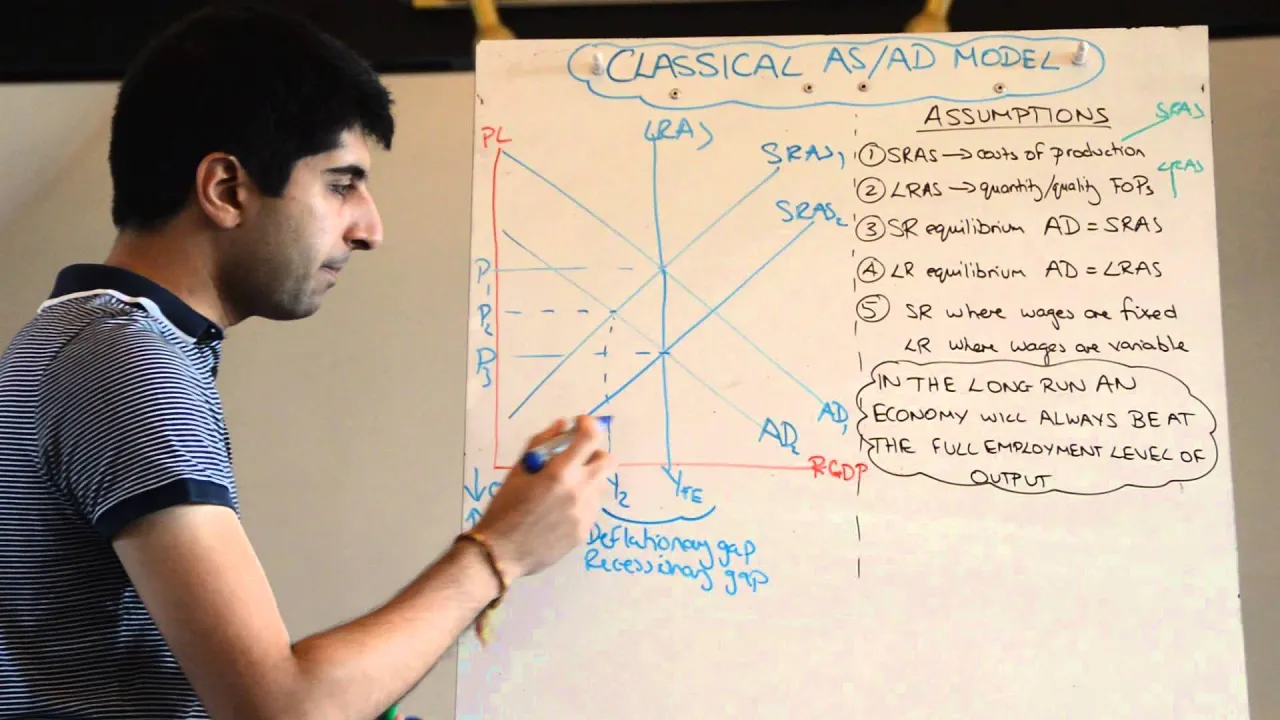
Classical AS/AD Model: Short Run & Long Run Explained
@EconplusDal
460.9K views•2015-02-28

113:18
The Age of Easy Money: Fed & Inflation | Full Documentary
@frontline
21.2M views•2023-03-15
Related Study Plans & Knowledge Roadmaps
Structured learning paths in Economics
economics
Sovereign Debt: Defaults, IMF & Restructuring
01Introduction to Sovereign Debt & Government Bonds
02Debt Sustainability & Credit Ratings
03Anatomy and History of Debt Crises
+ 2 more learning modules
12h5 modules
Explore Roadmap
economics
Market Design: Matching Theory & Gale-Shapley
01Introduction to Market Design and Price-Free Markets
02Two-Sided Matching & The Gale-Shapley Algorithm
03School Choice Systems and Mechanism Design
+ 2 more learning modules
10h5 modules
Explore Roadmap
economics
Impossible Trinity: Forex, Capital & Policy
01Introduction to Monetary Policy and Central Banking
02Exchange Rates and International Capital Flows
03The Mundell-Fleming Model
+ 2 more learning modules
8h5 modules
Explore Roadmap
economics
Healthcare Economics: Market Failures & Systems
01Introduction to Healthcare Markets and Market Failure
02Asymmetric Information and Adverse Selection
03Moral Hazard and Insurance Design
+ 2 more learning modules
12h5 modules
Explore Roadmap