


















Keynesian economics, developed by John Maynard Keynes in 1936, argues that government spending can stimulate economic recovery during recessions through the multiplier effect, where initial government expenditure generates additional spending throughout the economy; however, this approach involves trade-offs including potential debt accumulation, crowding out of private investment, and the broken window fallacy, which questions whether forced spending truly benefits the economy or merely redirects resources from more productive uses.
Keynesian Economics Explained: Multiplier Effect and Fiscal Policy Tradeoffs
Added:Basic macroeconomic indicators, specifically Gross Domestic Product (GDP), inflation, and the phases of the business cycle.
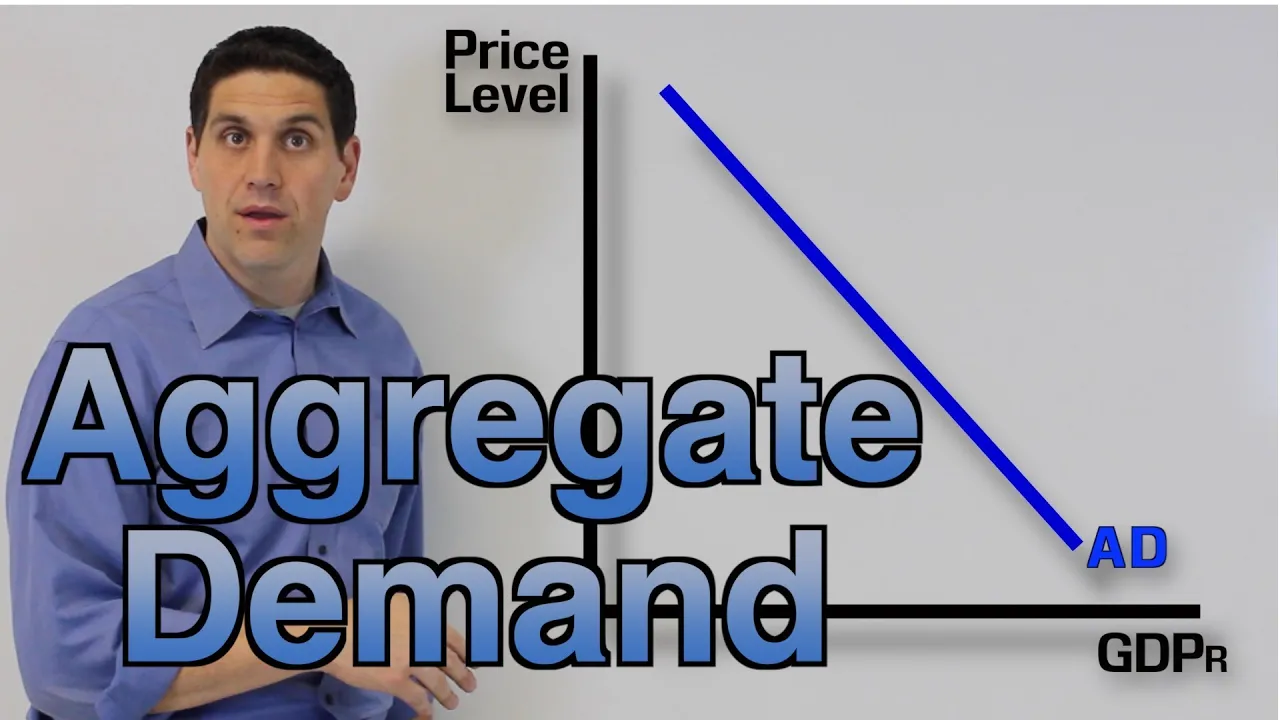
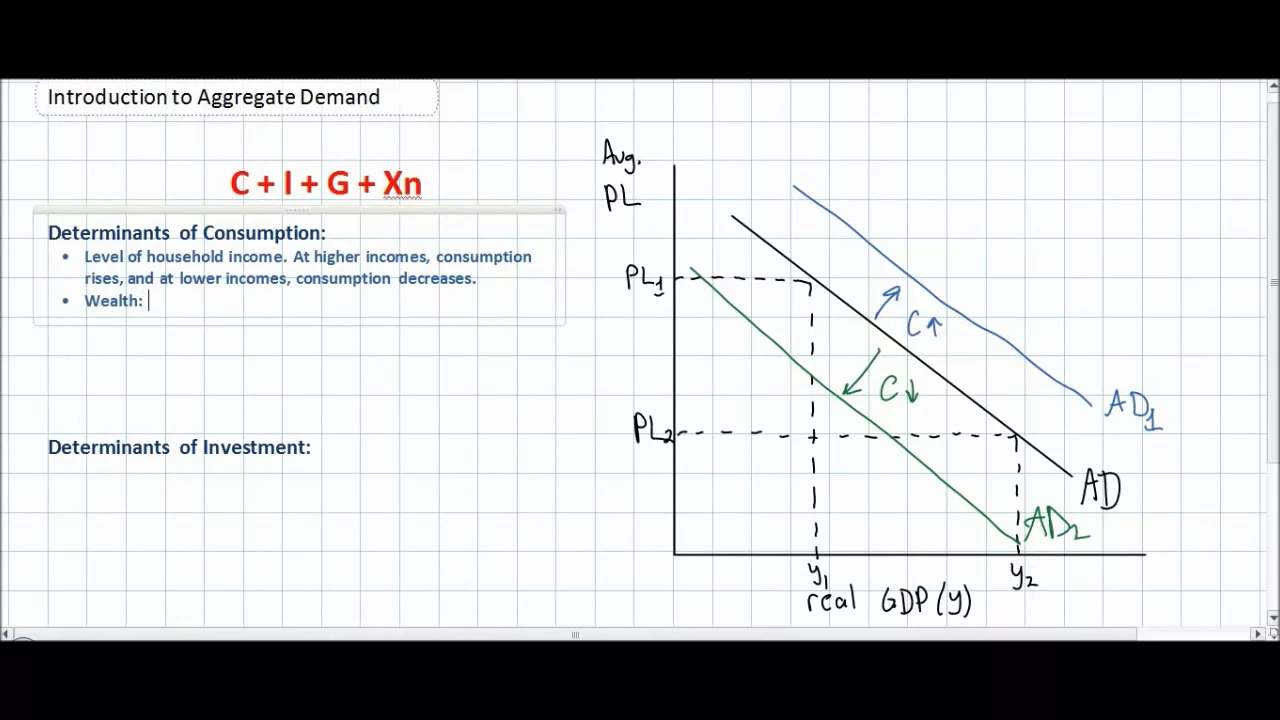
The concept of Aggregate Demand (AD) and how its components (Consumption, Investment, Government Spending, Net Exports) drive economic activity.
The fundamental difference between fiscal policy (government taxing and spending) and monetary policy (central bank actions).
The concept of Marginal Propensity to Consume (MPC), which serves as the mathematical foundation for the multiplier effect.
The 'Crowding Out' effect and how government deficit spending can lead to rising interest rates and reduced private investment.
The stagflation crisis of the 1970s and the subsequent rise of Monetarism and Supply-Side economic theories.
Modern/New Keynesian economics, focusing on price and wage rigidities (sticky prices) and rational expectations.
Empirical analysis of real-world fiscal stimulus packages, such as the American Recovery and Reinvestment Act of 2009 or pandemic-era economic relief.
698.4K views11.2Klikes5:16Original Release: 2015-12-02
[Music] Well, hello there. My name is John Maynard Kanes and welcome to AC/DC Economics. Today we are going to learn about Keynesianism, the greatest thing that's ever happened in the history of mankind.
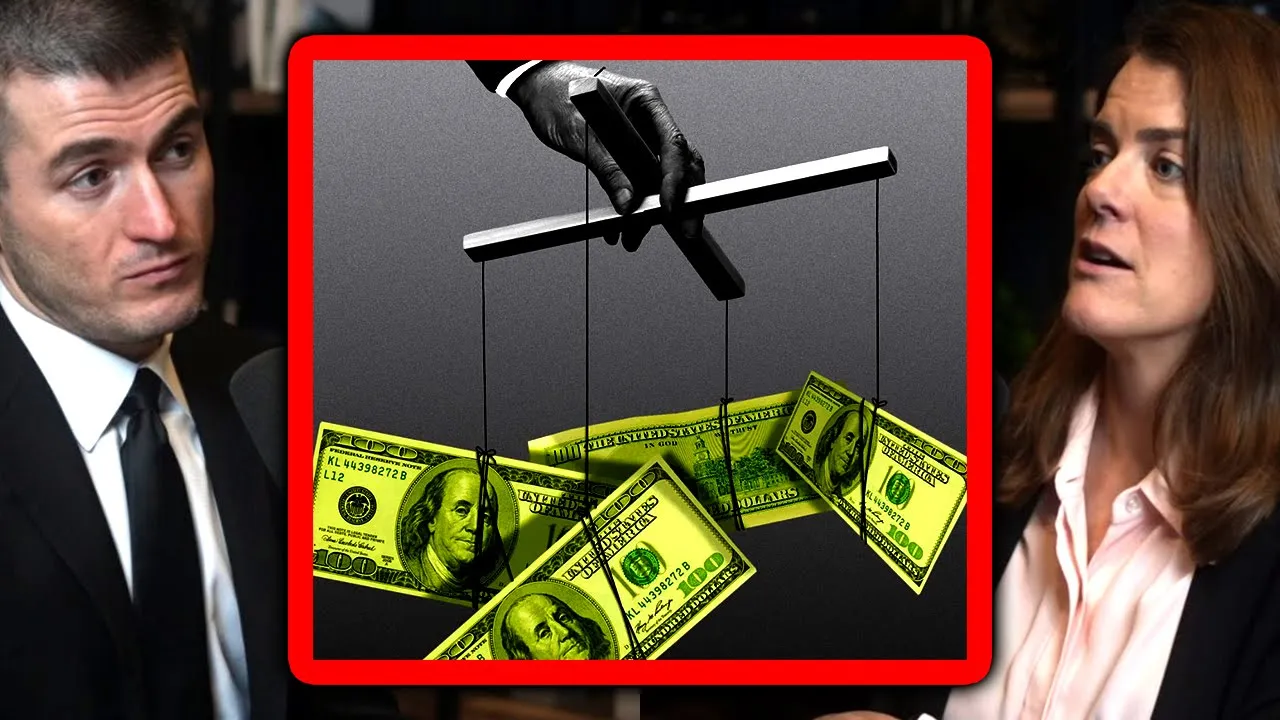
Whether you like his ideas or not, you have to admit that John Maynard Kanes was one of the most influential thinkers in modern times. His ideas and theories have influenced the lives of millions of people. I was born in England in 1883 and let's skip all the history junk and get straight to the economics. In 1936, Kanes wrote a book called the general theory of employment, interest, and money. In that book, he challenged classical economic theories that insisted that economies self-correct over time and that government involvement will always do more harm than good. Instead, Kanes focused on spending. He suggested that if consumer spending falls, then the government can stimulate the economy by increasing spending and increasing the money supply. In his book, he outlined the logical and mathematical reasoning for his conclusions. And he believed in the idea so much that he gave an often misunderstood but clearly ridiculous suggestion. I suggested that the government could deliberately bury bottles of money and have people dig it up to reduce unemployment. Seriously, you said that quite so. Kanes wasn't really suggesting the government should bury money. He was just pointing out the government shouldn't sit around and do nothing and wait for the economy to self-correct. Instead, the government should actively stimulate the economy.
stimulate. I like it. Kane pointed out that government spending in the economy leads to more spending. Economists call this the multiplier effect. Here's the idea. When the government spends money, it becomes somebody's income and they save a portion of that and they spend the rest. That spending becomes somebody else's income and they save some and spend some. That keeps happening over and over again and that's called the multiplier effect. An initial change in spending causes a ripple effect through the entire economy and leads to more total spending. And that total amount depends on how much people spend of new income. This is the idea of what Kane's called the marginal propensity to consume. The more people spend, the larger the multiplier effect. By the way, I made a video explaining this idea of geometric series and how to calculate the multiplier. It's right here. Take a look. The idea of the multiplier also explains why we have recessions. If people think the economy is going to be bad and they might lose their job, they're likely to decrease the amount they spend, perhaps going out to eat less often. Restaurant owners see their sales drop, so they lay off some workers, and these workers have less income, and they buy less of other stuff, causing other workers to lose their job. Again, there's a ripple effect, but now it's pulling down the economy. To simplify, Keynesian economists believe that government spending is needed when there's a recession because the multiplier effect will mean more spending, more jobs, and hopefully more growth. But in real life, this idea of expansionary fiscal policy becomes tricky. First, there's the debate of whether it's worth going into debt to stimulate the economy. But even if economists and politicians agree to increase in government spending, how much should they spend? In the textbook, it makes it look easy, but the multiplier is difficult to calculate and there's no way of knowing exactly how much people are going to spend. And economists disagree on how much government spending actually improves the economy. For example, there's the broken window fallacy. It's a parable created by a French economist, Frederick Bastia. The story goes that a boy breaks a shopkeeper's window and it's praised by onlookers for helping the community since the storekeeper now has to spend money on fixing the window. That spending will allow the glass man to spend more money on other things in town which will increase total spending. So in the onlooker's eyes, breaking the window was a good thing. But that doesn't really make any sense. And if it did, all we have to do to get out of a recession is break a bunch of windows.
Great idea. Perhaps we can bury the windows first. The money that was used to fix the window could have been used to buy something else that the shopkeeper actually wanted. But now that spending will never occur. The same idea applies to government spending. When the government uses tax revenue to pay for public projects and services, there's more spending in some areas, but less spending in other areas. If I give my money to the government, then I can't spend that money myself. Now, that's not really a problem if the government's buying things that I would want anyways, like schools and national defense. But it is a problem if it's going to the agency that's bearing bottles full of money. But what about if the government borrows the money? Well, even in that case, the money isn't free. If the government borrows money, then that leaves less money for companies to borrow. That could lead to higher interest rates and less investment.
Economists call this crowding out. But even if there's plenty of money to borrow, there's still a problem with debt. Whatever the government borrows, eventually they're going to have to pay back. Now, I know it seems like I've been kind of mean to canes in this video, and that's not my goal. The goal is to show you that Keynesian policies, like all policies, have a trade-off.
That being said, a lot of economists agree that the Keynesian policies of increasing government spending during the financial crisis significantly reduced the depth and length of the Great Recession. But the question is, was it worth it? Well, I don't know.
Tell me what you think in the comments below. Okay, until next time. Thanks for watching AC/DC Economics. If you'd like to learn more about the multiplier, click right here. If you'd like to review for exam or learn something else, if you want to review for an exam or learn more economic This is the worst British accent I've ever heard. And if you'd like to review for exam and learn other things, click right here. Also, please make sure to subscribe and leave a comment and tell me what you think about me, John Maynard Kate. Thanks for watching. Until next time.
Up Next
6:27
Monetarism Explained: The Money Supply and Business Cycles
@MarginalRevolutionUniversity
203.2K views•2017-11-14
5:07
Impact of Yuan in Indo-Russian Trade Amid Sanctions
@WION
261.9K views•2022-07-01

5:04
Consumer and Producer Surplus & Deadweight Loss Explained
@JacobAClifford
59K views•2022-05-08

113:18
The Age of Easy Money: Fed & Inflation | Full Documentary
@frontline
21.2M views•2023-03-15
Related Study Plans & Knowledge Roadmaps
Structured learning paths in Economics
economics
Sovereign Debt: Defaults, IMF & Restructuring
01Introduction to Sovereign Debt & Government Bonds
02Debt Sustainability & Credit Ratings
03Anatomy and History of Debt Crises
+ 2 more learning modules
12h5 modules
Explore Roadmap
economics
Market Design: Matching Theory & Gale-Shapley
01Introduction to Market Design and Price-Free Markets
02Two-Sided Matching & The Gale-Shapley Algorithm
03School Choice Systems and Mechanism Design
+ 2 more learning modules
10h5 modules
Explore Roadmap
economics
Impossible Trinity: Forex, Capital & Policy
01Introduction to Monetary Policy and Central Banking
02Exchange Rates and International Capital Flows
03The Mundell-Fleming Model
+ 2 more learning modules
8h5 modules
Explore Roadmap
economics
Healthcare Economics: Market Failures & Systems
01Introduction to Healthcare Markets and Market Failure
02Asymmetric Information and Adverse Selection
03Moral Hazard and Insurance Design
+ 2 more learning modules
12h5 modules
Explore Roadmap