



![[KDI] [1-2-1] Philipp Hartmann "Systemic Risk and Macro-Prudential Supervision"](https://i.ytimg.com/vi/aPSvOnwlEtU/hqdefault.jpg?sqp=-oaymwEmCOADEOgC8quKqQMa8AEB-AGMBYAC4AOKAgwIABABGGUgWChIMA8=&rs=AOn4CLBJ-fD3Re0SRBgcXX9FDS4scqLweg)





















![[홍사훈의 경제쇼] 서영수ㅡ지금은 경기침체가 아니라 금융위기를 걱정할 때! | KBS 220701 방송](https://i.ytimg.com/vi_webp/AAx2lkH3isA/maxresdefault.webp)
This lecture argues that macroeconomic policy (monetary and fiscal policy) should be the primary tool for addressing financial instabilities in capitalist economies, rather than relying heavily on regulatory interventions. The speaker contends that regulatory approaches like time-varying capital requirements face significant challenges including regulatory arbitrage, limited understanding of their effects, and potential conflicts with monetary policy. Historical evidence shows bubbles have occurred under various regulatory structures, and financial innovation has historically contributed to economic growth. The speaker warns that excessive regulatory interference may harm growth and that macro policy tools are better suited for preserving the microeconomic benefits of market-based economies while maintaining financial stability.
Rethinking Monetary Policy: Financial Stability & Growth (LSE)
Added:Thanks.
Uh well, it's it's it's a great privilege to be here today. Uh and it has been a great privilege to be a part of the group that Richard and uh Paul organized. I certainly learned a great deal uh from the meetings and um you know, ever since I was a 19year-old lacking in self-esteem, not knowing what to do, Richard's been a great source of inspiration to me. he was actually responsible for me even doing a post-graduate degree in economics and he continues to inspire me. Um so thank you Richard. Uh in terms of what I'm going to talk about today, um I essentially one thing that's really puzzled me in this postcrisis debate is how little uh attention has been uh devoted to reforming the macroeconomic framework including the monetary framework but also I think how we set fiscal policy and uh what I will argue argue that attempts to exonerate uh monetary policy as a contributory factor to the crisis.
Of course, you know, I think the crisis had many causes. Uh you know, I at least these attempts I've so far found unconvincing.
Uh I continue to believe that leaning against the wind monetary policy is very important.
uh but that it is also necessary to coordinate it with uh macrocredential policy and I'll say a little bit about why uh I worry that the proposed reforms in the UK may be flawed.
Uh I then want to essentially go on to discuss the essay question Richard sent me uh which is about regulatory reform.
uh and essentially I will I will remind you uh of the possibility of regulatory failure. I will discuss uh why I believe financial innovation has been important to growth not only 200 years ago but also recently uh and we'll also spend a couple of minutes uh on countries outside the developed world as to why uh actually financial reform is not only important there for their own sake but actually important for the resolution of global imbalances.
And if I only leave you with one point, it's really Keynes's point that we should largely be relying on macrostabilization policy to deal with the instabilities uh that capitalist economies are prone to. uh because and there's a typo there uh we because we need to preserve the microeconomic benefits of of market-based economies and essentially I think we should be thinking rethinking our monetary and fiscal framework uh because I worry that a lot of the regulatory interference that's being proposed may actually hurt growth and may not work anyway.
So I'll start with monetary policy. I mean it has been a puzzle to me that after the crisis uh there's been so little repentance. Um you know 10 years ago we were having this lean versus clean debate. Um and perfectly reasonable for people to be in both camps. But I'd always believed that ultimately uh events would determine that debate and that people would you know if if a crisis eventuated and if it then uh was shown that mopping up didn't work that people would move into the lean lean against the wind camp. And I guess the puzzle to me is that that hasn't happened yet. So uh out of the Fed you've got Bernani and K arguing uh that we should uh we don't really need to change the way we set monetary policy but we should rely on regulatory policy in the UK. Uh the bank's paper on macrocredential tools was very dismissive of the role of monetary policy in reacting to financial imbalances.
And certainly the chancellor in his mansion house speech uh essentially uh I think said something which is plain wrong uh when he asserted that the bank couldn't react to this financial imbalances because of the framework.
U sorry to interrupt you not to know what CT Oh, sorry. You don't need don't worry about it. it's not essential to the argument. Sorry. U now uh if if I can just elaborate on why I think the chancellor was wrong to assert that the remmit we were set uh at the MPC was to meet the inflation target at all times.
It wasn't a remmit to meet the inflation target two years ahead. uh and that I think is a key distinction because what we were concerned about was minimizing the deviations from the inflation target over the entire future. It then uh allowed us uh the it permitted us in fact we should have uh reacted to asset price misalignments. Essentially the argument being that uh it was perfectly permissible to set interest rates higher than would be warranted to hit your two-year ahead target while the house house price bubble was emerging because you knew that ultimately if the bubble got very big and it burst that it would then be extremely difficult to mop up and the deviations from uh the inflation target could be entrenched as Japan has found uh in the last two decades.
Um and indeed other central banks did do this. Australia did this. Sweden did this to some extent. Canada did this. So uh it was really the US and UK that were different from the pack rather than the other way around. And it was explicitly discussed in the UK.
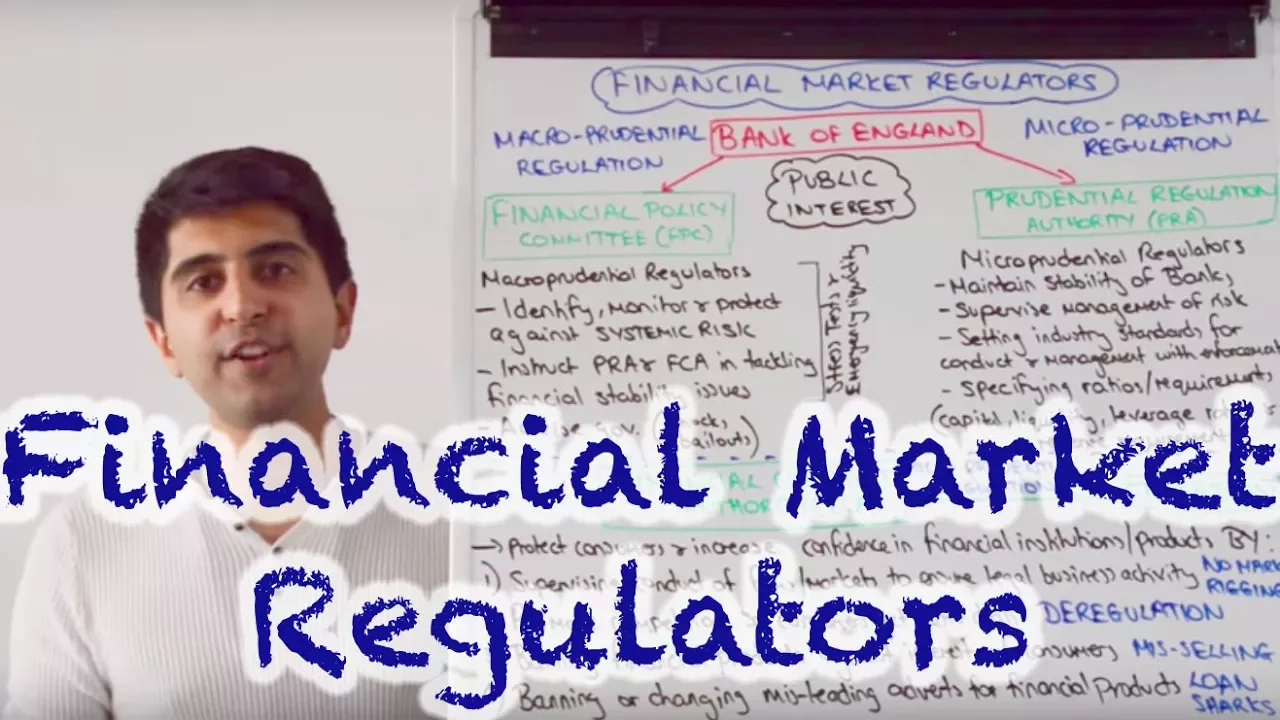
Now that's the past. Uh I want to focus very much on the future. Uh and in the UK uh you know we are about to set up this uh financial policy committee that might vary capital requirements uh over the cycle and Charles Goodhart in his Geneva report was very early to recommend this very sensible policy. uh and certainly in this volume both Andrew Smithers and Andrew Large uh have written in much greater detail. What I want to talk about is the interaction uh of the FPC with the MPC. Uh and it's my belief that it's rather odd to separate the FPC from the MPC.
uh one in terms of standard economic theory, we know that if you use two instruments to achieve two targets and you do that simultaneously, that's likely to be more efficient than having specific assignment.
And I think this is most vividly illustrated by what went wrong in Spain.
In Spain, you had dynamic provisioning, but yet it couldn't prevent a housing market bubble as monetary policy was actually set by the ECB to deal with Europewide inflation.
Um, now another issue, another important practical issue u that we're going to have to grapple with is regulatory arbitrage.
uh and it's my belief that it's much less easy to evade higher interest rates than it is to evade higher capital requirements. And the other problem you do have with the FPC setting time varying capital requirements is of course that there is a market capital requirement. And in good times, uh, markets reward banks that engage in this regulatory arbitrage.
And in bad times, markets might in any case hold banks to higher capital requirements than the lower ones that the FBC will be trying to set. And therefore, as others like Diamond and Rajan have pointed out, uh it's at least possible that counter cyclical capital requirements might prove to be relatively ineffective in terms of their impact on behavior. And that's why it's important to be setting monetary policy and these capital requirements together because essentially you can shift uh the weight that you place on either tool depending on uh the the the you know on on depending on how effective you perceive the capital requirements to be.
Uh, another big advantage that monetary policy has over TVCR is that TVCR has to be coordinated internationally to prevent arbitrage.
While of course in a floating exchange rate uh regime, you have considerable autonomy in terms of monetary policy.
Uh the other thing that really worries me uh not just about TVCR but also about uh you know uh essentially having very intrusive regulation is that we just don't have enough information.
Um you know at least we've been setting interest rates for a long time. We have some experience. we have some approximate indication uh of the monetary policy transmission mechanism.
However, in the case of capital requirements, we know pitifully little.
Uh I was reading a recent study and the study was surveying uh essentially various uh recent estimates of the long run impact of increasing capital requirements on banks by 1%. And the range of estimates was essentially in the ratio of 10 to1 and that's the long run uh which economists are supposed to know a bit more about in terms of the short run the variation was even bigger. Um and remember that the backdrop to this is a way of thinking and a way of modeling which didn't even regard this stuff as very important. So if you take Beckham the the bank's model uh it had no role for bankruptcy and it assumed the modiglanian miller theorem anyway. Um and we shouldn't overestimate our ability to get these things right. Uh remember that even as late as 2007 uh the bank was on the wrong page in terms of a lot of these issues. So as late as August 2007, which was after the Bear Sterns hedge funds had failed, after IKB had failed, the bank was still arguing that securitization was a good thing and was would make the uh global banking system more stable. And as late as September 2007, the Bank of England was arguing that the UK banking system had plenty of capital and didn't need and didn't need anymore. And therefore we may well be uh assuming too much in terms of the knowledge that regulators can have uh in relying too much on time bearing capital requirements.
Um a common argument against using monetary policy and using macrocredential tools instead. uh and Adair said this on the Today program this morning as well, but I don't see him here. Um is that essentially raising interest rates imposes a very high cost on the economy. Uh while uh the argument goes that macrocredential requirements wouldn't do that. I must confess I don't fully understand that argument.
uh first because leaning against the wind monetary policy raises interest rates to deliver macro stability. You don't do it to prick the bubble. And that's a very important distinction because you calibrate the rise in interest rates that you think in your best judgment uh would deliver greater macro stability. So you're leaning against the wind. You're not a bubble popper.
The second argument that's relevant to this is that increasing capital requirements will essentially widen the spread between lending rates and the policy rate. So essentially you'll see the impact through higher lending margins.
So the rate paid by consumers and businesses will go up. So in some sense that will have a very similar impact on output that raising the policy rate does. These are just different ways of increasing the cost of borrowing. And therefore if you are worried that leaning against the wind monetary policy will hurt output, you should be equally worried that time varying capital requirements will have that impact.
Um, another counterargument that you hear is that leaning against the wind monetary policy would deank inflation expectations.
However, um I would say two things. One is that one could then go for price level targeting which is what Governor Carney argues for.
The second thing is that there is at one level a choice between deankering inflation expectations now to some extent or deankering them a lot later on as we've seen in Japan. So if you do if you do the wrong thing and you end up in a Japan style trap, you end up deankering inflation expectations.
Anyway, um one final argument on this topic uh which um on this I'm uh influenced by what Harvard Davis and David Green have written uh and essentially it's this view that you can have an MPC and FPC uh and and somehow the you know somehow they can act independently and Howard and David are quite right to criticize this. Uh and if you take the following example, suppose you have a situation where the F FPC increases capital requirements, pushes lending margins up and this then leads inflation to be uh forecast to undersshoot the target.
If you keep these committees separate and ask them to rigidly shoot for for the for you know for their respective targets then the MPC would respond to that by lowering policy rates and hence the impact on the house price boom uh could could be ambiguous and as says you essentially could end up with push me pull you policies. Uh and this I think is a serious problem uh with the proposed changes in the UK.
And one sort of final point which is historically uh you've had bubbles under different regulatory structures different types of banking systems including narrow banks and in terms of different regulatory structures you've had it also under the sort of structure Adair was recommending this morning. It's the sort of structure you have in India for example and uh you know with with all these sectoral limits on lending and I've seen no evidence that it prevents bubbles and b and busts and I it actually ends up hurting growth and does very little in terms of cyclical stability and therefore if what you want to do is to deal with macro stability then you need to use macro tools fiscal and monetary policy Um, Richard, I'm conscious I've only got 10 minutes. Is that right?
If you want some questions, you've got five. Oh, okay. In that case, I'll skip over this bit. Uh, I I have a section in the paper which discusses Bernank's defense uh of monetary policy and I go and I discuss each of his three arguments. Uh, and I'll leave that.
I'll go over to regulatory reform. And here just to make the obvious point, regulators made a lot of mistakes. Uh and one shouldn't assume that regulators will suddenly stop making mistakes. And therefore, if you end up giving them too much power, you are vulnerable to regulator failure just as you are to market failure.
Um the the sort of big point I did want to discuss especially as Adair said so much about it this morning uh was this issue of the financial sector and growth.
What worries me about a lot of this debate is that it resembles many debates historically after a bubble bursts, which is it's not uncommon at all to blame financial innovation for the crisis and then try to strangle it. So we know for example that after the South Sea bubble burst in 1720, the first thing that happened is they banned joint stock companies um and then they banned option trading.
So not all post crisis reform is sensible.
Um I think most of us agreed uh you know within the group that the financial sector has made a significant contribution to growth historically. Uh so for example, Sir John Hicks used to always emphasize that the industrial revolution came to England not because we were necessarily ahead in terms of industrial innovation but because we were ahead in terms of capital market innovation.
Uh but that's agreed territory. So I'll skip over that. There is also an impressive body of empirical evidence which links financial deepening with growth.
uh and what's impressive about this evidence is it's sort of many different uh ways of attacking the same question.
So there's time series evidence but there's also sort of there there are also more careful studies.
For example, Rajan and Zengales is a very clever study which essentially uh identifies industries that are naturally heavier users of external finance and then shows that they relatively outperform in countries with deeper financial systems. So you manage to control for a lot of these statistical issues.
Um however as Adair was saying this morning uh there is agreement that financial innovation may have contributed in the past but the assertion is that somehow it stopped recently and Paul Vuler says that as well. Um my my worry about that is I'm not sure what the theoretical justification for believing in this turning point in the contribution of financial innovation is. And also I note that this has been asserted many times before in history. If you go back uh and look at the the the the the debate in the 1930s, you see the same thing.
people asserting that financial innovation had been a good thing until then and then it had stopped. Uh and this is a natural reaction to a bubble bursting. Uh but I'm not sure that it's grounded in evidence. uh now I don't have time to go into the detail here but certainly in the chapter I discuss some more recent studies uh which argue that even over the last 30 years financial in innovation has played an important role in the US in terms of contributing to the productivity growth of the non-financial sector that's the key uh so that work is sort of immune to some of the statistical issues that Andy old aid uh has correctly raised.
Um I mean there is for example sorry I went too far. Uh if you just look in the data one notices that there is this strong relationship between bid offer spreads and TFP growth um and so on. And uh I mean I went into the city now about 20 years ago and I've certainly seen bid offer spreads shrink very very considerably. Uh and it seems to me one shouldn't underestimate the benefits that have come from that.
Richard, I've got about two minutes.
One. One. Okay. Sorry. Okay. I won't say much about China except to say that again you can read about it. I make the obvious point that if China had more financial liberalization then it would uh help in terms of the resolution of global imbalances. And every time we in the west say bad things about the financial sector we are undercutting the pro- financial reform people in countries like China and India and we should be cognizant of that risk.
Uh I I I'll just leave you with one last uh sort of little empirical regularity which I think needs more research but there there is a very interesting study uh which shows that essentially uh financial liberalization leads to higher GDP growth but it also leads to a greater incidence of crisis.
uh and essentially so what one is talking about is yes you get the growth benefits but you also tend to get more crisis so negative skewess is an issue u and within their cross-country study they have this very interesting comparison between India and Thailand where Thailand has grown much faster than India Thailand has had a very liberalized financial system India's has of course been very repressed um and but yet over the longer period uh Thailand's done better in terms of GDP per capita. Um now you know I certainly take the point that G GDP growth per capita is not the same thing as happiness as Richards reminded us. Um but it's it's it's just something to have at the back of your mind. We've been through a big crisis which has been damaging but this is what you get when you have a large financial sector but one shouldn't lose sight of the growth benefits and therefore in designing uh reform strategies uh one needs to be mindful of that and therefore if I leave you just with one point it is to repeat that I think we should be using macro policy primarily towards delivering greater macro and financial financial stability and we should be careful about this kind of micro meddling which may end up hurting growth significantly.
Thank you.
Start a lot of controversial remarks. Yes.
Hi. Press the button.
I'm Alex Fairman. Sushi question. Um given your your uh assertion that uh one should pay greater attention to to fiscal and monetary policy. Uh is that an argument also for housing micro super uh credential supervisory polic and supervision in the central bank?
Uh it's certainly my view that we need more tools. Um and and when I was at the bank, I I certainly in at least one of my speeches argued for more tools even back then in O2. Um the problem is we we don't have enough tools and we know very little about some of the potential tools. So the more tools you have uh you know the more diversified your portfolio can be and the less likely it is that you make some big policy mistake. So I'm all in favor of having more tools. Now there is a a big political question about giving so much power to an unelected committee. Um because if if you have the unelected committee not only setting the interest rate and setting capital requirements but also set setting the rate of land tax which is what I'd argued in O2 um and was quickly told to keep quiet.
um the um uh I mean you know this basically raises some very very big and deep issues about how much power you give to a bunch of technocrats and and there is therefore an issue of how you coordinate this with the politicians.
Can you press the button?
Yes. Okay.
Direct effect on growth indirect on crisis and they found as you suggested that the growth effect was larger. But that was only true when they aggregated across both developed and emerging countries. If you took emerging market economies alone in their data set, it turns out the crisis overwhelmed the positive growth effects and one wonders now if you did the same experiment and added in the recent crisis whether you wouldn't find a reversal of the results you appealed to. Yes. Uh I think you're absolutely right. I hope what I said was that this was just an intriguing finding that needed more research. If I didn't say that now, I certainly say that in the chapter. Uh I think it deserves further research. Uh and all I'm arguing is that one may want to be some because there's such a lot of impressive evidence not their paper but other papers uh which show that the financial sector can contribute to growth. Uh I think one needs to be cautious. you know, even if I look back at the last 25 years that I've been in the finance uh 20 years that I've been in the financial industry, you've not only had a big reduction in bid offer spreads, but you've also, you know, if you talk to people in the IT industry or the biotech industry, they will tell you that they are under very little doubt that the venture capital industry helps speed up innovation in those industries.
uh and one shouldn't end up throwing the baby out with the bathwater. There's a lot that goes on in the finance industry which is bad. We certainly need an you know uh a competition inquiry. There's a lot there are a lot of good suggestions in what my colleagues uh you know have discussed and will discuss later today.
But all I'm saying is let's be careful.
Last quick question from uh Will Hutton also a member of our group.
That's okay. I was uh just I'd like you to address this component. Sure. A weak element of your argument is this is that um Dare this morning was saying of course smoothing consumption life cycles uh temporal transfers etc etc. a third component which is actually directly moving savings into investment. Now you put up the Raj Adams and Gal's uh paper and their point is not that financial innovation per se promoted growth. It is that the type of financial innovation that took place in those countries permitted an addition to capital stock um which is not the kind of thing that financial innovation has been doing in the last decade. see a Dez analysis and indeed uh Andre and so you know if there's financial innovation that promotes let's say you know residential property sector or commercial real estate sector um but you don't have financial innovation that kind of financial innovation could be highly problematic and actually you might want to have a specific policy tool that addresses it whereas you know financial innovation direct role of savings into investment would be not something that you need to meddle But I'm not certain that the proposals that uh uh have been put forward actually do meddle with that and it's claimed that there's a major institutional dysfunction there in Britain. Quickly. Okay. Uh I mean you certainly raised several deep issues there. So I I I can't do justice to it.
What I would say is that I'm not at all confident that however clever they are that the bureaucrats can do sectoral allocation properly. I guess I've seen the baboos in India mess up for a very long period and I'm very colored by that. The second point I'd make is that in terms of uh the evidence um you know I I wouldn't dream of arguing that everything that goes by the name of financial innovation has been a good thing. There's been a lot of wasteful stuff. There's been a lot to do with regulatory arbitrage.
Um but my reading of the literature is that there's an impressive body of evidence that it that over a long period of time financial innovation has done good things. It's consistent with the anecdotal evidence I pick up um you know in terms of the venture capital industry over the last 20 years. And my fear is that if you put the bureaucrats in charge, you might throw out the baby with the bath water. Social, thank you very much.
[Applause]
Up Next

The Art of Listening in Aid and Entrepreneurship: Ernesto Sirolli
@TED
849.1K views•2012-11-26

Impact of Yuan in Indo-Russian Trade Amid Sanctions
@WION
261.9K views•2022-07-01
Behavioral Economics Explained: Rationality, Nudges, and Risk
@crashcourse
1.1M views•2016-03-12

The Age of Easy Money: Fed & Inflation | Full Documentary
@frontline
21.2M views•2023-03-15
Related Study Plans & Knowledge Roadmaps
Structured learning paths in Economics