



















The global financial system, structured around the US dollar as the reserve currency since 1971, faces existential challenges from peak cheap oil, where the marginal cost of oil production has risen 8-10% annually due to depletion, making it incompatible with dollar-denominated sovereign debt; this creates a 'Mexican standoff' where energy exporters cannot store wealth in treasuries (which lose purchasing power against rising oil costs), energy importers face depleting dollar reserves, and the US cannot afford the interest rates required to service its $33 trillion debt, forcing a transition toward multicurrency energy pricing and gold-backed settlement systems that will likely involve 10-15% sustained inflation and a debt jubilee in the coming decade.
What Peak Cheap Oil Means for the Global Economy & Future Currencies
Added:The political power has resided with the debt merchants, the exporters of debt. You know, who has won in the last 40-50 years in this system. It's been the exporters of debt, which is Washington and Wall Street. And they still have a lot of power, they're not going to want to hear this. I'm pleased to welcome Luke Gromen to The Great Simplification. Luke works in the financial industry. He founded Forest for the Trees, LLC, where he advises clients on the macroeconomic energy integrated scenarios that affect the global economy. I worked on Wall Street 20 years ago and I have found very few Wall Street minded people that integrate the centrality of energy to our profits, our expectations and the implication of peak cheap oil has for growth and our institutions and the way that our currencies work.
Doomberg, Kiril Sokoloff upcoming is Lyn Alden and Jeremy Grantham. Luke is one of those people that is integrating peak cheap oil and energy with 10 to 25,000 hours of human labor per barrel of oil. I think without understanding this, we can't see the big picture. He and I talk about currency reform due to energy decline and what is going to happen to our financial system in the coming decade is at least as urgent to be discussed and planned for as the ecological crises we face. Please welcome Luke Gromen. Luke, welcome to the program.
Thanks for having me on, Nate, it's great to be here. I'm excited to talk to you.
You might be asking, and my viewers might be asking why you are on a systems ecology podcast.
And I'll tell you. Because at the core of how the human ecosystems function is energy and finance, and you are one of the few financial professionals that I've come across that from my systemic lens gets what's going on. And I think for the environment and for governance and for energy transition and where the society is headed, we need to understand the interlinkages between energy and money. And I know you and your organization, Forest for the Trees have been articulating this quite clearly.
Can you just start off with maybe giving us a long-ish elevator pitch of you and your organization's worldview with respect to the current global financial situation?
Yeah, absolutely. So I think the easiest way to simplify it is in the absence of an energy productivity miracle, which is a phrase we use a lot, it's something we can touch on and what exactly that means, said energy productivity miracle could take multiple forms of varying degrees of either pleasantness or unpleasantness, which again, we can expound on. The bottom line is the debt backed fiat currency system, as it has been structured and existed since 1971 when Nixon took the US off the gold standard, in our view, has reached exhaustion for peak cheap energy, peak cheap oil in particular reasons. I'm going to read a quote to you that I think is perfectly summarizes it. So this quote was written in 1980 by the chairman of the Bank of International Settlements, Jelle Zijlstra, and it said "its second oil crisis could be worked through slowly, but the international financial system could not survive a third oil crisis. The inflation would make it impossible to recycle the petrol dollars to the oil importing countries with any hope of repayment in real terms, in oil terms. Trade would crumble and the system would be brought to its knees." And so at its core, peak cheap oil in our view means we are now in that third oil crisis that the system as structured cannot survive in its present form.
I would break the world, and we look at the world, into three basic categories of nations. You have energy importing US creditor nations or regions. So within that Japan, China, Europe, some others.
You have energy exporting US creditors under the post '71 system. So OPEC, Russia historically. And then you have the US who runs twin deficits and whose job is to essentially supply the dollars by running ever bigger deficits to this system. The problem that peak cheap oil introduces to this system is that as we are seeing the marginal cost of global oil supply, so over the last 10 years, 90% of global oil production growth has come from US shale. So US has become the marginal producer of oil. It is high cost and critically the geology of shale is such that the Dallas Feds surveys have been showing pretty consistently from the producers they survey down in the Permian and elsewhere that they need eight to 10% on average growth in the price of oil in terms of their breakeven. So their breakeven price rises by on average eight to 10% in recent years.
That's because they have to dig deeper and more complicated technology. Just to keep technology up with depletion, they have to increase prices eight to 10% a year.
It's depletion, it's the Red Queen problem as I'm sure you and many others in your pod. So basically the Red Queen is running at eight to 10% per year in terms of what they have to increase the price of oil to outrun the Red Queen. The depletion, the decline rates in shale, the cost of oil service equipment, et cetera, et cetera. The problem within that is the US government cannot afford anywhere near eight to 10% interest rates on its 33 trillion in debt that that would imply. So basically we are now at a situation in the global monetary system as a result of what has been by far the biggest marginal producer of oil in the world over the last decade, which is US shale, energy exporters globally that first group I talked about would have to be stupid to be blunt, to store surpluses that they earn in dollars in US treasuries at rates that are not compensating them at the rising cost of the marginal barrel of oil, right? If the marginal barrel of oil is rising eight to 10% per year and treasuries are paying them 4.3% right now at the tenure, they're better off leaving the oil in the ground.
With one exception maybe is that treasuries are more liquid than oil and things in the ground?
Yes, all else equal. But even then, if they dig out or if they produce oil, sell it, store those surpluses in treasuries, at some point they are going to reach their own decline or depletion problem and they're going to have a pile of treasuries for them to go out and re-buy the oil that they just sold to the world and it's going to buy them a lot less oil than what they shipped.
So basically, yes, in the short run in financial market terms, yes. In the long run that as you're managing a country, as you're managing the sustainability of your FX reserves, if you're a politician in these places and you don't want to have a very bad personal outcome for you and your family, you have to start thinking about this problem. So it's a problem for the energy exporters. For the energy importing creditors who have historically stored treasury bonds, treasury bonds were kept relatively fungible relative to the price of oil. In other words, if I was China, if I was Europe, if I was Japan, I did trade with the United States, I ended up with dollars, I bought treasury bonds. Those treasury bonds I could rely on within a range to maintain their purchasing power in oil terms over time. Because when you look at Europe, when you look at Japan, when you look at China, they are creditors, but what are they short? They're short energy and more broadly some other commodities. So this problem affects them too. They can no longer store their wealth earned from surpluses in trade with the United States in treasuries because they will find themselves short oil over time.
For the people that understand what you just said, this is pretty fricking horrifying, the implications.
It's a Mexican standoff because the United States can't let rates go to eight to 10% either. Because we let debt get too high because we did a bunch of really... We spent a lot of money over the last 20 years and didn't get a whole lot out of it. So yes, we are in this the third oil crisis that Zijlstra wrote about in 1980. It's here, it's here now.
It's a Mexican standoff and it has to result in major systemic change in some way, shape or form. And as I said, that can be pleasant or unpleasant depending on how things go from here.
So you and I just recently met, and to tell you just a little bit of my history, I worked on Wall Street, I was at Salomon Brothers and Lehman Brothers and looking at credit markets and fixed income and commodities, and then I kind of had an environmental epiphany. And the last 20 years I've been working on systems ecology and the environment and human behavior and anthropology and systems.
But my brain still remembers Wall Street times. So it's really refreshing to me to hear someone who understands finance but also is using words like peak cheap energy and the Red Queen. I'm terming what's coming as the biophysical phase shift, which is where society used to measure our wealth and our future prospects pretty much solely in a money and technology sense, and now it's energy and ecology and commodities are going to be primary and that has massive implications for a world that measures our wealth in papers and digits. So yeah, keep going.
That's exactly how we're looking at it as well, right? So historically you had energy and you had trade and you had the dollar in the middle. So you had these surpluses, dollar, energy and everything flowed through the dollar and the treasury market as a storage of dollars for future energy purchases. And so what you've been watching happen since shortly after the great financial crisis has been the arbitraging of basically the cutting out of the middleman, the arbitraging of this situation where, it started with China and Russia.
So China is looking at the situation and you can see it by their actions. They're going, why am I going to store my wealth in treasuries for future energy as I get these dollars coming in from trading with the United States? That makes no sense for a number of different reasons. Number one, as we just talked about, the geology of US shale as the biggest marginal oil producer over the last 10 years by far simply is not conducive to treasury bonds maintaining their purchasing power in terms of the marginal oil barrel. So basically my treasuries are never going to buy more oil on average than they do right now. They're not going to be able to rise in value relative to oil on average in the future. So why store in treasuries? You know what I'll do instead? I'll take the dollars and instead of buying treasuries, I'm going to cut the middleman out. I'm going to cut the Americans out, I'm going to go straight to Qatar and I'm going to say, sign me a 27-year deal on gas. I will commit to buying gas at this price for the next 27 years. I will take these volumes, take or pay, here's the dollars. Boom.
I mean 10 years ago, you can find a story from late 2013 how China came to control an OPEC country's oil. By 2013, the Chinese had signed so many of these forward deals, dollars now for oil in the future from Ecuador, they controlled like 70 or 80% oil of Ecuador's future oil production until the mid-twenties. So basically you saw China go, wow, there's a problem. Peak cheap oil is a problem. How do I fix this problem? There's a number of different ways to do that, but one way you do that is you stop storing your surplus in treasuries, and instead you cut out the middleman and you do the deals directly with the commodity producers for future supplies of oil. That introduces other issues you have to manage hedge, et cetera. But that gets rid of your primary issue, which is you're China, you have a bunch of treasuries, you wake up one day and suddenly your treasuries that you thought were going to buy you a hundred barrels of oil now buy you 50 barrels of oil or 40 or 30 and you have a serious political problem on your hands.
And in fact, China has been selling off their US treasuries recently. Yes?
They haven't bought an incremental treasury since 2011. I mean, I'm sure they've bought and sold, but on a net basis, their treasury portfolio has not risen since roughly 2011 or 2013, depending on how you measure it.
So things are maturing and rolling off and they're not adding.
And they're not adding, and instead they're deploying those funds into things that will much better store value in energy terms, whether that be oil supplies, refineries, ports, gold, et cetera.
Well, the other shooting ourselves in the foot is when we froze all the Russian assets. Good or bad, that sent a signal to the world market that whoa, maybe holding our savings in US treasuries isn't as safe as we thought.
I think that's exactly what the message was. And I think there are elements within the United States that saw that as a good thing. Ultimately, there are interests in the United States government that also see this problem that China's been addressing by basically cutting out treasuries, which is to say the US, the way the system works, ends up driving a form of dollar Dutch disease for the United States and Dutch disease - I don't understand what that is.
So Dutch disease is an economic term that is used to describe what happens when a country suddenly finds itself in position of vast natural resource wealth after the Netherlands with, I think it was probably the Groningen field back in the fifties. But basically, oh my gosh, we found this giant source of natural wealth and as a result, so much of the attention, wealth development, et cetera, goes to commercializing and developing that source of wealth that all of the other industries in the country atrophy and die off and go elsewhere. And so it was termed Dutch disease, but you see it very regularly across a number of different OPEC nations, nations with natural resource wealth. Where you rarely see it described is in relation to the dollar and the treasury market. But to the extent the United States, as the FT said it four years ago, the United States is the Saudi Arabia of money. We're the Saudi Arabia of dollars, we can print.
Well, what has happened as we became the Saudi Arabia of money, we got Dutch disease, we don't manufacture anything anymore. Our defense industrial base withers on the vine. And so there are interests in the United States, typically around the defense and intelligence communities that realize the dollar and treasury market system as it has evolved over the last 40, 50 years is no longer a one-way street positive for US national security. Because ultimately in a war, you can't throw dollars at people. You can wad them up and throw them as hard as you can, but you're probably not going to kill them with that. And that's what they're seeing in Ukraine right now.
Well, in a war or just in a smaller world where we need local and regional supply chains and need to produce our own things, you can't throw dollars at that. You need factories and machinery and skills.
And for that you need energy. Yeah.
And for that you need energy. So I want to get to the currency thing in a minute, but let me ask you a couple more questions.
Sure, sure, sure.
Clearly, when you go to conferences and you're very financially connected, people understand that oil and gas and energy are important, but I don't think too many people yet understand that energy is the currency of life and underpins the entire edifice. And you often write that a barrel of oil has 25,000 man-hours of labor in it. I would handicap that, I say 10,000 because we're more efficient at getting the muscle power, but still it's like years of our work is in a barrel of oil. So how many people in your industry understand that, that energy is fundamental to society in our past and in our future?
That's a good question. It's a minority. I mean, it's still a severe minority, but it's getting less.
Because of Ukraine maybe.
I think that's a big part of it. I think that's a part of it, where you're seeing this recognition.
Our GDP was, I don't know how many times bigger than Russia as we measured it. However, the Russian's, GDP, was energy and producing weapons and not a lot else, and ours was a lot of selling houses back and forth to each other at ever higher prices and selling stocks and bonds back and forth to each other, ever higher prices. And when you get into a crisis, a war, it boils everything right down to the essentials. And what we're seeing is the Russians are able to outproduce us. They're able to out manufacture the mighty United States in part because of this Dutch disease, this de-industrialization that has taken place around the dollar over the last 50 years.
We are really complacent as a nation, are we not?
Oh, yes, absolutely.
So from an energy perspective that we can print money but we cannot print energy, only extract it faster, wouldn't a wise longer term outlook, visionary government try to keep our own oil in the ground and print dollars and buy other people's oil?
Yeah, you would think that they would. There have been those that argued some of what we did over the last 50 years was a version of exactly that, and I think there's something to be said about that. I would say that generally speaking, the leadership that was in power during that, during the Cold War, I would say is far wiser than the leadership we have had over the last 25 to 30 years.
I also think if we use that lens, it gets really interesting when you say, okay, what changed that all of a sudden we started producing our own oil again instead of if everybody still loved the dollar the same way and nothing had changed around the dollar, why would we ever produce our own oil shale when we could still print as many dollars as we wanted and bought everybody else's oil? Unless that had started to change globally. And I think at some level it started to, I mean, to be clear, I think it was largely a free market reaction in terms of the technology with long laterals, steerable laterals in the shales, the high price of energy, the low cost of capital with the Fed cutting rates. With that said, if you go back to the seventies, you can read different documents where there was a recognition by Kissinger and some others around Kissinger that once US oil peaked in 1970 for the first time in terms of production, that they were dangerously exposed to OPEC and the Soviet Union in terms of US oil imports going forward and geopolitically it made sense to diversify and hedge that. Well, how do you do that? There is a recognition you can read in various history books and declassified documents, et cetera, from State Department that there was an understanding that if you remove the gold backing of the dollar, you weaken the dollar enough, you send the price of oil up in dollars enough, you will make economic basins that were, with a gold-backed dollar, uneconomic. Basins such as Prudhoe Bay, Alaska, such as UK North Sea, such as Deep Water, Gulf of Mexico, Canaveral, et cetera. There was a recognition amongst certain US policy makers that weakening the dollar to increase the dollar price of oil as a geopolitical hedge and diversification to reduce US dependence on OPEC and Russia in the '70s, there was a recognition of that. It's a lever people don't often think about, but I think when we had wiser policymakers, I think they did think about it.
I like to refer to our culture and our policymakers as energy blind and let's move on to BRICS and Russia and China. It was just announced that Iran and other countries, UAE, that are not only oil producers but oil exporters have joined BRICS Plus, or whatever you term it. I'm not sure I sent you this chart I made earlier in the week, but if you add up all the countries now in the expanded BRICS, it accounts for over 50% of the exportable oil in the world, not the production, but what's left after internal consumption is accounted for. And the barrels of oil that are purchasable in the world, 50% or 51% is from Russia, Saudi Arabia, et cetera. Does this longer term spell some biophysical phase shift in the reserve currency situation, or what do you think this means, if anything?
I think we are watching real politic happen ultimately, and what I mean by that is China is the biggest oil importer in the world. China is the biggest trading partner with the Gulf Nations, the GCC nations and with Russia and with basically everybody for that matter. China has an energy shortage problem if you look at the system as it is currently structured, and what I mean by that, if we can go back four years, Kyle Bass gave an interview on, I think it was either Hedgeye or CNBC, but the point was this, China's got a finite FX reserves in dollars. China needs to import oil and other commodities to a lesser extent in dollars. China's economy is growing, the price of oil is rising, and as the price of oil rises that consumes dollars fast, finite dollars faster. As China's oil demand goes up to support their growing economy and they're growing debt, the supply of dollars goes down faster. Ultimately, oil imports, if they're only in dollars, will cause China to run out of dollars. Once they do, they have to shrink their economy, shrink their oil imports. That is a catastrophic economic outcome, catastrophic political outcome that would look very much like the Southeast Asian Crisis in the late 1990s. Massive devaluation of the yuan, great shrinkage in Chinese living standards, political problems, et cetera. That is a non-starter for the Chinese Communist Party. How do they get out of this?
There's a couple ways they have been managing and getting around this for at least 10 years now, closer to 15 years or more. Number one, as we talked about before, instead of storing dollars in treasury markets, you begin going straight to the source and you sign the long-term supply agreements with the actual producers of energy. Step two, you start building a military and defense capabilities that prevent the United States Navy from cutting off your oil supplies.
They have done that with nuclear hypersonic missiles to basically keep the Straits of Malacca open. And then the third thing you do is you begin working toward buying oil in your own currency and arranging trade arrangements. Now, who's going to trust the yuan? Not a lot of people 10, 15 years ago. What are they going to do with the yuan if they get it? And when I say they oil surplus nations, what will oil surplus nations do with yuan 10, 15 years ago? Not a lot. There's only so many plastic trinkets they can buy now, high quality 5G plus Huawei equipment infrastructure, nuclear power plants, weapons. There's a lot that China has moved so far up the value added curve. What I think we are watching evolve with the BRICS is a system where China will have the ability to buy oil in yuan and other commodities when they want to. The resulting yuan surpluses at oil importing nations, which like you just said, having joined the BRICS with over 50% of global oil, exportable oil, some of them will end up with yuan surpluses. When they do, they can use those yuan to buy Chinese goods, Huawei 5G equipment, it's nuclear power plants that they can then use to build desalination, blah, blah, blah. Things to improve the living standards for their own people. Gasp. Wow. To the extent that these energy exporters buy what they need from China in terms of goods to improve the living standards and infrastructure of their countries and still have yuan left over as sometimes happens depending on the price of oil, et cetera, China has facilitated the settlement of surpluses, yuan surpluses in physical gold in Shanghai, in Hong Kong, in London, and while nobody trusts yuan, everybody trusts gold. Alan Greenspan said the only currency that's better than the dollar in 2014 he said was gold. I think we are watching this system evolve before our eyes, and as such, I think BRICS is a center or a proxy for that. And as such, I think these nations joining the BRICS I think is a very important signal in terms of the willingness to engage in this multicurrency, energy pricing, net gold settlement system.
Two part depressing question. Part one, how do we navigate the next decade without currency reform? And part two, how do we navigate the next decade without a global war? When all the things are going on that you just said.
Currency reform, I don't see how it doesn't happen. There's going to be one way or another currency reform. Not only is it going to come, it's already happening. We have a chart we've showed clients before, have put it on Twitter before 2014, in late 2013, the People's Bank of China came out and said, "It's no longer in our interest to grow holdings of FX reserves." It was basically China saying, "We're done buying, growing our holdings of treasuries." This was 2013. Since that moment, we have seen US holdings of treasuries by global central banks decline by almost $600 billion, which is unprecedented going back. Central bank holdings of treasuries never fell for the 50 to 60 years before 2014. Since then they are down about 5%. It's about $600 billion. Gold has gone up 300 billion. We are moving towards that. I think currency reform will happen. It is happening.
A war? I'm optimistic that it won't happen simply because of mutually assured destruction.
If there's anywhere war, we're all screwed. Let's avoid it at all costs.
Absolutely. And the sense I get when I talk to people in the military and intelligence communities in the United States, I think there's absolutely an understanding of that. You hear the bravado and the rah, rah from certain people in public areas about, "We've got the best military and they can't stop us, blah, blah, blah." When you have quiet moments with serious, sober-minded military intelligence professionals, they admit that there is absolutely a level of mutually assured destruction, not just from a military standpoint, but from a financial market and standards of living standpoint. It would be horrifying.
I fully agree with you. I hope you're right. I think the military intelligence people do get it. It's the State Department type of people that I worry about. On the one lens, everything you just described makes me incredibly bearish on the US dollar and our standards of living. But on the other hand, we're 90% energy independent. We import some oil, but we are abundant in coal, natural gas. We're growing renewable energy. Europe and Japan and other countries do not have that biophysical underpinning. The US dollar is bad, but I can't imagine another currency that would replace it unless it's something biophysical like gold or land or energy SDRs or something like that. What are your thoughts on that?
I think you described it very, very well, which is peak cheap oil is going to force this biophysical issue. We've been seeing Russia and China in particular others central banks acknowledging this defacto by how they have rearranged the deployment of their surpluses. They've stopped moving them out of sovereign debt and they've moved them into gold and hard assets, and that could even include equities, et cetera. The paradox of the way the dollar system is set up, which is that there's a lot of dollar denominated debt outstanding, as you move to multicurrency energy out of necessity, as China does this out of necessity, there's a huge overhang of dollar denominated debt that needs a constant supply of dollars to service. Because every year you've got interest, so you need more dollars to service that. All else equal, there is a monstrous bid for dollars, which is an oversimplification, but just for illustrative purposes. As you start shifting small amounts of the global energy trade away from almost all dollars to some yuan, some euro, some yen, et cetera, you're going to effectively, as that oil comes out of the ground and is paid for in these other fiat currencies, you're basically creating new supplies of these fiat currencies.
You're increasing supply of yuan. We'll just use that one. But there's not a monstrous bid for yuan. There's not a lot of yuan debt outstanding in the global markets. Yuan supply up, not a lot of demand. What happens to yuan? It goes down. Flip side, to the extent you divert a small amount of energy production away from dollars into yuan, you're going to shrink the supply of dollars just a little bit. It doesn't have to be a lot. It hasn't been a lot. However, there is a monstrous bid, monstrous demand for dollars from the install base of dollar debt as the system has evolved over the last 50 years. Paradoxically, as you move global energy pricing away from the dollar, it actually mechanically drives the dollar up against these other currencies. Slightly smaller supply of dollars, huge demand, demand up supplied down a little price up and vice versa for the yuan, yen, et cetera. And we've been seeing some elements of that in the way things have traded. Now, ultimately, it is very bearish for the dollar and for our living standards, barring this energy miracle because of what we started describing, or started the podcast by discussing, which is these foreigners are no longer financing our deficits. When we talk about foreign central banks not having bought treasuries for almost a decade now, the US debt in that decade is up 11 or $12 trillion. Ultimately, the Fed has to print the money to pay for these deficits, and that causes a weaker dollar in the long run.
This is why my dad, when I was 13, told me where babies came from, but did not tell me where money comes from because it's so labyrinthine to understand all this. Money comes from commercial banks giving loans, and now governments' deficit spending. Let me put this together.
The foreigners, China and other places are more reluctant to hold and invest in treasuries given the logic that you described. At the same time, the United States has to deficit spend more for entitlements and COVID relief and all kinds of holes and mouths to feed in our economy, et cetera. We're borrowing more money. How does it work when we have done all this the last 15 years with relatively low interest rates? You said that we've grown our debt $11 trillion in the last decade. Not only have we doubled, a 50% increase in our debt, but now what if rates go up? What if rates go to 4, 5, 6, 7%? What does that mean, Luke?
I think that factors into the decision tree that our creditors, that we described before, the energy importing creditors and the energy exporting creditors. I think that's factored into their logic of ceasing to buy treasuries. They don't have the, rather than say they don't have the luxury of not having to run a portfolio that's marked to market on a monthly basis or quarterly basis. They can look out and ask that very question, "How is the US going to afford this?" And the answer is either the United States, when you look at what we spend all this money on, the reality is there's only three things big enough to cut, it's entitlements. We're spending call it almost 65% of treasury receipts, record treasury receipts by the way, on entitlements, defense about another 25% of record receipts. And then incredibly in the aftermath of the Fed hikes, we're at about 30% on a proforma basis of treasury receipts is going to go to interest as a result of the Fed rate hikes. And that hasn't fully reset yet. By the time all is said and done, it's going to be closer to 40%. After that, everything else we spend money on drops off dramatically. The point is, the US has two choices, as rates have risen, it can slash spending on entitlements, it can slash spending on defense or it can print money, buy down interest rates via QE and yield curve control, in which case the dollar and inflation and in particular energy inflation, given the bottleneck constraints that we've been discussing there, that'll be the release valve. And I think part of the message in the long run of US creditors, both energy importing and exporting, moving away from storing wealth and treasury is they don't know when it's going to happen, but they know ultimately the end game is the Fed's going to print the money to basically smooth over the deficit holes and that the dollar will be the release valve. And that will be extremely inflationary in a particularly very energy inflationary.
Not only the Fed, but the Bank of England, the ECB, the Bank of Japan.
Because to your point, the treasury bond is the risk-free rate for everything else. If treasury yields go up a bunch, corporate borrowing rates, the Bank of Japan's borrowing, or excuse me, the Japanese borrowing rates, et cetera.
Let me double click on that because if rates in the US go up significantly, what is the impact on the emerging markets and all the countries in the world that have had to peg their borrowing to the US dollar? And doesn't that create an emerging markets crisis like in 1999 with long-term capital? Doesn't this really hurt the US but it crushes some of these developing nations?
The short answer is yes. The longer version of it is that it accelerates the de-dollarization of global energy markets, and we're seeing that happen. When we talked before about the need of China and others to gain the ability to buy oil in their own currency as a matter of national security, because otherwise they'll run out of dollars. Yes. What I just described will accelerate the pace of dollar shortages as the dollar rises, as rates rise. If you're the average emerging market, you've got big dollar outflows for two things, dollar denominated debt service and energy. And you can't service dollar denominated debt with anything other than dollars. And what they will do, what we are watching happen is as this dynamic plays out, like you said, where it starts drawing down dollar reserves as a result of the stronger dollar, as rates rise, as interest rates rise on the dollar denominated debt for these countries, they have two choices. They can shrink their real economy, they can default. I guess there's really three choices. Default, shrink the real economy. That's the same decision, or they can accelerate the pace at which they shift to buying energy in their own currency. And you've been seeing that the Ghanaian government has done that recently, using again, gold as a measure. Argentina to a lesser extent, and taking yuan swaps to repay the IMF. It accelerates the de-dollarization flows. It doesn't necessarily stop the currency depreciation, but it keeps the energy flowing.
Let me ask you two questions about gold. One, everything you just said makes complete sense.
We are not going to shrink entitlements, we're not going to shrink the military, therefore we have to print and try to inflate our way out of this. I just don't see how that's not going to happen. The markets and financial participants, even if their energy blind have to see this, why isn't gold already not at four or $5,000 an ounce?
I think ultimately it's interesting when we talk about energy as the real currency as real money, the price of gold in oil has risen almost 4x since 2008. The gold to oil ratio has gone from eight to nine barrels an ounce to almost 30.
But if energy is the real money, why isn't oil the thing that's going up?
Because oil's very difficult to store. It has a very low stock to flow ratio. It's commodity properties.
That's the difference. You can buy gold and store it, but you can't do the same with oil.
Not in any real way.
Unless you have some tankers sitting around, because that was my second question about gold is gold is more biophysical than digits and linen that are the dollars in our wallets, but it's still not, you can't eat it. It doesn't have a productivity attached to it. Do you foresee in not this decade, because I think we're too close to it, but do you think future human societies in the decades ahead could have a currency tethered to something physical like land productivity, energy? Or is that just too remote of a possibility?
I think the reserve asset will be tied to it, I think. And you're seeing that happen. That's why I say we're already a decade into this. When central banks stop buying treasuries and buy gold instead, they are storing their wealth in a reserve asset with a direct energy tie, which I think is critical to maintain that energy purchasing power. When you ask, "Why hasn't gold risen more?" The answer's pretty straightforward, which is, we know demand for gold has risen. We know gold is finite, and if the price hasn't risen, it's really formulaic. They have created synthetic supply of gold somewhere else. And how did they do that? The expansion, really the unlimited expansion of paper gold derivatives over the past 30 to 40 years has allowed policymakers to manage the price of gold, right? So, if to the extent that unallocated paper gold demand, unallocated gold demand centered in London primarily increases. So basically, if you have a demand for ounces, you can either increase the price or you can increase the number of claims on the existing pool. And that ladder is what has happened over the years.
Now, that then gets into a very interesting situation, and again, why peak cheap oil will force, is forcing monetary system change, is that when you hear me say central banks have stopped buying treasuries and instead are storing wealth in gold, restoring reserves in gold, when we hear me also say nobody trusts the yuan, but by offering credible physical gold settlement of any oil surpluses in yuan at the Gulf Nations in Russia in gold, what you're doing is effectively tying oil to physical gold, physical oil to physical gold, not paper gold, physical, which is important from a price discovery standpoint for gold.
Because as you were just pointing out, the difference between oil and most other commodities in gold is the stock to flow ratio. So oil, you buy it, you use it, it's gone. And so the stock to flow ratio, which is just all the inventories out there relative to the daily usage, when oil inventories get high, it's maybe 1.3 stock to flow ratio. And when oil gets really tight, it's maybe 1.1. It's just not that efficient to store a lot of oil. The flip side, the stock to flow ratio of gold is like 65. So, basically all the gold ever produced is still out there in some way, shape or form by and large, there's some marginal consumption for industrial uses. However- Except for the stuff I buried in 2008 in my back land here, and I still haven't fricking figured out where I buried it, but go on.
... Well, precisely. When you have a 65 stock to... So the stock to flow ratio can be simplified down to the number of shells in a shell game, right? So if you have a commodity with a stock to flow ratio of 1.1 to 1.3 like oil, you can't separate physical fundamentals from price for very long, because the stock and flow ratios are so small it's going to show up, right? So you have 1.1 to 1.3 shells per p. If the stock to flow ratio of gold is 65, there's 65 shells per p. And so, they can play games by creating paper unallocated supply to manage the gold price. And they've absolutely done that. And I can go chapter and verse for a long time, but I won't, on examples of that happening in history. However, peak cheap oil is a forcing function on the breaking of that unallocated gold market because again, as peak cheap oil breaks, indicts, makes unworkable the debt backed fiat currency system where you store your reserves in sovereign debt as we discussed is happening, and you store it instead in gold, they're not going to take paper gold, they're going to want physical. And so, as you connect oil and gold, gold stock to flow ratio will drop towards oils and the price will start to react.
You've mentioned a couple times Russia and China. So gold is increasingly the reserve go-to choice of what some call the evil axis of Russia and China. How likely do you think it is that the US and the West are going to try to vilify gold and possibly try to restrict its use similar to the US did in the 1930s? And they're kind of doing it now with crypto. Do you think that's possible? Because if they don't do that things could get out of hand, or what are your thoughts?
I think it's very possible they could.
How much of the world's gold reserves do the United States have, roughly?
Oh, 8,000 tons on, call it 32 or 33,000, so about a quarter.
So a quarter?
Yeah, so very well represented. And so number one, that's part of the reason why I'm not convinced that they will, because it actually will be in the interest of the United States for the price of gold to rise. It recollateralizes the system, it weakens the dollar, it will free up more oil supplies in the way we talked about with the '70s. So, it's possible they will, and there are definitely interests that want that in Washington. But again, quietly, much smaller number of interests, there are people in Washington tied with the defense and intelligence community that understand the need for a neutral reserve asset. Basically, we are seeing the Biden administration run this reshoring, the increasing investment in electrical grid, all this domestic infrastructure, this basically industrial policy we've seen the Biden administration do, that is in direct contradiction to the global monetary system as it has been structured since 1971.
In other words, since 1971, the US' job is we run deficits and if we need to shut down our manufacturing and import it from elsewhere to run more deficits to supply the dollars, that's what we do. So if we're actually bringing stuff back, relocalizing, that means the global system is changing. That means the global monetary system is changing.
And if that is going to continue to happen, you have to have a neutral reserve asset. You can't have both treasuries be the primary global reserve asset, which means treasuries remain the biggest export of the United States and reshore. If you want to reshore, you have to move to a neutral reserve asset. This is understood at certain levels in Washington. And that's why I say, to the extent it is in the interest of the US defense industrial base that has been hollowed out and to relocalize in supply chains, there are interests that understand that a higher price of gold is not necessarily against US interests the way it was for a long time.
What a profound observation historically, that one of the richest, most successful nations in the history of Homo sapiens' largest export is their debt certificates, at a time when we're realizing that energy underpins all economic activity and we're passing peak cheap oil as you've mentioned many times. Seriously, that's like in the early Warner Brothers part of a Wiley Coyote cartoon. I want to get to some synthesized questions on this, but let me ask you one or two more things that you mentioned earlier. You've said several times, barring an energy productivity miracle, what's on the horizon that... Why would that help, and is there anything on the horizon that you're seeing there?
Yeah. So, an energy productivity miracle would basically offset the dynamics that peak cheap oil is putting in motion. So basically, to the extent that the world is concerned about the real value of sovereign debt and treasuries, specifically relative to their needed energy inputs now and in the future, that would allow them to say, "Oh, okay. I'm not going to run out of energy. The real value of debt is not going to collapse against energy. I can buy debt again, we can move back toward that other system. We don't need to change the system as radically and as quickly as we seem to need to."
But it's not specifically energy productivity in this case because we could have a miracle in some energy technology that has nothing to do with liquid fuel that is the transport vector of the global system. So, it's kind of got to be a miracle in that arena as well, right?
Yes, basically or it's equivalent. So, you commercialize small fission and build the infrastructure and now all of a sudden you actually can... And you don't have battery material constraints, and so now we can run EV cars and trucks to replace those fuels. So yes, exactly. You raised a great point in terms of the liquid fuel constraint.
And do you see, in your research at your firm, do you see any promising energy productivity miracles on the horizon?
The short answer is no, not that won't require basically yield curve control implemented by the Fed to monetize industrial production. There are small- Can you explain that? Because I actually think we're headed for yield curve control as well, but I don't think we've talked about that on this podcast. What is yield curve control and why is it important?
... Yield curve control is just the central bank drawing a line over the bond market in terms of yield. So basically the Fed comes in and says, "We are not going to allow the 10 treasury bond to trade above 4%." And they print as much money as they need to ensure that the 10 year treasury never goes above 4%. So basically by- So that's what Bank of Japan has been doing with the JGBs.
... Yes, exactly.
So here's a naive question, hold on a second. If we're worried about higher interest rates because the government has to pay a huge amount of our tax receipts to servicing our debt, they could just say, "No, the market clearing interest rate of five, six, seven, 8%, we're not going to allow that, we're capping it at 4%." So that the government's going to only pay 4% on its interest. But meanwhile in the back door here, we're going to be printing a lot more dollars to pay for that. Is that what you're talking about?
Yes. The release valve is the real value of the dollar, and that's exactly what the United States did during World War II. As Japan bombed Pearl Harbor, shortly thereafter the Fed said, "We're going to cap the 10 year US treasury bond at 2.5% and the three month 3/8th of a percent, and we will buy whatever the government issues." And nobody lost a dime in their treasuries for those five years in nominal terms. In real terms, those bonds fell sharply, particularly after the war ended and the rationing of goods came off, real rates in the aftermath of World War II shortly thereafter. Real rates are just inflation adjusted interest rates. Real rates in the United States bottomed at negative 13%. In other words, inflation was 15 and your interest rate was two. Yes.
Okay. Let's put this all together, Luke. This spells an ominous economic future for the United States and for most of the world. Can you synthesize this? And of course, there's not one outcome, it's not a binary thing, this or that, there's a distribution of possible outcomes. But what economically could you envision in the next decade in the United States based on everything you've explained so far? What would it look like to the average person and what are some things that are quite likely in your opinion?
If we don't get that energy productivity miracle, which could be some sort of VAT. They could also be things like the United States overthrows Putin and gains control of Russian resources and is able to redirect them.
Not going to happen.
Not going to happen. If, I'm not wishing for this, I'll caveat this. When we talked about the big expense being entitlements at 65% of receipts, if something, God forbid, happens to a quorum of the most expensive baby boomers in terms of healthcare and benefits, where they... If you said, "Luke, I know for a fact in three years, two years, the unhealthiest 60% of baby boomers will be dead." And if that's the case, that's an energy productivity miracle in ways, because you are going to reduce the draw on resources. I'm not wishing for that, I don't think it's going to happen, but it's- No, no, no, no. Just conceptually, these are all long shot things, but if those things don't happen, then what?
... Then I think you are in for a, in the not too distant future, a dramatic rise, potentially non-linear rise in global capital costs, which means interest rates. United States, global sovereign debt, corporates, everybody. And I think that ultimately, given the obligations of governments and western social democracies in particular, drives them as a group into some form of yield curve control, possible varying degrees of capital controls light. Some of that could be in terms of conversions into gold and Bitcoin and things like that, to your prior point.
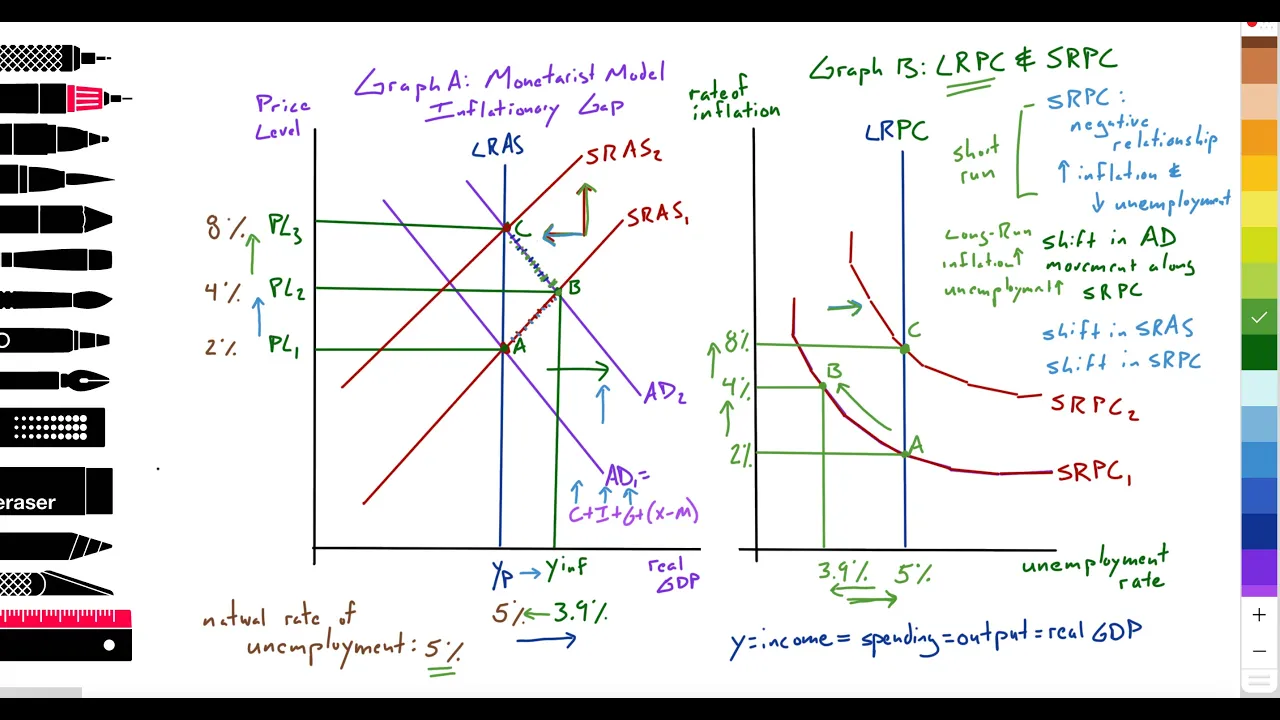
The net of it is, I think we are in for a period at some point in the next decade where real interest rates in the United States, inflation surges in the United States, across much of the world and real interest rates are drastically negative for a period of several years. So you go through a period of time where inflation is on a sustained basis in the United States, 10 to 15% for several years at a time, and ultimately the real value of this debt that is ultimately the problem is eroded in commodity terms and energy terms. And we wake up at the end of this period of time, debt to GDP in the United States and other western social democracies is at much more manageable levels from which central bank can raise rates without blowing up the system. And basically, you have what amounts to a debt jubilee on a real basis. The government gets a debt jubilee by virtue of high rates of inflation and yield curve control for a span of several years.
Except that debt is a claim on future energy. But when we issue money today, the money is spent on real infrastructure and real things with energy. That can't be inflated away. So to me, the real economy has to shrink relative to today based in the scenario that you stated.
The financialized economy, yes. Not so much... Basically the GDP of the energy and the infrastructure and some of the trades will... A good way I think to think about it, is right now in the United States, this is not for political reasons, but we have the blue states and red states and we've all seen the map. And if you look at the map, blue states, red states, we've seen these articles that have highlighted that essentially the blue states subsidize the red states, right? The blue states are your surplus states, and the red states run deficits within the United States Union. And so the blue states, which tend to be much more highly financialized than the red states, subsidize the red states.
What this world would look like is effectively reversing of that, where your red states are producing oil and food and goods and the prices of those things relative to the things that the blue states tend to produce more of, bonds, financial assets, paper assets, movies.
Movies, spas.
Exactly. So you end up with the reversal where all of a sudden the red states will be subsidizing the blue states as a result of that or after that.
But what about... I can see that, but it depends what global and US oil production are. And it also depends bigly on the complexity risk between here and there.
Absolutely.
Because there are so many different supply chains and contracts and little spark plugs that are made somewhere. And so, what do you think the likely impact on global supply chains, is there going to be a recognition that we need to shorten supply chains, especially for key goods, and is that some advice that you would give to someone thinking about this stuff?
Yes, it is advice I would give them. I think there has been some recognition of that among policymakers. I think you raise a great point too, as it ties back to the prior point of, "Can US and western policy makers constrain gold in that world?" And if the bottleneck is energy as we think it will be relative to dollars, treasuries, paper, financial assets, that ties back to why I think it might be so important about the BRICS in particular, a session of these energy producers to the BRICS or the entry into the BRICS is, gold you can separate the western interests especially can separate from the real economy. Oil, they cannot. And we saw that with Russia. What'd we do? We sanctioned everything, everybody and their mother in Russia, everything and their mother in Russia except oil, we didn't touch oil. We've tried to cap it, but even then the oil has kept flowing. And setting aside grades and et cetera, oil's fungible. So, if oil's the bottleneck and the BRICS understand that the situation in peak cheap energy necessitates a new reserve asset, then whatever the sort of gold, the oil ratio if you will, if they say, "Listen, we value gold at a 100 barrels of an oil per ounce, not the 30 barrels that they do in London and New York.", the fungibility of oil will make the global market go to a 100 barrels of an ounce. And it ties back to your point on supply chains, which is, if they decide that, which they can by virtue of their share of oil production, by virtue of their share of population, by virtue of their share of real production of basically everything else, then the Americans and the English can say, "Well, no, no, no, that's not the right price." And they can say, "Fine, then you don't get the spark plug. You don't get the complex supply chains. Call us when you're serious and you're ready to pay a 100 barrels an ounce." So you can see, you control oil, you can control the value of the reserve asset and by extension you can control the dollar, the value of the international trade, value of the dollar supply chain. So yes, all of it depends on the complexity, but you can see how these things can be used in a way that, again, because people don't think about the primacy of energy of oil relative to the financial assets, they don't see this yet by and large. Some, it's a small minority that sees it, but I think a lot more people are going to see it when it hits them over the head in coming years.
Yeah, I happen to agree. That's what I've called this podcast, The Great Simplification, because we've complexified by adding energy and if we have suddenly the same amount or less energy than before, we almost by definition have to simplify the way we solve problems and the way our society is structured. So let me ask you this and then I'll get to some closing personal questions. So you, your organization, the people that follow you, the people that invest with you are focused on the financial markets. But what advice might you give to a leader in either local or state or federal government or a future leader who is persuaded by the logic of what's coming our way, what sort of policy or macro advice outside of the financial markets might you suggest that wouldn't get them fired?
That's the tricky part is- I know... the challenge in this scenario, and I'm not advocating for this, I'm simply making an objective observation, is that in scenarios like this where you are effectively in a wartime emergency type situation, authoritarian setups have an easier time doing things than nations that are on a two-year election cycle and much more heterogeneous in terms of the political.
Well, put a finer point on it, Luke. Cheap oil supported liberal democracies.
Yeah. It absolutely did. And so, to answer the question, not to dodge the question, I would say you are going to need to run. We're now getting to a point where you have to make a longterm strategic decision, which is implement industrial policy to build resilience, to build anti-fragility, to build re-localizing supply chains. And the cost of that is going to be the real value of your currency relative to commodities and it's going to be the real value of your bonds. The challenge is that politically, particularly here in the United States and to a lesser extent in the UK, the political power has resided with the debt merchants, the exporters of debt. Who has won in the last 40 to 50 years in the system? It's been the exporters of debt, which is Washington and Wall Street. And they still have a lot of power, they're not going to want to hear this.
Well, and yeah. See, that's the problem is as we get closer to this biophysical inflection point that you and I are discussing, it's going to become less able to have this conversation, and no one's going to want to do these things until it happens. And it's going to happen suddenly. That's part of the reason I'm doing this work is so we get more humans thinking two or three steps ahead at kind of the inevitability of the money energy nexus and start planning for the things that you're mentioning because I don't think we're going to get a lot of warning. It may be five or seven years off, but we're not going to get a whole lot of warning.
No, and you can already see, the crazy thing is when central banks stop buying your debt, that's a warning. When they buy gold, that's a warning. When China stops, when they start buying up supplies of this stuff. So, by way of framing of how far behind our leaders are in this way of thinking, there's a great book by Helen Thompson called Disorder and it's very focused on energy, energy policy, et cetera. At any rate, I'm about halfway through but very early on in the book, she notes that in '03 when the United States said, "And now we're going to invade Iraq because they have WMD and they supported Al-Qaeda," despite very we'll say minimal evidence to support that. Chinese leaders, she said, "Took that as a sign that there was something wrong with global oil supplies," because the American leadership had historically been sane, sober, et cetera.
And so, their read on this seemingly insane move, this completely illogical move was there's a problem with oil and oil supplies, and what do we do to start fixing? They termed it their Malacca problem. Their Malacca problem was 5 million barrels a day of oil plus goes through the straits of Malacca, which can be shut down very easily by the US Navy. And so, they got to work on it. But this is 2003 they were thinking about their Malacca problem as a sign. So, a 20 year headstart and our leaders still aren't quite there with the exception of some small groups.
Oh, we're drawing down the strategic petroleum reserve to keep gas prices a little bit lower.
Yeah, to support, basically, to support the bond market, right? Because when oil prices went up, what happened in financial markets was our oil importing creditor friends, China, well is China friends? China, Japan went into current account deficit positions. What that means is basically they were burning down cash. Well, what do they sell to raise cash when they're burning down cash because energy has gotten so expensive? They sell treasury bonds that they've stored up.
You could see last year it was adding to the disorder in the Treasury bond market, and so it's very poorly understood that this SPR rundown, the US faced two choices last year.
When oil went up a bunch, great. Let's take the strategic approach and use the price incentive to drive consumption savings, to drive investment in production. Or let's sell the SPR down to get oil down and just stuff all those problems that are real problems back under the rug for a second, because the Treasury market's getting upset. And of course the US leadership being US leadership chose the Treasury market and the short-term expedient rather than the longer term, hey, oil's 120? Awesome. That will get people to start converting into better fuel efficiency and to EVs and to increasing production, and all these good things strategically.
What a mess. Let me ask you two more questions on this and then I'll move to my closing questions.
So, we have a wealthy country but we have a lot of inequality. There are a lot of people, many double-digit percentages of our citizens have nothing or close to nothing. So, in the environment that you're predicting with 10 to 15% inflation, et cetera, doesn't that crush people with 30 grand in their savings and they just have it in banks, and all the things that they're paying for are going up substantially in price? In the scenario that you're projecting as likely, doesn't this really, really hurt the middle and lower class in the US?
The short answer is yes. The longer answer is that it depends on what they're doing, right? If they are lower and middle class because they've been part of the blue collar and trades workers and laborers in this country that have been on the wrong side of the financialization of the economy over the last 50 years, you're starting to see little signs of this. When you see UPS drivers getting 170,000. When you see around me, plumbers making 300 to 350,000 in Cleveland, Ohio, when a nice house is 250, 300,000, maybe 350,000. There is a rebalancing that will take place. It will require in a lot of cases, flexibility. But to the extent you are a laborer, skilled trades, et cetera, it's very possible in that 15% inflation, depending on your area, you may be seeing 10, 15, 20% wage inflation at a time when your 30-year mortgage is three.
Right.
So, there's puts and takes. But yeah, if you don't have or are unwilling to flex to that, be part of that area that is benefiting already and I think we'll benefit greatly as we rebuild and restructure and reshore, unfortunately sadly, I think it is a very difficult environment possibly for them.
Speaking about the environment, what do you think about the environment? Climate change, biodiversity loss, plastics, some of the other externalities that are not included in the prices of the goods and services that we pay for?
It's a tragedy of the commons problem, right? Ultimately, in terms of because nobody pays for the externalities, here we are. So again, it comes down to what's the right thing to do is to better reflect what the real price is. That ultimately is not just a political question, because who decides what the right price is? Because now you make an assumption about a future discount rate based on the deterioration in the environment, et cetera, et cetera. What's the price of fresh water? Well, to me in Ohio, it's really cheap. I lived next to Lake Erie.
To a guy in Arizona, it should be very expensive. So, it's not just a political question but it's an unpopular one, because in the end you have to pay more. The answer is pay more to account for those tragedy of the commons. We all like living in clean areas and we pay taxes for it.
And whatever your political or personal value is on that issue, peak cheap oil is going to make society's ability to pay more tougher.
I say that all the time in my research. Oil and energy, energy broadly, oil specifically, is nature's discount rate. So, peak cheap oil is just going to increase the discount rate on every other asset. Basically, every asset that everybody owns, their house, their car, Amazon, trucking companies, whatever, with the exception of two assets, they all have implied in their value a full and growing supply of cheap oil. You take away the cheap oil, what's the value of a house in a far out exurb in a place like California where public transportation stinks? You take oil to 15 bucks a gallon, the value of that house collapses if that person needs to get into LA from whatever, 60 miles away, 50 miles away. Commercial real estate falls, et cetera. Only physical gold, self-custodied or custodied outside of the banking system and self-custodied Bitcoin, both of which have energy components within them do not have that counterparty risk, that energy counterparty risk because they have energy embedded in them.
We could probably go on for hours. I think I said it earlier, but I don't talk to people like you that often. I'm talking to scientists and anthropologists and activists and philanthropists. So, I kind of miss talking to Wall Street people, but I don't really miss talking to Wall Street people. But let me ask you some closing questions that I ask all my guests. You have been working as a macro observer of the United States and the global economies as a career choice. So, given everything you just told me, what is your personal advice to the viewers of this program at this time of global upheaval and anxiety and this currency reform and potential inflation and other things on the horizon?
I would say invest in maintaining and building personal relationships, personal health, anti-fragility in your life, in your finances. Stay under-levered.
Don't go out and borrow a bunch of money because... I'm not saying not to borrow any, but make it productive and don't over lever because the volatility in financial markets, in economies around what we describe here, around some of these potential processes could be very great. That's what I've done in my own life. Those are the things that really matter.
But you earlier said there's going to be a debt jubilee, so wouldn't the game theoretical move be to actually lever since it's going to be written off in the future? Somewhat facetious, but not totally.
Well, it's a great facetious question because it highlights a very important point, which is if... There's a chart actually from my friend, Dan Oliver, Myrmikan Capital, and it shows one of the great... Let's take it to the extreme, right? Extremes inform the means. One of the great hyperinflations of all time was in Weimar, Germany from 1918 to 1923, 1920 to '23. We've all seen some version of that chart, right? So basically, gold goes from 10 Reichsmarks to a trillion Reichsmark over five years. Everyone's looked at that chart and said, "Yeah. Wow, okay, if there's going to be a debt jubilee, if there's going to be high rates of inflation, the optimal strategy is borrow a bunch of money, buy that asset on leverage and then just let the inflation go."
Personally, I had thought that myself, too. I'd only ever seen that version of the chart. Then I saw this chart from my friend, Dan Oliver, and it shows the month-over-month price change in the price of gold as the Reichsmark was going from 10 to a trillion in gold terms, basically going to zero in gold terms. What it shows is that if you were levered, levered long gold- You were taken out.
In the greatest hyperinflation in history, you lost all of your money four or five separate times in five years. And that's why I say the vault, I don't think are people understand... They've started to see glimpses of it on Wall Street, right? When we've seen the two-year Treasury note trade like Dogecoin back in March. When we saw the repo rates spike in September '19 from two to 10 overnight, and the Fed come in immediately and do not QE. We've seen little glimpses of the type of volatility that this could spur, and that's in assets that we've never seen or volatility. As you know, as a former bond guy, the Treasury market doesn't trade like Dogecoin.
The overnight repo rate that underpins everything else doesn't go from two to 10 in a day.
No.
But it has started to, and that's why I think it's so critical to be under-levered, prudently levered against either productive assets or a place you can live and grow with your family.
It does bogle the mind to see how many monetary claims on our physical reality, how many tens and hundreds of trillions of digits are out there relative to the amount of oil and forests and copper and gold, et cetera. It really is something.
So, second part to the previous question, what about young people? What advice do you have to young listeners, who are becoming aware? Even if they might not understand some of the archaic and esoteric terminology you're using on finance and treasuries, et cetera, they can kind of squint and see the picture that you're painting. What sort of advice would you give?
It's going to sound cheesy, but fall in love, start a family, go to an art museum, find what you're passionate about. Because, yes, on one level it's very scary. On another level, that opens up lots of opportunities for doing and talking about things or engaging in things that you can do as a career, as a life's purpose, that otherwise wouldn't be available to you.
Just me talking to you, hopefully hundreds of thousands of people or millions of people will listen to this around the world, and that type of reach was simply unavailable even 10 years ago, five years ago, and yet here we are. Then I think it's just having mental flexibility of... It's like Bruce Lee said, "Be like water." I think 95% plus, I say this, I have three boys and I say this all the time, that 95% of life is just showing up, trying and then being persistent when it inevitably goes pear-shaped when you try it the first and second and third time. So, show up, be persistent, try, be persistent, fall in love, start a family, but whatever it is that really moves you. Because it's easy to get worked up about the finances and the possible environmental implications of the peak cheap energy. All these things we're talking about, the geopolitics. But all the best things that have happened, I'm 40, late forties, everything, all the best things that have happened for me in my life are tied to having spent time with my family. Invested time with my children, pursuing a passion. For me, it's macroeconomics and talking with clients and writing reports about it, whatever. Pursue those things that make you happy and that are the really good things in life, whatever those happen to be for you.
I have a feeling I might know how you're going to answer this, but what is one specific issue that you are most concerned about in the coming 10 years in our world?
To me, the thing that's scary, the most concerning thing to me, I don't want to say scared but most concerning thing is the intelligence and foresight, strategic foresight of Western leadership leading us into a, what I still think is a tail risk, really bad outcome. That, to me, and part of that is because over the past several years, I have been increasingly disappointed and surprised, quite frankly, at exactly how poor the decision-making has been. That is not just a reference to American leadership.
The Europeans in the last 18 months, to me, stunningly, stunningly bad leadership. Like galactically, stunningly bad leadership. So, those are the things that concern me.
Yeah, we don't have a governance model nationally or internationally to face what's coming. That is what scares me. Everything emanates from that. Yes, peak cheap energy is the cause, but if we don't have better governance, we're in for a tough road. I agree with you. So, if you could wave a magic wand and there was no personal recourse to your decision, what is one thing you would do to improve the future?
One thing. I would actually, if I could just do one thing, I would give, and this is, again this is going to sound cheesy, but I actually really, there's I think a kernel of truth here that I think is really important. I would give every child a mom like the mother my boys have had. I think you'd have a much more peaceful world.
I think you would have people that are armed with the ability to have a governance model to talk about the things we talked about. I just think you'd be in a much better place. So, that's what I would do. My boys have been very lucky, I've been very lucky, but that's what I would do. I think that would go a long way in fixing a lot of the world's problems.
I totally agree with you. The irony is, is the care and the home things that the mother of your three boys have done are not included in GDP.
It's funny, there's a meme that I've seen before where, especially in today's day and age, as the boys were growing up there was a little bit of a, well, I stay at home and you sort of said that quietly. I remember a meme totalling up the GDP value of what she did. I said to her, "I can't afford you. I'm going to need to downsize because I'm not making enough money to pay for all of this as it is accounted for in GDP in theory." So, you're exactly right. And that doesn't even include any of the tragedy of the commons problems that a great mother fixes, right? In the long run.
Well, and this is what's at stake is figuring this out. What is it that we really need for a productive and sustainable society going forward? I know you're a very busy man.
Thank you for taking the time today to talk with me, and to be continued.
Absolutely. I hope so. I really enjoy our conversations. I've been a long time admirer of you and your work, and so it was a real thrill to be able to do this. So, thanks for having me on.
If you enjoyed or learned from this episode of The Great Simplification, please subscribe to us on your favorite podcast platform and visit TheGreatSimplification.com for more information on future releases.
Up Next
Japan's Economic Stagnation: Lessons from the Lost Decades
@EconomicsExplained
2.5M views•2019-08-22
Impact of Yuan in Indo-Russian Trade Amid Sanctions
@WION
261.9K views•2022-07-01
Behavioral Economics Explained: Rationality, Nudges, and Risk
@crashcourse
1.1M views•2016-03-12

The Age of Easy Money: Fed & Inflation | Full Documentary
@frontline
21.2M views•2023-03-15
Related Study Plans & Knowledge Roadmaps
Structured learning paths in Economics