









![God Isn't Real! Unless... Come debate! [7/08/2026]](https://i.ytimg.com/vi/3zDwNPNV90I/maxresdefault.jpg)




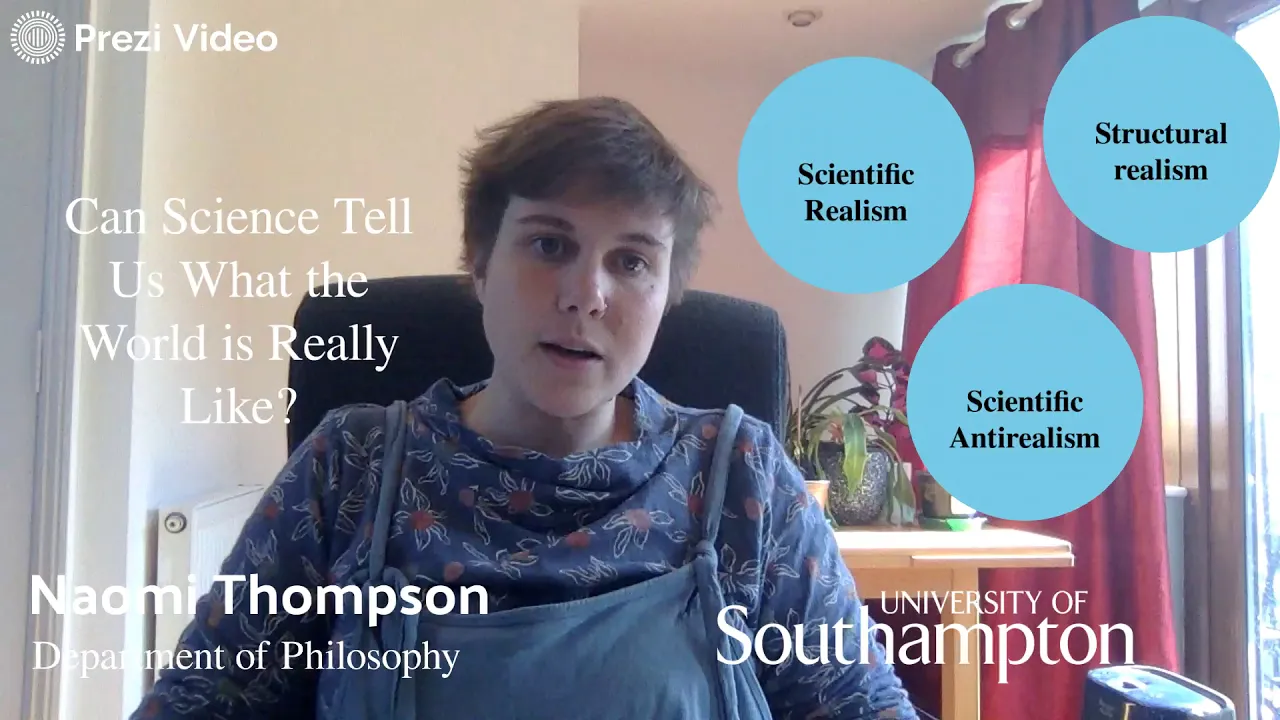




Scientific realism holds that our best scientific theories are approximately true descriptions of an objective, mind-independent reality, while anti-realism (particularly constructive empiricism) argues that science only needs to be empirically adequate (correctly describe observable phenomena) without committing to the truth of unobservable theoretical entities; key arguments include the No Miracles Argument (science's success requires theories to be approximately true), the Pessimistic Meta-Induction (historical theories that were successful are often false, so current theories likely are too), and the Unconceived Alternatives Argument (past theories succeeded because better alternatives were unconceived, suggesting current theories may also be replaced).
Scientific Realism and Antirealism Explained | Philosophy of Science
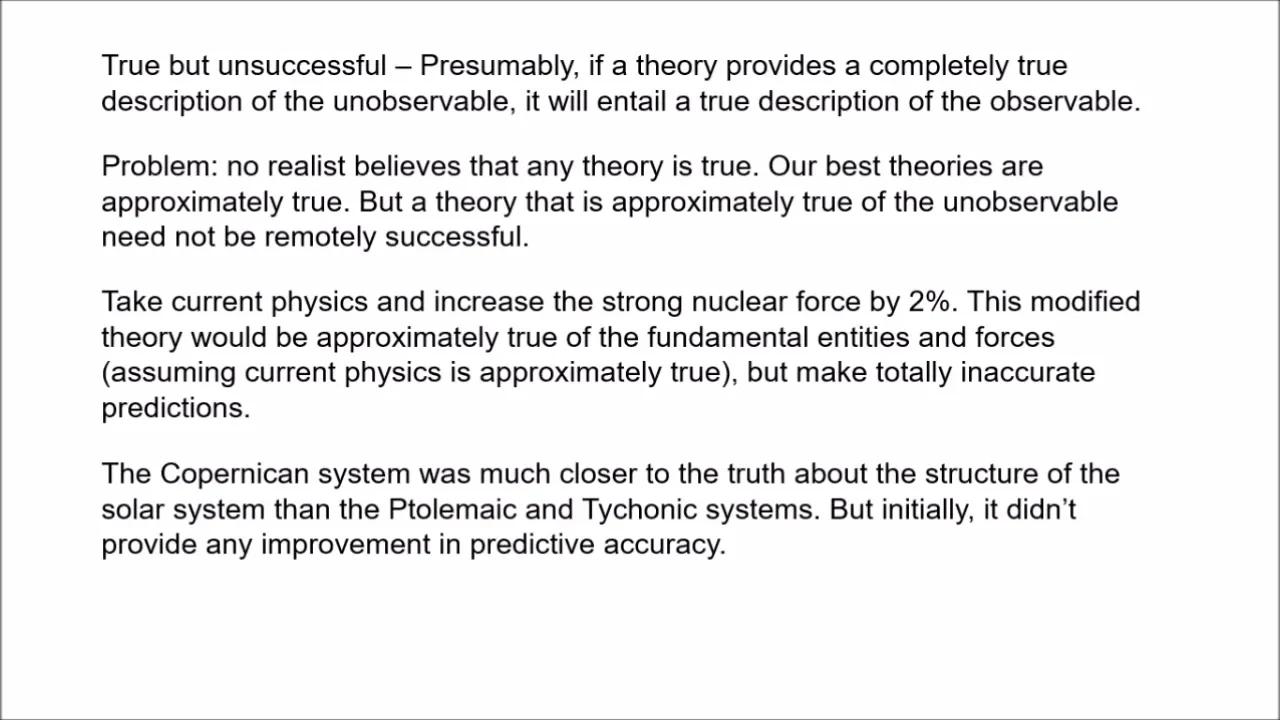
Added:[Music] hey everyone welcome back to the majesty of reason i'm joe schmid and today i'm here with kane baker to discuss scientific realism um lots of you hopefully you should know his channel k b he's got amazing videos on philosophy of science metaphysics all sorts of different things so definitely check that out you can see the link in the description and uh he's also writing a dissertation on perspectivism and philosophy of science so um yeah i mean i don't know much else to say by way of introduction but i guess i'll turn it over to you if you want to plug anything or say anything uh i don't know i'm not really that good at introductions so i'm not really sure what to say other than uh yeah you know if you're interested in philosophy you should check out the channel because yeah there's there's a lot of different topics on there and i've been doing it for quite some time so um you know quite a lot of quite a lot of content there may be of interest um or maybe not it's it's up to you do what you want uh but i don't know yeah that's that's me and i think your introduction was fine so i i don't really need to say anything so i'm i'm just going to stop talking now and back over all right sweet so i guess we could probably start off by defining scientific realism and its different components like the metaphysical and epistemic and semantic components of it so um can you walk us through sort of these different you know potential components of it and yeah um yeah so so scientific realism um the um i mean the the simple way to put it you know if you're just expressing it colloquially would be to say well the scientific realist holds that our best theories about the world that we're justified in believing that our best series are true and so to break that down a little bit more precisely different people have different conceptions of what exactly scientific realism is which i imagine if anybody's ever explored philosophy they'll know that everybody has different definitions of everything but the definition that i quite like is um so scientific realism involves first of all a metaphysical claim which is a claim that there is a mind-independent external world you know there's there's some something out there beyond our minds so you know we're ruling out things like idealism um then there's a semantic claim which is that our theories should be taken literally they should be taken as literal descriptions so that when a scientific theory talks about things like electrons and mitochondria and black holes um you should the the right interpretation of that is that it is literally just trying to describe things in the world and so this would contrast with um i mean these kinds of views aren't really very popular anymore but um there it was once the case that um there were a lot of philosophers who held that when theories make claims about things beyond what we can observe um those claims should be taken as um in some sense maybe non non-literal so um maybe instead of when scientists talk about electrons right really uh they're just talking about you know tracks in cloud chambers and things like that so claims about these unobservable things um should be reinterpreted so that they're really claims about observables as i say those kinds of views aren't really very popular anymore um but you know it's just worth saying right so there's the semantic claim theories are literal descriptions and then um there's the epistemological claim which is a claim about justification so um the realists will say that in some cases uh obviously not in all cases but in at least some cases when we look at our our best theories theories that are uh you know very very well confirmed theories that have um you know a lot of explanatory power theories in fields of science that are very mature so um you know think about things like say the standard model of particle physics um we're justified in believing that those theories are true so basically there's a minor dependent world out there our theories try to describe it and some of them get it right i think that would be the the way to put scientific realism yeah that's good i think two things that we might want to dwell on briefly here might be the notion of approximate truth and also the the distinction between unobservables and observables so uh approximate truth well you know scientific realists they recognize that you know all our current theories even the ones in mature you know our mature sciences the maturity reason why not the ones that have gained a kind of widespread acceptance and we have the methodology down they're not going to be perfectly accurate you know not going to be entirely uh you know down to every minute detail uh capturing reality and so what they really want to say pretty much is is that these theories are just approximately true and uh this has gotten a lot of pushback from a lot of anti-realists because they're like well what the hell do you guys mean by approximate truth right i mean surely either the cup's on the table or it's not on the table right there's no approximate fact of the matter there so um can you take us through like i guess why this i don't know maybe just uh illuminate approximate truth for us and why it matters at this stage um well you know i i don't know if i if i necessarily agree completely with your characterization uh actually um so i think that uh yeah there are there are problems with the notion of approximate truth um i don't know if that's the sort of usual line that anteriorists will take and the reason is because it looks like we well there are very persuasive reasons to think that we're probably going to have to have some sort of notion of approximate truth whatever our view is on the realism anti-realism debate and so just to take your example of the uh the cup on the table right so you said you know that look the cup's there or it's not there right and like that's that's it that's either true or false um but you know we might sort of look at that and say well okay but hang on a minute um you know when we talk about the cup on the table um like what exactly are we referring to when we use the term cup um i mean there are lots of problems in metaphysics about like the constitution of objects for instance i can i'm just looking at a cup right now uh that's why i was looking away i have a cup in front of me there and um but you know uh so um yeah what was i saying so okay i i have this cup in front of me and um the problem is is that it's not clear that the term cup picks out say a specific object uh because obviously the boundaries between different things are vague right i mean if you zoom in far enough on that cup um then eventually you're going to find that it's difficult to draw an exact line around what the boundaries of the cup are and so you might think that even with a claim like the cup is on the table we are not expressing something that is like completely perfectly true um maybe there's still some need for approximate truth there maybe a better example actually would just be something like um uh if i say oh i i don't know um that i'm five foot six right um so okay that's that's true but of course i'm not exactly five foot six because you know we know that height changes throughout the day you know if i lie down i'm going to be a little bit taller because you know there won't be the gravity compressing my spine and you know obviously if you like zoom in far enough again does the hair count right where exactly we're drawing the boundaries so there's all of those problems of making it precise um it looks like we want to say that that's true but we're probably going to have to say that it's in some sense approximately true um so i think that you know a realist is going to say well yeah our theories don't get it exactly right but actually you know we never get it exactly right i mean none of our representations of anything um at least none of our representations of anything in the empirical world are complete and perfectly accurate um i think so yeah i think that's probably the way to put it right and i think that's probably something that both realists and anti-realists would agree on right we never have access to complete and perfectly accurate representations of anything in the world um so there are problems with approximate truth but uh i feel like those are probably problems that we are that both sides of this debate are going to have to confront um does that make sense yeah no that makes sense and that's good um i know there's yeah i i enjoyed watching your video and even the the work of the person you were relying heavily on um it's interesting because i was talking with one of my philosopher friends uh josh rasmussen about um i forget what's what's this like the referential realism guy where he's talking about you know the vague boundaries and and whatnot oh is this um is this paul teller yes exactly exactly oh yeah right yeah yeah yeah okay i actually um i i'd gotten confused about what you were referring to there so yeah teller i should say teller's position is a relatively new one um so you know that was why it like um yeah that's why i say that i don't see that as necessarily a a point that a lot of anti-realists would use yeah um but no um sorry yeah no no i was just gonna say like yeah i know i um after your video on that and i i've looked into some of his work and i was just talking about how this might apply in different domains in like uh philosophy of mind and other sorts of things so i just wanted to make that connection and how yeah you're right that it's probably going to be this notion of approximate truth and approximation and these points about you know referential realism and whatnot these are probably going to be like you said um applying across uh the the different boundaries between the the realists and the anti-realists so this the approximately i mean that's um that is teller's own position right so um you know teller has kind of criticized the the realist notion of truth um but he's also criticizing the anterior list notion of truth because anteriorists traditionally um want to say okay well we we have access to the observable world and we can make claims about observable things and so there are truths about observables that we can express like for instance the cup is on the table you know or i'm five foot six um and until it's like well actually right no even in the case of observables um you know there are a host of problems when it comes to sort of understanding what it is for a statement to be true um but then you know that's going to apply to both realists and anti-realists yeah i guess um one final thing to dwell on here for talking about realism and defining it is there are different strands of realism that i want my audience to be aware of and i guess two quote-unquote major strands might be entity realism and structural realism of course within structural realism you got like ontological or on-text structural realism and epistemic structural realism we don't need to go that far but we might just want to touch on entity realism and structural realism uh because these guys are gonna have different conceptions of and potentially different responses to uh well not only the arguments against scientific realism but in favor of scientists scientific realism as well because you know some some structural realists say might uh respond to say the pessimistic meta-induction which we'll cover later on they might say well hey actually although science is um the history of science is a history it's a graveyard of failed theories there's a significant amount of overlap uh concerning the the structural relations and the abstract mathematical structural relations uh across such um theories and so the pessimistic meta-induction would be blocked my point that is my point in saying that is just that um this distinction is pretty important for evaluating the arguments for and against realism later on and so i think that our audience should probably uh be familiar with that so can you just uh maybe define this difference uh for us here um well you know i think actually you kind of expressed structural realism quite well um because yeah so the structural realist is going to say that um well i guess i should just sort of say right the point of this is that um just in general right what a lot of realists have done is they've kind of moved towards uh forms of selective skepticism so um realists uh in the face of various arguments from ancient realists have said well okay maybe we shouldn't say that our best theories are true just across the board um but what we can do is like specify particular aspects of those theories as being true um and a structural realist will say um that we can believe the structural content and i guess the best way to just intuitively think about structural content is to think of it as the mathematics right like the mathematical laws and relations of the theory that's not quite right that doesn't but that kind of gives you an intuitive sense of what they what they're getting at like you can um look at for instance mathematical laws um uh as that they're preserved across theories um so you know something like um you know newton's laws for example um even though the underlying ontology of newtonian mechanics is now known to be false um it's being displaced by general relativity you can recover at least an approximation to newton's laws in general relativity or if you just take something like i don't know snell's law um about the behavior of light right that law is preserved across a whole bunch of different theories of the nature of light so originally light was thought of as being streams of particles corpuscles then it was thought of as uh being a wave and a luminiferous ether um today we think of it as well you know photons which have you know bizarre quantum behavior wave particle duality but across all of these different theories snell's law is preserved um so that's the structural reality right they're going to say we believe in the structural content the mathematical content and the entity realist says um very different view the ncc realist because the entity realists will be actually very very skeptical of the truth of laws and structural content and stuff like that what the entity really says is well we can believe in the things that are postulated by the theories the entities so we can believe in electrons and black holes and mitochondria um well i mean exactly which entities they're willing to believe in will depend on what exact what arguments they use but um you know so electrons for example we can believe in them and the reason why we can believe in electrons is because we manipulate electrons to build things like electron microscopes you know you can literally like shoot streams ian hacking right ian hacking if you can spray them then they're real right that's a great quote yeah i i like that one and that kind of sums it up um so um and there are different there are other kinds of selective skepticism as well um but you know hopefully that gives a bit of a sense of the of the options that are available to a realist so you know you don't just have to say okay well our best theories are true um you know you might be a bit more selective about it um all right sweet okay so that's realism and now we can move on to a kind of anti-realism and perhaps we could just focus on well maybe perhaps your view here but i guess what are some of the main alternatives to realism on offer and the you know the broad label is of course anti-realist but you know you can get into more specific ones like constructive empiricism and whatnot um so can you just uh give us maybe a little bit just a quick lay of the land and in particular your view yeah well okay so i i when i was talking about realism i i um pointed out these sort of three dimensions right the metaphysical semantic and epistemological um so okay one one alternative to realism is to deny the semantic claim and to say that actually theories shouldn't be interpreted literally um as i say this isn't very popular these days but it it has been popular in the past um so for people who hold this view um there's just not even a question of whether or not theories truly describe the observable exactly unobservable because they're not even trying to do that um more popular forms of anti-realism these days so um i think by far the most popular form of anti-realism in philosophy of science uh today is is going to deny the epistemological claim um so the claim will be yeah there is an external world and you know there's a fact about like the way the world is mind independently i think it's trying to describe it but it's just there are good reasons to be skeptical that theories actually successfully do that um so uh constructive empiricism um is i'm probably the most influential form of anti-realism and that literally just says well the aim of science is to give us theories that are empirically adequate where to say that theory is empirically adequate is to say that it correctly describes the observable phenomena so you know okay it correctly accommodates the facts about cars and trees and mountains and oceans but uh electrons uh mitochondria black holes right we should be skeptical of all of that anything unobservable um then uh there's so so then another way to challenge realism would be to deny the metaphysical claim um and so this kind of view would be a kind of a sort of perhaps constructivist type view where we might say that um you know theories our best theories are true right and they do correctly describe the world and we're justified in believing that but um the facts are in some sense constructed by us um like we you know we make the facts so it's it's not the case that these theories are describing a mind-independent world um so um i guess an intuitive way to think about this kind of view would be um let's take for instance color right color classification um when i say that grass is green right you might say okay that's true but there's a pretty good argument right that greenness is not independent of me that i'm not describing a fact about the mind independent world partly because my impression of the grass is green is due to the interaction with my visual system obviously a different organism would see it completely differently and partly because the way in which we classify colour is like a highly uh uh kind of dependent well it's it's it's different in different societies right there are some societies that just don't have um the classification of things as green um so that is grass is green is true but it's perhaps kind of constructed by us it's it's or at least it involves our input um we're not just mirroring the world um so yeah uh i think those are the uh kind of main the main ways of challenging realism um so that's that yeah no that's good and so now we've kind of just for the audience we we've defined realism we looked at some of the aspects of that the metaphysical semantic and the epidemic claims we looked at approximate truth and also the different kinds of realism like entity and structural realism and then we just looked at different forms of anti-realism so now we're moving on to some of the motivations for at least we're going to probably hopefully just look at the motivations for realism and assessing some of those or at least some of the primary ones and then also going on to looking at some of the motivations or at least the primary ones for uh constructive empiricism so now we're just going to turn hopefully to well probably the most influential argument for scientific realism i think i'm justified in saying that but the no miracles argument so roughly the no miracles argument is just going to say like listen science is enormously successful right in terms of its predictions novel predictions that theories weren't you know constructed so as to fit but like new surprising novel predictions so predictive accuracy that kind of uh success technological success right so science has propelled us forward in the modern world just in an unparalleled manner and also seemingly explanatory success right so science seems to uncover um and remove mystery about why things occur why the rain falls why you know all sorts of different things happen so this there are whole hosts of ways that science is successful and so we have to ask well what best explains that right why why is science so successful now putnam famously said as you know and probably a lot of your listeners know he said realism scientific realism is the only philosophy of science that doesn't make the success of science a miracle it would just seem to be this kind of cosmic miracle cosmic coincidence if theories that are indeed false didn't um it would seem a miracle if theories that are false were so successful we're so successful at removing mystery and explaining these things and facilitating technological developments and predict you know these novel predictions um and so it would seem as though we should we should accept that philosophy of science which provides the best explanation for the success and scientific realism provides the best explanation for the success and so we should accept uh scientific realism uh so i guess that's the broad outlines and you know you can do a bayesian form as well you can say oh well um the probability that we would we would see such success conditional upon the truth of our mature scientific theories is much greater than the probability that we would see such success conditional on the falsehood of such theories and therefore we have evidence for bayesian confirmation theory blah blah blah for uh scientific realism vis-a-vis scientific anti-realism so that's the general general structure of the no miracles argument and so i guess i'll turn it over to you to you know what are some different ways well firstly if you want to comment on that exposition and secondly what are some ways that anti-realists respond to the no miracles argument yeah i mean so just one point um that might be kind of worth noting is that um you know i think that the realist would probably add okay so i mean first of all when we think about how you're going to justify any kind of philosophical theory um philosophers tend to use imprints to the best explanation right i mean so insofar as they're claiming that realism is the best explanation for the success of science um you know that's sort of an application of um a more general epistemological framework and it's also something that you find applied in the sciences as well so you know why do scientists adopt say general relativity well because general relativity is the best explanation for a whole bunch of you know phenomena right and so a lot of realists will see themselves as just um extending to philosophy of science um a kind of a form of inference that is um already like widely accepted widely practiced um uh yeah so um well like you say that's kind of that's that's the that's the central argument that's the big one um it's kind of hard to because there are lots of different ways that anti-realists have pushed back against this i think that um the most so to me the most compelling response or at least like intuitively compelling response um is is just to find uh well that we can find plenty of examples of theories that were remarkably successful but that turned out to be false um and there are sort of two things that we can draw on to do this one option is to look at the history of science so newtonian mechanics for instance was back in the 1800s i mean the most incredibly powerful theory that anybody had ever developed right like in terms of its predictive accuracy in terms of its explanatory scope um it was incr it was a theory of incredible power i mean it still is today because we still use newtonian mechanics today to send probes to pluto so you know um this is a really really successful theory but oh look it turns out that it's claims about the underlying uh structure of space and time and its claims about how that relates to you know mass and so on and gravity it's just wrong um it's now being displaced so you know an anti-release will say well okay you know it's it might be difficult to see how um you know you you can get such remarkable success right from a false theory but we know that that has happened um also when you look at contemporary science um there are falsehoods everywhere right science is littered with um idealizations um an idealization is basically just a falsehood it's it's something that we know is not true so for instance if you are i don't know giving a model or in biology of like the selective processes in the population you might model the population as if it had an infinite number uh of members or if you're uh modeling a star or something you can't you might model it as if it were composed of an ideal gas um and we do all of these things because well i mean there's many many reasons uh one primary reason is just that we have to do that in order to simplify the equations but like clearly we can get remarkable success from models that we know contain pulses um so this i think i think that that point is um quite yeah quite quite uh persuasive to me um i'd also say that we can challenge i think the the kind of value of the realist explanation insofar as um but we might wonder well okay what exactly is the connection supposed to be between truth and success because as we've pointed out right and as all parties to the debate agree um realists do not claim that their theories are perfectly true right they claim only approximate truth um and the trouble with that is that it looks like there are examples where relatively minor changes in the on in the sort of underlying ontology or structure structural claims of a theory lead to completely different predictions so i'm thinking of things like um you know you you see this in the so-called fine-tuning arguments and this is potentially controversial but you know there are a lot of people who think well if you were to take um i i don't know the the strong nuclear force and then make it like two percent stronger um the universe just wouldn't exist right like it or at least it would have collapsed back in on itself a couple of seconds after the big bang okay so so let's take our contemporary theory our contemporary like cosmological physical theory right and just adjust its claim about the strong nuclear force by two percent right well now we have a theory which in terms of its uh kind of underlying ontology and underlying laws is really really similar to our to the one we we accept but it makes completely different predictions so you know i i think that it's it's easy to see what the connection would be between perfect truth and empirical success it's a bit less obvious what the connection is between approximate truth and empirical success does that make sense yeah yeah so um i mean that well you know there's lots of other things that could be said here but i i think that's uh uh hopefully that's a point um you know that we can perhaps build from uh yeah there's the challenge i think i think the point about well i get i guess well there might be three different ways that you could go about um responding to it you could try to find success you pinpointed successful but false series you could also try to find true but unsuccessful ones and that's kind of what you're getting at at the end it's like or at least approximately true right because you can slightly tinker with uh by the realists own lights approximately true theories you can slightly tinker them to make them approximately true and yet they are drastically unsuccessful they make you know pathetically wrong predictions and so yeah successful but false theories true but unsuccessful theories might potentially pose challenges to this now something that you brought up that i found really interesting was idealization and simplification in science and i think an interesting point that um that can be made here is that it seems that these falsehoods are oftentimes actually essential to the success of some of the predictions it's like it's precisely because we idealize that we can make a lot of these really really good really accurate predictions um by contrast if we were not to idealize then things would get extremely unwieldy extremely difficult and we probably wouldn't even have the kinds of successful technological development and predictions and whatnot so it's almost like it's precisely because we have the falsehoods the idealizations and the simplifications that at least on many occasions you get the kind of success that we see so i'm wondering what you think about that kind of way to bolster what you're saying oh yeah yeah i mean um absolutely uh that's uh yeah um i don't know i think i think you put that um put that very well um you know there are uh kind of ways out for the realists i mean in response to any of these things so you know i i i don't want to sort of make it seem like you know this is somehow a kind of knock down argument because um you know there are no knock-down arguments in philosophy um but you know yeah no this is is a i think very very serious problem right like so um because what the realist is ultimately doing to put it in very simple terms is trying to make an inference from success to proof um and we can we can point to all of these cases in which um idealization as you say are essential in allowing us to actually make the predictions that we that we do um like it's it's not it's not even possible well certainly not possible in practice for us to remove all of the idealizations even in relatively simple cases like if you take say um models of a pendulum um the the the kind of simple pendulum is something that is a uh it assumes um so let's say you've got a bob on the end of a spring right well it's going to assume that the bob is a point mass it's going to assume that there's no friction no air resistance it's going to assume that the gravitational field is perfectly uniform um it's going to assume a whole bunch of other things which i can't think of off the top of my head but there's a long list of idealizing assumptions and we can get rid of some of them right like so um and this is kind of what a realist will look at they'll say well hey you know we can get rid of some of these idealizing assumptions and make increasingly accurate predictions but the problem is we we never get rid of of all of them um and the interesting thing is that if we did get rid of all of them like let's imagine that we had a model of a pendulum that removed all of the idealizing assumptions so it was perfectly but perfectly true right i have a pendulum here and i have a model of that pendulum that is perfectly accurate well now notice that my model of this pendulum because it's perfectly accurate to that pendulum it's not going to apply to any other pendulum so i have in a sense uh reduced like i've increased the accuracy but i've massively reduced the explanatory scope because now i have a model i have a perfect model of this particular pendulum um but what we really want is a model that applies to many many pendulums and so this is why so this is why idealizations kind of play an essential role um in the success of our theories because part of the success of our theories is um well as i think you mentioned earlier um you pointed out the uh explanatory success right the explanatory scope the fact that we can kind of unify a whole bunch of different things under a single scheme right that's a really uh important function that theories play for us and it seems like some idealizing and simplification is actually essential for them to do that yeah well uh you know as much as i'd love to dwell on the no miracles argument further um and you know maybe i'll put some links in the description for people to um look into it further because of course they're gonna be realist responses to that and you know anti-real further responses and whatnot and there's a lot of really interesting literature on this and like i said certain bayesian arguments uh from it but um just just before you i should say just so everybody's clear that i'm very firmly on the anterior side yeah but yeah i'm hearing um a biased view of this debate if you were to talk to somebody else they would probably have quite different things to say um no um so just so you know where i'm coming from um like yeah yeah yeah and i guess uh for the audience as well um i am a scientific realist so but i it's not my area of like primary research as my audience knows i mainly do stuff in philosophy of religion philosophy of time metaphysics so i have very tentative views in this matter and um but yeah i'm just trying to you know facilitate an unbiased presentation here as much as i can with you so so so let's um let's move on to we covered the no miracles argument maybe let's move on to one more argument for realism and uh it's the fact that we seem to have a bunch of different ways of corroborating let's say certain postulates of a theory whether it be the entities or um or other aspects of the theory like you might have a proton nmr machine that can give you a certain result and then you might have a microscope that gives you like exactly what you would expect if the thing existed and you might have some other kind of independent means of uh corroborating that the thing exists even though it's unobservable and it's something that anti-realists would like his at um so uh what do you can you i guess perhaps speak further to this argument from corroboration because i i i didn't give as robust of a presentation as i did with the no miracles argument so maybe speak further to what the realist is really getting at in this argument from corroboration independent corroboration in particular and also how anti-realists go about responding to it well um so this kind of argument comes up in lots of different contexts and i don't know if there is a single argument yeah right so um it's interesting this actually follows on quite nicely from what i was saying about idealization because um one sort of line right that realistic will take here is to say well okay yeah right like we we have um a bunch of models and they um include all sorts of idealizations but look um very often scientists will generate multiple models of the same system right so you know when we're again like if we're modeling a pendulum we can come up with all sorts of different models of that pendulum with different idealizations again you know modeling a star right you will sometimes model it as if it contained an ideal gas it'll sometimes model it as if um you know it has a constant density throughout the whole star sometimes you won't you know you use different idealizations in different contexts and so one way in which this kind of argument is applied is to say we can identify um assumptions that hold in all of those models that follow from all of those models so if you've got um i don't know let's say you've got like five different stellar models okay and they all contain different idealizations but all of those models tell us that the internal structure of the star um is a particular way like you know there's like a core and then a radiative zone and then a convective zone just to give a simple example right and so all of these models despite all their different idealizations point at the same result um so then the thought is that that result is robust over various models and so you've kind of uh in a sense discharged the idealizations specific to any one model so that gives you you know a way out of the idealization problem um another context in which you find this argument uh would be uh if we're so like anti-realists um will uh very often argue that you know we're not justified in um believing claims about things beyond what we observe and the realist will say well you know if you look at something if you take like a particular sample and you look at it through a microscope right you can find you know structures in a cell um and you can find those same structures whether you look at them through an optical microscope or whether you look at them through an electron microscope and again these instruments right uh involve completely different processes um and i mean that's not like even a theoretical claim you know you can just see you can observe that those instruments work in very very different ways and yet they all give us the same picture of what's going on you know beyond the observable um so uh yeah again i i i in a certain way right we we end up just coming back to this point that um wouldn't it be a kind of a miracle right wouldn't it be a so if if it were not the case so if mitochondria did not exist it would just be a miracle right if these if these completely different physical instruments right showed us the same structure in cells that would be a weird cosmic coincidence wouldn't it um that's i i think the idea right so it's i mean that there is i mean potentially there is an argument here that this isn't really a dip this is not actually a separate argument this is just another application of the no miracles argument um some people have suggested that um but uh you know again i think you can see the intuition right that if you have multiple means of accessing something and all of those multiple means give you the same answer that seems to lend support you know to the the representation that it's presenting i think that i think yeah no that's good i mean one way that um i know some people push or some anti-realists push back on this is to challenge the challenge the claim that these are independent from one another so you know whenever you're developing some kind of technology um or some kind of instrument you always have to corroborate in some way you know you always have to like you have to be sure like hey this thing needs to be accurate it's getting the right result it's truth tracking and how do you do that well if we're talking about unobservables you have to compare it to some of your other instruments and you have to say oh yeah that thing is telling us that this thing matches this and we know that this one is reliable so and that's how you conclude to the other ones being reliable or truth tracking or or what have you and in that case they aren't actually independent from one another and so um although it might seem as though that you know they might work by different mechanisms or they might um you know have various differences if they are ultimately dependent upon one another um in in this way and this might be a more general phenomenon about instruments uh at large if they're dependent on one another in this way it seems as though we lose a lot of that um i guess the uh the argumentative force the dialectical force of the the cosmic coincidence because they're all a lot of them are dependent on one another so yeah that's i know that's one way that they respond maybe you can comment on that and perhaps your your favorite way of responding yeah so i mean i think that that's um i don't know if i find that that particular response all that persuasive and i mean the the reason is that so i mean okay a lot of it would depend on on how exactly we're defining the idea of two instruments being independent of one another but i think that my intuition is um it's like okay you know if you could show me an instrument right that when i look at a cell through this instrument it reveals something completely different to what is revealed by the optical microscope or what is revealed by an electron microscope right and it's what it's revealing is um like there are patterns that it's revealing that are like stable and that you know we can make predictions about and you know we can then uh uh like interfere with the patterns um in such a way as to bring about other results and so on like if we could do all of that right so if we if we had an instrument that was giving us a completely different representation of a cell um [Music] you know that was still kind of stable and reliable um then i feel like you know we we'd have a chat well that would obviously be a challenge to the realist picture um but that never happens right like that's just that's never so it's it's not as though we had a bunch of instruments like that but then we were like oh well we need um some way to you know we need to corroborate them so we're just gonna go with these two instruments that happen to show the same thing or that you know happen to reveal the same kind of patterns um we've just never come across an instrument that has produced reliable representations that completely contradict those of others so i i do find that response i mean you know even even as an anti-realist i find that i i i i sort of clutching at straws i think that that my um no so my favorite take on this is is well i guess sort of two prongs um the first prong is to say that really this is just another inference from success to truth and i'm already doubting that inference right like this is as i suggested i see this as really just being another application of the kind of no miracles argument which i have independent reasons to doubt um the other thing i would say is that i don't actually think it really matters that much if we allow the instruments reveal the unobservable phenomena so um there is much so like even if you think that when you look through an electron microscope um you're seeing structures that are really there right you're you're so so far away from um uh like you know the kind of claims that are made by our more general biological theories um or you know just yeah theories in general right like um so i mean as i see it entity realism some sort of entity realism which is what you'd get from this argument um is a very minor concession um you know because i mean i'm happy to believe that there are some entities right like i'm happy to believe there are cups and trees and like if i have to push it a bit further and say well yeah there are bacteria and cells i yeah that's that's not really a big deal um i mean remember that anything that you see through um uh any kind of instrument like an electron microscope has undergone a great deal of like uh preparation and um you know like things have to be fixed and stained and manipulated in particular ways and then you're going to be making extrapolations from that to how things are in the environment and in fact we know um from like if we're talking about uh i don't know bacteria for instance um we can only cultivate about one percent what we think of the bacterial diversity there is right so what you actually see through these instruments is a very very very narrow part of the world um so so yeah i uh i think i think that's the sort of response i i would take um all right yeah no that that's good okay so you know unfortunately we're gonna have to leave the arguments for realism uh and you know there are others of course so um the realists in the audience are you know shedding a signals here but that's okay we can move on um and you know maybe uh you know just check out uh kmb's other videos on scientific realism if you want to hear some of those other ones but um also check the links in the description because i you know i've decided that i'm gonna put some sources in there okay so now let's move on to arguments against scientific realism and i know in the outline that i sent you you know i i listed a lot of them but maybe let's just um look at uh let's see uh maybe the pessimistic meta induction because i'm really interested in that one um uh unconceived alternatives and then finally i guess we'll just go on to what moved you towards your kind of current anti-realist view and then we'll close it out okay um okay yeah yeah so um the pessimistic med induction yeah basically the history of science is a graveyard of failed theories so the argument goes you know you have like miasma theory of disease where it's like bad air somehow or something like that that causes it and you know you've got like caloric and you know all these other sorts of postulates and theories and all these other sorts of things that are just flat out wrong even by the realist lights and uh if that's the case if the history of science is this kind of fail graveyard of failures um why it would seem to be arbitrary just privilege oh our current theories are fine but no all those past ones uh no they they're they're the failures so really what this this is just saying is like oh well our history of science is a you know history of failures uh and our current theories are at least relevantly similar to those we uh don't have some kind of really special reason to privilege ours above them and so we can inductively infer that uh our current theories are probably likewise uh not true they are similarly um they similarly belong or at least will eventually belong in that graveyard so uh that's kind of the general thrust of the argument and i guess i'll turn it over to you to either comment on that or maybe give give maybe your take on it uh yeah well i i think that's a very good summary um yeah um countless successful theories in the past are wrong so in inductively we getting further our current theories will probably be going to be wrong as well um it's i think the pessimistic induction is a really great argument for making anti-realism intuitively plausible but it's it's a bad argument as an argument i don't like it either yeah right yeah i don't like it it's the kind of thing where um it's like i say if you're explaining anti-realism to somebody then that's exactly what you do you know you appeal to these past theories that were successful and false but actually i i just don't think it works and i mean so part of this obviously is you know i i'm kind of a human and i am skeptical of inductee well i don't necessarily want to say skeptical but you know my take on induction is such that i um i i i don't think that how should i put this i don't think any inductive inference like that is is is rationally compelling um i don't think there's anything irrational about um you know what i i'm not gonna go into this actually uh i'll set that aside but i would point out that i expect that most people who are attracted to anti-realism would probably similarly be more inclined to a sort of human line on induction right i think there's probably a lot of overlap there so you know in fact i know that's the case with baz van pressen um who is you know the the most prominent anti-realist he doesn't buy induction so uh you know um pessimistic induction doesn't work for him but um no the main problem is right even even if we accept traditional a traditional view of induction um i don't think the inductive inference works because contemporary science is is radically different from yeah from past science um and i mean there are so many differences that you you can point out here but i think that for me the most compelling one would be something like this um when you look at these past theories so um particularly stuff like fodgeston theory and caloric theory in their time right they they were very successful and you know they did have reasonably wide explanatory scope and you know they could be applied um yeah they made successful predictions and so on the thing is that with contemporary theories um at least with our central theories uh they seem to be so um kind of deeply integrated with like with each other that the only way that like if you were to show that one of them was wrong right you're just gonna have to do away with like the whole framework so if it was so if you were to show for instance that um there are no electrons right i mean think about what would have to change right you know our our view of um you know uh um i don't know electricity and electrical circuits right is like the credit cycle you know like it everything is going out like the current cycle yeah uh our view of you know the production of the aurora borealis yeah our view of uh thermonuclear fusion in the core of the sun um you know our view of all sorts of biological phenomena right we appeal to physical theories in such a huge range of cases and i don't think that was ever really the case with things like progesterone and caloric or at least you know you could i mean you could kind of so i suppose in a sense right there's a sense in which say caloric was applicable in a wide range of conditions because caloric was an account of heat and obviously there's lots of circumstances in which we um interact with heat but they never made like specific quantitative predictions in such a wide range of cases and they weren't so deeply integrated with theories in general i i don't think that there's any particularly good reason to expect that our central theoretical claims will be displaced in the future i mean i should say i wouldn't be surprised if they are um but i just don't think that the fact that the history of science provides a good inductive reason to expect that they are because there do seem to me to be um some significant differences between contemporary science and path signs um so that yeah i i in in for many reasons um i'm not persuaded by the pessimistic induction yeah i mean i also take that kind of relevant that's my favorite response pinpointing relevant differences between them that kind of blocks the inductive inference and like you said there are lots of others including how many uh scientists and the interdisciplinary aspects that you were pointing to um and i i think one author um one philosopher did this thing where he like proportioned um you might have talked about this one of your videos so i watched those like years ago you know your scientific videos but like i i remember one philosopher was like proportioning he like drew it on the line and he was he was proportioning know who this is yeah yeah you this far back i think yeah probably pronouncing it incorrectly but i think that's who you're referring to yeah exactly and he's like um he's pointing out that like the scientific papers that are produced and the number of scientists working is like doubling every 15 or 20 years or something like that and and if you like proportion the amount of scientific work going on um and you like put it on a line actually what you see with this quote-unquote history and graveyard theories is that in the infancy of science you have yeah lots of failures but then there's this huge portion of the line where there it's not like that and that's precisely what um you know you'd expect um yeah so it's it's i mean i suppose the way to think about it is about like 95 percent of all scientific work that's ever been done has been done since 1920 right you've done in the last hundred years right and this graveyard of failed theories is generally found before 1920 exactly um so well actually most science it's it's it's been pretty stable um it seems so yeah i did want to run by one one further response before we really quickly touch on unconceived alternatives um i'm wondering if the pessimistic induction argument is self-defeating i i'm wondering i i just want to turn it over to you and ask because um well here's why one might think that so they're trying to say you know we can look at scientific theories they're you know they're it's like a history of failures and so we can infer the the failure of current theories or the probable falsehood of current theories but like run this with philosophical arguments like philosophical positions or even arguments in the scientific realism debate i don't know it's like most philosophical theories in the past are utterly false and bizarre and wrong and so per this meta induction we should conclude that most current arguments and theories and whatever are wrong including this pessimistic net induction so by its own lights we should think that the argument doesn't really succeed i'm wondering what you think about this kind of self-defeat response um yeah so this is this is an interesting point i think that the the best kind of line to take on this would be to try to argue that the pessimistic induction isn't really a philosophical argument um so what you could then what you might then try to say is well oh no no it would still be it would still be self-defeating um actually uh so i'm just talking office of my head right now but it's just occurred to me no that's so what i was gonna say was um it's an empirical argument right like we're just appealing to the history of empirical theories and hey it's turned out they're mostly wrong um no no we can avoid we can avoid it we can avoid it we can avoid the the self-defeat in this way so number one you argue that the pessimistic conduction isn't really a philosophical argument it's just a straightforward empirical argument right so it's what we've found here is an empirical regularity about the nature of science um so this is a kind of thing that it's not really philosophy um this is really i i guess part of the sociology of science or the science of science right because it's just inductive right you know we're making observations and we're talking about the way science as an an observable like social institution works right um and then what we say is okay look the changes that have occurred throughout the history of science are changes in the underlying ontologies um they're changes in the claims about the structure and nature of the unobservable world the pessimistic induction is not making a claim about underlying ontology or anything like that it's not offering an explanation it's literally just saying right there there are these there's there are these changes in the way that science as and like like this is this is a observable regularity about the nature of science so an observable regularity about the nature of sciences that over time the uh underlying ontologies of its theories tend to change okay and so i think that would avoid the self-defeat right because the pessimistic induction appeals to observable properties and it makes a prediction about what will happen like to things that we observe in the future right and it's not a philosophical argument it's a purely scientific argument and science although we might be anti-realist about the unobservables right science does latch on to observable regularities okay that's my attempt at a response i'll have to think about that further um i'll definitely have to think about that further you know um but for now i think we could probably move on very briefly to unconceived alternatives so um this one i probably want to spend the least amount of time on um but you know the idea is uh hey like let's look at that pessimistic med induction maybe we don't think it works but like why why were those past theories oftentimes failures well oftentimes they just didn't really the the scientists developing them didn't really conceive of you know alternatives whether it be conceptual things when you know when it came to you know einstein and whatnot like we needed some conceptual development before that happened so like unconceived concepts and unconceived methods and unconceived data and other sorts of things like that's precisely why a lot of these past theories say um didn't work it's because the scientists that developed them there were lots of alternative theories that were you know would be better than them but they just didn't really conceive of them and so if that's the case for all these past theories well why isn't that the case for present theories surely there are lots of unconceived alternative theories that are even better than and would supplant say are current theories uh and so it's similar to the pessimistic meta-induction but it's like focusing on the reason why maybe a lot of those past theories failed and you know attributing it to unconceived alternatives um now my one of my worries for this is again a kind of self-defeat but i'll turn it over to you um what do you think about that exposition and you know maybe your response yeah i think the way that um so that was proposed by a guy called kyle stanford and i think the way stanford puts it is that um this is more like an induction on the capacities of scientists right um so uh yeah it's it's just a claim that yeah we look at the history of past science um people just failed to conceive of the alternatives that were available to the theories at the time um i tend to think that this is a bit more this has a bit more going for it than the pessimistic induction does and the reason is that um so i i mentioned that there are these radical differences between contemporary science and past science um and in particular right we we can endorse the unconceived alternatives argument even if we take no opinion about whether current theories will be displaced because it may be the case that one of the features of science is that it becomes increasingly systematic and so increasingly like you get connections between different fields and you know you sort of build up and you know all sorts of different theories and models connecting with each other and that's what we find in science right like you a biologist who proposes a biological model it has to be um at least consistent with contemporary physics and will probably sometimes even appeal to um like specific models in physics so um i guess the point is is that over time as this systematicity increases right there's gonna become a point where um even if there's a completely different way of conceiving of the world it's just no longer accessible um because in order to like get there we'd have to throw out like everything and that would you know it's like with caloric well you know back then we could throw out caloric because it really wasn't connected to all that much um so you know it was just we were changing our theory of the nature of heat these days you know well can't throw out electrons because they're just connected to too much so i think that the unconceived alternatives is is it perhaps has a bit more of a better prospect in that sense but um i don't know again this isn't the sort of line that i'm inclined to take again because it is you know these this sort of inductive arguments i tend to be skeptical of just in general so um and as as you mentioned there are there are with the unconceived alternatives there is a serious problem of um it applying to itself like i'm um unconceived objections exactly like the history of philosophy is such that every philosopher's like got this great new theory is like the the succeeding philosophers conceive of objections that the people who proffer the theories who proffered the arguments couldn't or didn't conceive of and so surely this is going to be applying to his own argument that's my biggest worry and yeah um but anyway i guess i guess we could probably just for the last maybe um 10 minutes or so we can uh just look at why i don't know why wha what is your major or major motivations for uh being a constructive empiricist or being an anti-realist um so i guess i'll just turn it over to you maybe just to sketch why um okay well i suppose i should say first of all i mean my so i i would count myself as i think yeah a kind of constructive empiricist um but so i'm agnostic about the nature of the unobservable world um and with respect to observables i'm a kind of constructivist uh so i'm not really a realist in any sense anymore um yeah i i feel like the slogan would be constructivism about observables and agnosticism about anything unobservable right so uh but um all right what was it that made me change well i don't know it's it's difficult to pinpoint something specific and i mean part of this is because well i i mentioned earlier as far as i'm concerned there are never any knock-down arguments in philosophy um i think that um i i know that when i was an undergrad doing my dissertation i did my dissertation on the miracles argument and i went into it intending to defend it and i found myself unable to do that because as i was writing about it i just found myself uh you know accumulating like there were too many problems and the thing is once you've once you've given up on the no miracles argument um i think that what underlies the no miracles argument is this inference from success to truth and um i became very skeptical of that of that inference from success to truth and i part of the sort of reorientation that happened with my philosophical approach is that i wanted to account for success in general in ways other than appealing to truth because the thing is is that once you've started to become skeptical of realism it does at least for some philosophers i think it raises a serious challenge to a lot of other things that you're doing elsewhere in philosophy um if you're doing philosophy of time then i mean am i right in assuming that that's probably going to require a kind of realist view of science i yeah i think right yeah definitely really that would be a problem right yeah so i had this like same kind of thing because a lot of the topics that i was interested in that i was thinking about actually rested on a realist view of science right um so once i became a bit skeptical that that was going to work i had to radically rethink things and uh yeah i these days i would say that i'm a pretty hardcore empiricist um and i think that i pursue empiricism as part of a general project of um attempting to account for the success of various practices not just science but you know i mean science obviously has its own type of success but there's lots of practices we engage in like you know i mean well you know moral talk for instance again i'm a moral anti-realist so i want to account for or mathematics right part of empiricism as i see it is accounting for the success of these practices without um you know postulating entities um beyond what can impinge on experience um and that kind of gave me a a new way of approaching philosophy and uh a new kind of program to follow and that's what i'm following that's what i'm following now um so as for the reason so for the more specific reasons i mean i think i've kind of already like talked about them earlier right like ultimately i don't find the no miracles argument persuasive i think that idealization poses a really serious challenge to realism um i i'm not persuaded by the pessimistic induction i'm not persuaded by uh things like under determination arguments which we didn't really get into but um no there's there's there's enough to push me to the anti-realist side so um i feel like that maybe wasn't a very good a very good answer rambling and such doing all sorts of things you know it's difficult it's like no it's like asking you know someone who's spent their well i don't know it's like asking a you know philosopher of religion who is either a theist or an atheist like why are you a theist like why are you an atheist it's like there are so many different considerations you know it's like you know i don't know i mean ultimately what we're doing is you know we're weighing up lots of different things right and lots of different arguments all i can say is that um so once you reject the success to truth inference and once you start thinking of i mean i no longer buy inference to the best explanation in general right i don't think that imprints the best explanation is a guide to the truth um again if you if you become skeptical of that it's very hard to defend any kind of substantive realism um uh i think that in almost all forms of realism seem to rely on some sort of inference from success to truth so once that's out right anteriorism becomes much more um appealing and yeah i i just think that the ultimately the considerations way in favor of anti-realism but i would say um i uh i don't think there's anything [Music] you know as i see i don't think there's anything like uh irrational about being a realist um if somebody sort of just says well i'm just gonna take our best theories um as like you know guides to reality and i'm just gonna believe them um i don't think that that would be uh a rationally indefensible move um so i'm pretty um conciliatory in that respect yeah yeah well uh i think that's that's a good way to to end uh our discussion we've been uh somewhat biased throughout our presentation you know but i think ending on a conciliatory note is gonna be good uh i guess uh yeah thank you for coming on and if you wanna say any any final words about either the discussion or um yeah i'll just turn over you for some final words um i don't think i have any final words i mean thanks for having me on that was um yeah that was fun and um i don't know yeah thanks thanks for that um yeah do bear in mind you know that that you were getting a very biased view there because um oh it's like your video on oh my goodness your video on newcomb's problem was hilarious i love that it's like you're like i'm a committed one boxer and i think the other these guys are crazy but i'm going to try to present the arguments i love it i'm not um i said i'm not conciliatory about it so realism right is perfectly rational i think two boxing is irrational um i'm prepared to go that far um i think that they are yeah so i i'm not conciliatory about that i am a one boxer and i think that if you're a two boxer you are indeed behaving irrational uh uh i'd lean towards one boxing so i do i lean towards one boxing i mean uh yeah i wouldn't say i'm as firm as you but i definitely lean towards unboxing so um what's his name um uh he was on alex malpass's channel thotology uh he is in the uk um i think he's at cambridge anyway his name is evading me right now but he's written a lot in defensive unboxing and he's got really good work on it but um anyway i'll just uh man i can't believe his name is escaping me but um we're just gonna have to deal with that we're gonna have to deal with that so anyway thank you for coming on i guess uh we can end it there everyone again check the links in description to to go after sources and uh stanford psychopedia philosophy internet encyclopedia philosophy and different papers that i'll put in there as well as candy's channel go to his channel subscribe and uh yeah so i guess what better way to end it there then i'm josh mid this is the majesty of reason and peace out [Music]
Up Next
Why I'm Not a Scientific Realist: A Philosophical Analysis
@KaneB
23.7K views•2018-07-18

John of Damascus on Holy Images: A Theological Defense
@BannedBooks
139 views•2026-04-25

Should We Destroy the Machines? Big Tech Surveillance Critique
@TheStoriesWeTell303
167.9K views•2025-11-30
The Myth of Sisyphus: A Greek Legend of Eternal Punishment
@TEDEd
8.6M views•2018-11-13
Related Study Plans & Knowledge Roadmaps
Structured learning paths in Philosophy