



















Platform cooperativism is an economic model that combines communal ownership and democratic governance with digital platform technology, offering an alternative to the extractive corporate model of the sharing economy. Unlike platforms like Uber or Amazon that exploit workers by classifying them as independent contractors and extracting profits for Silicon Valley shareholders, platform cooperatives allow workers to own and govern the platforms they use, ensuring fair income, democratic decision-making, and community wealth retention. This approach addresses the fundamental problem that capitalism is ineffective at protecting workers' rights and dignity in the digital economy, where workers earn an average of $7,900 annually through labor platforms while platform owners accumulate profits.
Platform Cooperativism: A Democratic Alternative to the Shared Economy
Added:So in 1998, I moved to San Francisco in a small Buddhist temple.
In the temple, the first thing I did was I took all my savings and I bought an IBM laptop.
My spiritual comrades said: "Why would you possibly do that?
Why would you buy a computer if the community owns one already?"
For me, even though working about the Internet, I had never thought about computers beyond individual use and in terms of collective ownership.
For me it was a first encounter to that genuine sharing economy.
Over the past five years, jumping into the more recent past, we saw the technological ingenuity of the sharing economy deeply resonating with the zeitgeist.
Initially there were projects like couch surfing and BlaBlaCar which were really about genuine human connection.
They were about underutilized resources and about open data.
Just like my Buddhist friends back then.
The pioneers of this economy proposed to split the use of lawnmowers, cars and other belongings.
For them, this was really about a challenge to income inequality and corporate power.
But at the same time, we also saw the Renaissance of the solidarity economy.
We had social movements, you might remember Occupy, the community land trust that emerged through the last few years.
The credit unions, farmer’s markets, artist coops, tech cooperatives, there is a real renaissance of that over the last few years.
Soon non-commercial values that were behind these platforms were rewritten in the boardrooms of Silicon Valley, turning the sharing economy into a misnomer.
Sharers were being sheared and sharing turned into shearing.
Today facing various imaginaries about the future of work we need to remind ourselves that there is no unstoppable evolution of this "Uberazation“ of society.
There is nothing logical or innate about that evolution.
Alternatives are absolutely possible.
An Internet of people is absolutely feasible.
What are some of these competing visions?
In his book "Average is over“ Tyler Cowen makes a prediction.
He is the conservative economist you may have read in the New York Times.
He foresees a future a tiny meritocracy would make millions, while the rest of us struggles to survive on anywhere from the $10-$15000 a year.
So this supplied by free internet and canned beans he imagines to work quite well.
He points to Mexico, where supposedly all of that is working quite nicely already.
He says that the weather is nicer there, so sleeping outdoors and stuff is kind of easier.
But then, there is also Carl Frey and Michael Osborne who predict that 45% of jobs are at risk of being automated in the next 20 years.
And third, there is the sharing economy.
Which I have no doubt when thinking about platform owners such as Travis or Amazon and Uber.
That in the absence of governance and government regulation and resistance from workers, will exploit their undervalued workers.
I am referring to this as crowd fleecing.
It's really like what you can see here.
A trickle-down effect.
It's a trickle-down effect of the sharing economy where the profits are trickling down to platform owners.
I am all on board with the Paul Mason, Kathy Weeks visions for post capitalist, post work future.
Where universal basic income will rule the way we think about life opportunity.
The final aim is less work and universal basic income.
In the meantime, let's find better work and a bed to sleep in.
But in the United States however, unlike in Finland, universal income is highly unlikely to become a reality the next few years.
The question becomes what can we do right now?
With and for that contingent part of this American workforce?
This is one third of the American workforce.
53 million Americans are freelancers and contingent workers.
Which are all unlikely to see a return of the traditional safety net, the 40-hour work week and the steady paycheck.
What can we do for them right now?
Today’s Internet bears little resemblance to the noncommercial, decentralized, post-Sputnik network.
Today we are finding that the sources of entertainment, we switch on the computer to find entertainment or to go to work, Or to play, to talk, to enter feedback loops of social network sites.
They are owned by a handful of people and 50 stockholders in Silicon Valley.
I think that is unacceptable.
We are talking about privacy, big data, net neutrality, access for all.
All incredibly important topics.
There is never any talk about ownership.
So for this reason I proposed a theory of platform cooperativism in 2014.
So workers in the on demand economy are called upon to live like lions.
To unchain the inner entrepreneur and to live the flexibility and autonomy that is promised to them.
But with slightly more flexibility comes more risk and harsher taskmasters.
The average on demand economy worker earns $7900 a year, through labor platforms.
It shows most of them are part-time.
The question is also: Who are really the most vulnerable participants in this economy?
Often disregarded are the workers that are actually pushed out by the current on demand workers.
If you think about the Uber drivers, the workers on mechanical turk, that are underpaid.
But we are rarely focusing of those who are pushed out of the market by them.
Uber Drivers are 40% college educated and far more white than traditional taxi businesses.
We see in addition to that a nullification of the law.
The company is knowingly violating city regulations and labor laws which allows them to create a consumer base to which they can point and say "See, this is what we created, all these people love our service, so you might want to change your old laws“.
Firms activate their abspaced consumers as a grassroots movement.
We saw this in Barcelona and in New York City.
When the mayor tried to curb the number of Ubertaxis.
They put in a feature in the app that would allow them to lobby city hall.
Thereby almost removing the mayor.
Creating so much pressure.
For every Uber there is a unter.
Privacy should also be a concern for workers and customers.
Uber is analyzing their routines from one night stands to daily commute.
To then impose search pricing when they most rely on the service.
Think about that next time.
There is a navigation of the legal grey zones.
These deregulated commerce hubs misclassify workers, employees as independent contract workers.
They never call them turkers, driver partners, rabbits.
But never workers.
Behind the curtain of the Internet, these companies that are trying to pretend that they are tech companies but in fact they are labor companies.
Think about that in this context.
Between 2000 and 2010, the median income in the US declined by 7%.
When adjusted for inflation.
In 2014, 51% of all Americans made less than $30,000 a year.
76% of them had no savings at all.
Since the 70s we see a concerted effort to move people out of direct employment, which has led to a growth of the number of independent contractors.
You can think of digital labor as a child of the low-wage crisis.
It is part of the process which unraveled over the last 40 years.
As part of which signaled the end of employment.
So the past could easily be our future, if you think about the fact that employment is not that old an idea.
I ask what has the sharing economy brought us, collectively?
Beyond the consumer convenience of course it is easier to spend money.
There is also a lot of efficiency in creating short-term profit for a few platform owners.
It has demonstrated in terms of social well-being and environmental sustainability, that capitalism is ineffective in watching out for people.
The gains of more than 100 years of labor struggles, from the Haymarket riots in 1886 to the Shirtwaist factory in 1911 have been stalled.
The fair labor standards act of 1938 has no pull at all, because there are far fewer employees.
All of these problems are related to 21st-century labor.
The biggest problem is that there are a few alternatives.
So few people actually propose alternatives.
But there are.
I will identify a few approaches.
The first of the approaches is based on the belief of negotiation, with corporate owners and government.
The domestic work alliance created the good work code.
Which allows them to define certain guidelines for digital works which they hope platform owners would adapt.
So Obama endorsed this, so they can now go to Amazon and see Obama liked that.
So maybe you like it too.
And you can hope for regulation.
There was this interesting case in the US, where a major yoghurt company decided to turn to worker ownership.
They give a large part of the ownerships to the workers in stocks.
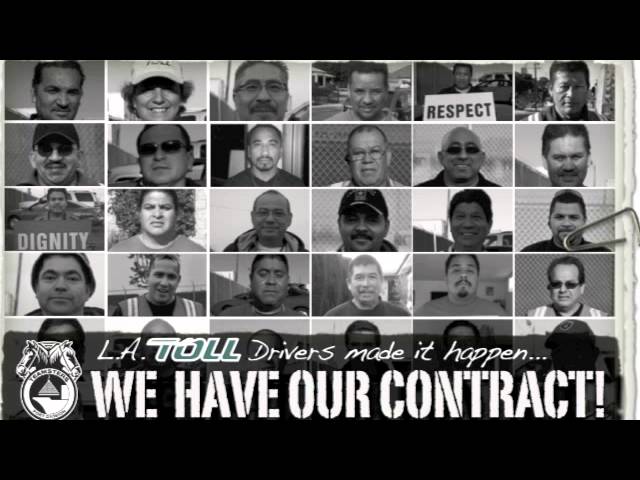
Seattle imposed a tax on Uber and the teamsters now represent the Uber drivers in the city.
New York's mayor attempts to curb the number of Uber taxis in the street.
And the city of San Francisco tried to regulate Airbnb.
A third way is to take your production out of the market all together.
To remove yourself from the market, like Wikipedia did.
Yochai Benkler talked about this and wrote "The wealth of networks“ about this.
And finally for the compensated labor market.
There is the fourth approach, which is platform cooperativism.
Try to say that three times fast.
Which is a model of social organization based on the understanding that it is hard to substantially change what you don't own.
My thinking about platform cooperativism owes much to the digital labor conferences at the new school.
They have worked on this topic since 2008 and this started in 2009.
There were various other conferences, this continued up to 2015.
Where I convened platform cooperativism with Nathan Schneider, which drew some thousand five hundred people.
So initially these events were really about labor, commercial surveillance.
Artists like Burak Arikan, Alex Rivera, Dimitri Kleine, Stephanie Rothenburg, theorists like Tiziana Terranova, Lisa Nakamura, they all drew public’s attention to this digital work.
Later the discussion was more concerned with crowd fleecing.
The exploitation of thousands of invisible workers.
In systems like Amazon mechanical turk.
But I have to ask myself: Do I really want to shine the banister of the sinking Titanic of employment or do I want to look for alternatives?
So I dedicated myself more into alternatives.
The theory of platform cooperativism has two main tenets.
Which is communal ownership and democratic governance.
It's bringing together 135 years of workers self-management with 170 years of the cooperative movement.
And as well it could bring in the commence based peer production together with those into this digital economy.
The term platform, just to clarify that for audience members who are not geeks.
I'm thinking about places where we hang out and work, tinker and generate value when we switch on our phones or computers.
And the cooperativism bit is about ownership models for labor and logistics platforms, or online marketplaces.
Which can replace the likes of Uber with cooperatives.
So in a nutshell this slide means to take the technology that Uber and the sharing economy offers embrace.
Rip out the corporate heart of it and fuel it with cooperatives.
Embed the values in the code that those cooperatives would represent.
That’s the key value.
So ask yourself, why would a village in Denmark or a town like Martha in rural Texas generate profits for the 50 people in Silicon Valley who run Airbnb?
That is exactly what is happening.
Berlin just changed that with the recent ruling on Airbnb.
But why would cities all over the world generate profit for a few people in Silicon Valley?
Instead of creating community value, community wealth through a website that is run in their own city.
That mends its short term rentals to go through their platform.
And have profits go into their community instead of the beautiful bay area.
This is not just a pipe dream, not walking just in Jesus sandals, as you would say in German.
This platform coops already exists.
So this internet of people is already in the making.
There is the cooperative owned online labor brokerage market "Fermando".
Global decentralized online marketplace owned by its local users.
They are having a pledge right now if you want to become a shareholder you can go to their website and do that.
A video streaming site that is owned by filmmakers and their fanbase.
Or imagine an Uber that is owned by its drivers, like French "VTC Cab" or "Arcade City", another project.
Imagine a global crowd funded media coop like positive news.
Or a stock photography site owned by the photographers who sell their work on it, "Stocksy".
Now after giving you these examples, let me go more into detail.
In Brooklyn where I live there is the "Sunset Park Family Center", which represents nine cooperatives of low income immigrants.
Here you see one of them in action.
This is a worker of "Beyond Care" which is one of the cooperatives.
They offer childcare services, under the same umbrella CCPuerta, they do something like home cleaning and there is pet care in the network.
Financed by the Robin Hood Foundation in NYC, they created a platform that would help to compete in the digital market.
The platform is called "Coopify" and will be launched in fall.
Here you have various problems solved.
They are looking at how to pay workers, some are undocumented, that cannot be paid through credit cards.
They find a way of doing that in cash, even though the site is operated through this app.
You see workers already talking about how their concrete situations can be improved by this project.
When the platform will be launched, users can select the services they need, housekeepers, childhood services, etc. and workers can be empowered through this.
Let me talk a little bit about reactions to this idea.
So in "Liberation" Berharnd Stiegler identified platform cooperativism as one alternative to Uberazation of society.
And they were countless articles through Le Mont, Washington Post, etc. And now there are events in many cities focusing on this topic, from Berlin, London, Melbourne, Bremen, Vancouver, many other cities.
I wrote an introduction to platform cooperativism, I would have really hoped to have this in German for you.
It will be translated and available through the Rosa Luxembourg Foundation at the end of May.
Now you have an English version which will be translated.
In summer I launch that book "Uberworked and underpayed.
How workers are taking back the digital economy“.
And a second book I edit with Nathan Schneider, where we asked 60 authors: "You want to start an online platform that is cooperative.
What do you need? What do people need to know?
So this is coming out in the early fall.
Importantly my friend Nathan Schneider created a directory of platform co-ops, so that we can track this emerging ecosystem.
He calls it "The internet of the ownership".
That is also an URL you can go to.
What is next?
Platform coops can be attractive options for home care, home health care professionals or pensioners who need extra cash.
In the US are 650.000 people who are released from prison every year.
They have a very hard time to find well payed and dignified work.
It could be a place for them.
It could also be an interesting subject for refugees.
Who in countries like Sweden take up to 8 years to find their new job in that country.
With this model workers can become collective owners.
They don't have to subscribe to the pathology of this old systems that trained them to be followers and internet users.
Some few people will feel drawn to any of this abstractions.
They are not really convinced by guidelines or rules.
But once people committed, there has to be some values.
People should agree on rules and guidelines as well.
Elinor Ostrom, the political scientist reminded us, said: "Inspiring to create alternatives without rigorous study is a pipe dream“.
Being realistic about cooperative culture is essential.
We see from the history of cooperativism in the US: We can have a labor stable income and dignified workplace.
This is what you learn from studying.
From this necessary enthusiasm of makers who like to make a lot of arm waving.
You also need this begrudged looking scholars who are skeptical of this.
These two groups really have to talk. They really can learn from each other.
But education, study and research is an essential corner stone of platform cooperativism.
First of all I talked about communal ownership.
Second: Platform coops have to be able to offer income security.
In Emilia Romagnia in Italy where there are many cooperative business, we see far less unemployment than in other regions of Italy.
Of course Mondagan is always given as a successful example of Spain with over 74.000 members.
In the US cooperative business have been successful in areas like orange juice production.
But are also faced with many challenges, competition from multinational concerns, public awareness, self-exploitation, the network effect, etc. We need to show a transparency of the algorithms.
This is where they have to distinguish themselves as well.
They have to show where the data about workers and customers are stored, to whom they were sold, and what purpose.
Work on platform cooperativism has to be co determined.
From the very first day the designers have to work with the people for whom they designing and who they would like to work for the platform.
There has to be a protective legal framework and much more.
It's hard.
Platform cooperativism is really not any particular about technology.
It's not about an app or techno solutionism, not about "to change the world click here“ It is the marriage of cooperativism and the Internet, the online economy.
In the absence of rigorous democratic debates, online labor giants are producing a future right in front of us.
So we have move quickly, this is not something that we say, "I was in this panel at 3 o’clock let's put this into our schedule and two years from now we are working on this.
No, we have to work on this in right now.
That is where the urgency to produce this work comes in.
We need an alliances of the big cities who are fighting against the sharing economy.
We need a consortium for platform cooperativism.
You can follow up, there is little time on question, you can follow up and get involved at stage T at 6.45.
Thomas Dernebring will head up a workshop on platform cooperativism.
There is already a group in Berlin that is dedicated to it.
So you can join us, 6.45 Stage T.
To wrap up: What we need is a genuine sharing culture.
Just like the one I experienced in this Buddhist center, this time ago.
We need incubators, small experiments with this kinds of technologies.
Step by step walkthroughs, legal templates for online co-ops.
Developers need a wordpress of platform cooperativism.
That can be used to build this free software platform so that not everybody has to reinvent the wheel.
This isn't really about countering the structive visions of the future.
This is about like I said bringing together technology and cooperativism.
Then to learn and see what we can do for our children and their children.
Thank you.
(Applause) Thank you very much.
We have a short break, two or three minutes, and then we will be back.
Up Next
Uber Strike and the Gig Economy: A Crypto Perspective
@PaulBarronNetwork
41.4K views•2024-02-14

Triumph of Orthodoxy Icon: Byzantine Art & History Explained
@BenCallan
2.1K views•2024-08-06

FastAPI vs Flask vs Django: Choosing the Right Python Web Framework
@TechWithTim
302.5K views•2024-05-26

Game of Thrones Opening Credits: A Cinematic Analysis
@gameofthrones
46.3M views•2011-04-18
Related Study Plans & Knowledge Roadmaps
Structured learning paths in General & Interdisciplinary Studies