






![कठोर दायित्व का सिद्धांत ।। Strict Liability [Part - 1] || Law of Torts || #youtube](https://i.ytimg.com/vi/vb5U5iY0qpo/sddefault.jpg)


![[들으면서 이해하는 국제 법무 상식] 제조물 책임법(Product Liability)](https://i.ytimg.com/vi/OVIxS_R36mw/maxresdefault.jpg)


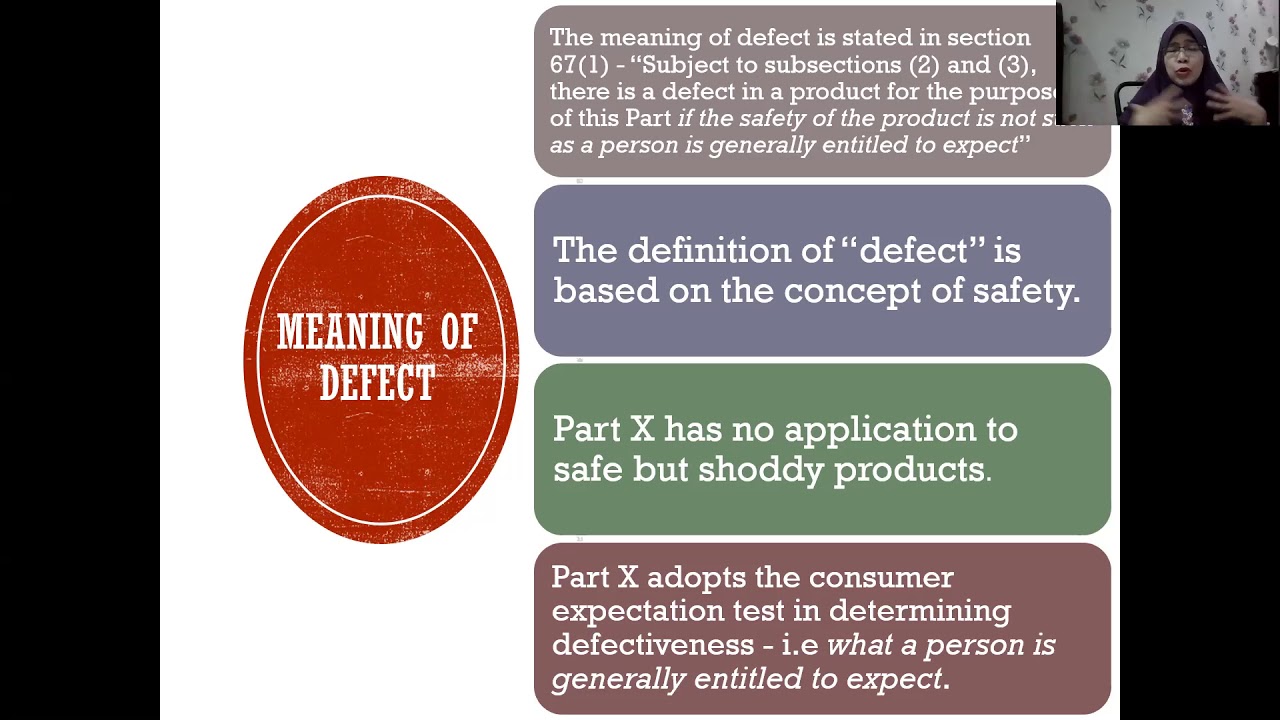






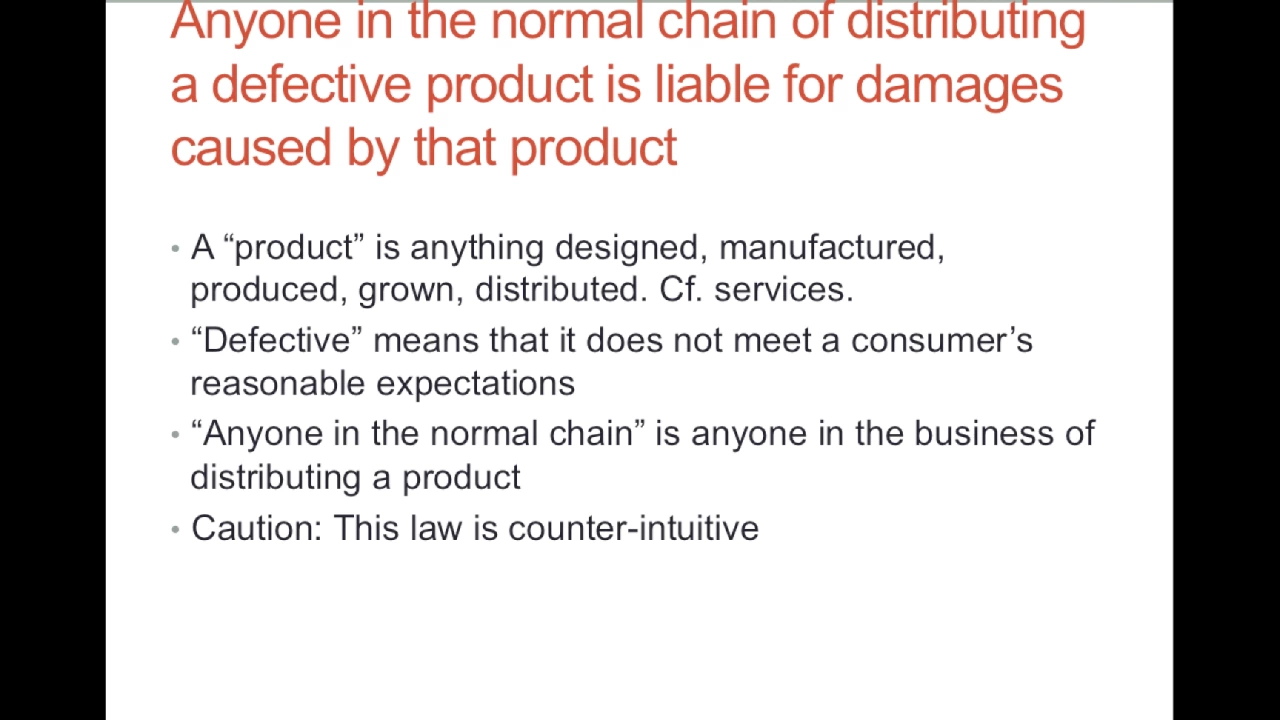








In product liability law, a design defect occurs when a product is unreasonably dangerous despite being manufactured properly, and liability is determined through the risk utility test, which balances the foreseeable risks posed by the product against its usefulness, the cost of making it safer, and the practicality of alternative designs; unlike manufacturing defects which compare individual products to proper manufacturing standards, design defects require plaintiffs to demonstrate that a reasonable alternative design existed that would have reduced the risk without making the product too costly or less useful.
Product Liability: Design Defects Explained
Added:Introduction to Tort Law: Understanding civil wrongs, duty of care, and how liability is established in civil courts.
Negligence vs. Strict Liability: Comprehending the difference between fault-based liability and liability without fault.
Overview of Product Liability: A general understanding of how manufacturers, distributors, and retailers can be held legally responsible for injuries caused by products.
The Three Types of Product Defects: Distinguishing conceptually between manufacturing defects, design defects, and marketing (warning) defects.
In-Depth Analysis of Manufacturing and Warning Defects: Examining the legal standards and case law for the other two major categories of product defects.
Defenses to Product Liability: Studying how defendants protect themselves using arguments like product misuse, comparative fault, state-of-the-art defense, and statutes of limitations.
The Restatement (Third) of Torts vs. Restatement (Second) Section 402A: Analyzing how different state jurisdictions apply either the consumer expectations test, the risk-utility test, or a hybrid approach.
Class Action Lawsuits and Mass Torts: Exploring how design defect cases are litigated on a large scale, such as in automotive recalls or pharmaceutical litigation.
6.8K views71likes14:57Original Release: 2021-06-28
module two design defects design defects versus manufacturing defects product liability is the area of law governing liability for products that are defective and that as a result caused economic loss or physical harm to the users of such products defective design is an important subset of products liability law a product can be defective either due to an error in the manufacturing process or because the very design of the product makes it potentially dangerous for the user defects that belong to the first category manufacturing defects are proven by comparing how the product that caused the harm was produced with how it was supposed to be produced if the product does not conform to proper manufacturing standards in this error in the manufacturer makes it dangerous the seller can be liable for injuries caused by the defective product however the second type of defect a design defect occurs when the product is unreasonably dangerous despite being manufactured properly to understand the difference compare the facts of two cases in the first case the plaintiffs sued a car dealer for selling a car with defective spokes leading to an accident she sued on the theory that the car she purchased did not meet the standards for the proper manufacturer of that type of car in the second case a forklift operator sued when the forklift he was operating experienced a power surge knocking him to the ground causing serious injury he did not claim that the forklift was manufactured incorrectly however the plaintiff argued that the manufacturer should be liable because the forklift was designed without a seat for the operator to sit on making it dangerous to operate the case rested on the theory that the design of this type of forklift was itself the defect so unlike the case of a manufacturing defect the plaintiff could not prove that the machine that caused his injuries was defective due to flaws in the manufacturing process or by comparison with properly manufactured forklifts in these cases the entire line of products is manufactured uniformly and would be equally defective design defect tests the risk utility test a seller can be liable for a design defect when the product being sold poses risk to the user because of the way it was designed however no product is completely without risk and almost any product can be made safer if the law allowed for liability any time there was some way of making a product safer the cost to the manufacturer and the consumer would increase dramatically so the law must devise a test that determines when the design is dangerous enough to create liability without driving less expensive products out of the market one important approach to addressing design defects is called the risk utility test this test balance is the risk faced by users of the product against the usefulness of the product as designed as well as the cost that would be incurred to make it safer under the test the design of a product is defective when the foreseeable risks of harm posed by the product could have been reduced or avoided by using a reasonable alternative design a manufacturer will be liable if the failure to employ an alternative design makes the product unsafe assuming that using the alternative design would be reasonable under the circumstances the first element of the test requires the plaintiff to show that the risk posed by the defective product were foreseeable this means that the risks arise when products are used in ways that the seller may reasonably expect they are not expected to make products safe for every conceivable circumstance for example in one instance a child found a beer bottle smashing it against the utility pole and a shard of glass from the shattered bottle cause serious injury to his eye in circumstances such as these the seller cannot be expected to design the product to reduce the risk of injury because the risk was not reasonably foreseeable if the plaintiff can make the case that the risk was foreseeable she must still establish that the risk could have been mitigated in a reasonable way this reasonable design alternative is the second element of the risk utility test the reasonable design alternative has two components first the plaintiff must show that an alternative design would pose less risk than the allegedly defective design in addition she must demonstrate that using the safer alternative design would be reasonable for the man facture this reasonability test depends on the level of risk posed by the product the utility of the product for society and the cost involved in adopting the alternative design let's begin with the question of what constitutes an alternative design this inquiry is complex and involves economic and technological factors first note that the law does not require the plaintiff to produce a prototype of an alternative product to make the case for liability instead plaintiffs generally bring evidence from similar products on the market produced by other manufacturers if it can be shown that other products already on the market serve a similar function at lower risk and at comparable cost this is a strong basis for establishing a safer alternative design the key legal question will often be which products are considered similar enough to serve as a basis for comparison in tyson versus General Motors a Court rejected the claim that a two-door hardtop car was defective on the grounds that the roof was designed without the robust safety features of an earlier version of the car the courts rationale was that the earlier model was a full-frame four-door sedan and so could be expected to have different methods of manufacture with different types of risks than the later model even though the accident was considered a foreseeable risk and the court agreed that the car would have been safer if the manufacturer had used a different support infrastructure evidence from another type of product could not be used to show the existence of an alternative design note that while the existence of similar products on the market with a safer design can be persuasive evidence of a reasonable alternative design the plaintiff is not required to submit such evidence the standard only requires that such an alternative is a practical possibility so the fact that a proposed alternative design has not been adopted by other manufacturers and is not available in the market does not preclude a finding that there was a reasonable alternative design at the same time the defendant can rely on industry standards as evidence that no alternative was practical when the product was offered for sale this is known as the state-of-the-art defense a design will not be considered defective if the defendant can show that the available technology and the state of market did not allow for a safer product at the time of manufacture in addition to showing that a product of similar cost and similar model or function could be designed to be less risky the plaintiff must also demonstrate that it would have been reasonable for the manufacturer to employ the proposed alternative design in practice safety mechanisms are often marketed as features of products being offered for sale a seller can ask a higher price for products with these features because they are less risky alternatively some products that pose risks to users because of their design are also highly useful due to that same design in those cases the only way to increase the level of product safety would be to decrease its usefulness this is why cost and utility are essential to determining the reasonableness of an alternative design it may not be reasonable to require that manufacturers add safety features if the result is higher cost to the consumers or less valuable products consider an example a police officer wearing a bulletproof vest was shot and killed at a traffic stop when a detained person fired at him the bullet struck him on the side of his body which was not covered by the vest the family of the officer sued the manufacturer of the bulletproof vest claiming that the design of the vest left the side of the body exposed to gunfire they brought evidence of another larger vest that completely wrapped around the body to show that a reasonable alternative design existed however the safer vest was costlier furthermore evidence often showed that officers chose the vest that covered less of the body because the more expensive wraparound vest was also less flexible and more confining and did not dissipate the heat as well as the smaller vest in such a case the defendant has a strong case to argue that the bulkier more expensive vest is not a reasonable alternative to the more flexible and cheaper vest instead these should be seen as two competing products each with their own costs and benefits to determine whether a product is defective due to a reasonable alternative design courts employing the risk utility test will look at factors such as a the gravity of the danger posed by the challenge design B the likelihood that such danger would occur see the mechanical feasibility of a safer alternative design D the financial cost of an improved design and II the adverse consequences to the product and to the consumer that would result from an alternative design alternative approach the consumer expectation test while the risk utility balancing test is the standard approach to design defects it is important to note the consumer expectation test which is an alternative approach that may be used in place of or along with the risk utility test under this test a product may be defective if it fails to perform as safely as an ordinary consumer would expect when used in a reasonably foreseeable manner specifically a manufacturer can be liable if the product is dangerous to an extent beyond with the ordinary customer who would purchase it would contemplate the consumer expectation test uses a standard of ordinary knowledge common to the community regarding the characteristics of the product in question however determining how a device should function and what design would make it safe often involves complex questions of Technology and economics in many cases these are questions that most people are not in position to answer so the consumer expectation test has generally been limited to cases in which the design defect is obvious and apparent to most average users finally under certain circumstances some products are so unsafe that the law may hold the defendant liable even if there are no reasonable alternative designs that would make the product safer these products are sometimes referred to as unavoidably unsafe the rationale is that these products are so unsafe that the risks they pose will always outweigh any utility they may have for society one case in which a product was determined to be unavoidably unsafe involved certain above-ground pools these pools were deemed so hazardous that they should be considered defective even if there was no way to make them safer another example often considered to be in the unavoidably unsafe category are realistic-looking toy guns that shoot rubber bullets such devices will be considered defective even if every effort is exhausted to make them as safe as possible prescription drugs and medical devices one special and timely aspect of design defects law is that of liability for defective prescription drugs and medical devices the law treats the area of medicine differently from the rest of product liability because it presents a unique set of risks and benefits in medicine what may be helpful for some can be harmful for others and vice versa this means the usual risk utility analysis must be considered differently when dealing with a product that has great utility for society while posing serious risks at the same time if the law imposed broad liability due to the risks medical products posed to some it would prevent the use of these products by others for whom they are greatly beneficial for this reason the standard for establishing liability in these cases is higher than for non-medical products the standard adopted by a highly influential torts treatise is that prescription drugs and medical devices will not be considered to have design defects if they have significant benefits for any class of patients even while posing serious risk of harm to other patients to succeed in a case for design defect it must be shown that the foreseeable risks so far outweigh the benefits that reasonable healthcare providers would not prescribe the drug or device to any class of patients according to this approach legal liability for risky drugs or medical devices that nevertheless contribute to positive health outcomes in any way would be highly unusual note however that this demanding standard has not been adopted universally some have maintained that the risk utility test is applicable to drug and medical devices cases as well in one case the court rejected the argument that a drug manufacturer was categorically exempt from liability for complications arising from the use of a high blood pressure drug since the medication had clear benefits for at least some patients even when the high standard does limit liability for design defects there are other means of preventing unreasonably dangerous drugs and medical devices from reaching consumers prescription drugs and medical devices are regulated by the Food and Drug Administration which is a federal agency one reason that courts are reluctant to find liability when a class of patients benefits from a risky medical product is because they tend to defer to the FDA to determine the risks and potential harms of a product in this vein some jurisdictions have passed legislation that recognizes a regulatory compliance defense to claims of design defects this legislation absolves drug companies of liability for defective medical products if the drug or device in question has been approved for use by the FDA finally the law imposes an obligation to warn health care providers of foreseeable risks associated with prescription drugs and medical devices the duty to warn is primarily a duty to inform a physician or other health care provider of the potential harms of products they may prescribe to their patients most product liability cases for prescription drugs are decided based on the adequacy of the warning note however that failure to warn will only create grounds for liability if the warning would have impacted a physician's decision to prescribe a drug in one case the widow of a depressed patient who committed suicide after taking an antidepressant sued the drug manufacturer the plaintiff argued that the manufacturer failed to warn the prescribing physician of the suicidal tendencies associated with the drug the court dismissed the action relying on the fact that the physician in question was familiar with the risks of the drug when he prescribed it thus there was no evidence that the physician would have behaved differently if a warning had been provided this segues into our next module wherein we will look at the duty to warn that applies to other products as well as prescription drugs
Up Next
81:40
National Moot Court Finals 2019: Key Arguments
@NYCBarAssociation
4.9K views•2019-02-06

4:27
US Secondary Sanctions Impact on EU Businesses and Blocking Legislation
@Bureauvandijk
1.6K views•2019-03-20

15:47
Hearsay Rule in Evidence: Hearsay Fundamentals (Module 6)
@LawShelf
16.8K views•2021-07-02

24:42
Police Interrogation Tactics: False Confessions & Legal Reform
@LastWeekTonight
7M views•2022-04-18
Related Study Plans & Knowledge Roadmaps
Structured learning paths in Law
law
Self-Defense Law: Imminence & Castle Doctrine
01Foundations of Self-Defense Law
02Imminent Threat & Reasonable Belief
03The Principle of Proportionality
+ 3 more learning modules
12h6 modules
Explore Roadmap
law
Defamation Law: First Amendment & Actual Malice
01Introduction to civil torts and the First Amendment
02Elements of Defamation: Libel and Slander
03Public Figures vs. Private Individuals
+ 2 more learning modules
8h5 modules
Explore Roadmap
law
Hearsay Rule: Trial Evidence & Exceptions
01Introduction to Trial Evidence & Courtroom Basics
02Demystifying Hearsay: The Core Definition
03Non-Hearsay: Exclusions Under FRE 801(d)
+ 3 more learning modules
14h6 modules
Explore Roadmap
law
Medical Malpractice: Law, Liability & Care
01Foundations of Tort Law and Civil Liability
02The Four Elements of Medical Malpractice
03Defining and Proving the Standard of Care
+ 2 more learning modules
12h5 modules
Explore Roadmap