



![23) Dr.Gihan [Nervous Tissue] 29/03/2014](https://i.ytimg.com/vi/dQqE6Zlwfwc/hqdefault.jpg?sqp=-oaymwEmCOADEOgC8quKqQMa8AEB-AH-BIAC6AKKAgwIABABGFMgWihlMA8=&rs=AOn4CLBgBr4B9O7CD2lJA6MLVNMFwNCZWg)






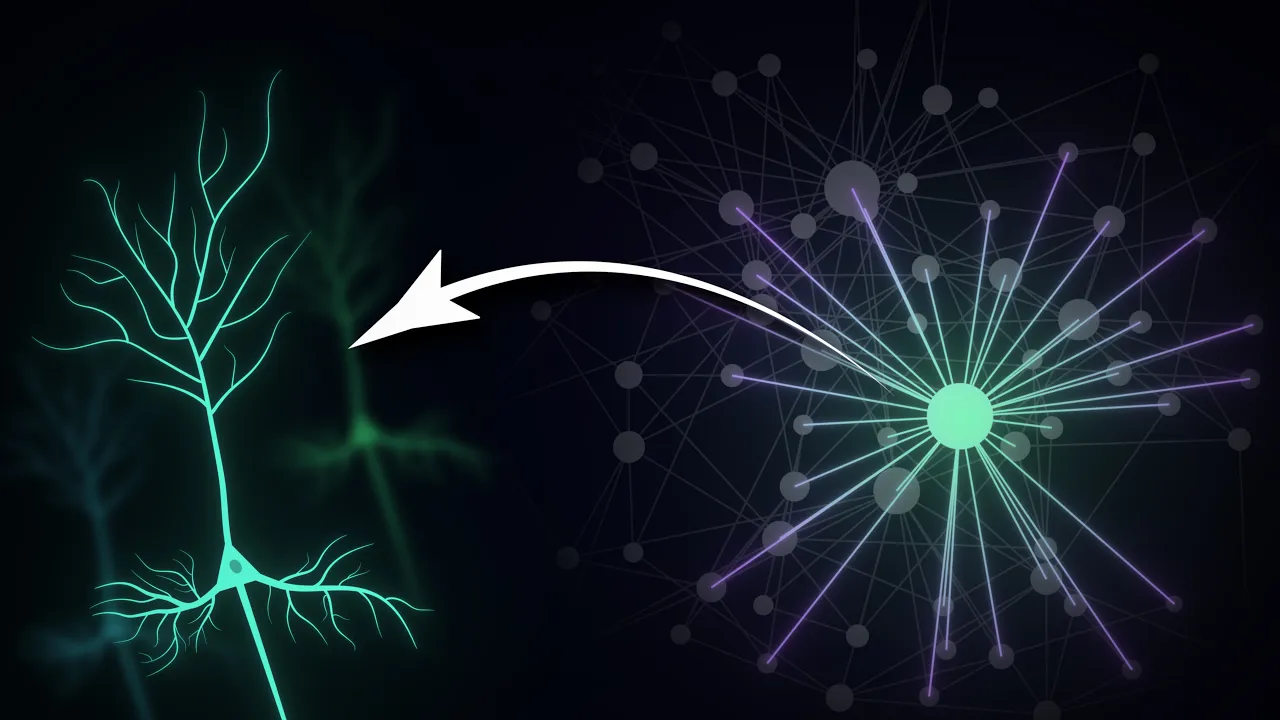
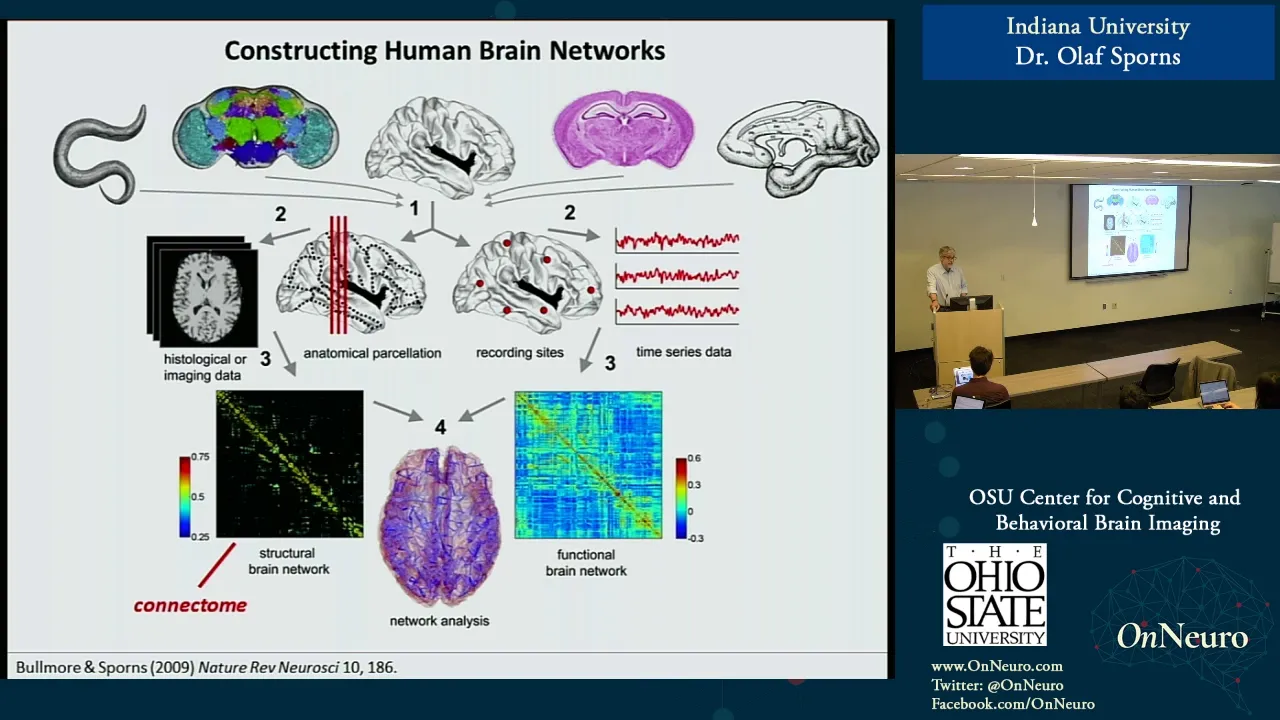










The brain cannot be understood as a collection of independent modules but must be viewed as a highly interconnected, dynamic network where functions emerge from complex interactions between multiple brain regions working simultaneously; this challenges traditional reductionist approaches in neuroscience and has significant implications for understanding mental processes and psychiatric conditions.
Brain Networks vs. Brain Areas: A Neuroscientist's Perspective on Psychiatry
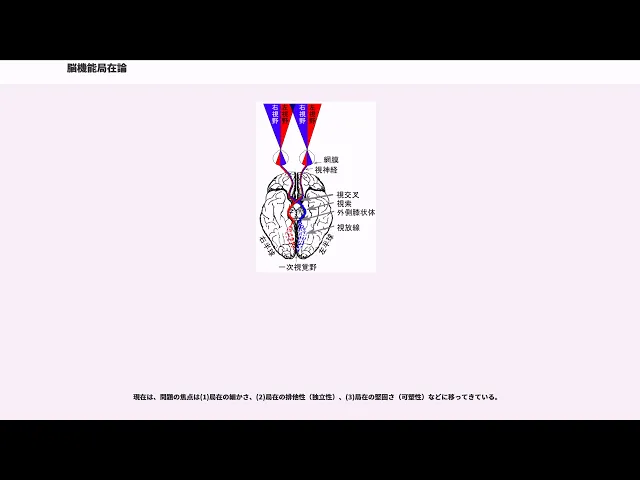
Added:The theory of functional localization, which posits that specific, isolated brain regions are responsible for distinct mental and cognitive functions.
Basic neuroanatomy, including the general locations and traditional roles of key structures such as the prefrontal cortex, amygdala, and hippocampus.
The fundamentals of neurotransmission and how neural pathways facilitate communication between different parts of the nervous system.
An introductory understanding of major psychiatric disorders, such as depression, anxiety, and schizophrenia, and how they have historically been diagnosed.
Network Neuroscience and Graph Theory, exploring how the brain is mathematically modeled as a complex network of nodes (brain regions) and edges (connections).
The functions and dynamics of canonical large-scale brain networks, such as the Default Mode Network (DMN), the Central Executive Network (CEN), and the Salience Network.
Functional Connectivity Neuroimaging methodologies, specifically how resting-state fMRI (rs-fMRI) is used to map synchronous brain activity.
The concept of 'connectopathies,' which investigates how psychiatric disorders are increasingly defined by disrupted network connectivity rather than localized brain damage.
Network-targeted clinical interventions, such as personalized Transcranial Magnetic Stimulation (TMS) and closed-loop Deep Brain Stimulation (DBS) designed to modulate specific circuit dysfunctions.
491 views15likes1:25:34Original Release: 2025-12-13
Well, thank you everybody for for coming along. I'm sat in a very cold room in a rather sc cold Scotland. Um we're delighted to have uh Professor Louis Poa uh speaking today for the SPG um primarily about his book um the entangled brain, how perception, cognition and emotion are woven together um which was published by Mnt Press 2022.
Um, I read this book a couple of years ago, um, and found it to be incredibly insightful. Um, and I think a challenge to the way perhaps a lot of us in psychiatry have traditionally thought about neuroscience and it got me thinking a lot about some of the implications that that it might have for for psychiatry more generally. So, um, Professor Por is not not a psychiatrist.
So um he is a professor of psychology and a member of the neuroscience and cognitive science program at University of Maryland College Park. Um and his interest center around interactions between cognition emotion motivation emotion and motivation in the brain. Um and his website is emotioncognition.org.
Um, I'd also give a shout out to the neuroscience and philosophy salon um that I'm not sure in what capacity you're involved in and but it's a fantastic uh resource on on YouTube and I'll share if there's one video you watch I suggest the our mental illnesses uh brain disorders uh and I'll link that and so as I say professor is not a psychiatrist um and I'm I'm hopeful that uh today can be followed by a discussion of some of the implications of his work for psychiatry more widely. So without further ado, I'll hand over. Thank you.
>> Yeah, thank you. Thank you so much, Chris. I'm I'm really delighted to be here and I I I really would be fun for me to engage in a conversation and know the kinds of questions that you might have so that in future iterations of of the works that I write more broadly, I can aim to to uh address those points.
Okay. So let me get started.
Okay. Okay. So the the starting point that I want to uh provide is let's consider a goal that we might have now [snorts] that AI is all the rage that a group is is is planning on developing an art an artificial brain and has to decide on what exact architecture it should have. So a natural choice would be to have components such as perception that would fit into cognition that would fit it into action.
I don't know that the my cursor is let me actually also make my cursor visible.
Yeah, I think that would be uh so by having just perception, cognition and action might be insufficient. So it would be maybe natural to include for instance an emotion component to this architecture perhaps to downregulate some of the actions so that this robot doesn't get out of control. And so you would have something like a an a link between cognition and emotion so that it cognition dampens emotion. You could also have a component that we might label motivation to sort of reinforce previous behaviors that led to perceiving or having cognitions of certain kinds that were associated with prior rewards.
But the bottom line, however you might want to limit or extend this architecture, the bottom line is that we would envision envision it in in an AI or computer science or an engineering sense as as basically developed in a modular fashion. By modular fashion what I mean is that you literally can ex ext extract the com one component that you want for instance the cognition component and you put the you know the next version the GBT 5 something you insert there and and and the cognitive the cognitive machinery is enhanced and it works fine with all the rest of the architecture other components but how about biological ical brains.
How is the actual biological brain organized? How are behavioral functions and mental states supported by the brain?
And what are the implications for mental processes? So that's what I'm going to try to cover in the next half hour or so 40 minutes or so. So what is the brain?
At the broadest level, one can envision or can conceptualize the brain at the systems level in terms of 100 100 to 200 cortical brain areas that subdivide the entire cortical mass plus subcortical areas areas in the midbrain and hindbrain and so forth. But basically subdivided into elementary area components.
What are areas? So if we go back more than a hundred years, there was already a very wellestablished heristic to think about and to search and re and and investigate areas by looking at differences in in the structural organization of tissues let's say in the in the cortex. So the idea was that that you would focus on looking at under the microscope at the density of cells, the cell types, the cell distribution, cell uh cell type distribution and so on and so forth. and based on potential differences between one patch of cortex and another patch of cortex or between one subcortical area and another subcortical patch I should say. Then you could define them and delimit them as areas.
But the important point here is not only anatomical, it's functional. The functional units then the functional units of the cortex then become these areas and very much related arguments exist for parts of the brain that are non-cortical.
What exactly are areas? Well, if we then fast forward from the early 1900s to the 1900 to the 1950s for instance with the computational with computation as a mathematical logical entity as well as a physical device. We then get into incorporating a computational metaphor that very much defines how we think of areas. areas compute implement specific functions that given certain inputs generate outputs. So brain areas which are the units of the brain compute functions.
A neuroscientist for instance who is interested in understanding the brain then has her task very well outlined is a simple one of the good old cartisian approach of decomposition and divide and con or or or put another way divide and conquer.
Right? So I might be interested in this brain region and study it for a few years and understand what it does. Then I go a few years later um I go to this brain region or some other group does that for me does that for the field and and and visit another area and so on and so forth until we cover the entire brain including subcortical areas and our job is more or less done because like in a given machine a me uh the mechanism is once the parts are well functioning The understanding the collective the understanding of the collective of the whole is somewhat directly related to the individual the function of the individual parts.
So this strategy of understanding the brain can be considered in my view defensible if the brain as a biological system that empirically we have to determine how it's organized happens to be what is called nearly decomposible and this is a concept that is very important that was outlined in in the early 1960s by Herbert Simon that proposed in a very influential paper that scientists frequently are interested in systems that exhibit that have this property of near complete decomposability.
So you can study something scientifically from let's say the biological realm by decomposing it into individual parts and studying them and then kind of piecing everything back together.
But what kind of system is the brain? If we think of it as a spectrum, we can think of the end of the spectrum that was outlined by Simon of of strong decomposibility is one but many types of organization that this logically speaking that this this system this biological system might exhibit.
going through weak forms of decomposability in which the parts are more interdependent to perhaps architectures that are strongly non-decomposable in in the sense that understanding one part requires for instance understanding almost all other parts simultaneously in some complex perhaps nonlinear fashion.
If it interacts with these three regions it does something different than interacting with these other four regions and so on. You can imagine at least from a logical standpoint many different scenarios.
So in answering what kind of system is the brain I outlined in in previous work a few principles some of which I'm going to discuss today that help us try to address this question which is something that has to be determined empirically and it's ongoing effort. In fact for a century and a half one can say that that has been the mission one of the important roles of neuroscience.
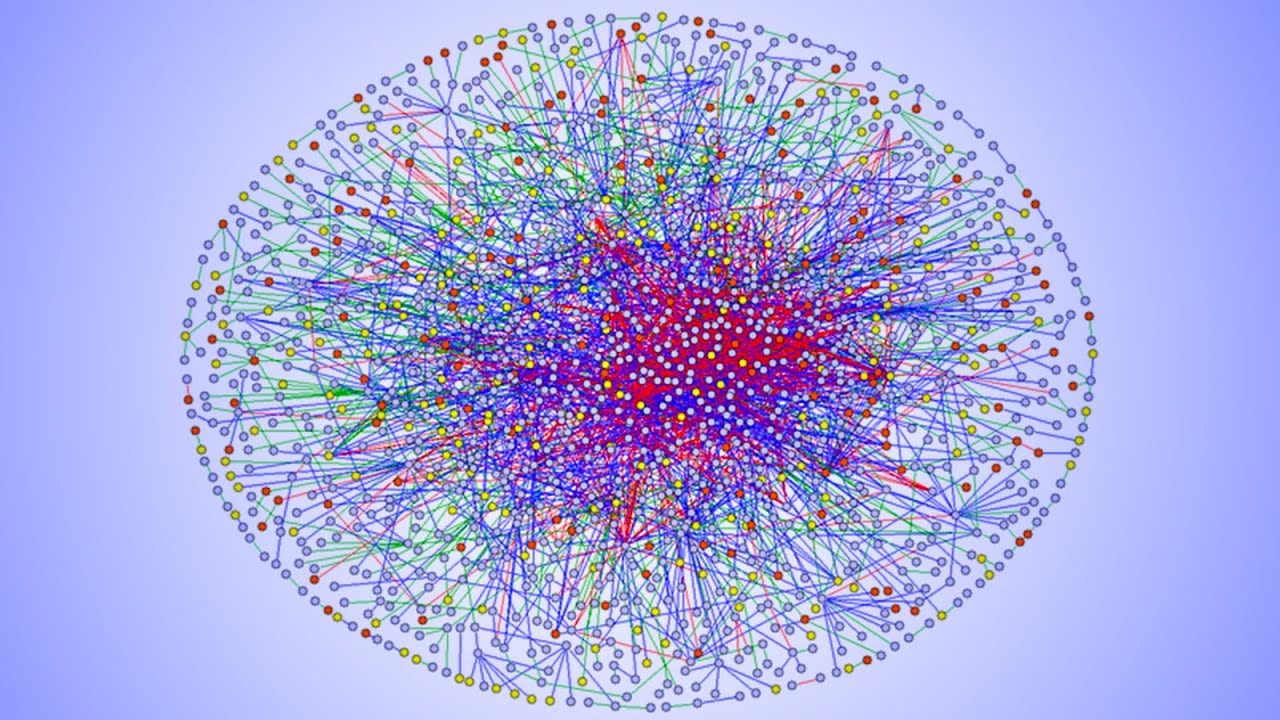
So the first principle that I would like to outline is the existence of or or the the presence of massive combinatorial anatomical connectivity throughout the brain. So what do I mean by that? What I mean is that both cortical and subcortical brain regions are extremely densely interconnected in the sense that if I take certain subp parts of the temporal cortex here or the insula or the parietal cortex or the frontal cortex, it takes just one or two or three connections to be able to reach another sector of the brain because it is so highly and so densely interconnected that if you imagine two disperate disparate points the degrees of separation as sometimes it's phrased are a relatively low number of steps.
So this is purely based on existing anatomical information. If we collate over hundreds and now thousands of studies, we observe this this this this type of organization and that applies not only to the cortex as I was showing before, right? So like for instance the singulate cortex, the frontal cortex and so on and so and so forth. But to to to to subcortical territories that I indicate briefly here and illustrate in the case for instance of the amygdala which is a subcortical region that is very important for many uh many functions and is very popularly described as involved in fear fear processing. But this region itself is actually very densely connected to a lot of the cortex with hundreds of connections that have been documented.
Okay. The second concept is a functional one. So we started with an anatomical concept. The second principle is functional. So is the need to understand this concept of signal interaction and coordination and understanding the notion that there's a highly distributed functional interactions and signal coordination in the brain which I'll try to explain a little bit here. So it basically forces us to move from the plane of an anatomical description to one of a general space if you will of functional relationships between areas.
So in this sense what we need to understand is if a brain patch or let's call it area for now. If a brain area has a certain signal that evolves in time, it might be measured by EEG, uh, magnetophilography, MEG or fMRI or intracellular recordings or sorry electrophysiology, any kind of recording that it has some kind of signal ongoing signal there and you you can extract the the corresponding signals for different disperate parts of the brain.
And mathematically, computationally, you can establish relationships between these signals. For instance, the simplest one that you can imagine is that the signals in let's say this this blue patch here and this this blue region and this uh green region are actually synchronized.
So every time that region A goes up and down in its it's its own variability in signal the other region also is synchronized to it undergoing a very correlated type of activity.
So what we have here is that there's a space of functional relationships that can be studied between across regions that these relationships can be pairwise or even beyond just two two regions multiple region multivariat multiple region relationships. But the important point here is that these relationships that need to be extracted by our analyzing data are mathematical relationships that point to functional relationships between regions. For instance, these signals by working in a synchronized fashion might be part of a coherent ensemble of group or cluster of regions that work together in a given task or given mental state.
So the distinction the the the the relationship between the anatomical and the struct the anatomical and the functional uh principles is important to kind grasp and sometimes it's a little bit unclear.
So one um attempt that I that I that I've had at this is to to consider for instance if you consider the Roman Empire's enormous reach across the globe uh 2,000 years ago uh more than 2,000 years ago uh this was supported by an enormous range of of physical in infrastructure or roads. So these are the physical connections making an analogy to the case of the brain.
However, these roads actually exist there and support multiple types of economic, cultural, and other social relationships and coordinations between very disperate parts of the of of the empire, the Roman Empire, that are are possible are are emerge out of the the the the the from this backbone of physical in infrastructure. So one way to think about this this this um the anatomical and functional is that they are highly interrelated but it's also really important to understand that the functional relationships or in this case the economic culture relationships are not easily uh grasped or measured by just looking at the at the physical infrastructure. you have to really measure something that has to do with economic and cultural norms and print in and and events to to establish these which depend on the anatomical but exist in their own realm.
So another principle that I like to highlight is high context dependence.
And so what I mean by that is that this amount of signal distribution that is possible across the brain that leads to some com a combinatorial possibility space if you will of signals being able to be combined supports an enormous amount of context dependence in the way that functions brain functions are carried out and support behaviors. So whenever there's a certain kind of behavior or mental state many dimensions that we could go on for a long time there's just a few uh here that uh we can highlight such as familiarity with the with the situation or the stimulus or the conditions or the task the attention being devoted to to the components of the world. this the context in in in the case of humans the social context in which the behavior is being is occurring emotional motivational factors whether actions certain actions are possible or not possible in in in that in that case.
So all of those make brain processing actually extremely highly context dependent. It's not invariant and fixed but something that is highly malleable.
And there are many ways to to understand this principle of of context dependence.
And some of them have to do with computational principles and other kinds of things that are a little more formal.
But one thing that is I think more intuitive is the fact that we know that neuronal circuits they're engaged and perform functions differently. They perform different functions. In fact, based on the action of neurom modulators and neurom modulators such as the chemicals that we are very all very familiar with including serotonin or epinephrine, dopamine and so on and so forth.
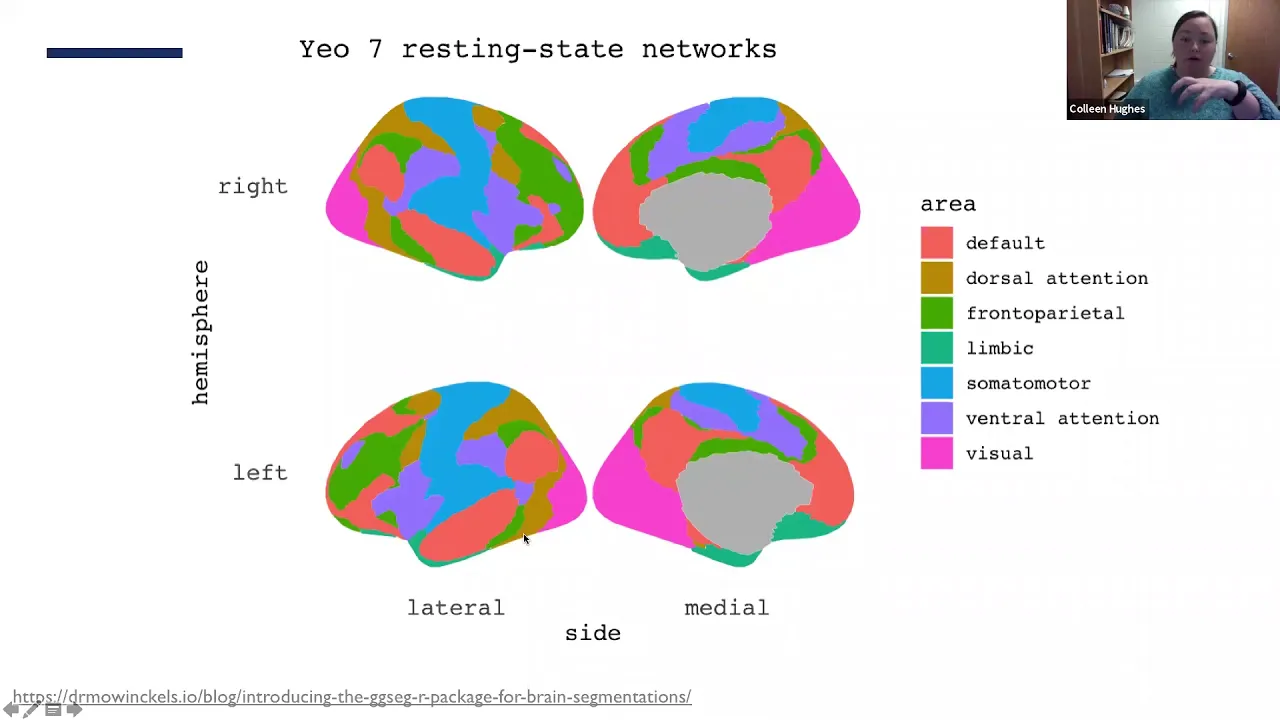
If you put these three principles together, one way to think about it is that and together with a few other things that you can, if you're interested, I'll suggest some readings. They lead to the suggestion that instead of thinking of brain areas as the functional units of the brain, we should be thinking of function the function functional units as dynamic networks or circuits. So I use networks and circuits interchangeably here not making a distinction. Sometimes neuroscientists makes make a little distinction make some of a bit of a distinction between them but here we don't have to to to to consider those. So these circuits are composed of many patches or areas if you will many areas of the brain that are linked directly or indirectly via anatomical pathways that function in a cohesive coherent fashion as the functional unit that we need to understand. So moving away from a brain area okay there is there's brocus area there is the amydala there is the part of this prefrontal subgenial prefrontal cortex and whatever in the parietal cortex and so on and so forth is actually moving to the to the domain of networks or circuits instead of brain areas and these brain air these these these circuits I should say they're not static in the sense that for instance broadman more than 100 years ago proposed that area 46 in the brain was in the prefrontal cortex and you can point to it. These are dynamic dynamically evolving and recruited assemblies of multi-reion collections that instantiate important functions at a at a given point in time. So, in lacking um movie clip skills, I just put some arrows here to to remind us that this is supposed to be dynamic and not something that is statically glued onto the brain that you can point. Oh, this is one network right here.
Okay. So, what kinds of brain networks?
So, if the brain networks and circuits or circuits are important, what kind of how what what do I mean?
So I think it's useful to distinguish two kinds.
One kind is for a lack of uh imagination and it's a little bit dull but I call it type one networks are just networks in which certain patches of the brain might have or have let's say have specific functions or subfunctions more elementary functions basic functions such as for instance a patch here in the so-called fus musform gyrus might be extremely important for face perception.
Some patch in the superior temporal sulcus might be really important for face and body movement. Some patch in the temporal parietal cortex junction might be really sensitive to the social content. I'm speaking here uh without an audience. So maybe it's there it's a different social context than if I'm speaking in a large lecture room and so on and so forth.
So the networks here exist based on these localized sub areas or patches of cortex or subcortex too.
But what I want to highlight is that even though there might be regions of the brain that have a relative and this is sometimes a little strong functional specialization, typically for most functions that of interest uh to people outside of neuroscience for sure, but even in neuroscience, these functions really should be thought at the network level in the sense that these patches or areas are highly interactive the signals are going back and forth between them and influencing them dynamically. So this is all something again it's a movie it should be thought of everything that I'm showing here should be a movie and not some static picture because this the temporal dimension is is really fundamental in in in in our understanding here. So for instance when I'm I'm processing or gathering or sensitive to the social meaning of this situation which I am now that we're doing this over Zoom and the people are in another country in another continent and so on and so forth.
It might be something that has to do with it is something I would claim that it has to do with a a a circuit that is not localizable in in one given little patch. It's actually something that is distributed across space.
But one of the thing one of the things that I think is extremely important is this one in one sense is is how neuroscience thinks a lot about how the brain works.
Right? So some regions have some or a lot of specialization and but they still have to talk to other regions and communicate with other regions to support more complex behaviors.
But what I like to s suggest is that in many instances many instances the functional unit is a network in this case type two network in which the function itself is distributed. So what I mean by that is that here I pointed okay here I'm calling this is more involved in face perception and this is has a certain specialization for face or body movements and so on. So I'm localizing things in this case here we don't localize things because it is the multiple regions working together that instantiate the basic function of interest. So the basic function itself is distributed across regions. So what that means is that you can't point to this little patch and say that it's carrying out a given function that you can point to because it is actually participating with other regions to generate a function that is spatially distributed.
And the concept that I've been trying to develop based on my work and the work of many people is that this is a really important principle of organization of the brain that hasn't been as studied as much mostly because we haven't had the technology to to measure uh these signals electrophysiologically in multiple regions at the same time because until the 90s is we were measuring the responses of a few neurons in one little patch of the brain and characterizing that little patch individually and moving to a different patch because we just simply didn't have the technology to measure multiple locations at the same time and understand the relationships between their signals and have mathematical and computational techniques to try to put those together and see what kind of functions they jointly instantiate.
So basically the idea here is that we have to move from a viewpoint like a mechanistic viewpoint that I outlined in the in the beginning with that clock that watch.
Moving from that kind of description or thinking into a realm of thinking about the brain as a complex system in which the circuit properties of interest really require us to understand how multiple brain regions are working simultaneously and these regions may be kind of adjacent to each other but not necessarily. Many really important circuits will involve parietal sorry frontal parietal regions and almost all these circuits are interlin with the phalamus that is birectionally connected with these regions or via basil ganglia loops and all sorts of anatomical substrates that if you're interested you can you can take a look at the books that talks about them in a very high level manner not in a like a neuroscience textbook fashion.
So we do have these kinds of networks.
But the important point here is to suggest or the the the suggestion that I'm making is that we have to be considering these functions as emerging as emergent functions that emerge out of these interactions between regions that are highly complex. They're birectional.
They're not they're nonlinear interactions. So it's it's something that it is not going to be easy to figure out exactly what they're doing without some considerable amount of mathematical sophistication because it's not a linear system such that when you add a third component you become you know one-third more strong it can actually shut things down. It can have completely kinds of behaviors that are that are really far from linear. It can inhibit things and so on and so forth.
Yet we often study the brain in a fashion that quite deviates from what I said and in a sense that we try to take these mental domains that have existed for a long time some of them for hundreds of years and try to map them to individual territories of the brain. Right? Right?
So you have the back of the brain here, occipital cortex is perception, visual perception and you have a big chunk of prefrontal cortex that is highly associated with cognition and so on and so forth.
The way we study the brain is exemplified by any really good textbook.
This is a really good textbook that from actually good friends of mine. This is it's it's really good. But what does it do? It does talk about a chapter's perception, a p a chapter is attention and so on and so forth. And there are some relationships between these and they're going to be discussed, but it's it's one again of subdividing the brain into mental do subdividing the mental realm into mental domains that map to coherent portions of the brain.
So let me just briefly give an example and um and we can um when I get to 40 minutes here I I'll I'll I'll I'll stop but and then we can have questions but let me give an example of the emotion emotion in the brain which is something that I've been working on for a couple decades. So historically if we think historically in the late n in the late 40s the beginning of the 50s Paul Mlan came up with the concept of the lyic system the visceral brain certain areas and territories were really important for for for emotion the hypothalamus since the 20s and 30s by canon and bard the hypocampus was hypo was this was was previous uh the case of HM with his lesion in the hippocampus. So the hippocampus was thought to be really important for emotion. It is involved in emotion processes to this day. Uh our understanding neuroscience neuroscientific understanding bears that much but it was thought to be as a highly central region. If we f fast forward to more or less around today, we we see a a a different set of areas that are thought to be more important or the the the important regions. But the idea of dedicated areas and the concept of an emotional brain is is is alive and well.
And even more so that there's a set of regions within this set of regions.
There has always been one or two regions that have been really played an important role as sort of like the hub or center or yeah the center of the emotional brain in the 1920s and the 1950s was the hypothalamus. in the past 30 years or so we can I think it's probably fair to claim it might might we might speak of the amydala but if we remember the things that we were talking about not only the anatomical but the other considerations just a simple reminder that the amygdala for instance is is highly interconnected so to be a region that is the center of something and at the same time be so deeply interconnected birectionally such that it influences and is influenced by many other regions is is it becomes a little problematic and especially in in the view that we have to think about the functional domain.
So when we put this whole set of principles and the circuit as the the unit together and these emergent properties we come to this concept that I like to call interactional complexity. So interactional complexity is is just a way to speak about this uh this type of emergent behaviors that occur without invoking the word emergence which really uh um gets people very excited and and and and uh leads to I think lots of distraction. So I like to to discuss it in terms of a a range of interactional complexities potential interactional complexity levels and this high level of interactional complexity of the brain.
What are some of the implications of of of of this complexity? So let me give you an example and then I'll stop of fear extinction. So let me remind you about fear extinction. So fear conditioning, the traditional Pavlovian fear conditioning, pairing a tone to a shock and so on and so forth.
When that is established, the animal learns that the CS plus is paired with the shock. It becomes a CS plus a condition condition stimulus.
But after fear conditioning is established, if you present the tone by itself and not followed by the shock, the animal naturally learns that the tone is not paired with the shock. And after a few of these repetitions, it learns that the tone is not to be feared anymore. And so it learns that it's actually a safe stimulus.
So this phenomenon that I just described is called extinction, fear extinction. What that means is that the CS+ the tone ceases to generate the condition response. The typical one in the laboratory is because the mouse is in a little cage, a tiny little cage, the mouse can't run anywhere to to to avoid the shock. So it freezes. So the animal upon hearing the tone does not does not freeze anymore. The freezing was considered to be a sign that the animal feared the tone. Now it doesn't freeze anymore. So it's extinguished. Fear has extinguished.
So let's see the one example of the implications of this idea of interactional complexity.
So in the 19 uh in the early 90s there were really important uh studies uh by Leoo by Joe Leoo and many other uh neuroscientists that outlined a potential circuit that was really key to the behavior or the learning of extinction. meaning to learn to not to fear the tone. And the circuit that was identified was the following. A region in the medial prefrontal cortex was proposed to inhibit parts of the amygdala, the basolateral amydala, and receive information about the context in which the animal is situated.
what cage it's it is it's it's in the hippocampus is highly sensitive to context it's lo the location of the animal and so on and so forth. So the animal would learn to inhibit its fear by using its frontal cortex uh in this circuit such that it could regulate your fear response based on context. And here this is just a the animal was in in in the the study was in in rats I should say but this is just a little diagram in humans. So the which we haven't worked out the exact mechanisms for obvious reasons we cannot do invasive studies in in humans but functional MRI studies and other studies are consistent with the idea uh partly consistent with the idea that the medial prefrontal cortex is is interacting with the amigdula possibly in an inhibitory fashion.
If we fast forward, if we go ahead from the early 1990s, 10 or 20 or so years, what happened if we look at that time frame, what happened was that this the story became a lot more complex that the the study identified connections and then lesioned the medial prefrontal cortex of the rat and noticed that this regulation was decreased with lesioning it.
However, as we started understanding the circuit itself, the anatomy itself, just the anatomy, things started to become to look a little different because the medrontal cortex and the basil the basolateral amydala are connected actually birectionally.
The basolateral amigdula is birectionally connected with the hippocampus.
So the circuit started having many additional nuances and in addition to that the circuit was gradually expanding such that even a mini circuit looks like this nowadays.
So in the 1990s one could say that this was the mini circuit. People always people understood that other regions might be influencing things but you could consider a minimal minimal circuit to be comprised of these three regions. Obviously some other regions of the brain connect to the medoprontal cortex and neuroscientists knew that. But for this behavior was thought to embody or or explain most of the literature or the phenomenon I should say of fear extinction.
So the circuit now has expanded considerably and one of the things that happens in this case is that even the causal flow of the signals the information that flows through a a circuit like that is is far from simple.
It's not even it's not unidirectional.
It's really hard to attribute causation to a given region in a circuit like that. In the previous circuit, it was very easy to to say that there was a causal role of the medial prefrontal cortex in projecting to the amigdula. It was directional.
Now we find responses in the amygdala.
Now it's measuring functionally physiologically responses in the amygdala that carry signals related to extinction that even seem to preede signals from the medial prefrontal cortex that are related to temporally precede the signals that one observes in the medrontal cortex. So even the causal flow now is quite difficult. So let me just uh conclude by saying that the implications of this interactional complexity is that if we consider simple decompositions of the brain and we insulate circuits in this manner, we might be capturing something important.
For instance, the mop prefrontal cortex does contribute to fear extinction, but it's really a minor part a minor portion of the entire contributions that are that the contributions of multiple brain parts to the behavioral effect that is studied.
And this is not something that is just basic neuroscientists that are working out and are interested in all these. It's not something, oh, it's all this biological detail. It's beautiful for a neuroscientist, but who cares? Because if you think about it, fear extinction is something really fundamental. It's learning to it's unlearning fear, right?
It's fear unlearning. So fear extinction research has naturally informed treatments for instance of in involving phobias and PTSD.
However, in both laboratory animals and humans, the procedures to extinguish behavior extinction actually lead to multiple side effects. For instance, a temporary increase of the very behavior that is being extinguished. So, it's a par a paradoxical increase instead of decrease. a return of other behaviors previously uh previously extinguished increased frequency of undesirable behaviors such as aggression. So there's a whole range of dark matter so to speak phenomena that exist but we we don't know how they arise and and and how they come about at the circuit level because it in my view it it leads us to uh a certain amount of myopia to just consider these minimal isolated subcircuits that are involved but are really just um a one portion of a much more uh intricate set of interactions that are involved in in complex behaviors that humans and animals exhibit.
So uh in the interest of time, I'm going to stop here and um thank you for your attention.
>> Thank you so much, Louie. that was incredibly interesting and uh and and very um I think provoked lots of different questions in in my mind. Um as usual, I I always have lots of things to ask.
I'll maybe I'll maybe just start off with with one question and then open it up to the floor if that's >> okay. So, um it might need a little bit of setting up. So just for for for people not familiar with the concept of multiple realizability and and please correct me if I say anything that is that is incorrect Lou.
>> Okay.
>> So this is the idea that when we're thinking in terms of functions rather than than structure, it becomes apparent that um the same function can be uh instantiated in different ways. Um, so it can be multiply realized. Um, and one of the things I've been wondering about is given that we know dynamical systems can be very adaptive as well as being robust.
um is it possible uh or even likely that some of the phenomena that we deal with as psychiatrists so let's just use let's use depression as an example which is a very heterogeneous term in and of itself >> but is it is it feasible or possible or probable that something a phenomena like depression is is multiple multiply realizable to the point where brain circuits might not might not be the best represent the best level of explanation. Could it get to the point where if for whatever reason >> if we think of depression as an attractor state and the system just right >> go back into that that attractor state.
>> Yeah. Yeah. Sure. and and if it could be potentially multiply realized by various different um >> is is it I suppose what am I you know is it possible that we might not be able to explain some of the phenomena that we see and so circuits >> yeah so if anyone is interested I I have this piece um in the Eon magazine uh about the brain and in the last few paragraphs I discuss depression and other other conditions and how this framework um what implications it might have and so I so I think this is a a very difficult question for many reasons but so I'll just uh give a a first pass answer and then we can continue if you want but essentially I think we have to differentiate a couple of things here one of one of which is is the fact that given that depression seems so heterogeneous, we might have let's say easily just simplifying for now. Uh let's say six subtypes. Let's say there are six subtypes that account for I don't know 50% or a good amount of the population that can be considered to to be depressed. you know they have MDD or or some other type of classification. So, so in a very basic sense it could be it is going to be extremely important to distinguish that the subtypes of the conditions that we are interested in mental health.
Assuming that one is in agreement that they are highly heterogeneous across individuals and there's multiple subtypes. They will map to different types of circuits multiple in it not a single but multiple circuits that might be functioning in ways that are that impair a person's life you know the well-being of a person's life right so so in that sense we at even already at that point we need to start pointing to multiple classes of of systems and circuits that are involved.
But even when you bring it to one subtype, suppose suppose there are well- definfined subtypes may maybe it's much more continuous. So maybe the subtypes is not a not a great idea.
But suppose there are some subtypes of depression and even in that subtype I I would say that a person's individual history is such that it will alter enough of how the brain is is functioning.
memory circuits, memory related circuits, and multiple circuits, how they interact that I I don't think that there there's going to be a a really simple brain target that will be easily identified and whose function if we if which function we we we if we um altered and brought back to a a a more normal and quote unquote range that the person's life would would improve. So I don't think that that mapping is is straightforward because the mapping itself is so contextually dependent and temporally contextually time is the context too, right?
t temporal timing and contextually dependent in a way that it's it's going to be incredibly difficult to isolate these components. I don't think however that it is the case that it would this is an empirical question which is easy for a neuroscientist to say but it's really hard for the hundreds of millions of people who who who greatly suffer. It is it becomes an empirical question whether there's going to be subtypes that there's a type of imbalance in the system or a different balance relative to other individuals.
There's a type of balance in balance or imbalance in the system that is so um dominant so to speak that in in in those cases for those patients at that point in time in their lives it's more it can isolate a little more easily. So for instance, it is possible that some individuals do have certain components of a system that are hyperactive or hypoactive considerably. So that greatly alter the the circuit function in a more major way that some other of the components. So they might have perhaps their distribution of of of of uh receptor distribution that that they have in in in certain regions is much more sensitive to certain neurotransmitters or the the receptor distribution or the genetic chemical profile of the subcircuits that they happen to have deviate so much from that are that are sufficient that are powerful enough to to make the the entirety of a circuit or multiple circuits behave in ways that are highly undesirable in terms of uh of quality of of well-being. So I do think that it it is it is possible. So I think that when one brings complexity, complexity also has to be understood in that sense that there are complex systems that are that have some components that have incredible amount of influence on the rest of the circuit.
So if you have an ecological system, you have these um what are they called?
Keystone species. I forget now, but you know they have certain, you know, there's these studies about the gray wolf in Yellowstone and then when that species goes up or down, it has an enormous cascade of effects.
So it it's a highly complex interactive system in ecological settings, but that doesn't matter. It it doesn't mean that everyone is playing the same role.
So that's really important to understand is that is that the effects are contextual because for instance one species might have a great effect when there's some other two species that are also doing a certain thing >> and but perhaps in some circumstances the apex species have a huge effect almost regardless. So we're going to have to work those things out. It is not that there is no hope of of understanding some regularity or some mapping that can be done if you understand that in most cases it could be highly context sensitive and could be dynamic and in in in ways that interact with many other things to have more or a little bit less of an effect in some cases then more is going to be very powerful.
So, I don't know if that makes sense, but >> No, no, that that does. Thank you. I've I'll I'll hold off for now and open it to to the floor. Um, George, hi. Good to see you. And I can see that apologies to John if you had your hand up for a while. I I'll go to George because I've just seen his hand go up and then to John.
>> Uh, thank you, Professor Pasau.
reading your prequel to your book uh in the philosophical transactions paper you wrote was an act of liberation for me.
So thank you very much and what you've given is a wonderful answer now and I'd like maybe to try and concretize it a little bit >> please >> um depending how much time I have first I'll make some statements that uh my colleagues may think are obvious or provocations and then if uh our chair wants us to I'll say a little bit more or I'll stop at the beginning.
But so here are my three thesis which I think follow uh from the answer you've just given and your whole talk.
Biological factors are important in psychiatry in two ways. One, the patient may have thyroid disease or a brain tumor or something else and you need some sort of physician to pick that up.
If you don't have a psychiatrist who knows that stuff, you won't pick it up.
But that's a minority. That's not the majority of problems we're dealing with, especially when we're talking about anxiety, depression, but also psychosis to be frank.
So in that sense, we can debate how much of psychiatry is biological. At the extreme, I'd say 20%, others may say 40%.
But uh others may put an even bigger uh figure.
In that sense, I would say that although psychiatry is a part of medicine, based on what you've been saying, it's as different from internal medicine as internal medicine is from surgery.
though both are medical specialties and finally I think one implication of what you're saying and I think you were saying as much in your answer as just now is we really need to up our game in terms of training in understanding language or systems of communication and meaning and value and culture.
And incidentally, Lawrence Kermire has edited co-edited a wonderful book on mind culture and brain that is worth reading. It's a wonderful book. So these are my thesis or provocations if you want and if I have time I can say a little bit more on the basis of a book I've been co-editing and an editorial we've just uh had accepted.
Yeah.
>> Yeah. Oh, sorry. Sorry, sorry. No, no, I'm sorry.
>> No, I'll stop there. I'm very keen on your answer. Yes, please.
>> Yeah, I know. I I I I agree. I I resonate with these points very much and I I given that this is being recorded and going to put on on uh public public access I hesitate a little but I'm a little still tempted to say on the on the question whether psychiatry is uh 10% 20% 50% what have you whatever percentage biological I I have two two points to make. Uh one is that if we take the kinds of things that I was talking about and sort of iterate them beyond what I was talking to consider I think what you alluded to cultural factors, social factors that we are social beings. So if we expand things uh in one sense I don't view the biological as completely separate or or as separate from these other realms. They're sort of co-determining co co they co-determine each other and they coexist. they they define they mo mutually define one another in in ways that I think are are not sufficiently appreciated.
However, that is not to say that.
So, what I'm trying to say is it's it seems a little bit trying to say it's it's not all in the brain and it's not a productive way to think about it. And in that sense, it maps to okay, what percentage of of of it is a psychiatry is the brain is it 10% or what have you.
So I I don't think that that that so what I would say is that I I view it much more of a spectrum. Having said that it it's it's intertwined with these other components of the social and other uh domains in which humans exist their environment including their social environment social cultural environment.
I do think that we should not we cannot neglect the fact that we are biological beings.
So it is not that everything maps back in some unique fundamental and co causally dominant factor of biology.
We have to transcend that type of view.
But at the same time we have to acknowledge that there are ways in which the our biology can have major impact as well. So there are circumstances in which it is possible as I I was saying in terms of complex systems that there's a certain kind of altered functioning in certain circuits of the brain that could lead to very altered mental mental health mental illness scenarios. So in some cases the the contribution could be sort of it's almost illdefined in a sense because you can start by saying that it it doesn't determine it but it's it's it's I think it's better to think of it as a as a as a whole spectrum of possibilities in in some ca in some cases it might be more extreme like for instance something like a tumor right so you have a tumor that is impacting a certain part of the brain and whatnot.
You can imagine that in some circumstances there's certain alterations of this system that are so that are magnified to such an extent that the biological contribution becomes preponderant.
So I I really don't think that it we we should I think it's 20% that person is 20 thinks is 30% and someone else is is 7% or someone is 0% whatever. I guess that's a little different if it's 0% but that that I think we should really view it in a little more flexible way as as a whole range that is again with together with the in in the spirit of this the theme that I'm adopting that it's a spectrum that depends on how these complex systems navigate interact with these other complex systems that we have in culture social environmental factors Thanks very much. I'm going to come to John because he's been waiting very patiently with his hand up. Uh and then >> Yeah, that's fine. I'm interested in your thoughts on this big question of how the brain generates consciousness and [laughter] how that might be disturbed in conditions like psychosis or psychedelic drug use.
I will have to pass on that one because I have way too many colleagues that are experts on that and I I think I cannot do justice to to uh s such a monumentally challenging question as to you know to to speak to as to how certain alterations in the brain lead to changes in consciousness and and states and types of conscious states and I I that that is um something that I my reach doesn't extend there so I have to apologize.
>> Thank you anyway.
>> Um so I can see George you have your hand up.
>> Yeah I do. Thank you. Um so I want to come back to what uh Louise was just saying and the impossibility really of partialing out bio psycho and social and I think here evolutionary psychiatry can help us a lot and I come back to an earlier point which is about language language is evolutionarily is evol it's an evolved biological function >> which is psychological and is primarily social and when I talk about language I don't just mean words but I I mean meaning and signification and communication and the point I was really trying to make earlier is uh that we need to engage more as psychiatrists with that I think over the last 30 years we've engaged disproportionately with the brain in in uh in in in relation to this other integrated uh functions and this is where I think Lawrence Kermire's editor edited book is uh is superb uh in in uh my opinion I'll finish by saying I'm co-editing now a book that uh is with a printers at the moment on psychiatry after crlinging and interestingly the period coincides with the period you covered. You start in 1903.
We start what we call the long 20th century of psychiatry from 1899 when schizophrenia was described by crepelin and we end it in 2025 which is the anniversary of his death.
But Mike Owen, probably Britain's most distinguished psychiatric geneticist, has said that the search for discrete natural kinds as schizophrenia, bipolar disorder, >> right, >> has failed.
>> And I think that is the important thing.
That doesn't mean as you say that a brain tumor may not be important or some brain circuits may not be important. I think they may be but equally we ought to be looking at these other factors and whether they might be not might not be more important than we've thought until now.
>> I I I completely agree as a neuroscientist. I would say that is is is sort of disappointing to see uh how society has reacted to this this um um it's almost like a sort of like a magic bullet to to everything mental health but also you know how I learn or how I remember everything is some simple thing in in the brain you know so I I think that we've done a disservice in letting I mean I don't know how to counteract it but an an enormous industry of propagating these over overly simplistic ideas about the brain and in all these domains all the way in in in as as you said in dominating u psychiatry but also many other I just came from a conference uh this past weekend on education and you know their hope is give me a talk in which you talk about what I can do so that people will learn better from what you know about the brain and it's it's really sad because neuroscience is nowhere near if ever is going to be there because in fact these might be quite separate domains that that we're we're looking at the wrong place but it's it's unfortunate that I think just to conclude that I think that neuroscientists have a lot of responsibility because since the 2000s the National Institute of Mental Health in America at least really promoted this view that if we can only isolate genetically, neurochemically, chemically and otherwise the these uh circuits that are malfunctioning, we will figure we're going to figure we going to fix things and and we're going to make great progress. And I think that was a an incredibly simplistic viewpoint that was defended by very powerful people that steered funding in a direction that has been great for neuroscientists to understand basic properties of the brain but hasn't translated in almost anything of utility to the well-being of of humans in our understanding of of mental health. And so it's really unfortunate. It's is disappointing to be part of an enterprise that has I think to be honest uh again being mindful this is going to be online sort of failed in in in offering something. I don't know how much we sold this hope as well, but we certainly went after the funding and and embraced a paradigm that tried to reduce these extremely complex mental phenomena socially socially and culturally embedded into some imbalance of two molecules, three molecules in four brain regions.
Uh yes, Andrew.
>> Yes, thanks very much for that talk. It was really interesting. I mean, I'm just wondering what you think of the idea that the whole concept of seeing the brain as kind of like in a mechanistic fashion as as like a super complicated computer, I suppose, is the the kind of most popular metaphor at the moment. I mean, I'm just wondering how much you think that's actually helpful or if it's actually leads or thinking about how people work down down down the line >> because I I mean I think I mean there's also the whole I we don't have time to get into the whole thing about artificial intelligence and the idea that >> intelligence and consciousness is just about a whole lot of connections within a machine when in effects.
Even just the idea that you can view humans just as individuals divorced from their social and environmental and cultural context is >> right >> people think absurdly productive >> and and I mean I I don't want to be rude to neuroscientists but I think this the kind of neuroscientific paradigm of the brain as a machine I think has been in a lot of ways entirely unhelpful and and you think of the research that's done about how >> the brain actually isn't the whole story. There's your whole guts nervous system. There's all the bacteria that live in your gut or all or yours any number of things that affect your emotional and cognitive state and that uh this kind of reductive view of of the brain as a machine is is really >> yeah helpful but sorry I'm rambling a bit now but uh I was just wondering what you thought about that. Yeah, I no thank you that I think it's a really important question because of the following. I think there is no question that a mechanistic type of uh analytical mechanistic approach in science has been enormously productive ac across the centuries. And I think that it made a lot of sense to continue along that direction in the the decades of the last century for for a good amount of time because it's an entry point into any system, right? So basically we are limited beings humans in terms of knowledge and in terms of everything and so to understand something as complex as the brain it does make sense that going into this mechanistic cartisian type of approach makes makes sense as a as a first approach. But I think what happened is that in biology especially with u the development of of of genetics and molecular molecular biology uh in the beginning in the 50s and and taking off in the 60s and 70s. It it really uh we learned an incredible amount, but I think an unfortunate byproduct of that has been this massively reductionistic approach in which we think that the lower levels are always the most basic and fundamental ones and that everything that is at a higher level will map in a neat way or will be derable from functions and operations and computations or what have you of this lower level and and not not to understand that the complexity of these intle phenomena and the existence of phenomena that exists at a natural level irrespective of of the the the lower levels if you will. So I basically think that it it made sense but it's unfortunate because since the 50s and 60s and so I I should preface this by the fact that in science in general we did not understand complexity. We didn't have tools to understand complexity. So I think it was inevitable because we just didn't have a way to grasp complexity.
But it's starting in the 50s and obviously going back many decades since you know the 1890s already in math and whatnot. We we had a few inklings in a few tools that starting in the 50s started being built so that we could really understand complexity from a formal standpoint both mathematically and computationally. And so at that point what we see is that many scientists which who developed this but also were utilizing these ideas to understand biology, neuroscience and other things. They they took that perspective of complexity, complexity science, complex systems, and they offered a a different view that was really an incredibly minority view unfortunately because I think that a combination of this, you know, we wrote a short piece with some colleagues from from the University of Sussex and other places um briefly talking about this need for both bottom up and top down approaches in this sense that yes we we need to understand the basic levels but we also need to have understanding of these higher levels in themselves and perhaps meet in the middle or perhaps not but but essentially we have to legitimize types of sciences that don't aim to reduce everything to the lower levels And I think it has been from a from looking back historical point of view it it it feels I don't know if the missed opportunity is the right way of expressing it but it's unfortunate that instead of opening up the ways in which we view these these systems ecological systems climate systems the brain and the universe in general in in these very diverse and and and other ways that were new, novel ways that were possible to look at things that never took off and instead of that people doubled down on the reductionistic strategy. So I I do agree with you that we the end result has been a a um a dependence on a type of thinking that is now so ingrained that biologists scientists almost can't think differently because it's becomes almost inconceivable that it could be otherwise because that's the only way that we think and but I think we're now coming with genetics especally especially after the the human genome project, the failure of revealing and curing all diseases. Now that we have the entire genome mapped as a monumental failure that it that now scientists are a little bit perhaps more open to ways of looking at at the genetics at other things, immune system that what have you in ways that are not going to the extreme mechanistic viewpoint and and having a more systemsoriented type of approach.
Yeah.
Thank you very much. I'm I'm mindful of time. Just a very quick one quick point and then one quick hopefully quick question. Um the first is I suppose just to highlight I think [clears throat] it's it's the the work that you that you're doing and and colleagues are doing is is so important because it it is it's cognitive neuroscience but it's non reductionistic. And I think perhaps in the way that we've been trained as psychiatrists that's been on more the kind of traditional reductionist model. So it's so fantastic to have um a space to acknowledge and study acknowledge the importance of the brain and study it without reducing it uh or without reducing the phenomena associated by with it down to the brain. And and I think part of what comes out of that is that um I'm yet to read this book yet.
Uh context changes everything.
>> Yeah.
>> Yeah. So what's really exciting is that what comes out of that is actually in the process of studying the brain, what you're doing is actually emphasizing the role of environment because the two are because the context is so relevant. Um >> yeah yeah >> so the kind of the two go hand in hand.
>> Um my question was I was just thinking about this kind of idea of whether we can think about things in terms of 20% biological or or whatever. And I wonder if our language is betraying us somewhat in that. I suppose what I wonder if we mean when we say X is 20% biological, we're actually talking about um the extent to which it is stable under multiple different conditions.
>> Yeah. Um and and actually as so as context becomes more and more relevant, we think of it as being less biological.
But of course, it's not about whether it's less or more biological. What we're actually talking about is the extent to which context i.e. environment changes the whether the biology is is causal in the way across the different conditions. Does that make any sense?
>> Yeah. Yeah, it Yeah. No, it does. Yeah.
I I think I think I mean I think that Yeah. In terms of in terms of a so I I I I agree with everything you said and um so I I might not know exactly if there's a question. was more of a comment because it it does map to sort of the the issue of having this illdefined range of influences because it's it's basically too co-determined by social, cultural, environmental factors that is not really productive to kind of just siphon everything back into the brain and say this little amigdala here is hypoactive. Therefore, you you have depression or whatever and anxiety or but but let me just make one point about it's maybe it's u parenthetic but uh I I'll say it anyway. It's sometimes my frustration with language is is it brings back to a little bit of what you were saying. I think there's a huge problem with I think the way we communicate because language is an amazing well it's it's an amazing human activity or capability or competence, but it is also an incredibly dangerous thing because it's it's it's sort of like um it it's it's a it's it's a reduces everything in in some categorical fashion.
It reduces things to these tokenized discrete entities that are very easy to use in a way that oversimplifies oversimplifies things. So it's basically a language that I think we use language for obvious reasons but it it is something that it it leads to to to a lot of oversimplification because we don't speak right I so I don't speak in in in huge paragraphs I speak sequentially and incoherently and whatnot and and so I I do think that by using language in combination with science we often oversimplify things in the hopes of being able to communicate it to other scientists or other individuals.
So, one might be aware of all sorts of nuances, but when one communicates that background knowledge is is not included in the conversation and therefore there's a lot of room for misinterpretation or simplification.
And so just for a second imagine that in one of the slides that I was going to have in the end and I didn't get to is like okay what do we do with our language and so do we start I'm not do I stop talking about cognitive phenomena emotional phenomena and so what do I do trivial thing is I put a hyphen I never say cognitive or emotional phenomena I say cognitive emotional as a unit okay and then but how how much can I do that. Add a third one, cognitive, emotional, motivational, you know, so language kind of gets in the way. And it it's an enormously liberating to have language, but it's also enormously constraining in my view. And I do think that we need to build a new language. So one of the conclusions that I wanted to have was that I think we need to move away from this language that is completely tends to be enormously dichomous. It's emotion versus cognition. It's emotion versus motivation. It's system one versus system two. Is this versus that. To use language somehow in ways that are less like that. So if we can create a language that is less about separation but it's more about integration I think it's it would be a huge prog it would be enormous progress because then things don't seem to be because then the complexity of the world it it's part of that language but it's it's awkward right because language is temporal I can't spend time 10 time 10 minutes here saying that yeah my day was you know something about social, cultural, this, that, and that related to my day here in in the US because it it just doesn't work. So, we tend to focus on a few things and use these discrete tokens and maybe we can create new tokens that themselves after being used a lot in in imbuing them lots of different things, but it's it's it's really hard, right? So I mean I guess philosophers have tried and tried to do that and and kind of do that but aside from us us humans uh the rest of us normal humans uh really struggle to have words that have you know these compound and very intricate meanings that you can then use as basic units with other terms like that. But anyway, so I I digress completely, but I think language is is incredibly liberating, but also is a big problem in in the way that we communicate and the way that we teach, the way we write textbooks because they're linear, you know, it's not a network that you click and you go everywhere. It's it's basically, you know, page one, page two, and I mean page 99. You page you are already in page 200. Great. But it's it's linear.
[snorts] >> Thank [clears throat] you. you've you've managed to answer another question that I wasn't going to ask because we're out of time. Um I I could ask a million more questions, Lou, but I' I've already abused my power as chair and and let us run over. Um so I I better better end things there. But thank you so much for for taking the time.
>> That was it was a great fun. Thank you very much. really appreciate it.
Up Next

60:35
Introduction to Neuroscience I | Brain Structure & Neurons
@stanford
1.3M views•2011-02-02

59:49
Neuroscience and Genetics of PTSD: A Precision Medicine Approach
@UWPBSCI
221 views•2024-05-09

4:10
Vagus Nerve (CN X): Anatomy, Nuclei & Functions Explained
@Alilamedicalmedia
305.2K views•2022-10-31
13:03
How Exercise Benefits Your Brain: Science Explained
@TED
11.4M views•2018-03-21
Related Study Plans & Knowledge Roadmaps
Structured learning paths in Neuroscience
neuroscience
Appetite Regulation: Brain Circuits & Hormones
01Foundations of Endocrinology and Brain Anatomy
02Introduction to Energy Homeostasis
03Peripheral Signals: Leptin, Ghrelin, and Insulin
+ 2 more learning modules
14h5 modules
Explore Roadmap
neuroscience
Neuroeconomics: Value, Risk & Brain Mechanisms
01Foundations of Neuroscience and Brain Anatomy
02Introduction to Neuroeconomics and Subjective Value
03Dopaminergic Prediction Errors & Reinforcement Learning
+ 3 more learning modules
18h6 modules
Explore Roadmap
neuroscience
Spatial Navigation: Cells, Grids & Brain Maps
01Foundations of Brain Anatomy and Memory
02Place Cells and Head-Direction Cells
03Grid Cells: The Brain's Coordinate System
+ 2 more learning modules
12h5 modules
Explore Roadmap
neuroscience
BCIs: Neural Decoding & Prosthetic Control
01Neuroscience Foundations: How the Brain Signals Intent
02Signal Acquisition: Recording the Brain's Activity
03Neural Decoding: Translating Brain Waves into Data
+ 2 more learning modules
25h5 modules
Explore Roadmap