





















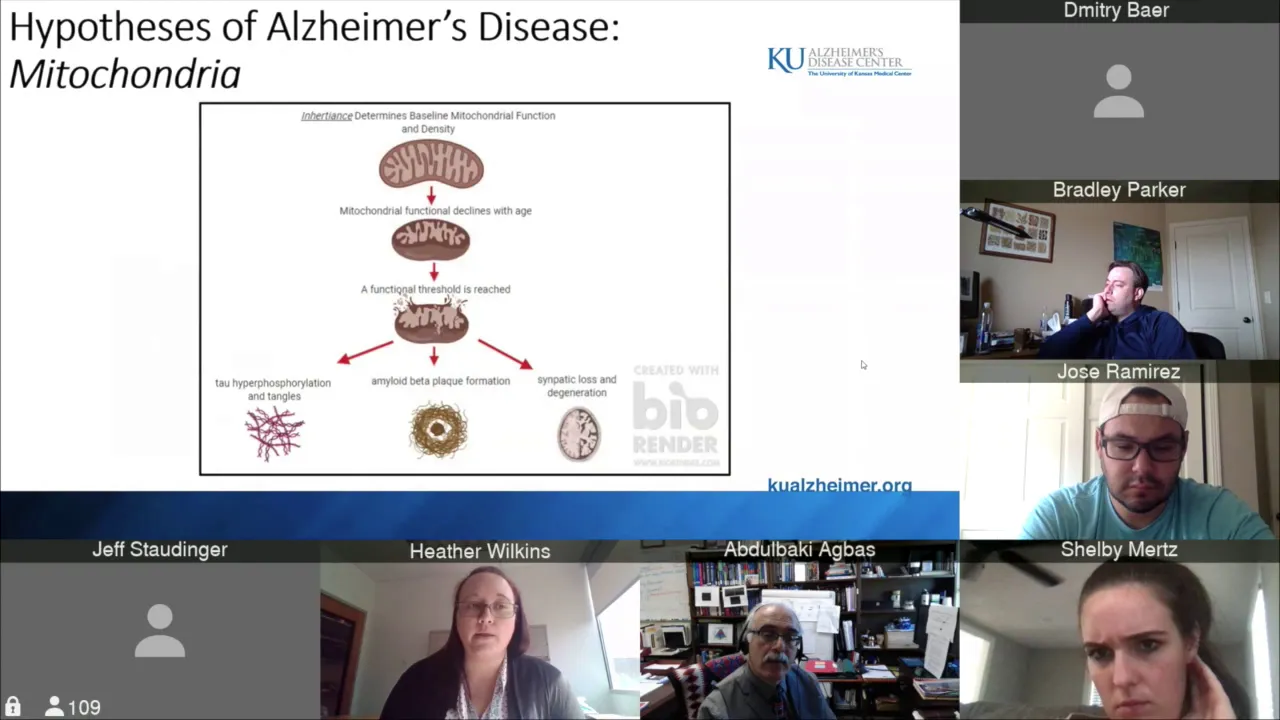


The FDA-approved Alzheimer's drug aducanumab, which targets amyloid-beta plaques, demonstrates that clearing a disease biomarker does not guarantee clinical improvement, as the drug failed to show significant cognitive benefits in phase three trials despite reducing plaque levels; this highlights the complexity of Alzheimer's pathology, where amyloid plaques may appear first but tau protein tangles and neuroinflammation likely drive actual cognitive decline, suggesting that effective treatments may need to address multiple pathological mechanisms simultaneously.
FDA-Approved Alzheimer’s Drug: Aducanumab & the Amyloid Hypothesis
Added:The basic pathophysiology of Alzheimer’s Disease, including the progressive loss of synapses and neurons in the brain.
The core concept of the 'Amyloid Hypothesis,' which posits that the accumulation of beta-amyloid plaques is the primary driver of Alzheimer's pathology.
The difference between disease-modifying therapies (which target the underlying biological cause) and symptomatic treatments (which merely manage symptoms).
An understanding of the FDA approval process, particularly the concept of 'accelerated approval' based on surrogate endpoints rather than direct clinical outcomes.
The specific clinical trial controversies surrounding Aducanumab (the EMERGE and ENGAGE studies) and why the FDA's advisory committee largely opposed its approval.
The mechanism, safety, and clinical efficacy of newer-generation anti-amyloid monoclonal antibodies, such as Lecanemab (Leqembi) and Donanemab.
Amyloid-Related Imaging Abnormalities (ARIA), a critical adverse effect of plaque-clearing antibody treatments involving brain swelling or microhemorrhages.
Alternative scientific theories of Alzheimer’s pathogenesis, such as the tau propagation hypothesis, neuroinflammation, and the metabolic/mitochondrial dysfunction theory.
287.5K views11.7Klikes12:33Original Release: 2022-03-23
Thanks to Linode Cloud Computing for supporting this episode of SciShow.
Head to linode.com/scishow to learn more and get a $100 60-day credit on a new Linode account.
[♪ INTRO] There’s a big new Alzheimer’s treatment on the block.
It’s the first drug approved by the FDA here in the US that claims to stop Alzheimer’s at the source, by removing the plaques that cause disease.
This new drug, aducanumab, is the first of its kind.
It’s designed to stick to and help clear the amyloid plaques in the brain long thought to cause the symptoms of Alzheimer’s disease.
But there’s a problem.
The biomarkers of a disease, like amyloid plaques, are meant to be objective measures of that disease.
And they seem like they should go hand in hand with its clinical symptoms.
But they don’t always.
And understanding that might make a big difference for how we approach Alzheimer’s treatments going forward.
People with Alzheimer’s disease have buildups of protein in their brains, consisting of two main types: tangles of tau within cells, and of amyloid-beta outside of cells.
That amyloid-beta accumulates into plaques.
Aducanumab was designed to lock onto amyloid plaques and help the immune system identify and remove them.
This was all in line with the dominant theory of what causes Alzheimer’s disease: the amyloid hypothesis.
Basically, scientists saw those plaques accumulating in those with Alzheimer’s and concluded that that’s probably… not what should be happening.
In the 80s and 90s, scientists discovered that amyloid-beta is a chopped down version of a larger protein, known as amyloid precursor protein or APP.
And later, they came across the enzymes that do the chopping: β-secretase and γ-secretase.
But the amyloid hypothesis really got legs when scientists discovered that genetics relating to these enzymes played a big role in one type of inheritable Alzheimer’s.
Alzheimer’s most often develops in people with no family history of the disease.
But some cases have a strong genetic component, and identifying those genes should help us understand the causes of Alzheimer’s.
In the 90s, researchers pinpointed PSEN1 and PSEN2.
These genes affect where the secretases cut APP, which determines the length of the amyloid-beta fragments.
That finding was super important, because longer lengths of amyloid-beta clump together a lot more easily.
And the easier they clump, the more readily amyloid plaques form.
Scientists were able to see plaques forming in people with variants of PSEN1 and 2 that favor long amyloid-beta.
Those same gene variants were seen in people with familial Alzheimer’s.
Because of that, researchers felt like there was a really good case for amyloid being the culprit in causing Alzheimer’s.
If that hypothesis is correct, then if we could take those plaques out, we should have a cure, right?
Well, unfortunately… the results of our massive effort to cure Alzheimer’s by treating amyloid have fallen very flat.
One meta-analysis, published in 2021, pooled data from 14 randomized controlled trials to look for evidence that drugs which reduced amyloid plaques also improved cognition in participants.
Amyloid plaques are a key biomarker of Alzheimer’s.
That can be a broad term, but in this case, it’s basically something we can measure objectively that’s associated with the disease, which is often very useful in clinical trials.
But!
If you clear away a biomarker, but it doesn’t actually help patients, you’re not curing the disease at all.
Which is why a drug that affects a biomarker also needs to affect the clinical signs of the disease, and improve how people actually feel or decrease their need for medical care.
In medical parlance, it needs to improve patient outcomes.
Taken together, the data from all trials showed that those given the amyloid-targeting treatments didn’t experience any significant improvements in their cognitive symptoms.
Which is part of what makes the approval of a new drug targeting just plaques kind of bizarre.
If there’s evidence targeting amyloid in various ways doesn’t seem to make a difference, why are we licensing a drug that does just that as a treatment?
This is the part of the episode where I should be able to pull out the stats from aducanumab’s clinical trial and argue that it had some effect on cognitive symptoms.
But in fact, I’m going to do the exact opposite!
The team conducting these trials didn’t post any data suggesting that it improved cognitive symptoms in Alzheimer’s patients.
The phase three trials for aducanumab were actually stopped prematurely in March 2019.
That’s the biggest and last phase of human trials before a drug is submitted for approval.
The trials were stopped because data indicated that the drug wasn’t going to meet its goals of improving Alzheimer’s symptoms.
At the time, one trial was trending positive, just not enough.
The other showed no statistical benefits.
They did, however, demonstrate a reduction in what was considered a key biomarker: the amount of amyloid plaque.
Just not clinically meaningful endpoints, like symptom reduction.
And, that’s where the phase three research ended.
On a cliff-hanger.
Despite this, in 2021 the FDA approved aducanumab anyway, via its Accelerated Approval Pathway.
This means a license was granted based on a drug’s effect on biomarkers, rather than actual improvements in symptoms of cognitive decline.
We won’t get into it too much, but this approval was decidedly controversial.
The drug has failed to get approval in Europe due to the lack of evidence for its effectiveness, as well as some potential to cause swelling and bleeding in the brain.
Understandably, some patients, families, and doctors are still willing to give aducanumab a shot.
Potential treatments for Alzheimer’s have so far been rare, and for some, the possibility of hope is better than nothing.
For those who have relatives suffering from irreversible cognitive decline, or face the prospect of it themselves in the near future, using a drug that might work can seem like the obvious choice.
Among experts, there are mixed opinions -- though a lot of them are pretty spicy.
Some people think it could invigorate research into Alzheimer’s, whereas others think it could set it back decades.
Like it or not, aducanumab is now heading toward what researchers are referring to as a phase four study: real world observation of effects on disease progression and cognition.
We won’t know the outcome of this for several years.
And even if it fails this phase four trial, there’s a possibility that it might still prove useful if given to younger people who are at risk of developing Alzheimer’s later down the road.
See, there’s actually a lot of evidence that plaques alone aren’t responsible for the kind of cognitive decline we see in this type of dementia.
One of the main pieces of evidence we have for this is the fact that there are plenty of people with amyloid plaques that show no signs of dementia at all.
In fact, some scientists have suggested that the prevalence of amyloid plaques could be just as high in those without Alzheimer’s as those with it.
The amount of plaque also doesn’t correlate strongly with Alzheimer’s severity.
However, there’s a difference in when different pathological features arise in the brain.
Amyloid plaques appear first, about 10-20 years before cognitive symptoms start.
So clinical trials looking at the timing of starting therapy are already underway with different amyloid-clearing drugs.
But it’s going to be a hot minute… or rather, a hot few decades, before we can take a look at results for studies like that.
If aducanumab fails on all fronts at stopping cognitive decline, it could be the final nail in the coffin of the Amyloid Hypothesis that dominated the field for many years.
We tried every which way to clear plaques, and even succeeded.
But if that doesn’t affect the clinical manifestation of the disease, that means we’re missing something about what causes it.
But, that doesn’t mean scientists are out of options.
Right now, researchers are actively looking at a few other potential targets.
For starters, how about that other protein tangle I mentioned earlier: tau.
Treatments targeting tau also have a whole lot of potential.
In a healthy brain, tau is vital for maintaining the internal structure of neurons.
But in Alzheimer’s, an abnormal form of tau builds up into tangles inside neurons, and causes their internal skeleton structure to fall apart.
Those neurons then stop working as intended, leading to a general decline in function of areas with a lot of tau build up.
Now this probably isn’t going to be a case of pointing a finger at tau instead of amyloid-beta and being all ‘ah ha, it was you all along!’.
Clinical research is usually more complex than an Agatha Christie novel.
What actually seems to be going on is a complex relationship between tau, amyloid-beta, and other factors, and that relationship evolves over the course of the disease.
Tau starts out accumulating and replicating itself in areas related to memory, namely the entorhinal cortex and hippocampus.
And as amyloid continues to accumulate, things seem to reach a tipping point, which results in the abnormal tau starting to spread throughout the brain, hopping from cell to cell.
How exactly it does this, we’re not sure, but some evidence points to tau ‘seeds’ crossing synapses.
And as it spreads and grows and replicates, more and more neurons become damaged, driving cognitive decline.
Recent research has shown that in the mid-to-late stages of Alzheimer’s, tau replication rather than spread seems to drive neurodegeneration onwards, and therefore cognitive decline.
This gives one potential opening for a treatment.
What if we could design a drug that stopped tau replication, for example?
Researchers are already exploring a lot of options, like therapies that stop tau from hopping from cell to cell, clear tau tangles, or stop tau from becoming abnormal in the first place.
We have a lot of research on tau already, but the trouble is, much of that previous research thought of tau as its own separate entity when it comes to Alzheimer’s.
But now, evidence is mounting that it has more of a synergistic relationship with amyloid-beta than being a lone ranger.
Not only does this give us a clue as to why amyloid-only approaches are falling flat, but it may mean scientists have to reassess previous tau research through this lens too.
It’s not just tau that scientists are homing in on, though.
Another popular avenue for research is the role inflammation might play.
That is, we’re beginning to understand that the activity of the brain’s immune cells may be a third key feature of Alzheimer’s.
When pathogens or amyloid plaques build up, these immune cells, called glial cells, try their best to clear them out.
In the process, they can set off inflammation in the brain.
When those glial cells go into overdrive in people with Alzheimer’s, their inflammatory output seems to kill off neurons.
It also seems like this inflammation exacerbates both amyloid and tau build up.
This lines up with what we’re seeing in genetic studies too.
Large genetic studies have identified several genes that are related to an increased risk of developing Alzheimer’s, as well as regulate the brain’s immune response.
The jury’s still out on whether or not treating inflammation will be enough to improve Alzheimer’s symptoms.
So far, clinical trials of drugs designed to do that haven’t been successful.
But while we continue to figure out the cause of Alzheimer’s, there are some slightly more futuristic treatment options on the horizon too.
As with a lot of conditions that have a genetic component, there’s already a lot of talk about the potential of gene therapies.
One example is a CRISPR-based approach, which is being trialed to target the genes that snip APP to weird lengths right there inside the brain, though right now, it’s only been done in cell culture.
And an approach involving injecting restorative genes into the brain was reported to have begun in-human clinical trials in 2021.
These genes produce brain-derived neurotrophic factor, or BDNF, which is a protein that supports the survival and growth of new neurons and synapses.
In those with Alzheimer’s, levels of BDNF are diminished, and researchers hope that increasing the amount of this protein will help keep symptoms at bay.
While we await the outcome of aducanumab’s phase four trial, there’s a lot more research still moving forwards.
If aducanumab fails, and fears based on previous data play out, we are likely to see a lot of disappointment from patients and their families.
On a human level, that’s deeply understandable.
From a purely scientific point of view, we want to update old hypotheses with new data, and discard them if they don’t fit the facts.
And ethically speaking, we don’t want to give people something that doesn’t work, or creates false hope.
But being so close to what we once thought would be a cure, it can be hard to let that hope go.
Still, while it could fizzle into nothing, we’re far from out of options to pursue.
Because science never really ends, it just changes direction.
Thank you for watching this episode of SciShow.
I know that a lot of students and teachers welcome SciShow into your classrooms and homes.
So we’re proud to have today’s video sponsored by Linode, a cloud computing company that provides easy access to teaching tools like Moodle to make online learning and instructing more manageable.
On Moodle, you can make quizzes, collaborative projects, and checklists to help stay on track and keep classwork engaging.
While grades aren’t quite as much fun, it’s important to have a secure place to keep track of them.
Linode knows how to keep online data secure and has earned the trust of Moodle users.
That’s over 200,000 students and educators around the world.
So you can click the link in the description or head to linode.com/scishow to check out Linode’s learning solutions.
That link gives you a $100 60-day credit on a new Linode account.
Thanks to Linode for sponsoring this video.
[♪ OUTRO]
Up Next
19:18
Parkinson's Disease Pathophysiology: Causes and Neural Mechanisms
@NinjaNerdOfficial
240K views•2017-04-01

48:47
Graphic Medicine: Comics for Collaborative Healthcare Communication
@nationalpatientadvocate
189 views•2023-12-04

5:24
Particle Accelerators in Hospitals: PET Scans Explained
@SciShow
119.3K views•2021-07-02
3:05
Stages of Labor and Vaginal Birth | Childbirth Animation
@nucleusmedicalmedia
52.1M views•2017-08-18
Related Study Plans & Knowledge Roadmaps
Structured learning paths in Medicine
medicine
Abnormal LFTs: Diagnostic Workup & Pathology
01Liver Anatomy and Basic Physiology
02Introduction to Liver Function Tests (LFTs)
03Hepatocellular vs. Cholestatic Patterns
+ 3 more learning modules
12h6 modules
Explore Roadmap
medicine
Analyzing Blood Smears: RBC, WBC & Platelets
01Introduction to Blood Components & Smear Preparation
02Normal Morphology of Blood Cells
03Erythrocyte Pathologies & Morphological Variants
+ 2 more learning modules
12h5 modules
Explore Roadmap
medicine
Mechanical Ventilation: Waveforms & Alarms
01Anatomy and Physiology of Breathing
02Introduction to Mechanical Ventilation & Core Modes
03Ventilator Settings and Waveform Interpretation
+ 2 more learning modules
12h5 modules
Explore Roadmap
medicine
Neuro Exam: Localization & Stroke Syndromes
01Foundations of Neuroanatomy and Vascular Supply
02The Neurological Examination: Step-by-Step
03Principles of Neurological Localization
+ 3 more learning modules
18h6 modules
Explore Roadmap