
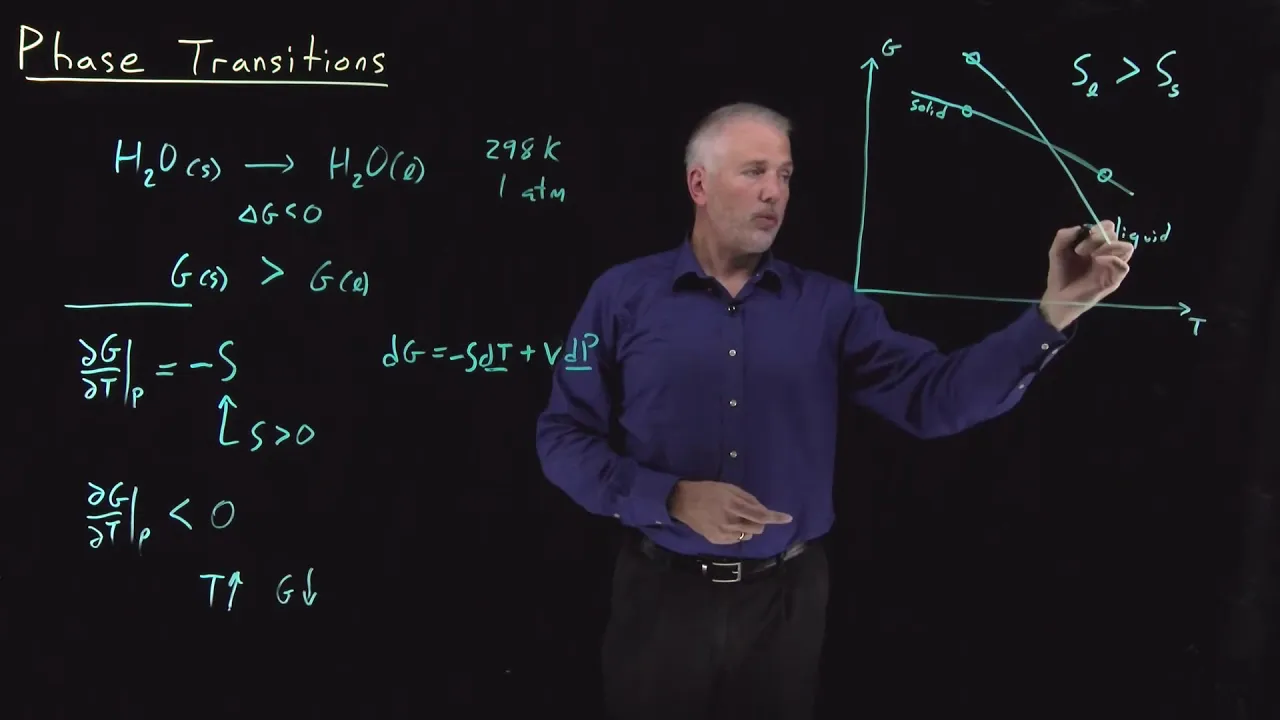


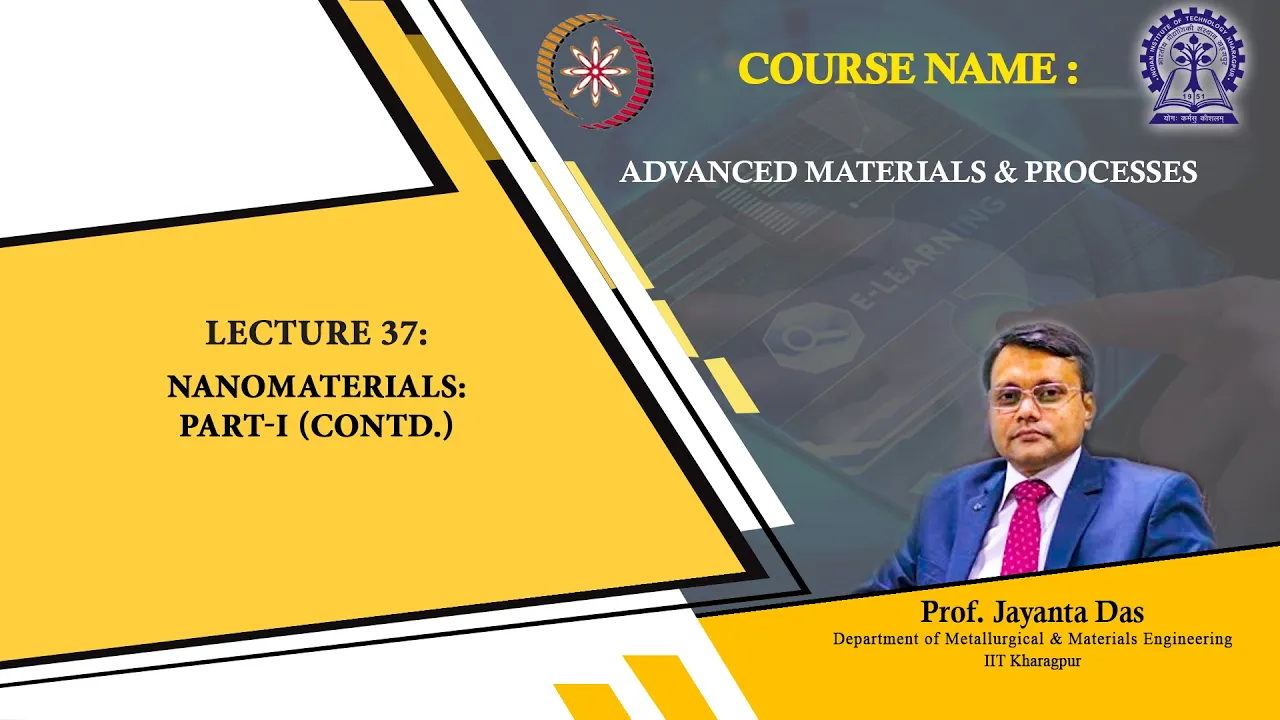


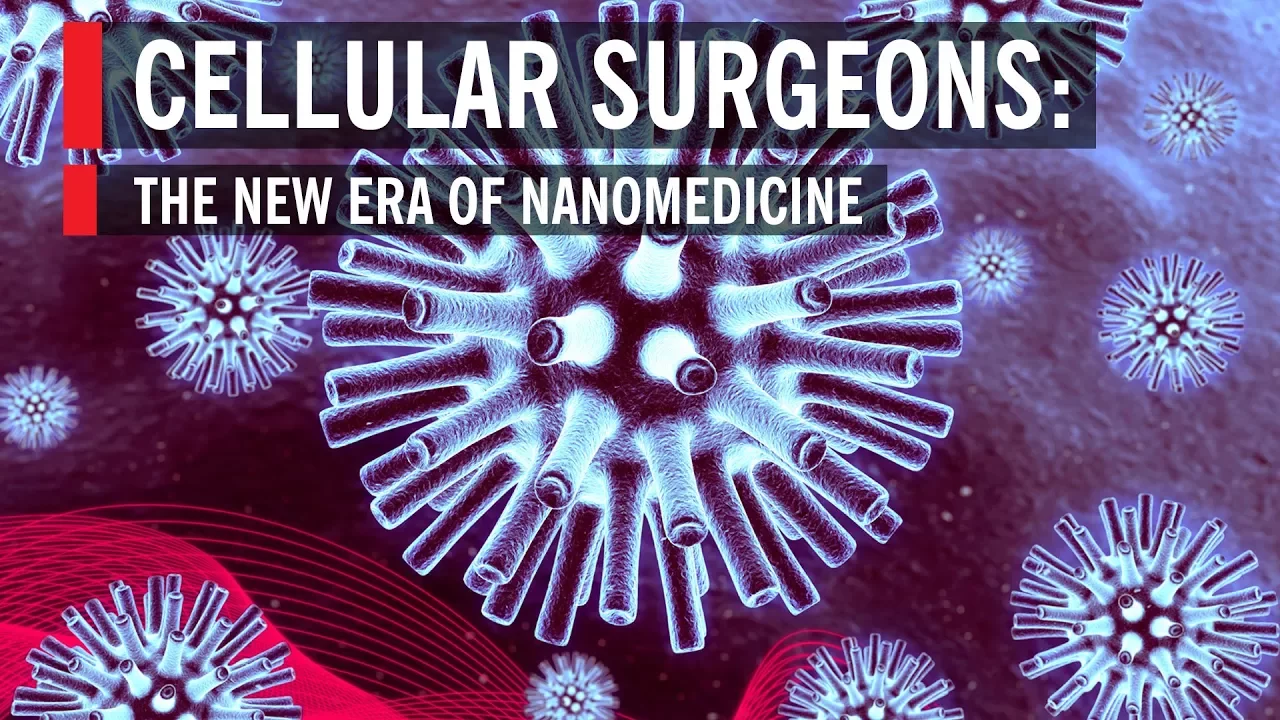
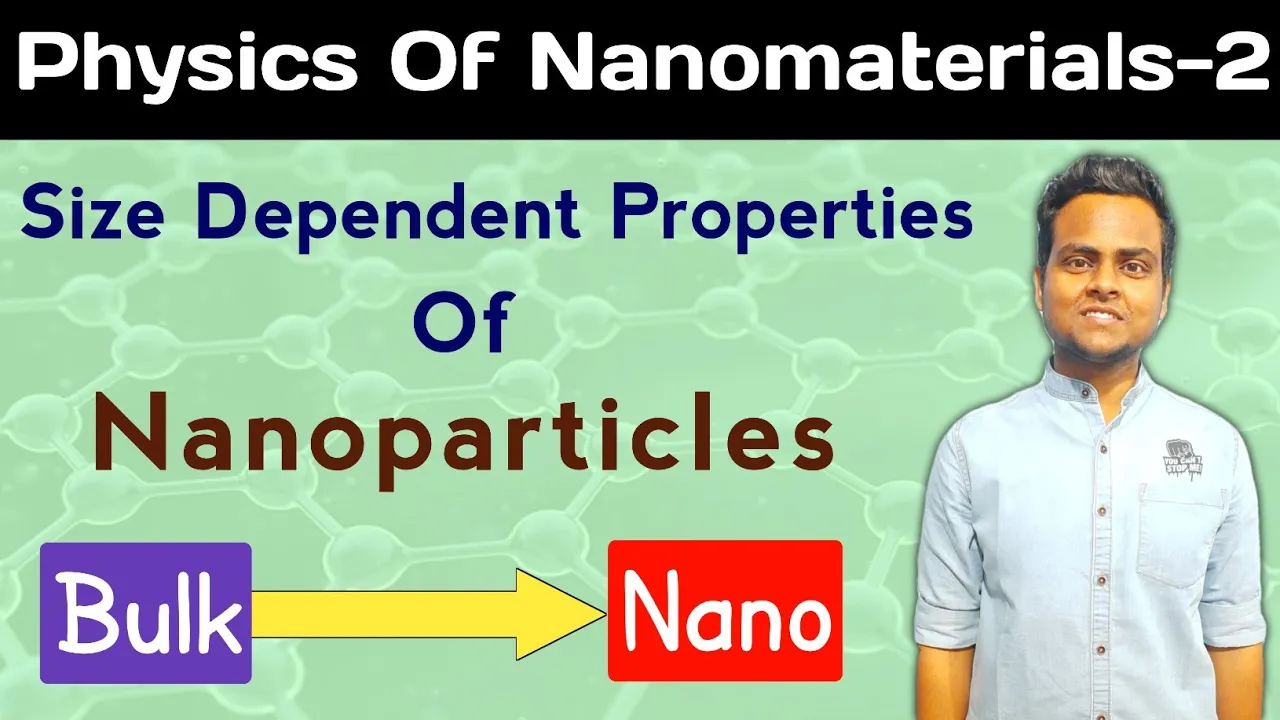
















Nanomaterials exhibit size-dependent properties where reducing material dimensions significantly alters physical behavior; as size decreases, melting point decreases due to higher surface-to-volume ratio and more exposed surface atoms, diffusion rates increase because smaller particles have more surface area for atomic movement, and solubility improves as dissolution occurs primarily at the surface. These size effects extend to other properties like thermal conductivity, electrical conductivity, and magnetism, with quantum confinement effects becoming significant at the nanoscale.
Size Effect in Nanomaterials: Melting, Diffusion, Solubility Explained
Added:Basic thermodynamics, including phase transitions, Gibbs free energy, and the definition of melting point and solubility.
The concept of surface-to-volume ratio and how it geometrically scales as particle size decreases.
Fundamentals of atomic bonding, surface energy, and the difference in coordination number between bulk atoms and surface atoms.
Standard diffusion mechanisms in solids and liquids, including Fick's laws of diffusion.
The Gibbs-Thomson equation and its mathematical modeling of melting point depression in nanoparticles.
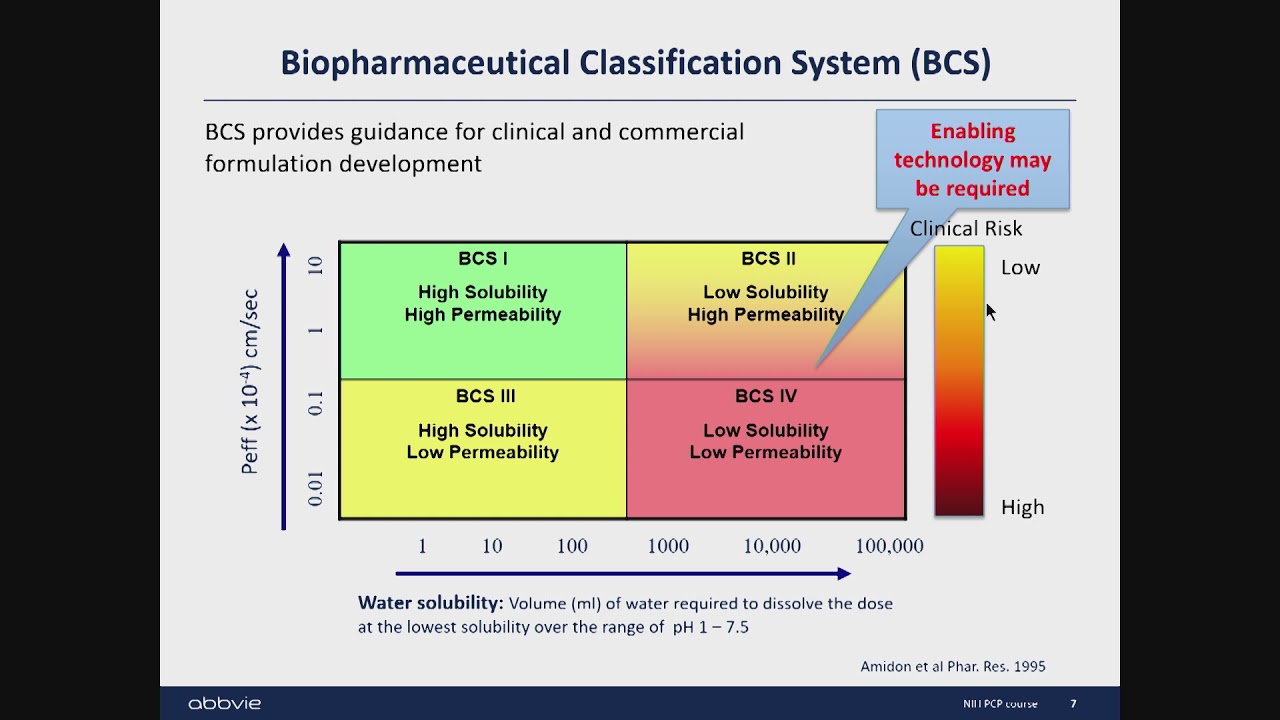
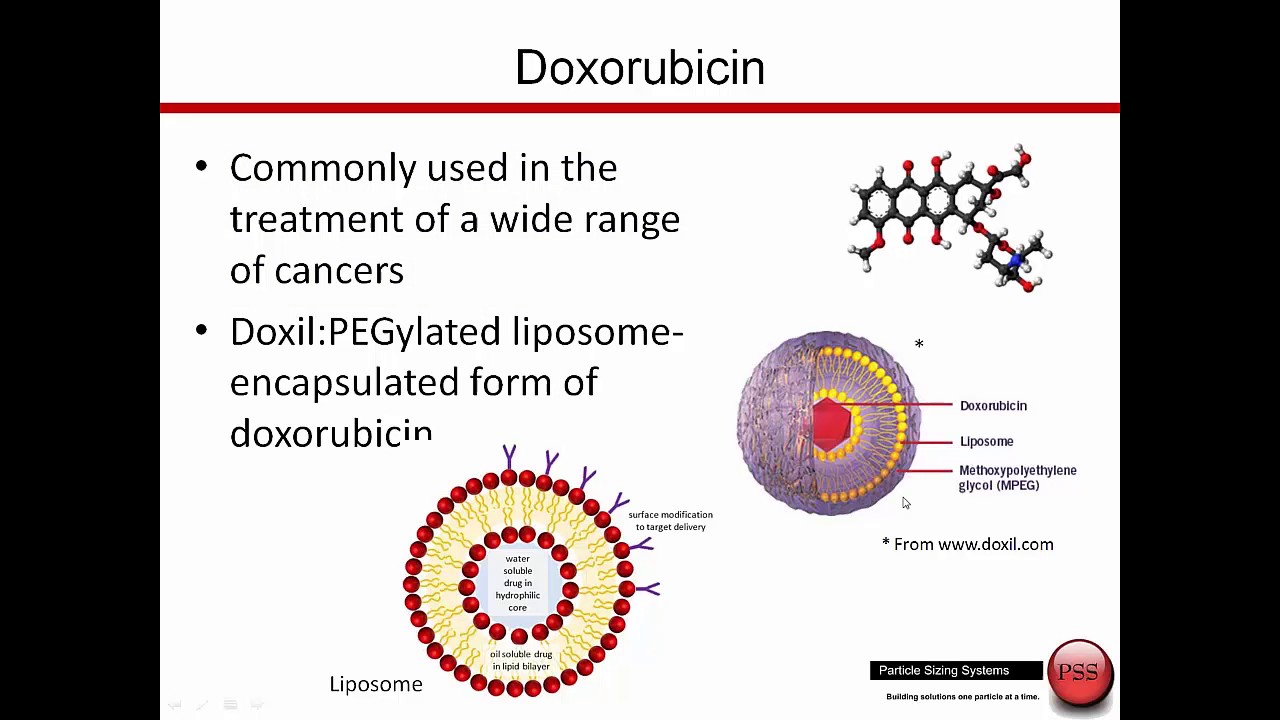
Practical applications in nanomedicine, such as tailoring nanoparticle size to control solubility and dissolution rates for targeted drug delivery systems.
Sintering kinetics at the nanoscale, specifically how enhanced diffusion affects the manufacturing, coalescing, and thermal stability of nanomaterials.
Strategies for stabilizing high-energy nanoparticles against unwanted aggregation and phase changes, including the use of capping agents and surfactants.
9.6K views41likes5:39Original Release: 2016-05-19
hello students today we are going to discuss about size effect in nanomaterials so today I going to discuss I'll show you three videos which will tell you about what is happening to the size in three different properties and based on that you can think on the other properties for example uh first of all we'll try to see what is happens to the melting point melting of a ice so this video is a simulation how the melting progresses for a ice cube look carefully observe carefully what is happening to the the corner molecule they started falling up past the falling means it is melting and as it progresses as the size decreases now see what is happening to the falling apart process or the melting process observe carefully as shape changes size decreases carefully observe what is happening to the m the rate at which it melts now yeah this is what I was telling so how does it happen now you go to the next we'll we'll just make it a little more complicated we have more surface now this is a square the same similar atoms we can take in to make into different complex shape which more surface area or Surface atoms atoms in the surface that now look at this here also Corner atoms which is exposed only one side is attach to the main object or main part they will start falling for just look carefully yeah that's what I was telling you now you see the surface area is more here compared to that the rate at which it melts also should differ initially it looks okay that it is not Ming that fast but now as it progress there is a sudden increase look at this okay now you have some idea now just observe carefully what happened to the bul even at as the melting starts The Bu whole bulk starts melting and the surface area where it is more exposed that is more surface area there melting fast okay now you have understanding the melting point or the melting of ice and this complex object depends on the size or rather the surface now we'll have a look at another property called diffusion which is important from the point of view making most of the Alloys and all now look at these two are different this is one and this is a uh dop and that you want to put it different Matrix now what is happening here the particle is small so it diffuse faster so diffusivity depends on the material now look at what is happened to the solubility solubility means how a material uh dissolves in a solvent now for this we'll take a water molecule in water we'll try to put sodium chloride where sodium is a positive positive ion and chlorine chlorine is a negative so that's it and the water as you all know is also polar molecule with hydrogen being positive and uh oxygen being negative so when they come in contact with this negative Florine the hydrogen will attach this and sodium oxygen will attach now this is how this m uh dissolution happens the positive part they attack the negative chlorine atom they pull it and the negative charged part will attach the positive sodium at now this is how they make and they'll not allow them to come together to form a ion form a ion Crystal again this is how the resolution and this phenomena it happens more or less on the surface so now you think what is what will happen to the surface as you reduce the size and similarly you can think upon other uh properties like what will happen to the conductivity what can happen to the magnetism as you reduce the size so that will have differ things also we need to take into consideration and different things I mean to say is like Quantum confinement also that I will do in the next video but you think about those property also what will happen if you reduce the size now we have seen melting we have seen disolution we have seen the this uh diffusion so these are all your thermal property you can think also you can also think about uh what will happen to Thermal conductivity what will happen to the electrical conductivity okay these are all physical properties so just think about it and tomorrow we can discuss in the class
Up Next

7:36
Synthesis of Quantum Dots: Cadmium Selenide Nanocrystals | Lab Guide
@ChemicalEngineeringNewsVideos
100.7K views•2011-09-16

12:54
Triumph of Orthodoxy Icon: Byzantine Art & History Explained
@BenCallan
2.1K views•2024-08-06

9:49
FastAPI vs Flask vs Django: Choosing the Right Python Web Framework
@TechWithTim
302.5K views•2024-05-26

1:42
Game of Thrones Opening Credits: A Cinematic Analysis
@gameofthrones
46.3M views•2011-04-18
Related Study Plans & Knowledge Roadmaps
Structured learning paths in General & Interdisciplinary Studies
general-studies
Elevator Engineering: History, Physics & Cities
01From Hoists to Safety Brakes: The Dawn of Vertical Lift
02Hydraulic vs. Traction: The Engineering Physics of Elevators
03Modern Speed, Safety, and Algorithms
+ 2 more learning modules
12h5 modules
Explore Roadmap
general-studies
Rubber: Material Science, History & Geopolitics
01Origins of Natural Rubber & Mesoamerican History
02The Chemistry of Natural Rubber & Vulcanization
03The Geopolitics of the Rubber Boom & Colonization
+ 2 more learning modules
12h5 modules
Explore Roadmap
general-studies
Containerization: Evolution, Logistics & Trade
01Ancient Trade & Bulk Cargo: Amphorae to Barrels
02The Industrial Revolution & Cardboard Packaging
03The Containerization Revolution: Malcom McLean
+ 2 more learning modules
12h5 modules
Explore Roadmap
general-studies
Textile Tech: Evolution, Labor & Global Impact
01Pre-Industrial Textiles: Handloom & Cottage Industry
02Mechanization: The Spinning Jenny to the Power Loom
03The Factory System & Global Labor Transformation
+ 2 more learning modules
10h5 modules
Explore Roadmap