















![Radioactivity: Law of Decay and Half-Life [L6]](https://i.ytimg.com/vi_webp/X84Stiw7wd0/maxresdefault.webp)
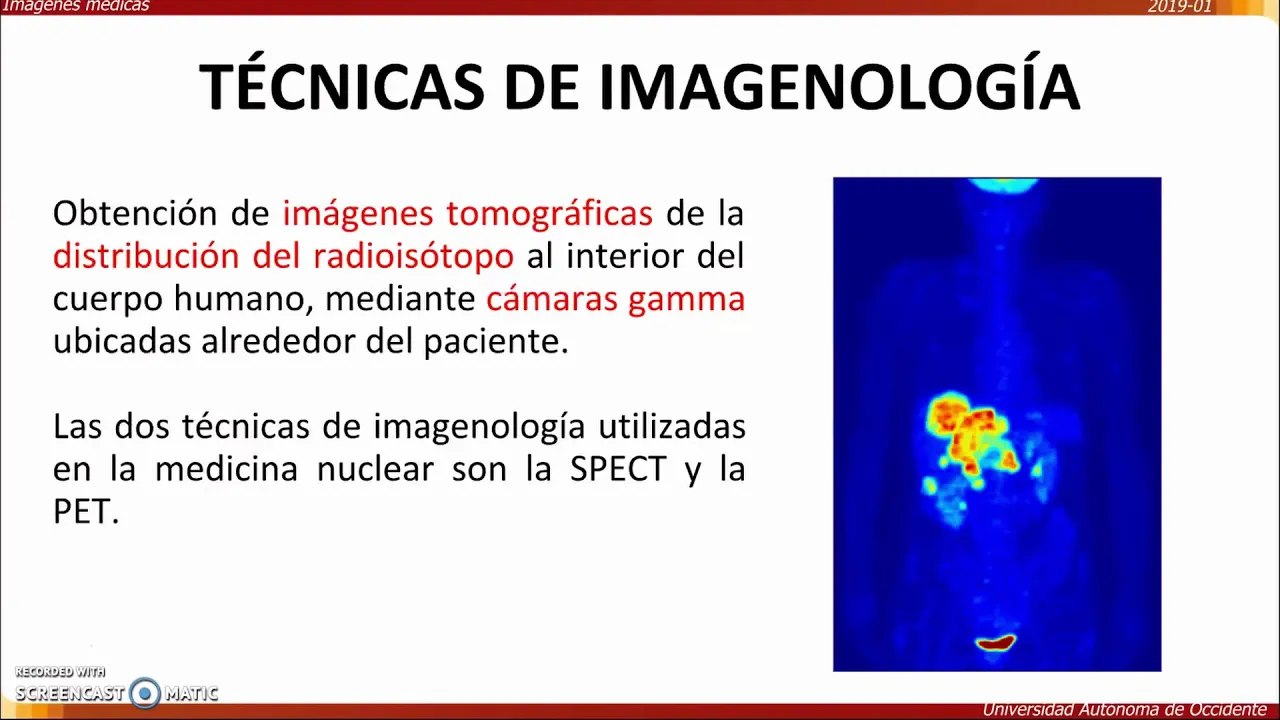








Nuclear medicine uses gamma-emitting radioactive tracers placed inside the body to create diagnostic images, with Technetium-99m being the most widely used isotope due to its 6-hour half-life that balances diagnostic effectiveness with minimal patient radiation damage; it is produced on-site in hospitals by extracting it from decaying Molybdenum-99 through a chemical separation process called elution, then bonded to targeted pharmaceuticals that accumulate in specific body tissues like bones or organs for imaging.
A-Level Medical Physics: Nuclear Medicine & Radiotracers
Added:Understanding of radioactive decay types, specifically gamma emission, and their respective penetrating and ionizing powers.
The concept of radioactive half-life and the mathematical modeling of exponential decay.
Basic atomic structure, including isotopes, mass numbers, and the concept of nuclear energy levels (metastable states).
Fundamental principles of how ionizing radiation interacts with human tissue and matter.
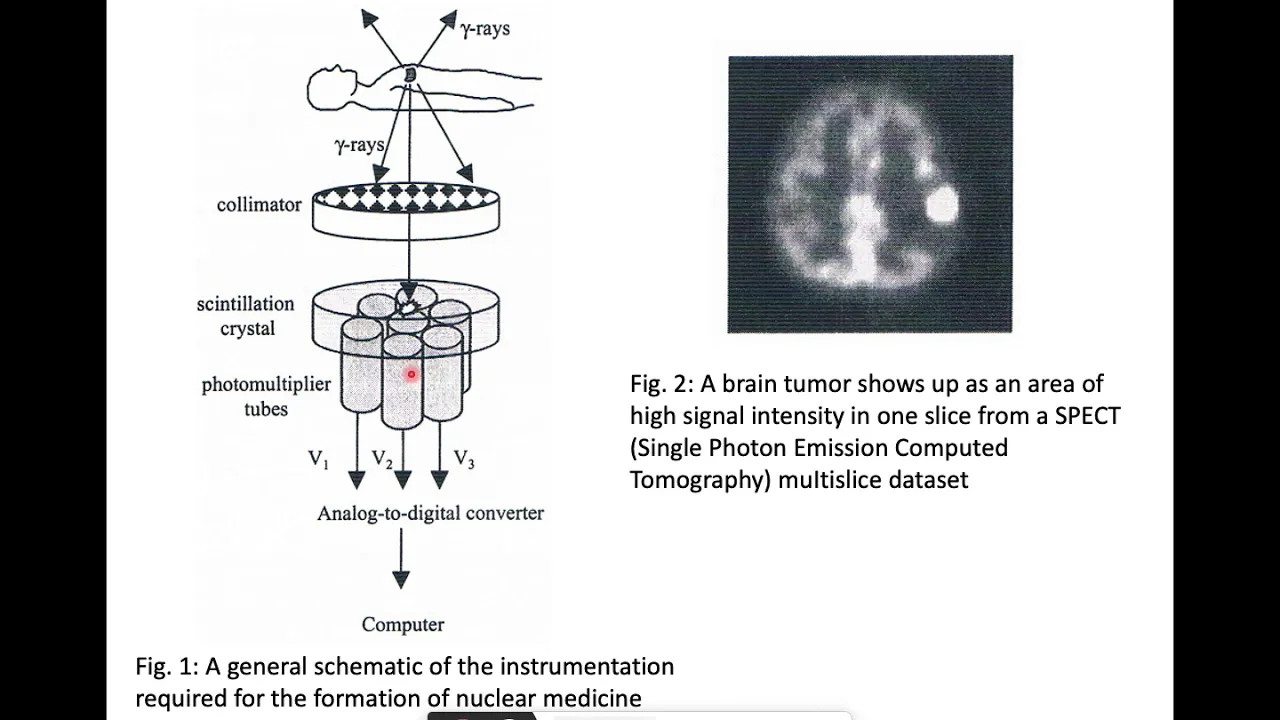
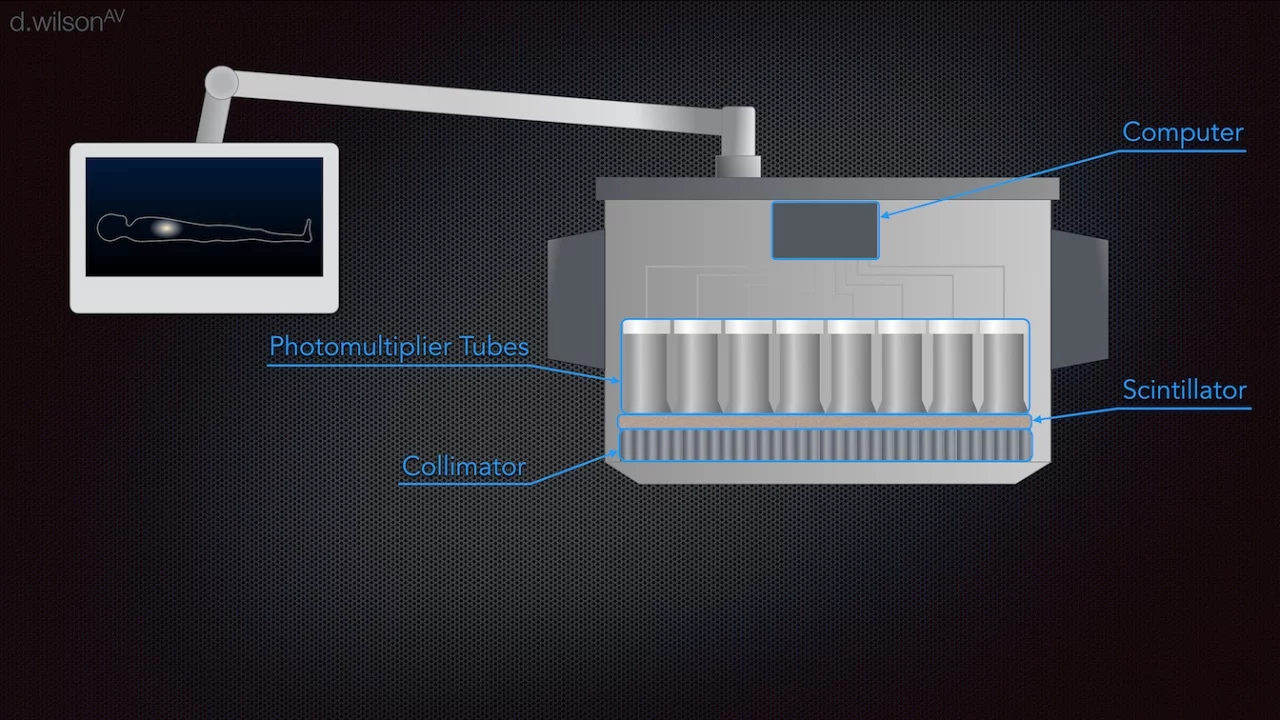
The mechanics and instrumentation of Gamma Cameras, including the role of collimators and photomultiplier tubes.
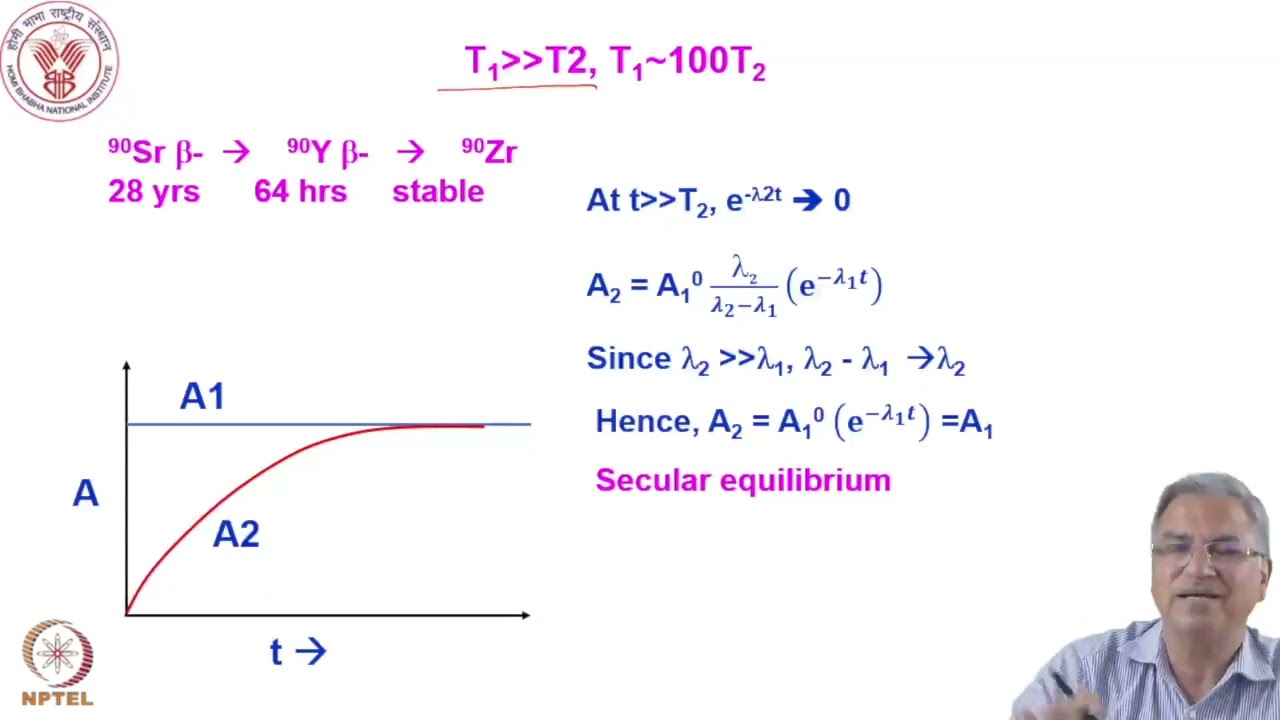
The physics of radionuclide generators, specifically the transient equilibrium in Molybdenum-99/Technetium-99m generators.
Advanced tomographic nuclear imaging techniques, such as SPECT (Single-Photon Emission Computed Tomography) and PET (Positron Emission Tomography).
Radiation dosimetry, evaluating effective dose, and understanding biological risks versus diagnostic benefits in clinical environments.
The distinction between diagnostic nuclear medicine (using tracers) and therapeutic nuclear medicine (e.g., using Iodine-131 for thyroid ablation).
23.6K views178likes13:48Original Release: 2013-04-18
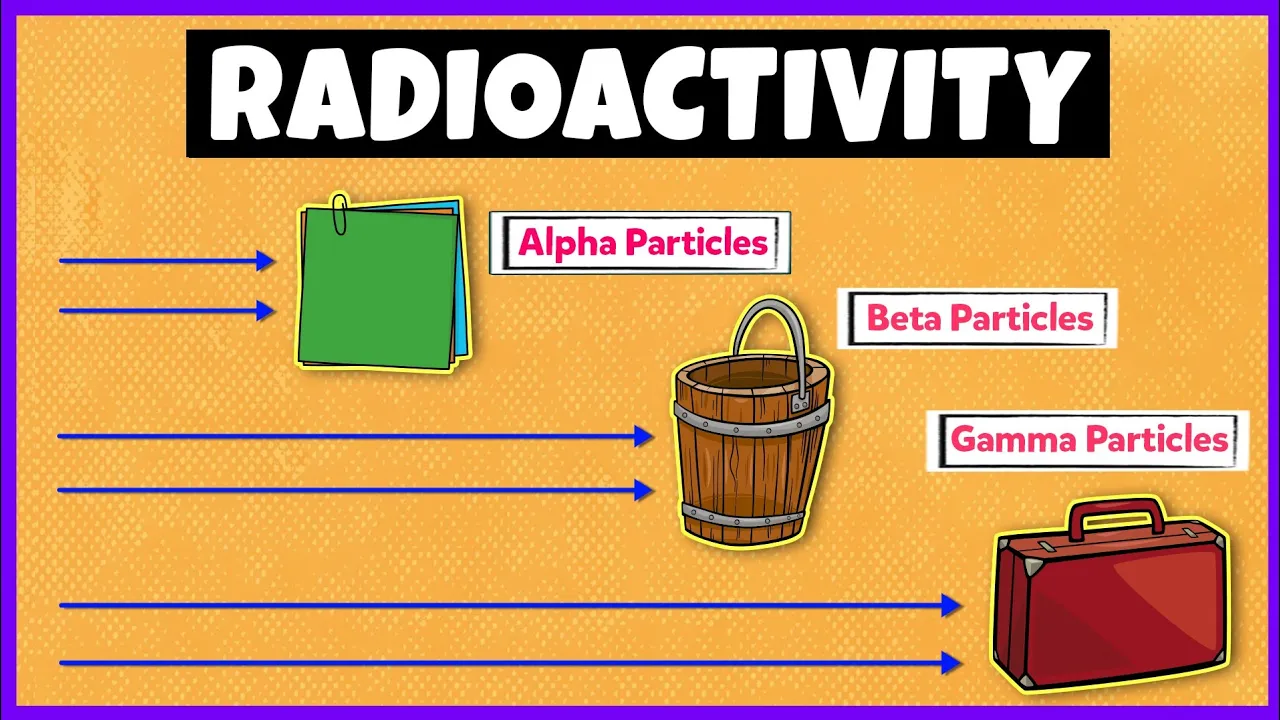
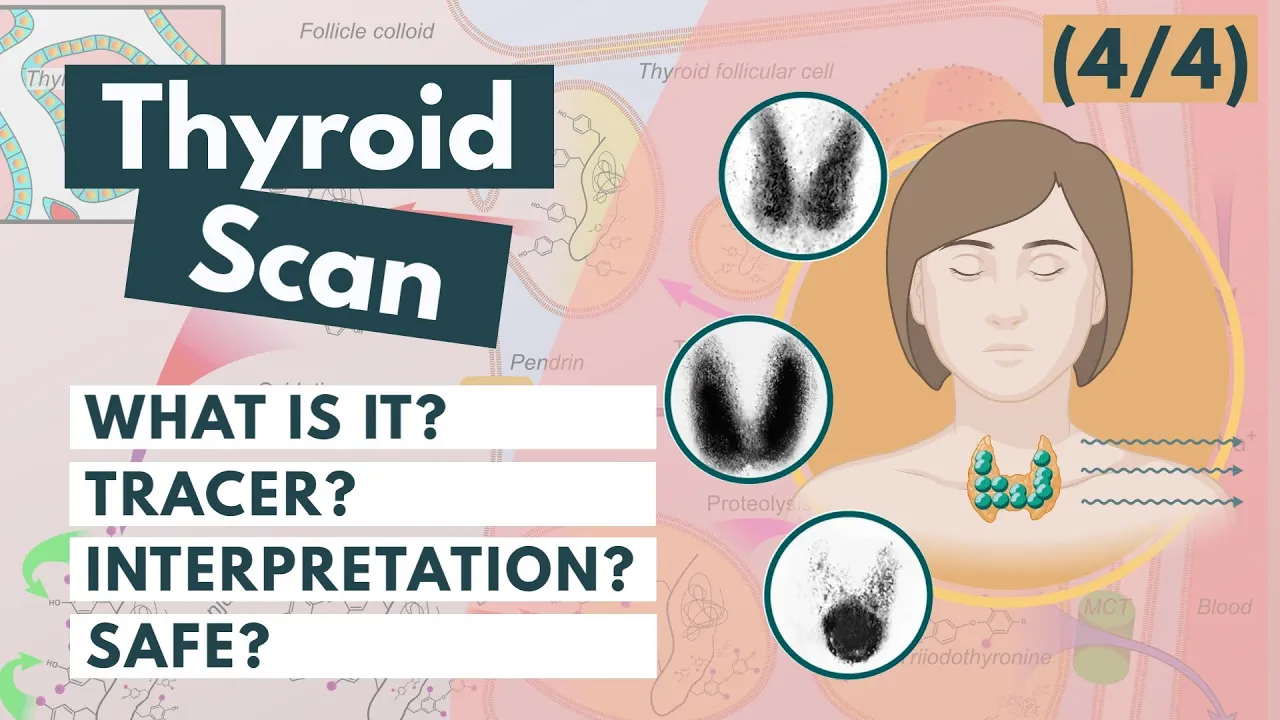
hello this is an a-level video on nuclear medicine which discusses how we can use radioactive isotopes to diagnose own image patients and their body systems so let's get started straight away so what we've looked at so far is x-rays and we've talked about how x-rays can be used to make quite detailed images of body systems x-rays and external technology so we direct the x-rays from one side of the patient through to the other side and we detect them on the other side of the patient using a camera or a film what nuclear medicine does is it places our diagnostic technology within the body and we can place it within the body and then it will emit its radiation and we can detect that radiation outside the body and this has certain distinct advantages to x-rays okay so what sort of radioactive isotope do we want to use well it has to be firstly a gamma emitter okay it's got to be a gamma emitter because alpha and beta are not penetrating enough to escape the body so if you placed an alpha emitter within the body it would be dangerous because it's highly ionizing and be it's not very penetrating and so the radiation wouldn't escape from the body and similar things can be said about beta okay so we have to use a gamma emitter the gamma emitter that we do use must have a reasonably short half-life not too short but reasonably short so what we want is to make a whip a reasonably rapid diagnosis but we don't want the isotope to remain in our body for too long we wanted to have a short half-life so that it will decay quickly and the damage to the patient's body will be minimized so in essence we need a gamma emitter with a half-life of generally speaking a few hours now one of the most widely used in fact the most widely used radioisotope in nuclear medicine is called technetium-99m now 99 is the mass number of the isotope technetium is the element and M stands for metastable which we'll have a look at in a minute so this is produced via a beta decay in molybdenum-99 so the parent isotope for technetium-99m is molybdenum-99 and that decays via the mission of a beta particle and an anti neutrino standard beta decay to technetium-99m now the molybdenum-99 has a half-life of 67 hours so technetium-99m is what we call a metastable state which we'll have a look at in a minute and it decays to ordinary technetium-99 via gamma emission and this is the one we want to have going on in in the patient's body now this has a half-life of 6 hours so it's quite suitable for medical diagnosis because it's short enough for the doctor to make a diagnosis and for the isotope to get around the body but it's not too long so by the time damage starts being does the patient the isotope will have decayed away so 6 hours is a good half-life for that and so the technetium is excreted by the body and then that decays by beta emission to another isotope which has a very long half-life but by the time this happens the technetium has left the body so here's a little decay graph for that we've got the molybdenum at the top and this decays by beta decay with a half-life of well it says 66 67 hours they're two technetium-99m the meta stable form of technetium and that decays by gamma emission with a half-life of a roughly six hours to technetium-99 and that's the one that happens in the body this decay is what we want to happen in the patient's body okay so what we're going to do is inject this stuff and let it decay alright so we've talked about this term metastable so we ought to kind of describe what that means a little bit now there are some some isotopes that have two states both of them are stable so it but the metastable state is what we call an excited state so the nucleus of technetium 99m is in an excited state and normal excited nuclei will immediately drop down into a lower energy state for example some elements that decay by alpha decay will immediately be followed by a gamma decay as the nucleus drops from a higher energy excited state into a lower state now a metastable state can stay in that excited state for far longer than usual up to a few hours in this case so an analogy of it is is this little ball so the most stable state for this little black ball is down here but there's also another less stable but still stable state up here and this is the metastable state now a slight nudge on this ball will knock it out of that metastable state and and it will fall into this more stable lower energy state so this is kind of like a gravitational analogy to what's happening in the nucleus very simple one okay so the metastable state is one where the nucleus will stay in its excited state because it's reasonably stable for longer than a normal nucleus would okay and then it will drop down into its lower energy state via the emission of a gamma photon and obviously the energy of the gamma photon will equal the difference in the energy levels of the nucleus and the energy of these gamma rays in technetium-99 are approximately 140 ke v which is a similar sort of energy to some of the x-rays that we use for alternative diagnosis okay so that's what we mean by metastable so the next part of this is to look at how we actually produce technetium-99m now this has to be done in the hospital itself because of the shorter half-life it can't be transported so the technetium-99m must be manufactured on site so what the hospital will do is it will buy on a weekly basis it will buy a supply of molybdenum-99 now molybdenum-99 is produced in nuclear fission research reactors of which there are a few up and down the country and around the world and molybdenum-99 a byproduct of nuclear fission so this research reactor will will supply many hospitals probably all the hospitals in the country with a weekly supply of molybdenum-99 which is shipped down in what they call cows or technetium generators is is the actual technical term of it it's a Ledge shielded box full of molybdenum-99 in essence so this has a half-life of 67 hours so the hospital will get their supply of molybdenum-99 on-site and then they will manufacture the technetium-99m from the molybdenum okay and you need to know how this is done okay I've got a diagram coming up in a minute but let's just have a look at this this text just just to see what what's happening so the the molybdenum-99 is what we call adsorbed onto alumina so basically they get a column of alumina okay which is like a compound of aluminium oxide and the molybdenum-99 is effectively bonded to this this compound that the the alumina forms a substrate onto which the molybdenum-99 is bonded and that process is called an adsorption now when it does that it forms a compound called molybdate which is mo o for to - so it's a doubly negative ion so the molybdenum-99 in the form of this compound sits there decaying and as it decays it the compound here changes into what we call pertechnetate now pertechnetate has the formula TCO 4 1 - ink the singly negative on which contains the radioactive technetium the thing is that this tech this pertechnetate is only singly ionized all right whereas the molybdate is doubly ionized and as such it forms a less strong bond a looser bond if you like with the Allium with the alumina so it's still bonded to the alumina but less strongly because of the singly ionized molecule so what you do then is is you you pull saline solution across the alumina and the patek negate pertechnetate will dissolve in the saline solution okay so you will then get a solution of patek metate all right in what we call sodium pertechnetate so it bonds with the sodium in the saline solution forming sodium pertechnetate and that can then be pulled up this this process is called it Ellucian like that Ellucian so that is then pulled off by a system of tubes into what we call an illusion vial where you end up with a an aqueous solution of sodium pertechnetate and that is the one that you actually inject into your patient so if we have a this is sometimes called milking and so we have if we have a look at I a gram which tries to explain what's going on here here is your saline solution and this is your Ellucian vial here where the thing ends up and this is under low pressure and that low pressure will pull the air through the saline solution okay and the saline solution will come up this tube and into the alumina column where you have both the molybdate and the pertechnetate adsorbed onto this alumina and it will pull off the protective tape from this column and that will then form sodium protective tape which will then go down this tube into your Ellucian vial giving you a solution of sodium Patek rotate okay so that's called where sometimes called milking but it's effectively the production and the illusion of the sodium particulate ate from from the from the molybdenum and from the alumina okay so what do we do with the sodium per ticket eight once we've got it well we need we use it as what we call the radiopharmaceutical tracer and our tracer is something that can tell you where there's a problem with something and obviously a radiopharmaceutical or a pharmaceutical means a drug and a radiopharmaceutical is a drug that is radioactive so we're using the radioactive properties of the drug in order to tell us where the problem is because what we can do is we can take that pharmaceutical and we can bond it to something else that the body system that we want to issue will take up quite readily so for example if we want to image bone and technetium-99m is quite good for imaging bone we can bond it to a chemical or a pharmaceutical that contains phosphor because phosphor is very readily taken up by bone because it's one of the ingredients of button to bone uses any phosphor that's in the body and if that phosphor is then bonded to to a CMU 99 the technetium-99 will then enter the bone and we can get decent images about the bone okay so these are targeted pharmaceuticals targeted drugs that will be taken up by what we want to image so we've been quite clever about it and that's what's known as a tracer okay so here are some radio pharmaceuticals that we actually use in the house really cirrhosis oops we've spent on medicine wrong up there just ignore that so another one we can use with bone is fluorine-18 flooring is also used for PET scanning which we'll look at in a different video technetium-99m is quite widely used because it's got many different uses so for bone for blood circulation and for functions of the heart and liver and we can get very good images of functioning hearts and things like that using this process if we want to image a thyroid we can bond it to an iodine one two three k sorry no we can use a radiopharmaceutical which is an isotope of iodine and if we want to look at the function of lungs we can use a radiopharmaceutical xenon 133 so there are various Radio isotopes radio pharmaceuticals that we can use technetium-99m being the most common
Up Next

18:21
PET Scan Working Principle | Cambridge A Level Physics (9702) A2
@ETphysics
9.7K views•2022-03-16

12:53
21cm Hyperfine Transition in Neutral Hydrogen: Radio Astronomy Basics
@AaronRobertParsons
12.4K views•2011-10-13

10:44
A-Level Medical Physics: X-Ray Attenuation Mechanisms Explained
@PlymCollSci
36.5K views•2013-03-05

27:14
Entropy and the Second Law of Thermodynamics Explained
@veritasium
27.5M views•2023-07-01
Related Study Plans & Knowledge Roadmaps
Structured learning paths in Physics
physics
Nuclear Physics (Decay, Fission & Reactors)
01Atomic Structure and the Binding Force
02Radioactive Decay and Half-Life
03Nuclear Fission Mechanics and Chain Reactions
+ 2 more learning modules
12h5 modules
Explore Roadmap
physics
Soft Matter (Polymers, Colloids & Rheology)
01Foundations of Soft Matter & Thermal Forces
02Polymer Physics and Macromolecules
03Colloids, Surfactants, and Self-Assembly
+ 2 more learning modules
38h5 modules
Explore Roadmap
physics
Analytical Mechanics: Lagrangian & Hamiltonian
01Mathematical Foundations: Calculus of Variations
02From Newtonian Mechanics to Constraint Dynamics
03The Principle of Least Action & Lagrangian Mechanics
+ 3 more learning modules
28h6 modules
Explore Roadmap
physics
General Relativity (Spacetime & Cosmology)
01Foundations of Relativity: Special Relativity
02The Geometry of Spacetime: Equivalence Principle & Curvature
03Einstein's Field Equations: The Mathematics of Gravity
+ 2 more learning modules
55h5 modules
Explore Roadmap