





















X-rays are absorbed by body tissue through three primary mechanisms: the photoelectric effect (where X-ray photons with energy less than 100 keV are completely absorbed by electrons, causing ionization), Compton scattering (where high-energy X-rays transfer partial energy to electrons, producing lower-energy scattered photons), and pair production (where X-rays with energy above 1.02 MeV convert into electron-positron pairs via interaction with the nucleus). The attenuation coefficient depends on both photon energy and atomic number, with the photoelectric effect being most sensitive to atomic number (proportional to Z³), Compton scattering being independent of atomic number, and pair production showing intermediate dependence (proportional to Z²). These mechanisms explain why bone (high atomic number) absorbs X-rays more strongly than soft tissue, enabling medical imaging contrast.
A-Level Medical Physics: X-Ray Attenuation Mechanisms Explained
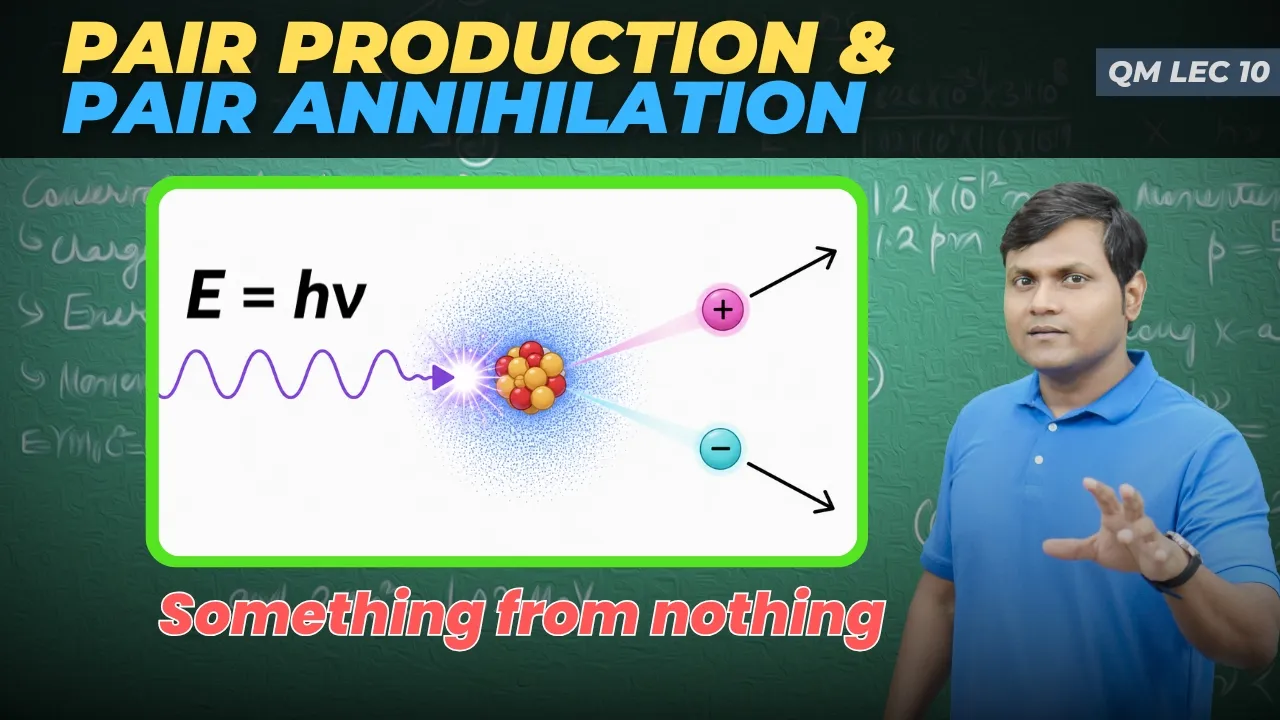
Added:okay so what causes the x-rays to be adamant right that's what we're going to talk about next well there are three mechanisms that cause x-rays to be absorbed into Shu or in the body and these are the three all right now these are described in detail elsewhere and the photoelectric effect so obviously we met last year when we were doing quantum mechanics hair production we've met a little tiny bit when we were doing nuclear fusion and stars Compton scattering would possibly haven't met yet so far so I'm going to describe these three absorption mechanisms for x-rays so the first one is the photoelectric effect now in terms of Medical Physics what happens is this okay it's quite simple really just involves ionization and it only applies to x-rays of energy less than 100 ke V all right so the incident x-ray comes into the atom all right is incident in this direction and it interacts with an electron in such a way that the electron absorb absorbs all of the x-rays energy so all of the x-ray photons energy is absorbed okay so the x-ray is completely absorbed by the electron and that gives it extra energy and it is actually removed from the atom in effect what you've done is you've is atom okay in the body now that's clearly dangerous because ionization of body tissue is not a good idea but we need to keep the dose fairly low in order to prevent problems happening from this mechanism all right but the photoelectric effect causes an ionization within the atom and all of the x-rays energy is absorbed the x-ray disappears there is no photon after this interaction okay so that's one way in which the x-rays are absorbed the second way is what we call compton scattering which is almost the same as the photoelectric effect but in this case the the the x-ray photon is interact with an electron but not all of the energy is used up so the electron is still removed the pattern is still ionized but there's a little bit left over okay and that little bit left over is Rima 'td as a lower energy boat on alright so this high energy high frequency x-ray photon interacts with the electron sufficiently to give the electron enough energy to remove it from the atom but the x-ray photon has more energy than is needed to do that and therefore it is we emitted the extra energy is remit 'add as a lower energy photon possibly an ultraviolet visible infrared and so on further down the electromagnetic spectrum okay now obviously in order to do this rather than the photoelectric effect the incident x-ray photon must have more energy and a the Compton scattering effect is very prominent in the range 500 ke V to 5 MeV so 500 kilo electron volts to 5 mega electron volts okay the third one is completely different and is called pear production now this is the quantum mechanical effect that happens all over the place but in terms of x-ray absorption what happens is the x-ray comes in it doesn't interact with one of the electrons in the outer shell all it does is it interacts with the electric field of the nucleus alright so in it comes and spontaneously spontaneous mass energy oops transfer okay so as it interacts with the electric field one of the things that can happen is the act the energy in the x-ray can actually be transferred into mass all right into matter spontaneously and this is governed by the relationship of equals mc-squared which we've looked at in terms of nuclear processes nuclear fission and fusion alright so that mass energy relationship occurs here as well and what is produced in the place of the x-ray energy is a matter antimatter pair okay the x-ray disappears from existence completely and an electron and a positron are produced and those electron and positive that electron and positron pair whiz off in opposite directions effectively alright and this is called pair production for obvious reasons the energy of the photon is converted into the matter and that matter manifests itself in terms of a matter antimatter pair of an electron and a positron alright and that's another way that the x-rays are absorbed by the body tissues okay so all three of these types depend on various things they depend on the energy of the x-ray alright and they depend on the atomic number of the atom in the body body tissue all right so we're talking about the different types of isotopes whoops excuse me different type of isotopes or nuclei different type of elements alright so here we have the three attenuation mechanisms the photoelectric effect the compton scattering and the pair production these are the typical ranges of x-rays that that are required to generate this type of attenuate attenuation mechanism so you can see that for very low energy x-rays the photoelectric effect is dominant for high-energy x-rays the Compton scattering effect is dominant and for pair production you need at least one point zero two MeV that's because the mass of a positron plus the mass sorry I'll just do that again the mass of a positron plus the mass of an electron are equivalent to an energy of one point zero 2 MeV okay and so you need at least that amount of energy in order to produce these two masses alright and here's a brief description of or summary of what happens to the photon and how its attenuated how its absorbed now the relationship between the attenuation coefficient I good an attenuator it is how good and absorb how good an absorber the tissue is and the atomic number is given here so for the photoelectric effect the attenuation coefficient is very sensitive to atomic number alright so if the atomic number doubles I you go from you know well hydrogen to helium for example not as much helium in the body the attenuation coefficient will go up by two to the power three right very sensitive for Compton scattering because you're using going high-energy x-rays the attenuation coefficient is independent of the atomic number it doesn't care what at emit it's effectively what type of Advocates repair production is sort of intermediate alright so the attenuation coefficient is proportional to the square of the atomic number all right now what this means for these two is that elements with higher atomic number are much more likely to absorb x-rays the attenuation the absorption is much stronger in much much stronger in atoms of high atomic number now if you consider what type of atoms are in tissue and what type of atoms are in bone you know in tissue you've got things like carbon nitrogen oxygen hydrogen and like that they're all fairly low atomic numbers all right six seven eight hydrogen is obviously just one but in phone I'll just write that down here you've got things of much higher atomic number you've got things like calcium all right with much higher atomic number and that is one of the reasons why the absorption coefficient is much higher in bone because the atomic number of some of the absence in the bone is much higher okay now the relationship between the attenuation coefficient and the energy is a bit more complicated the attenuation coefficient in the photoelectric effect mechanism is proportional to one over e cubed so if your energy if the energy of your photon goes up the energy of your x-ray goes up I use high-energy x-ray the attenuation coefficient will go down very sharply alright this is proportional to one over eq and that's one of the reasons why at high energy this isn't a particular particularly important effects you have to have low energy photons in order to to have this attenuation mechanism and this is why alright easy as the energy goes up the attenuation the absorption drops very quick in terms of Compton scattering mechanism the sorry about that the attenuation decreases slowly with E alright so there's not much change and with the pair production the attenuation Rises slowly with E so as he goes up the attenuation Rises but only slowly and that's it thanks for listening
Up Next

MRI Physics Explained: Principles of Magnetic Resonance Imaging
@LightboxradiologyAu
982.9K views•2013-09-25

21cm Hyperfine Transition in Neutral Hydrogen: Radio Astronomy Basics
@AaronRobertParsons
12.4K views•2011-10-13

A-Level Medical Physics: Nuclear Medicine & Radiotracers
@PlymCollSci
23.6K views•2013-04-18

Entropy and the Second Law of Thermodynamics Explained
@veritasium
27.5M views•2023-07-01
Related Study Plans & Knowledge Roadmaps
Structured learning paths in Physics