





![Corrina Sivak on Dynamo: Amazon's Highly Available Key-Value Store [PWL Tokyo]](https://i.ytimg.com/vi/RnHS0Yn8jH4/sddefault.jpg?sqp=-oaymwEmCIAFEOAD8quKqQMa8AEB-AH-CYAC0AWKAgwIABABGHIgYSg2MA8=&rs=AOn4CLCqk9YWSySXPQZLFbcagg142O6HSw)























Virtual nodes solve the load balancing problem in consistent hashing by assigning multiple hash positions to each physical node on the hash ring, enabling even data distribution, flexible scaling, and minimal data movement during cluster expansion or contraction, as demonstrated by systems like Cassandra and DynamoDB.
Virtual Nodes in Consistent Hashing: Load Balancing Explained
Added:Basic understanding of traditional hash functions, hash tables, and modulo arithmetic.
The fundamental concept of Consistent Hashing (the hash ring) and how keys are mapped to physical nodes.
The problem of non-uniform data distribution (hotspots) in distributed networks.
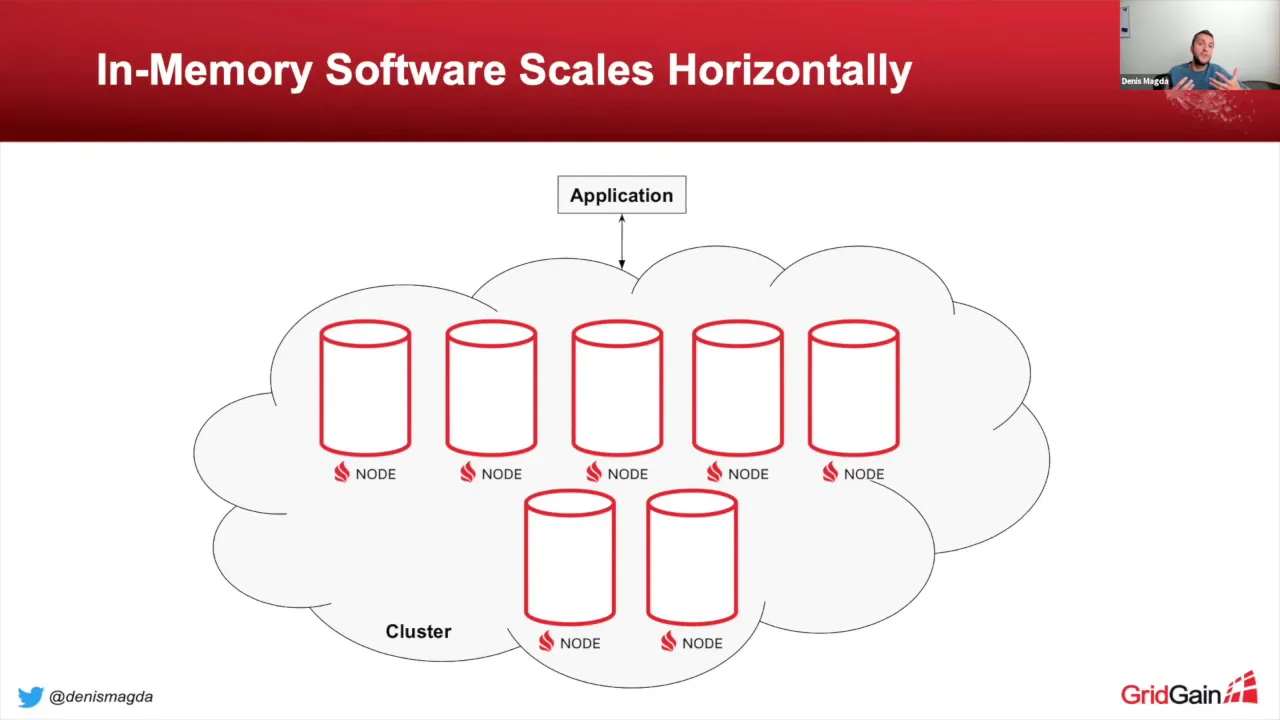
Core distributed systems architecture concepts, including horizontal scaling and data partitioning.
Deep dive into real-world implementations of virtual nodes (vnodes) within Apache Cassandra and Amazon DynamoDB.
Data replication strategies and node discovery/membership protocols (e.g., Gossip Protocol) that work alongside consistent hashing.
Dynamic rebalancing and resharding algorithms, evaluating the network overhead of data movement when nodes join or leave.
Alternative distributed data partitioning strategies, such as range-based partitioning used in Google Spanner and Apache HBase.
114 views4likes4:54Original Release: 2025-12-13
Welcome to this video on virtual nodes in consistent hashing. We'll explore how to achieve better load balancing in distributed storage systems by using multiple hash positions per physical node. This technique is fundamental to understanding how modern distributed databases like Cassandra and Dynamodeb manage data across clusters.
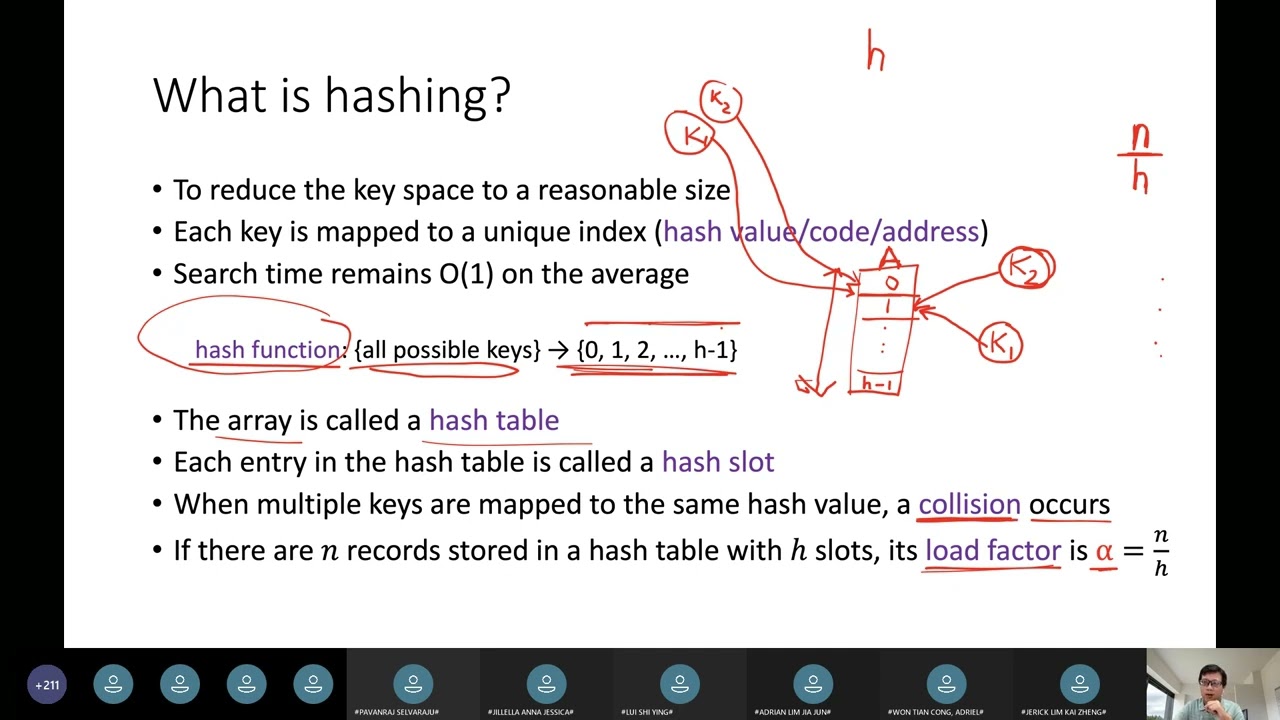
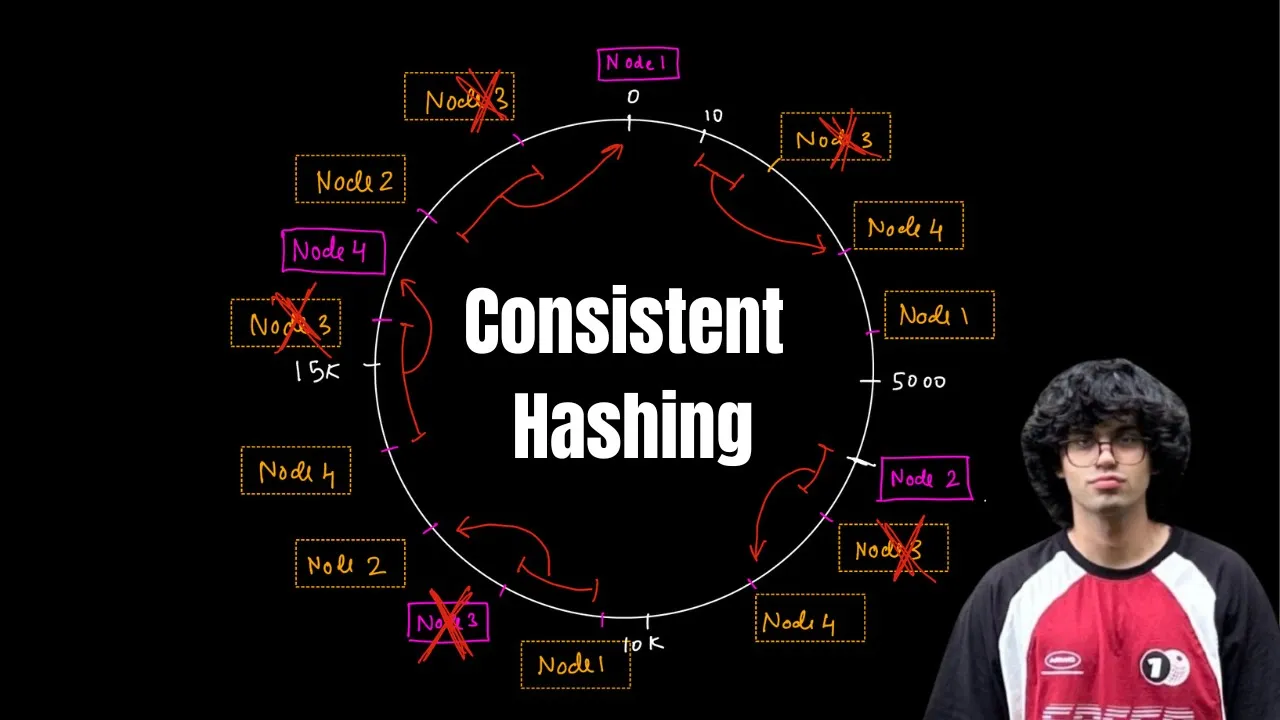
Basic consistent hashing has a significant problem. When nodes are placed randomly on the hash ring, data distribution becomes uneven. Some nodes end up with far more data than others, creating hotspots. This leads to poor resource utilization where certain nodes become overloaded while others remain underutilized. Additionally, server failures can cause sudden load spikes on the remaining nodes.
Virtual nodes solve this problem.
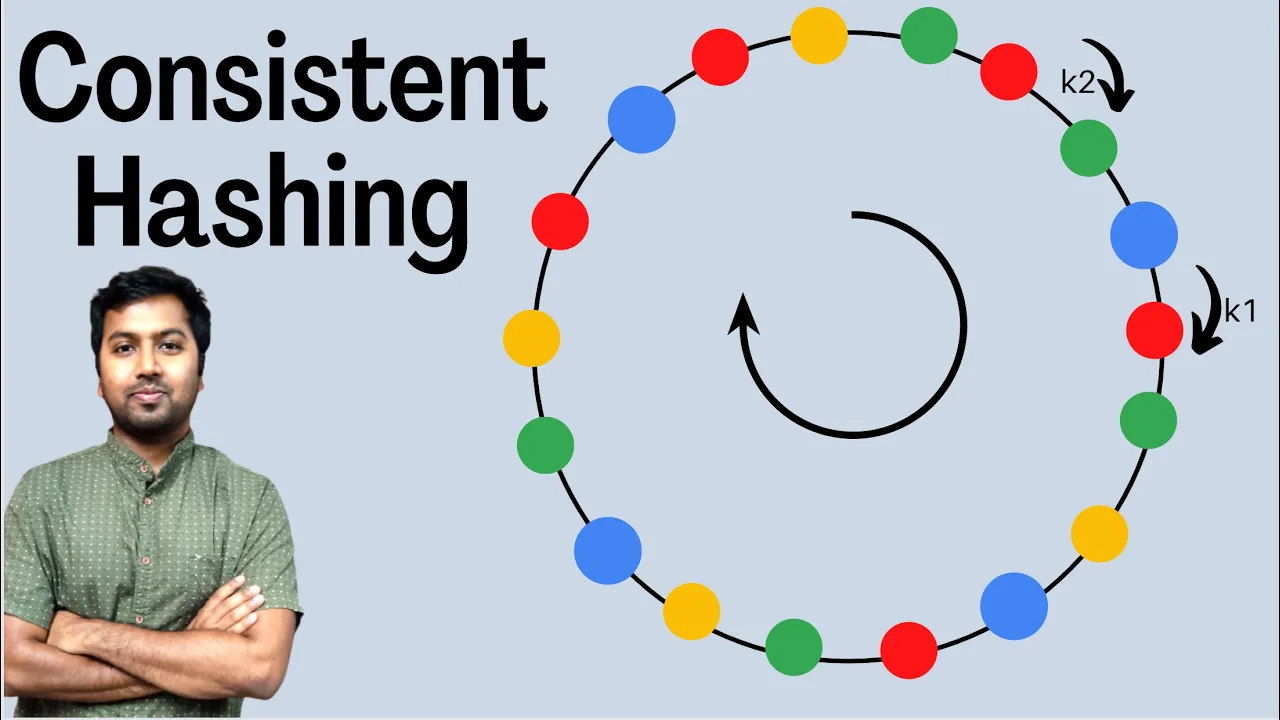
Instead of assigning one position to each physical node on the hash ring, we assign multiple positions. Each physical server occupies several points on the ring simultaneously.
This approach enables better data distribution, balances load across all nodes, and provides flexible scaling as your cluster grows or shrinks.
Here's how virtual nodes work in practice. Each of our three physical nodes gets assigned multiple virtual positions on the hash ring. Node A might occupy positions a 1, a two, and a three. When data arrives, its key is hashed to find a position on the ring.
The data then gets stored on the nearest virtual node which belongs to the physical node. This distribution of virtual nodes ensures that data spreads evenly across the physical cluster.
The process has four main steps. First, each physical node is assigned k virtual positions on the ring. Next, incoming data keys are hashed to determine their position. Then, we walk clockwise from that position to find the nearest virtual node. Finally, the data gets stored on the physical node that owns that virtual node. By repeating this process for every key, we achieve balanced distribution across the entire cluster.
Let's compare the two approaches. Basic consistent hashing suffers from uneven distribution, high variance in node load, and some nodes becoming overloaded while others sit idle. Virtual nodes eliminate these problems. They provide even data distribution, low variance in load across nodes and excellent resource utilization. No node becomes a bottleneck and the system performs predictably under load.
The key parameter is K, the number of virtual nodes per physical node.
Cassandra, for example, uses 256 virtual nodes by default. The choice of K involves trade-offs. A higher K value gives better distribution and lower variance, but consumes more memory and makes lookup slower. A lower K value uses less memory and is faster, but provides worse distribution. Most production systems use K values between 100 and 300.
Virtual nodes also improve replication.
When data needs to be replicated, copies are placed on the next k virtual nodes clockwise from the primary. Because virtual nodes are distributed across different physical nodes, replicas naturally spread across the cluster.
This means the primary and all its replicas will land on different physical nodes, improving fault tolerance. If one node fails, your data is safe on the other replicas.
Virtual nodes make cluster scaling efficient. When you add a new node, it receives K virtual positions on the ring. Only a portion of the keys rehash to these new positions. So only about one overk of your total data needs to migrate. Similarly, when removing a node, only its assigned keys move to new locations. This minimal data movement keeps your cluster responsive during scaling operations.
Here are the essential points to remember. Virtual nodes provide balanced load distribution across all servers.
You can configure the number of virtual nodes to match your cluster size and replication factor. Scaling the cluster requires minimal data movement, typically one overk of your total data set. Replicas spread across different physical nodes for improved resilience.
Finally, virtual nodes are the industry standard in systems like Cassandra and Dynamodeb for good reason.
If you like this video, hit that like button and don't forget to subscribe.
Visit codelucky.com for more such useful content.
Up Next

14:56
Consistent Hashing Explained Simply | System Design Fundamentals
@sudocode
67.6K views•2021-04-29

87:26
Introduction to Secure Multiparty Computation with Yehuda Lindell
@fhe_org
7.7K views•2021-02-04

4:55
HTTP Requests Explained: GET, POST, PUT, DELETE
@codecademy
103.1K views•2021-10-07

19:25
Enigma Machine Mechanics: WWII Encryption Explained
@JaredOwen
13.2M views•2021-12-11
Related Study Plans & Knowledge Roadmaps
Structured learning paths in Computer Science
computer-science
Container Runtimes: Namespaces, Cgroups & Go
01Linux Systems & Go Programming Foundations
02The Core of Isolation: Chroot and Filesystems
03Linux Namespaces: Process Isolation
+ 3 more learning modules
32h6 modules
Explore Roadmap
computer-science
Building a CHIP-8 Emulator: Rust & CPU Basics
01Computer Architecture Foundations (Bits & Bytes)
02Rust Programming for Systems Development
03CHIP-8 Virtual Hardware Specifications
+ 2 more learning modules
32h5 modules
Explore Roadmap
computer-science
Building BitTorrent: Go, P2P & Concurrency
01Go Fundamentals & Concurrency
02Networking Foundations & P2P Architecture
03Bencode Parsing & Torrent Metadata
+ 3 more learning modules
26h6 modules
Explore Roadmap
computer-science
Actor Models (C++ Concurrency & Lock-Free)
01C++ Multi-Threading Foundations
02Thread Pools and Task Scheduling
03Atomics and Lock-Free Queue Design
+ 3 more learning modules
45h6 modules
Explore Roadmap