



















Bioarchaeology is the interdisciplinary, problem-oriented study of human remains from archaeological contexts that draws on multiple disciplines to investigate past populations. Researchers analyze skeletal remains to determine age, sex, disease, trauma, and diet, while also examining burial contexts to understand mortuary practices, social inequality, and migration patterns. Key methods include paleodemography (population characteristics), paleopathology (disease and injury analysis), isotopic analysis (diet and migration), and biological affinity studies (kinship relationships). A critical challenge is the osteological paradox, where individuals who died from diseases before skeletal lesions could form appear healthy in the archaeological record, making it difficult to distinguish between healthy individuals and those who died from particular diseases.
Bioarchaeology Explained: Methods & Key Concepts
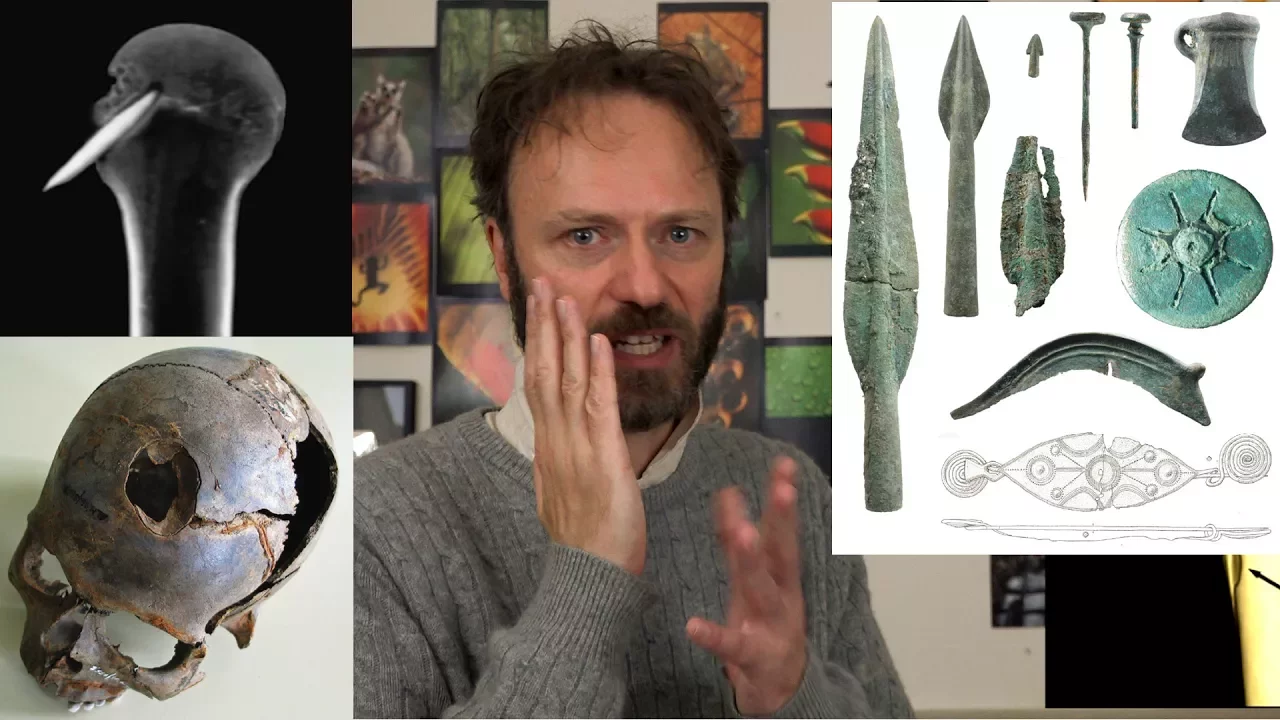
Added:one approach to the study of death and dying especially amongst ancient populations is the subdiscipline of bioarchaeology so what is bioarchaeology well it is the interdisciplinary and problem-oriented study of human remains from archaeological contexts so when i talk about interdisciplinarity we are drawing on a number of different disciplines to answer questions about the past so we will step through many of these sub-disciplines that are listed here and types of analyses that are conducted within bioarchaeology in this lecture and in terms of being problem oriented you know we're focused on specific sorts of questions our we're trying to learn about the past learn about how populations died how they treated their dead but something to keep in mind is this reflexivity so society and the individual are always sort of working off each other and changing over time another thing to keep in mind is you know our knowledge of the past comes at a cost in some cases this is felt most directly by descendant communities who um are related to the people that might be investigated and they can see this as a sort of disruption of the deceased when burials are disturbed um but the other sorts of questions we can look at we can look at individuals learn about their lives and how they died as well as the sorts of identities that they might have imbued within their life we can learn quite a bit actually from the deceased individual and their society by studying the human skeleton studying the burial context from from which they are discovered things like their age and sex if they suffer from any kind of disease or trauma and also their diet so some pretty interesting questions that we can investigate one of the first sort of um things we can address is the topic of paleo demography and so to do this bioarchaeologists use biological information from the graves and the cemeteries themselves to describe um many characteristics of a population this is an ideal sort of situation that you just get all the information you can from grave markers or historic records but not everything is always written down and not everything is always accurate that's written down so it's really important to actually look at the material culture and the skeletons themselves so how do we do that how do we reconstruct the the size and dynamics of a past population well in terms of the age of an individual there are certain measurements that we can look at on a person's body so these are the openings in the pubic bones so the hip bone area of individuals also different dentition patterns that develop over time are very indicative of a person's age at death in terms of their sex we can look at the opening of the pelvic structure again for females it tends to be much wider opening than it is for males go figure because they're the ones that actually birth babies um also though there are other kinds of markers on a skeleton on the crania specifically that we can look at that tend to be more hyper feminine to hyper masculine along this sort of continuous spectrum and these are measurements or characteristics of the skeleton itself help us to determine the person's sex we're also able to look at mortality and fertility rates so pretty obvious that mortality is the number of deaths in a particular population over some span of time you know typically on an annual basis can't always get at that scale and then obviously fertility is the number of births that we're having in the population important things to keep in mind when you're looking at these sorts of ideas though are you know are any segments of the population missing from your data set and what can that sort of pattern tell us about the culture itself so for example if we saw that there were no infant burials at all well we know it's pretty common in past societies that there were high infant mortality rates so maybe these the infants themselves are being buried elsewhere or their bones are actually so fragile they might not preserve and make it into the archaeological record so you can't just take everything at face value you have to really dive into what else could be contributing to these patterns paleo demography also allows us to look at migration patterns and the geographic extent of different you know culture areas as they've been called in the past areas where we see similar cultural traits that are shared burial practices themselves you know if there's extended burials or flexed burials inhumation versus cremation we see trends and differences you know even here in the southwest aligned with these different archaeological cultures we could also look at population density this is you know the size of a burial area of a cemetery the number of individuals there depending on the length of time we think that a site has been occupied we can get a sense of increases and decreases in the density of population in different places over space over space and time when it comes to mortuary analysis itself so this is the study of the material evidence surrounding death and burial it allows us to characterize the mortuary context themselves so is it a formal um is it a pit burial is it a formal tomb these have different sorts of meanings within different societies uh types of questions maybe we might want to think about are how did the past people think about death how did they interact with the dead what sorts of funerary practices can we discern from the material evidence a really important one or not necessarily important but interesting question we can ask is was there social inequality in the past so do we see differential differences in the types of bear sorry differences in the amounts of goods or types of goods that are buried with different people and if we do see patterns like that if we were to see a very young child with you know all this wealth that they're buried with well they uh they're that means that the social or social inequality might be a bit hereditary in terms of a young person doesn't have much time to um accrue importance in society unless they're born into it and then die quite young the site where i worked at for my dissertation is la quemada down in zecatechus so just bringing this in as a quick example there are several different types of mortuary contexts within the site itself especially in terms of the display of human remains we see evidence of what are called some pontlies or skull racks and we can determine this based on you know finding these the holes on the top of the heads or the sides of the heads like you see in the middle figure there that would have allowed the skulls themselves to be put on display we also have evidence of bundles of remains that may have been you know sort of venerated ancestors that they visited and left offerings to on a semi-regular basis paleopathology this is the study of medical disorders and injury in the past the health status of past populations can be investigated by recording the nature or the condition of the bones themselves if there's any trauma that affected the skeleton for example any bone fractures arthritis or periodontal disease nutritional problems can also be reflected in bones and the bone growth cause of death however can only be determined for a pretty small population or a small percentage of burials the questions we might want to talk about are what kinds of diseases affected past populations how did disease spread were individuals who became sick cared for so do we see some with a leg fracture that heals and they're able to get back to a semi-regular life well if they were out there on their own they probably would have succumbed to that injury because they couldn't they weren't mobile enough to move around or feed themselves when it comes to thinking about the health of past populations it's a bit tricky and we'll get into that in another slide or two so paleo paleo pathology itself it's an extremely detailed study of human remains we're looking for skeletal indicators of stress and disease that would have either ended a person's life or we see that they would have suffered from for several years this slide includes several different examples um syphilis in the bottom left corner and tuberculosis which affects the spine over time these are the sorts of things that bioarchaeologists can look for and draw interpretations of ailments that person might have suffered from so this brings us to what's called the osteological paradox and as i said this question of health can be quite tricky in some cases there are different diseases that might cause identical reactions which actually makes them indistinguishable when we only have the skeletal skeleton of that person left other diseases that don't actually affect the skeleton at all well we're not going to be able to trace that in the archaeological record the trickiest part or trickiest example that i could bring up then is that skeletons of individuals who die from a disease before it can actually affect their bones would actually appear to be healthy so for example if we had three populations sorry three subpopulations within a community that are exposed to a disease that risks death and causes skeletal lesions well there might be one population that none of the individuals are affected by the disease the second population within their the community might experience the disease they're sick for a while and develop these sort of characteristic bony lesions that can be observed by the bioarchaeologists in the future but they survive so we see that they were able to recover and lived a longer life beyond having suffered from the disease well there might actually be a third population within that community where everyone experienced the disease and they actually succumbed to the disease before those bone lesions are able to manifest if we're left with only looking at the archaeological record then the population that never experienced the disease and the population that was killed by the disease before those skeletal stress markers can conform well they're going to look exactly the same in the archaeological record so how are we going to be able to tell who was healthy and who who who died because of a particular disease so important things to keep in mind we're also able to trace evidence of violence and trauma in the past you might be wondering how violent was the past can we actually reconstruct the sequence of events that led to someone's traumatic injury in la quemada where i work we actually see evidence of the the processing of human remains even after death so the removal of flesh from bones leaves certain sort of cut marks like what you can see in the upper right image here on the bones themselves other sorts of traumatic injuries in the past will leave very obvious indicators if you see a bullet hole in the top of someone's head for example that might be evidence of how they died we do see evidence of treatment of injuries in the past so surgeries that would have taken place as well as the remains of bandages and other sorts of medicinal tools many people are interested in looking at rates of interpersonal violence that can change over time and often they look also for other sorts of social or environmental factors that would have influenced fluctuations in this type of interpersonal violence when it comes to biological affinity this is the study of how closely related people were in the past so that involves individuals as well as groups so it can compare group to group the sorts of methods that are used include craniometrics so measurements on the bones themselves especially within the cranium we also nowadays though can look at nuclear and mdna to determine how people were actually related and also gets into descent systems you know through matrilineal patrilineal descent obviously these data can then help us understand how past societies were organized and whether or not burial practices are reflective of kinship patterns themselves that brings us to isotopic analysis so there are certain elements in the environment so carbon being one of them and you're seeing the carbon cycle here and the right carbon oxygen nitrogen strontium these are elements that get absorbed into organic materials and that includes us as human beings when a person dies and we have their skeletal remains later on we can look at ratios of the different isotopes of those elements to actually assess dietary patterns as well as migration patterns amongst human and animal populations we're also able to learn quite a bit about paleoclimatic reconstruction and the effect of any kind of environmental change on organisms over time another example then is strontium which comes typically out of the the bedrock of an area bioarchaeologists are able to collect natural water samples plant samples and rock samples to get these sort of baseline information and then they compare the skeletons of those individuals to those baselines to determine well are they local did they live here for most of their life or had they migrated into this area at a later stage in their lives questions would include any kind of dietary differences that we might be able to associate with social status and again the mobility of different populations isotopic analysis can be conducted on any sort of organic material so bone skin hair tooth or plants themselves and these are some photos from a colleague of mine who actually studied his dissertation on macau burials here in the southwest and seeing where they where they came from and how they ended up in the southwest lastly there's forensic anthropology and this is a sub discipline that involves the application of bioarchaeological methods within a legal setting so these are people who are involved in the recovery remains identifying victims reconstructing how someone died and then eventually going into legal proceedings as an expert witness and providing testimony to the analysis they were able to conduct so as i said bioarchaeology is very much interdisciplinary and you're reading one of your readings for this week is by larsen and so you will see many of these same types of analyses used in his approach to the bioarchaeological analysis at la florida so that brings us for your activity for this week and we are learning about the la florida bioarchaeological project which is directed by clark spencer-larsen it's a great example of how bio-archaeology and ethnographic analogy can be used to help us understand the lives of people in the past as well as the factors that may have contributed to their death so i want you to consider the questions below while reading larson's article and then submit your answers through canvas by the end of the week i would encourage you to discuss the activity with your classmates you can go ahead and start a thread in the questions or concerns discussion board for this module but each student must submit their own unique responses so feel free to collaborate and talk about things but in the end everyone's responsible for submitting their own assignment
Up Next
Forensic Science: Military Murder Investigations & DNA Analysis
@TheNewDetectives
161.7K views•2022-11-19

Triumph of Orthodoxy Icon: Byzantine Art & History Explained
@BenCallan
2.1K views•2024-08-06

FastAPI vs Flask vs Django: Choosing the Right Python Web Framework
@TechWithTim
302.5K views•2024-05-26

Game of Thrones Opening Credits: A Cinematic Analysis
@gameofthrones
46.3M views•2011-04-18
Related Study Plans & Knowledge Roadmaps
Structured learning paths in General & Interdisciplinary Studies