












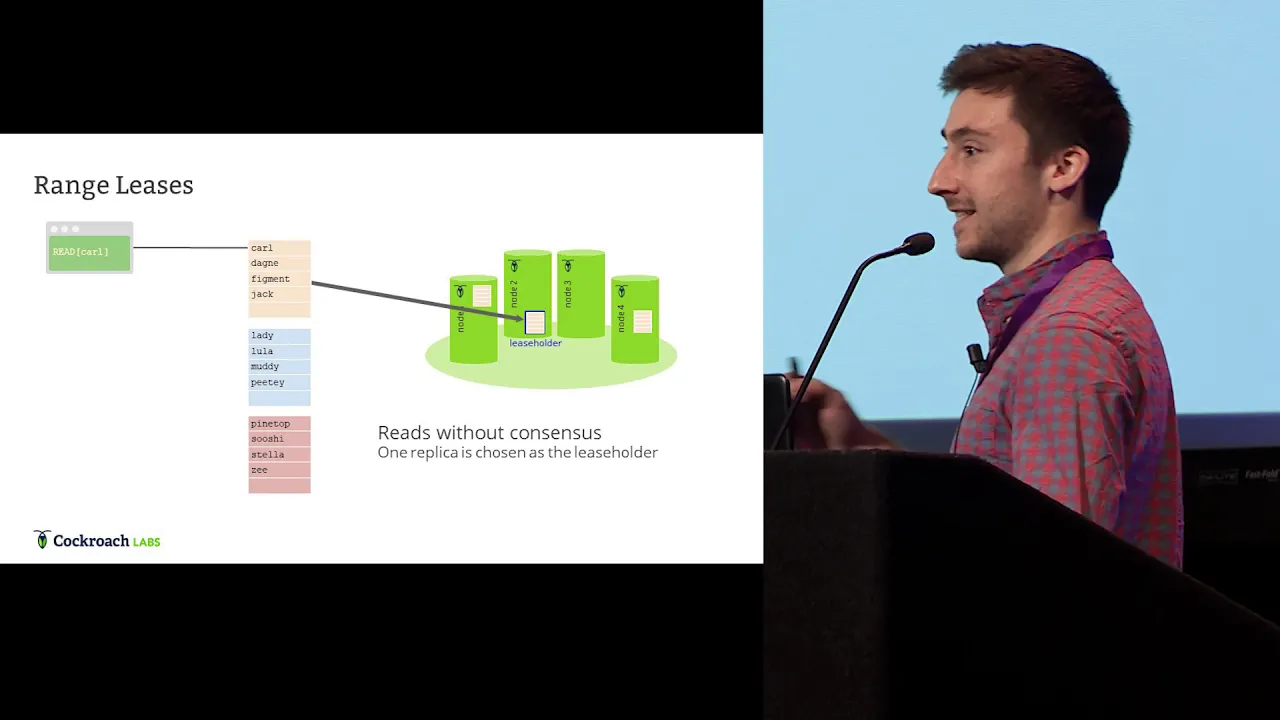
![Consensus algorithms, Paxos and Raft by Yifan Xing [PWL BOS]](https://i.ytimg.com/vi_webp/fcFqFfsAlSQ/maxresdefault.webp)





![20 Whitepapers that changed the world [For Senior Software Engineers]](https://i.ytimg.com/vi/WWGM4hY34pI/sddefault.jpg)









A distributed system is a set of cooperating computers communicating over a network to accomplish coherent tasks, with key motivations including high-performance parallelism, fault tolerance, natural physical distribution requirements, and security isolation. The course explores core challenges such as concurrent programming complexities, partial failures, and the difficulty of achieving linear scalability. Two fundamental tools for building distributed systems are Remote Procedure Call (RPC) for masking unreliable network communication and threads for structuring concurrent operations. The MapReduce framework exemplifies distributed system design by abstracting away infrastructure complexity, allowing programmers to express computations as simple map and reduce functions while the framework handles data distribution, fault tolerance, and parallel execution across thousands of computers.
MIT 6.824 Lecture 1: Introduction to Distributed Systems (Spring 2020)
Added:all right let's get started this is 682 for distributed systems so I'd like to start with just a brief explanation of what I think a distributed system is you know the core of it is a set of cooperating computers that are communicating with each other over networked to get some coherent task done and so the kinds of examples that we'll be focusing on in this class are things like storage for big websites or big data computations such as MapReduce and also somewhat more exotic things like peer-to-peer file sharing so they're all just examples the kinds of case studies we'll look at and the reason why all this is important is that a lot of critical infrastructure out there is built out of distributed systems infrastructure that requires more than one computer to get its job done or it's sort of inherently needs to be spread out physically so the reasons why people build this stuff so first of all before I even talk about distributed systems sort of remind you that you know if you're designing a system redesigning you need to solve some problem if you can possibly solve it on a single computer you know without building a distributed system you should do it that way and there's many many jobs you can get done on a single computer and it's always easier so distributed systems you know you should try everything else before you try building distributed systems because they're not they're not simpler so the reason why people are driven to use lots of cooperating computers are they need to get high-performance and the way to think about that is they want to get achieve some sort of parallelism lots of CPUs lots of memories lots of disk arms moving in parallel another reason why people build this stuff is to be able to tolerate faults have two computers do the exact same thing if one of them fails you can cut over to the other one another is that some problems are just naturally spread out in space like you know you want to do interbank transfers of money or something well you know bank a has this computer in New York City and Bank B as this computer in London you know you just have to have some way for them to talk to each other and cooperate in order to carry that out so there's some natural sort of physical reasons systems that are inherently physically distributed for the final reason that people build this stuff is in order to achieve some sort of security goal so often by if there's some code you don't trust or you know you need to interact with somebody but you know they may not be immediate malicious or maybe their code has bugs in it so you don't want to have to trust it you may want to split up the computation so you know your stuff runs over there and that computer my stuff runs here on this computer and they only talk to each other to some sort of narrow narrowly defined network protocol assuming we may be worried about you know security and that's achieved by splitting things up into multiple computers so that they can be isolated the most of this course is going to be about performance and fault tolerance although the other two often work themselves in by way of the sort of constraints on the case studies that we're going to look at you know all these distributed systems so these problems are because they have many parts and the parts execute concurrently because there are multiple computers you get all the problems that come up with concurrent programming all the sort of complex interactions and we're timing-dependent stuff and that's part of what makes distributed systems hard another thing that makes distributed systems hard is that because again you have multiple pieces plus a network you can have very unexpected failure patterns that is if you have a single computer it's usually the case either computer works or maybe it crashes or suffers a power failure or something but it pretty much either works or doesn't work distributed systems made up of lots of computers you can have partial failures that is some pieces stopped working other people other pieces continue working or maybe the computers are working but some part of the network is broken or unreliable so partial failures is another reason why distributed systems are hard and a final reason why it's hard is that you know them the original reason to build the distributed system is often to get higher performance to get you know a thousand computers worth of performance or a thousand disk arms were the performance but it's actually very tricky to obtain that thousand X speed up with a thousand computers there's often a lot of roadblocks thrown in your way so the Elven takes a bit of careful design to make the system actually give you the performance you feel you deserve so solving these problems of course going to be all about you know addressing these issues the reason to take the course is because often the problems and the solutions are quite just technically interesting they're hard problems for some of these problems there's pretty good solutions known for other problems they're not such great solutions now distributed systems are used by a lot of real-world systems out there like big websites often involved you know vast numbers computers that are you know put together as distributed systems when I first started teaching this course it was distributed systems were something of an academic curiosity you know people thought oh you know at a small scale they were used sometimes and people felt that oh someday they'd be might be important but now particularly driven by the rise of giant websites that have you know vast amounts of data and entire warehouses full of computers distributed systems in the last twenty years have gotten to be very seriously important part of computing infrastructure this means that there's been a lot of attention paid to them a lot of problems have been solved but there's still quite a few unsolved problems so if you're a graduate student or you're interested in research there's a lot to you let a lot of problems yet to be solved in distributed systems that you could look into his research and finally if you like building stuff this is a good class because it has a lab sequence in which you'll construct some fairly realistic distributed systems focused on performance and fault tolerance so you've got a lot of practice building districts just building distributed systems and making them work all right let me talk about course structure a bit before I get started on real technical content you should be able to find the course website using Google and on the course website is the lab assignments and course schedule and also link to a Piazza page where you can post questions get answers the course staff I'm Robert Morris I'll be giving the lectures I also have for TAS you guys want to stand up and show your faces the TAS are experts at in particular at doing the solving the labs they'll be holding office hours so if you have questions about the labs you can come you should go to office hours or you could post questions to Piazza the course has a couple of important components one is this lectures there's a paper for almost every lecture there's two exams there's the labs programming labs and there's an optional final project that you can do instead of one of the labs the lectures will be about two big ideas in distributed systems they'll also be a couple of lectures that are more about sort of lab programming stuff a lot of our lectures will be taken up by case studies a lot of the way that I sort of try to bring out the content of distributed systems is by looking at papers some academics some written by people in industry describing real solutions to real problems these lectures actually be videotaped and I'm hoping to post them online so that you can so if you're not here or you want to review the lectures you'll be able to look at the videotape lectures the papers again there's one to read per week most of a research paper some of them are classic papers like today's paper which I hope some of you have read on MapReduce it's an old paper but it was the beginning of its spurred an enormous amount of interesting work both academic and in the real world so some are classic and some are more recent papers sort of talking about more up-to-date research what people are currently worried about and from the papers we'll be hoping to tease out what the basic problems are what ideas people have had that might or might not be useful in solving distributed system problems we'll be looking at sometimes in implementation details in some of these papers because a lot of this has to do with actual construction of of software based systems and we're also going to spend a certain time looking at evaluations people evaluating how fault tolerant their systems by measuring them or people measuring how much performance or whether they got performance improvement at all so I'm hoping that you'll read the papers before coming to class the lectures are maybe not going to make as much sense if you haven't already read the lecture because there's not enough time to both explaining all the content of the paper and have a sort of interesting reflection on what the paper means online class so you really got to read the papers before I come into class and hopefully one of the things you'll learn in this class is how to read a paper rapidly in the fish and skip over the parts that maybe aren't that important and sort of focus on teasing out the important ideas on the website there's for every link to buy the schedule there's a question that you should submit an answer for for every paper I think the answers are due at midnight and we also ask that you submit a question you have about the paper through the website in order both to give me something to think about as I'm preparing the lecture and if I have time I'll try to answer at least a few of the questions by email and the question and the answer for each paper due midnight the night before there's two exams there's a midterm exam in class I think on the last class meeting before spring break and there's a final exam during final exam week at the end of the semester the exams are going to focus mostly on papers and the labs and probably the best way to prepare for them as well as attending lecture and reading the papers a good way to prepare for the exams is to look at all exams we have links to 20 years of old exams and solutions and so you look at those and sort of get a feel for what kind of questions that I like to ask and indeed because we read many of the same papers inevitably I ask questions each year that can't help but resemble questions asked in previous years the labs there's for programming labs the first one of them is due Friday next week lab one is a simple MapReduce lab to implement your own version of the paper they write today in which I'll be discussing in a few minutes lab 2 involves using a technique called raft in order to get fault taught in order to sort of allow in theory allow any system to be made fault tolerant by replicating it and having this raft technique manage the replication and manage sort of automatic cut or if there's a field if one of the replicated servers fails so this is rav4 fault tolerance in lad 3 you'll use your raft implementation in order to build a fault tolerant key-value server it'll be replicated and fault tolerant in a lab 4 you'll take your replicated key-value server and clone it into a number of independent groups and you'll split the data in your key value storage system across all of these individual replicated groups to get parallel speed-up by running multiple replicated groups in parallel and you'll also be responsible for moving the various chunks of data between different servers as they come and go without dropping any balls so this is a what's often called a sharded key value service sharding refers to splitting up the data partitioning the data among multiple servers in order to get parallel speed up if you want instead of doing lab 4 you can do a project of your own choice and the idea here is if you have some idea for a distributed system you know in the style of some of the distributed systems we talked about in the class if you have your own idea that you want to pursue and you like to build something and measure whether it worked in order to explore your idea you can do a project and so for a project you'll pick some teammates because we require that projects are done in teams of two or three people so like some teammates and send your project idea to us and we'll think about it and say yes or no and maybe give you some advice and then if you go ahead and do if we say yes and you want to do a project you do that and instead of lab 4 and it's due at the end of the semester and you know you'll you should do some design work and build a real system and then in the last day of class you'll demonstrate your system as well as handing in a short sort of written report to us about what you built and I posted on the website some some ideas which might or may not be useful for you to sort of spur thoughts about what projects you might build but really the best projects are one where sort of you have a good idea for the project and the idea is if you want to do a project you should choose an idea that's sort of in the same vein as the systems that were talked about in this class okay back to labs the lab Greed's they we give you you hand in your lab code and we run some tests against it and you're great early based on how many tests you pass we give you all the tests that we use those no hidden tests so if you implement the lab and it reliably passes all the tests and chances are good unless there's something funny going on which there sometimes is chances are good that if you your coop passes all the tests when you run it or pass all the tests when we run it and you'll get a four score full score so hopefully there'll be no mystery about what score you're likely to get on the labs let me warn you that debugging these labs can be time-consuming because they're distributed systems and a lot of concurrency and communication sort of strange difficult to debug errors can crop up so you really ought to start the labs early don't don't even have a lot of trouble if you be elapsed to the last moment you got to start early if your problems please come to the TAS office hours and please feel free to ask questions about the labs on Piazza and indeed I hope if you know the answer that you'll answer people's questions on Piazza as well all right any questions about the mechanics of the course yes so the question is what is how does how do the different factor these things factoring the grade I forget but it's all on the it's on the website under something I think though it's the labs are the single most important component okay alright so this is a course about about infrastructure for applications and so all through this course there's going to be a sort of split in the way I talk about things between applications which are sort of other people the customer somebody else writes but the applications are going to use the infrastructure that we're thinking about in this course and so the kinds of infrastructure that tend to come up a lot our storage communication and computation and we'll talk about systems that provide all three of these kinds of infrastructure the the storage it turns out that storage is going to be the one we focus most on because it's a very well-defined and useful abstraction and usually fairly straightforward abstraction so people know a lot about how to build how to use and build storage systems and how to build sort of replicated fault tolerant high-performance distributed implementations of storage we'll also talk about some some of our computation systems like MapReduce for today is a computation system and we will talk about communications some but mostly from the point is a tool that we need to use to build distributed systems like computers have to talk to each other over a network you know maybe you need reliability or something and so we'll talk a bit about what we're actually mostly consumers of communication if you want to learn about communication systems as sort of how they work that's more the topic of six eight to nine so for storage and computation a lot of our goal is to be able to discover abstractions where use of simplifying the interface to these two storage and computation distributed storage and computation infrastructure so that it's easy to build applications on top of it and what that really means is that we need to we'd like to be able to build abstraction that hide the distributed nature of these of these systems so the dream which is rarely fully achieved but the dream would be to be able to build an interface that looks to an application is if it's a non distributed storage system just like a file system or something that everybody already knows how to program and has a pretty simple model semantics we'd love to be able to build interfaces that look and act just like non distributed storage and computation systems but are actually you know vast extremely high performance fault tolerant distributed systems underneath so we both have abstractions and you know as you'll see as a course goes on we sort of you know only part of the way there it's rare that you find an abstraction for a distributed version of storage or computation that has simple behavior but he's just like the non just non distributed version of storage that everybody understands but people getting better at this and we're gonna try to study the ways and what people have learned about building such abstractions ok so what kind of what kind of topics show up is we're considering these abstractions the first one this first topic general topic that we'll see a lot a lot of the systems we looked at have to do with implementation so for example the kind of tools that you see a lot for for ways people learn how to build these systems are things like remote procedure call whose goal is to mask the fact that we're communicating over an unreliable Network another kind of implementation topic that we'll see a lot is threads which are a programming technique that allows us to harness what allows us to harness multi-core computers but maybe more important for this class threads are a way of structuring concurrent operations in a way that's hopefully simplifies the programmer view of those concurrent operations and because we're gonna use threads a lot it turns out we're going to need to also you know just as from an implementation level spend a certain amount of time thinking about concurrency control things like locks and the main place that these implementation ideas will come up in the class they'll be touched on in many of the papers but you're gonna come face the face of all this in a big way in the labs you need to build distributed you know do the programming for distributed system and these are like a lot of sort of important tools you know beyond just sort of ordinary programming these are some of the critical tools that you'll need to use to build distributed systems another big topic that comes up in all the papers we're going to talk about is performance usually the high-level goal of building a distributed system is to get what people call scalable speed-up so we're looking for scalability and what I mean by scalability or scalable speed-up is that if I have some problem that I'm solving with one computer and I buy a second computer to help me execute my problem if I can now solve the problem in half the time or maybe solve twice as many problem instances you know per minute on two computers as I had on one then that's an example of scalability so sort of two times you know computers or resources gets me you know two times performance or throughput and this is a huge hammer if you can build a system that actually has this behavior Namie that if you increase the number of computers you throw at the problem by some factor you get that factor more throughput more performance out of the system that's a huge win because you can buy computers with just money right whereas if in order to get the alternative to this is that in order to get more performance you have to pay programmers to restructure your software to get better performance to make it more efficient or to apply some sort of specialized techniques better algorithms or something if you have to pay programmers to fix your code to be faster that's an expensive way to go we'd love to be able just oh by thousand computers instead of ten computers and get a hundred times more throughput that's fantastic and so this sort of scalability idea is a huge idea in the backs of people's heads when they're like building things like big websites that run on are you know building full of computers if the building full of computers is there to get a sort of corresponding amount of performance but you have to be careful about the design in order to actually get that performance so often the way this looks when we're looking at diagrams or I'm writing diagrams in this course is that I'm not supposing we're building a website ordinarily you might have a website that you know has a HTTP server let's say it has some types of users many web browsers and they talk to a web server running Python or PHP or whatever sort of web server and the web server talks to some kind of database you know when you have one or two users you can just have one computer running both and maybe a computer for the web server and a computer from the database but maybe all of a sudden you get really proper popular and you'll be up and you've you know 100 million people sign up your service ID how do you how do you fix your c-certainly can it support millions of people on a single computer except by extremely careful labor-intensive optimization but you don't have time for so typically the way you're going to speed things up the first thing you do is buy more web servers and just split the user so that you know how few users or some fraction the user go to a web server 1 and the other half you send them to a web server 2 and because maybe you're building I don't know what reddit or something where all the users need to see the same data ultimately you have all the web servers talk to the backend and you can keep on adding web servers for a long time here and so this is a way of getting parallel speed up on the web server code you know if you're running PHP or Python maybe it's not too efficient as long as each individual web server doesn't put too much load on the database you can add a lot of web servers before you run into problems but this kind of scalability is rarely infinite unfortunately certainly not without serious thought and so what tends to happen with these systems is that at some point after you have 10 or 20 or 100 web servers all talking to the same database now all of a sudden the database starts to be a bottleneck and adding more web servers no longer helps so it's rare that you get full scale ability to sort of infinite numbers of adding infinite numbers of computers some point you run out of gas because the place at which you are adding more computers is no longer the bottleneck by having lots and lots of web servers we basically moved the bottleneck I think it's limiting performance from the web servers to the database and at this point actually you almost certainly have to do a bit of design work because it's rare that you can there's any straightforward way to take a single database and sort of refactor things with it or you can take data sorta in a single database and refactor it so it's split over multiple databases but it's often a fair amount of work and because it's awkward but people many people actually need to do this we're gonna see a lot of examples in this course in which the distributed system people are talking about is a storage system because the authors were running you know something like a big website that ran out of gas on a single database or storage servers anyway so the scalability story is we love to build systems that scale this way but you know it's hard to make it or takes work off and design work to push this idea infinitely far ok so another big topic that comes up a lot is fault tolerance if you're building a system with a single computer in it well a single computer often can stay up for years like I have servers in my office that have been up for years without crashing you know the computer is pretty reliable the operating systems reliable apparently the power in my building is pretty reliable so it's not uncommon to have single computers it's just a for amazing amount of time however if you're building systems out of thousands of computers then even if each computer can be expected to stay up for a year with a thousand computers that means you're going to have like about three computer failures per day in your set of a thousand computers so solving big problems with big distributed systems turns sort of very rare fault tolerance very real failure very rare failure problems into failure problems that happen just all the time in a system with a thousand computers there's almost certainly always something broken it's always some computer that's either crashed or mysteriously you know running incorrectly or slowly or doing the wrong thing or maybe there's some piece of the network with a thousand computers we got a lot of network cables and a lot of network switches and so you know there's always some network cable that somebody stepped on and is unreliability or network cable that fell out or some networks which whose fan is broken and the switch overheated and failed there's always some little problem somewhere in your building sized distributed system so big scale turns problems from very rare events you really don't have to worry about that much into just constant problems that means the failure has to be really or the response the masking of failures the ability to proceed without failures just has to be built into the design because there's always failures and you know it's part of building you know convenient abstractions for application programmers we really need that but to be able to build infrastructure that as much as possible hides the failures from application programmers or masks them or something so that every application programmer doesn't have to have a complete complicated story for all the different kinds of failures that can occur there's a bunch of different notions that you can have about what it means to be fault tolerant about a little more but you know exactly what we mean by that we'll see a lot of a lot of different flavors but among the more common ideas you see one is availability so you know some systems are designed so that under some kind certain kinds of failures not all failures but certain kinds of failures the system will keep operating despite the failure while providing you know undamaged service the same kind of service it would have provided even if there had been no failure so some systems are available in that sense that up and up you know so if you build a replicated service that maybe has two copies you know one of the replicas replica servers fail fails maybe the other server can continue operating they both fail of course you can't you know you can't promise availability in that case so available systems usually say well under certain set of failures we're going to continue providing service we're going to be available more failures than that occur it won't be available anymore another kind of fault tolerance you might you might have or in addition to availability or by itself as recoverability and what this means is that if something goes wrong maybe the service will stop working that it is it'll simply stop responding to requests and it will wait for someone to come along and repair or whatever went wrong but after the repair occurs the system will be able to continue as if nothing bad had gone wrong right so this is sort of a weaker requirement than availability because here we're not going to do anything while while the failed come until the failed component has been repaired but the fact that we can get up get going again without you know but without any loss of correctness is still a significant requirement it means you know recoverable systems typically need to do things like save their latest date on disk or something where they can get it back you know after the power comes back up and even among available systems in order for a system to be useful in real life usually what the way available systems are SPECT is that they're available until some number of failures have happened if too many failures have happened an available system will stop working or you know will stop responding at all but when enough things have been repaired it'll continue operating so a good available system will sort of be recoverable as well in a sensitive to many failures occur it'll stop answering but then will continue correctly after that so this is what we love - this is what we'd love to obtain the biggest hammer what we'll see a number of approaches to solving these problems there's really sort of things that are the most important tools we have in this department one is non-volatile storage so that you know something crash power fails or whatever there's a building wide power failure we can use non-volatile store it's like hard drives or flash or solid-state drives or something to sort of store a check point or a log of the state of a system and then when the power comes back up or somebody repairs our power suppliers notice what we'll be able to read our latest state off the hard drive and continue from there so so one tool is sort of non-volatile storage and the management of non-volatile storage just Ning comes up a lot because non-volatile storage tends to be expensive to update and so a huge amount of the sort of nitty-gritty of building sort of high-performance fault-tolerant systems is in you know clever ways to avoid having to write the non-volatile storage too much in the old days and even today you know what writing non-volatile storage meant was moving a disk arm and waiting for a disk platter to rotate both of which are agonizingly slow on the scale of you know three gigahertz microprocessors good things like flash life is quite a bit better but still requires a lot of thought to get good performance out of and the other big tool we have for fault tolerance is replication and the management of replicated copies is sort of tricky you know that sort of he problem lurking in any replicated system where we have two servers each with a supposedly identical copy of the system state the key problem that comes up is always that the two replicas will accidentally drift out of sync and will stop being replicas right and this is just you know with the back of the every design that we're gonna see for using replication to get fault tolerance and lab - a lot - you're all about management management of replicated copies for fault tolerance as you'll see it's pretty complex a final topic final cross-cutting topic is consistency so it's an example of what I mean by consistency supposing we're building a distributed storage system and it's a key/value service so it just supports two operations maybe there's a put operation and you give it a key and a value and that the storage system sort of stashes away the value under as the value for this key maintains it's just a big table of keys and values and then there's a good operation you the client sends it a key and the storage service is supposed to you know respond with the value of the value it has stored for that key right and this is kind of good when I can't think of anything else as an example of a distributed system all Oh without key value services and they're very useful right they're just sort of a kind of fundamental simple version of a storage system so of course if you're an application programmer it's helpful if these two operations kind of have meanings attached to them that you can go look in the manual and the manual says you know what it what it means what you'll get back if you call get right and sort of what it means for you to call put all right so it's immediate so some sort of spec for what they meant otherwise like who knows how can you possibly write an application without a description of what putting get are supposed to do and this is the topic of consistency and the reason why it's interesting in distributed systems is that both for performance and for fault tolerant reasons fault tolerance reason we often have more than one copy of the data floating around so you know in a non distributed system where you just have a single server with a single table there's often although not always but there's often like relatively no ambiguity about what pudding get could possibly mean right in to ative Lee you know what put means is update the table and what get means is just get me the version that's stored in the table which but in a distributed system where there's more than one copy in the data due to replication or caching or who knows what there may be lots of different versions of this key value pair floating around like if one of the replicas you know if supposing some client issues a put and you know there's two copies of the the server so they both have a key value table right and maybe key one has value twenty on both of them and then some client issues a put nice we have client over here and it's gonna send a put it wants to update the value of one to be twenty-one all right maybe it's counting stuff in this key value server so sends a put with key one and value twenty one it sends it to the first server and it's about to send the same put you know wants to update both copies right it keeps them in sync it's about to send this put but just before it sends to put to the second server crashes I power failure or bug an operating system or something so now the state were left in sadly is that we sent this put and so we've updated one of the two replicas didn't have value twenty one but the other ones still with twenty now somebody comes along and reads with a get and they might get they want to read the value associated with key one they might get twenty one or they might get twenty depending on who they talk to and even if the rule is you always talk to the top server first if you're building a fault-tolerant system the actual rule has to be oh you talk to the top server first unless it's failed in which case you talk to the bottom server so either way someday you risk exposing this stale copy of the data to some future again it could be that many gets get the updated twenty one and then like next week all of a sudden some get yields you know a week old copy of the data so that's not very consistent right so in order but you know it's the kind of thing that could happen right we're not careful so you know we need to have we need to actually write down what the rules are going to be about puts and gets given this danger of due to replication and it turns out there's many different definitions you can have of consistency you know many of them are relatively straightforward many of them sound like well I get yields the you know value put by the most recently completed put all right so that's usually called strong consistency it turns out also it's very useful to build systems that have much weaker consistency there for example do not guarantee anything like a get sees the value written by the most recent put and the reason so there's there strongly consistent systems they usually have some version that gets seen most recent puts although you have to there's a lot of details to work out there's also weekly consistent many sort of flavors of weekly consistent systems that do not make any such guarantee that you know may guarantee well you're you know if someone does a put then you may not see the put you may see old values that weren't updated by the put for an unbounded amount of time maybe and the reason for people being very interested in wheat consistency schemes is that strong consistency that is having Rezac Chua lessee be guaranteed to see the most recent right that's a very expensive spec to implement because what it means is almost certainly that you have to somebody has to do a lot of communication in order to actually implement some notion of strong consistency if you have multiple copies it means that either the writer or the reader or maybe both has to consult every copy like in this case where you know maybe a client crash left one updated but not the other if we wanted to implement strong Sisseton see in them maybe a simple way in this system we'd have readers read both of the copies or if there's more than one copy all the copies and use the most recently written value that they find but that's expensive that's a lot of chitchat to read one value so in order to avoid communication as much as possible particularly if replicas are far away people build weak systems that might actually allow the stale read of an old value in this case although there's often more semantics attached to that to try to make these weak schemes more useful and we're this communication problem you know strong consistency requiring expensive communication where this really runs you into trouble is that if we're using replication for fault tolerance then we really want the replicas to have independent failure probability to have uncorrelated failure so for example putting both of the replicas of our data in the same iraq in the same machine room it's probably a really bad idea because if someone trips over the power cable to that rack both of our copies of our data are going to die because they're both attached to the same power cable in the same rack so in the search for making replicas as independent and failure as possible in order to get decent fault tolerance people would love to put different replicas as far apart as possible like in different cities or maybe on opposite sides of the continent so an earthquake that destroys one data center will be extremely unlikely to also destroy the other data center that as the other copy you know so we'd love to be able to do that if you do that then the other copy is thousands of miles away and the rate at which light travels means that it may take on the order of milliseconds or tens of milliseconds to communicate to a data center across the continent in order to update the other copy of the data and so that makes this the communication required for strong consistency for good consistency potentially extremely expensive like every time you want to do one of these put opera or maybe again depending on how you implement it you might have to sit there waiting for like 10 or 20 or 30 milliseconds in order to talk to both copies of the data to ensure that they're both updated or or both checked to find the latest copy and that tremendous expense right this is 10 or 20 or 30 milliseconds on machines that after all I'll execute like a billion instructions per second so we're wasting a lot of potential instructions while we wait people often go much weaker systems you're allowed to only update the nearest copy you're only consulted nearest copy I mean there's a huge sort of amount of academic and real-world research on how to structure weak consistency guarantees so they're actually useful to applications and how to take advantage of them in order to actually get high performance alright so that's a lightning preview of the technical ideas in the course any questions about this before I start talking about MapReduce all right I want to switch to Map Reduce that's a sort of detailed case study that's actually going to illustrate most of the ideas that we've been talking about here now produces a system that was originally designed and built and used by Google I think the paper dates back to 2004 the problem they were faced with was that they were running huge computations on terabytes and terabytes of data like creating an index of all of the content of the web or analyzing the link structure of the entire web in order to identify the most important pages or the most authoritative pages as you know the whole web is what's even in those days tens of terabytes of data building index of the web is basically equivalent to a sort running sort of the entire data sort you know ones like reasonably expensive and to run a sort on the entire content to the way I've been a single computer how long would have taken but you know it's weeks or months or years or something so Google the time was desperate to be able to run giant computations on giant data on thousands of computers in order that the computations could finish rapidly it's worth it to them to buy lots of computers so that their engineers wouldn't have to spend a lot of time reading the newspaper or something waiting for their big compute jobs to finish and so for a while they had their clever engineer or sort of handwrite you know if you needed to write a web indexer or some sort of Lincoln outlay a blink analysis tool you know Google bought the computers and they say here engineers you know do write but never whatever software you like on these computers and you know they would laborious ly write the sort of one-off manually bitten software to take whatever problem they were working on and so to somehow farm it out to a lot of computers and organize that computation and get the data back if you only hire engineers who are skilled distributed systems experts maybe that's ok although even then it's probably very wasteful of engineering effort but they wanted to hire people who were skilled at something else and not necessarily engineers who wanted to spend all their time writing distributed system software so they really needed some kind of framework that would make it easy to just have their engineers write the kind of guts of whatever analysis they wanted to do like the sort algorithm or a web index or link analyzer or whatever just write the guts of that application and not be able to run it on a thousands of computers without worrying about the details of how to spread the work over the thousands of computers how to organize whatever data movement was required how to cope with the inevitable failures so they were looking for a framework that would make it easy for non specialists to be able to write and run giant distributed computations and so that's what MapReduce is all about and the idea is that the programmer just write the application designer consumer of this distributed computation I'm just be able to write a simple map function and a simple reduce function that don't know anything about distribution and the MapReduce framework would take care of everything else so an abstract view of how what MapReduce is up to is it starts by assuming that there's some input and the input is split up into some a whole bunch of different files or chunks in some way so we're imagining that no yeah you know input file one and put file two etc you know these inputs are maybe you know web pages crawled from the web or more likely sort of big files that contain many web each of which contains many web files crawl from the web all right and the way Map Reduce starts is that you're to find a map function and the MapReduce framework is gonna run your map function on each of the input files and of course you can see here there's some obvious parallelism available can run the maps in parallel so the each of these map functions only looks as this input and produces output the output that a map function is required to produce is a list you know it takes a file as input and the file is some fraction of the input data and it produces a list of key value pairs as output the map function and so for example let's suppose we're writing the simplest possible MapReduce example a word count MapReduce job goal is to count the number of occurrences of each word so your map function might emit key value pairs where the key is the word and the value is just one so for every word at C so then this map function will split the input up into words or everywhere ditzies it emits that word as the key and 1 as the value and then later on will count up all those ones in order to get the final output so you know maybe input 1 has the word a in it and the word B in it and so the output the map is going to produce is key a value one key B value one maybe the second not communication sees a file that has a B in it and nothing else so it's going to implement output b1 maybe this third input has an A in it and a C in it alright so we run all these maps on all the input files and we get this intermediate with the paper calls intermediate output which is for every map a set of key value pairs as output then the second stage of the computation is to run the reduces and the idea is that the MapReduce framework collects together all instances from all maps of each key word so the MapReduce framework is going to collect together all of the A's you know from every map every key value pair whose key was a it's gonna take collect them all and hand them to one call of the programmer to find reduce function and then it's gonna take all the B's and collect them together of course you know requires a real collection because they were different instances of key B were produced by different indications of map on different computers so we're not talking about data movement I'm so we're gonna collect all the B keys and hand them to a different call to reduce that has all of the B keys as its arguments and same as C so there's going to be the MapReduce framework will arrange for one call to reduce for every key that occurred in any of the math output and you know for our sort of silly word count example all these reduces have to do or any one of them has to do is just count the number of items passed to it doesn't even have to look at the items because it knows that each of them is the word is responsible for plus one is the value you don't have to look at those ones we've just count so this reduce is going to produce a and then the count of its inputs this reduce it's going to produce the key associated with it and then count of its values which is also two so this is what a typical MapReduce job looks like the high level just for completeness the well some a little bit of terminology the whole computation is called the job anyone invocation of MapReduce is called a task so we have the entire job and it's made up of a bunch of math tasks and then a bunch of produced tasks so it's an example for this word count you know the what the map and reduce functions would look like the map function takes a key in the value as arguments and now we're talking about functions like written in an ordinary programming language like C++ or Java or who knows what so this is just code people ordinary people can write what a map function for word count would do is split the the key is the file name which typically is ignored we really care what the file name was and the V is the content of this maps input file so V is you know just contains all this text we're gonna split V into words and then for each word we're just gonna emit and emit takes two arguments mitts you know calmly map can make emit is provided by the MapReduce framework we get to produce we hand emit a key which is the word and a value which is the string one so that's it for the map function and a word count map function and MapReduce literally it could be this simple so there's sort of promise to make the and you know this map function doesn't know anything about distribution or multiple computers or the fact we need we need to move data across the network or who knows what this is extremely straightforward and the reduce function for a word count the reduce is called with you know remember each reduce is called with sort of all the instances of a given key on the MapReduce framework calls reduce with the key that it's responsible for and a vector of all the values that the maps produced associated with that key the key is the word the values are all ones we don't like here about them we only care about how many they were and so reduce has its own omit function that just takes a value to be emitted as the final output as the value for the this key so we're gonna admit a length of this array so this is also about as simplest reduce functions have are and in Map Reduce namely extremely simple and requiring no knowledge about fault tolerance or anything else alright any questions about the basic framework yes [Music] you mean can you feed the output of the reducers sort of oh yes oh yes in in in in real life all right in real life it is routine among MapReduce users to you know define a MapReduce job that took some inputs and produce some outputs and then have a second MapReduce job you know you're doing some very complicated multistage analysis or iterative algorithm like PageRank for example which is the algorithm Google uses to sort of estimate how important or influential different webpages are that's an iterative algorithm is sort of gradually converges on an answer and if you implement in MapReduce which I think they originally did you have to run the MapReduce job multiple times and the output of each one is sort of you know list of webpages with an updated sort of value or weight or importance for each webpage so it was routine to take this output and then use it as the input to another MapReduce job oh yeah well yeah you need to sort of set things up the output you need to rate the reduced function sort of in the knowledge that oh I need to produce data that's in the format or as the information required for the next MapReduce job I mean this actually brings up a little bit of a shortcoming in the MapReduce framework which is it's great if you are if the algorithm you need to run is easily expressible as a math followed by this sort of shuffling of the data by key followed by a reduce and that's it my MapReduce is fantastic for algorithms that can be cast in that form and we're furthermore each of the maps has to be completely independent and are required to be functional pure functional functions that just look at their arguments and nothing else you know that's like it's a restriction and it turns out that many people want to run much longer pipelines that involve lots and lots of different kinds of processing and with MapReduce you have to sort of cobble that together from multiple MapReduce distinct MapReduce jobs and more advanced systems which we will talk about later in the course are much better at allowing you to specify the complete pipeline of computations and they'll do optimization you know the framework realizes all the stuff you have to do and organize much more complicated efficiently optimize much more complicated computations from the programmers point of view it's just about map and reduce from our point of view it's going to be about the worker processes and the worker servers that that are they're part of MapReduce framework that among many other things call the map and reduce functions so yeah from our point of view we care a lot about how this is organized by the surrounding framework this is sort of the programmers view with all the distributive stuff stripped out yes sorry I gotta say it again oh you mean where does the immediate data go okay so there's two questions one is when you call a MIT what happens to the data and the other is where the functions run so the actual answer is that first where the stuff rotten there's a number of say a thousand servers um actually the right thing to look at here is figure one in the paper sitting underneath this in the real world there's some big collection of servers and we'll call them maybe worker servers or workers and there's also a single master server that's organizing the whole computation and what's going on here is the master server for know knows that there's some number of input files you know five thousand input files and it farms out in vacations of map to the different workers so it'll send a message to worker seven saying please run you know this map function on such-and-such an input file and then the worker function which is you know part of MapReduce and knows all about Map Reduce well then read the file read the input whatever whichever input file and call this map function with the file name value as its arguments then that worker process will employees what implements in it and every time the map calls emit the worker process will write this data to files on the local disk so what happens to map emits and is they produce files on the map workers local discs that are accumulating all the keys and values produced by the maps run on that worker so at the end of the math phase what we're left with is all those worker machines each of which has the output of some of whatever maps were run on that worker machine then the MapReduce workers arrange to move the data to where it's going to be needed for the reduces so and since and a you know in a typical big computation you know this this reduce indication is going to need all map output that mentioned the key a but it's gonna turn out you know this is a simple example but probably in general every single map indication will have produce lots of keys including some instances of key a so typically in order before we can even run this reduce function the MapReduce framework that is the MapReduce worker running on one of our thousand servers is going to have to go talk to every single other of the thousand servers and say look you know I'm gonna run the reduce for key a please look at the intermediate map output stored in your disk and fish out all of the instances of key a and send them over the network to me so the reduce worker is going to do that it's going to fetch from every worker all of the instances of the key that it's responsible for that the master has told it to be responsible for and once it's collected all of that data then it can call reduce and the reduce function itself calls reduce omit which is different from the map in it and what reduces emit does is writes the output to a file in a cluster file service that Google uses so here's something I haven't mentioned I haven't mentioned where the input lives and where the output lives they're both files because any piece of input we want the flexibility to be able to read any piece of input on any worker server that means we need some kind of network file system to store the input data and so indeed the paper talks about this thing called GFS or Google file system and GFS is a cluster file system and BFS actually runs on exactly the same set of workers that work our servers that run MapReduce and the input GFS just automatically when you you know it's a file system you can read in my files it just automatically splits up any big file you store on it across lots of servers and 64 megabyte chunks so if you write if you view of ten terabytes of crawled web page contents and you just write them to GFS even as a single big file GFS will automatically split that vast amount of data up into 64 kilobyte chunks distributed evenly over all of the GFS servers which is to say all the servers that Google has available and that's fantastic that's just what we need if we then want to run a MapReduce job that takes the entire crawled web as input the data is already stored in a way that split up evenly across all the servers and so that means that the map workers you know we're gonna launch you know if we have a thousand servers we're gonna launch a thousand map workers each reading one 1000s at the input data and they're going to be able to read the data in parallel from a thousand GFS file servers thus getting now tremendous total read throughput you know the read through put up a thousand servers so so are you thinking maybe that Google has one set of physical machines among GFS and a separate set of physical machines that run MapReduce jobs okay right so the question is what does this arrow here actually involve and the answer that actually it sort of changed over the years as Google's involve this system but you know what this in those general case if we have big files stored in some big Network file system like you know it's like GFS is a bit like AFS you might have used on Athena where you go talk to some collection and your data split over big collection o servers you have to go talk to those servers over the network to retrieve your data in that case what this arrow might represent is the meta MapReduce worker process has to go off and talk across the network to the correct GFS server or maybe servers that store it's part of the input and fetch it over the network to the MapReduce worker machine in order to pass the map and that's certainly the most general case and that was eventually how MapReduce actually worked in the world of this paper though and and if you did that that's a lot of network communication are you talking about ten terabytes of data and we have moved 10 terabytes across their data center network which you know data center networks wanting gigabits per second but it's still a lot of time to move tens of terabytes of data in order to try to and indeed in the world of this paper in 2004 the most constraining bottleneck in their MapReduce system was Network throughput because they were running on a network if you sort of read as far as the evaluation section their network their network as was they had thousands of machines whatever and they would collect machines they would plug machines and you know each rack of machines and you know an Ethernet switch for that rack or something but then you know they all need to talk to each other but there was a route Ethernet switch that all of the Rockies are net switches talked to and this one and you know so if you just pick some Map Reduce worker and some GFS server you know chances are at least half the time the communication between them has to pass through this one wouldn't switch their routes which had only some amount of total throughput which I forget you know some number of gigabits per second and I forget the number well but when I did the division that is divided up to the total throughput available in the routes which by the roughly 2000 servers that they used in the papers experiments what I got was that each machine share of the route switch or of the total network capacity was only 50 megabits per second per second in their setup 50 megabits per second per machine and then might seem like a lot 50 megabits gosh millions and millions but it's actually quite small compared to how fast a disks Ron or CPUs run and so this with their network this 50 megabits per second was like a tremendous limit and so they really stood on their heads in the design described in the paper to avoid using the network and they played a bunch of tricks to avoid sending stuff over the network when they possibly could avoid it one of them was they would they ran the gfs servers and the MapReduce workers on the same set of machines so they have a thousand machines they'd run GFS they implement their GFS service on that thousand machines and run MapReduce on the same thousand machines and then when the master was splitting up the map work and sort of farming it out to different workers it would cleverly when it was about to run the map that was going to read from input file one it would figure out from GFS which server actually holds input file one on its local disk and it would send the map for that input file to the MapReduce software on the same machine so that by default this arrow was actually local local read from the local disk and did not involve the network and you know depending on failures or load or whatever that couldn't always do that but almost all the maps would be run on the very same machine and stored the data thus saving them vast amount of time that they would otherwise had to wait to move the input data across the network the next trick they played is that map as I mentioned before stores this output on the local disk of the machine that you run the map on so again storing the output of the map does not require network communication he's not immediately because the output stored in the disk however we know for sure that one way or another in order to group together all of you know by the way the MapReduce is defined in order to group together all of the values associated with the given key and pass them to a single invocation to produce on some machine this is going to require network communication we're gonna you know we want to need to fetch all bays and give them a single machine that have to be moved across the network and so this shuffle this movement of the keys from is kind of originally stored by row and on the same machine that ran the map we need them essentially to be stored on by column on the machine that's going to be responsible for reduce this transformation of row storage essentially column storage is called the paper calls a shuffle and it really that required moving every piece of data across the network from the map that produced it to the reduce that would need it and now it's like the expensive part of the MapReduce yeah you're right you can imagine a different definition in which you have a more kind of streaming reduce I don't know I haven't thought this through I don't know why whether that would be feasible or not certainly as far as programmer interface like if the goal their number-one goal really was to be able to make it easy to program by people who just had no idea of what was going on in the system so it may be that you know this speck this is really the way reduce functions look and you know in C++ or something like a streaming version of this is now starting to look I don't know how it look probably not this symbol but you know maybe it could be done that way and indeed many modern systems people got a lot more sophisticated with modern things that are the successors the MapReduce and they do indeed involve processing streams of data often rather than this very batch approach there is a batch approach in the sense that we wait until we get all the data and then we process it so first of all that you then have to have a notion of finite inputs right modern systems often do indeed you streams and and are able to take advantage of some efficiencies do that MapReduce okay so this is the point at which this shuffle is where all the network traffic happens this can actually be a vast amount of data so if you think about sort if you're sorting the the output of the sort has the same size as the input to the sort so that means that if you're you know if your input is 10 terabytes of data and you're running a sort you're moving 10 terabytes of data across a network at this point and your output will also be 10 terabytes and so this is quite a lot of data and then indeed it is from any MapReduce jobs although not all there's some that significantly reduce the amount of data at these stages somebody mentioned Oh what if you want to feed the output of reduce into another MapReduce job and indeed that was often what people wanted to do and in case the output of the reduce might be enormous like four sort or web and mixing the output of the produces on ten terabytes of input the output of the reduces again gonna be ten terabytes so the output of the reduce is also stored on GFS and the system would you know reduce would just produce these key value pairs but the MapReduce framework would gather them up and write them into giant files on GFS and so there was another round of network communication required to get the output of each reduce to the GFS server that needed to store that reduce and because you might think that they could have played the same trick with the output of storing the output on the GFS server that happened to run the MapReduce worker that ran the reduce and maybe they did do that but because GFS as well as splitting data for performance also keeps two or three copies for fault tolerance that means no matter what you need to write one copy of the data across a network to a different server so there's a lot of network communication here and a bunch here also and I was this network communication that really limited the throughput in MapReduce in 2004 in 2020 because this network arrangement was such a limiting factor for so many things people wanted to do in datacenters modern data center networks are a lot faster at the root than this was and so you know one typical data center network you might see today actually has many root instead of a single root switch that everything has to go through you might have you know many root switches and each rack switch has a connection to each of these sort of replicated root switches and the traffic is split up among the root switches so modern data center networks have far more network throughput and because of that actually modern I think Google sort of stopped using MapReduce a few years ago but before they stopped using it the modern MapReduce actually no longer tried to run the maps on the same machine as the data stored on they were happy to vote the data from anywhere because they just assumed that was extremely fast okay we're out of time for MapReduce we have a lab due at the end of next week in which you'll write your own somewhat simplified MapReduce so have fun with that and see you on Thursday
Up Next
Primary-Backup Replication Explained | MIT 6.824 Lecture 4
@6.824
86.7K views•2020-02-18

Introduction to Secure Multiparty Computation with Yehuda Lindell
@fhe_org
7.7K views•2021-02-04

Fault Tolerance with Raft: Majority Voting Explained | MIT 6.824
@6.824
83.1K views•2020-03-01
Enigma Machine Mechanics: WWII Encryption Explained
@JaredOwen
13.2M views•2021-12-11
Related Study Plans & Knowledge Roadmaps
Structured learning paths in Computer Science